 Chief enginer is incharge of bunkering
 Manning requiremnt is satisfied for bunkering
Pre-Bunkering Procedure
 Sound the tanks
 Empty the overflow tank
 Clean the filter
 If any repairs carried out on the bunker line it is
to be pressure tested
 complete all fuel transfers
 Stop all hot work on board
Pre bunkering
 Arrangment of bunker tank ventilation
 Establish the loading volume of each tank
 Verification of the gaguging system with contents in
tank
 Alarm settings on over flow alarms
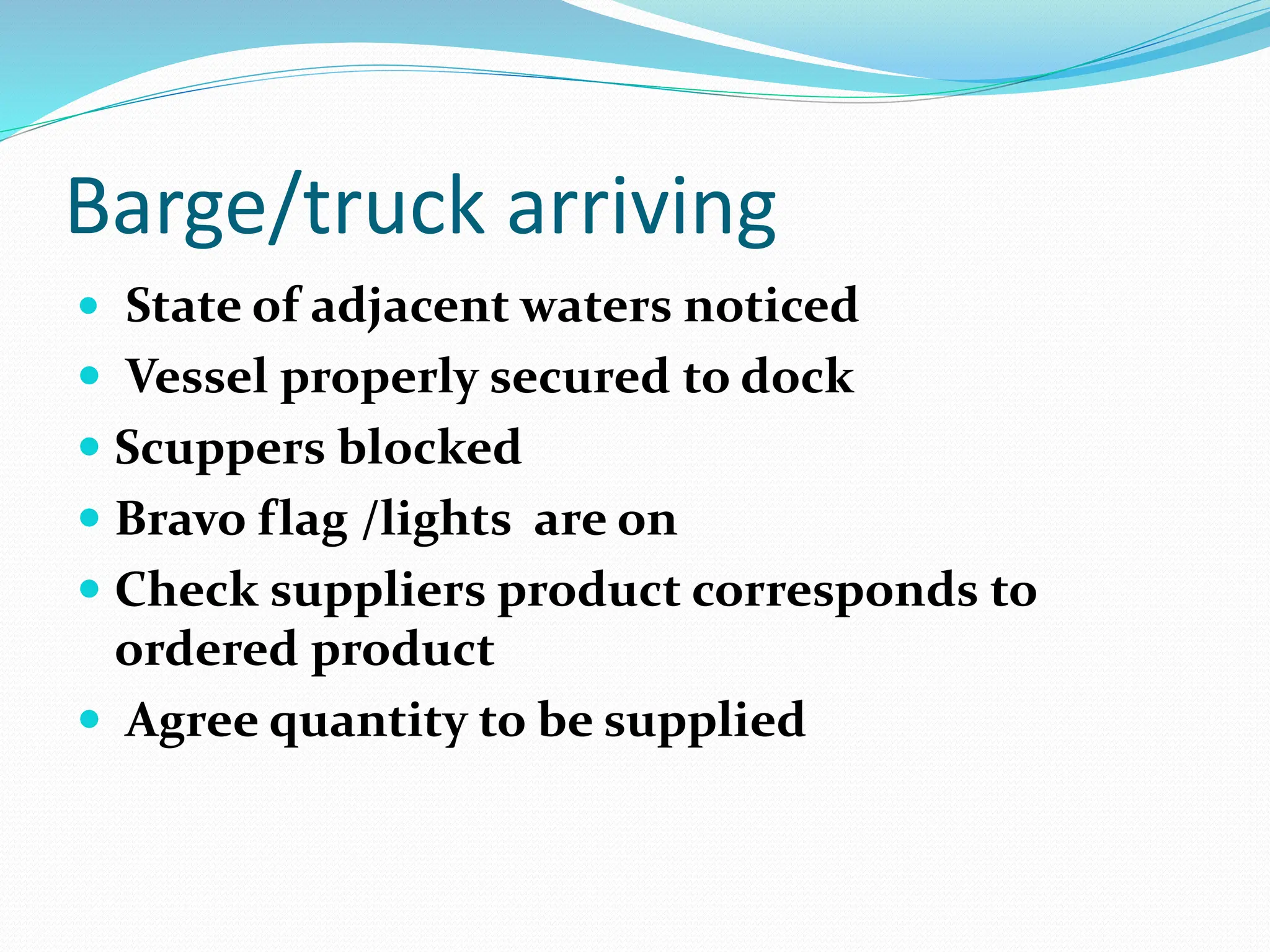
Barge/truck arriving
 State of adjacent waters noticed
 Vessel properly secured to dock
 Scuppers blocked
 Bravo flag /lights are on
 Check suppliers product corresponds to
ordered product
 Agree quantity to be supplied
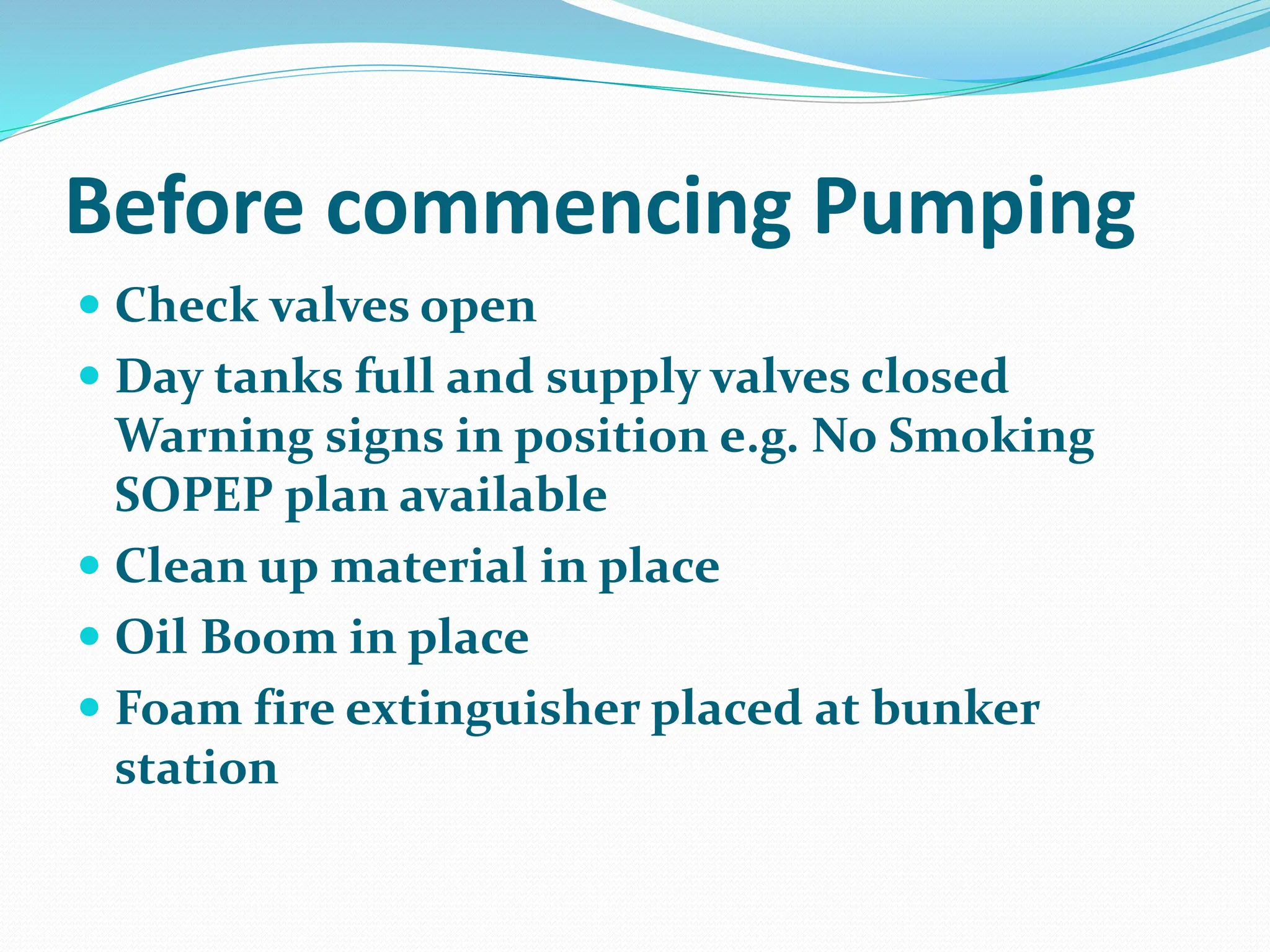
Before commencing Pumping
 Check valves open
 Day tanks full and supply valves closed
Warning signs in position e.g. No Smoking
SOPEP plan available
 Clean up material in place
 Oil Boom in place
 Foam fire extinguisher placed at bunker
station
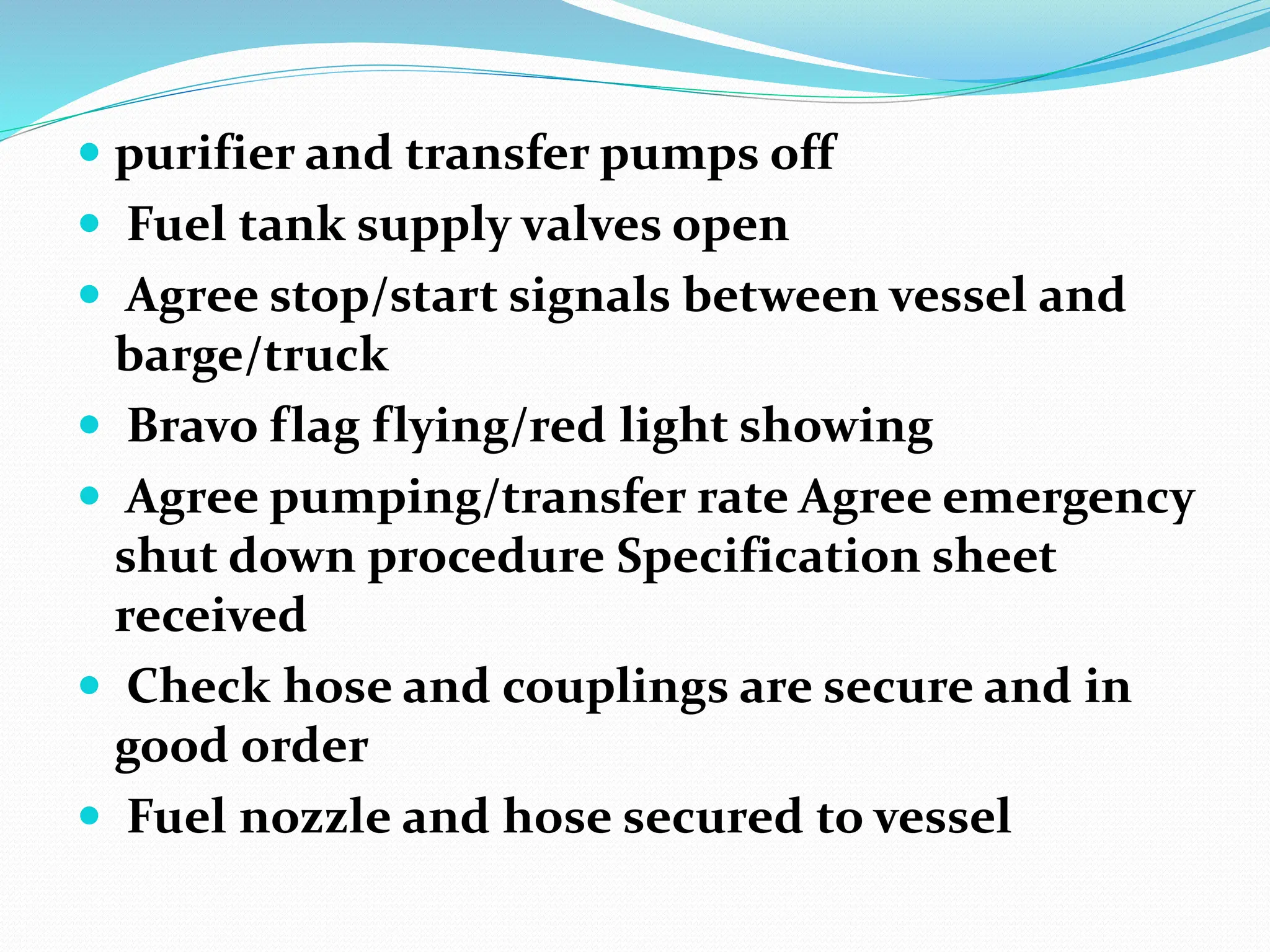
 purifier and transfer pumps off
 Fuel tank supply valves open
 Agree stop/start signals between vessel and
barge/truck
 Bravo flag flying/red light showing
 Agree pumping/transfer rate Agree emergency
shut down procedure Specification sheet
received
 Check hose and couplings are secure and in
good order
 Fuel nozzle and hose secured to vessel
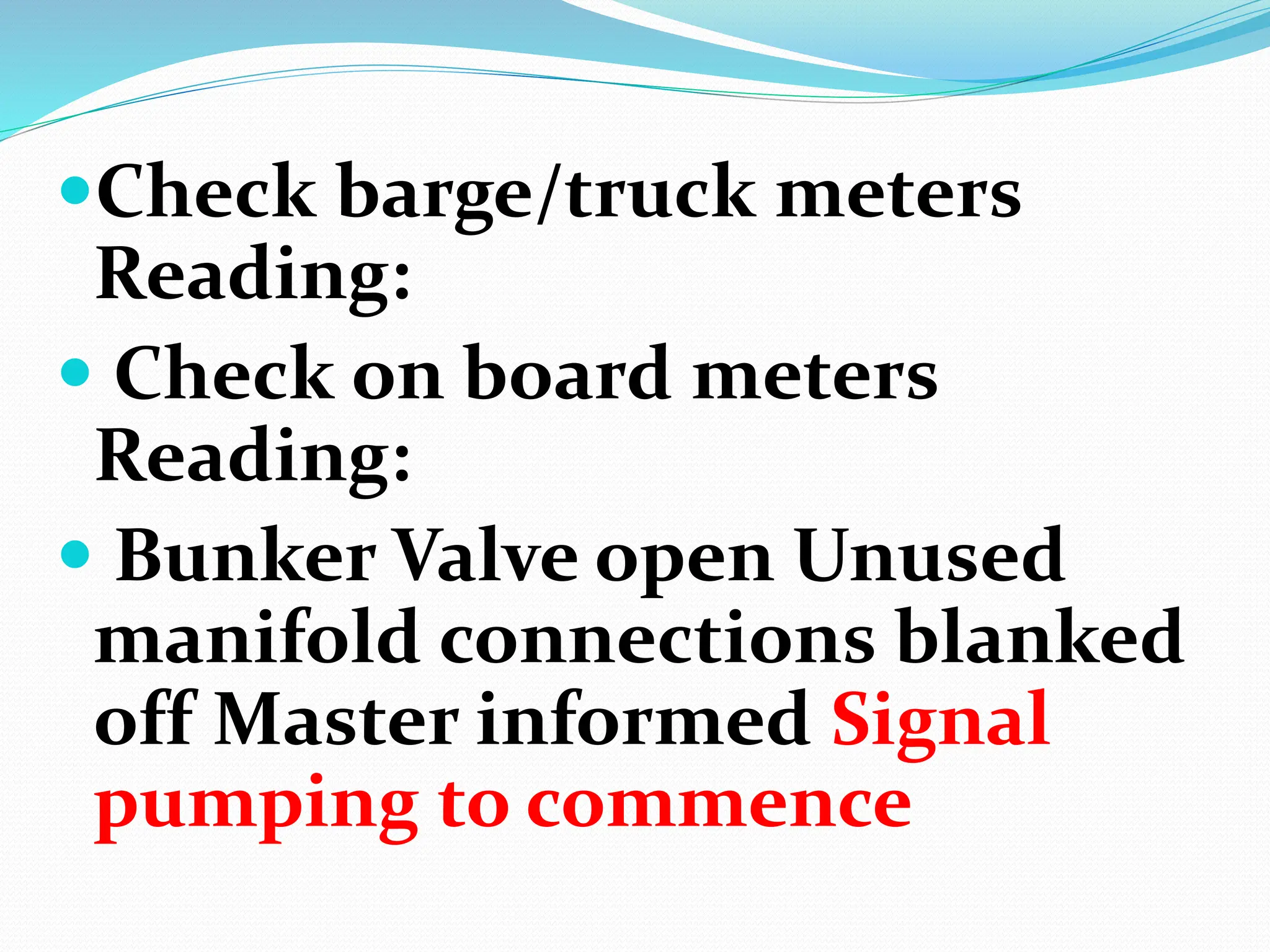
Check barge/truck meters
Reading:
 Check on board meters
Reading:
 Bunker Valve open Unused
manifold connections blanked
off Master informed Signal
pumping to commence
Procedure During Bunkering
 Witness taking and sealing of 2
representative product samples Monitor
fuel connections for leaks fuel flow and
control tank levels
 Reduce flow during topping up.
 While changing over tanks open a
empty tank before closing other
Check bunkering operation goes as
agreed
Loading rates are at expected levels
Procedure on completion of bunkering
 Bunker Valve closed Disconnect hose (drain before
disconnecting)
 Check barge/truck meter Reading:
 Check ships meter Reading: Sign Bunker Delivery
 Retain BDR with product sample
 SOPEP plan returned to bridge
 Clean up gear stowed / Oil boom returned Bravo Flag/Red
light stowed/switched off Remove and pack away
warning/safety signs
 Foam fire extinguisher placed back in correct location
 Complete Oil Record Book
 Master informed of completion
 Confirm in Oil Record Book Bunkering checklist
completed

bunkering procedure 2.pptx marine engineering

  • 2.
     Chief engineris incharge of bunkering  Manning requiremnt is satisfied for bunkering
  • 4.
    Pre-Bunkering Procedure  Soundthe tanks  Empty the overflow tank  Clean the filter  If any repairs carried out on the bunker line it is to be pressure tested  complete all fuel transfers  Stop all hot work on board
  • 5.
    Pre bunkering  Arrangmentof bunker tank ventilation  Establish the loading volume of each tank  Verification of the gaguging system with contents in tank  Alarm settings on over flow alarms
  • 6.
    Barge/truck arriving  Stateof adjacent waters noticed  Vessel properly secured to dock  Scuppers blocked  Bravo flag /lights are on  Check suppliers product corresponds to ordered product  Agree quantity to be supplied
  • 7.
    Before commencing Pumping Check valves open  Day tanks full and supply valves closed Warning signs in position e.g. No Smoking SOPEP plan available  Clean up material in place  Oil Boom in place  Foam fire extinguisher placed at bunker station
  • 8.
     purifier andtransfer pumps off  Fuel tank supply valves open  Agree stop/start signals between vessel and barge/truck  Bravo flag flying/red light showing  Agree pumping/transfer rate Agree emergency shut down procedure Specification sheet received  Check hose and couplings are secure and in good order  Fuel nozzle and hose secured to vessel
  • 9.
    Check barge/truck meters Reading: Check on board meters Reading:  Bunker Valve open Unused manifold connections blanked off Master informed Signal pumping to commence
  • 10.
    Procedure During Bunkering Witness taking and sealing of 2 representative product samples Monitor fuel connections for leaks fuel flow and control tank levels  Reduce flow during topping up.  While changing over tanks open a empty tank before closing other
  • 11.
    Check bunkering operationgoes as agreed Loading rates are at expected levels
  • 12.
    Procedure on completionof bunkering  Bunker Valve closed Disconnect hose (drain before disconnecting)  Check barge/truck meter Reading:  Check ships meter Reading: Sign Bunker Delivery  Retain BDR with product sample  SOPEP plan returned to bridge  Clean up gear stowed / Oil boom returned Bravo Flag/Red light stowed/switched off Remove and pack away warning/safety signs  Foam fire extinguisher placed back in correct location  Complete Oil Record Book  Master informed of completion  Confirm in Oil Record Book Bunkering checklist completed