Principles of Building
Planning
“Theconcept of positioning all the elements
and units of a building in a systematic and
practical manner to have
the maximum and
best utilization
of the available space, area and facilities is
termed as Principles of Building Planning.”
20.
Advanages of Principlesof
planning
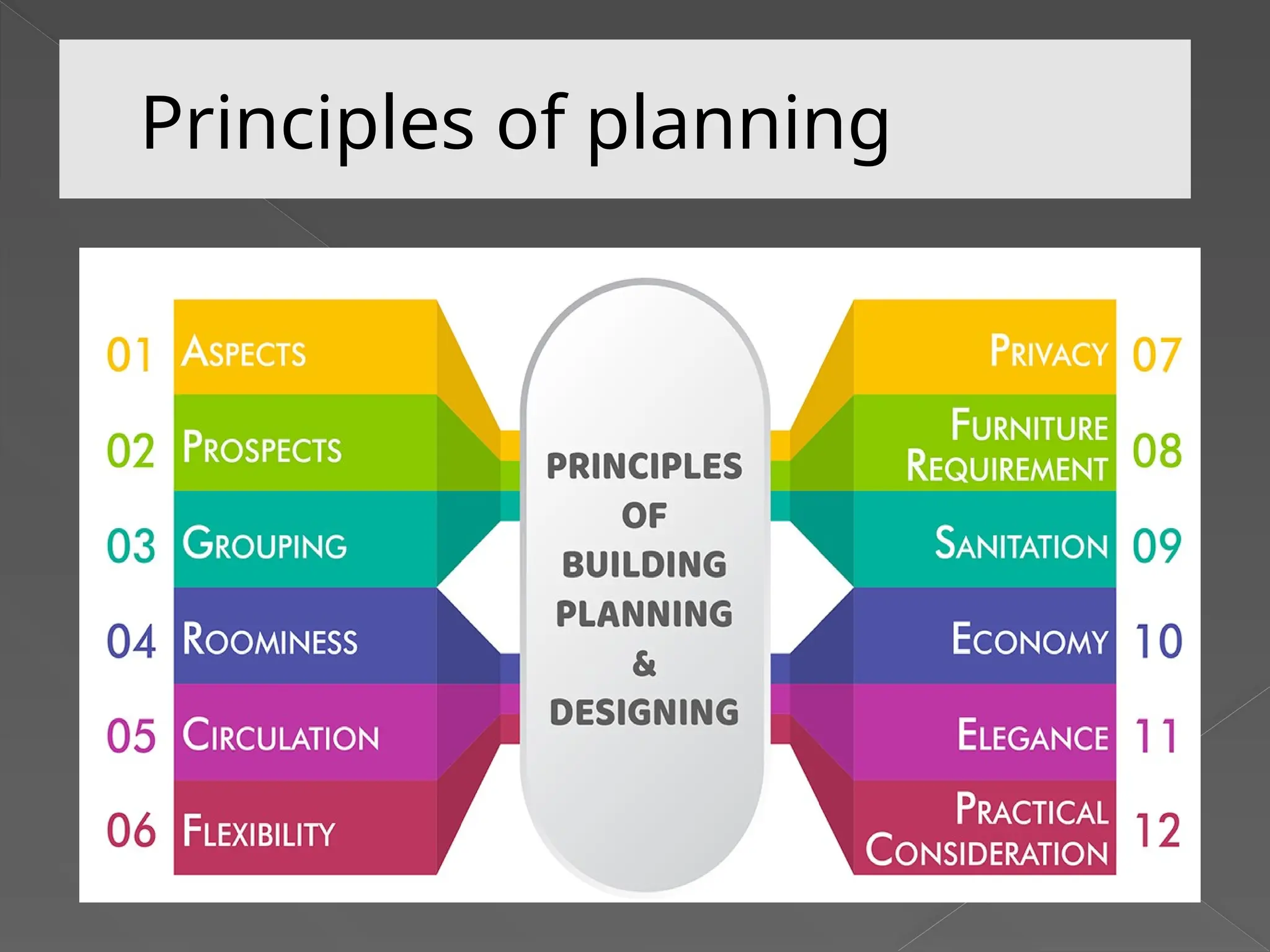
ECONOMY
PROPER VENTILATILATION
MAKES SPECIOUS
KEEPS BUILDING CLEAN, WARM, COOL
AND PLEASANT.
SAVES ENERGY AND ECO-FRIENDLY
REDUCES CONSRUCTION TIME
Aspect
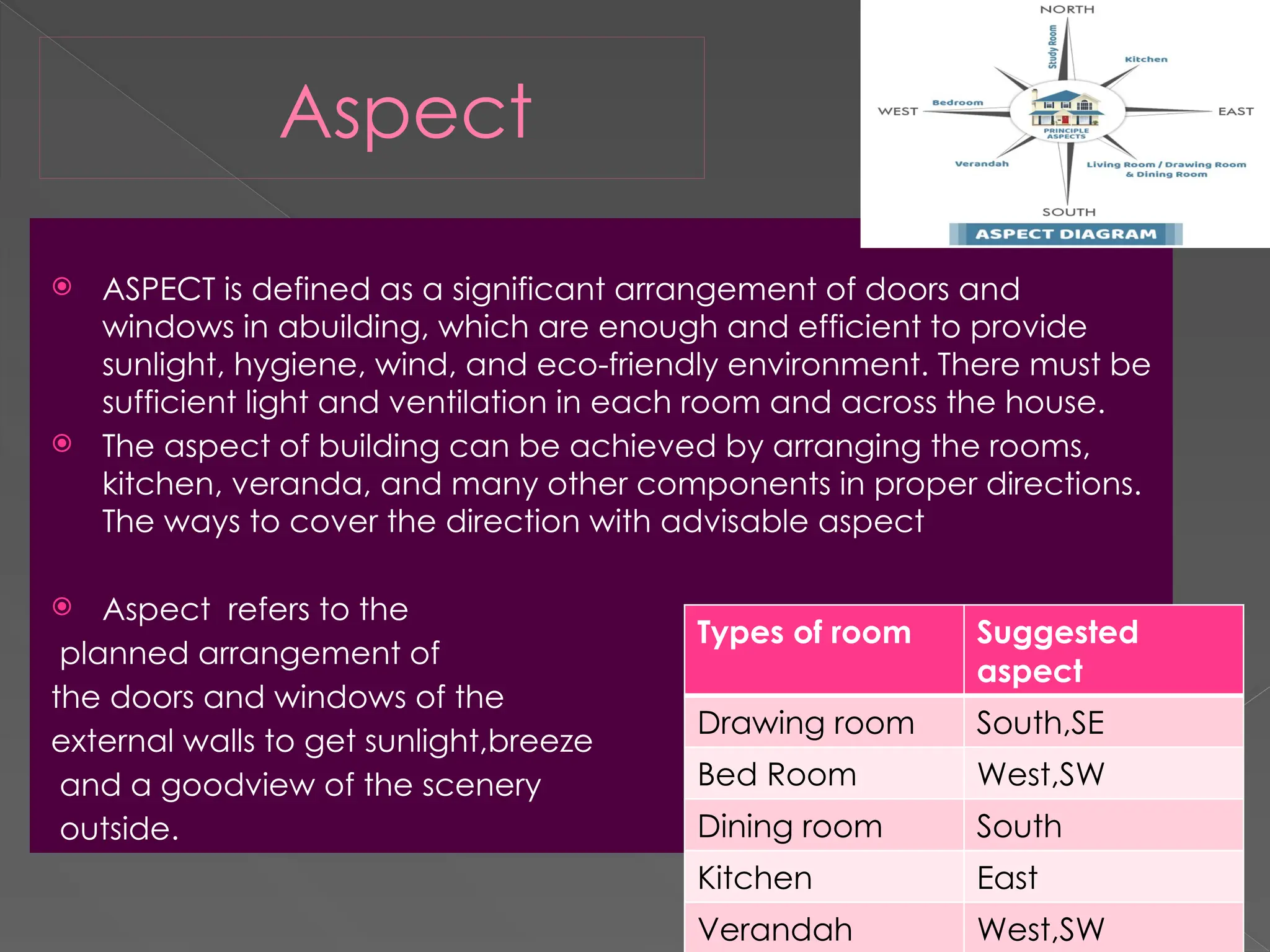
ASPECT isdefined as a significant arrangement of doors and
windows in abuilding, which are enough and efficient to provide
sunlight, hygiene, wind, and eco-friendly environment. There must be
sufficient light and ventilation in each room and across the house.
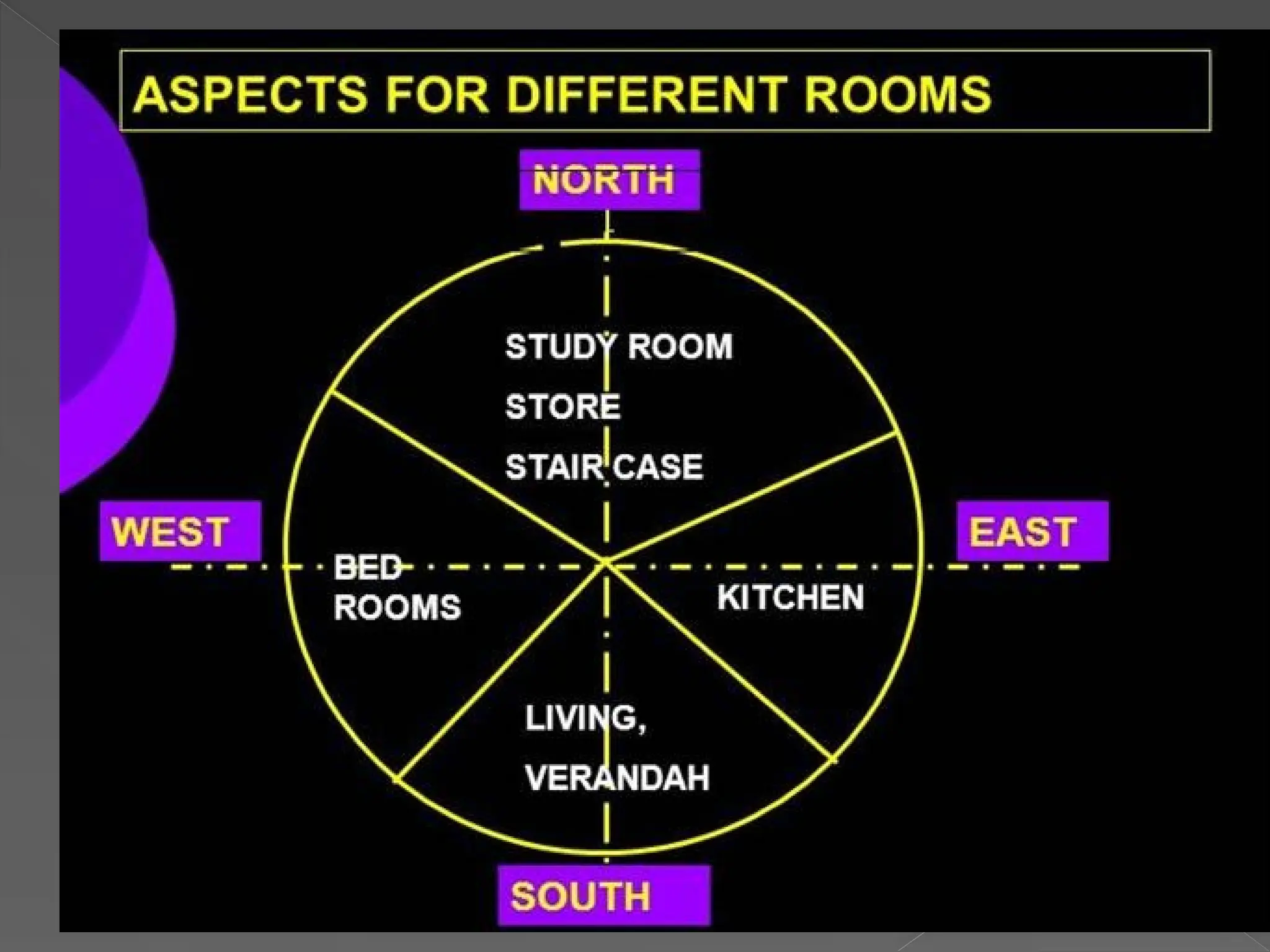
The aspect of building can be achieved by arranging the rooms,
kitchen, veranda, and many other components in proper directions.
The ways to cover the direction with advisable aspect
Aspect refers to the
planned arrangement of
the doors and windows of the
external walls to get sunlight,breeze
and a goodview of the scenery
outside.
Types of room Suggested
aspect
Drawing room South,SE
Bed Room West,SW
Dining room South
Kitchen East
Verandah West,SW
24.
Prospect
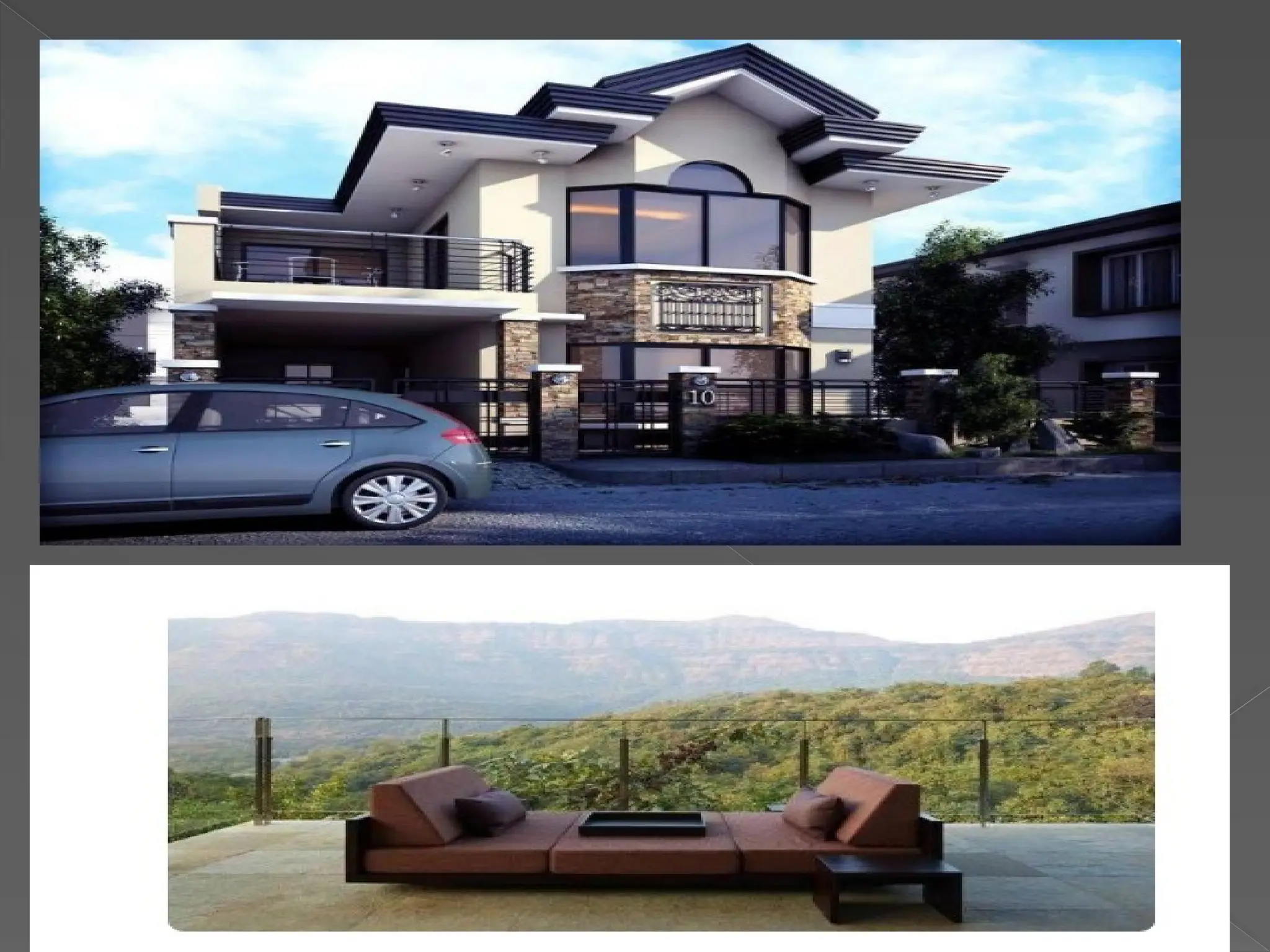
A buildingis said to have prospect when it presents a good and
pleasing appearance when seen from outside.
It is used to mean the external views as seen from certain rooms of
the building.
It also includes the concealment of some undesirable views in a
given outlook.
In these modern times, all the buildings and
constructions are aimed to achieve an aesthetically
appealing look from both exteriors and interior
considerations. The appearance of a house or a
building is defined as PROSPECT.
The standards are raised to accomplish the building’s pleasant
look by locating doors and windows at an accurate location to
view nature’s beauty and avoid unwanted attributes from getting
entry into the house.
26.
Privacy
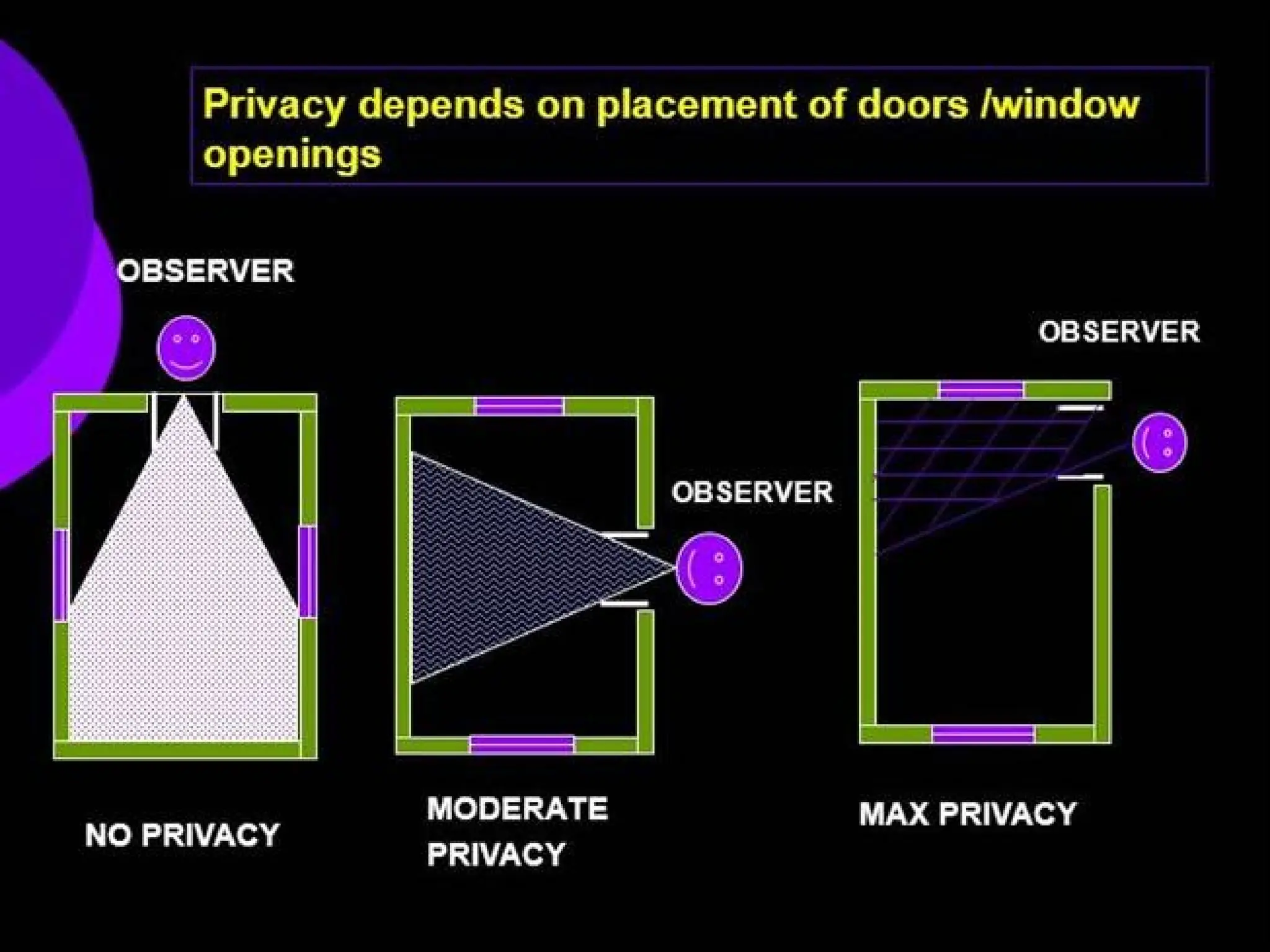
Privacy isan important factor that needs prior attention. Usually,
the privacy can be considered in two ways:
01. Internal Privacy: This deals with the privacy inside a house,
amongst the rooms. It covers the privacy between rooms and
water closets, corridors, passage lobbies etc.
02. External Privacy: Privacy of a building with respect to other
buildings and the things outside the building- such as streets,
roads, etc., is external privacy.
For residential building planning privacy is important
consideration. There should be privacy from one room to
another room and also from neighbour building and public
building and public building and streets.
Privacy is necessary in the bedroom, bathroom,wc and urinals.
28.
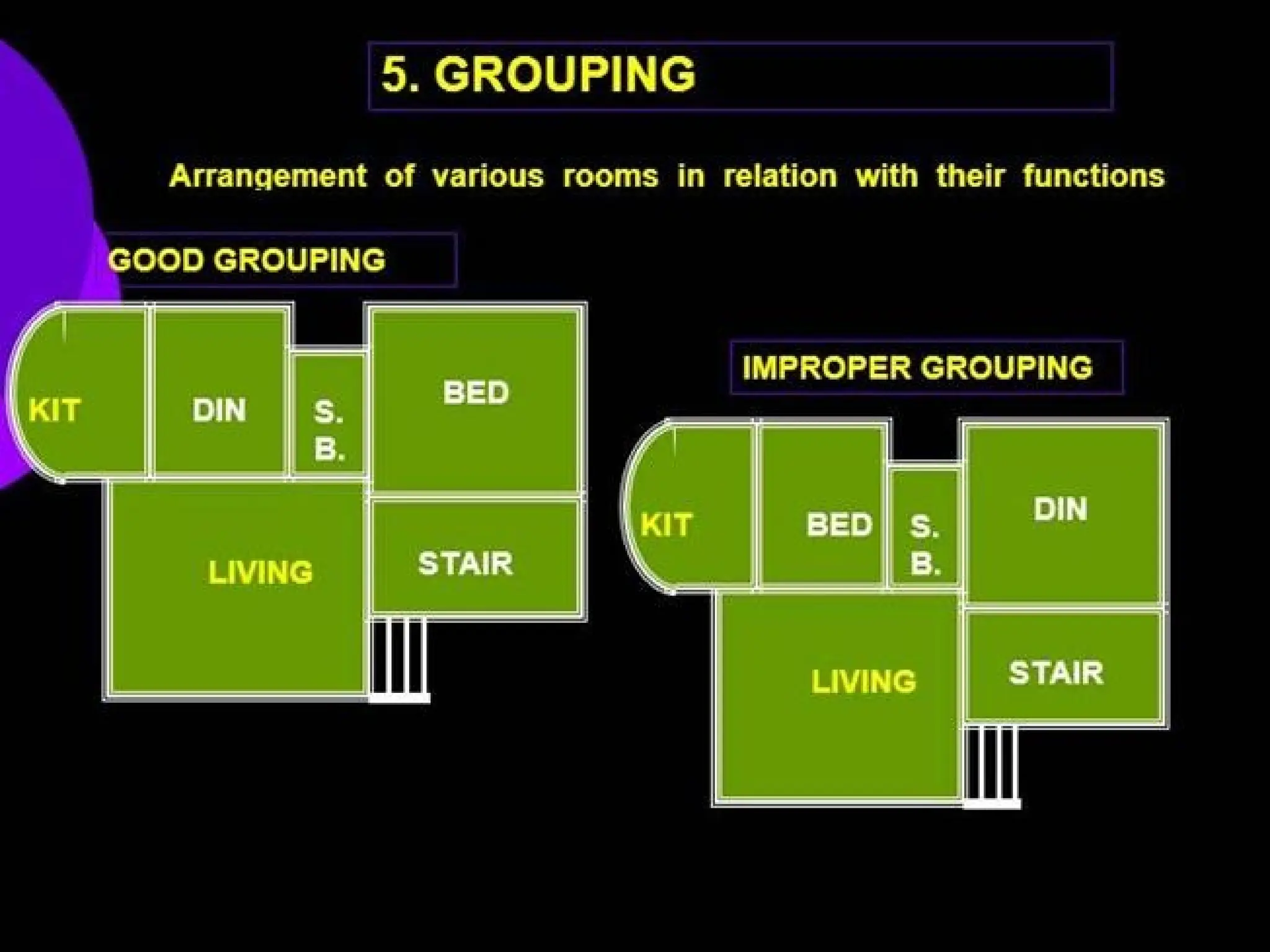
Grouping
it isto organize the different rooms in such a way
that they are adequately interconnected with
each other to form a functional and practical
layout of the house. The accessibility of all the
rooms is interlinked with each other, and this
provision can be satisfied by grouping.
Grouping refers to easy communication and
utility of various room .kitchen and dining room
should be close to each other.
Store room should be adjacent to kitchen. WC
and urinals should be far away from the kitchen .
30.
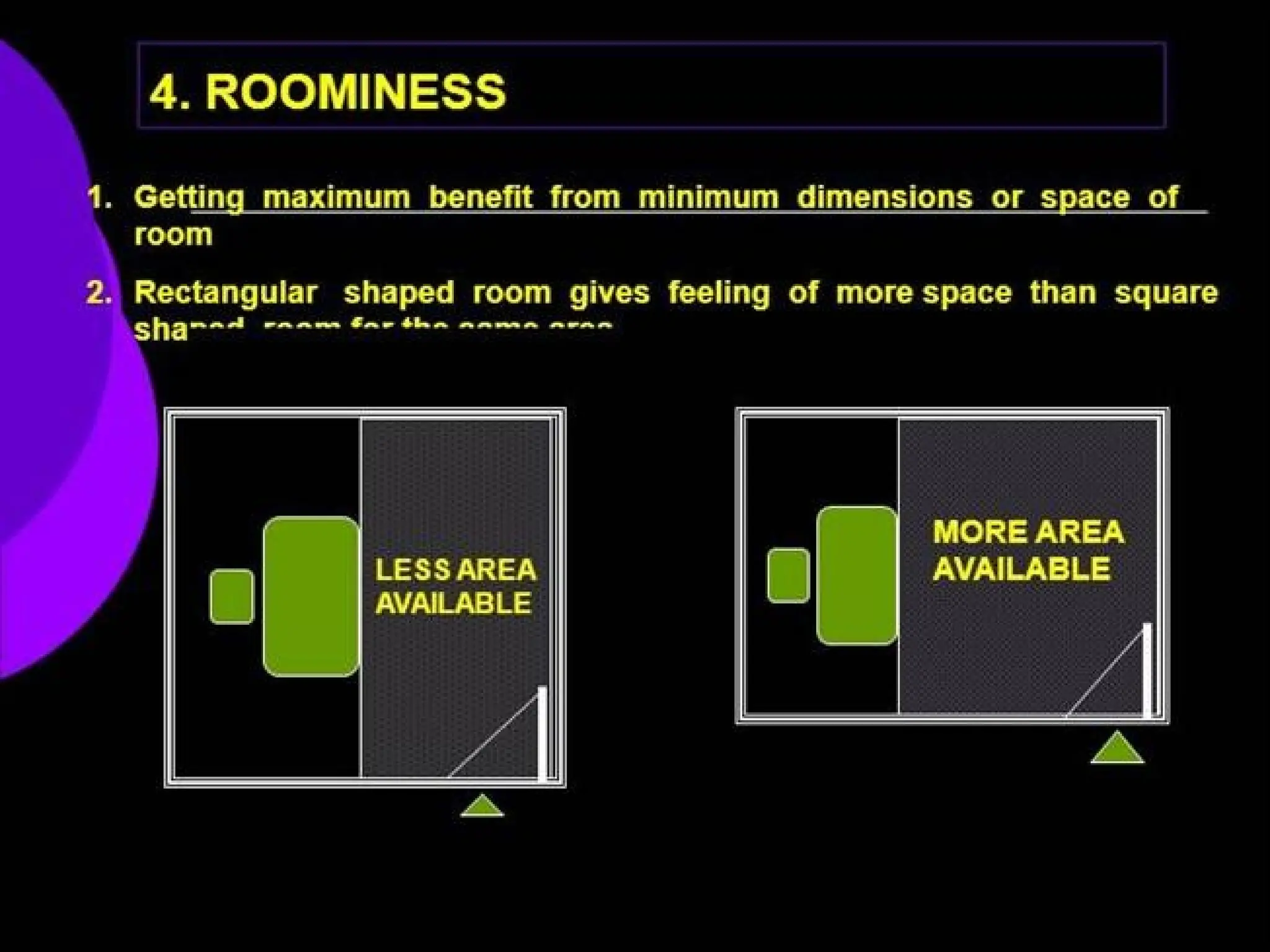
Roominess
The meaningof ROOMINESS is to maximize the
advantage of the available space from the
minimum dimension of a room.
Both the size and shape of the room play a vital
role in providing roominess.
It is an arrngement of getting the maximum
advantage from the minimum or limited dimensions
of a room.
The space must be utilised economically. Make the
room rectanguler .
Ceiling height and breadth ratio may be 1.20 to
1.50 for bulilding planning.
32.
(i) A greatskill should be exercised in making suitable
arrangements of the rooms, doors and passages for
accommodation in such a way that the utility, liability,
privacy and extension appearance are not adversely
affected.
(ii) It is always advisable to plan a rectangular room with
a proportion of 1.2 to 1.5 times the ratio of the length to
the breadth. The increase in ratio due to length gives
the tunnel experience as it looks longer.
A small room within ordinately high walls appears
relatively smaller than its actual size.
(iii) The disposition of doors, windows and cupboards,
such that they do not cross-cut this room area and
obstruct the placing of furniture, adds to roominess.
(iv) The design of elements such as floors, walls,
ceilings, lifts, etc. should be such as to create a sense of
space beyond its actual dimensions.
33.
Flexibility
The planningof the building should be
prepared by keeping in mind the future
requirement.
Expansion should be possible
economicaily without major altertions in
planning.
Planning should be such that with minor
adjustments , it becomes possible to
satisfy needs when the occasion arises.
34.
Furniture requirement
Duringbuilding planning the sizes of
furniture to be required for functional
utility of the rooms should be considered.
The size of the rooms should be decided
by considering easy accomodation
required.
Bed room size should accomdat
bed ,cupbored, side table, Dressing
table.
35.
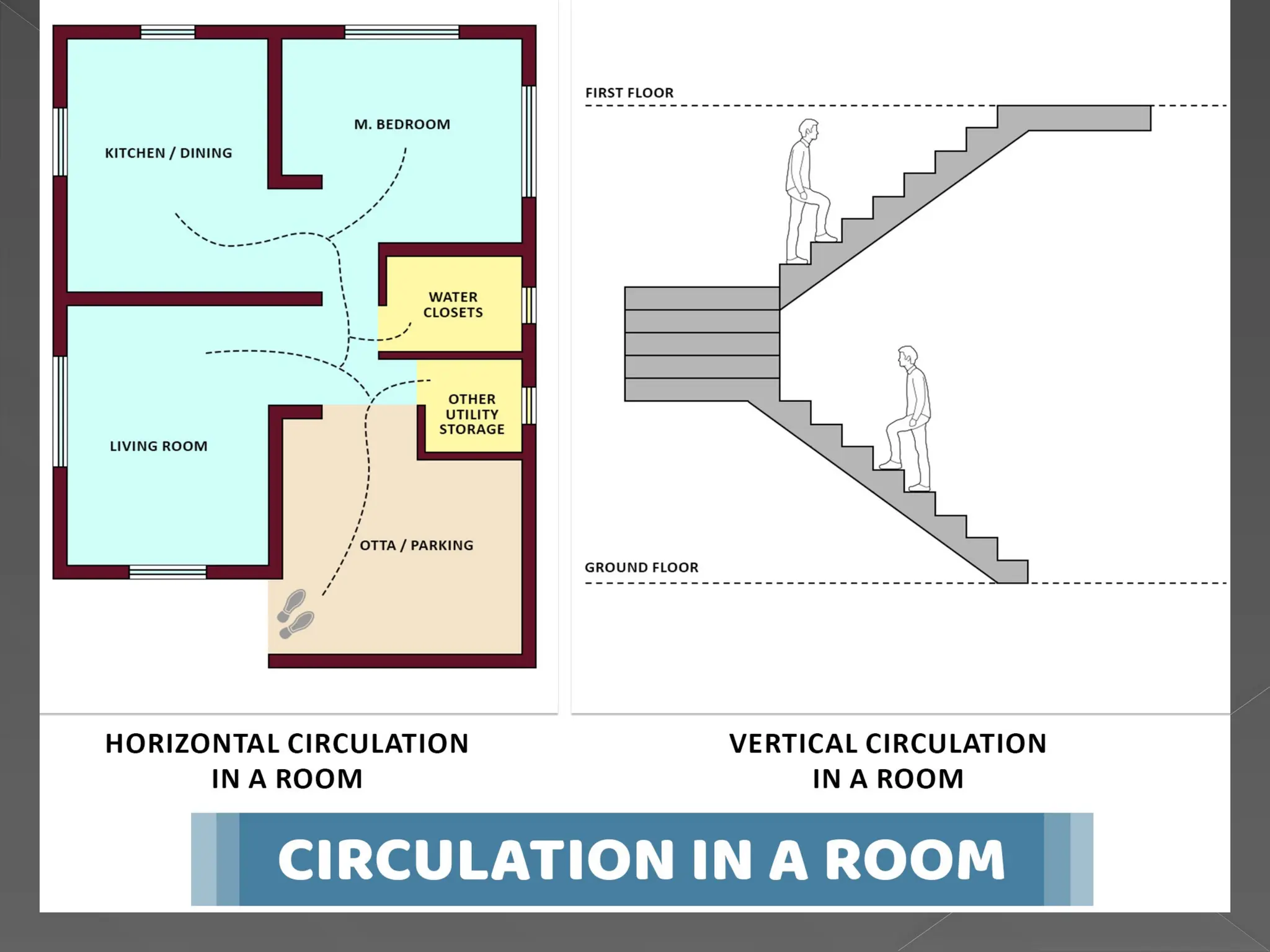
Circulation
Circulation refersto providing throgh
passages between rooms in a bulding.
It is necessary to permit horizontal
circulation throgh passages, corridors
and lobbies and vertical circulation
through staircases,lifts, and ramps in
bulding .
Passage should be provied along
37.
Lighting
Natural andartifical lighting is provided
in bulding , planning. By proper
venilation sunlight can given good
lighting.
By using various electrical appliences
artifical lighting is provided.
Glare should be avoided.
38.
Elegance
Elegance refersto the planning of
elevation and layout of the plan to give
an impressive appearance to the
bulding.
The proper of elevation width, height,
location of door and windows, materials
employed in construction of exterior
walls etc. create elegance is asthetics
of bulding.
39.
Economy
Bulding planningshould be carried out in
the financial limit of the cilent.
An engineer should know in advance,
client intends to spend for the bulding
and according material of consturaion
finshing items stage constucion should
be suggested.
By estimation proposed amount should
be followed to avoid miserble faliure of
bulding construction project.
40.
sanitation
Provision forcleanliness , lighting and ventilation and
Installing exhaust fans, lighting lamps, suitable absorbent
flooring, and improvised plumbing equipment can lead
to better sanitation.
sanitary units avoid growth of bacteria and spread of
disease condition.
The ventilators in bath w.c permit sunlight and air
circulation to maintain hygenic conditon the kitchen
sholud have glazed tiles
It is studied that for proper lighting, the least area of
window should not be less than 1/10th of floor area in
residential building. This ratio can be raised to 1/5th for
buildings other than residential ones.


![Seller Deck - Presentation [Concert L2].PPTX](https://cdn.slidesharecdn.com/ss_thumbnails/sellerdeck-presentationconcertl2-251219171156-24982daf-thumbnail.jpg?width=640&height=640&fit=bounds)


