Building Better Readers
Through Strong Minilessons
Presented by
Betsey Kennedy-Olotka Elizabeth.Kennedy@cobbk12.org
Elizabeth Marsili Elizabeth.Marsili@cobbk12.org
Essential Questions
• What are the key components of a
strong minilesson?
• How do I design minilessons that
impact readers in brief amounts of
time?
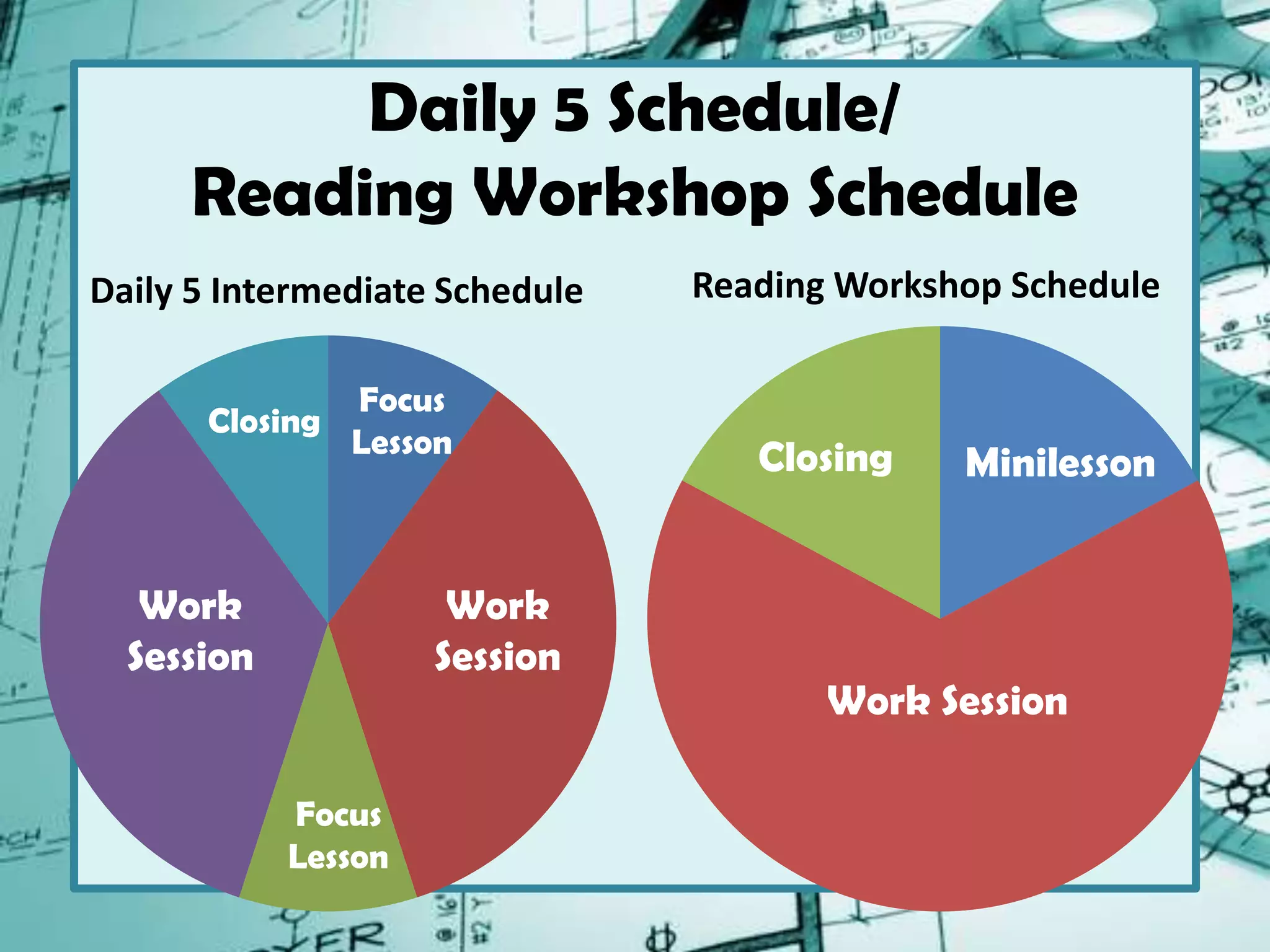
Daily 5 Schedule/
Reading Workshop Schedule
Daily 5 Intermediate Schedule
Minilesson
Reading Workshop Schedule
Work Session
Closing
Focus
Lesson
Focus
Lesson
Work
Session
Work
Session
Closing
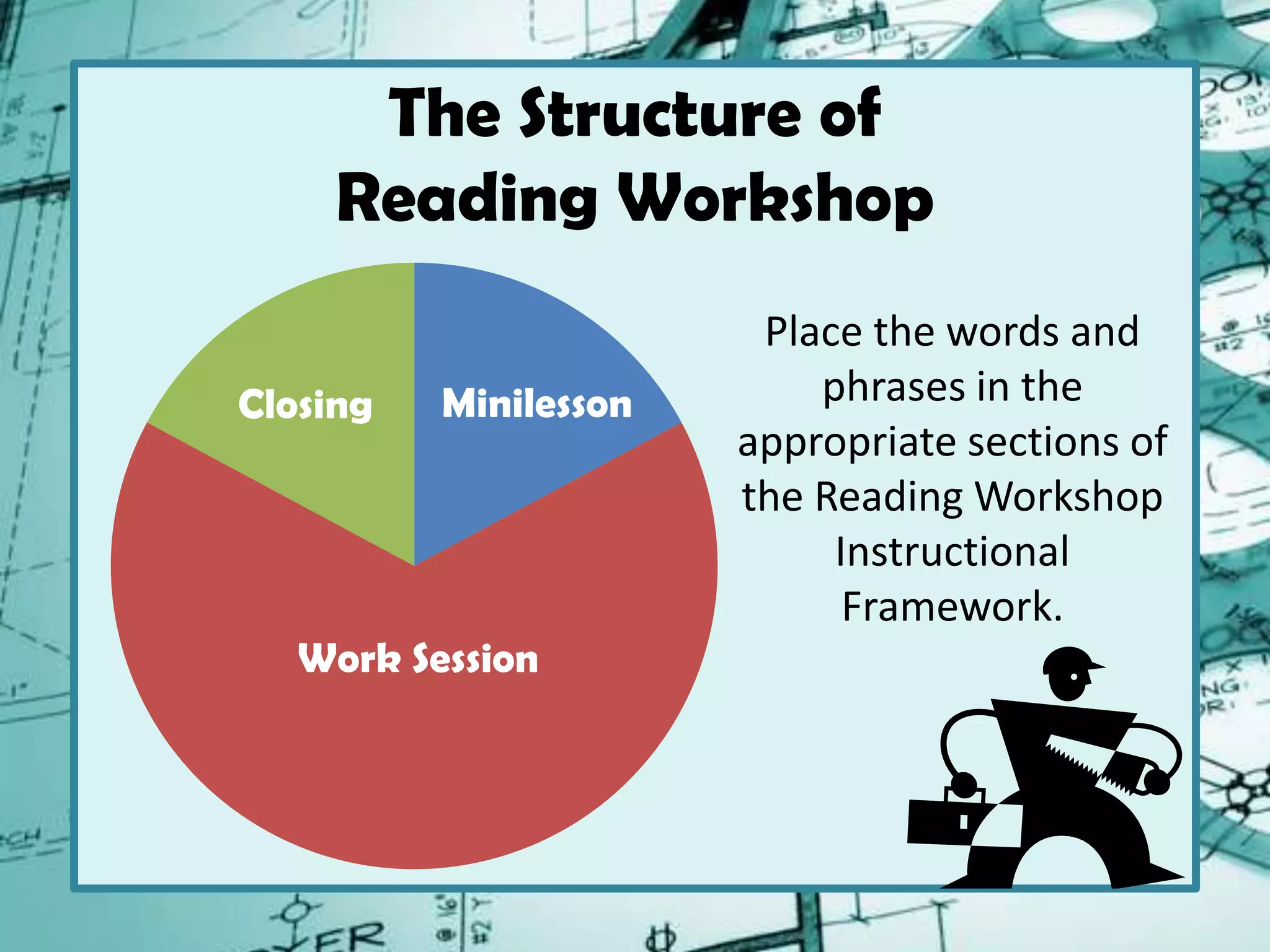
The Structure of
Reading Workshop
Place the words and
phrases in the
appropriate sections of
the Reading Workshop
Instructional
Framework.
MinilessonClosing
Work Session
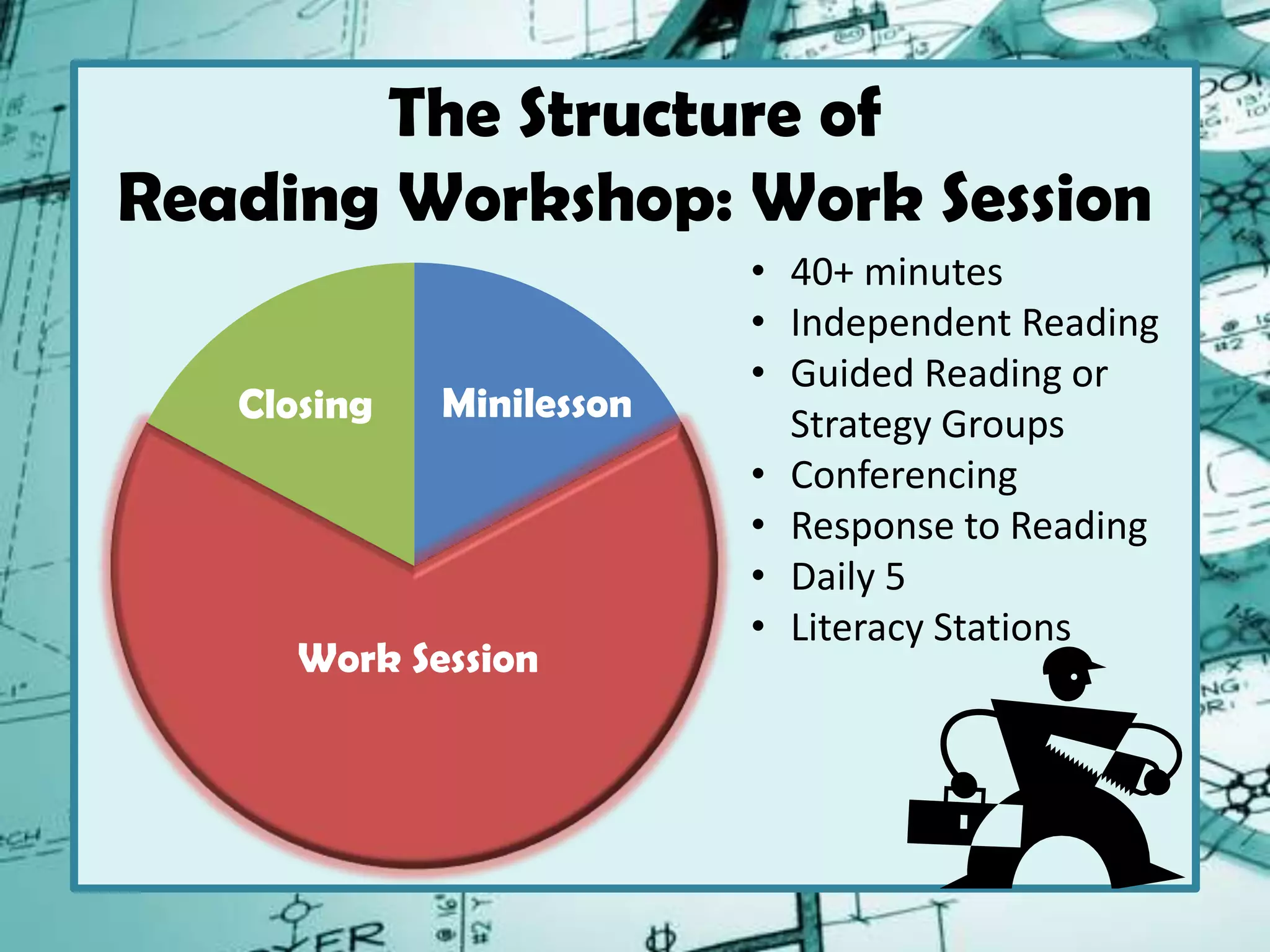
The Structure of
Reading Workshop: Work Session
MinilessonClosing
Work Session
• 40+ minutes
• Independent Reading
• Guided Reading or
Strategy Groups
• Conferencing
• Response to Reading
• Daily 5
• Literacy Stations
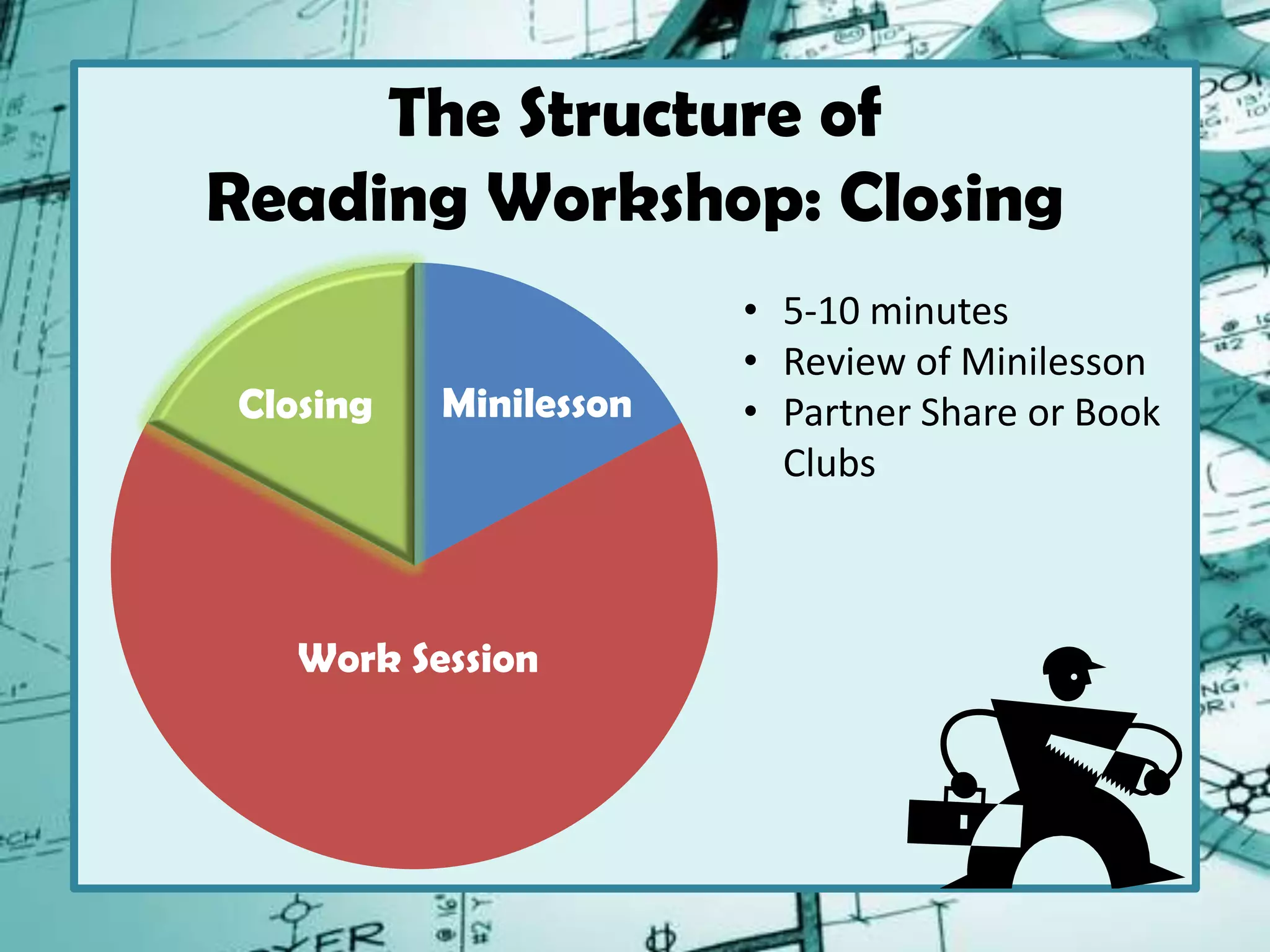
The Structure of
Reading Workshop: Closing
MinilessonClosing
Work Session
• 5-10 minutes
• Review of Minilesson
• Partner Share or Book
Clubs
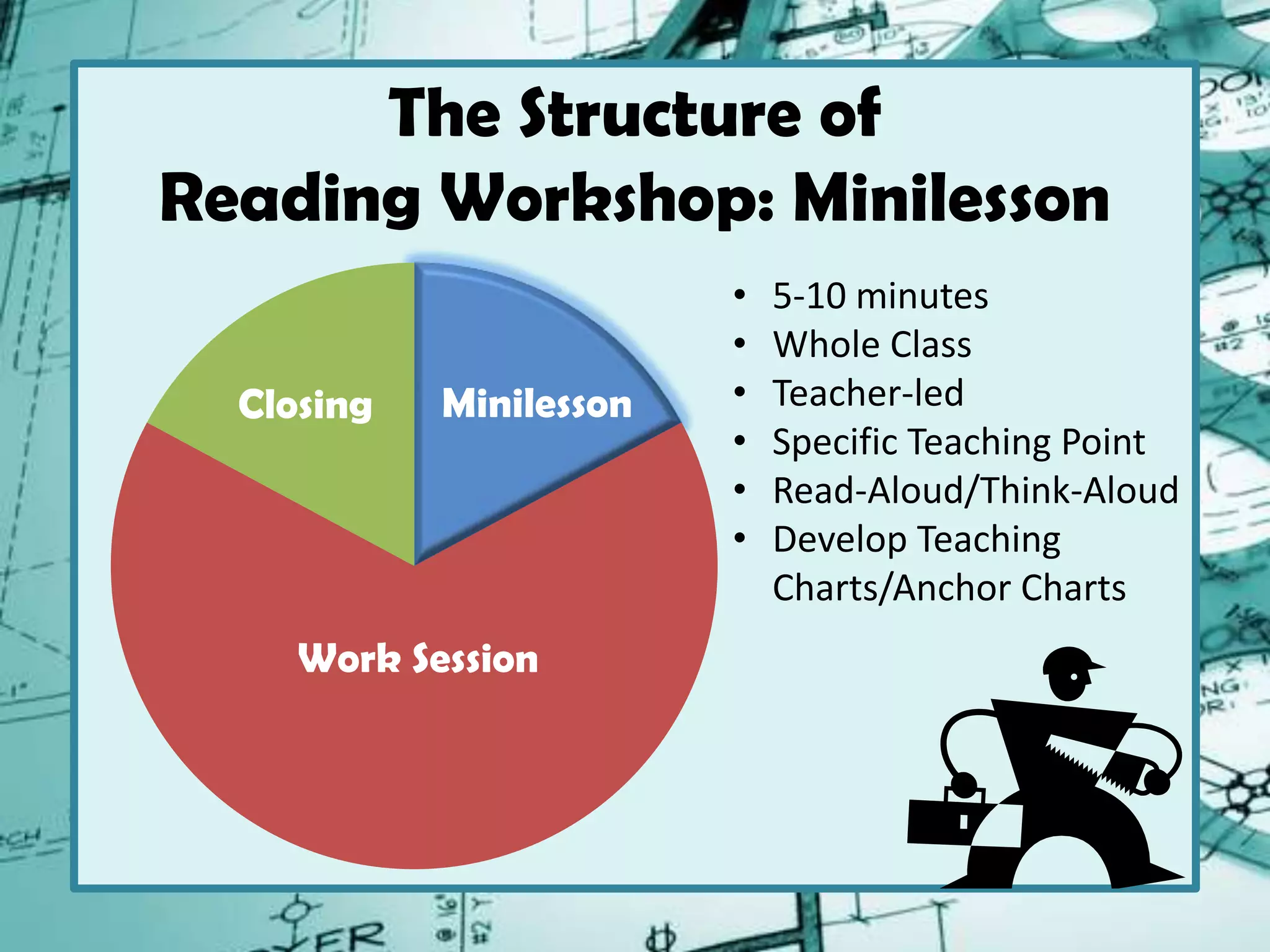
The Structure of
Reading Workshop: Minilesson
MinilessonClosing
Work Session
• 5-10 minutes
• Whole Class
• Teacher-led
• Specific Teaching Point
• Read-Aloud/Think-Aloud
• Develop Teaching
Charts/Anchor Charts
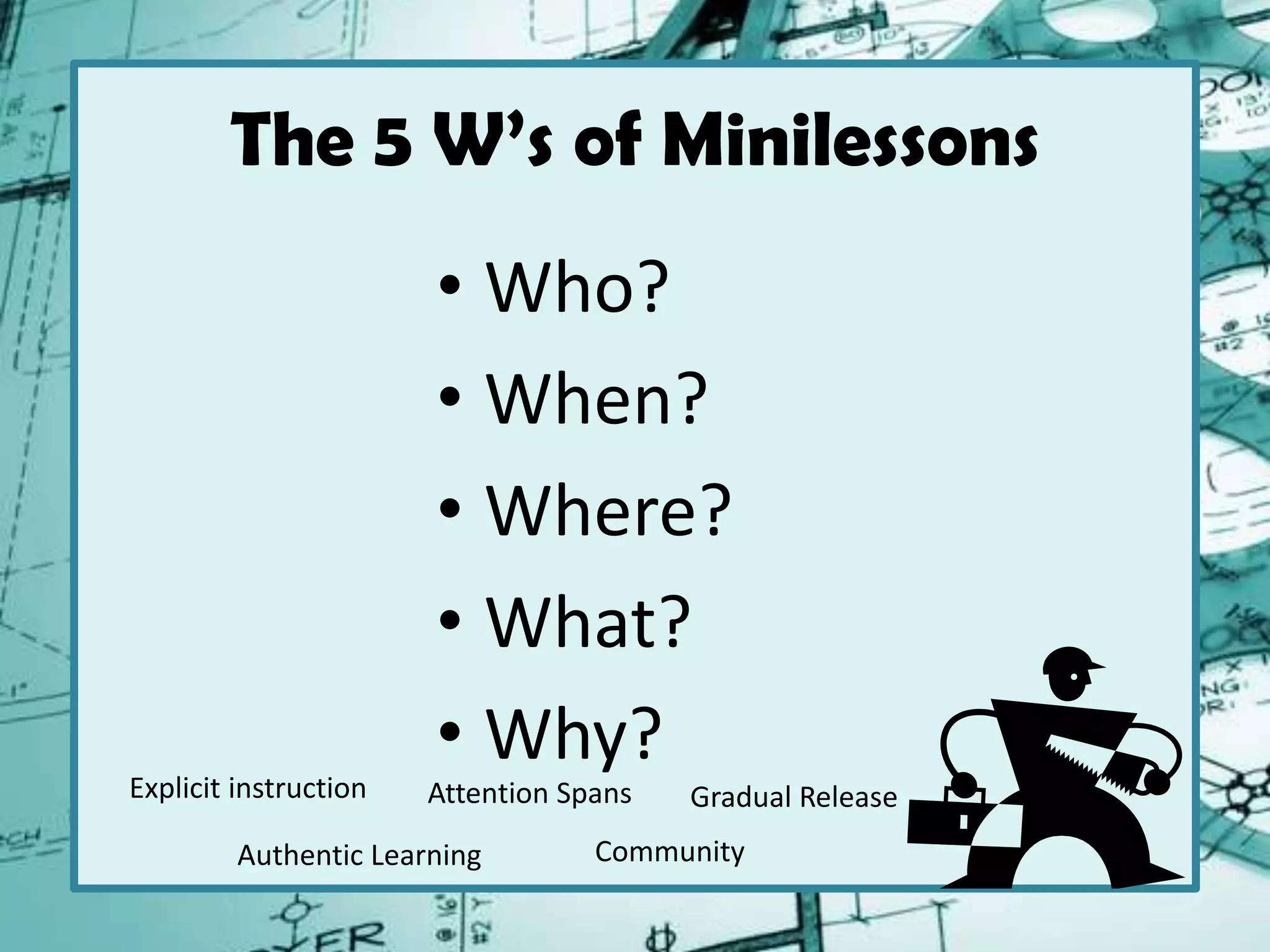
The 5 W’s of Minilessons
• Who?
• When?
• Where?
• What?
• Why?
Explicit instruction
Authentic Learning
Attention Spans
Community
Gradual Release
The Big Question:
Minilesson in Action
Minilesson Observations
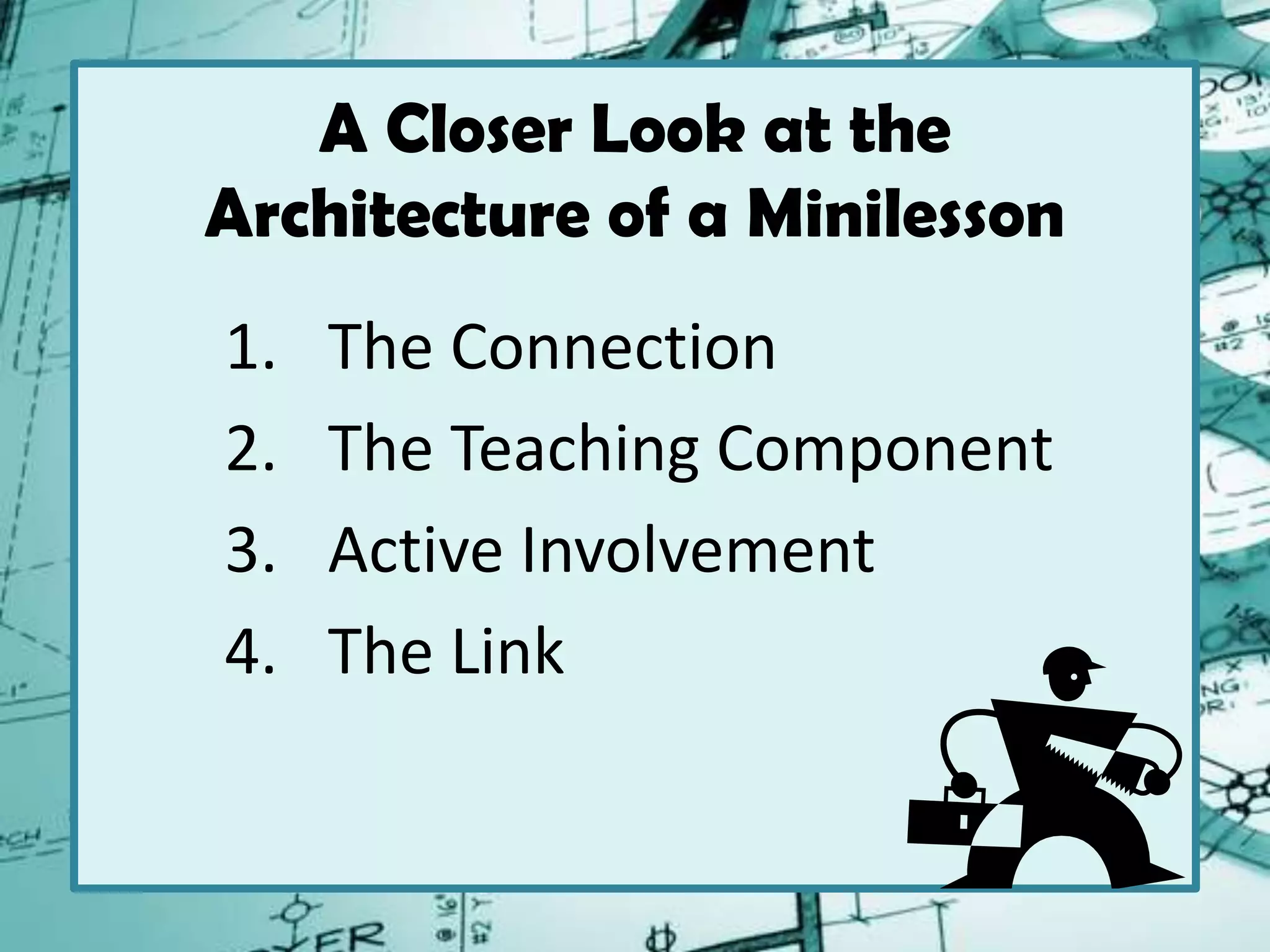
A Closer Look at the
Architecture of a Minilesson
1. The Connection
2. The Teaching Component
3. Active Involvement
4. The Link
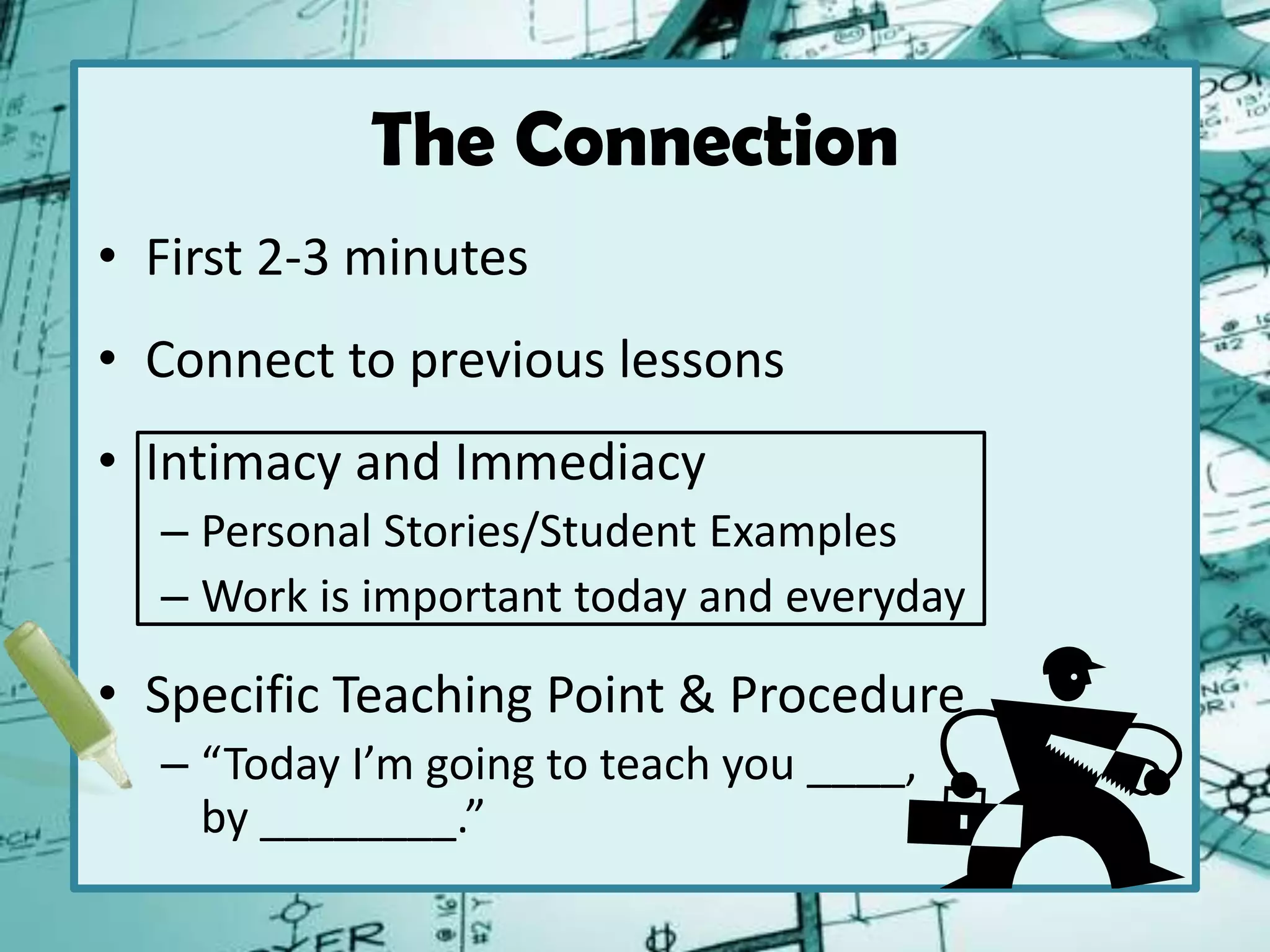
The Connection
• First 2-3 minutes
• Connect to previous lessons
• Intimacy and Immediacy
– Personal Stories/Student Examples
– Work is important today and everyday
• Specific Teaching Point & Procedure
– “Today I’m going to teach you ____,
by ________.”
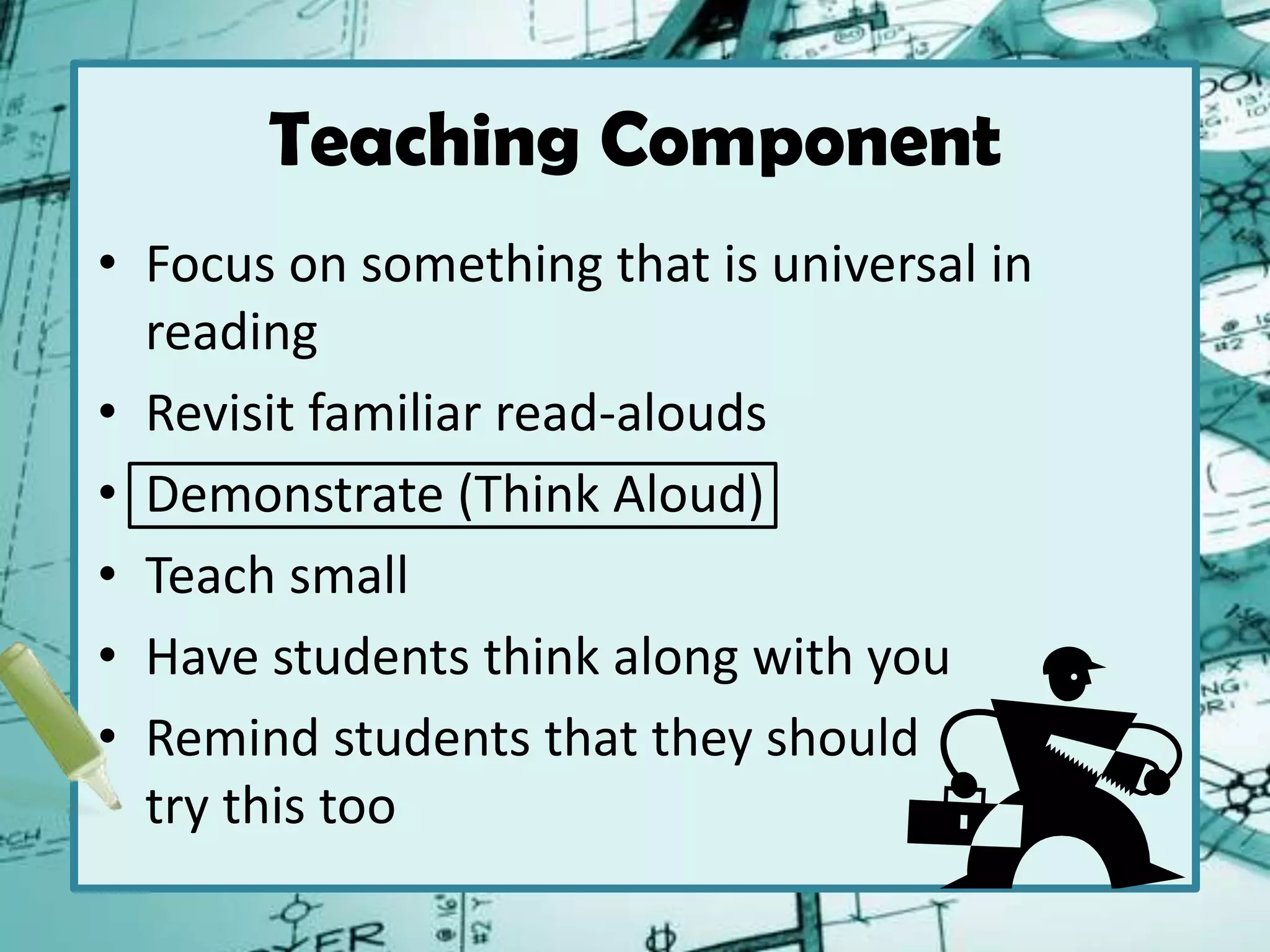
Teaching Component
• Focus on something that is universal in
reading
• Revisit familiar read-alouds
• Demonstrate (Think Aloud)
• Teach small
• Have students think along with you
• Remind students that they should
try this too
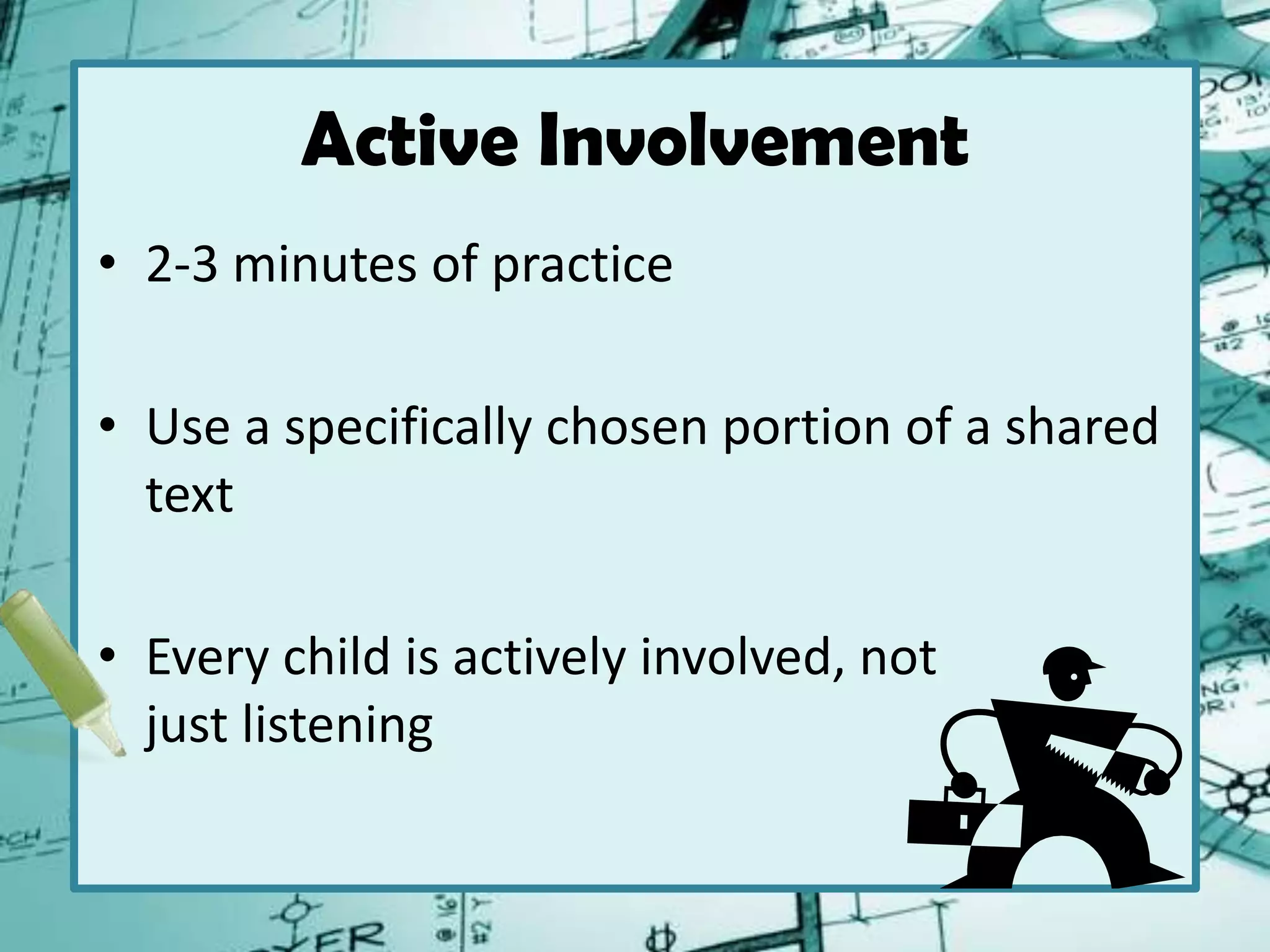
Active Involvement
• 2-3 minutes of practice
• Use a specifically chosen portion of a shared
text
• Every child is actively involved, not
just listening
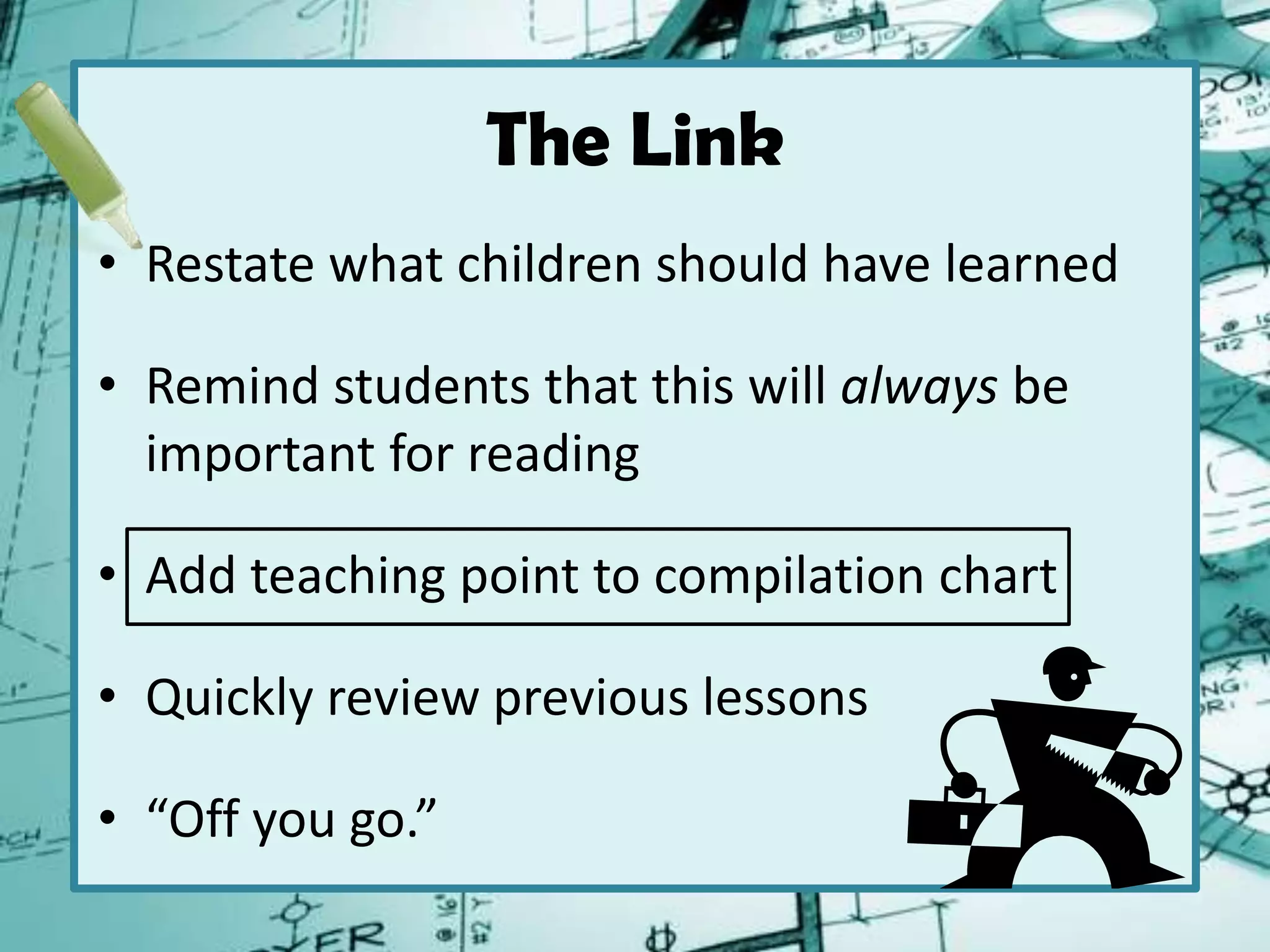
The Link
• Restate what children should have learned
• Remind students that this will always be
important for reading
• Add teaching point to compilation chart
• Quickly review previous lessons
• “Off you go.”
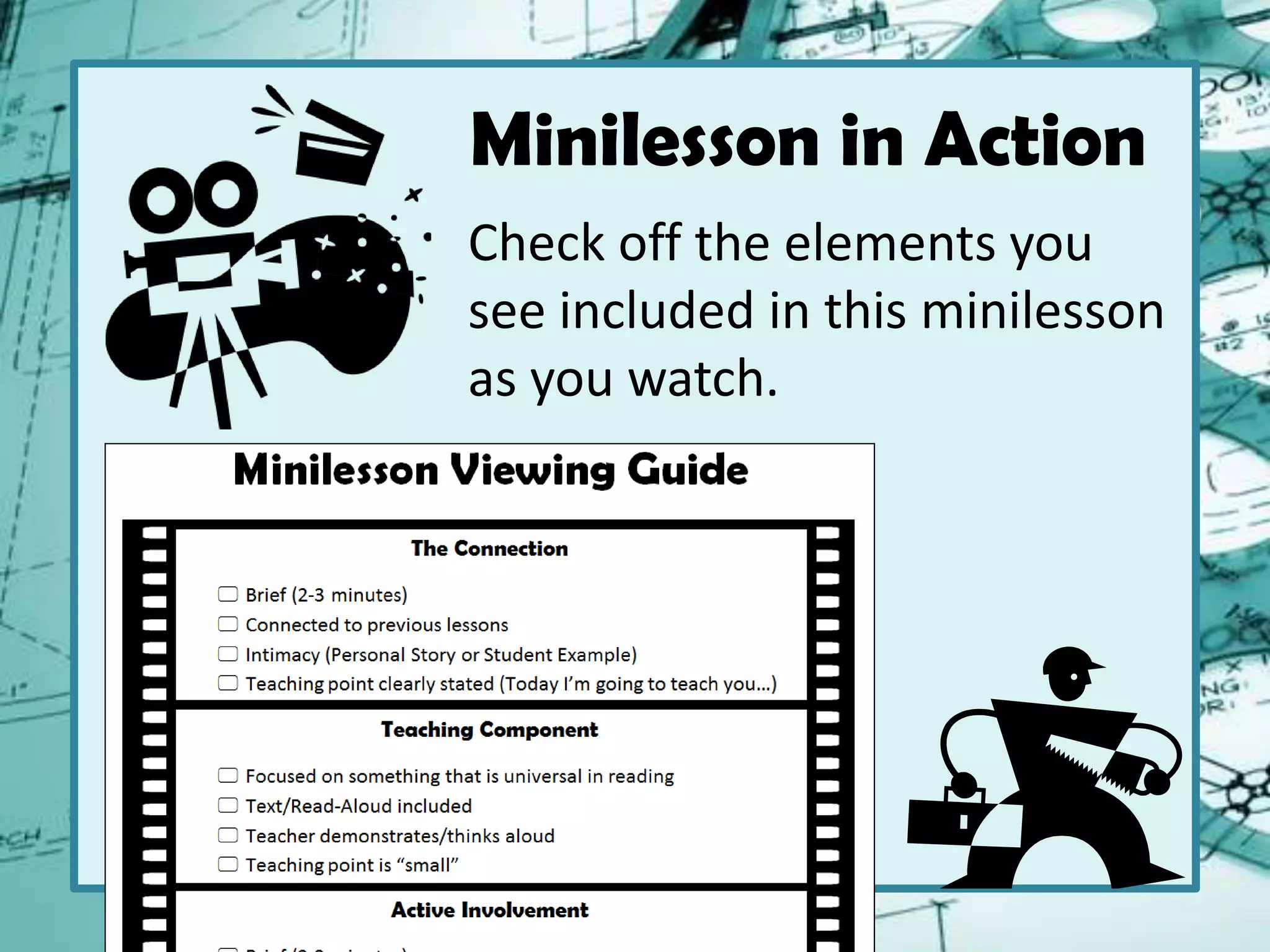
Minilesson in Action
Check off the elements you
see included in this minilesson
as you watch.
Minilesson Observations
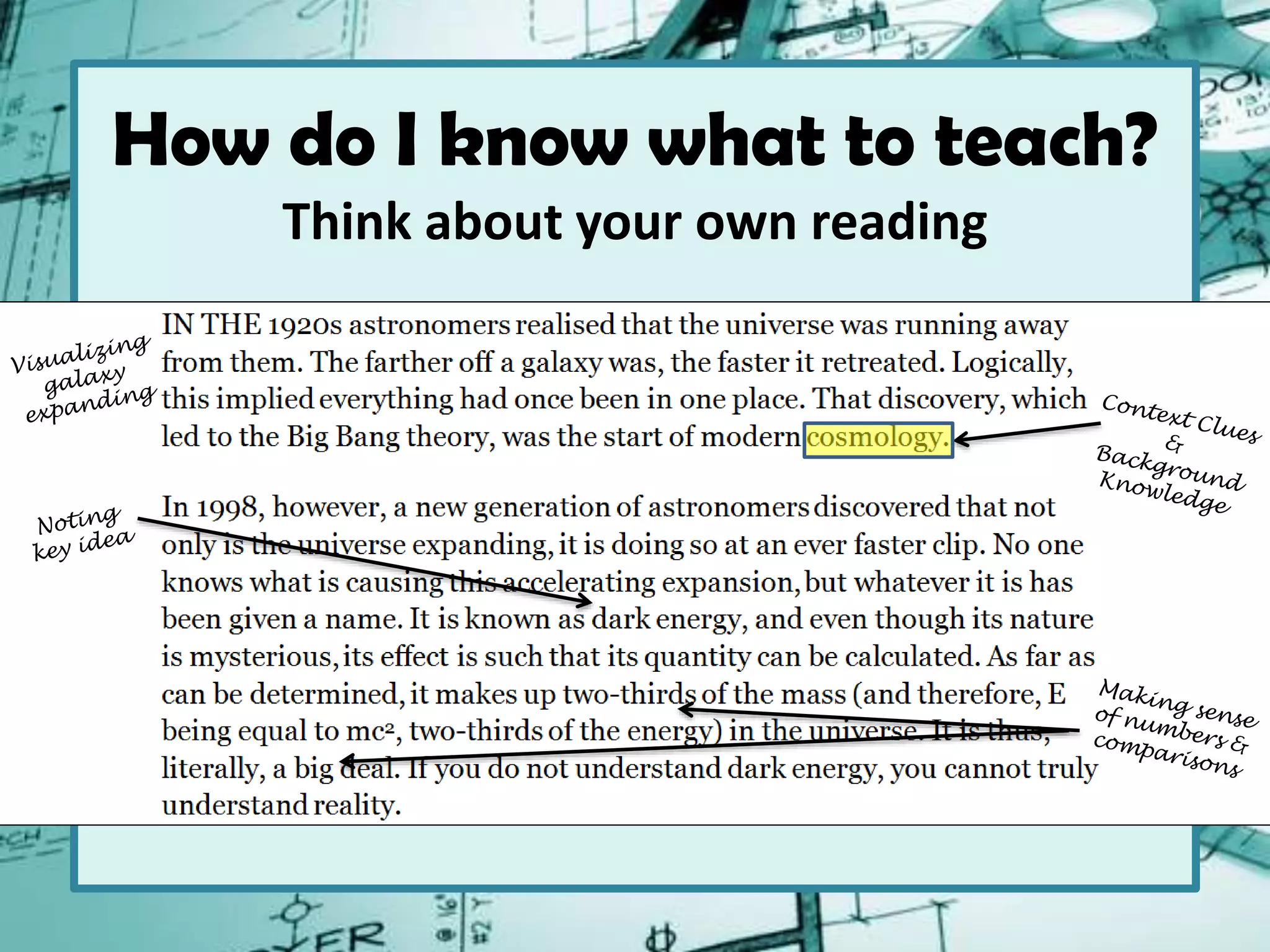
How do I know what to teach?
Think about your own reading
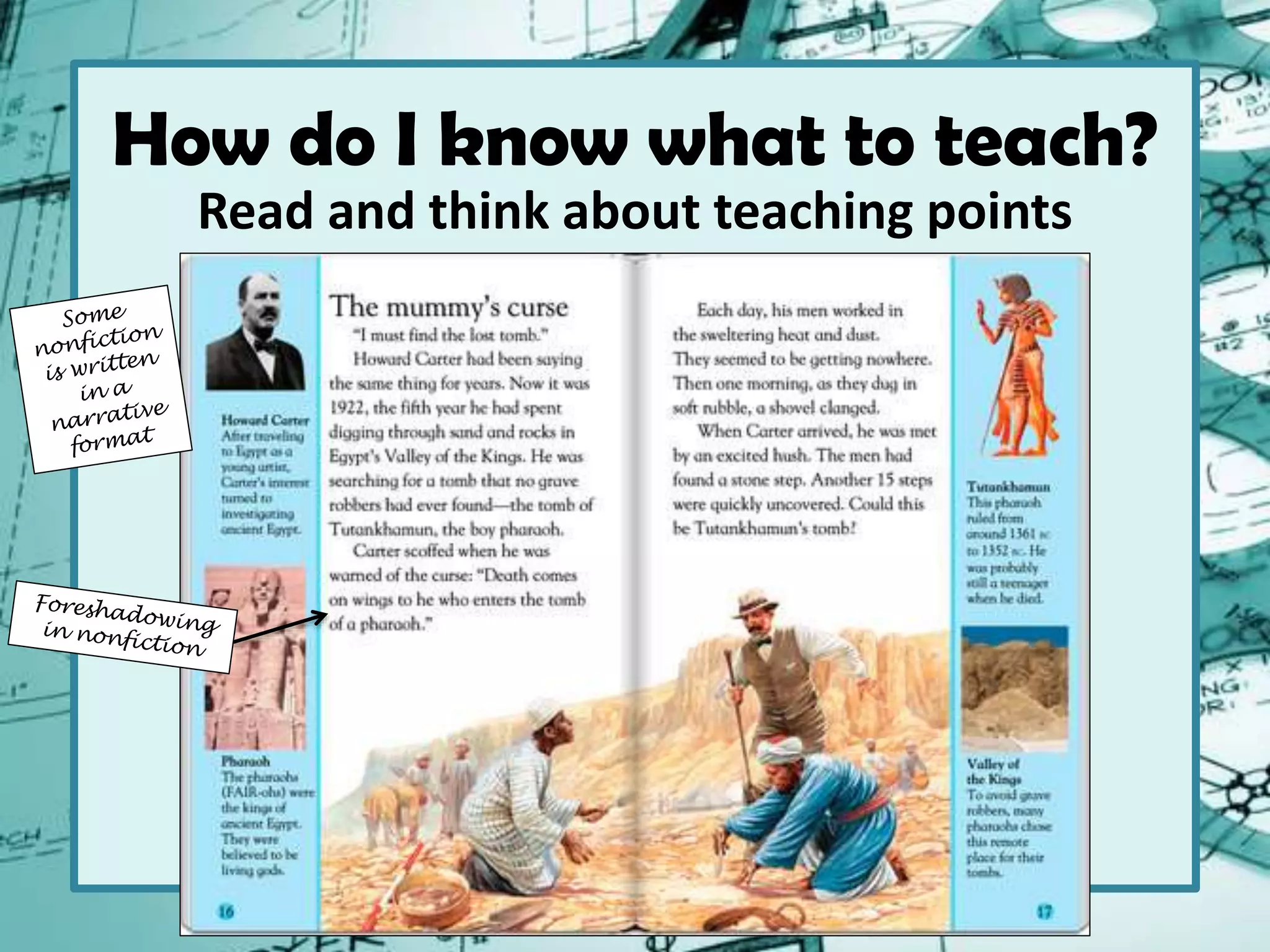
How do I know what to teach?
Read and think about teaching points
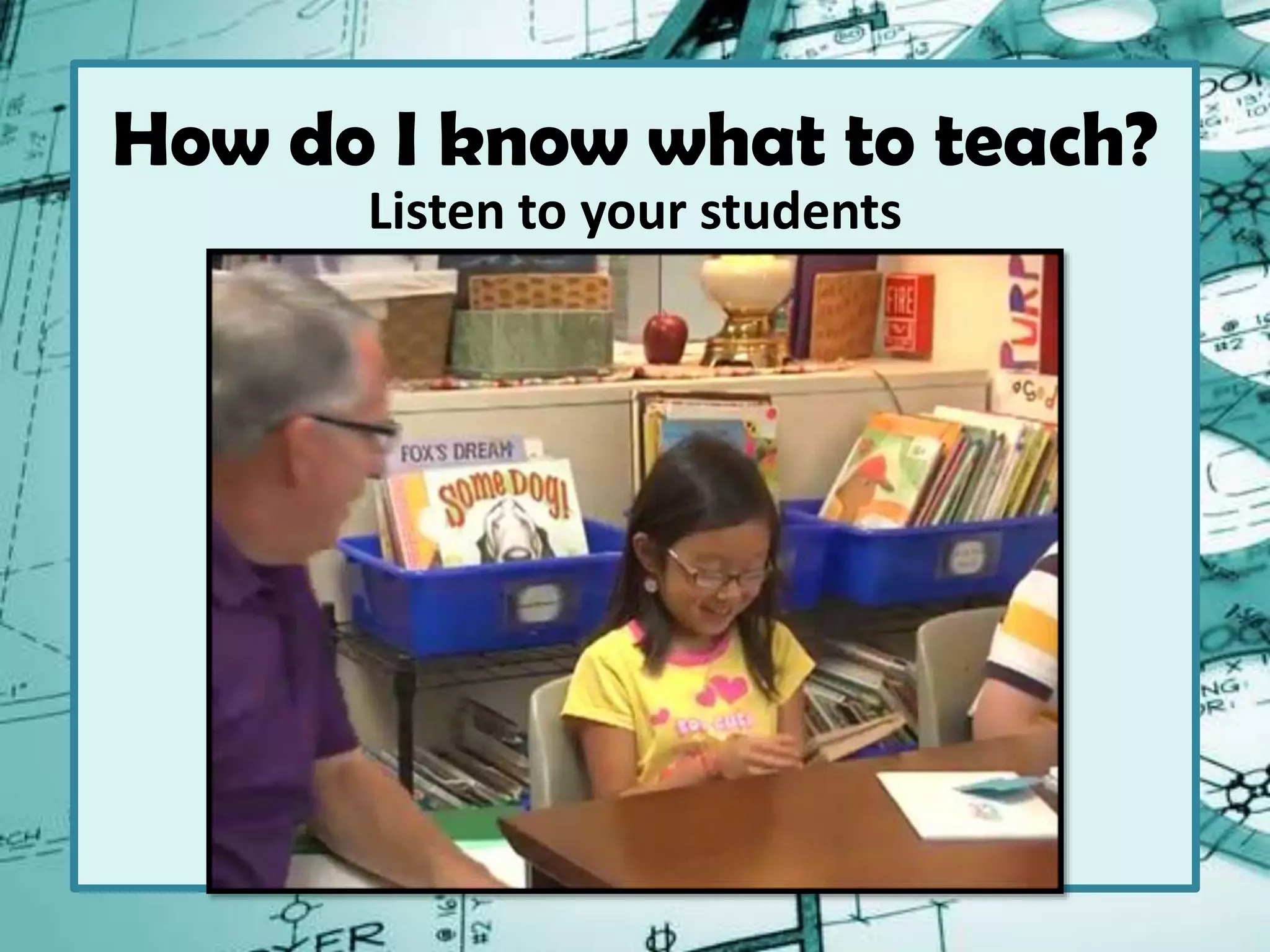
How do I know what to teach?
Listen to your students
How do I know what to teach?
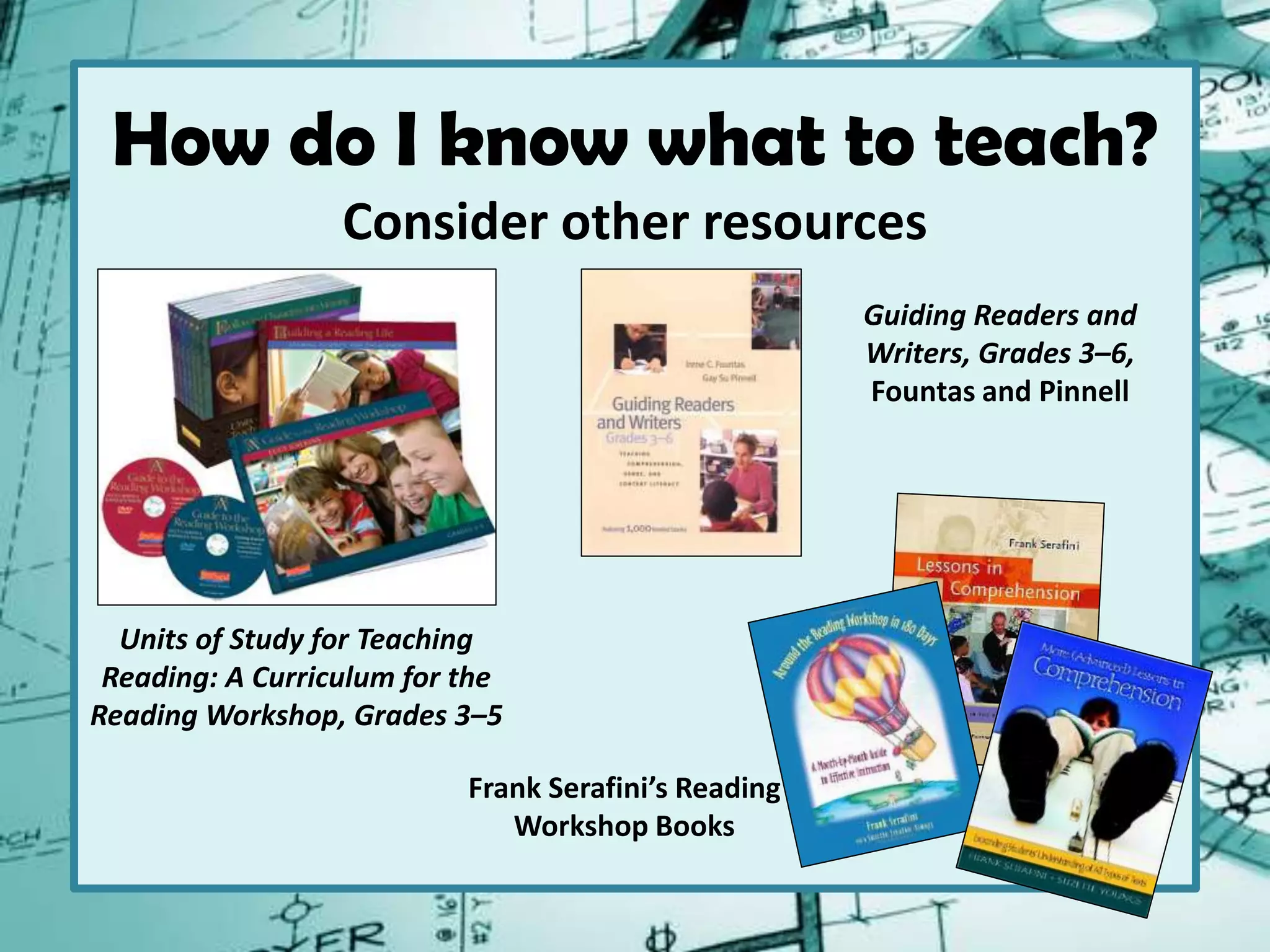
Consider other resources
Units of Study for Teaching
Reading: A Curriculum for the
Reading Workshop, Grades 3–5
Frank Serafini’s Reading
Workshop Books
Guiding Readers and
Writers, Grades 3–6,
Fountas and Pinnell
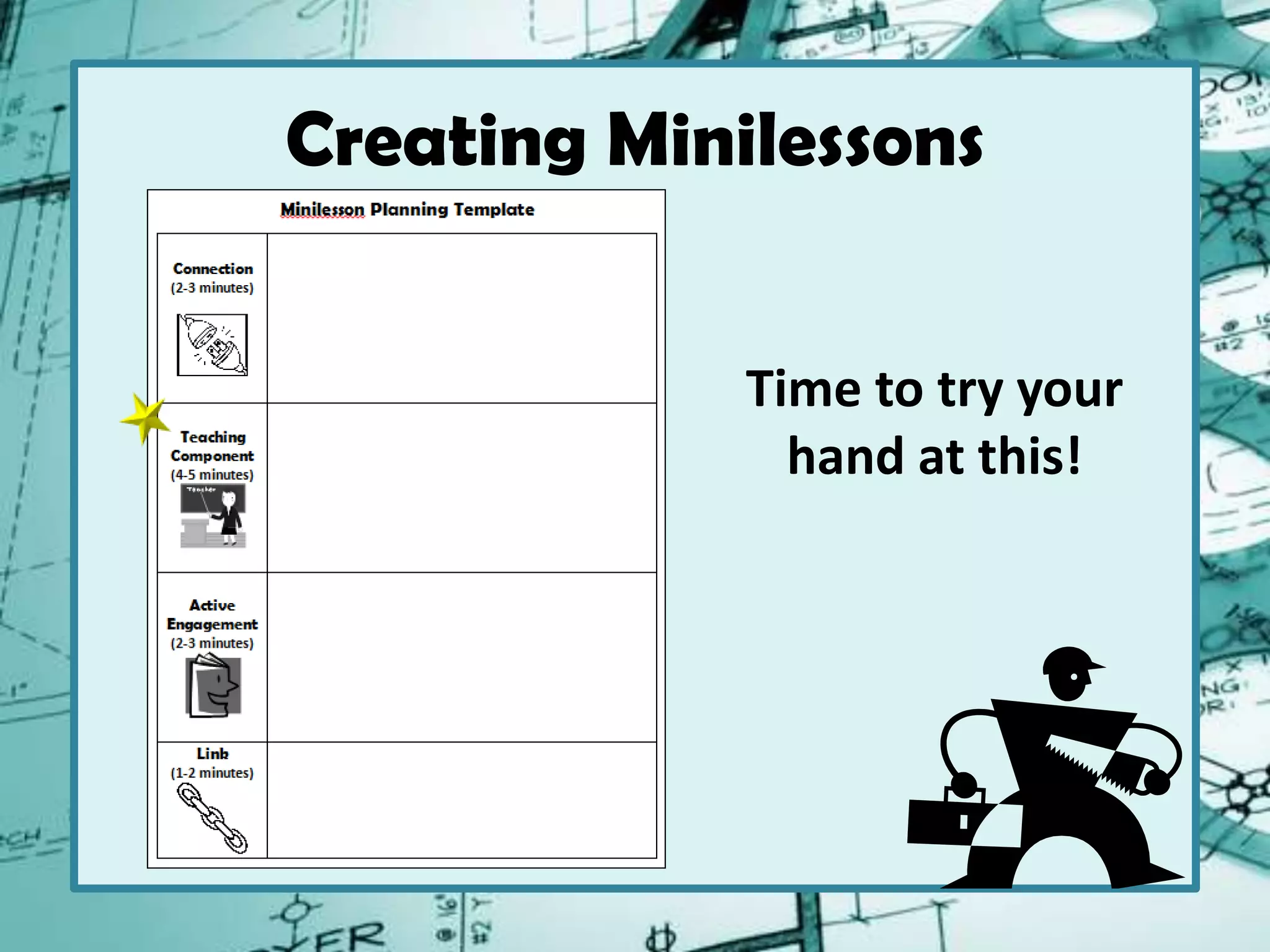
Creating Minilessons
Time to try your
hand at this!

Building better readers

  • 1.
    Building Better Readers ThroughStrong Minilessons Presented by Betsey Kennedy-Olotka Elizabeth.Kennedy@cobbk12.org Elizabeth Marsili Elizabeth.Marsili@cobbk12.org
  • 2.
    Essential Questions • Whatare the key components of a strong minilesson? • How do I design minilessons that impact readers in brief amounts of time?
  • 3.
    Daily 5 Schedule/ ReadingWorkshop Schedule Daily 5 Intermediate Schedule Minilesson Reading Workshop Schedule Work Session Closing Focus Lesson Focus Lesson Work Session Work Session Closing
  • 4.
    The Structure of ReadingWorkshop Place the words and phrases in the appropriate sections of the Reading Workshop Instructional Framework. MinilessonClosing Work Session
  • 5.
    The Structure of ReadingWorkshop: Work Session MinilessonClosing Work Session • 40+ minutes • Independent Reading • Guided Reading or Strategy Groups • Conferencing • Response to Reading • Daily 5 • Literacy Stations
  • 6.
    The Structure of ReadingWorkshop: Closing MinilessonClosing Work Session • 5-10 minutes • Review of Minilesson • Partner Share or Book Clubs
  • 7.
    The Structure of ReadingWorkshop: Minilesson MinilessonClosing Work Session • 5-10 minutes • Whole Class • Teacher-led • Specific Teaching Point • Read-Aloud/Think-Aloud • Develop Teaching Charts/Anchor Charts
  • 8.
    The 5 W’sof Minilessons • Who? • When? • Where? • What? • Why? Explicit instruction Authentic Learning Attention Spans Community Gradual Release
  • 9.
  • 10.
  • 11.
  • 12.
    A Closer Lookat the Architecture of a Minilesson 1. The Connection 2. The Teaching Component 3. Active Involvement 4. The Link
  • 13.
    The Connection • First2-3 minutes • Connect to previous lessons • Intimacy and Immediacy – Personal Stories/Student Examples – Work is important today and everyday • Specific Teaching Point & Procedure – “Today I’m going to teach you ____, by ________.”
  • 14.
    Teaching Component • Focuson something that is universal in reading • Revisit familiar read-alouds • Demonstrate (Think Aloud) • Teach small • Have students think along with you • Remind students that they should try this too
  • 15.
    Active Involvement • 2-3minutes of practice • Use a specifically chosen portion of a shared text • Every child is actively involved, not just listening
  • 16.
    The Link • Restatewhat children should have learned • Remind students that this will always be important for reading • Add teaching point to compilation chart • Quickly review previous lessons • “Off you go.”
  • 17.
    Minilesson in Action Checkoff the elements you see included in this minilesson as you watch.
  • 18.
  • 19.
    How do Iknow what to teach? Think about your own reading
  • 20.
    How do Iknow what to teach? Read and think about teaching points
  • 21.
    How do Iknow what to teach? Listen to your students
  • 22.
    How do Iknow what to teach? Consider other resources Units of Study for Teaching Reading: A Curriculum for the Reading Workshop, Grades 3–5 Frank Serafini’s Reading Workshop Books Guiding Readers and Writers, Grades 3–6, Fountas and Pinnell
  • 23.
    Creating Minilessons Time totry your hand at this!