History in Focus: 
Using Images to Teach Literacy Skills in Social 
Studies 
Presented by Betsey Kennedy-Olotka 
Elizabeth.Kennedy@cobbk12.org
All materials available at 
www.symbaloo.com/mix/ 
HistoryInFocus
Social Studies Meets Literacy 
• Social Studies offers students a perfect 
opportunity to practice the skills they are 
learning in Reading and Writing 
Workshop.
Why do images matter? 
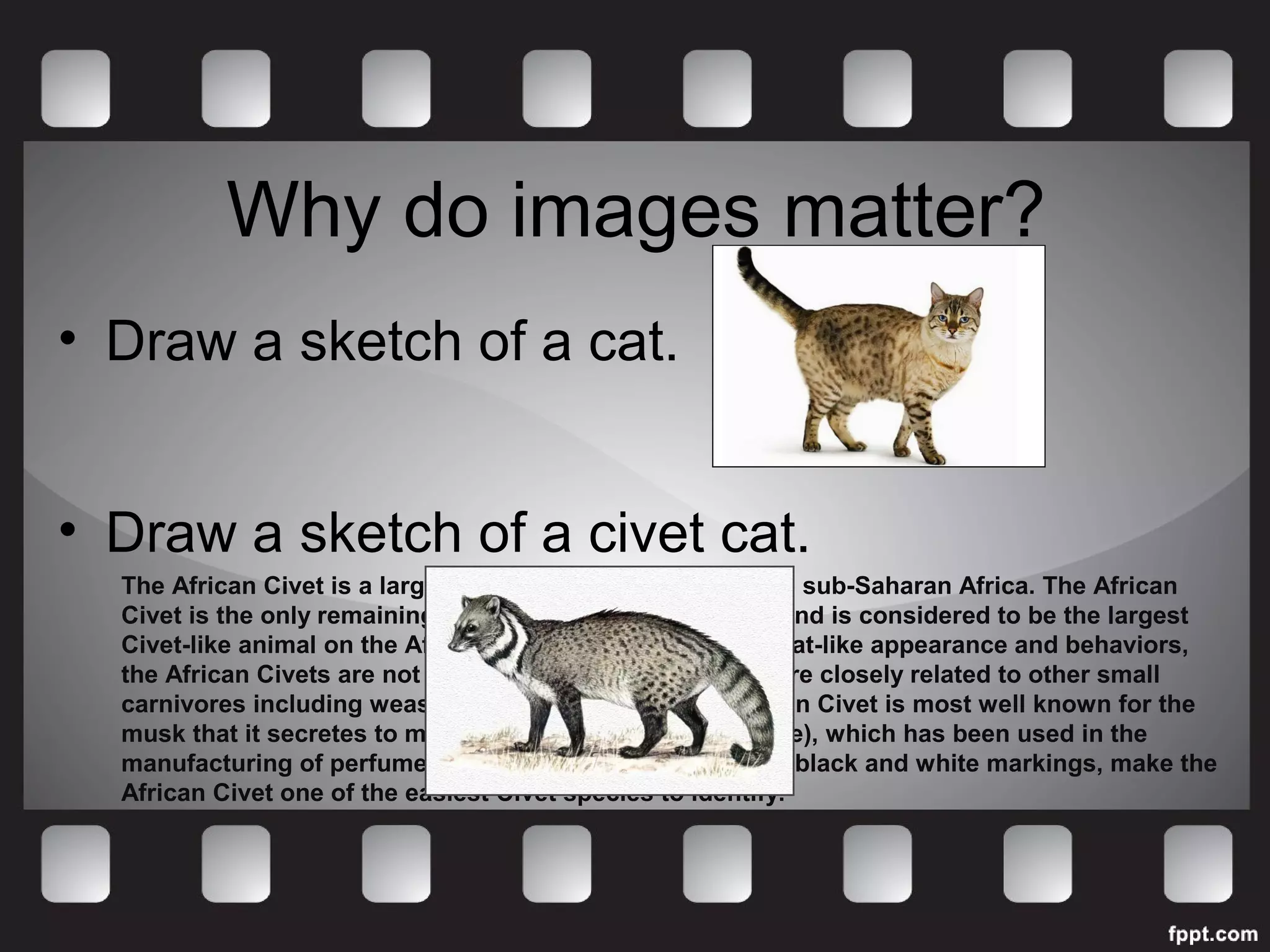
• Draw a sketch of a cat. 
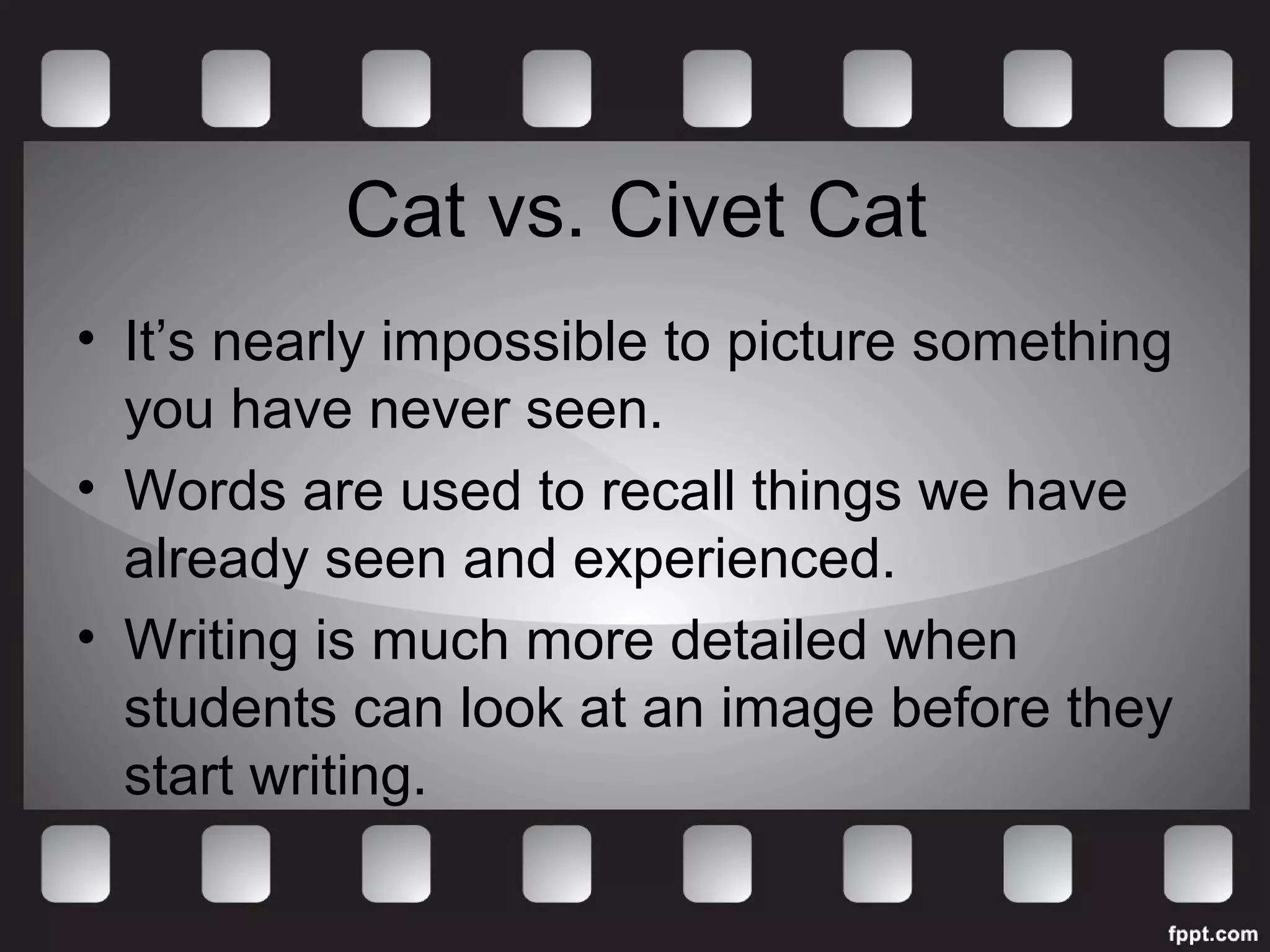
• Draw a sketch of a civet cat. 
The African Civet is a large species of Civet found across sub-Saharan Africa. The African 
Civet is the only remaining member in its genetic group and is considered to be the largest 
Civet-like animal on the African continent. Despite their cat-like appearance and behaviors, 
the African Civets are not felines at all but are in fact, more closely related to other small 
carnivores including weasels and mongooses. The African Civet is most well known for the 
musk that it secretes to mark it's territory (called Civetone), which has been used in the 
manufacturing of perfumes for centuries, and its striking black and white markings, make the 
African Civet one of the easiest Civet species to identify.
Cat vs. Civet Cat 
• It’s nearly impossible to picture something 
you have never seen. 
• Words are used to recall things we have 
already seen and experienced. 
• Writing is much more detailed when 
students can look at an image before they 
start writing.
Why do images matter? 
• The brain processes visual information 60,000 faster 
than text. 
- 3M Corporation, 2001 
• Visual aids in the classroom improve learning by up 
to 400 percent. 
- 3M Corporation, 2001 
• Approximately 65 percent of the population are 
visual learners. 
- Mind Tools, 1998
Why do images matter? 
• Anchor images increase recall and 
retention by an average of 42% 
• Anchor images increase transfer of 
knowledge (long-term learning and 
application) by 89% 
- Mayer, R.E., 2001
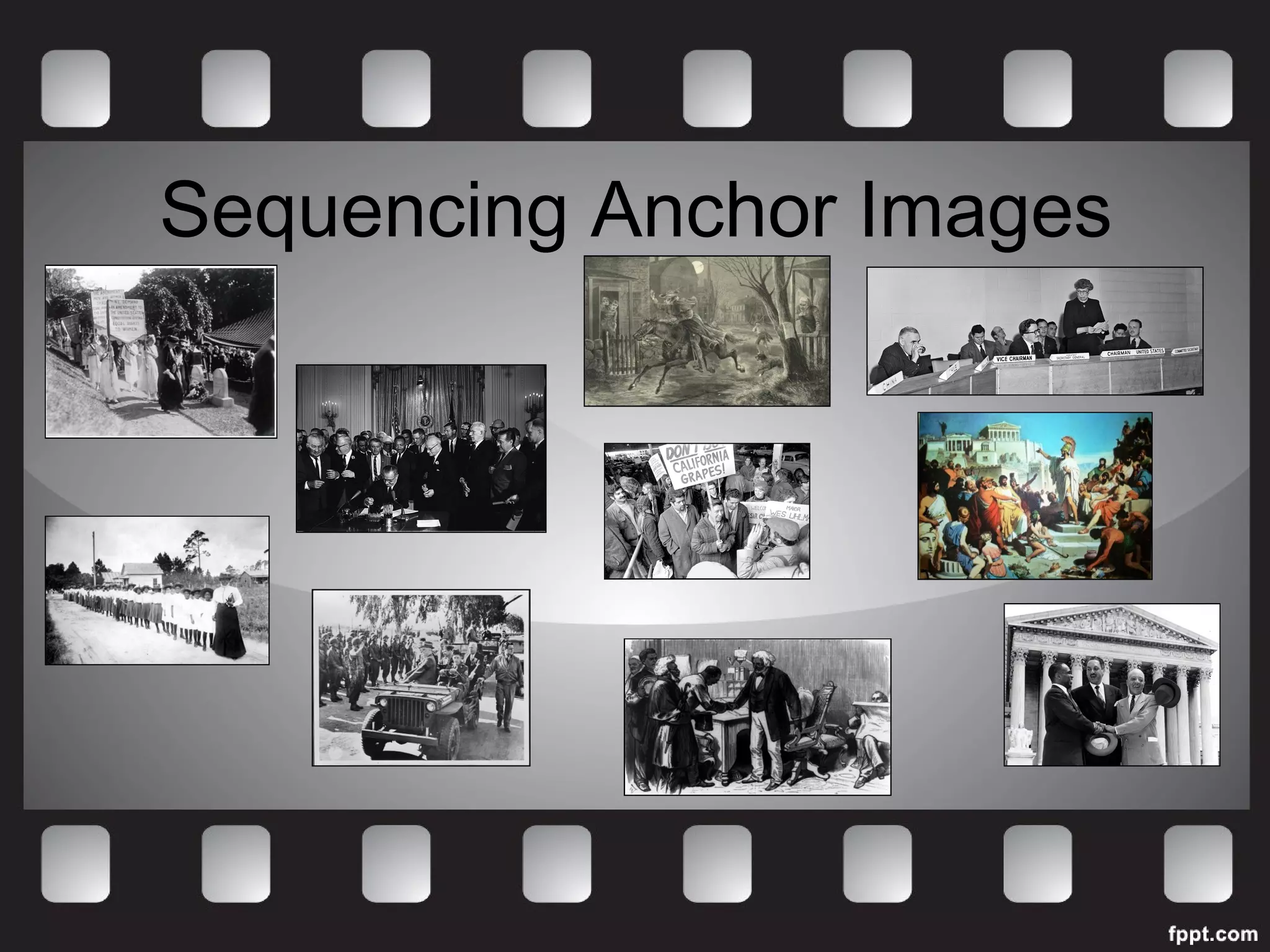
Sequencing Anchor Images
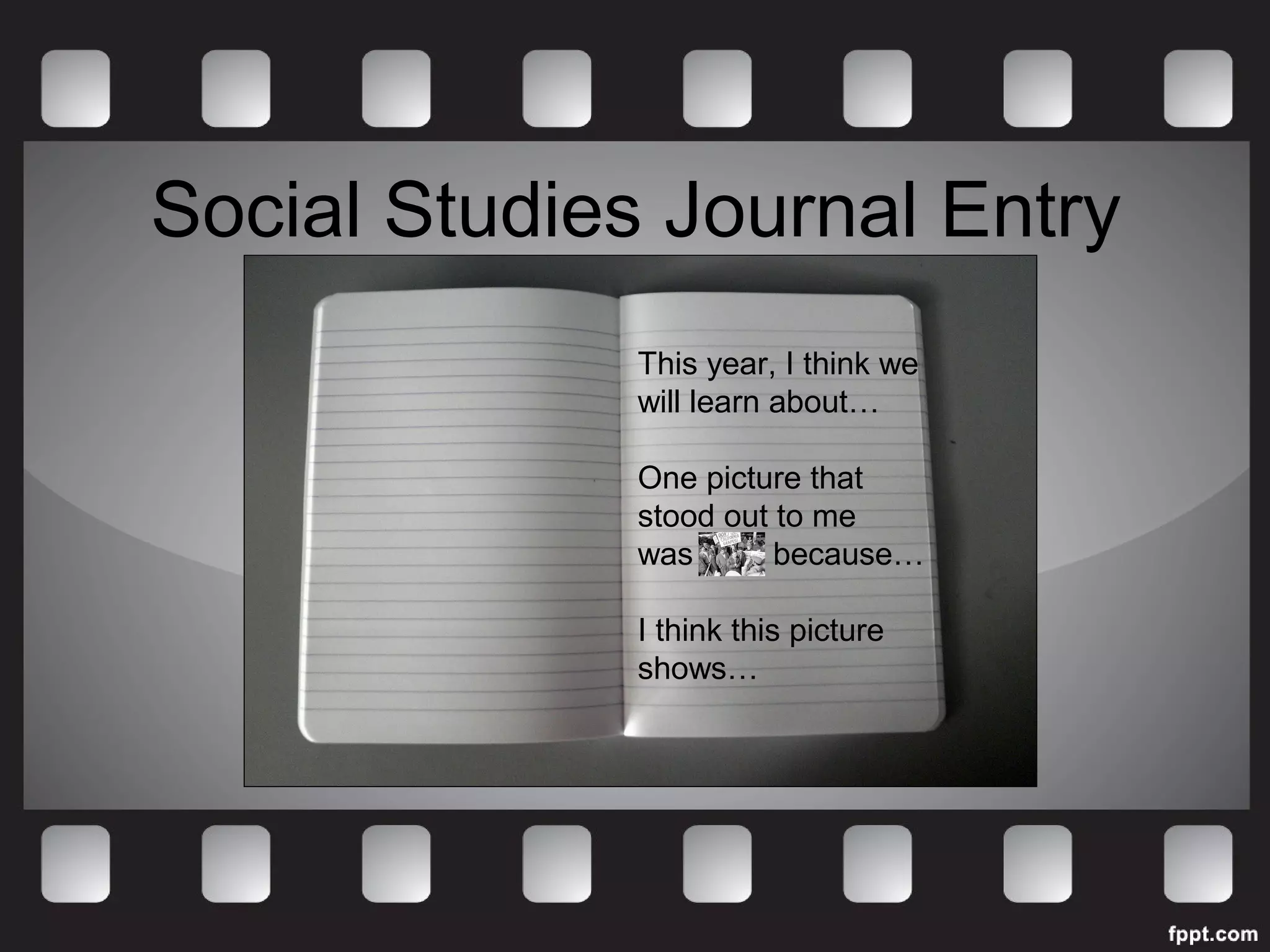
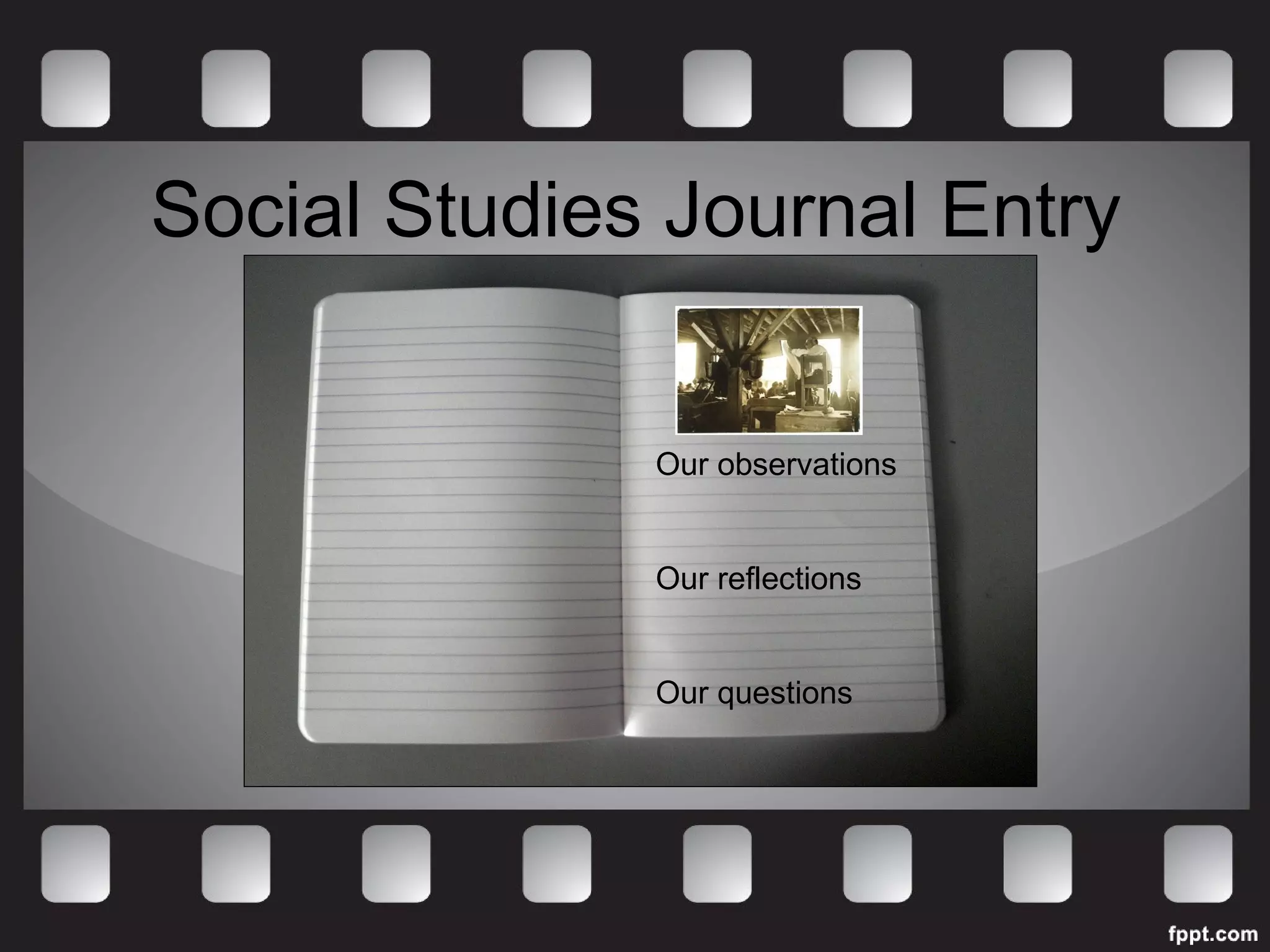
Social Studies Journal Entry 
This year, I think we 
will learn about… 
One picture that 
stood out to me 
was because… 
I think this picture 
shows…
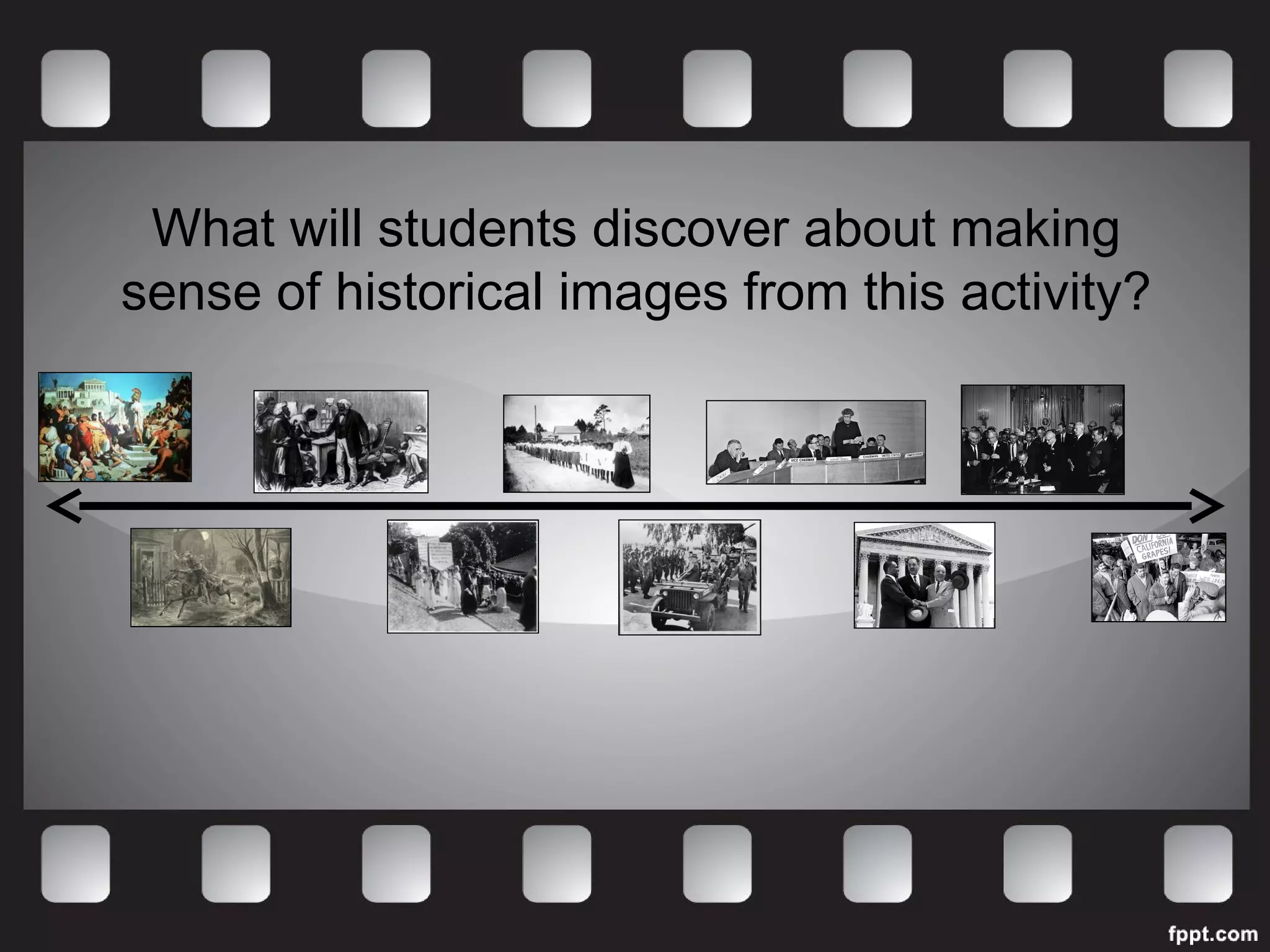
What will students discover about making 
sense of historical images from this activity?
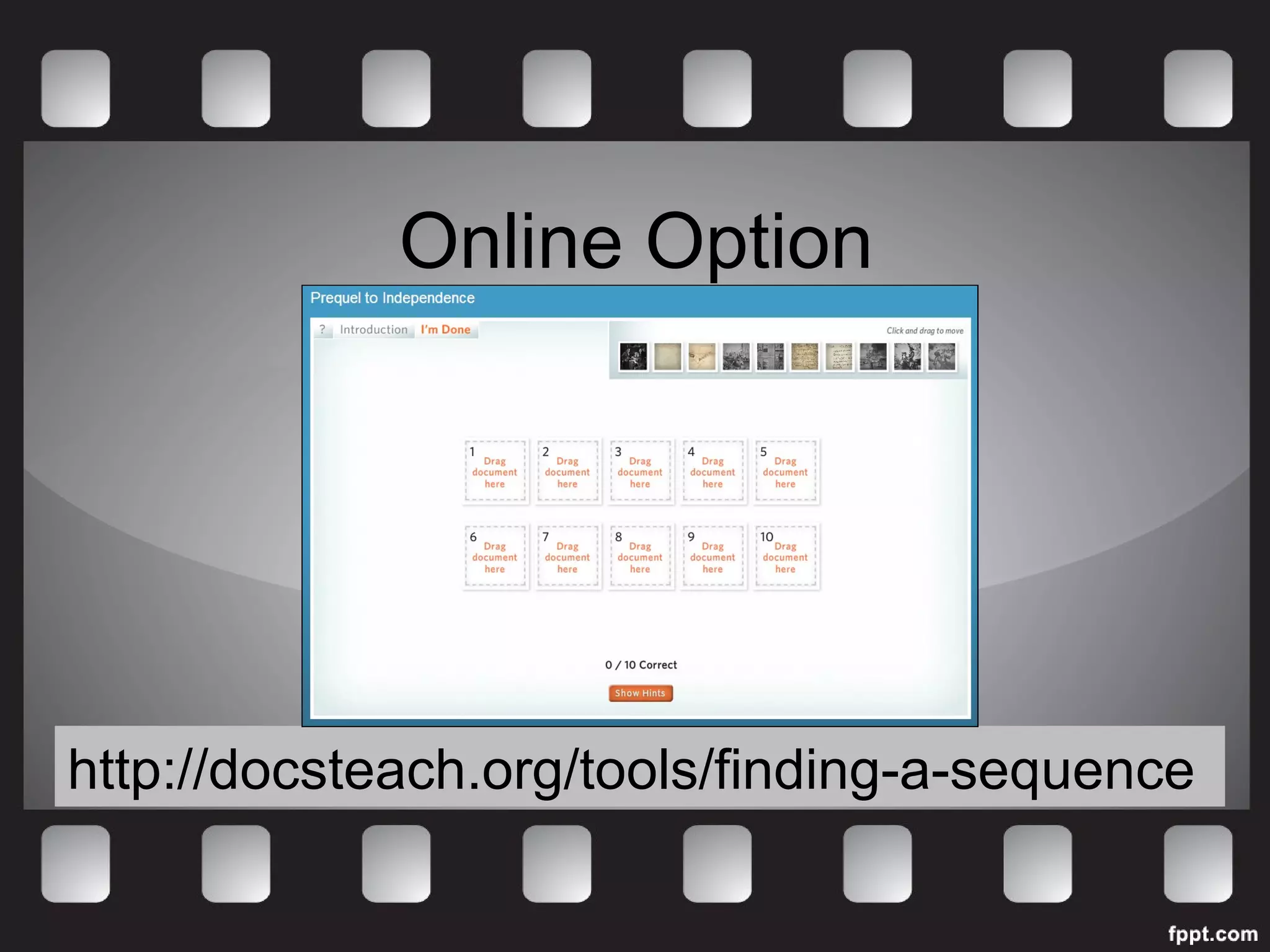
Online Option 
http://docsteach.org/tools/finding-a-sequence
Common Core Connection 
CCSS.ELA-LITERACY.CCRA.R.1 
Read closely to determine what the text says 
explicitly and to make logical inferences from 
it; cite specific textual evidence when writing 
or speaking to support conclusions drawn 
from the text.
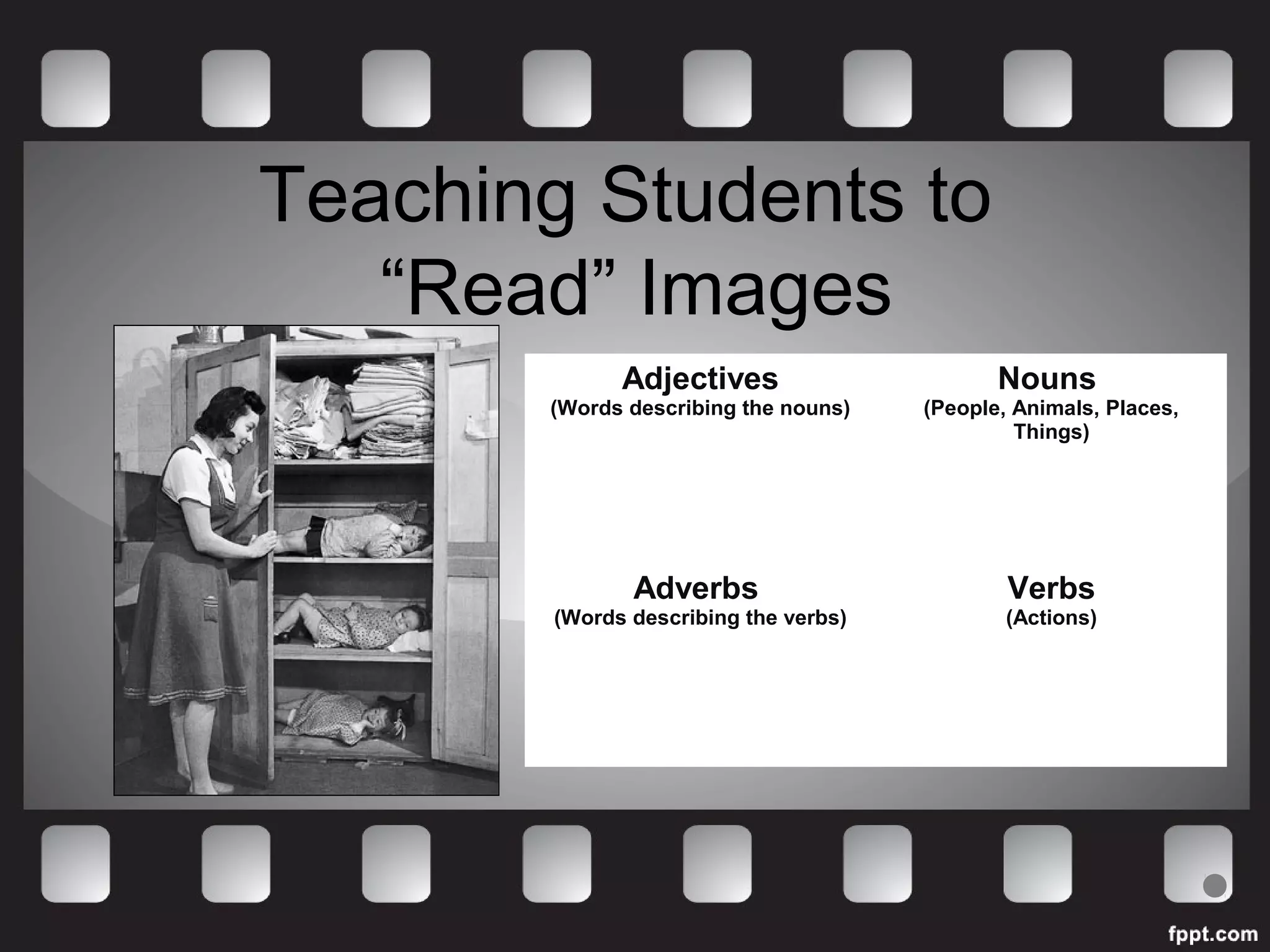
Teaching Students to 
“Read” Images 
Adjectives 
(Words describing the nouns) 
Nouns 
(People, Animals, Places, 
Things) 
Adverbs 
(Words describing the verbs) 
Verbs 
(Actions)
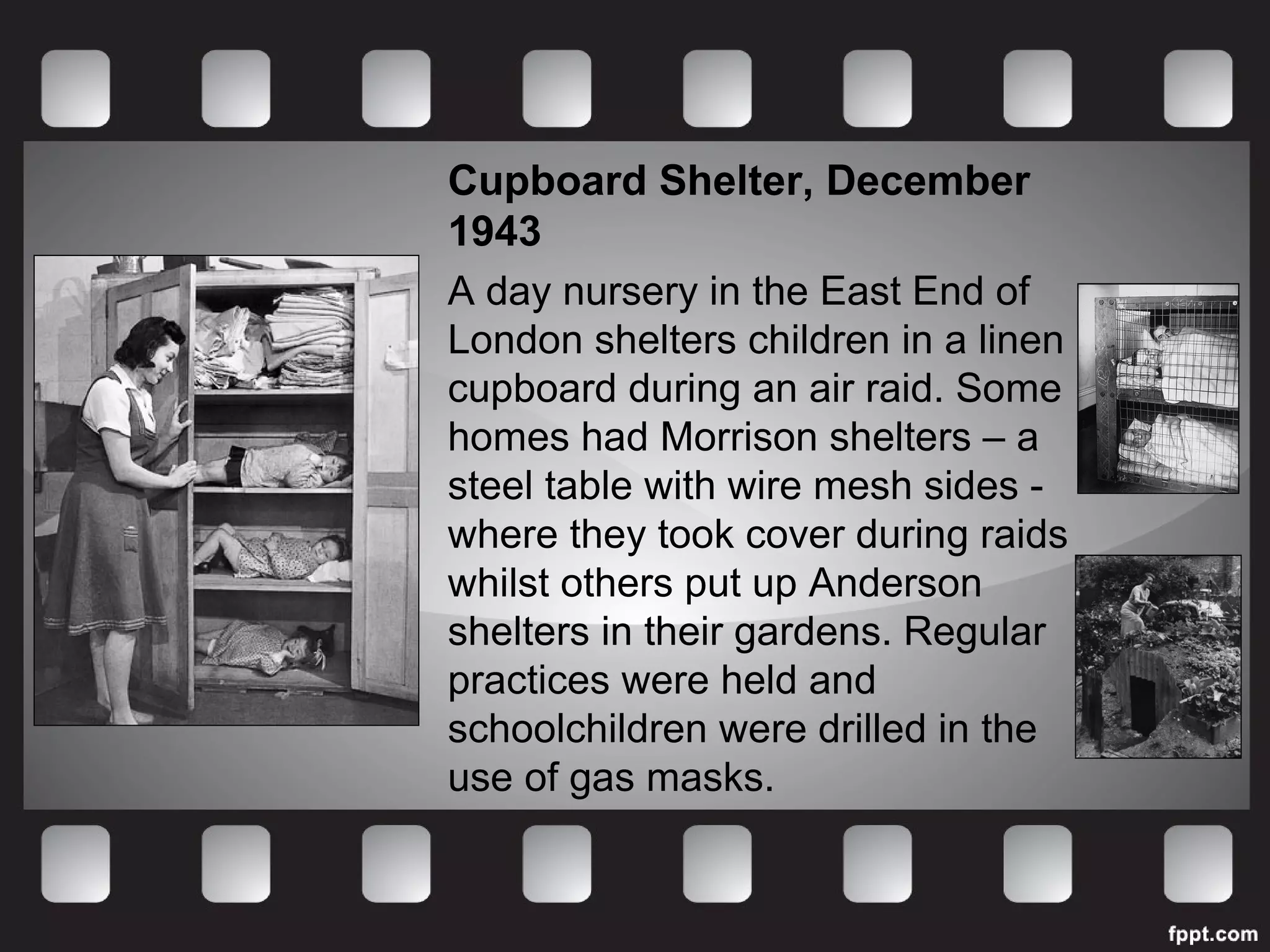
Cupboard Shelter, December 
1943 
A day nursery in the East End of 
London shelters children in a linen 
cupboard during an air raid. Some 
homes had Morrison shelters – a 
steel table with wire mesh sides - 
where they took cover during raids 
whilst others put up Anderson 
shelters in their gardens. Regular 
practices were held and 
schoolchildren were drilled in the 
use of gas masks.
Thinking About Images
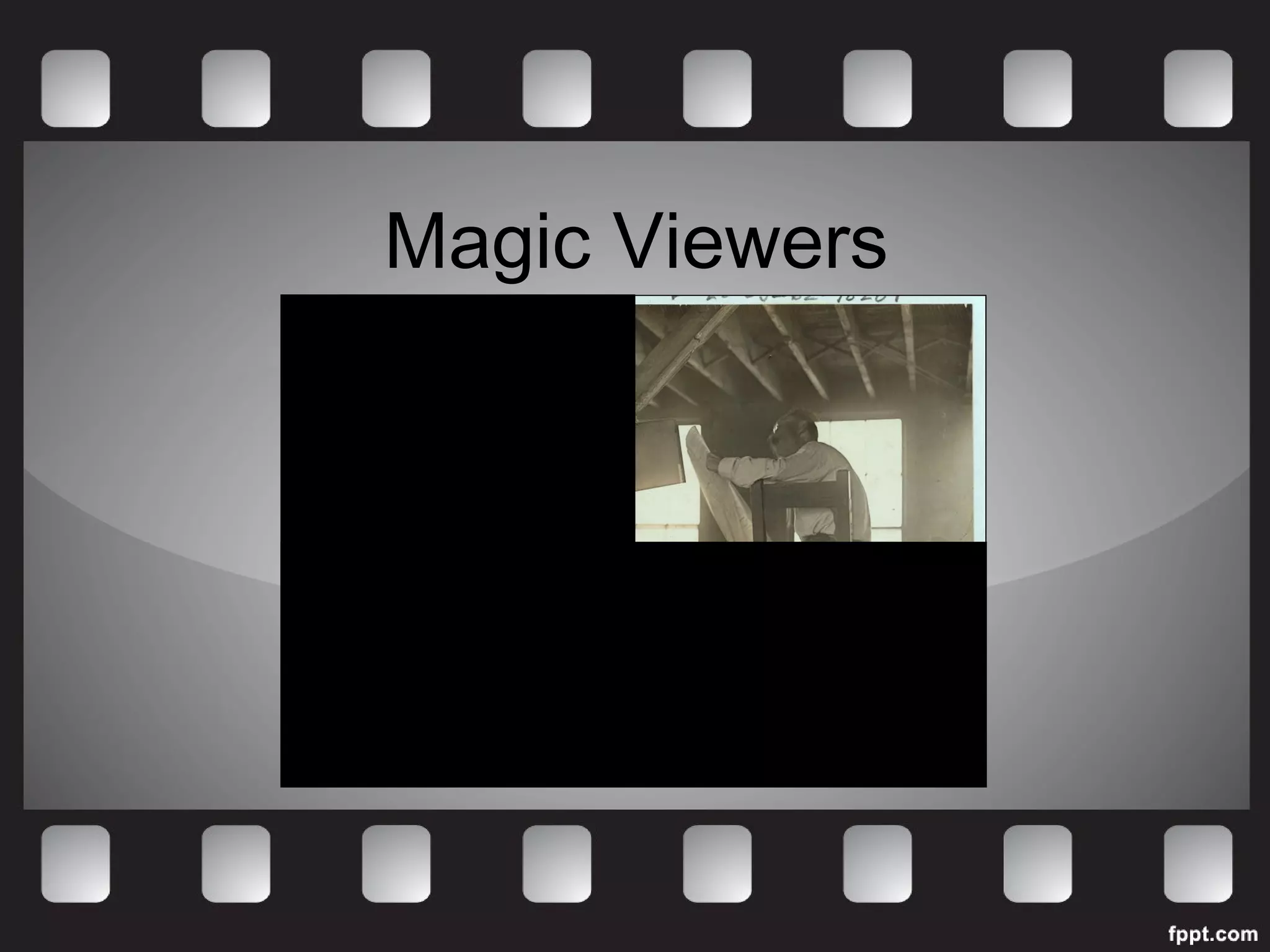
Magic Viewers
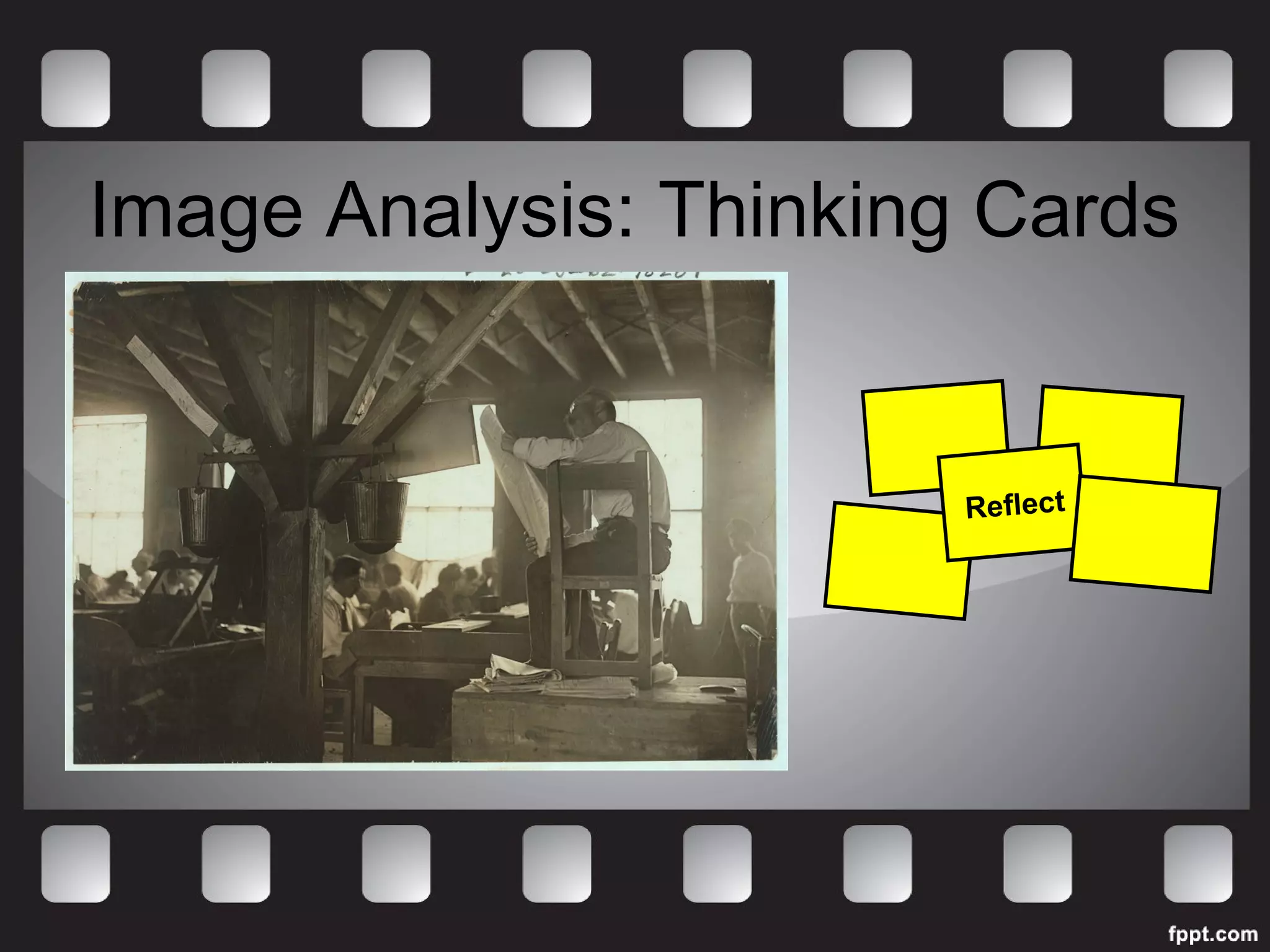
Image Analysis: Thinking Cards 
Observe
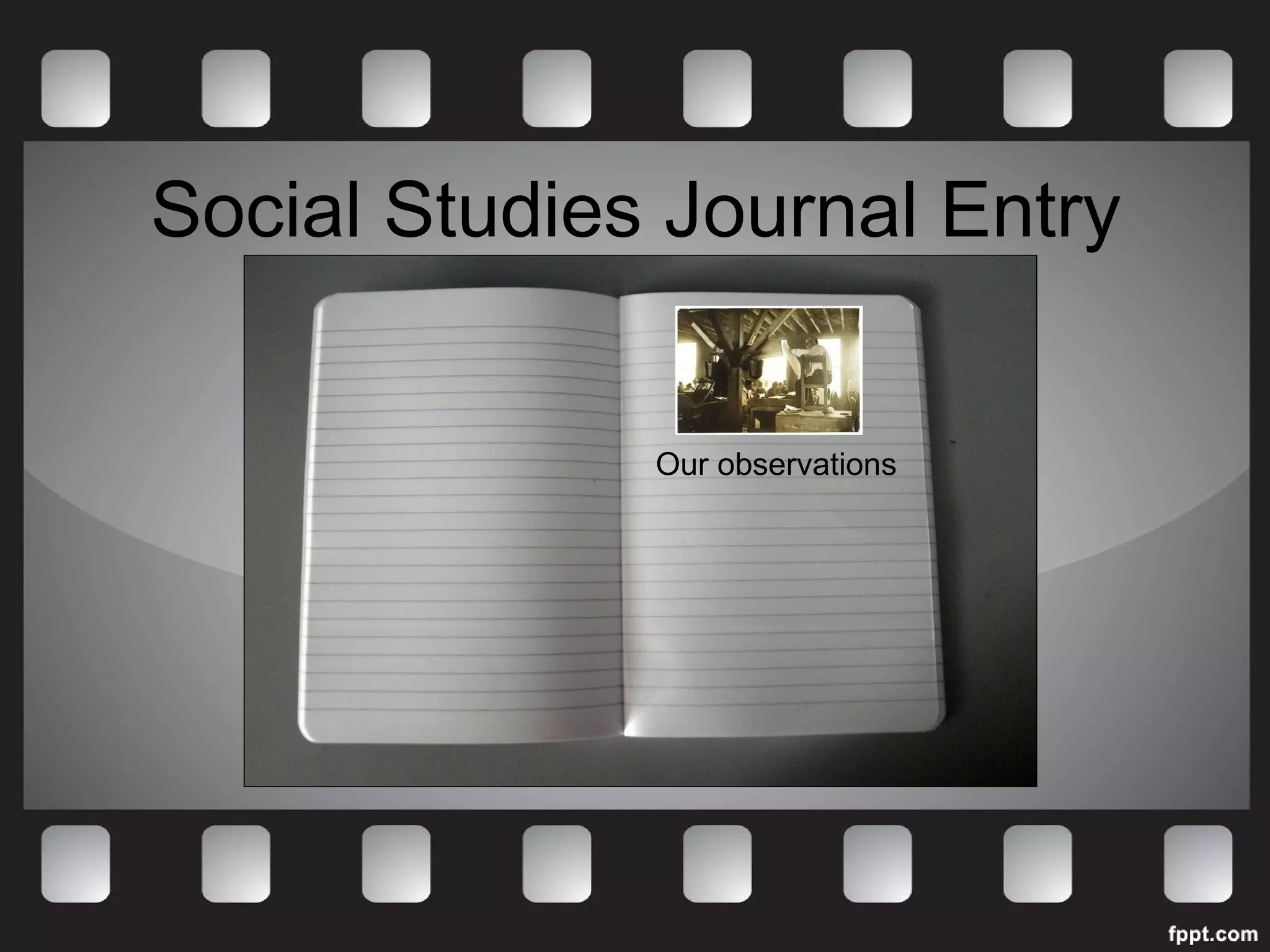
Social Studies Journal Entry 
Our observations
Image Analysis: Thinking Cards 
Reflect
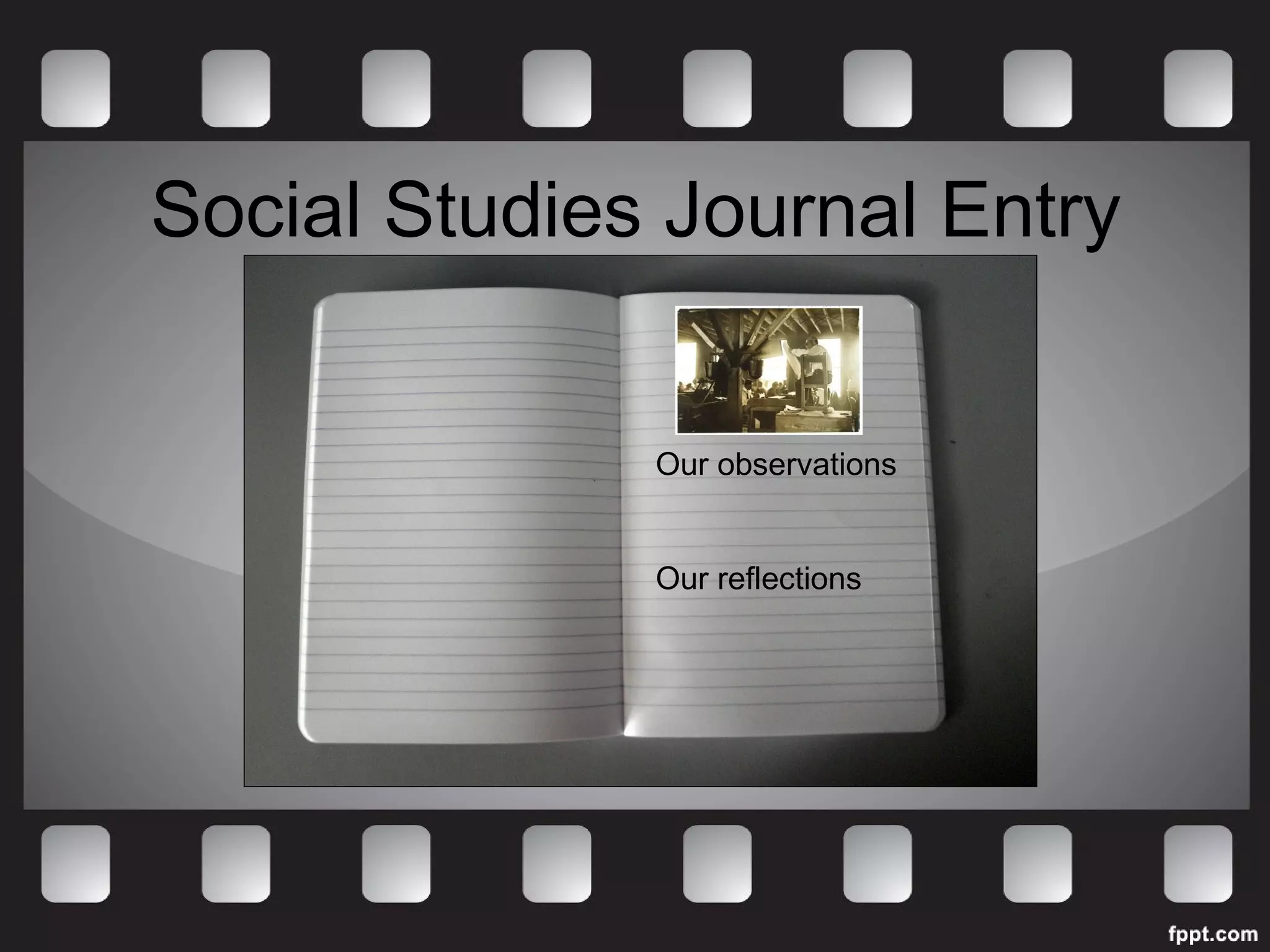
Social Studies Journal Entry 
Our observations 
Our reflections
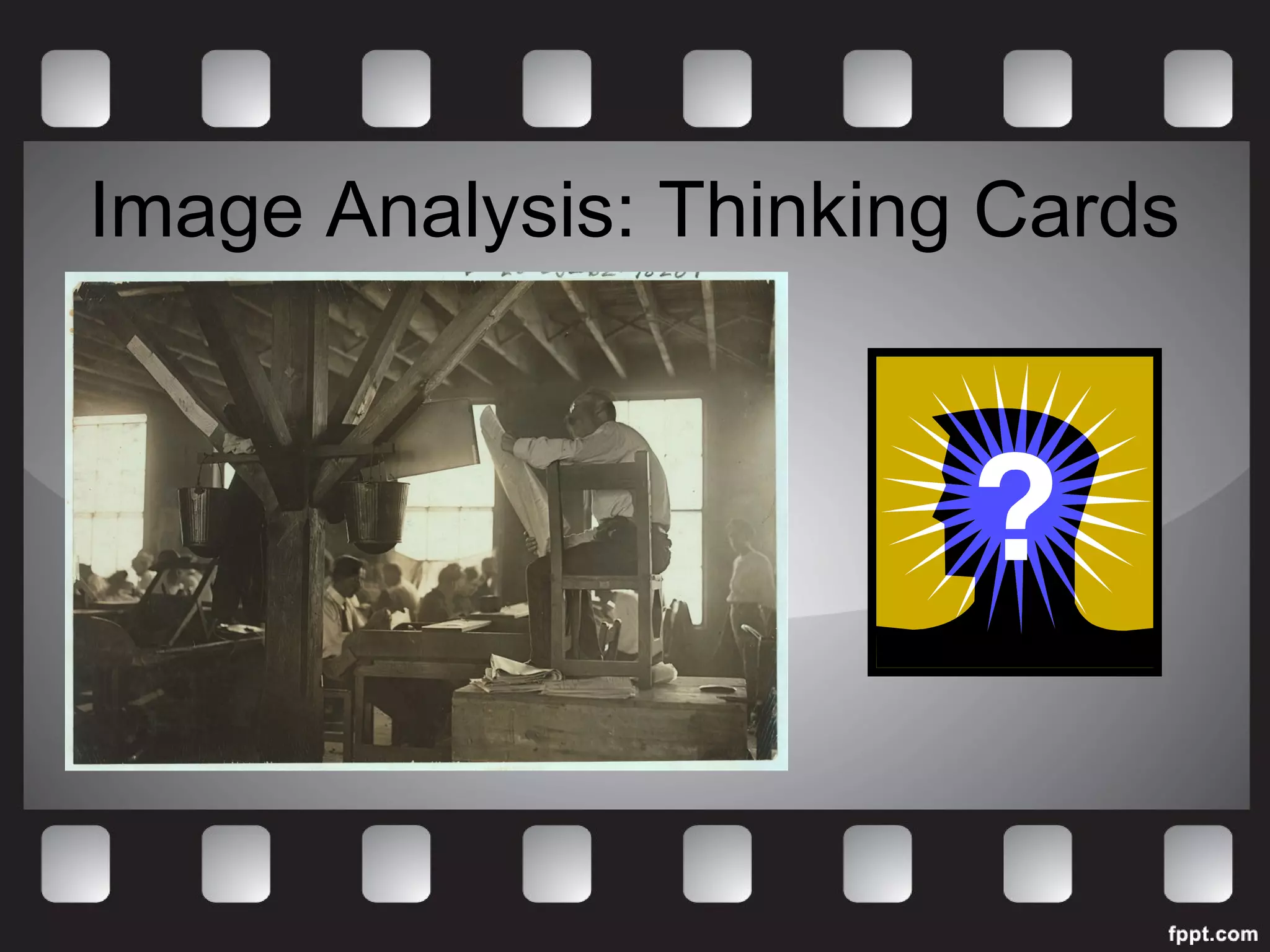
Image Analysis: Thinking Cards
Social Studies Journal Entry 
Our observations 
Our reflections 
Our questions
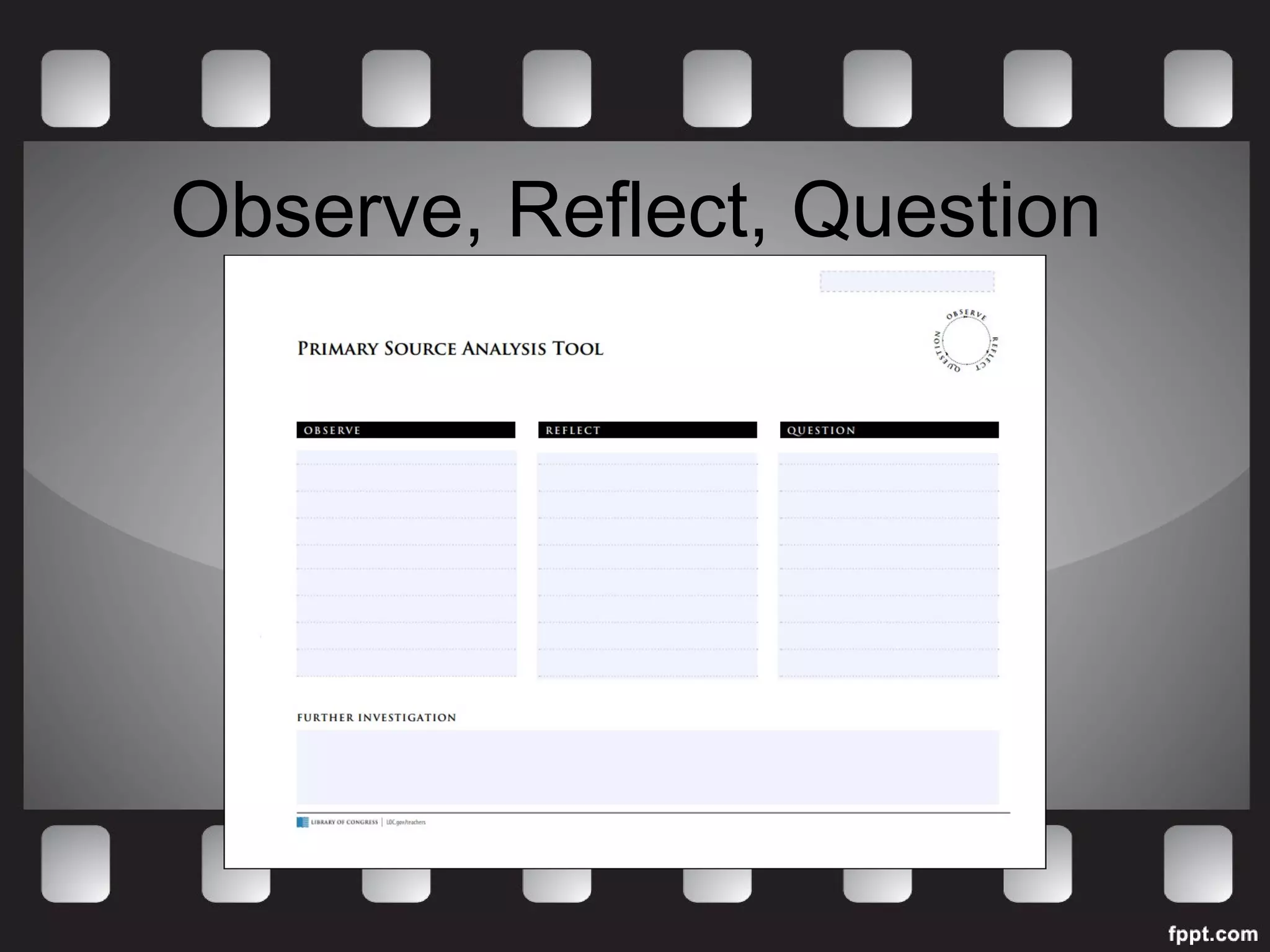
Observe, Reflect, Question
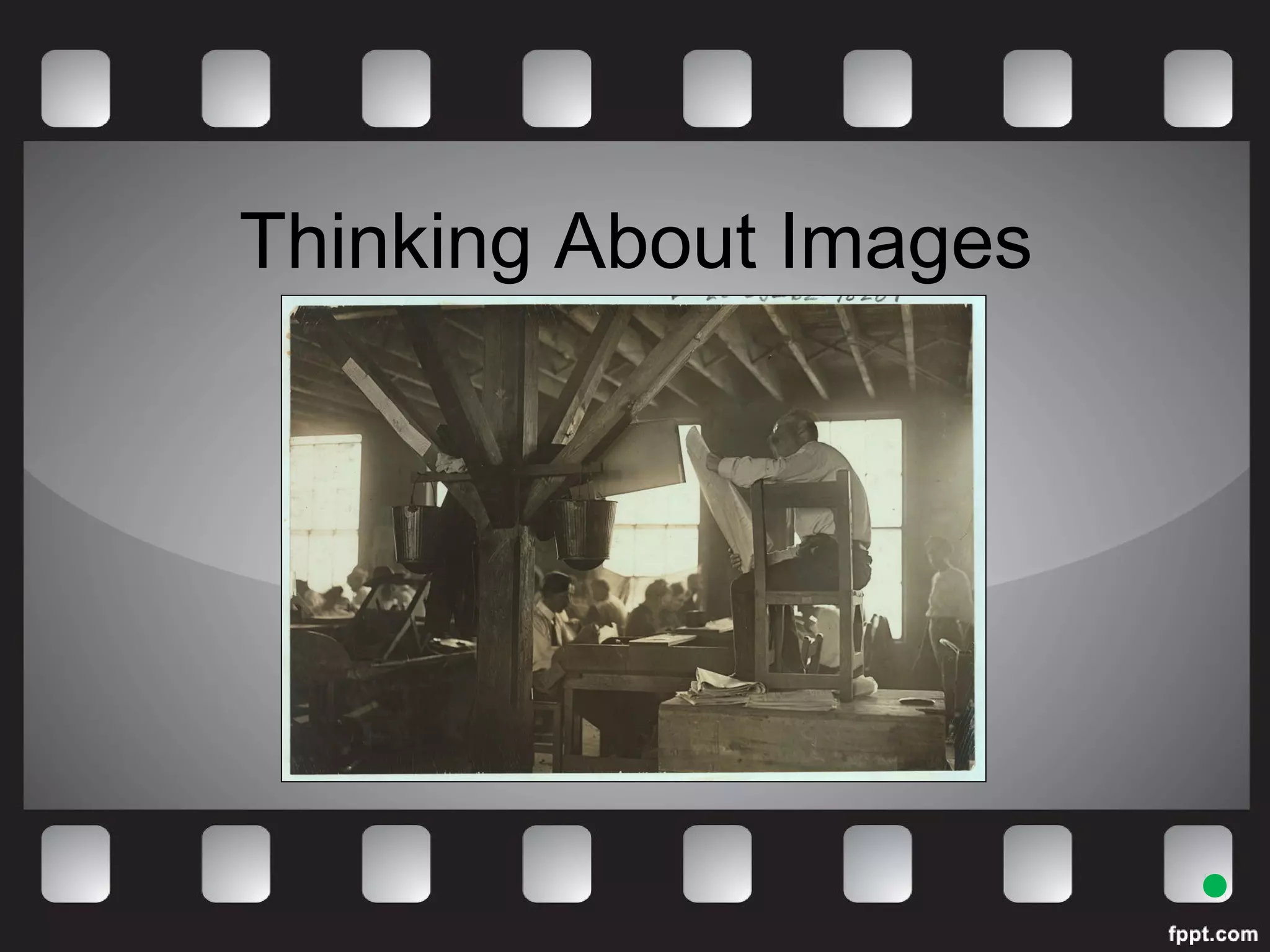
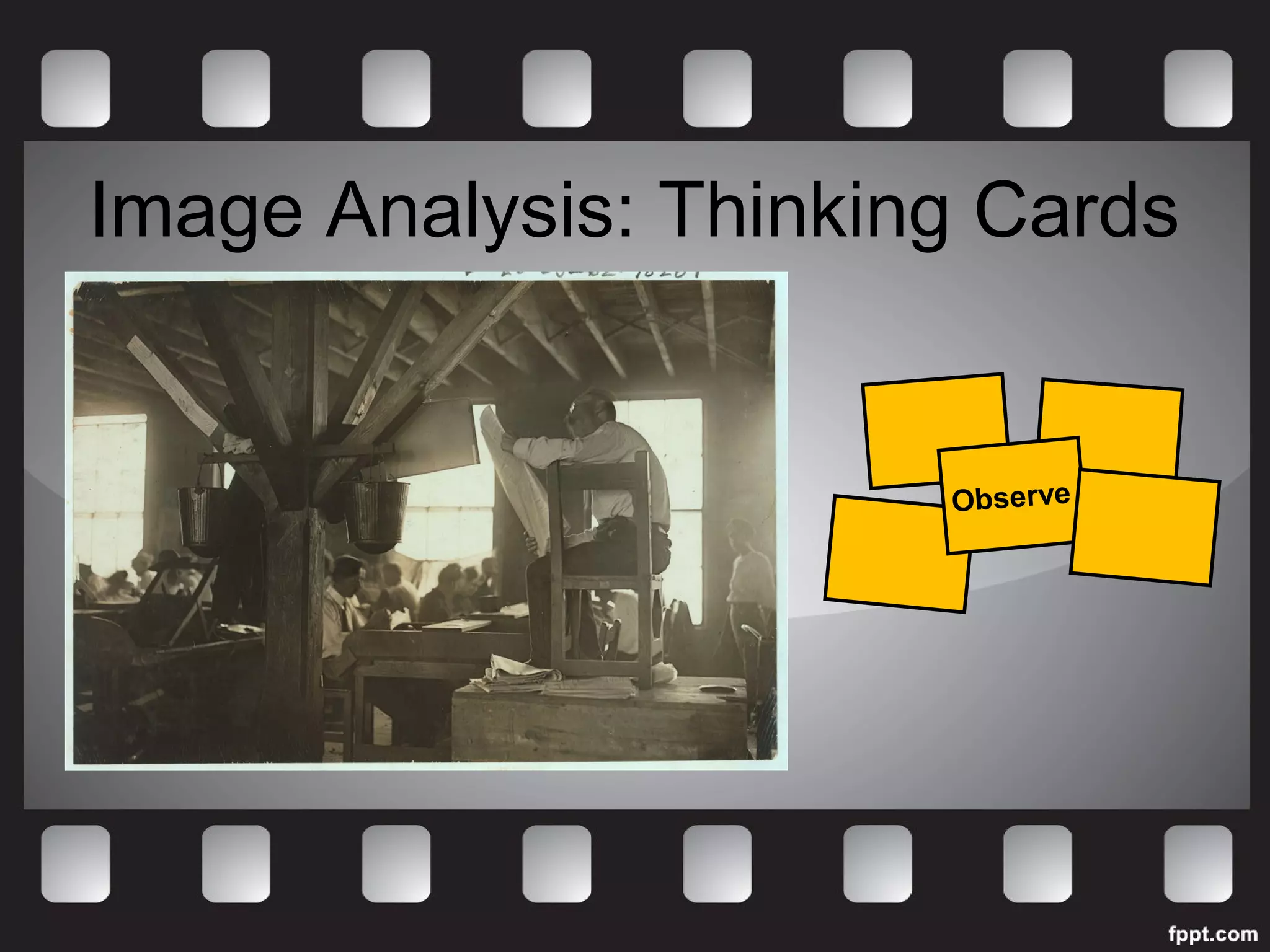
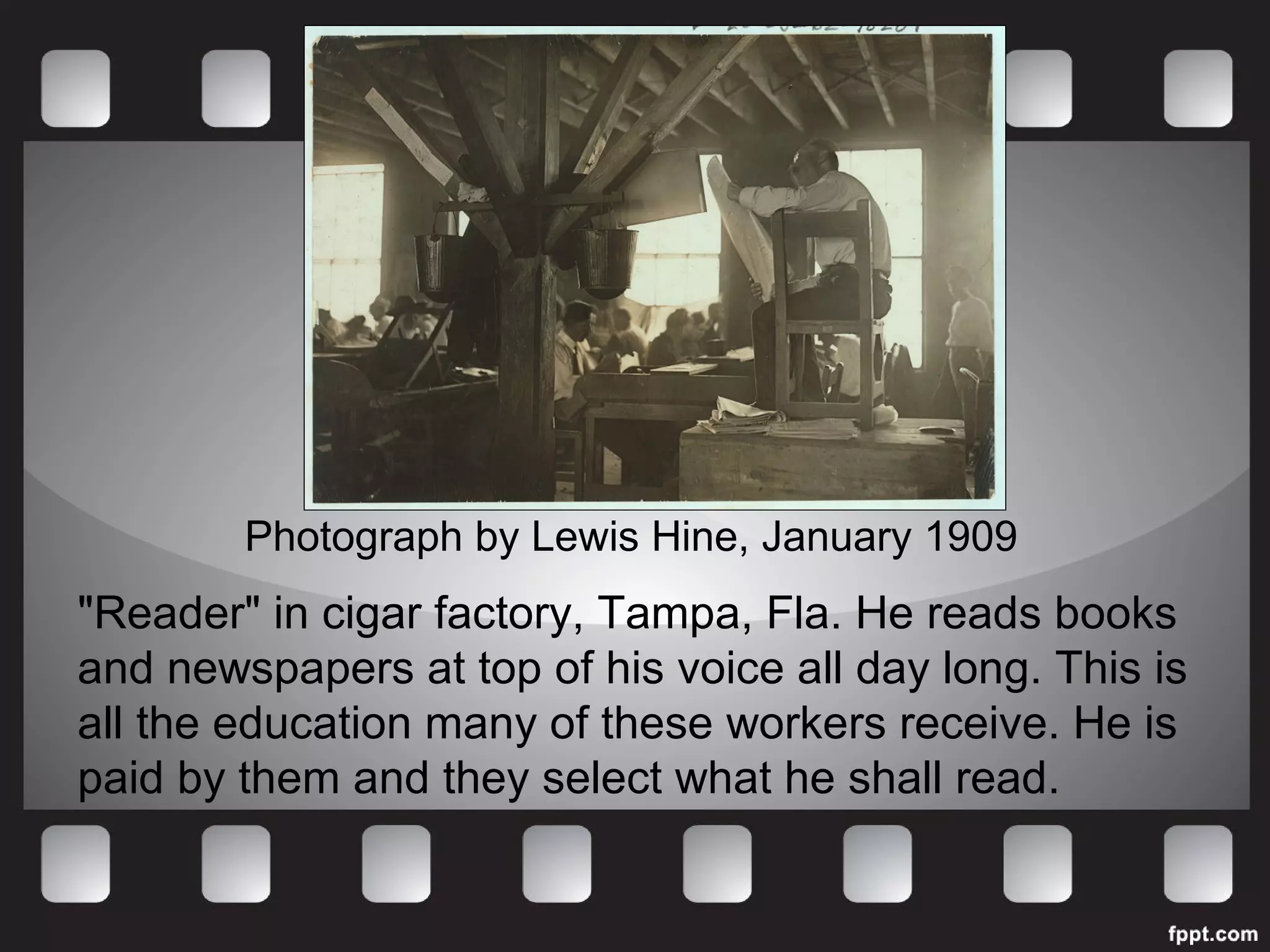
Photograph by Lewis Hine, January 1909 
"Reader" in cigar factory, Tampa, Fla. He reads books 
and newspapers at top of his voice all day long. This is 
all the education many of these workers receive. He is 
paid by them and they select what he shall read.
Common Core Connection 
CCSS.ELA-LITERACY.CCRA.R.7 
Integrate and evaluate content presented in 
diverse media and formats, including visually 
and quantitatively, as well as in words.
Annotate the Photo 
What do you 
see? 
What 
thoughts 
come to your 
mind? 
What 
questions do 
you have? 
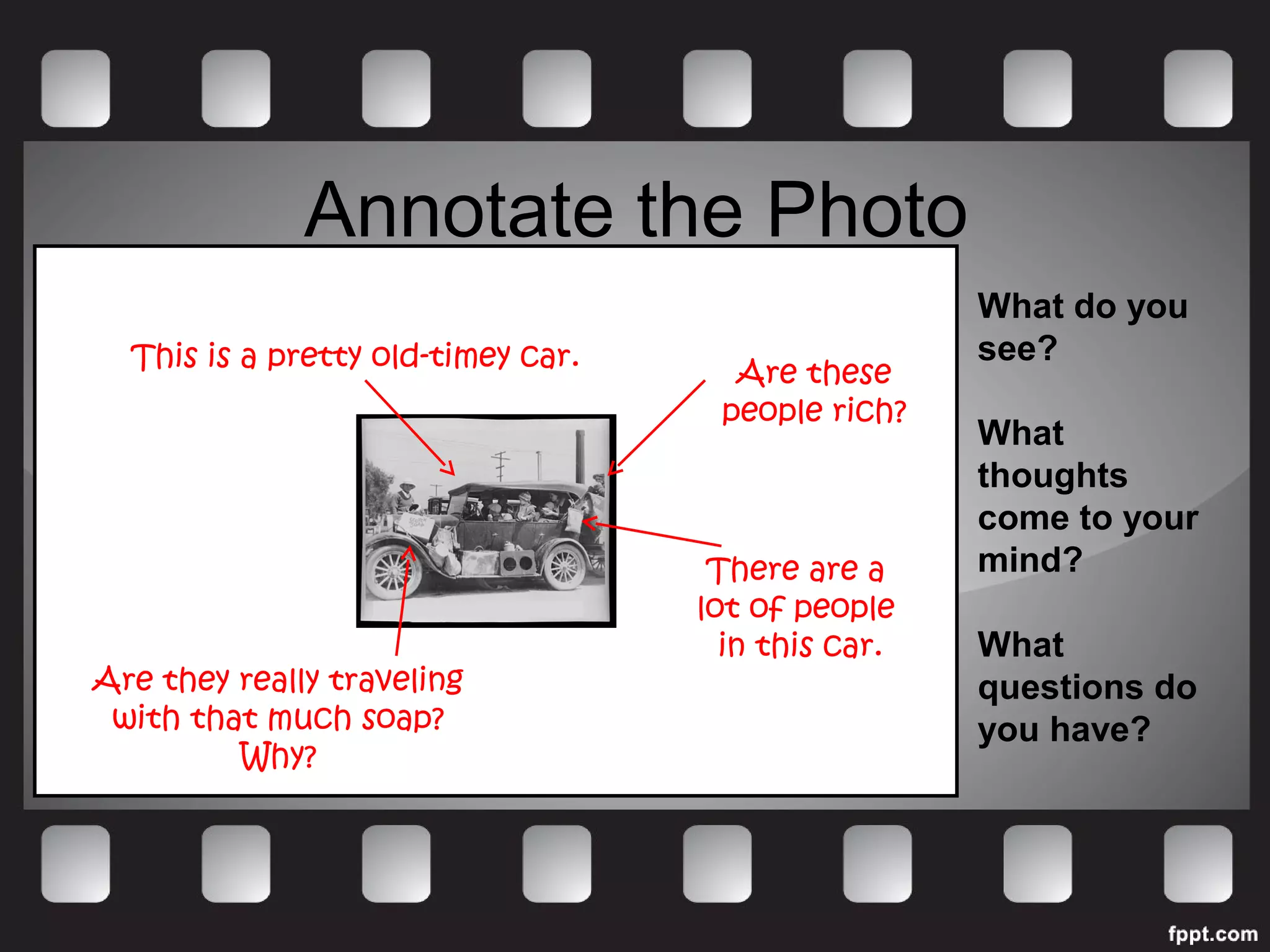
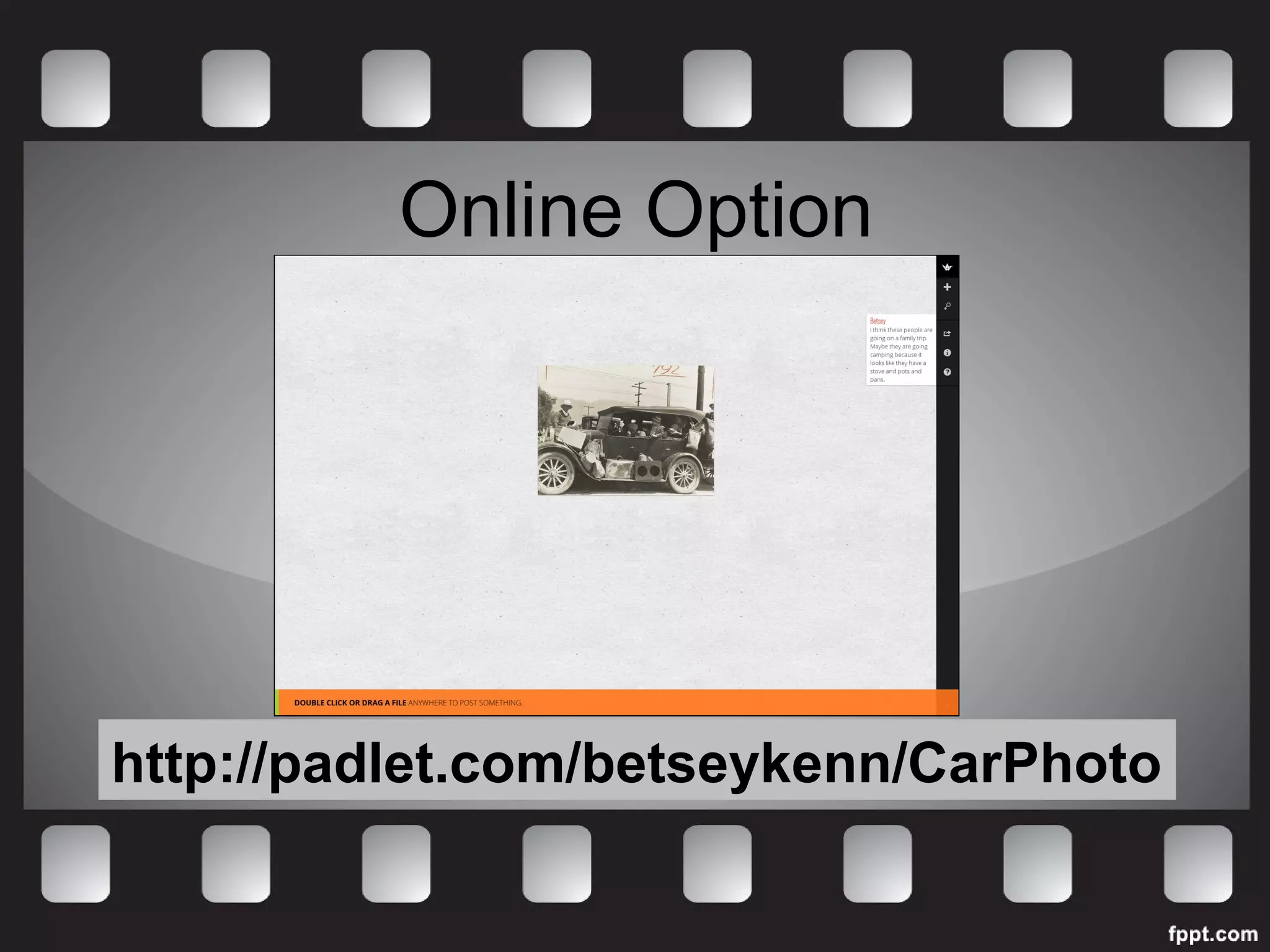
This is a pretty old-timey car. Are these 
There are a 
lot of people 
in this car. 
Are they really traveling 
with that much soap? 
Why? 
people rich?
Annotate the Photo
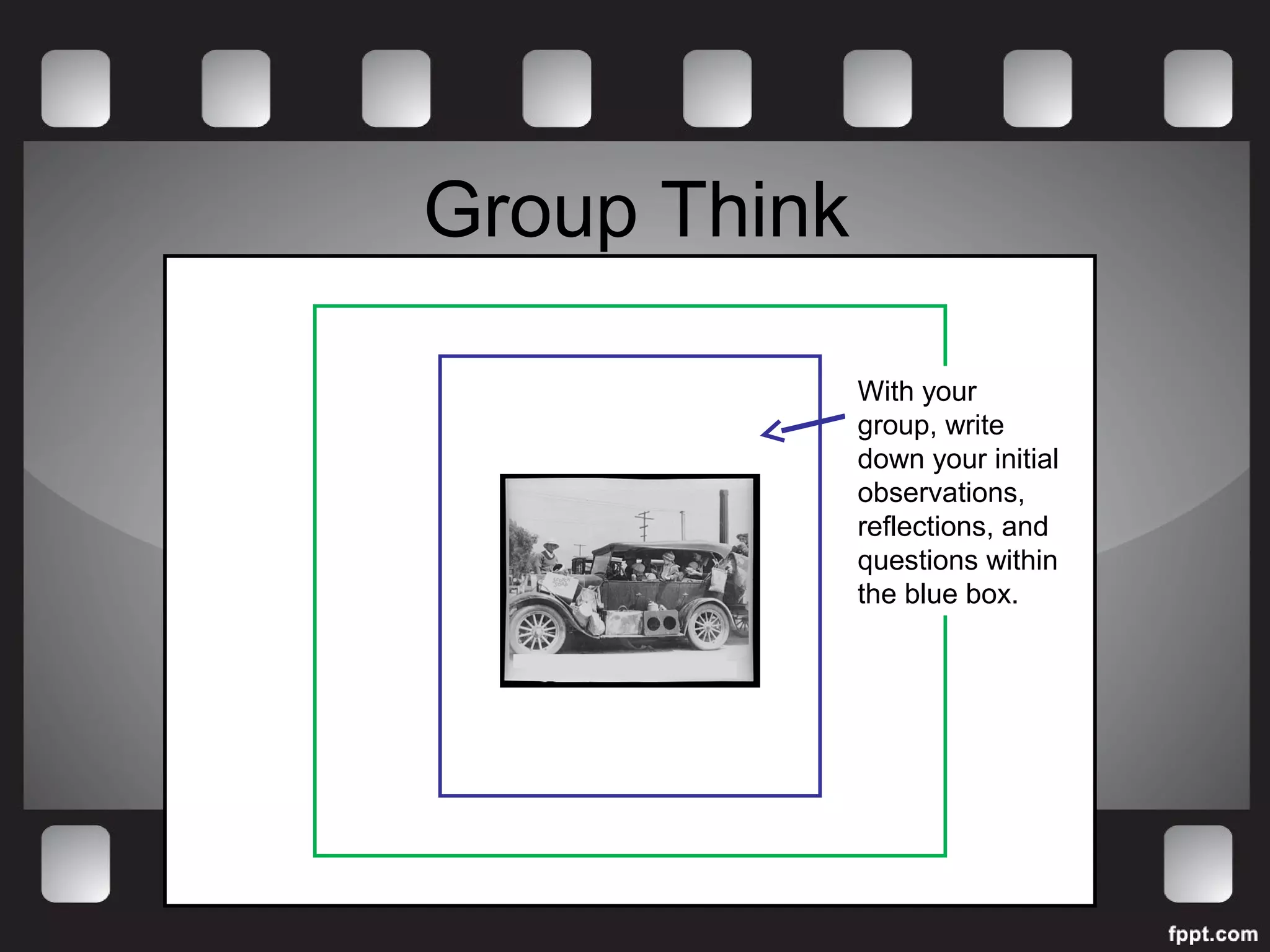
Group Think 
With your 
group, write 
down your initial 
observations, 
reflections, and 
questions within 
the blue box.
One Clue at a Time 
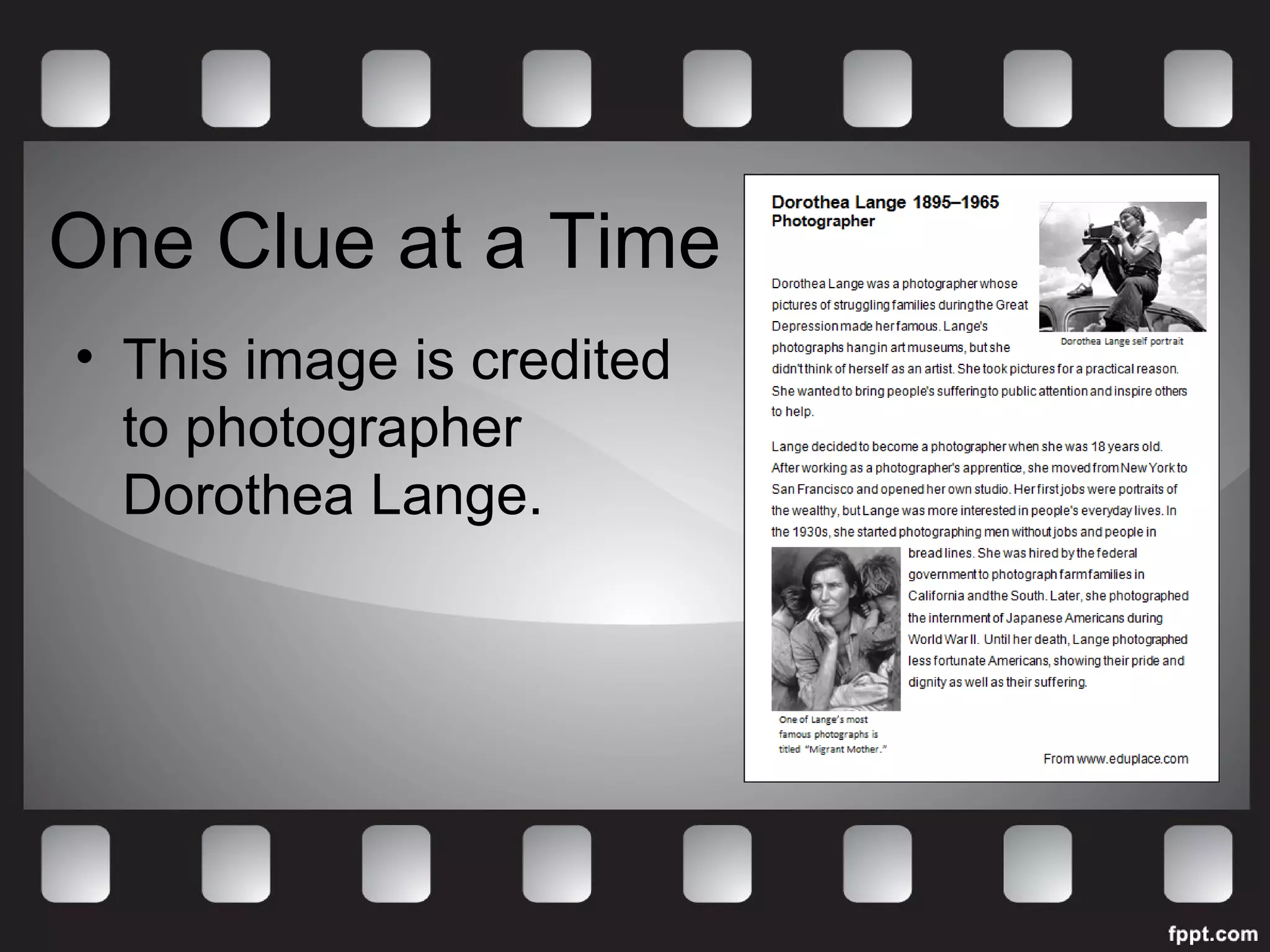
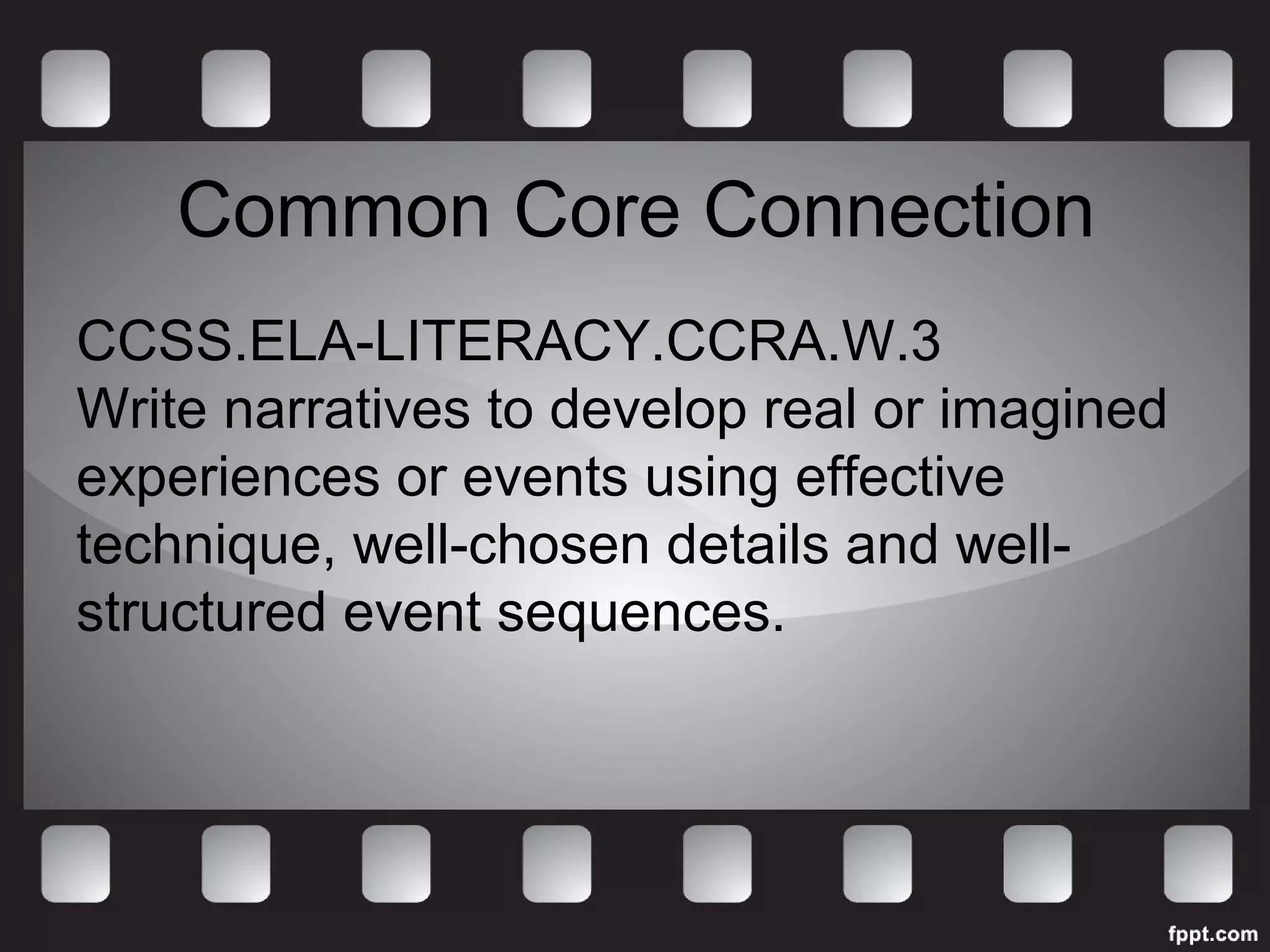
• This image is credited 
to photographer 
Dorothea Lange.
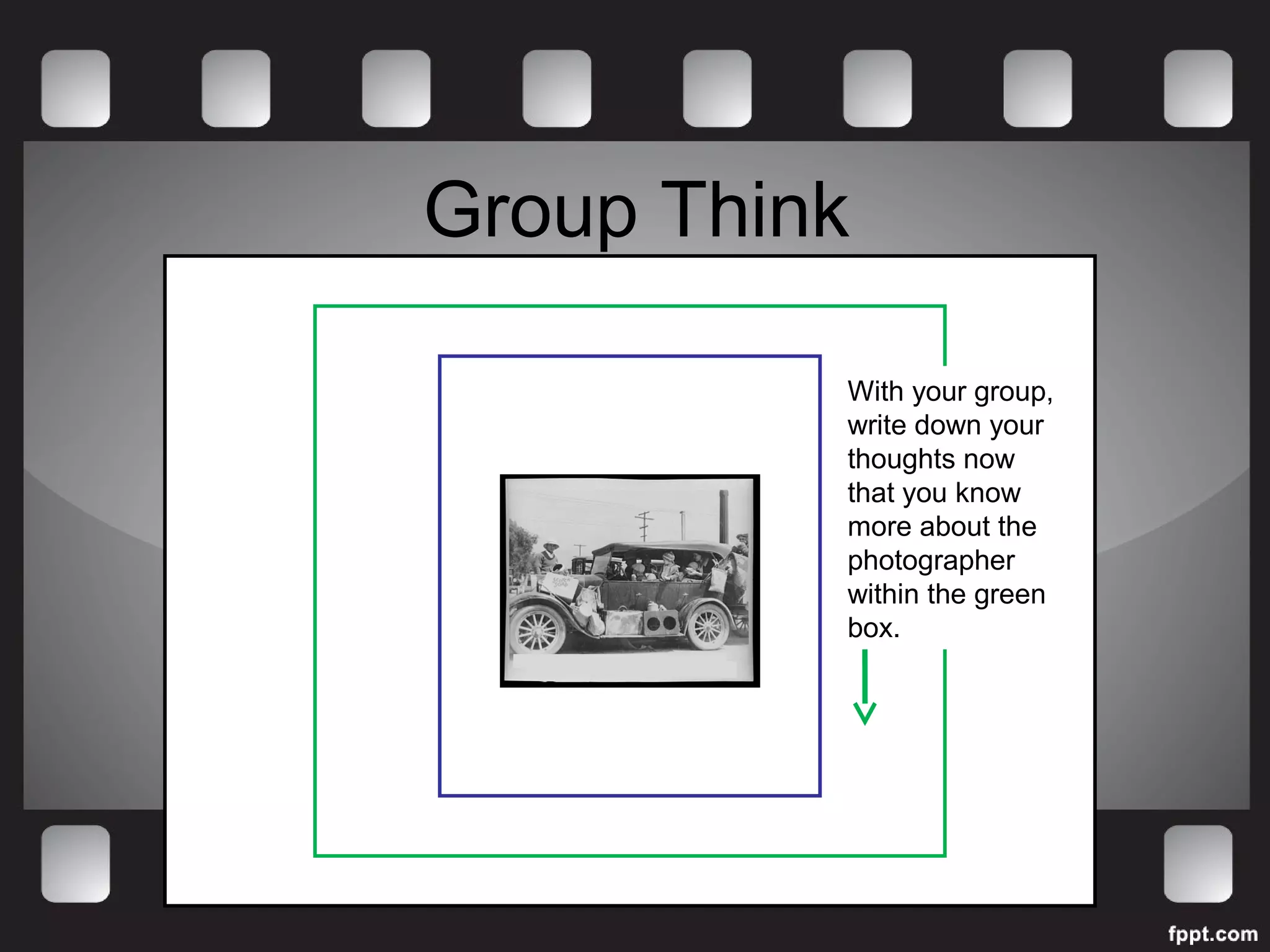
Group Think 
With your group, 
write down your 
thoughts now 
that you know 
more about the 
photographer 
within the green 
box.
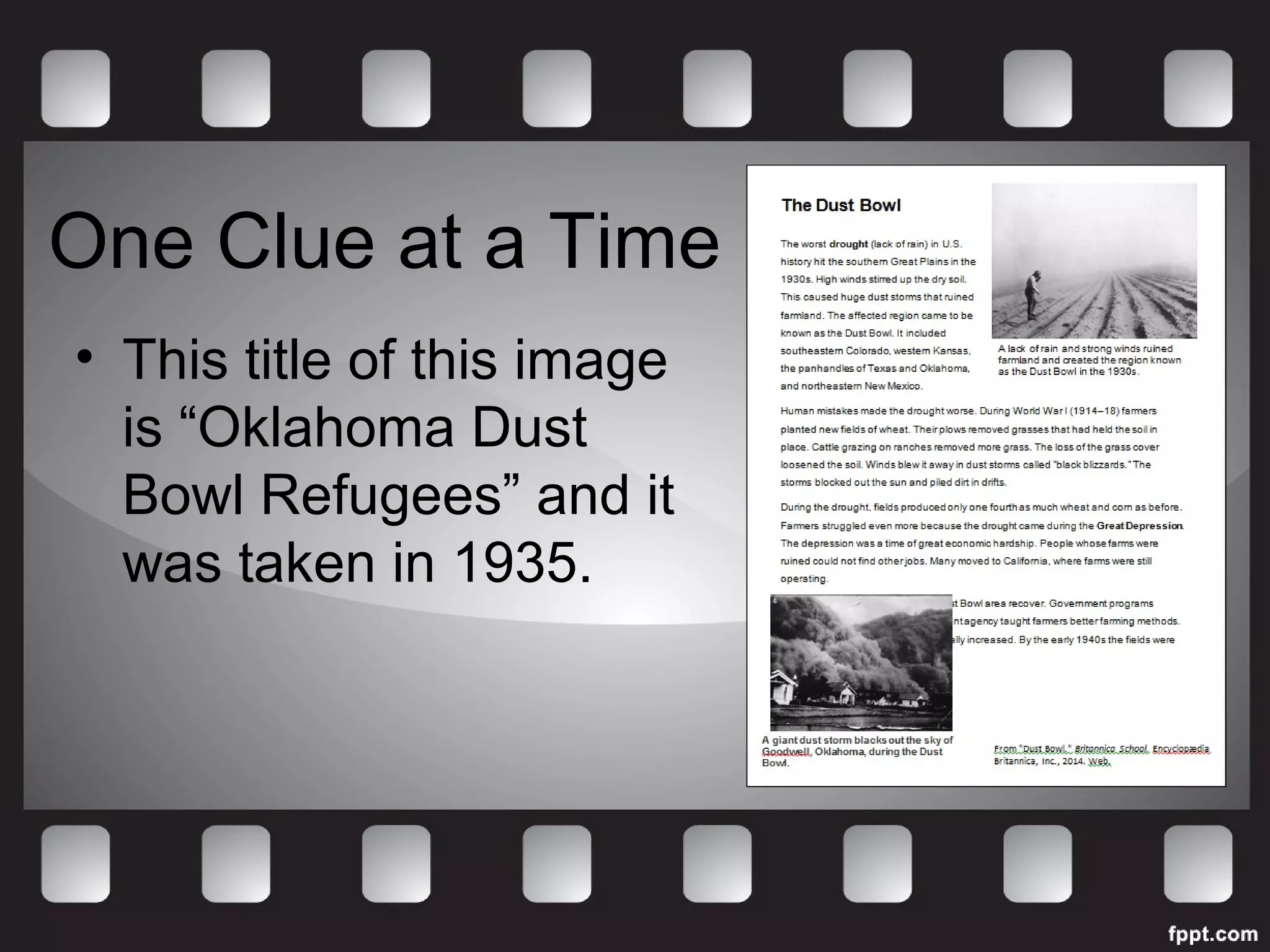
One Clue at a Time 
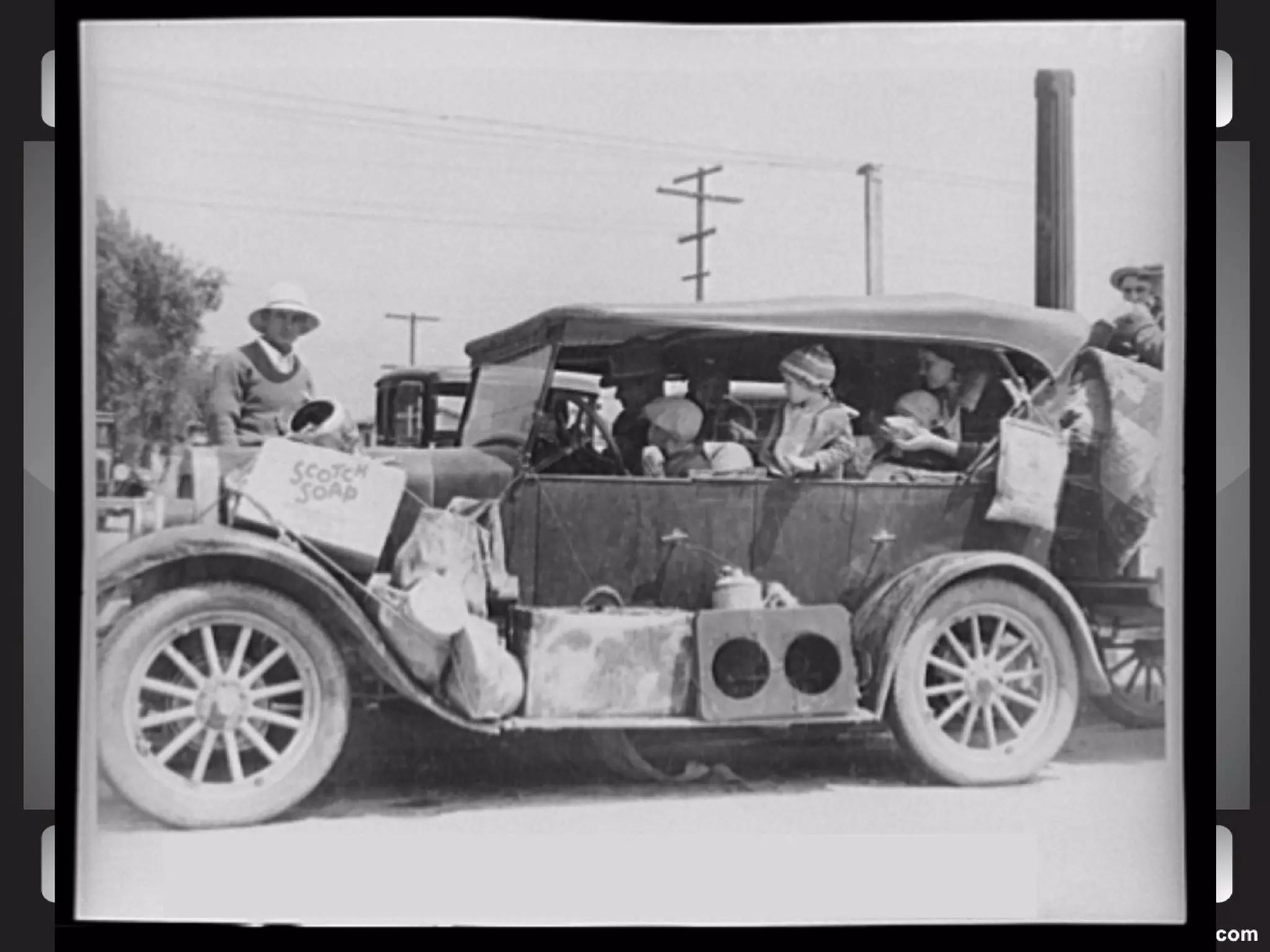
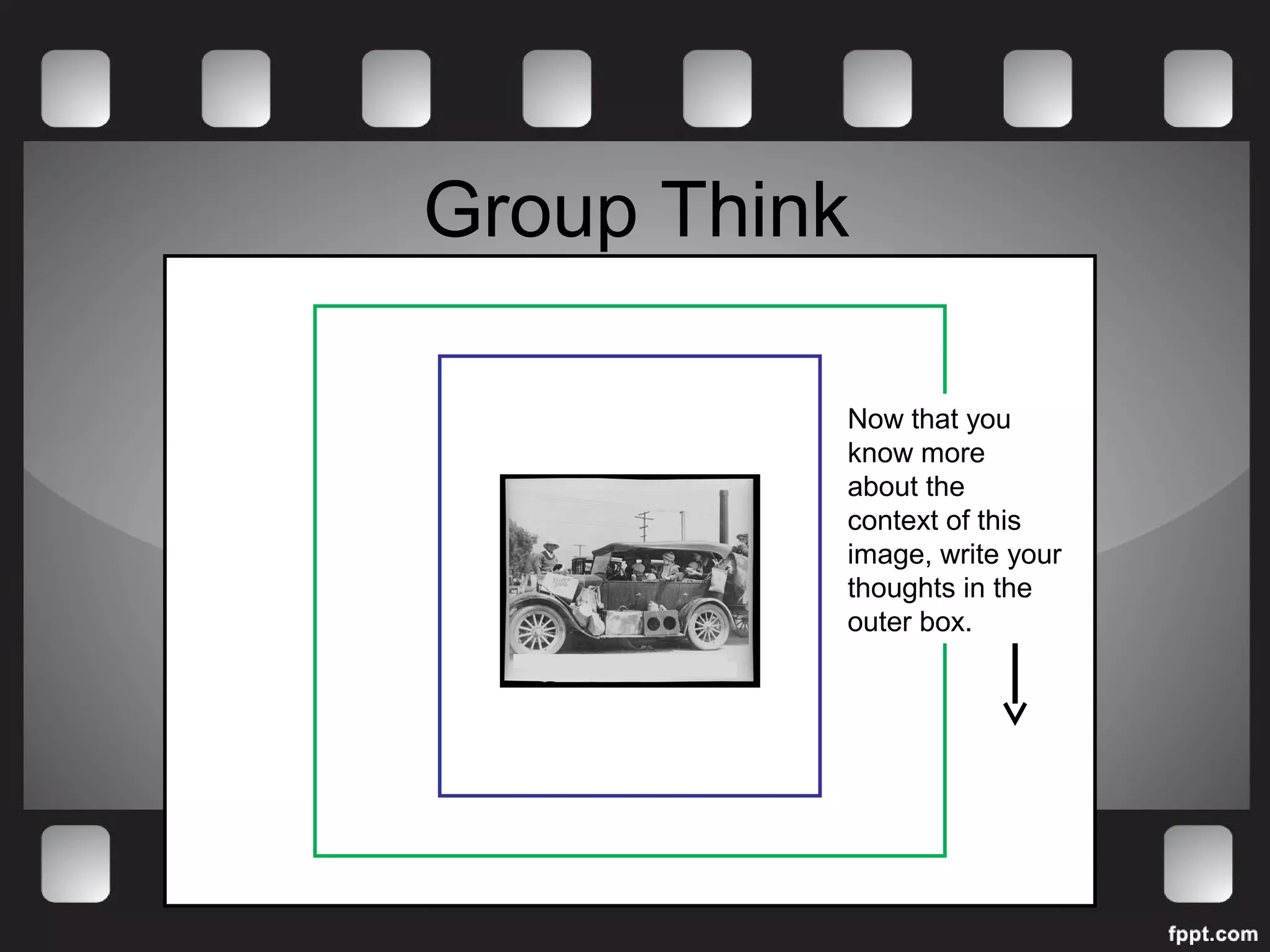
• This title of this image 
is “Oklahoma Dust 
Bowl Refugees” and it 
was taken in 1935.
Group Think 
Now that you 
know more 
about the 
context of this 
image, write your 
thoughts in the 
outer box.
Common Core Connection 
CCSS.ELA-LITERACY.CCRA.W.3 
Write narratives to develop real or imagined 
experiences or events using effective 
technique, well-chosen details and well-structured 
event sequences.
Social Studies Journal Entry 
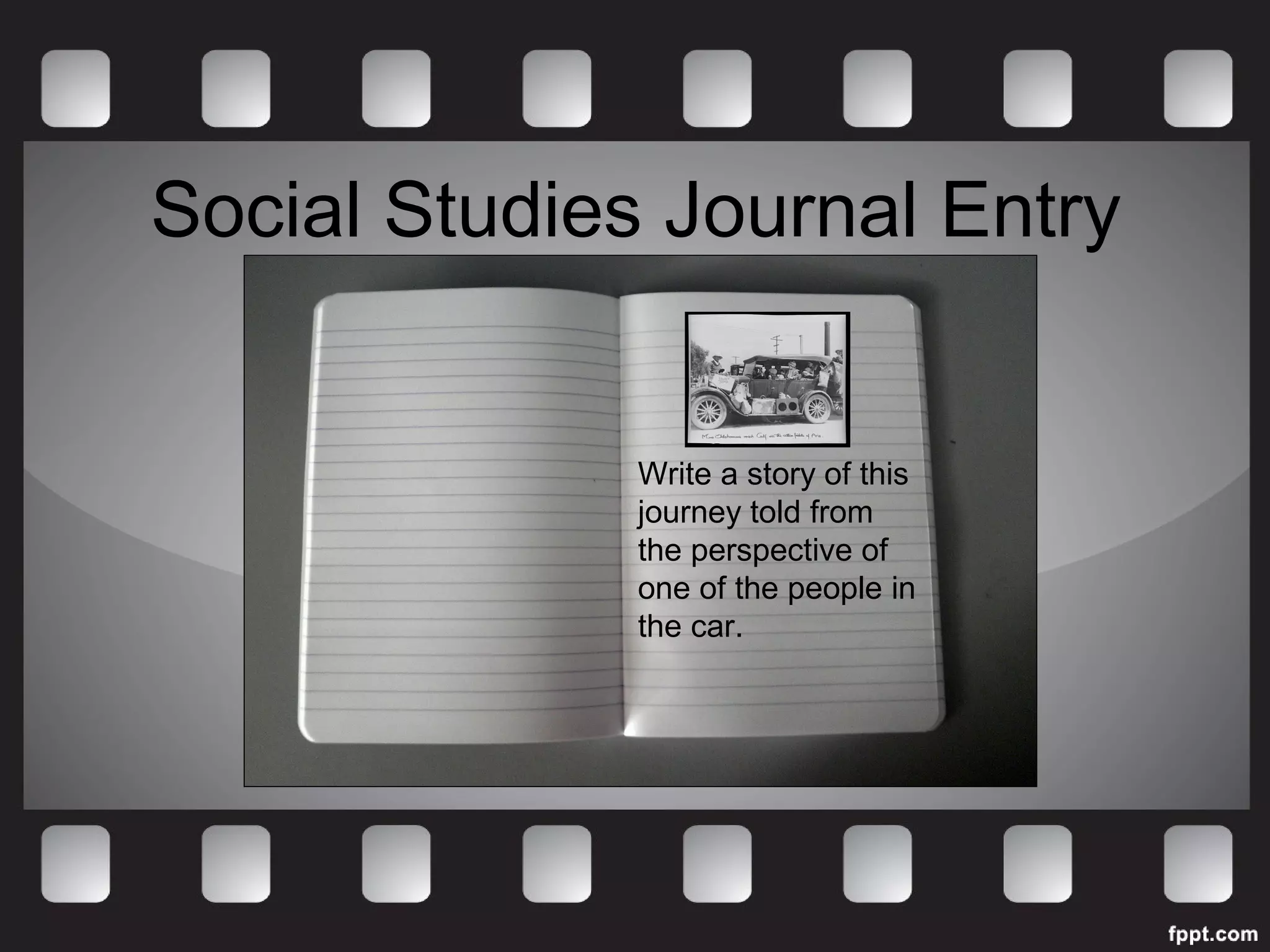
Write a story of this 
journey told from 
the perspective of 
one of the people in 
the car.
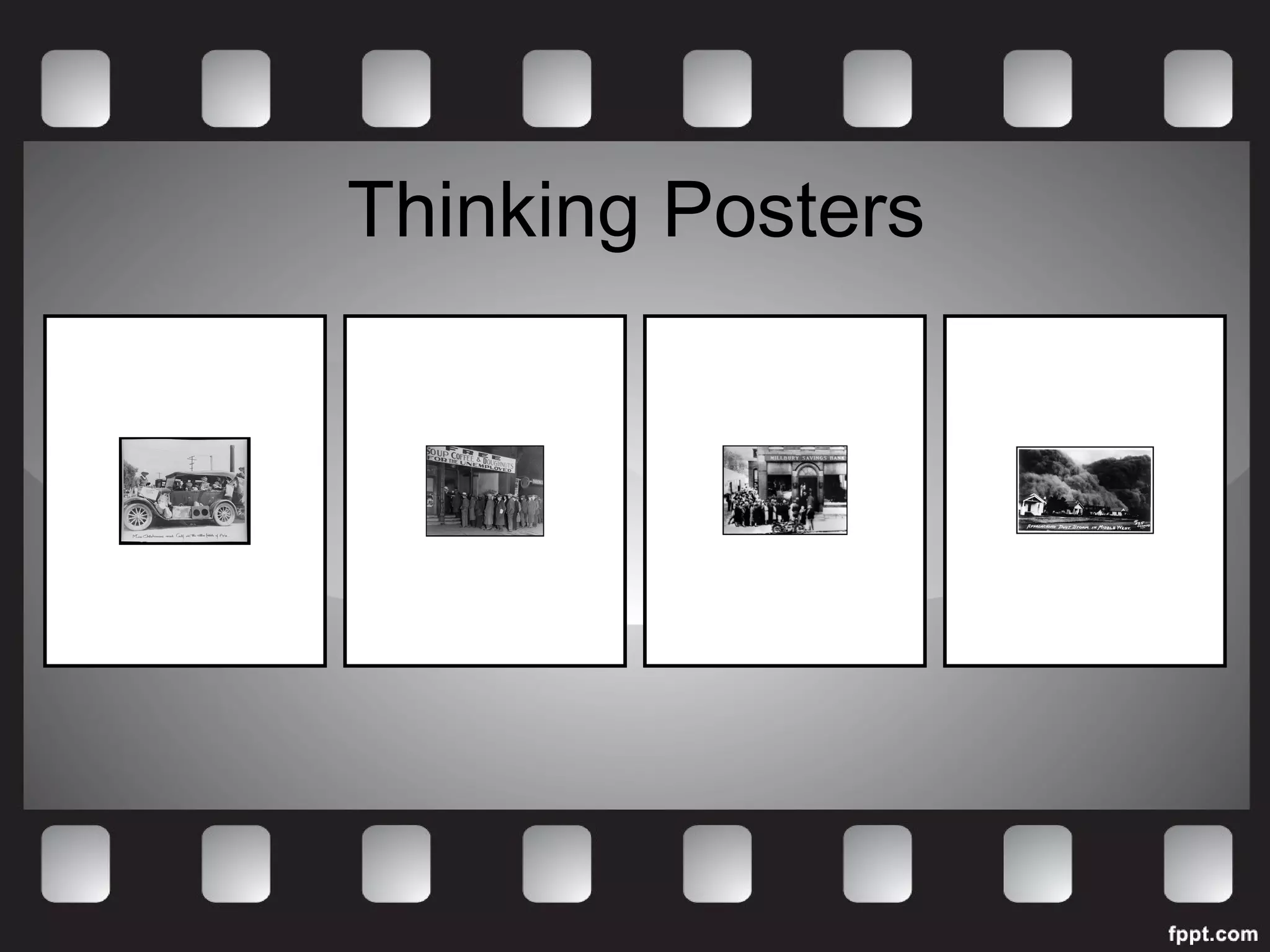
Thinking Posters
Online Option 
http://padlet.com/betseykenn/CarPhoto
Common Core Connection 
CCSS.ELA-LITERACY.CCRA.R.6 
Assess how point of view or purpose shapes 
the content and style of a text.
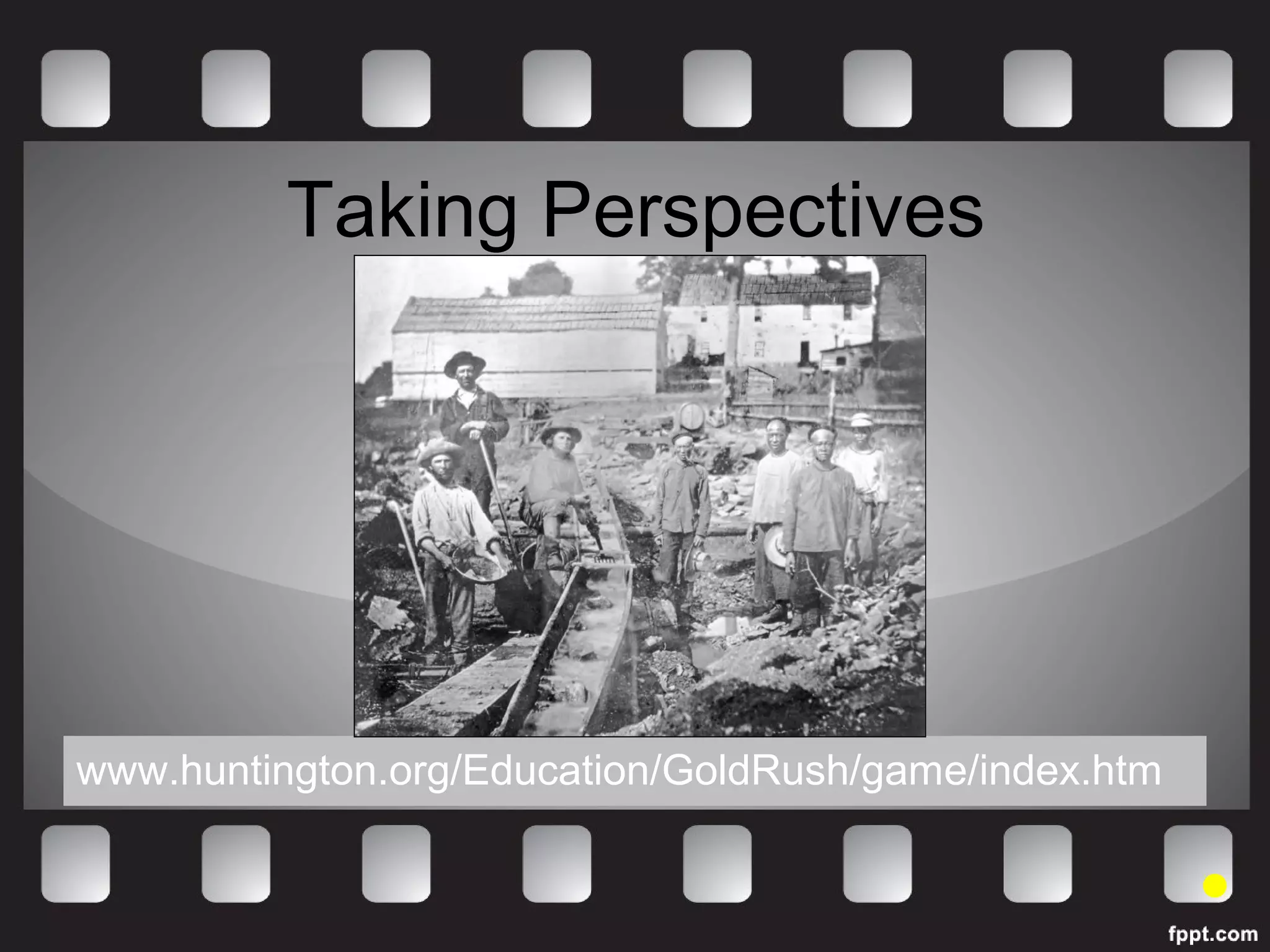
Taking Perspectives 
www.huntington.org/Education/GoldRush/game/index.htm
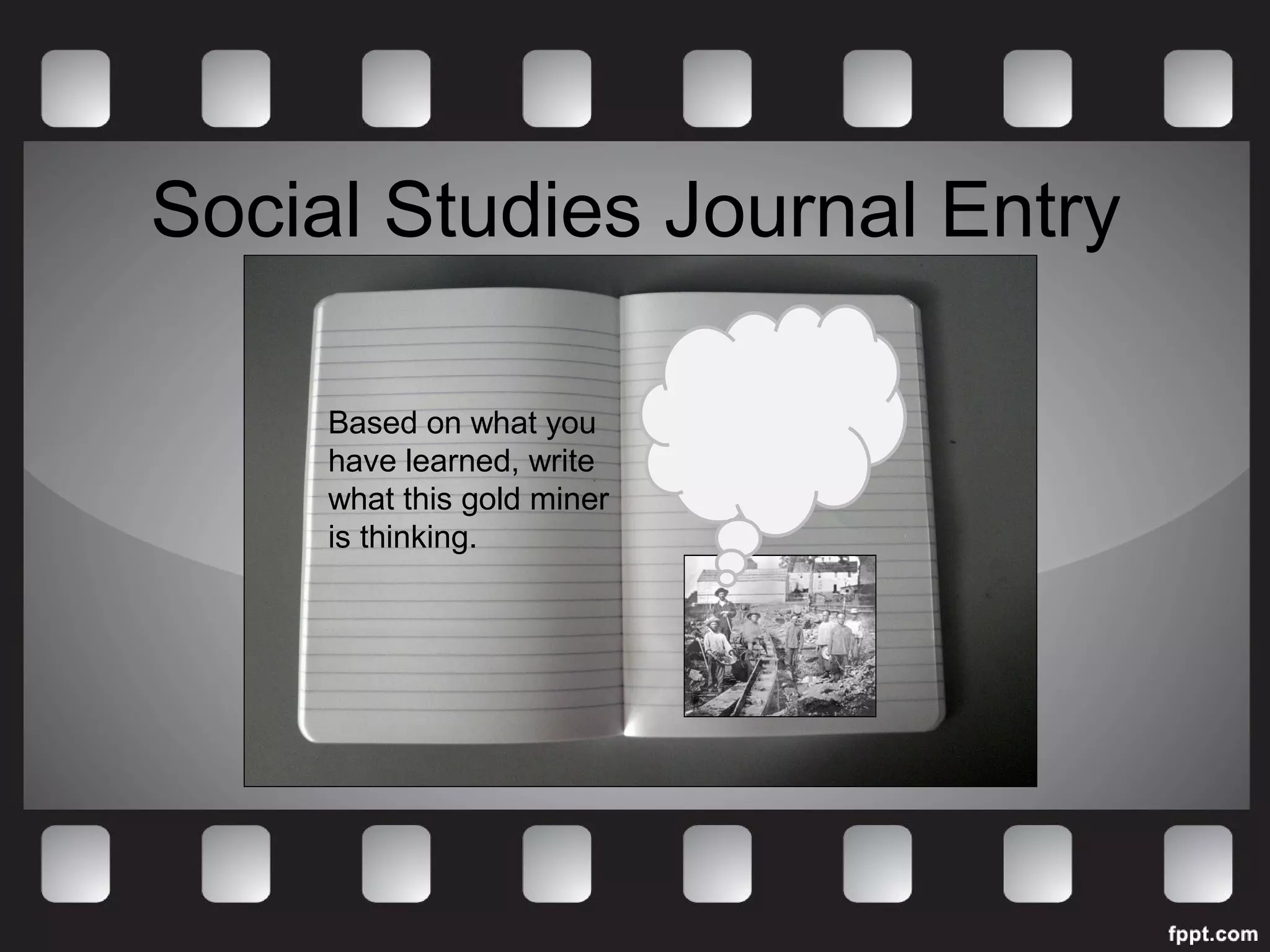
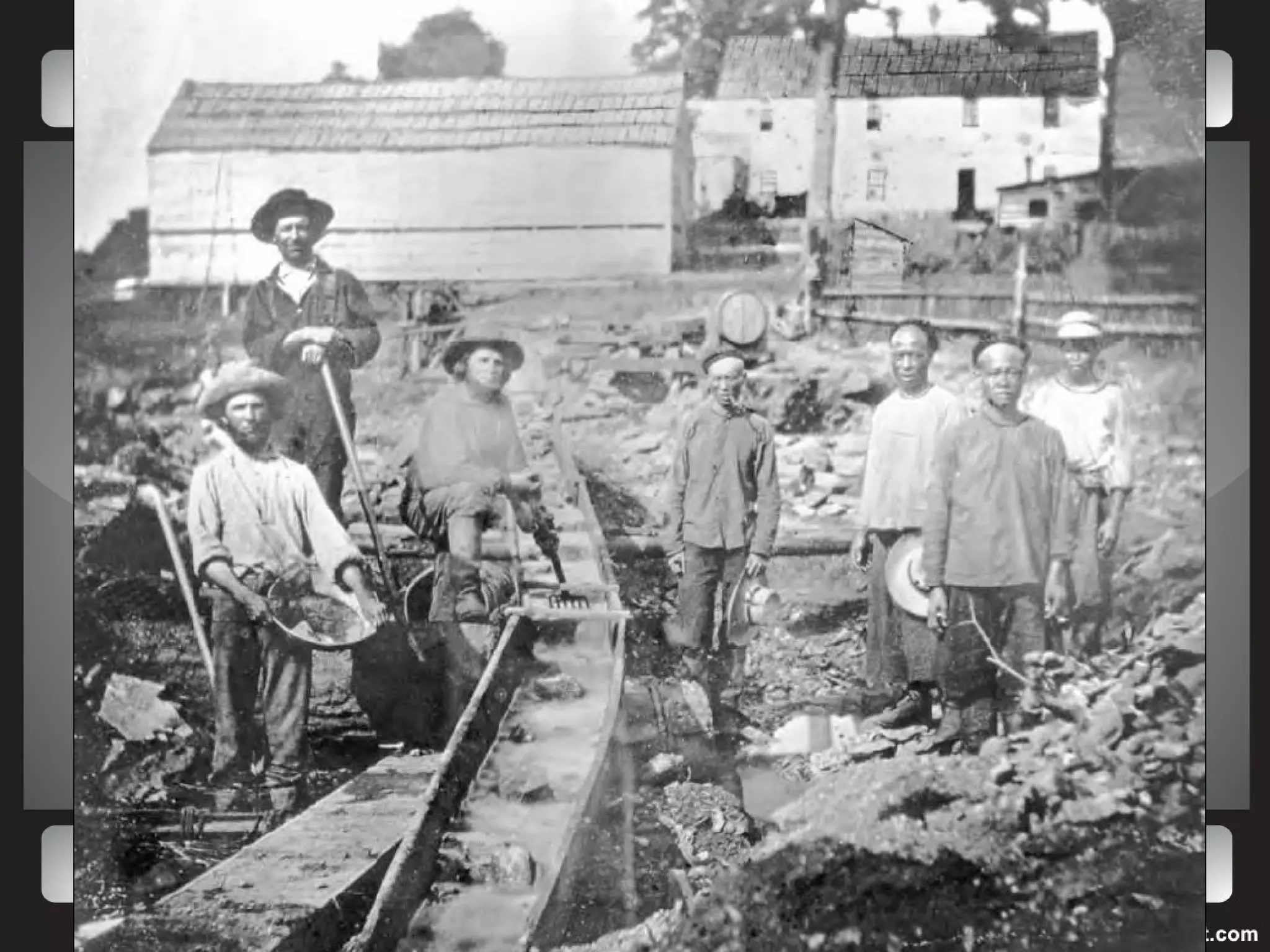
Social Studies Journal Entry 
Based on what you 
have learned, write 
what this gold miner 
is thinking.
Common Core Connection 
CCSS.ELA-LITERACY.CCRA.W.6 
Use technology, including the Internet, to 
produce and publish writing and to interact 
and collaborate with others.
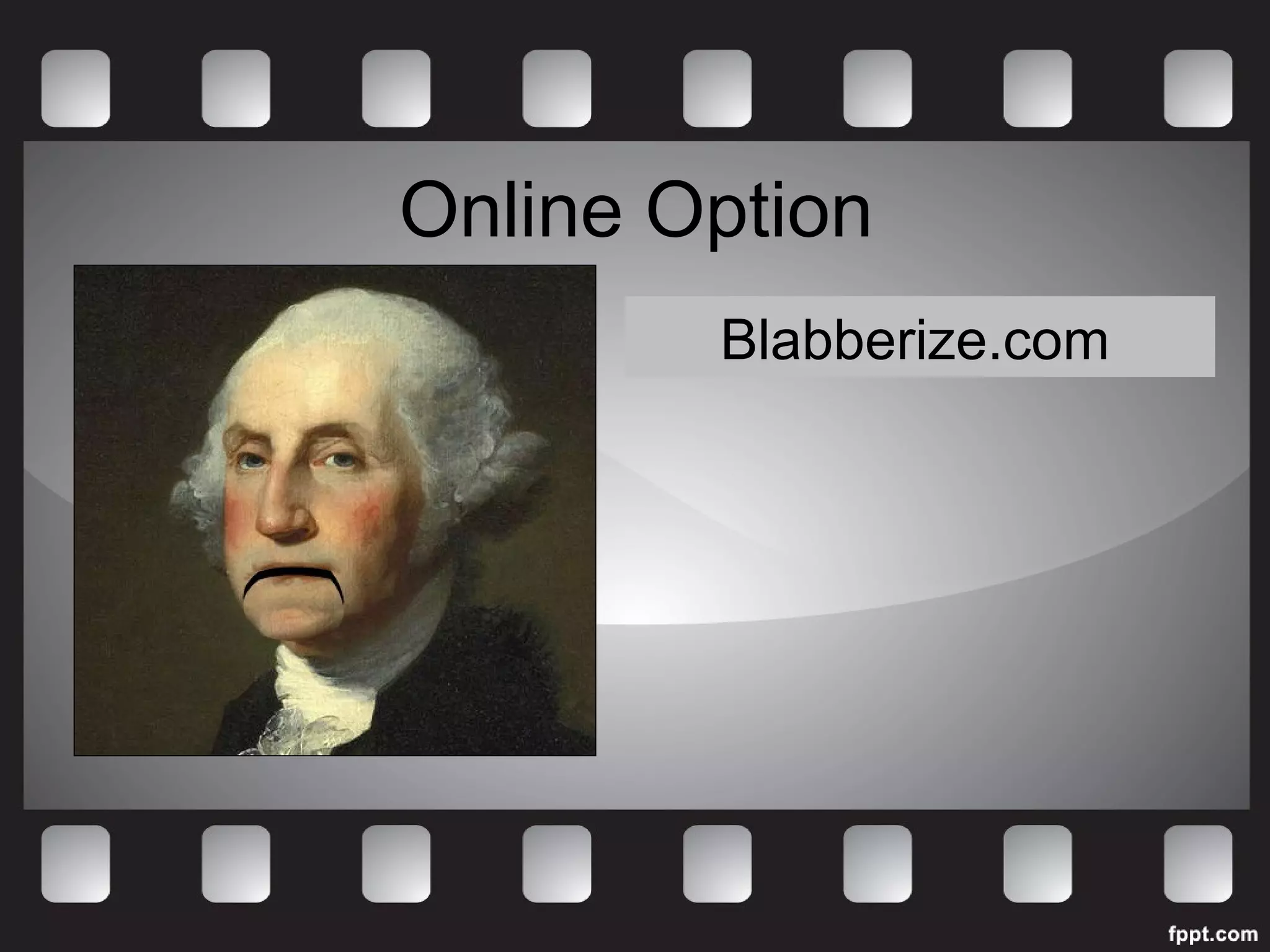
Online Option 
Blabberize.com
Common Core Connection 
CCSS.ELA-LITERACY.CCRA.R.6 
Assess how point of view or purpose shapes 
the content and style of a text.
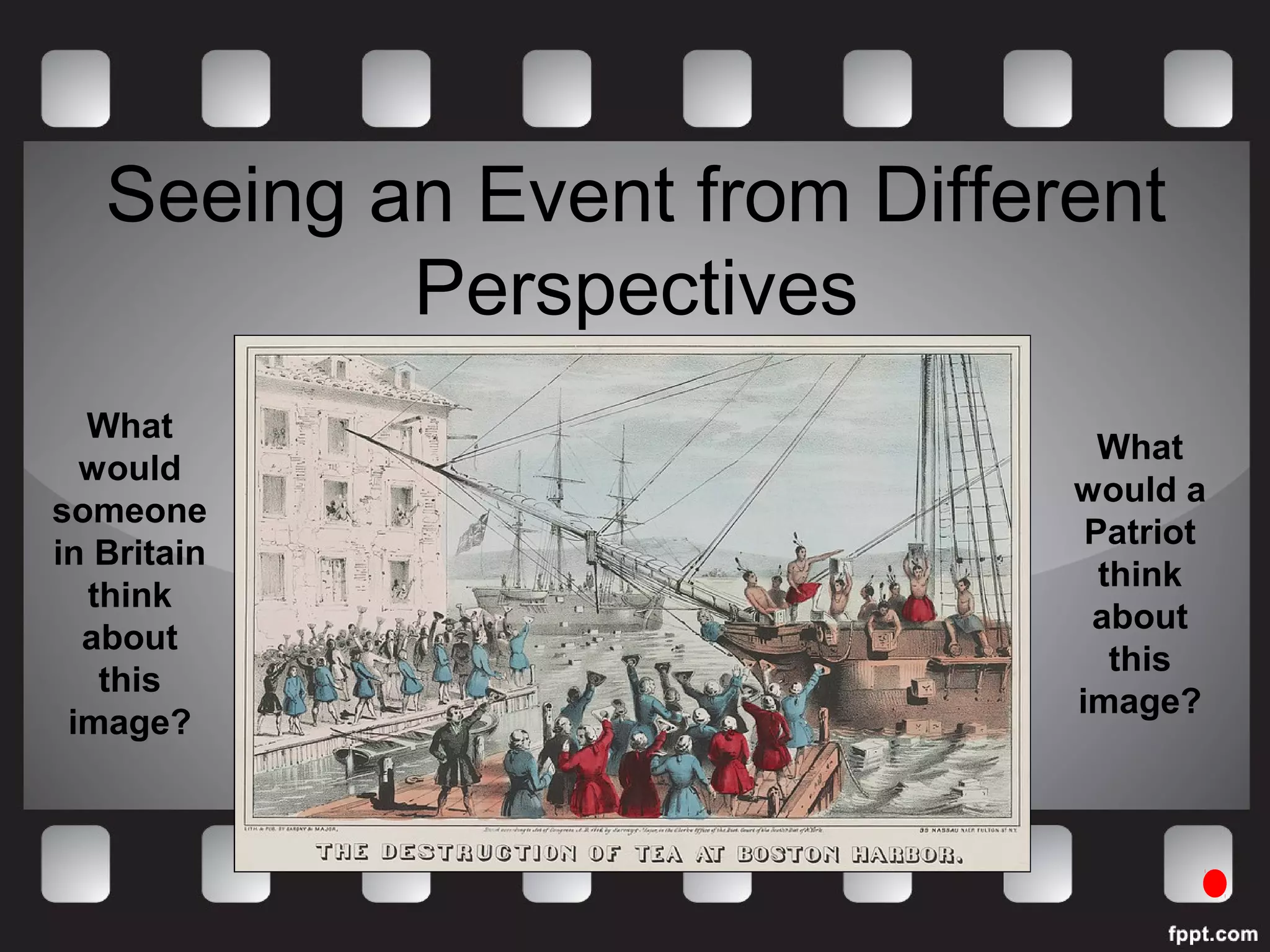
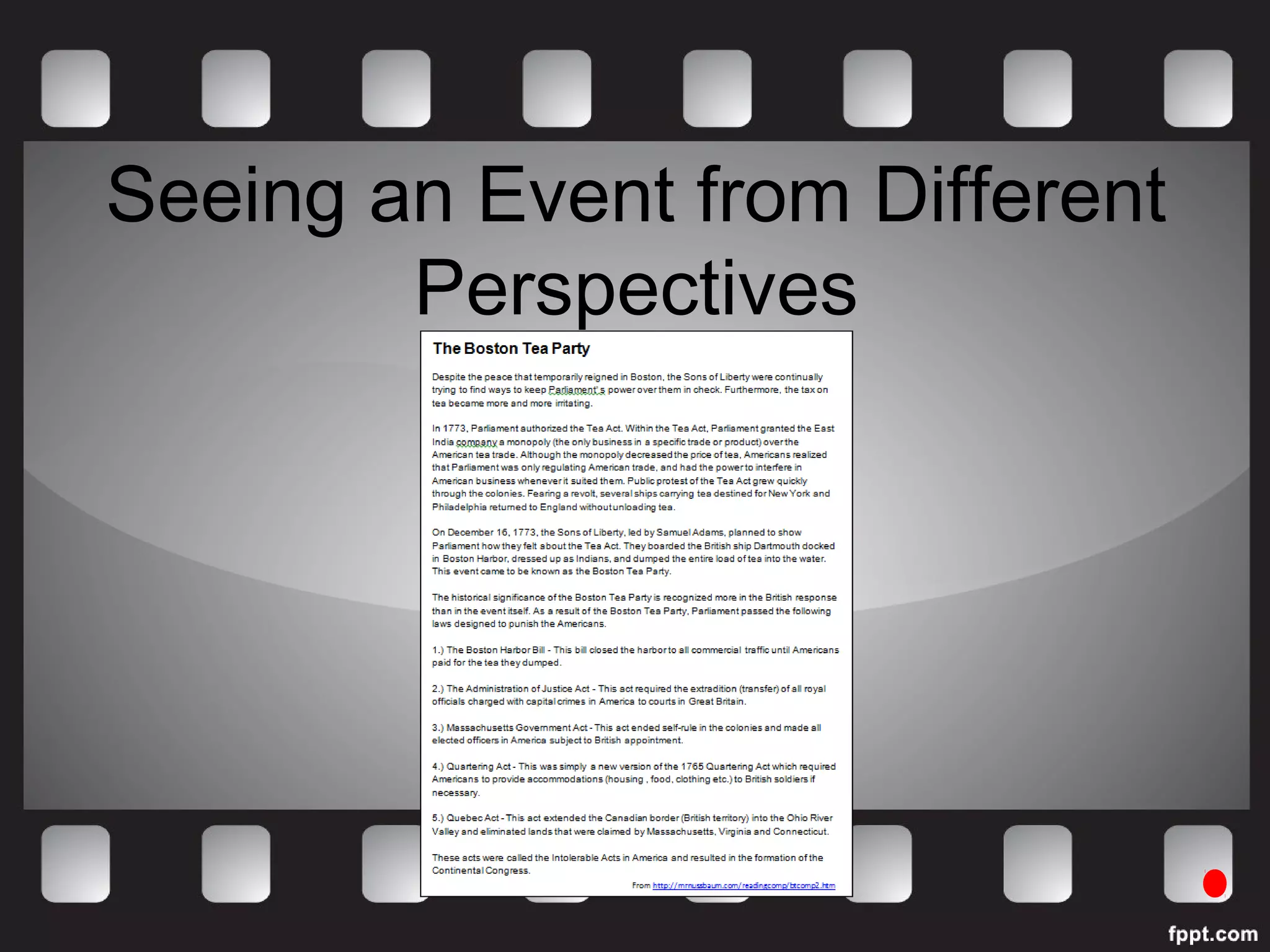
Seeing an Event from Different 
Perspectives 
What 
would 
someone 
in Britain 
think 
about 
this 
image? 
What 
would a 
Patriot 
think 
about 
this 
image?
Seeing an Event from Different 
Perspectives
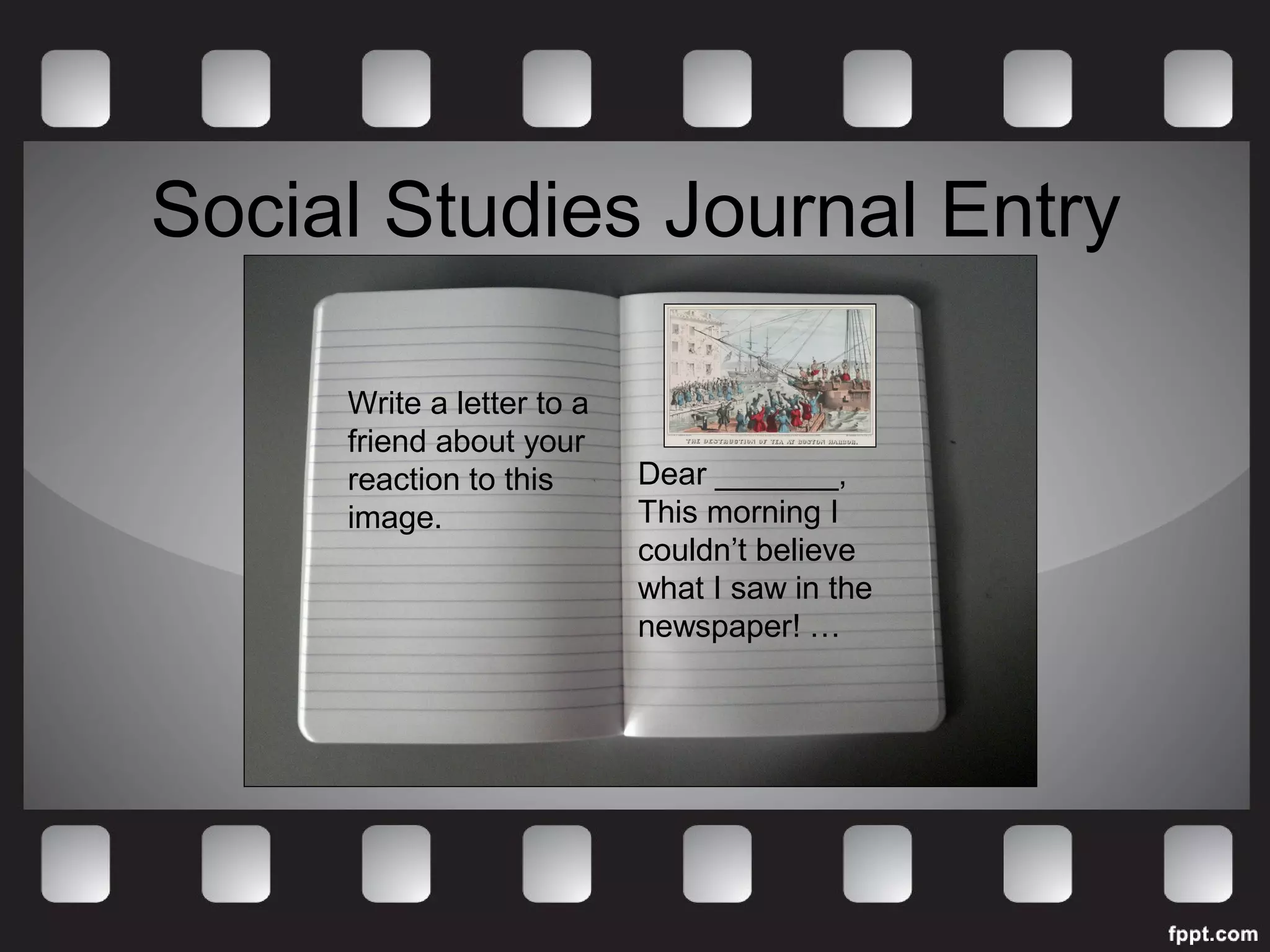
Social Studies Journal Entry 
Write a letter to a 
friend about your 
reaction to this 
image. 
Dear _______, 
This morning I 
couldn’t believe 
what I saw in the 
newspaper! …
All materials available at 
www.symbaloo.com/mix/ 
HistoryInFocus

History in focus

  • 1.
    History in Focus: Using Images to Teach Literacy Skills in Social Studies Presented by Betsey Kennedy-Olotka Elizabeth.Kennedy@cobbk12.org
  • 2.
    All materials availableat www.symbaloo.com/mix/ HistoryInFocus
  • 3.
    Social Studies MeetsLiteracy • Social Studies offers students a perfect opportunity to practice the skills they are learning in Reading and Writing Workshop.
  • 4.
    Why do imagesmatter? • Draw a sketch of a cat. • Draw a sketch of a civet cat. The African Civet is a large species of Civet found across sub-Saharan Africa. The African Civet is the only remaining member in its genetic group and is considered to be the largest Civet-like animal on the African continent. Despite their cat-like appearance and behaviors, the African Civets are not felines at all but are in fact, more closely related to other small carnivores including weasels and mongooses. The African Civet is most well known for the musk that it secretes to mark it's territory (called Civetone), which has been used in the manufacturing of perfumes for centuries, and its striking black and white markings, make the African Civet one of the easiest Civet species to identify.
  • 5.
    Cat vs. CivetCat • It’s nearly impossible to picture something you have never seen. • Words are used to recall things we have already seen and experienced. • Writing is much more detailed when students can look at an image before they start writing.
  • 6.
    Why do imagesmatter? • The brain processes visual information 60,000 faster than text. - 3M Corporation, 2001 • Visual aids in the classroom improve learning by up to 400 percent. - 3M Corporation, 2001 • Approximately 65 percent of the population are visual learners. - Mind Tools, 1998
  • 7.
    Why do imagesmatter? • Anchor images increase recall and retention by an average of 42% • Anchor images increase transfer of knowledge (long-term learning and application) by 89% - Mayer, R.E., 2001
  • 8.
  • 9.
    Social Studies JournalEntry This year, I think we will learn about… One picture that stood out to me was because… I think this picture shows…
  • 10.
    What will studentsdiscover about making sense of historical images from this activity?
  • 11.
  • 12.
    Common Core Connection CCSS.ELA-LITERACY.CCRA.R.1 Read closely to determine what the text says explicitly and to make logical inferences from it; cite specific textual evidence when writing or speaking to support conclusions drawn from the text.
  • 13.
    Teaching Students to “Read” Images Adjectives (Words describing the nouns) Nouns (People, Animals, Places, Things) Adverbs (Words describing the verbs) Verbs (Actions)
  • 14.
    Cupboard Shelter, December 1943 A day nursery in the East End of London shelters children in a linen cupboard during an air raid. Some homes had Morrison shelters – a steel table with wire mesh sides - where they took cover during raids whilst others put up Anderson shelters in their gardens. Regular practices were held and schoolchildren were drilled in the use of gas masks.
  • 15.
  • 16.
  • 17.
  • 18.
    Social Studies JournalEntry Our observations
  • 19.
  • 20.
    Social Studies JournalEntry Our observations Our reflections
  • 21.
  • 22.
    Social Studies JournalEntry Our observations Our reflections Our questions
  • 23.
  • 24.
    Photograph by LewisHine, January 1909 "Reader" in cigar factory, Tampa, Fla. He reads books and newspapers at top of his voice all day long. This is all the education many of these workers receive. He is paid by them and they select what he shall read.
  • 25.
    Common Core Connection CCSS.ELA-LITERACY.CCRA.R.7 Integrate and evaluate content presented in diverse media and formats, including visually and quantitatively, as well as in words.
  • 26.
    Annotate the Photo What do you see? What thoughts come to your mind? What questions do you have? This is a pretty old-timey car. Are these There are a lot of people in this car. Are they really traveling with that much soap? Why? people rich?
  • 27.
  • 28.
    Group Think Withyour group, write down your initial observations, reflections, and questions within the blue box.
  • 29.
    One Clue ata Time • This image is credited to photographer Dorothea Lange.
  • 30.
    Group Think Withyour group, write down your thoughts now that you know more about the photographer within the green box.
  • 31.
    One Clue ata Time • This title of this image is “Oklahoma Dust Bowl Refugees” and it was taken in 1935.
  • 32.
    Group Think Nowthat you know more about the context of this image, write your thoughts in the outer box.
  • 33.
    Common Core Connection CCSS.ELA-LITERACY.CCRA.W.3 Write narratives to develop real or imagined experiences or events using effective technique, well-chosen details and well-structured event sequences.
  • 34.
    Social Studies JournalEntry Write a story of this journey told from the perspective of one of the people in the car.
  • 35.
  • 36.
  • 37.
    Common Core Connection CCSS.ELA-LITERACY.CCRA.R.6 Assess how point of view or purpose shapes the content and style of a text.
  • 38.
  • 40.
    Social Studies JournalEntry Based on what you have learned, write what this gold miner is thinking.
  • 41.
    Common Core Connection CCSS.ELA-LITERACY.CCRA.W.6 Use technology, including the Internet, to produce and publish writing and to interact and collaborate with others.
  • 42.
  • 43.
    Common Core Connection CCSS.ELA-LITERACY.CCRA.R.6 Assess how point of view or purpose shapes the content and style of a text.
  • 44.
    Seeing an Eventfrom Different Perspectives What would someone in Britain think about this image? What would a Patriot think about this image?
  • 45.
    Seeing an Eventfrom Different Perspectives
  • 46.
    Social Studies JournalEntry Write a letter to a friend about your reaction to this image. Dear _______, This morning I couldn’t believe what I saw in the newspaper! …
  • 47.
    All materials availableat www.symbaloo.com/mix/ HistoryInFocus

Editor's Notes

  • #5 Text from http://a-z-animals.com/animals/african-civet/ A civet /ˈsɪvɨt/ is a small, lithe-bodied, mostly nocturnal mammal native to tropical Asia and Africa, especially the tropical forests. The term civet applies to over a dozen different mammal species. Most of the species diversity is found in southeast Asia. The best-known civet species is the African Civet, Civettictis civetta, which historically has been the main species from which was obtained a musky scent used in perfumery. The word civet may also refer to the distinctive musky scent produced by the animals.
  • #12 Cupboard Shelter, December 1943 A day nursery in the East End of London shelters children in a linen cupboard during an air raid. Some homes had Morrison shelters – a steel table with wire mesh sides - where they took cover during raids whilst others put up Anderson shelters in their gardens. Regular practices were held and schoolchildren were drilled in the use of gas masks.
  • #14 Cupboard Shelter, December 1943 A day nursery in the East End of London shelters children in a linen cupboard during an air raid. Some homes had Morrison shelters – a steel table with wire mesh sides - where they took cover during raids whilst others put up Anderson shelters in their gardens. Regular practices were held and schoolchildren were drilled in the use of gas masks.
  • #29 Title: Oklahoma dust bowl refugees. San Fernando, California Creator(s): Lange, Dorothea, photographer Date Created/Published: 1935 June.
  • #31 Title: Oklahoma dust bowl refugees. San Fernando, California Creator(s): Lange, Dorothea, photographer Date Created/Published: 1935 June.
  • #33 Title: Oklahoma dust bowl refugees. San Fernando, California Creator(s): Lange, Dorothea, photographer Date Created/Published: 1935 June.