Data Analysis: The vehicle for systemic school change Single Plan for Student Achievement data section Brian Centeno, Ed.D.
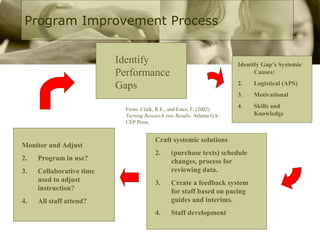
Program Improvement Process Identify Performance Gaps Identify Gap’s Systemic Causes: Logistical (APS) Motivational  Skills and Knowledge Craft systemic solutions (purchase texts) schedule changes, process for reviewing data. Create a feedback system for staff based on pacing guides and interims. Staff development Monitor and Adjust Program in use? Collaborative time used to adjust instruction? All staff attend? From: Clark, R.E., and Estes, F. (2002)  Turning Research into Results.  Atlanta GA: CEP Press.
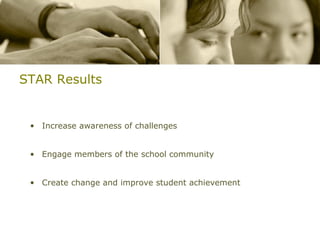
STAR Results Increase awareness of challenges Engage members of the school community Create change and improve student achievement
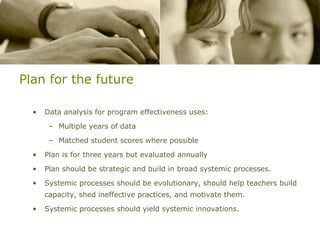
Plan for the future Data analysis for program effectiveness uses: Multiple years of data Matched student scores where possible Plan is for three years but evaluated annually Plan should be strategic and build in broad systemic processes. Systemic processes should be evolutionary, should help teachers build capacity, shed ineffective practices, and motivate them. Systemic processes should yield systemic innovations.
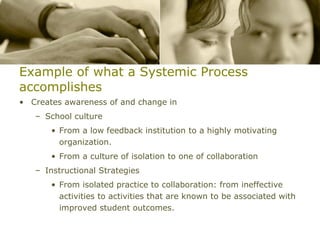
Example of what a Systemic Process accomplishes Creates awareness of and change in  School culture From a low feedback institution to a highly motivating organization. From a culture of isolation to one of collaboration Instructional Strategies From isolated practice to collaboration: from ineffective activities to activities that are known to be associated with improved student outcomes.

Brian Data Analysis Reduced

  • 1.
    Data Analysis: Thevehicle for systemic school change Single Plan for Student Achievement data section Brian Centeno, Ed.D.
  • 2.
    Program Improvement ProcessIdentify Performance Gaps Identify Gap’s Systemic Causes: Logistical (APS) Motivational Skills and Knowledge Craft systemic solutions (purchase texts) schedule changes, process for reviewing data. Create a feedback system for staff based on pacing guides and interims. Staff development Monitor and Adjust Program in use? Collaborative time used to adjust instruction? All staff attend? From: Clark, R.E., and Estes, F. (2002) Turning Research into Results. Atlanta GA: CEP Press.
  • 3.
    STAR Results Increaseawareness of challenges Engage members of the school community Create change and improve student achievement
  • 4.
    Plan for thefuture Data analysis for program effectiveness uses: Multiple years of data Matched student scores where possible Plan is for three years but evaluated annually Plan should be strategic and build in broad systemic processes. Systemic processes should be evolutionary, should help teachers build capacity, shed ineffective practices, and motivate them. Systemic processes should yield systemic innovations.
  • 5.
    Example of whata Systemic Process accomplishes Creates awareness of and change in School culture From a low feedback institution to a highly motivating organization. From a culture of isolation to one of collaboration Instructional Strategies From isolated practice to collaboration: from ineffective activities to activities that are known to be associated with improved student outcomes.

Editor's Notes

  • #4 All groups should be aware, parents , teachers, staff and administration. Engage members of the community in collective action: School Site Council, PTA and auxiliary groups will assist with the challenges, teachers will work collaboratively on a school-wide basis to meet challenges head on. Bad news creates the impetus for change, effective teachers in the school should be recognized, given a means to pass on their expertise (common planning while reviewing formative data, exchanging effective strategies).
  • #5 The plan should be strategic and sweeping in nature and not over specify or trivialize the response to student need. For instance, a plan that refers to one aspect of reading dysfluency in one sub-population and stipulates the purchase of a highly targeted program is only good as long as the specific need is present. Over time many fractured responses to highly specific student need are created in this way, and schools become awash in abandoned programs. Staff become disciples of long forgotten programs.