Brands and Communications Objectives
How advertising creates, build and maintain brands.
Communication objectives: Differentiation Consistency Recognisability Relevance Ubiquitous Market dominance Organisational values & behaviours Trust Value Co-promotions and alliances Commitment Brand personality Customer self-identification Personal relationship ‘ Iconic’ presence
Here are some examples:
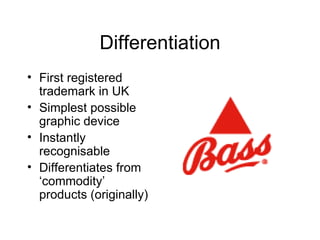
Differentiation First registered trademark in UK Simplest possible graphic device Instantly recognisable Differentiates from ‘commodity’ products (originally)
Consistency Over 200 years of consistent use ‘ Signature’ product of giant Bass Charrington group
Recognisability Said to be the most recognised image in the world
Ubiquitous Coca Cola dominates its marketplace Coca Cola’s marketplace is the world Coca Cola intends that every customer is constantly in sight of its advertising, and within reach of its products
Market dominance ‘ Hero’ product ‘ Hero’ consumer Heavy, consistent and high quality advertising quickly helped Lynx establish sector dominance
Trust Early brand differentiated from unreliable ‘commodity’ soaps ‘ £1000 reward’ for finding impurities never claimed Original ‘Signature’ product for worldwide Unilever Group
Value Pepsi’s original proposition: twice as much soda for your money
Customer self identification Identifies Dove with ‘real people’, just like you
Brand personality Favourite Ogilvy device Early identification of brand and product with a ‘character’ See also Marlboro Cowboy
Personal relationship Google and many new brands ask customers to enter into a more equal relationship which does not take the brand too seriously
Some branding milestones
Coca Cola invents Father Christmas
Silk Cut: the product that does not need to say its name
Benson & Hedges: the customers’ favourite advertiser
Absolut Vodka: the best pack shot in the world
Celebrity endorsement:Nike does it best
Stella, still reassuringly expensive

Brands & Ads