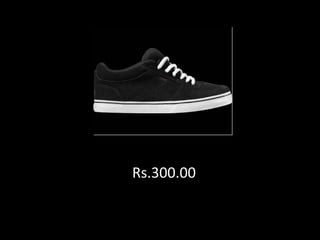
Rs.300.00
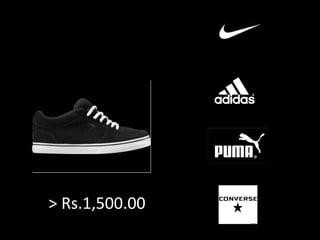
> Rs.1,500.00
 
Welcome to the World  of.. Branding
What  is a brand and branding? A name, term, sign, symbol, or design, or a combination of them which is  intended to identify  the goods or services of one seller or a group of sellers and  to differentiate   them from those of competitors.  (AMA, 1960) Logo + Slogan +Tagline
"A brand is not an icon,a slogan or a mission statement. It is a promise  — a promise your company can keep. First you find out, using research, what promises your customers want companies like yours to make and keep, using the products, processes and people in your company.  Then  you look at your competition  and decide which promise would give  you the best competitive  advantage
This is the  promise  you  make and keep in every  marketing  activity , every action, every corporate decision, and every customer interaction. You promote it internally and externally.  The promise drives budgets and stops arguments.  If everyone in the company knows what the promise is, and  knows that they will be rewarded or punished depending on the personal commitment to the promise, politics and personal turf issues start to disappear.” - Kristin Zhivago
"A brand is the  personification   of a product, service or even  entire company .“-Robert T. Blanchard  “ Art and science   of fulfilling human physical and emotional needs by capturing their attention, imagination and emotion” – Idres Mootee “ An organization can only ‘walk the talk' when its managers  deliberately shape its internal reality to align with its brand promise …(the brand's)  values must be internalized  by the organization, shaping its instinctive attitudes, behaviours, priorities, etc.” - Alan Mitchell
“ A brand is more than a name or a logo – it is a  promise  and a contract with every customer with whom you are dealing. And if people feel that the offering does not live up to what they expect from the brand, they will decide to stop buying” - Richard Branson “ Apple opposes, IBM solves, Nike exhorts, Virgin enlightens, Sony dreams, Benetton protests. … Brands are not nouns but verbs.” verbs Jean-Marie Dru, Disruption
“ The art of marketing is the art of brand building.  If you are not a brand you are a commodity.  Then price is everything and the low cost producer is the  only winner” – Philip Kotler "A brand is a living entity - and it is enriched or undermined cumulatively over time, the product of a thousand small gestures“ - Michael Eisner, CEO Disney
A product is something made in a factory; a brand is something that is bought by the customer.  A product can be copied by a competitor; a brand is unique. A product can be quickly outdated; a successful brand is timeless." Stephen King, WPP Group, London Its not what you say it is, it’s what  they  say it is
A strong brand is defined and characterized by the following  9 dimensions: Drives shareholder value It is led by the boardroom and managed by brand marketers with an  active buy-in from all stakeholders It is a fully  integrated part of the entire organisation  aligned around multiple touch points The brand can be  valued in financial terms  and must reside on the asset side of the balance sheet The brand can used as collateral for financial loans and can be bought and sold as an asset
Customers are willing to pay a  substantial and consistent price premium  for the brand versus a competing product and service Customers associate themselves strongly with the brand, its attributes, values and personality, and they fully buy into the concept which is often characterized by a  very emotional and intangible relationship  (higher customer loyalty) Customers are loyal to the brand and  would actively seek it and buy it  despite several other reasonable and often cheaper options available (higher customer retention rate) A brand is a trademark and marquee (logo, shape, colour etc) which is fiercely and pro-actively protected by the company and its legal advisors
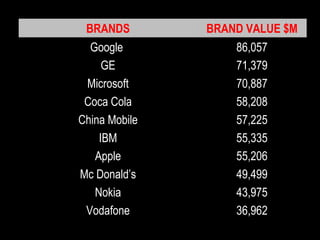
BRANDS BRAND VALUE $M Google  86,057 GE 71,379 Microsoft 70,887 Coca Cola 58,208 China Mobile 57,225 IBM 55,335 Apple 55,206 Mc Donald’s 49,499 Nokia 43,975 Vodafone 36,962
Awareness  The percentage of population or target market who are aware of the existence of a given brand or company.  There are two types of awareness: spontaneous , which measures the percentage of people who spontaneously mention a particular brand when asked to name brands in a certain category;  prompted , which measures the percentage of people who recognize a brand from a particular category when shown a list.
Brand Architecture  How an organization structures and names the brands within its portfolio. There are three main types of brand architecture system:  monolithic,  where the corporate name is used on all products and services offered by the company;  endorsed,  where all sub-brands are linked to the corporate brand by means of either a verbal or visual endorsement; and freestanding,  where the corporate brand operates merely as a holding company, and each product or service is individually branded for its target market.
Brand Associations  The feelings, beliefs and knowledge that consumers (customers) have about brands. These associations are derived as a result of experiences and must be consistent with the brand positioning and the basis of differentiation. Brand Equity  The sum of all distinguishing qualities of a brand, drawn from all relevant stakeholders, that results in personal commitment to and demand for the brand; these differentiating thoughts and feelings make the brand valued and valuable.
Brand Management  Practically this involves managing the tangible and intangible aspects of the brand. For product brands the tangibles are the product itself, the packaging, the price, etc. For service brands (see Service Brands), the tangibles are to do with the customer experience - the retail environment, interface with salespeople, overall satisfaction, etc. For product, service and corporate brands, the intangibles are the same and refer to the emotional connections derived as a result of experience, identity, communication and people. Intangibles are therefore managed via the manipulation of identity, communication and people skills.
Brand Culture Strong brands are managed by organisations characterized by their strong internal brand cultures. A strong brand culture is determined by the internal attitudes towards branding, management behaviour and practices of an organisation. These combined efforts are crucial to build and maintain strong brand equity through competitive advantages from branding. The most prominent person to lead these efforts is the CEO and the senior management team. Brand Essence The brand essence is an articulation of the "heart and soul" of the brand. A brand essence is typical three to five short word phrases that capture the core essence or spirit of the brand positioning and the values characterizing the brand. The brand essence is the description which defines a brand and the guiding vision of the brand.
Brand Positioning   The distinctive position that a brand adopts in its competitive environment to ensure that individuals in its target market can tell the brand apart from others. Positioning involves the careful manipulation of every element of the marketing mix. Brand Strategy A plan for the systematic development of a brand to enable it to meet its agreed objectives. The strategy should be rooted in the brand's vision and driven by the principles of differentiation and sustained consumer appeal. The brand strategy should influence the total operation of a business to ensure consistent brand behaviors and brand experiences.
Corporate Identity   At a minimum, is used to refer to the visual identity of a corporation (its logo, signage, etc.), but usually taken to mean an organization's presentation to its stakeholders and the means by which it differentiates itself from other organizations. Customer Relationship Management (CRM)  Tracking customer behavior for the purpose of developing marketing and relationship-building processes that bond the consumer to the brand. Developing software or systems to provide one-to-one customer service and personal contact between the company and the customer.
Differentiation  Creation or demonstration of unique characteristics in a company's products or brands compared to those of its competitors. FMCG  Fast moving consumer goods. An expression used to describe frequently purchased consumer items, such as foods, cleaning products and toiletries. Masterbrand   A brand name that dominates all products or services in a range or across a business. Sometimes used with sub-brands, sometimes used with alpha or numeric signifiers.  Audi, Durex, Nescafe and Lego, for example, are all used as masterbrands.
Job Description Brand managers plan, develop, and direct the marketing efforts for a particular brand or product. It is not uncommon for a brand manager to be responsible for coordinating activities of specialists in production, sales, advertising, promotion, research and development, marketing research, purchasing, distribution, package development, and finance.

What Is Branding?

  • 1.
  • 2.
  • 3.
  • 4.
  • 5.
    Welcome to theWorld of.. Branding
  • 6.
    What isa brand and branding? A name, term, sign, symbol, or design, or a combination of them which is intended to identify the goods or services of one seller or a group of sellers and to differentiate them from those of competitors. (AMA, 1960) Logo + Slogan +Tagline
  • 7.
    "A brand isnot an icon,a slogan or a mission statement. It is a promise — a promise your company can keep. First you find out, using research, what promises your customers want companies like yours to make and keep, using the products, processes and people in your company. Then you look at your competition and decide which promise would give you the best competitive advantage
  • 8.
    This is the promise you make and keep in every marketing activity , every action, every corporate decision, and every customer interaction. You promote it internally and externally. The promise drives budgets and stops arguments. If everyone in the company knows what the promise is, and knows that they will be rewarded or punished depending on the personal commitment to the promise, politics and personal turf issues start to disappear.” - Kristin Zhivago
  • 9.
    "A brand isthe personification of a product, service or even entire company .“-Robert T. Blanchard “ Art and science of fulfilling human physical and emotional needs by capturing their attention, imagination and emotion” – Idres Mootee “ An organization can only ‘walk the talk' when its managers deliberately shape its internal reality to align with its brand promise …(the brand's) values must be internalized by the organization, shaping its instinctive attitudes, behaviours, priorities, etc.” - Alan Mitchell
  • 10.
    “ A brandis more than a name or a logo – it is a promise and a contract with every customer with whom you are dealing. And if people feel that the offering does not live up to what they expect from the brand, they will decide to stop buying” - Richard Branson “ Apple opposes, IBM solves, Nike exhorts, Virgin enlightens, Sony dreams, Benetton protests. … Brands are not nouns but verbs.” verbs Jean-Marie Dru, Disruption
  • 11.
    “ The artof marketing is the art of brand building. If you are not a brand you are a commodity. Then price is everything and the low cost producer is the only winner” – Philip Kotler "A brand is a living entity - and it is enriched or undermined cumulatively over time, the product of a thousand small gestures“ - Michael Eisner, CEO Disney
  • 12.
    A product issomething made in a factory; a brand is something that is bought by the customer. A product can be copied by a competitor; a brand is unique. A product can be quickly outdated; a successful brand is timeless." Stephen King, WPP Group, London Its not what you say it is, it’s what they say it is
  • 13.
    A strong brandis defined and characterized by the following 9 dimensions: Drives shareholder value It is led by the boardroom and managed by brand marketers with an active buy-in from all stakeholders It is a fully integrated part of the entire organisation aligned around multiple touch points The brand can be valued in financial terms and must reside on the asset side of the balance sheet The brand can used as collateral for financial loans and can be bought and sold as an asset
  • 14.
    Customers are willingto pay a substantial and consistent price premium for the brand versus a competing product and service Customers associate themselves strongly with the brand, its attributes, values and personality, and they fully buy into the concept which is often characterized by a very emotional and intangible relationship (higher customer loyalty) Customers are loyal to the brand and would actively seek it and buy it despite several other reasonable and often cheaper options available (higher customer retention rate) A brand is a trademark and marquee (logo, shape, colour etc) which is fiercely and pro-actively protected by the company and its legal advisors
  • 15.
    BRANDS BRAND VALUE$M Google 86,057 GE 71,379 Microsoft 70,887 Coca Cola 58,208 China Mobile 57,225 IBM 55,335 Apple 55,206 Mc Donald’s 49,499 Nokia 43,975 Vodafone 36,962
  • 16.
    Awareness Thepercentage of population or target market who are aware of the existence of a given brand or company. There are two types of awareness: spontaneous , which measures the percentage of people who spontaneously mention a particular brand when asked to name brands in a certain category; prompted , which measures the percentage of people who recognize a brand from a particular category when shown a list.
  • 17.
    Brand Architecture How an organization structures and names the brands within its portfolio. There are three main types of brand architecture system: monolithic, where the corporate name is used on all products and services offered by the company; endorsed, where all sub-brands are linked to the corporate brand by means of either a verbal or visual endorsement; and freestanding, where the corporate brand operates merely as a holding company, and each product or service is individually branded for its target market.
  • 18.
    Brand Associations The feelings, beliefs and knowledge that consumers (customers) have about brands. These associations are derived as a result of experiences and must be consistent with the brand positioning and the basis of differentiation. Brand Equity The sum of all distinguishing qualities of a brand, drawn from all relevant stakeholders, that results in personal commitment to and demand for the brand; these differentiating thoughts and feelings make the brand valued and valuable.
  • 19.
    Brand Management Practically this involves managing the tangible and intangible aspects of the brand. For product brands the tangibles are the product itself, the packaging, the price, etc. For service brands (see Service Brands), the tangibles are to do with the customer experience - the retail environment, interface with salespeople, overall satisfaction, etc. For product, service and corporate brands, the intangibles are the same and refer to the emotional connections derived as a result of experience, identity, communication and people. Intangibles are therefore managed via the manipulation of identity, communication and people skills.
  • 20.
    Brand Culture Strongbrands are managed by organisations characterized by their strong internal brand cultures. A strong brand culture is determined by the internal attitudes towards branding, management behaviour and practices of an organisation. These combined efforts are crucial to build and maintain strong brand equity through competitive advantages from branding. The most prominent person to lead these efforts is the CEO and the senior management team. Brand Essence The brand essence is an articulation of the "heart and soul" of the brand. A brand essence is typical three to five short word phrases that capture the core essence or spirit of the brand positioning and the values characterizing the brand. The brand essence is the description which defines a brand and the guiding vision of the brand.
  • 21.
    Brand Positioning The distinctive position that a brand adopts in its competitive environment to ensure that individuals in its target market can tell the brand apart from others. Positioning involves the careful manipulation of every element of the marketing mix. Brand Strategy A plan for the systematic development of a brand to enable it to meet its agreed objectives. The strategy should be rooted in the brand's vision and driven by the principles of differentiation and sustained consumer appeal. The brand strategy should influence the total operation of a business to ensure consistent brand behaviors and brand experiences.
  • 22.
    Corporate Identity At a minimum, is used to refer to the visual identity of a corporation (its logo, signage, etc.), but usually taken to mean an organization's presentation to its stakeholders and the means by which it differentiates itself from other organizations. Customer Relationship Management (CRM) Tracking customer behavior for the purpose of developing marketing and relationship-building processes that bond the consumer to the brand. Developing software or systems to provide one-to-one customer service and personal contact between the company and the customer.
  • 23.
    Differentiation Creationor demonstration of unique characteristics in a company's products or brands compared to those of its competitors. FMCG Fast moving consumer goods. An expression used to describe frequently purchased consumer items, such as foods, cleaning products and toiletries. Masterbrand A brand name that dominates all products or services in a range or across a business. Sometimes used with sub-brands, sometimes used with alpha or numeric signifiers. Audi, Durex, Nescafe and Lego, for example, are all used as masterbrands.
  • 24.
    Job Description Brandmanagers plan, develop, and direct the marketing efforts for a particular brand or product. It is not uncommon for a brand manager to be responsible for coordinating activities of specialists in production, sales, advertising, promotion, research and development, marketing research, purchasing, distribution, package development, and finance.