BRAIN DEATH
Role of Intensivist in diagnosis and
preparation for organ retrieval
Speaker :Dr M.Harsha vardhan
Moderator : Dr Bhargavi,
Asst Professor
1
HISTORY
 1959 Coma de’passe’(Fr.- a state beyond coma) Mollaret
and Goulon
 1968 Irreversible Coma/Brain Death Harvard Medical
School Ad Hoc Committee
 1994 India, Transplantation of Human Organs Act
2
INTRODUCTION
• Traditional concept of death -life begins with the first inspiration after birth,
that death comes with the last expiration and that cardiac activity ceases
within a few minutes of the last expiration.
• BRAIN DEATH:
• Loss of Cerebral cortex and Brainstem function.
• Etiology is known and demonstrably irreversible. Spinal cord reflexes may be
preserved in some.
• Introduced by Harvard medical school in 1968
3
• CEREBRAL DEATH
Cessation of function of cerebral cortices. Brainstem function controlling
respiratory centers ANS & Endocrine & immune systems are preserved with
a flat cortical EEG
• BRAINSTEM DEATH
• Does not require EEG for confirmation
• Based on rationale that brainstem and not cortices control respiration,
circulation homeostasis and reticular formation for consciousness.
4
CAUSES
• CerebrovascularAccident
- Stroke
-RupturedAneurysm
• Anoxia
• Hanging, drowning, smoke inhalation, CO poisoning
• Trauma- RTA, Fall Open- Gun shot wounds
Closed- Blunt Injury
5
DEAD DONOR RULE
• The “dead-donor rule,” which requires that patients must be
declared dead before the removal of any life-sustaining organs
and the retrieval of organs for transplantation should not cause
the death of a donor, is the ethical and legal axiom.
6
Brain death
 Irreversible loss of all functions of brain including brain stem
 Three essential findings
Coma
Absent brainstem reflexes
Apnea
 Diagnosis is mainly clinical
7
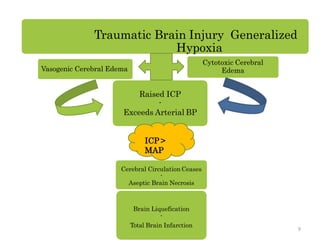
MECHANISM OF BRAIN DEATH
8
Traumatic Brain Injury Generalized
Hypoxia
Vasogenic Cerebral Edema
Cytotoxic Cerebral
Edema
Raised ICP
-
Exceeds Arterial BP
ICP >
MAP
Cerebral Circulation Ceases
-
Aseptic Brain Necrosis
Brain Liquefication
-
Total Brain Infarction
9
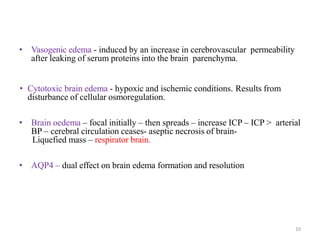
• Vasogenic edema - induced by an increase in cerebrovascular permeability
after leaking of serum proteins into the brain parenchyma.
• Cytotoxic brain edema - hypoxic and ischemic conditions. Results from
disturbance of cellular osmoregulation.
• Brain oedema – focal initially – then spreads – increase ICP – ICP > arterial
BP – cerebral circulation ceases- aseptic necrosis of brain-
Liquefied mass – respirator brain.
• AQP4 – dual effect on brain edema formation and resolution
• the brain parenchyma.
10
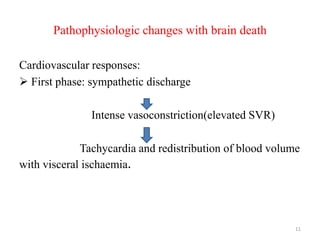
Pathophysiologic changes with brain death
Cardiovascular responses:
 First phase: sympathetic discharge
Intense vasoconstriction(elevated SVR)
Tachycardia and redistribution of blood volume
with visceral ischaemia.
11
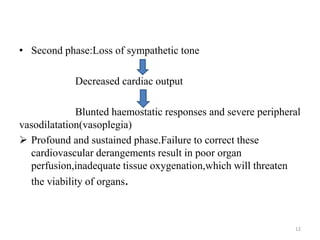
• Second phase:Loss of sympathetic tone
Decreased cardiac output
Blunted haemostatic responses and severe peripheral
vasodilatation(vasoplegia)
 Profound and sustained phase.Failure to correct these
cardiovascular derangements result in poor organ
perfusion,inadequate tissue oxygenation,which will threaten
the viability of organs.
12
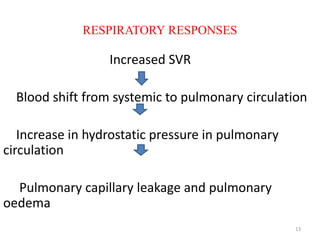
RESPIRATORY RESPONSES
Increased SVR
Blood shift from systemic to pulmonary circulation
Increase in hydrostatic pressure in pulmonary
circulation
Pulmonary capillary leakage and pulmonary
oedema
13
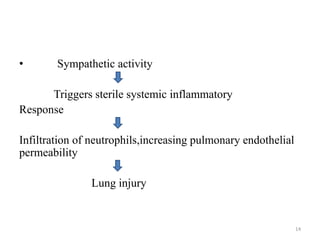
• Sympathetic activity
Triggers sterile systemic inflammatory
Response
Infiltration of neutrophils,increasing pulmonary endothelial
permeability
Lung injury
14
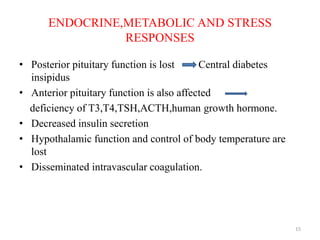
ENDOCRINE,METABOLIC AND STRESS
RESPONSES
• Posterior pituitary function is lost Central diabetes
insipidus
• Anterior pituitary function is also affected
deficiency of T3,T4,TSH,ACTH,human growth hormone.
• Decreased insulin secretion
• Hypothalamic function and control of body temperature are
lost
• Disseminated intravascular coagulation.
15
HYPOTHALAMIC PITUITARY ENDOCRINE
FUCTIONS
• Preserved to a certain degree for a certain period after the
onset of brain death.
• Thyroid hormones & vasopressins levels are markedly
reduced after brain death.
• Hormonal therapy for hemodynamic stabilization of brain-
dead organ donors - T3, vasopressin, methylprednisolone and
insulin.,
16
Steps in Determining Brain Death
 Clinical diagnosis of brain death should be performed in three
steps
1.Establishing the etiology of disease
2.Excluding certain potentially reversible syndromes that may
produce signs similar to brain death
3.Demonstrating clinical signs of brain death
• Coma
• Brainstem areflexia
• Apnea
17
REVERSIBLE CAUSES ( to be ruled out)
 Intoxication (alcohol)
 Drugs, which depress the central nervous system
 Muscle relaxants
 Primary hypothermia (by measuring rectal temperature)
 Hypovolaemic shock( by sequential measurement of blood
pressure)
 Metabolic and endocrine disorders. Hypernatremia and
diabetes insipidus is more often the effect rather than
the cause.
18
IRREVERSIBLE CAUSE OF DEATH
 Neurological assessments may be unreliable in the acute post-
resuscitation phase after cardiorespiratory arrest.
 In cases of acute hypoxic-ischemic brain injury, clinical
evaluation for NDD should be delayed for 24 h subsequent to
the cardiorespiratory arrest or an ancillary test could be
performed.
 Core temperature MUST be ≥ 36°C to proceed with formal
testing.
 Central blood, rectal or esophageal–gastric
 Previously was 32.2°C
19
LOSS OF CONSCIOUSNESS AND
UNRESPONSIVENESS
• The patient should be in coma and scored as 3 on the Glasgow
Coma Scale.
• Motor responses of the limbs or facial muscles to painful
supraorbital pressure should be absent.
• Motor responses (i.e. Lazarus sign) may occur spontaneously
during apnea testing and are considered to have a spinal origin.
This sign is often observed during hypoxic or hypotensive
episodes.
20
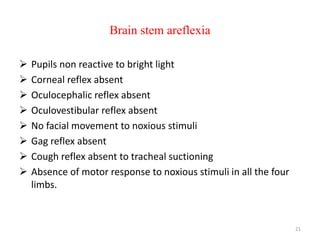
Brain stem areflexia
 Pupils non reactive to bright light
 Corneal reflex absent
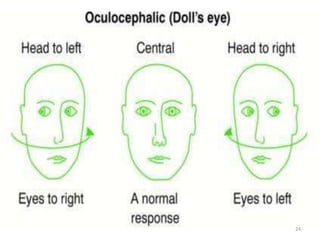
 Oculocephalic reflex absent
 Oculovestibular reflex absent
 No facial movement to noxious stimuli
 Gag reflex absent
 Cough reflex absent to tracheal suctioning
 Absence of motor response to noxious stimuli in all the four
limbs.
21
PUPILLARY REFLEX
• Absent pupillary reflex to
direct and consensual light
[cranial nerve II and III];
pupils need not be equal or
dilated.
• Conditions interfering in the
pupillary reflex are orbital
trauma, head injury, cataracts,
and medications like high dose
dopamine, glutethamide,
scopolamine, atropine,
bretylium or monoamine
oxidase inhibitors.
22
• Absent corneal reflex
[cranial nerve V and VII],
oculocephalic (also called
Doll eye movement), cough
and gag reflexes [cranial
nerve IX and X].
• The corneal reflex may be
altered as a result of facial
weakness
23
24
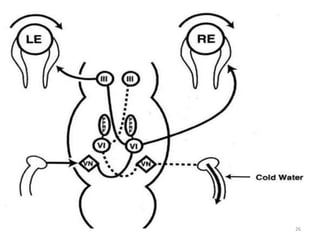
Oculovestibular reflex
• Cold Caloric test /Absent oculovestibular reflex [cranial nerve VIII,
III and VI]:
• The external auditory canal should be clear of cerumen and
tympanic membranes should be intact.
• Elevate the patient‟s head by 30˚.
• Twenty to fifty (20 to 50) ml of ice water irrigated into external
auditory canal and over the tympanic membrane using a soft
irrigation cannula.
• One should look for eye ball movement for which upper eyelids
need to be retracted.
• Allow 1 minute response time after injection/irrigation of fluid and
at least 5 minutes between testing on each side.
• No eye ball movements will be seen in brain dead patient.
25
26
APNEA TEST
 Pre-requisites:
(1) normotension (systolic blood pressure ≥100 mm Hg)
(2) normothermia (core temperature >36° C)
(3) Euvolemia
(4) eucapnia (Paco2 35 to 45 mm Hg), and no prior evidence of
carbon dioxide retention.
(5)Normal PO2. Pre-oxygenation for 15min with 100% Oxygen
before carrying the apnea test, try to achieve an arterial PO2 ≥
200 mm Hg for safely conducting the test
27
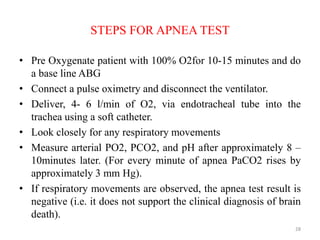
STEPS FOR APNEA TEST
• Pre Oxygenate patient with 100% O2for 10-15 minutes and do
a base line ABG
• Connect a pulse oximetry and disconnect the ventilator.
• Deliver, 4- 6 l/min of O2, via endotracheal tube into the
trachea using a soft catheter.
• Look closely for any respiratory movements
• Measure arterial PO2, PCO2, and pH after approximately 8 –
10minutes later. (For every minute of apnea PaCO2 rises by
approximately 3 mm Hg).
• If respiratory movements are observed, the apnea test result is
negative (i.e. it does not support the clinical diagnosis of brain
death).
28
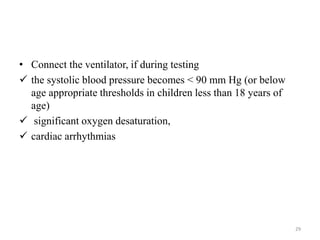
• Connect the ventilator, if during testing
 the systolic blood pressure becomes < 90 mm Hg (or below
age appropriate thresholds in children less than 18 years of
age)
 significant oxygen desaturation,
 cardiac arrhythmias
29
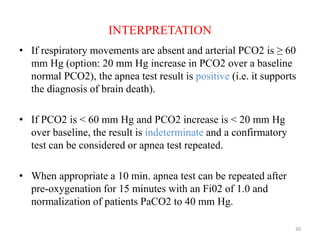
INTERPRETATION
• If respiratory movements are absent and arterial PCO2 is ≥ 60
mm Hg (option: 20 mm Hg increase in PCO2 over a baseline
normal PCO2), the apnea test result is positive (i.e. it supports
the diagnosis of brain death).
• If PCO2 is < 60 mm Hg and PCO2 increase is < 20 mm Hg
over baseline, the result is indeterminate and a confirmatory
test can be considered or apnea test repeated.
• When appropriate a 10 min. apnea test can be repeated after
pre-oxygenation for 15 minutes with an Fi02 of 1.0 and
normalization of patients PaCO2 to 40 mm Hg.
30
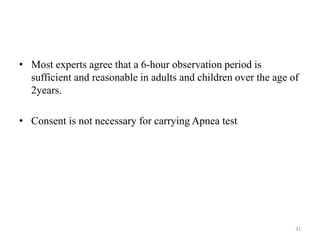
• Most experts agree that a 6-hour observation period is
sufficient and reasonable in adults and children over the age of
2years.
• Consent is not necessary for carrying Apnea test
31
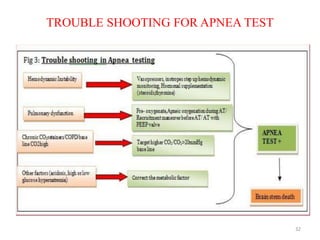
TROUBLE SHOOTING FOR APNEA TEST
32
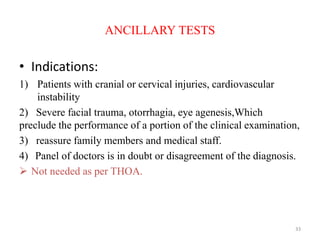
ANCILLARY TESTS
• Indications:
1) Patients with cranial or cervical injuries, cardiovascular
instability
2) Severe facial trauma, otorrhagia, eye agenesis,Which
preclude the performance of a portion of the clinical examination,
3) reassure family members and medical staff.
4) Panel of doctors is in doubt or disagreement of the diagnosis.
 Not needed as per THOA.
33
CEREBRAL ANGIOGRAPHY
a. The contrast medium should be injected in the aortic arch
under high pressure and reach both anterior and posterior
circulations.
b. No intracerebral filling should be detected at the level of entry
of the carotid or vertebral artery to the skull.
c. The external carotid circulation should be patent.
d. The filling of the superior longitudinal sinus may be delayed
34
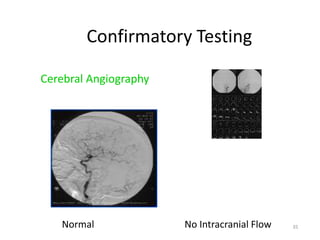
Confirmatory Testing
Cerebral Angiography
Normal No Intracranial Flow 35
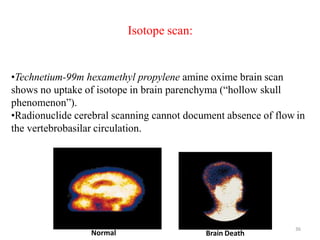
Normal Brain Death
Isotope scan:
•Technetium-99m hexamethyl propylene amine oxime brain scan
shows no uptake of isotope in brain parenchyma (“hollow skull
phenomenon”).
•Radionuclide cerebral scanning cannot document absence of flow in
the vertebrobasilar circulation.
36
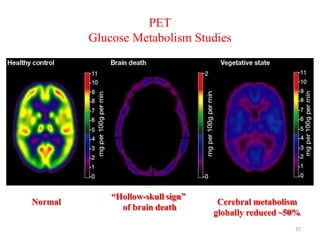
“Hollow-skull sign”
of brain death
Cerebral metabolism
globally reduced ~50%
Normal
PET
Glucose Metabolism Studies
37
COMPUTED TOMOGRAPHY
• Noninvasive test
• intravenous injection of contrast media-time density analysis
• Advantages –
1) easily accessible
2) fairly inexpensive
3)only minutes
4) can also be combined with CT perfusion imaging
5) noninvasive
6) the images are easy to interpret.
Xenon-CT cerebral blood flow method – average global flow
of less than 5 mL/dL/min confirms brain death
38
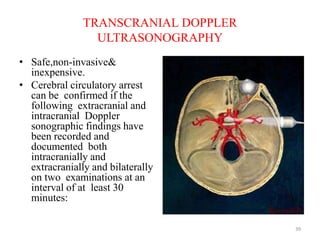
TRANSCRANIAL DOPPLER
ULTRASONOGRAPHY
• Safe,non-invasive&
inexpensive.
• Cerebral circulatory arrest
can be confirmed if the
following extracranial and
intracranial Doppler
sonographic findings have
been recorded and
documented both
intracranially and
extracranially and bilaterally
on two examinations at an
interval of at least 30
minutes:
39
• “Systolic spikes” or “oscillating flow” in any cerebral artery
can be recorded by bilateral transcranial insonation of the
internal carotid artery and middle cerebral artery.
• 2.The diagnosis established by the intracranial examination
must be confirmed by the extracranial bilateral recording of
the common carotid artery, ICA, and vertebral arteries.
40
EEG
• Minimum of 8 scalp electrodes to be used
• Loss of bioelectrical brain activity as shown on the EEG
(i.e., isoelectric EEG) is a reliable confirmatory test for brain
death
• False positive - drug intoxication – barbiturates.
• False negative – residual electrical activity that persist
after brain death
41
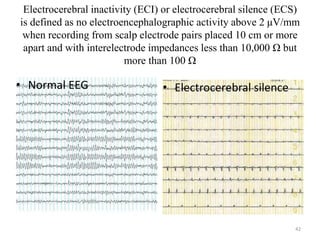
Electrocerebral inactivity (ECI) or electrocerebral silence (ECS)
is defined as no electroencephalographic activity above 2 μV/mm
when recording from scalp electrode pairs placed 10 cm or more
apart and with interelectrode impedances less than 10,000 Ω but
more than 100 Ω
• Normal EEG • Electrocerebral silence
42
How many doctors required?
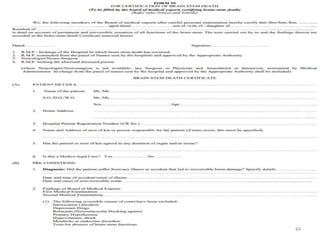
• For certification of of brainstem death requires a panel four doctors.
1.R.M.P.- Incharge of the Hospital In which brain-stem death has
occurred.
2.R.M.P. nominated from the panel of Names sent by the hospitals and
approved by the Appropriate Authority.
3.Neurologist/Neuro-Surgeon
4.R.M.P. treating the aforesaid deceased person
(where Neurologist/Neurosurgeon is not available, any Surgeon or
Physician and Anaesthetist or Intensivist, nominated by Medical
Administrator In-charge from the panel of names sent by the hospital
and approved by the Appropriate Authority shall be included)
Form 10 should be filled and signed by the medical experts certifying
brain stem death.
43
44
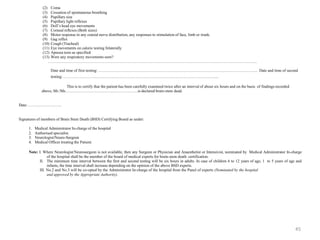
(2) Coma
(3) Cessation of spontaneous breathing
(4) Pupillary size
(5) Pupillary light reflexes
(6) Doll’s head eye movements
(7) Corneal reflexes (Both sizes)
(8) Motor response in any cranial nerve distribution, any responses to stimulation of face, limb or trunk.
(9) Gag reflex
(10) Cough (Tracheal)
(11) Eye movements on caloric testing bilaterally
(12) Apnoea tests as specified
(13) Were any respiratory movements seen?
…………………………………………………………………………………………………………………………………………..
Date and time of first testing: ………………………………………………………………………………………………………... Date and time of second
testing: ……………………………………………………………………………………………………...
This is to certify that the patient has been carefully examined twice after an interval of about six hours and on the basis of findings recorded
above, Mr./Ms……………………………………………….is declared brain-stem dead.
Date: …………………….
Signatures of members of Brain Stem Death (BSD) Certifying Board as under:
1. Medical Administrator In-charge of the hospital
2. Authorised specialist.
3. Neurologist/Neuro-Surgeon
4. Medical Officer treating the Patient.
Note: I. Where Neurologist/Neurosurgeon is not available, then any Surgeon or Physician and Anaesthetist or Intensivist, nominated by Medical Administrator In-charge
of the hospital shall be the member of the board of medical experts for brain-stem death certification.
II. The minimum time interval between the first and second testing will be six hours in adults. In case of children 6 to 12 years of age, 1 to 5 years of age and
infants, the time interval shall increase depending on the opinion of the above BSD experts.
III. No.2 and No.3 will be co-opted by the Administrator In-charge of the hospital from the Panel of experts (Nominated by the hospital
and approved by the Appropriate Authority).
45
• Clinical examination and apnea test need to be done two times
after an interval of six hours.
• After the second test the team should start counseling the
family regarding organ donation.
• The time of death is the end of second apnea test
46
COMMUNICATION PLATFORM
• The ICU physician should communicate the confirmation of
brainstem death to transplant coordinator who in turn can
communicate to family and make request for the organ
donation.
• Simultaneously, the administrators of the hospital should be
communicated to stop the further billing once diagnosis of
brainstem death is confirmed and family has consented for the
organ donation
47
• The process of consent for organ and tissue donation involves:
1) the deceased
2) Next of kin
3) Coroners consent (medico legal cases)
48
EXCLUSION CRITERIA
1)Infection with human immunodeficiency virus, , Human T cell
leukemia-lymphoma virus.
2) Systemic viral infections (measles, rabies, adenovirus,
parvovirus) and herpetic meningoencephalitis.
3)Active malignant disease or a history of malignancy that poses
a high risk for transmission irrespective of the apparent disease-
free period(e.g. melanoma, choriocarcinoma).
Bacteremia or fungemia are not absolute contraindication to
donation.
Acute organ dysfunction in particular acute renal failure in a
potential donor with prior renal function, is not a contraindication
to donation.
49
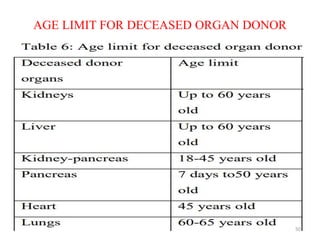
AGE LIMIT FOR DECEASED ORGAN DONOR
50
MANAGEMENT OF BRAIN DEAD DONOR IN ICU
51
GENERAL CARE
• Hand hygiene
• Bronchial toilet
• Eye care
• Nasogastric tube insertion
• Arterial and central venous line insertion- preferably
into upper extremities.
52
MONITORING
• The brain dead organ donor requires extremely close
monitoring to detect decompensation and treat it urgently. The
following monitors are required at a minimum.
1. Core temperature (Either Nasopharyngeal, esophageal, rectal
or indwelling bladder catheter)
2. ECG
3. SBP (Arterial Catheter)
4. CVP (Subclavian or IJV)
5. Arterial line
6. SpO2
7. Hourly urine output
8. Echocardiography (differential diagnosis of hypotension, and
aids in assessing the suitability of the heart for harvesting).
53
ROUTINE INVESTIGATIONS
• The following investigations should be performed at a minimum.
a.CBC
b. Blood grouping and cross matching
c. Coagulation profile- PT/PTTK
d. RFT-BUN, Creatinine
e. Complete LFT
f. S Electrolytes- Ca, Mg, Na, K
g. Blood Sugar
h. Urine analysis
i. ABG with lactate
j. Cardiac evaluation - i. ECG ii. Echocardiography
54
• K. Imaging-
1.CXR
2.USG for abdominal organs-liver, kidney, pancreas
l. Microbiology-
i. Surveillance cultures of ET Asp, Blood, urine, any other fluid
eg:ascitic fluid
ii. Viral markers- 1. HBsAg 2. Anti HCV 3. HIV 1&2
55
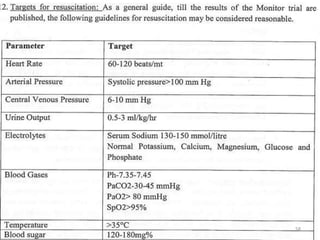
GOALS
• One should aim to maintain body temperature, ensure adequate
oxygenation, circulating volume, cardiovascular stability, and
adequate urine output
• A simple method to maintain potential donor is “Rule of 100”
56
RULE OF 100
• Systolic arterial pressure 100 mm Hg
• Urine output 100 ml/h
• PaO2 -100 mm Hg
• Haemoglobin concentration 100 g/litre.
• Blood sugar 100% normal’
57
58
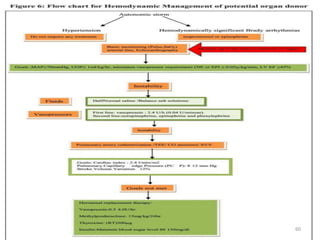
 The medical management of organ donor can be broadly
divided into
• Management of hemodynamics
• Management of metabolic derangement
• Temperature management
• Management of respiration and hematological parameters
• Nutrition management
59
60
MANAGEMENT OF HEMODYNAMICS
• Goals for management of hemodynamic status of the donor: -
1) To maintain normovolemia and blood pressure,
2) Optimize cardiac output so as to maintain perfusion pressure
of all organs with the use of the least amount of vasoactive
support.
61
Hypertension
• Because of the transient nature of autonomic storm,
antihypertensive are usually not required.
• If needed, short acting antihypertensive such as esmolol,
sodium nitroprusside, hydralazine, labetalol, or nitroglycerine
should be used.
• Antihypertensive is not required for long
62
HYPOVOLEMIA
• Three management strategies are commonly adopted and
treatment is escalated depending on the clinical response.
• These strategies are:
A) Volume expansion
B) Vasopressors, Inotropes.
C) Hormonal replacement
63
VOLUME EXPANSION
• Crystalloids with balanced salt content so as to avoid
hypernatremia (concurrent DI), hyperchloraemic acidosis
(increases renal vascular resistance, confounds base excess)
when used as resuscitation target.
• Administration of excessive intravenous fluids containing 5%
dextrose may further complicate the hyperglycemia and
hypothermia.
• Avoid colloids. Hydroxyethyl starches are contraindicated in
organ donors because they can damage renal epithelial cells
and cause early graft dysfunction in the transplanted kidneys.
64
• Albumin solutions (20%, 4%) may be considered to reduce the
amount of volume given, although usually only moderately
effective.
• The most commonly used fluids are Ringer‟s lactate,
Plasmalyte-A, Ringer‟s acetate, half normal
• Packed red cells should be transfused to achieve a haematocrit
of 30 percent in order to maintain oxygen delivery
65
VASOPRESSORS
• Vasopressin in pressor dose (1-2 U/hr.) plays an important role
in stabilizing the hemodynamic of brain-dead patient.
Vasopressin up to 2.4 units/hour may reduce the requirement
of other ionotropes. ( First choice)
• Norepinephrine is also commonly used for this purpose. As far
as possible, high doses of norepinephrine>0.05 mg/kg/min
should be avoided.
• Dopamine can be used as well, but has an increased incidence
of arrhythmias.
66
HORMONAL REPLACEMENT
• Thyroxine300- 400mcg through Naso-gastric route can be
given in hemodynamic ally unstable patients, but absorption
and clinical effect is not proven.
67
ARRYTHMIAS
• More commonly seen in case of longer lag between brain
death and organ removal.
• Electrolytes, blood pressure, fluid volume and body
temperature should be carefully monitored and maintaining
within normal range to reduce the risk of development of
cardiac arrhythmia.
• Treatment of tachyarrhythmia:
1. If arrhythmia occurs, it can be treated with standard therapy
such as Amiodarone or Cardioversion.
2. Atropine is not useful in management of bradycardia whereas
adrenaline, isoprenaline or pacing may be effective.
68
HORMONAL RESUSCITATION
a. Vasopressin 1 U bolus followed by an infusion of 0.5-4.0 U/h
(desmopressin intranasal has a selective action on the V2
receptors and a half-life varying from 6 to 20 h.
b. Methylprednisolone: 15 mg/kg immediately after diagnosis of
brain death and 24th hourly thereafter. Another option 250mg
followed by 100mg/hour till the organ retrieval.
c. Insulin infusion to maintain blood glucose between 80 and 150
mg.
d. Thyroxine (T4) 20 mcg bolus followed by infusions of 10
mcg/h. Tri-iodothyronine (T3) given as a 4-mcgbolus followed by
an infusion of 3 mcg/h.
69
METABOLIC DERANGEMENT
• Intravenous fluids are also required to maintain normal fluid
volume and electrolytes balance.
• Serum sodium and potassium should be monitored every 2-4
hours.
• Insulin infusion may be required for maintenance of normal
blood glucose.
• Maintain blood sugars b/w 80- 150mg/dl.
70
PULMONARY MANAGEMENT
• Respiratory passage should be clear without any obstruction.
In order to achieve this, routine measures such as suctioning,
positioning and turning should be continued.
• A technique such as positive end-expiratory pressure helps to
maintain oxygen delivery to the organs due to reduction in
atelectasis.
• Interstitial fluid overload should be avoided.
• Oxygen saturations within normal limits and normocapnia
should be maintained
71
TEMPERATURE MANAGEMENT
• Efforts should be made to maintain temperature >350C.
• Surface warming should be done in all patients with
hypothermia.
• The patients with body temperature of less than 340 C should
be given core warming.
• In such cases, inhaled gases should be warmed and
humidified by using humidifier.
• Intravenous fluid should also be warmed if large volumes are
to be administered
72
HEMATOLOGIC MANAGEMENT:
• In case of active bleeding, the cause of bleeding should be
corrected at the earliest.
• Sometimes, transfusion of blood, coagulation factors and
platelets may be needed to correct severe anemia and/or
coagulopathy.
• In case of worsening coagulopathy, organ removal should be
expedited.
• Transfusion of blood or blood products should be done only if
necessary.
73
INFECTION MANAGEMENT
• Donor should be infection free.
• Routine use of antibiotic prophylaxis is not warranted.
• Use of antibiotic agents on the basis of results of Gram’s
staining of aspirated secretion and positive cultures.
74
NUTRITION
• Nutrition should be continued as per standard ICU protocol.
• Nutrition should be continued in patients awaiting consent for
organ donation from the caregivers.
• Continuing enteral feeding in the potential donors may help in
providing beneficial effects for organ functioning.
75
SHIFTING TO OR
• Special care must be taken during the transfer as donor is
vulnerable to episodes of haemodynamic instability anytime.
• continuous monitoring since transport frequently precipitates
instability, often because of change in ventilation or delivery
of infusions.
• special attention must be paid to airway and particularly
infusion pumps delivering vasopressors.
76
PREPARATION OF OT
• Before transferring the donor to the theater, the OT should be
kept ready.
• The OT should be kept warm and warming blanket and fluid
warmers should be used to prevent gross hypothermia.
• The preparation should proceed as for any major surgery
keeping in mind that a large number of these donors can
developed hypotension, diabetes insipidus, cardiac arrhythmia,
disseminated intra vascular coagulation (DIC), pulmonary
edema etc.
77
ANAESTHETIC MANAGEMENT
• The main aim is to maintain haemodynamic stability for
optimal organ perfusion until organs are retrieved from brain
dead patient.
*Anaesthetic Agents:
1.Inhalational anaesthetics such as Isoflurane and sevoflurane can
cause ischemic preconditioning of organs and this may improve
graft organ function by offering protection against cold and warm
ischemia.
2.Inhalational anaesthetic may have a beneficial effect by causing
peripheral vasodilation.
78
OTHER DRUGS
• Some donors show spontaneous or response to stimulus when
the surgery starts. This is also called mass reflex and is a part
of the spinal reflex whereby there is tachycardia, hypertension,
perspiration and involuntary movements.
-Muscle relaxants (Vecuronium 0.1mg/kg) are given to allow
adequate surgical exposure and suppress the possibility of spinal-
reflex-induced patient movement.
-Analgesia can be provided with Narcotic analgesic-Fentany1 1-5
µg/kg.
-Air and oxygen mixture can be given.
79
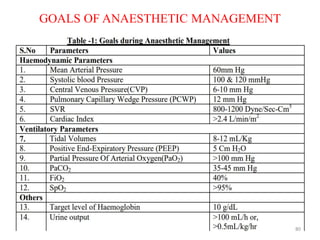
GOALS OF ANAESTHETIC MANAGEMENT
80
BROAD SURGICAL STEPS
a.The anaesthesiologist should be familiar with surgical steps so
as to keep pace with requirements of various surgical teams, more
so in case of multi-organ harvesting.
b. After preparing the donor from neck to pubis and a long
midline incision is made from the suprasternal notch to the pubis.
Depending upon the stability of the donor, either the thoracic or
the splanchnic dissection may follow.
c. In a haemodynamically stable donor, dissection is more
deliberate before donor is heparinized and cold-flushed. It may
even be possible to plan in-situ splitting of the liver graft.
81
4.In an unstable donor with imminent haemodynamic collapse,
harvesting of thoracic organs should be forsaken, the abdominal
organs should be rapidly flushed and cooled and organs are
removed en bloc for further dissection on bench.
5.If the pancreas is to be harvested, the duodenum is flushed with
an antibiotic or betadine solution through a nasogastric tube.
6.The portal circulation is cannulated.
7.The abdominal aorta is ligated and cannulated just above the
bifurcation
82
8.The heart is arrested, the aorta is clamped at the diaphragm, and
the organs are flushed with preservative solution.
9.Quick uniform cooling is essential to minimize warm ischemic
damage to the various organs. The UW solution is commonly
used as the preservative solution which is responsible for
maintaining a colloid-oncotic, osmotic, and electrolyte balance
across cellular membranes in the preserved organ.
10.In general the order of organ removal is as follows: heart and
lungs first, followed by removal of liver, pancreas and both
kidneys. Corneas are the last to be retrieved
83
Aishwarya Rai, Amitabh Bachhan, Jaya Bhachhan, Rajnikanth, Amir
Khan and many other film personalities have pledged their Eyes at
different times on media
Anil Kumble, Sunil Shetty, Yukta Mukhi, Revathi Menon
Madhavan have endorsed their views on multi-organ donation 4
84
THANKYOU 85
REFERENCES
1.MILLER’S 8th EDITION
2.Management of Potential Organ Donor: Indian Society of
Critical Care Medicine (ISCCM) - Position Statement
Rahul Anil Pandit, Kapil G. Zirpe1, Sushma Kirtikumar Gurav2, Atul P. Kulkarni3, Sunil Karnath4,
Deepak Govil5, Babu Abhram6, Yatin Mehta7, Abinav Gupta8, Ashit Hegde9, Vijaya Patil10, Pradip
Bhatacharya11, Subhal Dixit12, Srinivas Samavedan13, Subhash Todi14
3.GUIDELINES FOR MANAGEMENT OF THE BRAIN
DEAD ORGAN DONOR IN THE OPERATION THEATER
(OT)
Dr Vijay Vohra and Col Deepak Kumar Sreevastava
4. SOP FOR MANAGEMENT OF THE BRAIN DEAD ORGAN
DONOR IN INTENSIVE CARE UNIT (ICU)
86

Brain stem death3

  • 1.
    BRAIN DEATH Role ofIntensivist in diagnosis and preparation for organ retrieval Speaker :Dr M.Harsha vardhan Moderator : Dr Bhargavi, Asst Professor 1
  • 2.
    HISTORY  1959 Comade’passe’(Fr.- a state beyond coma) Mollaret and Goulon  1968 Irreversible Coma/Brain Death Harvard Medical School Ad Hoc Committee  1994 India, Transplantation of Human Organs Act 2
  • 3.
    INTRODUCTION • Traditional conceptof death -life begins with the first inspiration after birth, that death comes with the last expiration and that cardiac activity ceases within a few minutes of the last expiration. • BRAIN DEATH: • Loss of Cerebral cortex and Brainstem function. • Etiology is known and demonstrably irreversible. Spinal cord reflexes may be preserved in some. • Introduced by Harvard medical school in 1968 3
  • 4.
    • CEREBRAL DEATH Cessationof function of cerebral cortices. Brainstem function controlling respiratory centers ANS & Endocrine & immune systems are preserved with a flat cortical EEG • BRAINSTEM DEATH • Does not require EEG for confirmation • Based on rationale that brainstem and not cortices control respiration, circulation homeostasis and reticular formation for consciousness. 4
  • 5.
    CAUSES • CerebrovascularAccident - Stroke -RupturedAneurysm •Anoxia • Hanging, drowning, smoke inhalation, CO poisoning • Trauma- RTA, Fall Open- Gun shot wounds Closed- Blunt Injury 5
  • 6.
    DEAD DONOR RULE •The “dead-donor rule,” which requires that patients must be declared dead before the removal of any life-sustaining organs and the retrieval of organs for transplantation should not cause the death of a donor, is the ethical and legal axiom. 6
  • 7.
    Brain death  Irreversibleloss of all functions of brain including brain stem  Three essential findings Coma Absent brainstem reflexes Apnea  Diagnosis is mainly clinical 7
  • 8.
  • 9.
    Traumatic Brain InjuryGeneralized Hypoxia Vasogenic Cerebral Edema Cytotoxic Cerebral Edema Raised ICP - Exceeds Arterial BP ICP > MAP Cerebral Circulation Ceases - Aseptic Brain Necrosis Brain Liquefication - Total Brain Infarction 9
  • 10.
    • Vasogenic edema- induced by an increase in cerebrovascular permeability after leaking of serum proteins into the brain parenchyma. • Cytotoxic brain edema - hypoxic and ischemic conditions. Results from disturbance of cellular osmoregulation. • Brain oedema – focal initially – then spreads – increase ICP – ICP > arterial BP – cerebral circulation ceases- aseptic necrosis of brain- Liquefied mass – respirator brain. • AQP4 – dual effect on brain edema formation and resolution • the brain parenchyma. 10
  • 11.
    Pathophysiologic changes withbrain death Cardiovascular responses:  First phase: sympathetic discharge Intense vasoconstriction(elevated SVR) Tachycardia and redistribution of blood volume with visceral ischaemia. 11
  • 12.
    • Second phase:Lossof sympathetic tone Decreased cardiac output Blunted haemostatic responses and severe peripheral vasodilatation(vasoplegia)  Profound and sustained phase.Failure to correct these cardiovascular derangements result in poor organ perfusion,inadequate tissue oxygenation,which will threaten the viability of organs. 12
  • 13.
    RESPIRATORY RESPONSES Increased SVR Bloodshift from systemic to pulmonary circulation Increase in hydrostatic pressure in pulmonary circulation Pulmonary capillary leakage and pulmonary oedema 13
  • 14.
    • Sympathetic activity Triggerssterile systemic inflammatory Response Infiltration of neutrophils,increasing pulmonary endothelial permeability Lung injury 14
  • 15.
    ENDOCRINE,METABOLIC AND STRESS RESPONSES •Posterior pituitary function is lost Central diabetes insipidus • Anterior pituitary function is also affected deficiency of T3,T4,TSH,ACTH,human growth hormone. • Decreased insulin secretion • Hypothalamic function and control of body temperature are lost • Disseminated intravascular coagulation. 15
  • 16.
    HYPOTHALAMIC PITUITARY ENDOCRINE FUCTIONS •Preserved to a certain degree for a certain period after the onset of brain death. • Thyroid hormones & vasopressins levels are markedly reduced after brain death. • Hormonal therapy for hemodynamic stabilization of brain- dead organ donors - T3, vasopressin, methylprednisolone and insulin., 16
  • 17.
    Steps in DeterminingBrain Death  Clinical diagnosis of brain death should be performed in three steps 1.Establishing the etiology of disease 2.Excluding certain potentially reversible syndromes that may produce signs similar to brain death 3.Demonstrating clinical signs of brain death • Coma • Brainstem areflexia • Apnea 17
  • 18.
    REVERSIBLE CAUSES (to be ruled out)  Intoxication (alcohol)  Drugs, which depress the central nervous system  Muscle relaxants  Primary hypothermia (by measuring rectal temperature)  Hypovolaemic shock( by sequential measurement of blood pressure)  Metabolic and endocrine disorders. Hypernatremia and diabetes insipidus is more often the effect rather than the cause. 18
  • 19.
    IRREVERSIBLE CAUSE OFDEATH  Neurological assessments may be unreliable in the acute post- resuscitation phase after cardiorespiratory arrest.  In cases of acute hypoxic-ischemic brain injury, clinical evaluation for NDD should be delayed for 24 h subsequent to the cardiorespiratory arrest or an ancillary test could be performed.  Core temperature MUST be ≥ 36°C to proceed with formal testing.  Central blood, rectal or esophageal–gastric  Previously was 32.2°C 19
  • 20.
    LOSS OF CONSCIOUSNESSAND UNRESPONSIVENESS • The patient should be in coma and scored as 3 on the Glasgow Coma Scale. • Motor responses of the limbs or facial muscles to painful supraorbital pressure should be absent. • Motor responses (i.e. Lazarus sign) may occur spontaneously during apnea testing and are considered to have a spinal origin. This sign is often observed during hypoxic or hypotensive episodes. 20
  • 21.
    Brain stem areflexia Pupils non reactive to bright light  Corneal reflex absent  Oculocephalic reflex absent  Oculovestibular reflex absent  No facial movement to noxious stimuli  Gag reflex absent  Cough reflex absent to tracheal suctioning  Absence of motor response to noxious stimuli in all the four limbs. 21
  • 22.
    PUPILLARY REFLEX • Absentpupillary reflex to direct and consensual light [cranial nerve II and III]; pupils need not be equal or dilated. • Conditions interfering in the pupillary reflex are orbital trauma, head injury, cataracts, and medications like high dose dopamine, glutethamide, scopolamine, atropine, bretylium or monoamine oxidase inhibitors. 22
  • 23.
    • Absent cornealreflex [cranial nerve V and VII], oculocephalic (also called Doll eye movement), cough and gag reflexes [cranial nerve IX and X]. • The corneal reflex may be altered as a result of facial weakness 23
  • 24.
  • 25.
    Oculovestibular reflex • ColdCaloric test /Absent oculovestibular reflex [cranial nerve VIII, III and VI]: • The external auditory canal should be clear of cerumen and tympanic membranes should be intact. • Elevate the patient‟s head by 30˚. • Twenty to fifty (20 to 50) ml of ice water irrigated into external auditory canal and over the tympanic membrane using a soft irrigation cannula. • One should look for eye ball movement for which upper eyelids need to be retracted. • Allow 1 minute response time after injection/irrigation of fluid and at least 5 minutes between testing on each side. • No eye ball movements will be seen in brain dead patient. 25
  • 26.
  • 27.
    APNEA TEST  Pre-requisites: (1)normotension (systolic blood pressure ≥100 mm Hg) (2) normothermia (core temperature >36° C) (3) Euvolemia (4) eucapnia (Paco2 35 to 45 mm Hg), and no prior evidence of carbon dioxide retention. (5)Normal PO2. Pre-oxygenation for 15min with 100% Oxygen before carrying the apnea test, try to achieve an arterial PO2 ≥ 200 mm Hg for safely conducting the test 27
  • 28.
    STEPS FOR APNEATEST • Pre Oxygenate patient with 100% O2for 10-15 minutes and do a base line ABG • Connect a pulse oximetry and disconnect the ventilator. • Deliver, 4- 6 l/min of O2, via endotracheal tube into the trachea using a soft catheter. • Look closely for any respiratory movements • Measure arterial PO2, PCO2, and pH after approximately 8 – 10minutes later. (For every minute of apnea PaCO2 rises by approximately 3 mm Hg). • If respiratory movements are observed, the apnea test result is negative (i.e. it does not support the clinical diagnosis of brain death). 28
  • 29.
    • Connect theventilator, if during testing  the systolic blood pressure becomes < 90 mm Hg (or below age appropriate thresholds in children less than 18 years of age)  significant oxygen desaturation,  cardiac arrhythmias 29
  • 30.
    INTERPRETATION • If respiratorymovements are absent and arterial PCO2 is ≥ 60 mm Hg (option: 20 mm Hg increase in PCO2 over a baseline normal PCO2), the apnea test result is positive (i.e. it supports the diagnosis of brain death). • If PCO2 is < 60 mm Hg and PCO2 increase is < 20 mm Hg over baseline, the result is indeterminate and a confirmatory test can be considered or apnea test repeated. • When appropriate a 10 min. apnea test can be repeated after pre-oxygenation for 15 minutes with an Fi02 of 1.0 and normalization of patients PaCO2 to 40 mm Hg. 30
  • 31.
    • Most expertsagree that a 6-hour observation period is sufficient and reasonable in adults and children over the age of 2years. • Consent is not necessary for carrying Apnea test 31
  • 32.
    TROUBLE SHOOTING FORAPNEA TEST 32
  • 33.
    ANCILLARY TESTS • Indications: 1)Patients with cranial or cervical injuries, cardiovascular instability 2) Severe facial trauma, otorrhagia, eye agenesis,Which preclude the performance of a portion of the clinical examination, 3) reassure family members and medical staff. 4) Panel of doctors is in doubt or disagreement of the diagnosis.  Not needed as per THOA. 33
  • 34.
    CEREBRAL ANGIOGRAPHY a. Thecontrast medium should be injected in the aortic arch under high pressure and reach both anterior and posterior circulations. b. No intracerebral filling should be detected at the level of entry of the carotid or vertebral artery to the skull. c. The external carotid circulation should be patent. d. The filling of the superior longitudinal sinus may be delayed 34
  • 35.
  • 36.
    Normal Brain Death Isotopescan: •Technetium-99m hexamethyl propylene amine oxime brain scan shows no uptake of isotope in brain parenchyma (“hollow skull phenomenon”). •Radionuclide cerebral scanning cannot document absence of flow in the vertebrobasilar circulation. 36
  • 37.
    “Hollow-skull sign” of braindeath Cerebral metabolism globally reduced ~50% Normal PET Glucose Metabolism Studies 37
  • 38.
    COMPUTED TOMOGRAPHY • Noninvasivetest • intravenous injection of contrast media-time density analysis • Advantages – 1) easily accessible 2) fairly inexpensive 3)only minutes 4) can also be combined with CT perfusion imaging 5) noninvasive 6) the images are easy to interpret. Xenon-CT cerebral blood flow method – average global flow of less than 5 mL/dL/min confirms brain death 38
  • 39.
    TRANSCRANIAL DOPPLER ULTRASONOGRAPHY • Safe,non-invasive& inexpensive. •Cerebral circulatory arrest can be confirmed if the following extracranial and intracranial Doppler sonographic findings have been recorded and documented both intracranially and extracranially and bilaterally on two examinations at an interval of at least 30 minutes: 39
  • 40.
    • “Systolic spikes”or “oscillating flow” in any cerebral artery can be recorded by bilateral transcranial insonation of the internal carotid artery and middle cerebral artery. • 2.The diagnosis established by the intracranial examination must be confirmed by the extracranial bilateral recording of the common carotid artery, ICA, and vertebral arteries. 40
  • 41.
    EEG • Minimum of8 scalp electrodes to be used • Loss of bioelectrical brain activity as shown on the EEG (i.e., isoelectric EEG) is a reliable confirmatory test for brain death • False positive - drug intoxication – barbiturates. • False negative – residual electrical activity that persist after brain death 41
  • 42.
    Electrocerebral inactivity (ECI)or electrocerebral silence (ECS) is defined as no electroencephalographic activity above 2 μV/mm when recording from scalp electrode pairs placed 10 cm or more apart and with interelectrode impedances less than 10,000 Ω but more than 100 Ω • Normal EEG • Electrocerebral silence 42
  • 43.
    How many doctorsrequired? • For certification of of brainstem death requires a panel four doctors. 1.R.M.P.- Incharge of the Hospital In which brain-stem death has occurred. 2.R.M.P. nominated from the panel of Names sent by the hospitals and approved by the Appropriate Authority. 3.Neurologist/Neuro-Surgeon 4.R.M.P. treating the aforesaid deceased person (where Neurologist/Neurosurgeon is not available, any Surgeon or Physician and Anaesthetist or Intensivist, nominated by Medical Administrator In-charge from the panel of names sent by the hospital and approved by the Appropriate Authority shall be included) Form 10 should be filled and signed by the medical experts certifying brain stem death. 43
  • 44.
  • 45.
    (2) Coma (3) Cessationof spontaneous breathing (4) Pupillary size (5) Pupillary light reflexes (6) Doll’s head eye movements (7) Corneal reflexes (Both sizes) (8) Motor response in any cranial nerve distribution, any responses to stimulation of face, limb or trunk. (9) Gag reflex (10) Cough (Tracheal) (11) Eye movements on caloric testing bilaterally (12) Apnoea tests as specified (13) Were any respiratory movements seen? ………………………………………………………………………………………………………………………………………….. Date and time of first testing: ………………………………………………………………………………………………………... Date and time of second testing: ……………………………………………………………………………………………………... This is to certify that the patient has been carefully examined twice after an interval of about six hours and on the basis of findings recorded above, Mr./Ms……………………………………………….is declared brain-stem dead. Date: ……………………. Signatures of members of Brain Stem Death (BSD) Certifying Board as under: 1. Medical Administrator In-charge of the hospital 2. Authorised specialist. 3. Neurologist/Neuro-Surgeon 4. Medical Officer treating the Patient. Note: I. Where Neurologist/Neurosurgeon is not available, then any Surgeon or Physician and Anaesthetist or Intensivist, nominated by Medical Administrator In-charge of the hospital shall be the member of the board of medical experts for brain-stem death certification. II. The minimum time interval between the first and second testing will be six hours in adults. In case of children 6 to 12 years of age, 1 to 5 years of age and infants, the time interval shall increase depending on the opinion of the above BSD experts. III. No.2 and No.3 will be co-opted by the Administrator In-charge of the hospital from the Panel of experts (Nominated by the hospital and approved by the Appropriate Authority). 45
  • 46.
    • Clinical examinationand apnea test need to be done two times after an interval of six hours. • After the second test the team should start counseling the family regarding organ donation. • The time of death is the end of second apnea test 46
  • 47.
    COMMUNICATION PLATFORM • TheICU physician should communicate the confirmation of brainstem death to transplant coordinator who in turn can communicate to family and make request for the organ donation. • Simultaneously, the administrators of the hospital should be communicated to stop the further billing once diagnosis of brainstem death is confirmed and family has consented for the organ donation 47
  • 48.
    • The processof consent for organ and tissue donation involves: 1) the deceased 2) Next of kin 3) Coroners consent (medico legal cases) 48
  • 49.
    EXCLUSION CRITERIA 1)Infection withhuman immunodeficiency virus, , Human T cell leukemia-lymphoma virus. 2) Systemic viral infections (measles, rabies, adenovirus, parvovirus) and herpetic meningoencephalitis. 3)Active malignant disease or a history of malignancy that poses a high risk for transmission irrespective of the apparent disease- free period(e.g. melanoma, choriocarcinoma). Bacteremia or fungemia are not absolute contraindication to donation. Acute organ dysfunction in particular acute renal failure in a potential donor with prior renal function, is not a contraindication to donation. 49
  • 50.
    AGE LIMIT FORDECEASED ORGAN DONOR 50
  • 51.
    MANAGEMENT OF BRAINDEAD DONOR IN ICU 51
  • 52.
    GENERAL CARE • Handhygiene • Bronchial toilet • Eye care • Nasogastric tube insertion • Arterial and central venous line insertion- preferably into upper extremities. 52
  • 53.
    MONITORING • The braindead organ donor requires extremely close monitoring to detect decompensation and treat it urgently. The following monitors are required at a minimum. 1. Core temperature (Either Nasopharyngeal, esophageal, rectal or indwelling bladder catheter) 2. ECG 3. SBP (Arterial Catheter) 4. CVP (Subclavian or IJV) 5. Arterial line 6. SpO2 7. Hourly urine output 8. Echocardiography (differential diagnosis of hypotension, and aids in assessing the suitability of the heart for harvesting). 53
  • 54.
    ROUTINE INVESTIGATIONS • Thefollowing investigations should be performed at a minimum. a.CBC b. Blood grouping and cross matching c. Coagulation profile- PT/PTTK d. RFT-BUN, Creatinine e. Complete LFT f. S Electrolytes- Ca, Mg, Na, K g. Blood Sugar h. Urine analysis i. ABG with lactate j. Cardiac evaluation - i. ECG ii. Echocardiography 54
  • 55.
    • K. Imaging- 1.CXR 2.USGfor abdominal organs-liver, kidney, pancreas l. Microbiology- i. Surveillance cultures of ET Asp, Blood, urine, any other fluid eg:ascitic fluid ii. Viral markers- 1. HBsAg 2. Anti HCV 3. HIV 1&2 55
  • 56.
    GOALS • One shouldaim to maintain body temperature, ensure adequate oxygenation, circulating volume, cardiovascular stability, and adequate urine output • A simple method to maintain potential donor is “Rule of 100” 56
  • 57.
    RULE OF 100 •Systolic arterial pressure 100 mm Hg • Urine output 100 ml/h • PaO2 -100 mm Hg • Haemoglobin concentration 100 g/litre. • Blood sugar 100% normal’ 57
  • 58.
  • 59.
     The medicalmanagement of organ donor can be broadly divided into • Management of hemodynamics • Management of metabolic derangement • Temperature management • Management of respiration and hematological parameters • Nutrition management 59
  • 60.
  • 61.
    MANAGEMENT OF HEMODYNAMICS •Goals for management of hemodynamic status of the donor: - 1) To maintain normovolemia and blood pressure, 2) Optimize cardiac output so as to maintain perfusion pressure of all organs with the use of the least amount of vasoactive support. 61
  • 62.
    Hypertension • Because ofthe transient nature of autonomic storm, antihypertensive are usually not required. • If needed, short acting antihypertensive such as esmolol, sodium nitroprusside, hydralazine, labetalol, or nitroglycerine should be used. • Antihypertensive is not required for long 62
  • 63.
    HYPOVOLEMIA • Three managementstrategies are commonly adopted and treatment is escalated depending on the clinical response. • These strategies are: A) Volume expansion B) Vasopressors, Inotropes. C) Hormonal replacement 63
  • 64.
    VOLUME EXPANSION • Crystalloidswith balanced salt content so as to avoid hypernatremia (concurrent DI), hyperchloraemic acidosis (increases renal vascular resistance, confounds base excess) when used as resuscitation target. • Administration of excessive intravenous fluids containing 5% dextrose may further complicate the hyperglycemia and hypothermia. • Avoid colloids. Hydroxyethyl starches are contraindicated in organ donors because they can damage renal epithelial cells and cause early graft dysfunction in the transplanted kidneys. 64
  • 65.
    • Albumin solutions(20%, 4%) may be considered to reduce the amount of volume given, although usually only moderately effective. • The most commonly used fluids are Ringer‟s lactate, Plasmalyte-A, Ringer‟s acetate, half normal • Packed red cells should be transfused to achieve a haematocrit of 30 percent in order to maintain oxygen delivery 65
  • 66.
    VASOPRESSORS • Vasopressin inpressor dose (1-2 U/hr.) plays an important role in stabilizing the hemodynamic of brain-dead patient. Vasopressin up to 2.4 units/hour may reduce the requirement of other ionotropes. ( First choice) • Norepinephrine is also commonly used for this purpose. As far as possible, high doses of norepinephrine>0.05 mg/kg/min should be avoided. • Dopamine can be used as well, but has an increased incidence of arrhythmias. 66
  • 67.
    HORMONAL REPLACEMENT • Thyroxine300-400mcg through Naso-gastric route can be given in hemodynamic ally unstable patients, but absorption and clinical effect is not proven. 67
  • 68.
    ARRYTHMIAS • More commonlyseen in case of longer lag between brain death and organ removal. • Electrolytes, blood pressure, fluid volume and body temperature should be carefully monitored and maintaining within normal range to reduce the risk of development of cardiac arrhythmia. • Treatment of tachyarrhythmia: 1. If arrhythmia occurs, it can be treated with standard therapy such as Amiodarone or Cardioversion. 2. Atropine is not useful in management of bradycardia whereas adrenaline, isoprenaline or pacing may be effective. 68
  • 69.
    HORMONAL RESUSCITATION a. Vasopressin1 U bolus followed by an infusion of 0.5-4.0 U/h (desmopressin intranasal has a selective action on the V2 receptors and a half-life varying from 6 to 20 h. b. Methylprednisolone: 15 mg/kg immediately after diagnosis of brain death and 24th hourly thereafter. Another option 250mg followed by 100mg/hour till the organ retrieval. c. Insulin infusion to maintain blood glucose between 80 and 150 mg. d. Thyroxine (T4) 20 mcg bolus followed by infusions of 10 mcg/h. Tri-iodothyronine (T3) given as a 4-mcgbolus followed by an infusion of 3 mcg/h. 69
  • 70.
    METABOLIC DERANGEMENT • Intravenousfluids are also required to maintain normal fluid volume and electrolytes balance. • Serum sodium and potassium should be monitored every 2-4 hours. • Insulin infusion may be required for maintenance of normal blood glucose. • Maintain blood sugars b/w 80- 150mg/dl. 70
  • 71.
    PULMONARY MANAGEMENT • Respiratorypassage should be clear without any obstruction. In order to achieve this, routine measures such as suctioning, positioning and turning should be continued. • A technique such as positive end-expiratory pressure helps to maintain oxygen delivery to the organs due to reduction in atelectasis. • Interstitial fluid overload should be avoided. • Oxygen saturations within normal limits and normocapnia should be maintained 71
  • 72.
    TEMPERATURE MANAGEMENT • Effortsshould be made to maintain temperature >350C. • Surface warming should be done in all patients with hypothermia. • The patients with body temperature of less than 340 C should be given core warming. • In such cases, inhaled gases should be warmed and humidified by using humidifier. • Intravenous fluid should also be warmed if large volumes are to be administered 72
  • 73.
    HEMATOLOGIC MANAGEMENT: • Incase of active bleeding, the cause of bleeding should be corrected at the earliest. • Sometimes, transfusion of blood, coagulation factors and platelets may be needed to correct severe anemia and/or coagulopathy. • In case of worsening coagulopathy, organ removal should be expedited. • Transfusion of blood or blood products should be done only if necessary. 73
  • 74.
    INFECTION MANAGEMENT • Donorshould be infection free. • Routine use of antibiotic prophylaxis is not warranted. • Use of antibiotic agents on the basis of results of Gram’s staining of aspirated secretion and positive cultures. 74
  • 75.
    NUTRITION • Nutrition shouldbe continued as per standard ICU protocol. • Nutrition should be continued in patients awaiting consent for organ donation from the caregivers. • Continuing enteral feeding in the potential donors may help in providing beneficial effects for organ functioning. 75
  • 76.
    SHIFTING TO OR •Special care must be taken during the transfer as donor is vulnerable to episodes of haemodynamic instability anytime. • continuous monitoring since transport frequently precipitates instability, often because of change in ventilation or delivery of infusions. • special attention must be paid to airway and particularly infusion pumps delivering vasopressors. 76
  • 77.
    PREPARATION OF OT •Before transferring the donor to the theater, the OT should be kept ready. • The OT should be kept warm and warming blanket and fluid warmers should be used to prevent gross hypothermia. • The preparation should proceed as for any major surgery keeping in mind that a large number of these donors can developed hypotension, diabetes insipidus, cardiac arrhythmia, disseminated intra vascular coagulation (DIC), pulmonary edema etc. 77
  • 78.
    ANAESTHETIC MANAGEMENT • Themain aim is to maintain haemodynamic stability for optimal organ perfusion until organs are retrieved from brain dead patient. *Anaesthetic Agents: 1.Inhalational anaesthetics such as Isoflurane and sevoflurane can cause ischemic preconditioning of organs and this may improve graft organ function by offering protection against cold and warm ischemia. 2.Inhalational anaesthetic may have a beneficial effect by causing peripheral vasodilation. 78
  • 79.
    OTHER DRUGS • Somedonors show spontaneous or response to stimulus when the surgery starts. This is also called mass reflex and is a part of the spinal reflex whereby there is tachycardia, hypertension, perspiration and involuntary movements. -Muscle relaxants (Vecuronium 0.1mg/kg) are given to allow adequate surgical exposure and suppress the possibility of spinal- reflex-induced patient movement. -Analgesia can be provided with Narcotic analgesic-Fentany1 1-5 µg/kg. -Air and oxygen mixture can be given. 79
  • 80.
    GOALS OF ANAESTHETICMANAGEMENT 80
  • 81.
    BROAD SURGICAL STEPS a.Theanaesthesiologist should be familiar with surgical steps so as to keep pace with requirements of various surgical teams, more so in case of multi-organ harvesting. b. After preparing the donor from neck to pubis and a long midline incision is made from the suprasternal notch to the pubis. Depending upon the stability of the donor, either the thoracic or the splanchnic dissection may follow. c. In a haemodynamically stable donor, dissection is more deliberate before donor is heparinized and cold-flushed. It may even be possible to plan in-situ splitting of the liver graft. 81
  • 82.
    4.In an unstabledonor with imminent haemodynamic collapse, harvesting of thoracic organs should be forsaken, the abdominal organs should be rapidly flushed and cooled and organs are removed en bloc for further dissection on bench. 5.If the pancreas is to be harvested, the duodenum is flushed with an antibiotic or betadine solution through a nasogastric tube. 6.The portal circulation is cannulated. 7.The abdominal aorta is ligated and cannulated just above the bifurcation 82
  • 83.
    8.The heart isarrested, the aorta is clamped at the diaphragm, and the organs are flushed with preservative solution. 9.Quick uniform cooling is essential to minimize warm ischemic damage to the various organs. The UW solution is commonly used as the preservative solution which is responsible for maintaining a colloid-oncotic, osmotic, and electrolyte balance across cellular membranes in the preserved organ. 10.In general the order of organ removal is as follows: heart and lungs first, followed by removal of liver, pancreas and both kidneys. Corneas are the last to be retrieved 83
  • 84.
    Aishwarya Rai, AmitabhBachhan, Jaya Bhachhan, Rajnikanth, Amir Khan and many other film personalities have pledged their Eyes at different times on media Anil Kumble, Sunil Shetty, Yukta Mukhi, Revathi Menon Madhavan have endorsed their views on multi-organ donation 4 84
  • 85.
  • 86.
    REFERENCES 1.MILLER’S 8th EDITION 2.Managementof Potential Organ Donor: Indian Society of Critical Care Medicine (ISCCM) - Position Statement Rahul Anil Pandit, Kapil G. Zirpe1, Sushma Kirtikumar Gurav2, Atul P. Kulkarni3, Sunil Karnath4, Deepak Govil5, Babu Abhram6, Yatin Mehta7, Abinav Gupta8, Ashit Hegde9, Vijaya Patil10, Pradip Bhatacharya11, Subhal Dixit12, Srinivas Samavedan13, Subhash Todi14 3.GUIDELINES FOR MANAGEMENT OF THE BRAIN DEAD ORGAN DONOR IN THE OPERATION THEATER (OT) Dr Vijay Vohra and Col Deepak Kumar Sreevastava 4. SOP FOR MANAGEMENT OF THE BRAIN DEAD ORGAN DONOR IN INTENSIVE CARE UNIT (ICU) 86