By: Dr. Pamela Josefina T. Fabie
   BRAIN
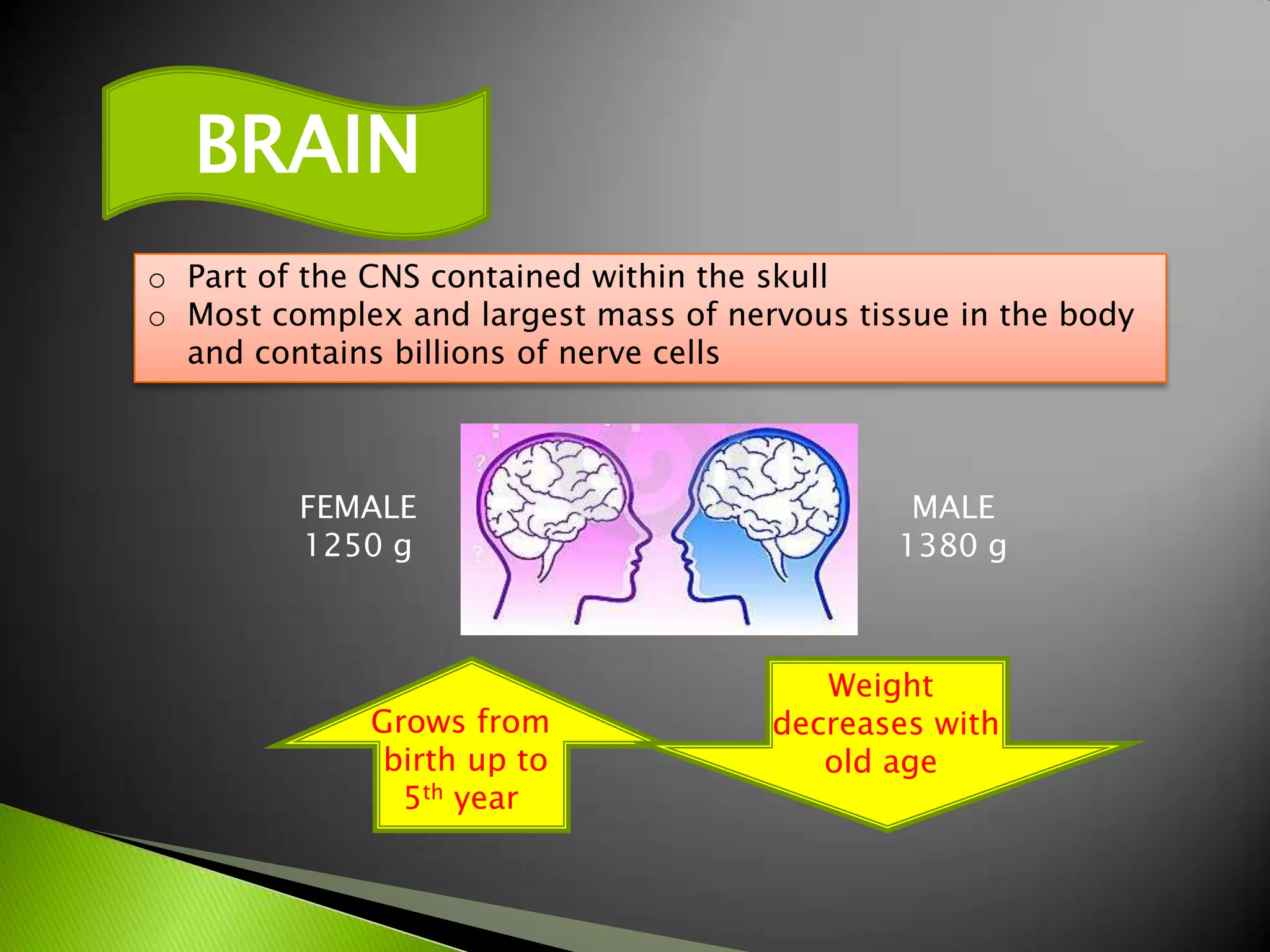
o Part of the CNS contained within the skull
o Most complex and largest mass of nervous tissue in the body
  and contains billions of nerve cells


         FEMALE                                MALE
         1250 g                               1380 g


                                         Weight
             Grows from               decreases with
              birth up to                old age
               5th year
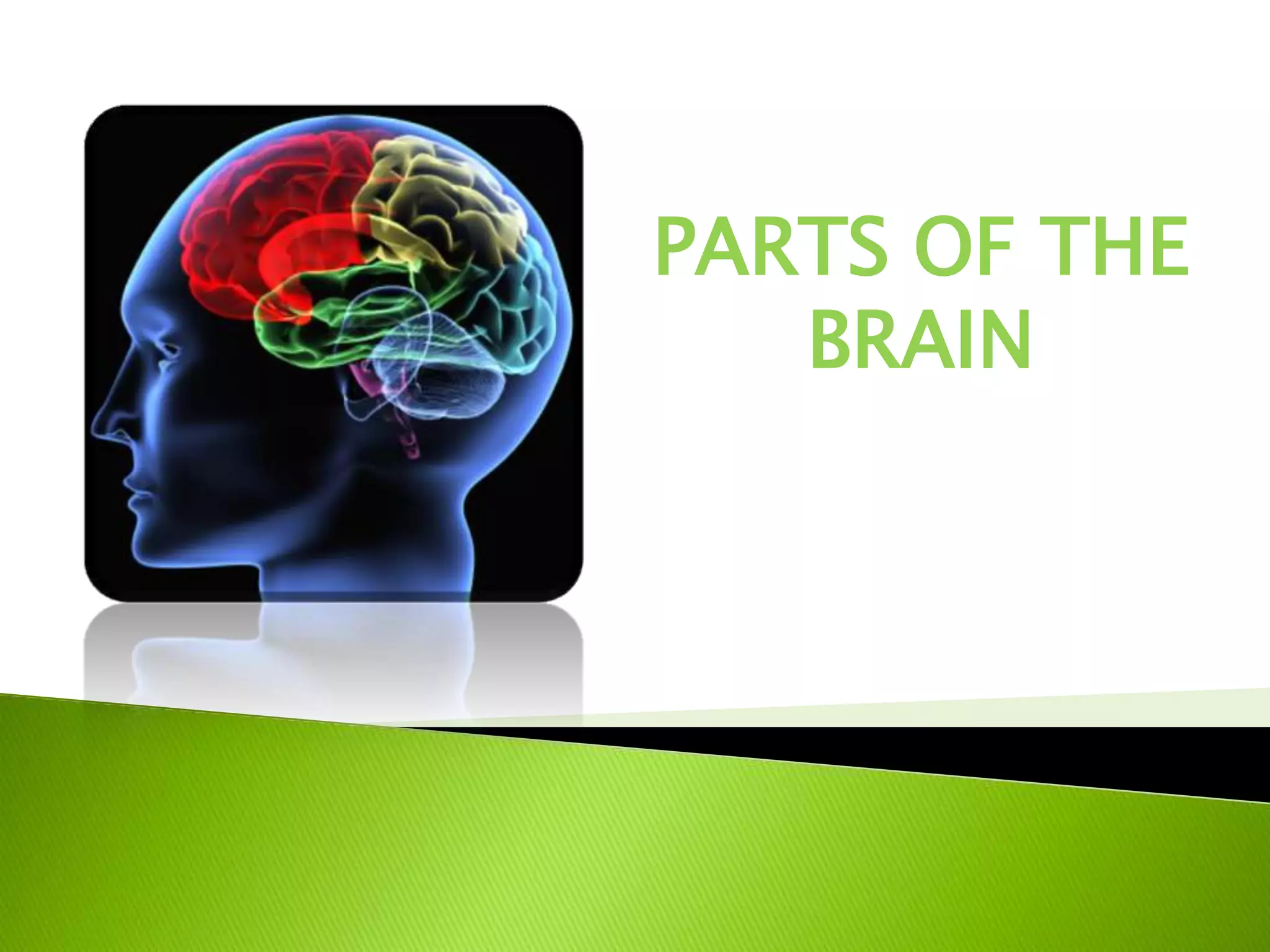
PARTS OF THE
   BRAIN
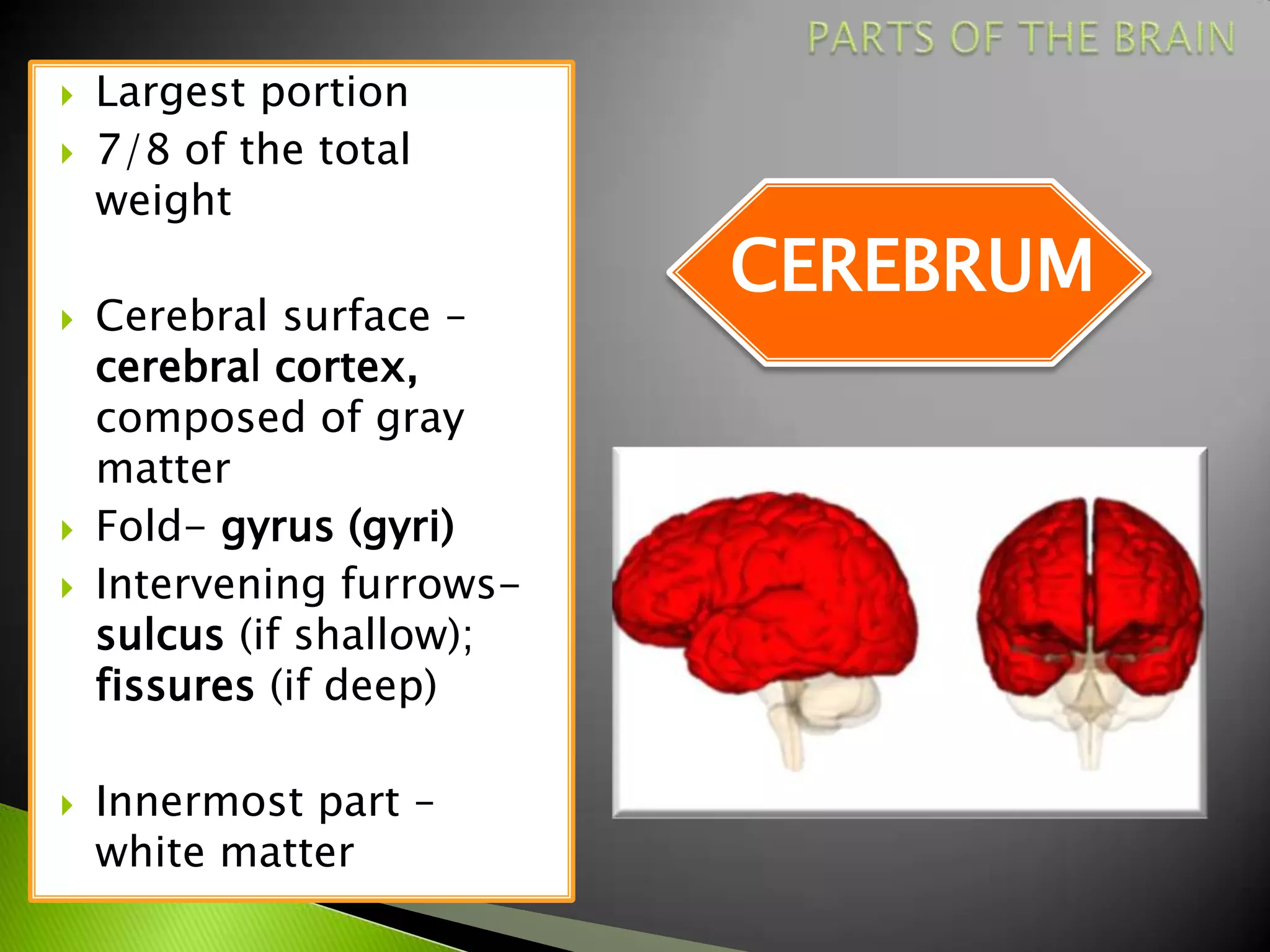
   Largest portion
   7/8 of the total
    weight
                           CEREBRUM
   Cerebral surface –
    cerebral cortex,
    composed of gray
    matter
   Fold- gyrus (gyri)
   Intervening furrows-
    sulcus (if shallow);
    fissures (if deep)

   Innermost part –
    white matter
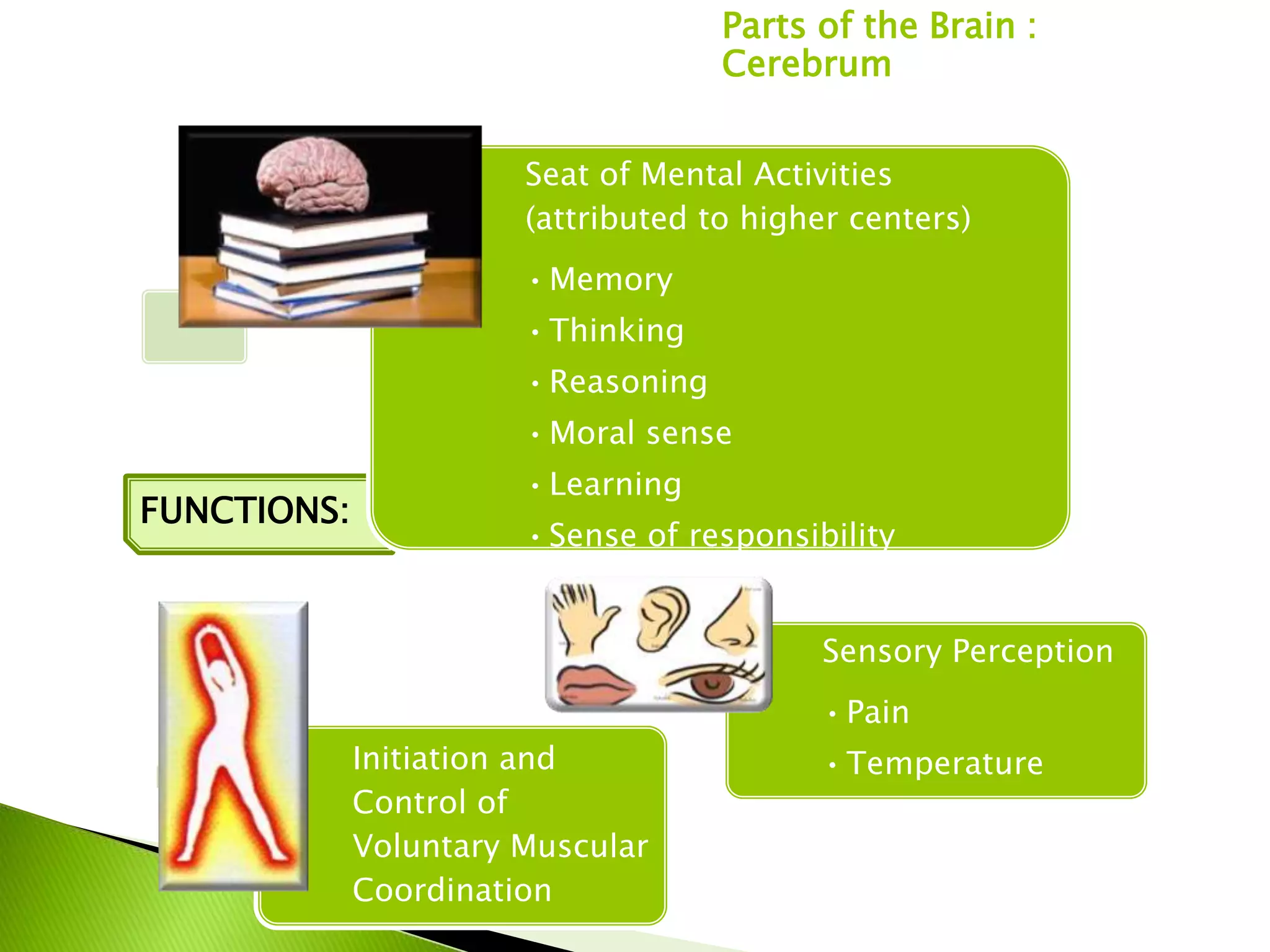
Parts of the Brain :
                                     Cerebrum


                       Seat of Mental Activities
                       (attributed to higher centers)
                       • Memory
                       • Thinking
                       • Reasoning
                       • Moral sense
                       • Learning
FUNCTIONS:
                       • Sense of responsibility


                                           Sensory Perception
                                           • Pain
             Initiation and                • Temperature
             Control of                    • Touch
             Voluntary Muscular
                                           • Special senses
             Coordination
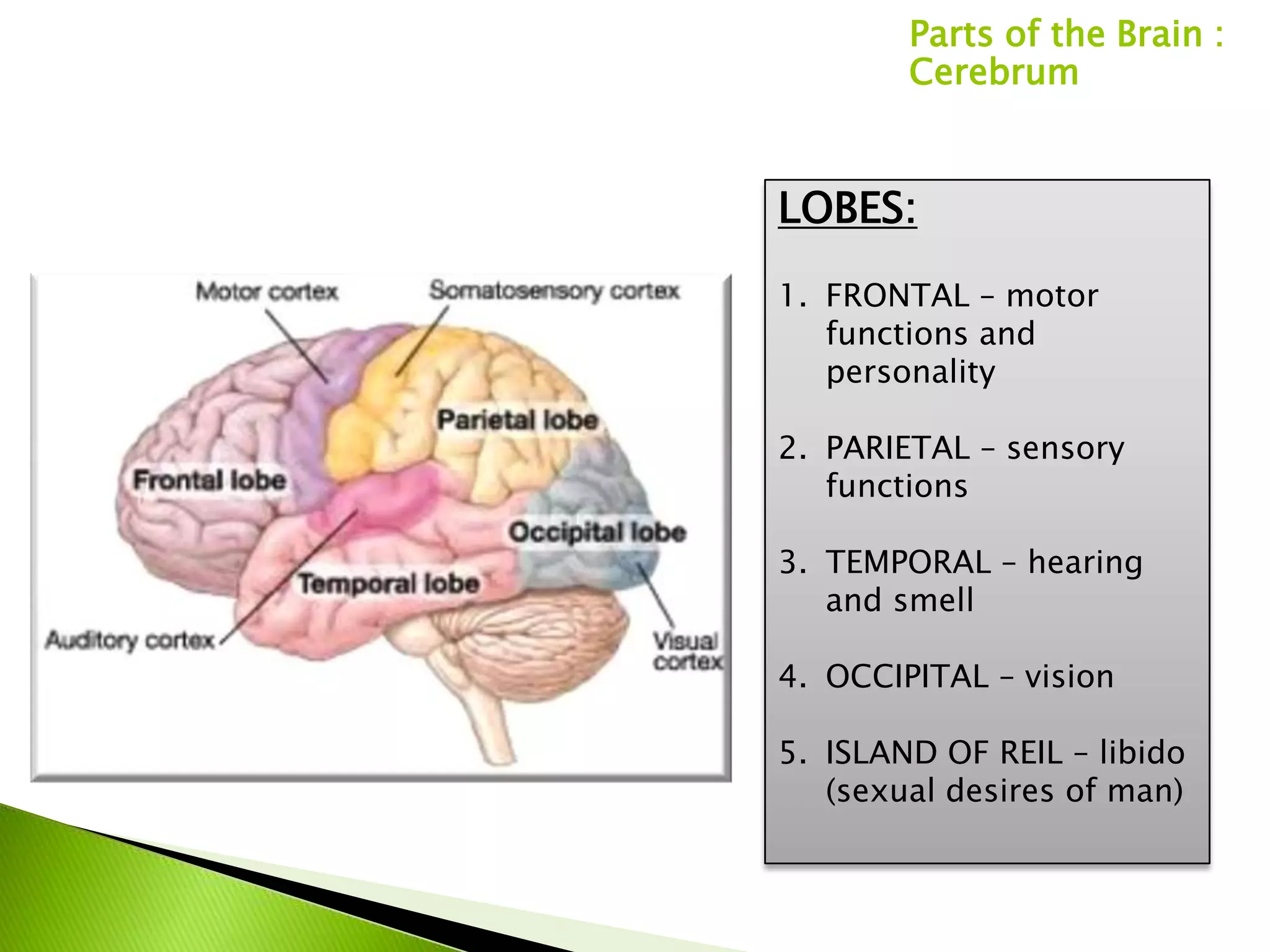
Parts of the Brain :
        Cerebrum


LOBES:
1. FRONTAL – motor
   functions and
   personality

2. PARIETAL – sensory
   functions

3. TEMPORAL – hearing
   and smell

4. OCCIPITAL – vision

5. ISLAND OF REIL – libido
   (sexual desires of man)
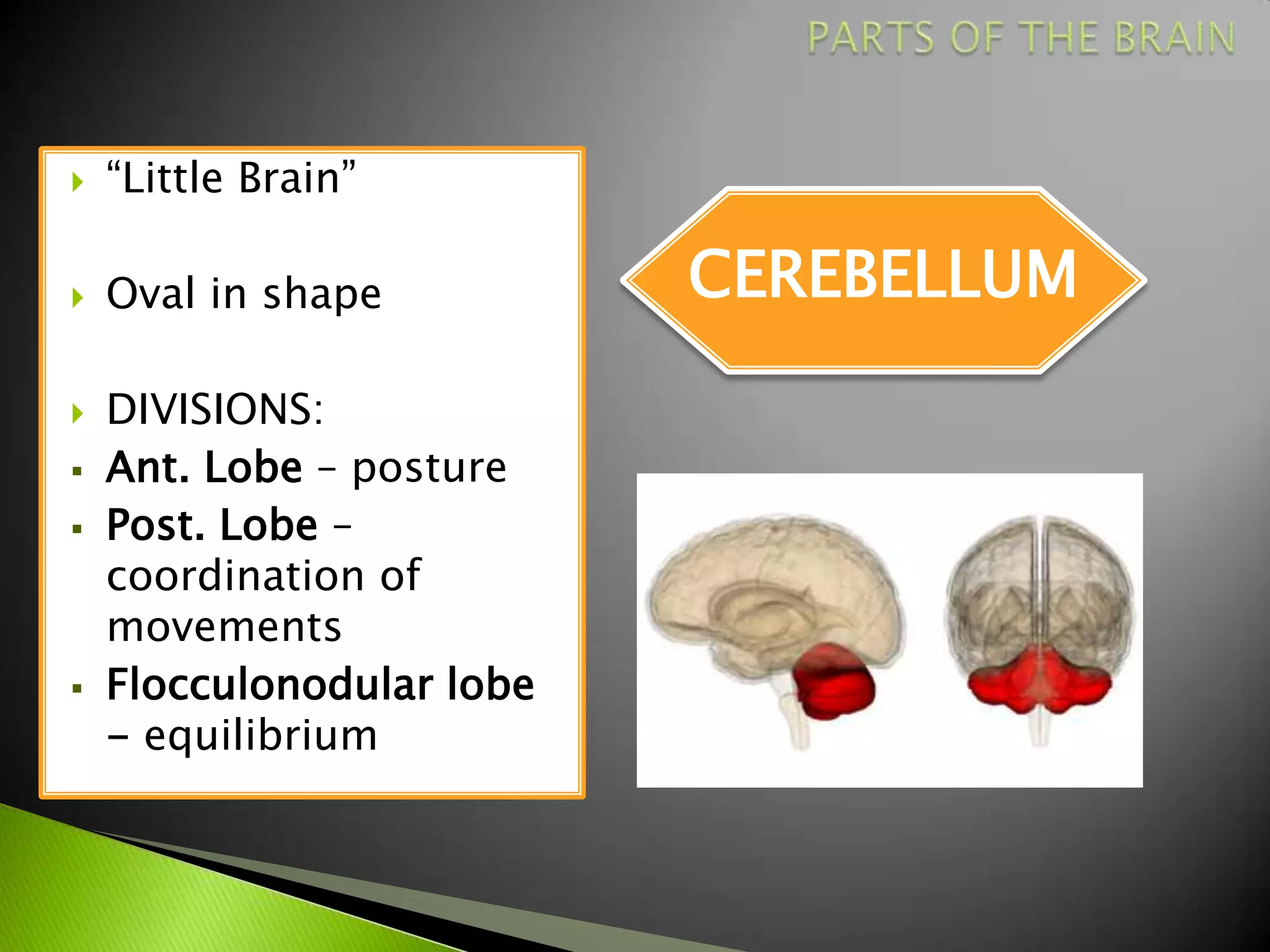
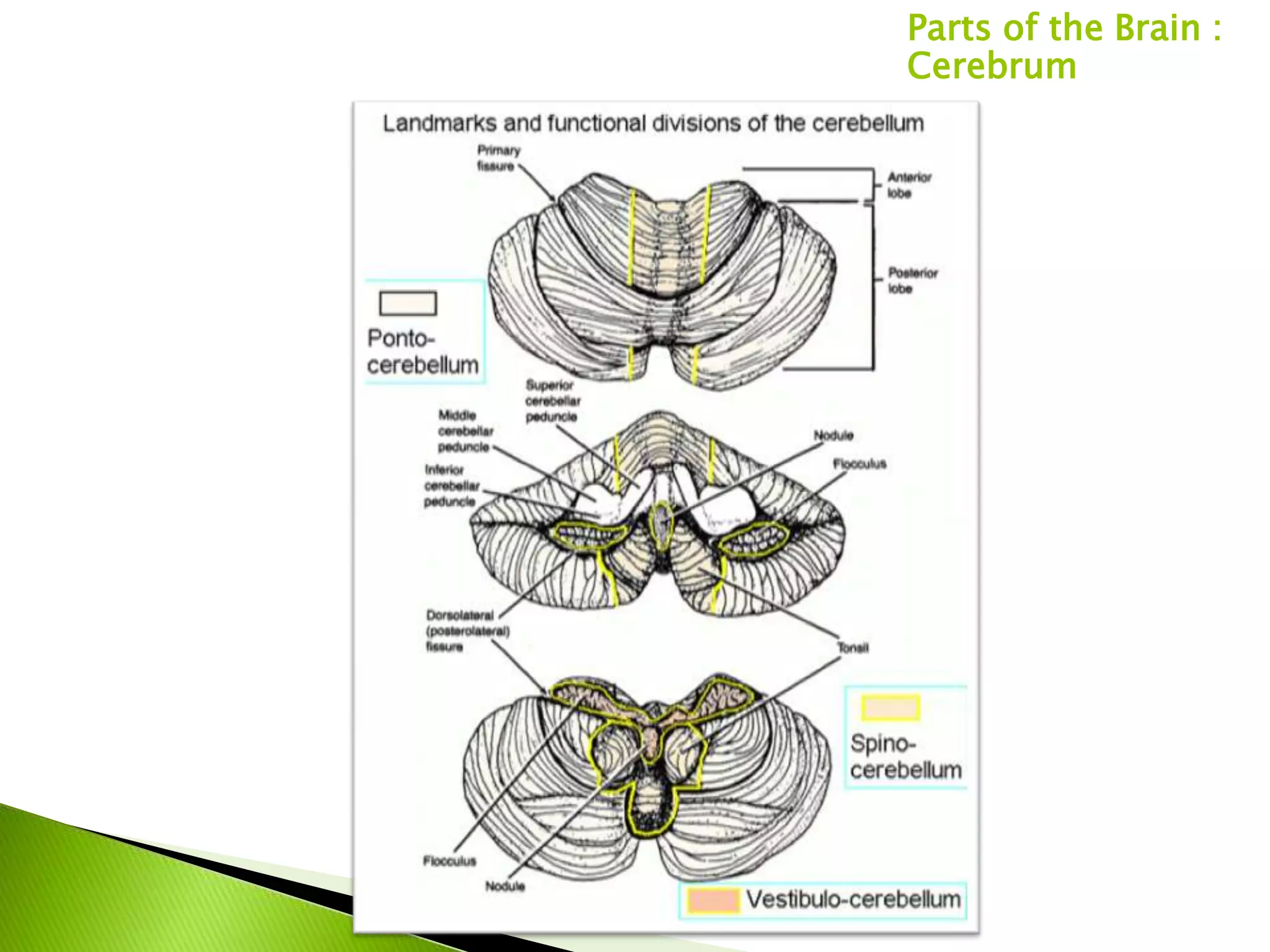
   “Little Brain”

   Oval in shape          CEREBELLUM

   DIVISIONS:
   Ant. Lobe – posture
   Post. Lobe –
    coordination of
    movements
   Flocculonodular lobe
    - equilibrium
Parts of the Brain :
Cerebrum
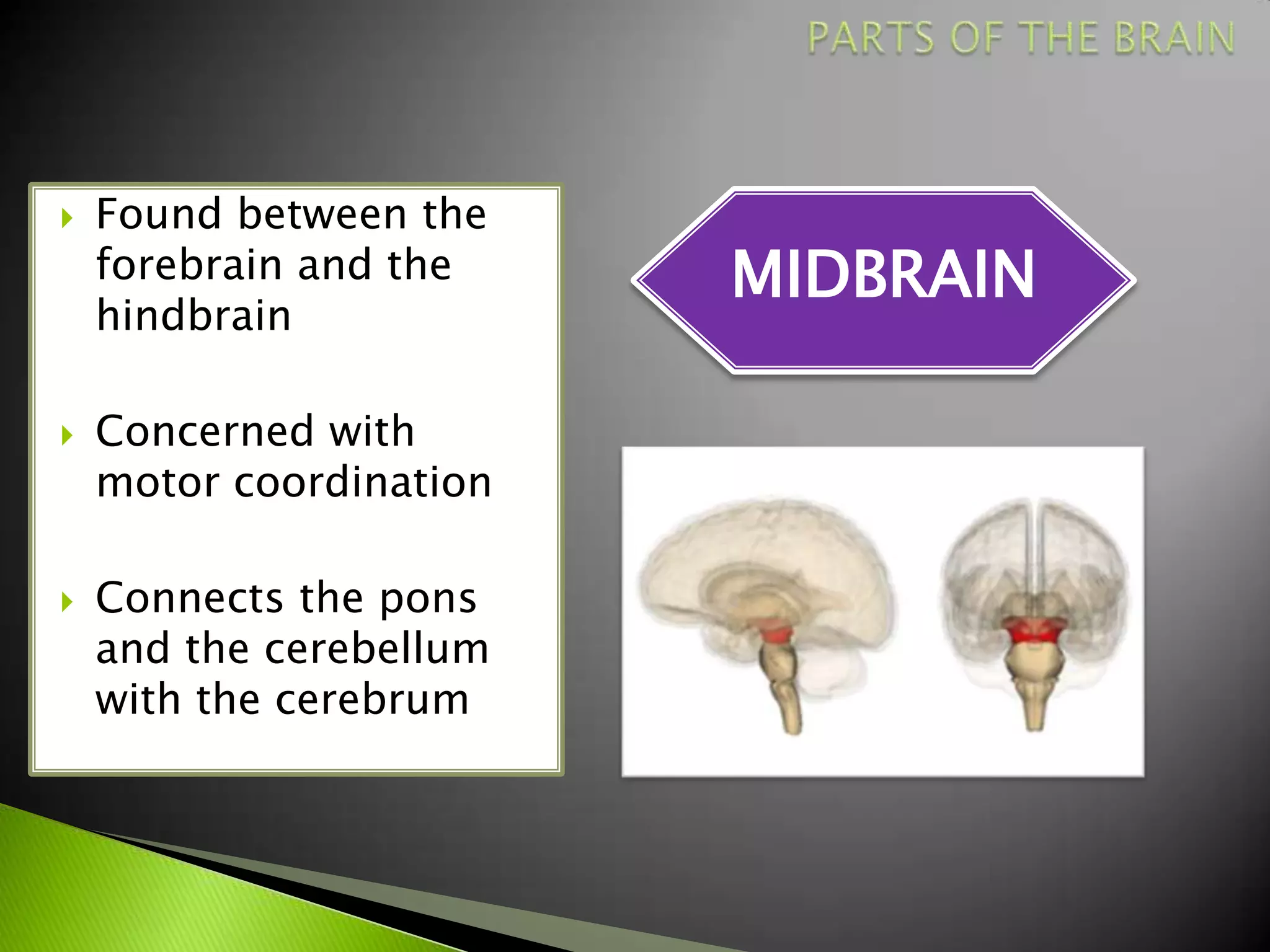
   Found between the
    forebrain and the    MIDBRAIN
    hindbrain

   Concerned with
    motor coordination

   Connects the pons
    and the cerebellum
    with the cerebrum
Parts of the Brain : Midbrain

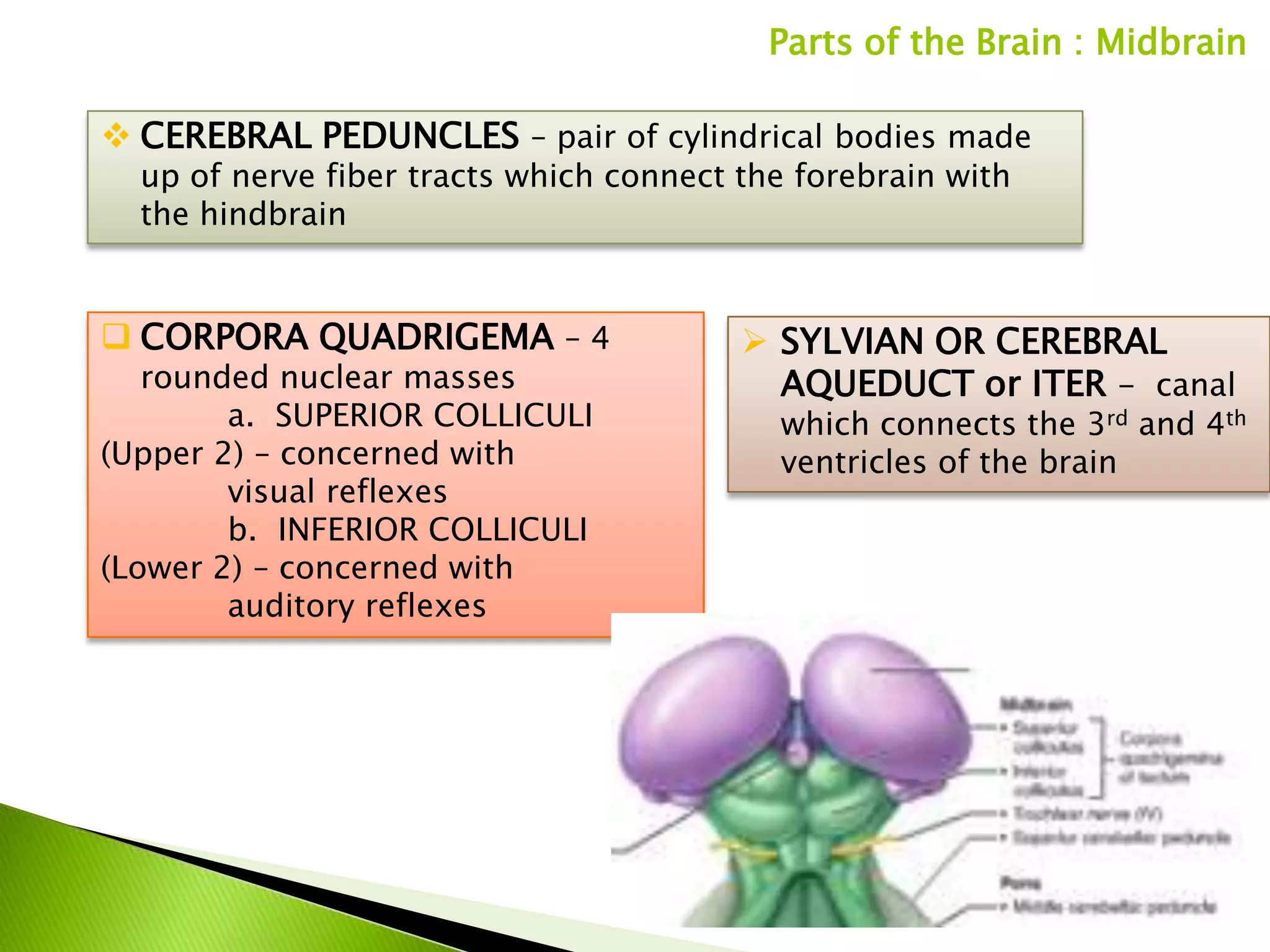
 CEREBRAL PEDUNCLES – pair of cylindrical bodies made
  up of nerve fiber tracts which connect the forebrain with
  the hindbrain


 CORPORA QUADRIGEMA – 4                  SYLVIAN OR CEREBRAL
   rounded nuclear masses                  AQUEDUCT or ITER - canal
        a. SUPERIOR COLLICULI              which connects the 3rd and 4th
(Upper 2) – concerned with                 ventricles of the brain
        visual reflexes
        b. INFERIOR COLLICULI
(Lower 2) – concerned with
        auditory reflexes
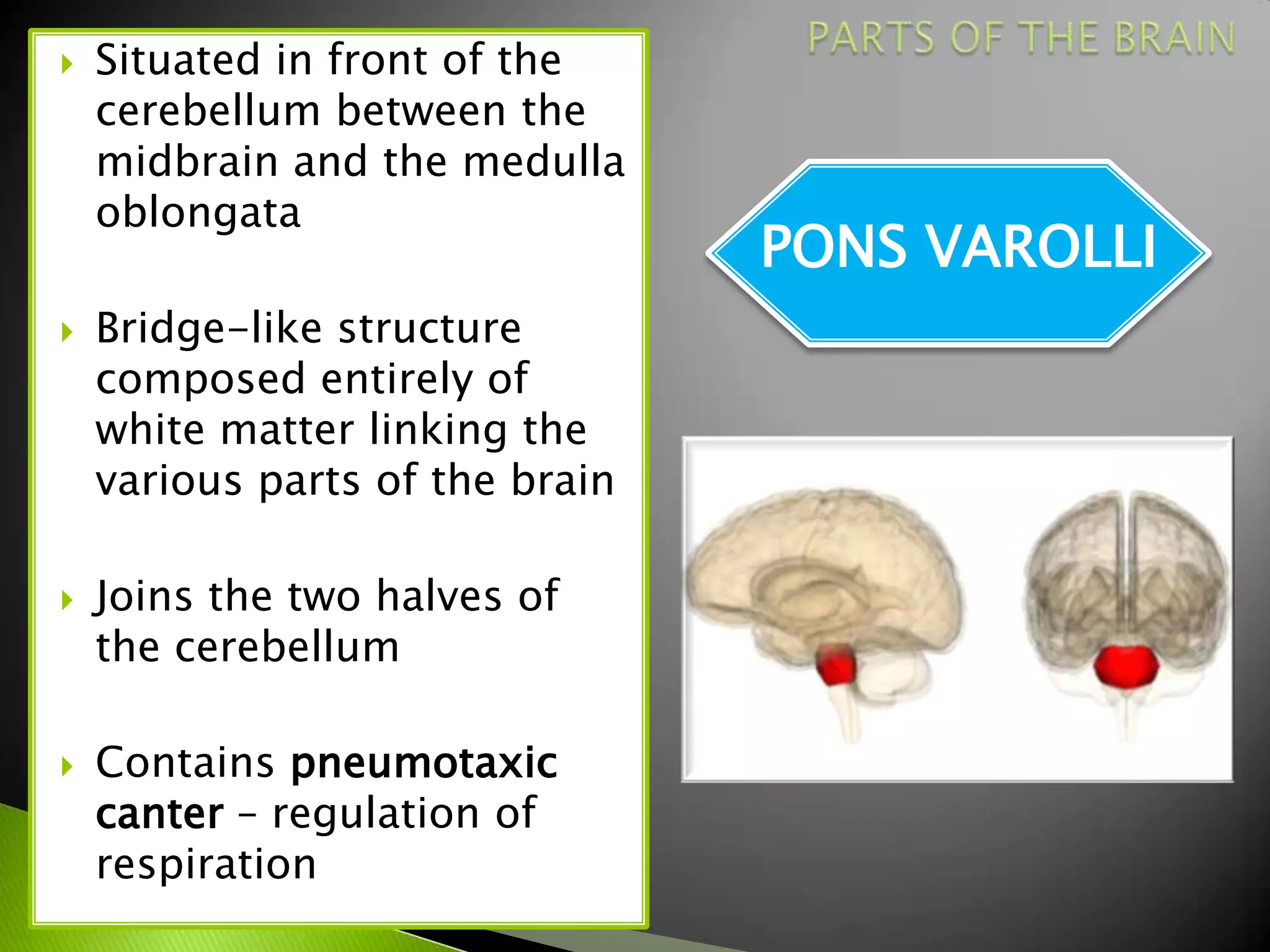
   Situated in front of the
    cerebellum between the
    midbrain and the medulla
    oblongata
                                 PONS VAROLLI
   Bridge-like structure
    composed entirely of
    white matter linking the
    various parts of the brain

   Joins the two halves of
    the cerebellum

   Contains pneumotaxic
    canter – regulation of
    respiration
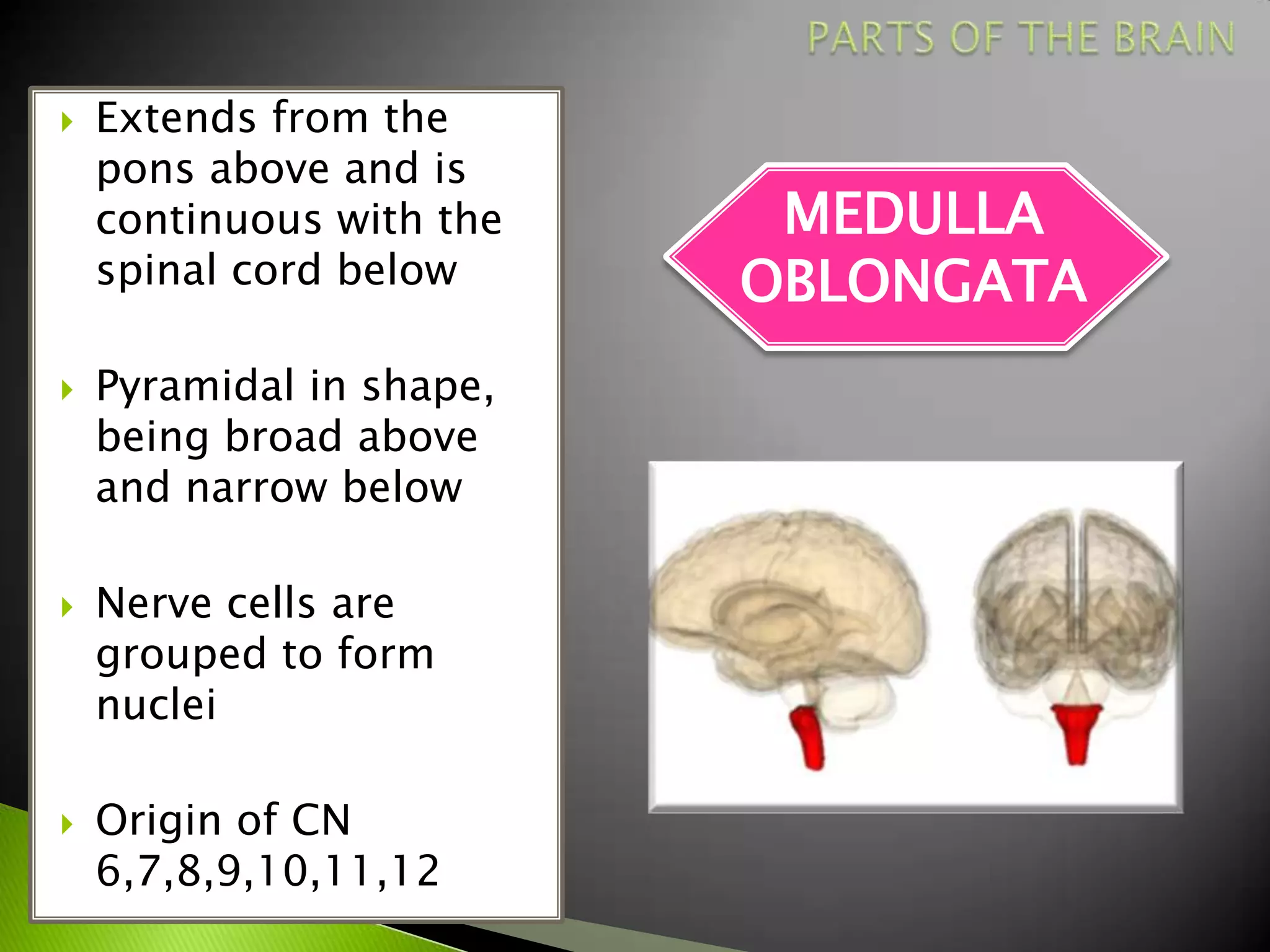
   Extends from the
    pons above and is
    continuous with the    MEDULLA
    spinal cord below     OBLONGATA
   Pyramidal in shape,
    being broad above
    and narrow below

   Nerve cells are
    grouped to form
    nuclei

   Origin of CN
    6,7,8,9,10,11,12
PARTS OF THE BRAIN:
                                           Medulla Oblongata
FUNCTIONS:

   1. Organ of conduction for the passage of
   impulses between brain and spinal cord


   2. Contains center for control of bodily
   functions

    • Cardiac inhibitory center – holds heart rate to slower rate
      through CN 10
    • Vasoconsctrictor center – narrowing of lumen of the
      arteries
    • Respiratory center – controls rate of depth of respiration
    • Reflex center – sneezing, coughing, vomiting, winking,
      movements and secretions of the alimentary canal

Brain

  • 1.
    By: Dr. PamelaJosefina T. Fabie
  • 3.
    BRAIN o Part of the CNS contained within the skull o Most complex and largest mass of nervous tissue in the body and contains billions of nerve cells FEMALE MALE 1250 g 1380 g Weight Grows from decreases with birth up to old age 5th year
  • 4.
  • 5.
    Largest portion  7/8 of the total weight CEREBRUM  Cerebral surface – cerebral cortex, composed of gray matter  Fold- gyrus (gyri)  Intervening furrows- sulcus (if shallow); fissures (if deep)  Innermost part – white matter
  • 6.
    Parts of theBrain : Cerebrum Seat of Mental Activities (attributed to higher centers) • Memory • Thinking • Reasoning • Moral sense • Learning FUNCTIONS: • Sense of responsibility Sensory Perception • Pain Initiation and • Temperature Control of • Touch Voluntary Muscular • Special senses Coordination
  • 7.
    Parts of theBrain : Cerebrum LOBES: 1. FRONTAL – motor functions and personality 2. PARIETAL – sensory functions 3. TEMPORAL – hearing and smell 4. OCCIPITAL – vision 5. ISLAND OF REIL – libido (sexual desires of man)
  • 8.
    “Little Brain”  Oval in shape CEREBELLUM  DIVISIONS:  Ant. Lobe – posture  Post. Lobe – coordination of movements  Flocculonodular lobe - equilibrium
  • 9.
    Parts of theBrain : Cerebrum
  • 10.
    Found between the forebrain and the MIDBRAIN hindbrain  Concerned with motor coordination  Connects the pons and the cerebellum with the cerebrum
  • 11.
    Parts of theBrain : Midbrain  CEREBRAL PEDUNCLES – pair of cylindrical bodies made up of nerve fiber tracts which connect the forebrain with the hindbrain  CORPORA QUADRIGEMA – 4  SYLVIAN OR CEREBRAL rounded nuclear masses AQUEDUCT or ITER - canal a. SUPERIOR COLLICULI which connects the 3rd and 4th (Upper 2) – concerned with ventricles of the brain visual reflexes b. INFERIOR COLLICULI (Lower 2) – concerned with auditory reflexes
  • 12.
    Situated in front of the cerebellum between the midbrain and the medulla oblongata PONS VAROLLI  Bridge-like structure composed entirely of white matter linking the various parts of the brain  Joins the two halves of the cerebellum  Contains pneumotaxic canter – regulation of respiration
  • 13.
    Extends from the pons above and is continuous with the MEDULLA spinal cord below OBLONGATA  Pyramidal in shape, being broad above and narrow below  Nerve cells are grouped to form nuclei  Origin of CN 6,7,8,9,10,11,12
  • 14.
    PARTS OF THEBRAIN: Medulla Oblongata FUNCTIONS: 1. Organ of conduction for the passage of impulses between brain and spinal cord 2. Contains center for control of bodily functions • Cardiac inhibitory center – holds heart rate to slower rate through CN 10 • Vasoconsctrictor center – narrowing of lumen of the arteries • Respiratory center – controls rate of depth of respiration • Reflex center – sneezing, coughing, vomiting, winking, movements and secretions of the alimentary canal

Editor's Notes

  • #4 Pic of- Weighing scale or brain of f and m
  • #5 Picture of brain no parts. real