UNIT-IV
Prepared And Presented By
Mr. Sandip R. Bhoi
Assistant Professor
KVPS’s Institute of Pharmaceutical Education. College, Boradi
INTRODUCTION
 In gas chromatography, gas is the mobile phase and solid or liquid is the
stationary phase.
 Two techniques:-
1) Gas solid chromatography- Gas is used as the mobile phase and solid as the
stationary phase. The adsorption process takes place. Rarely used.
2) Gas-liquid chromatography- Gas is used as the mobile phase and liquid, which
is immobilized by supporting on some solid matrix, is used as the stationary phase.
A partition process takes place. Widely used.
PRINCIPLE OF GLC
 The equilibrium for gas chromatography is partitioning, and the components of the
sample will partition (i.e. distribute) between the two phases: the stationary phase
and the mobile phase.
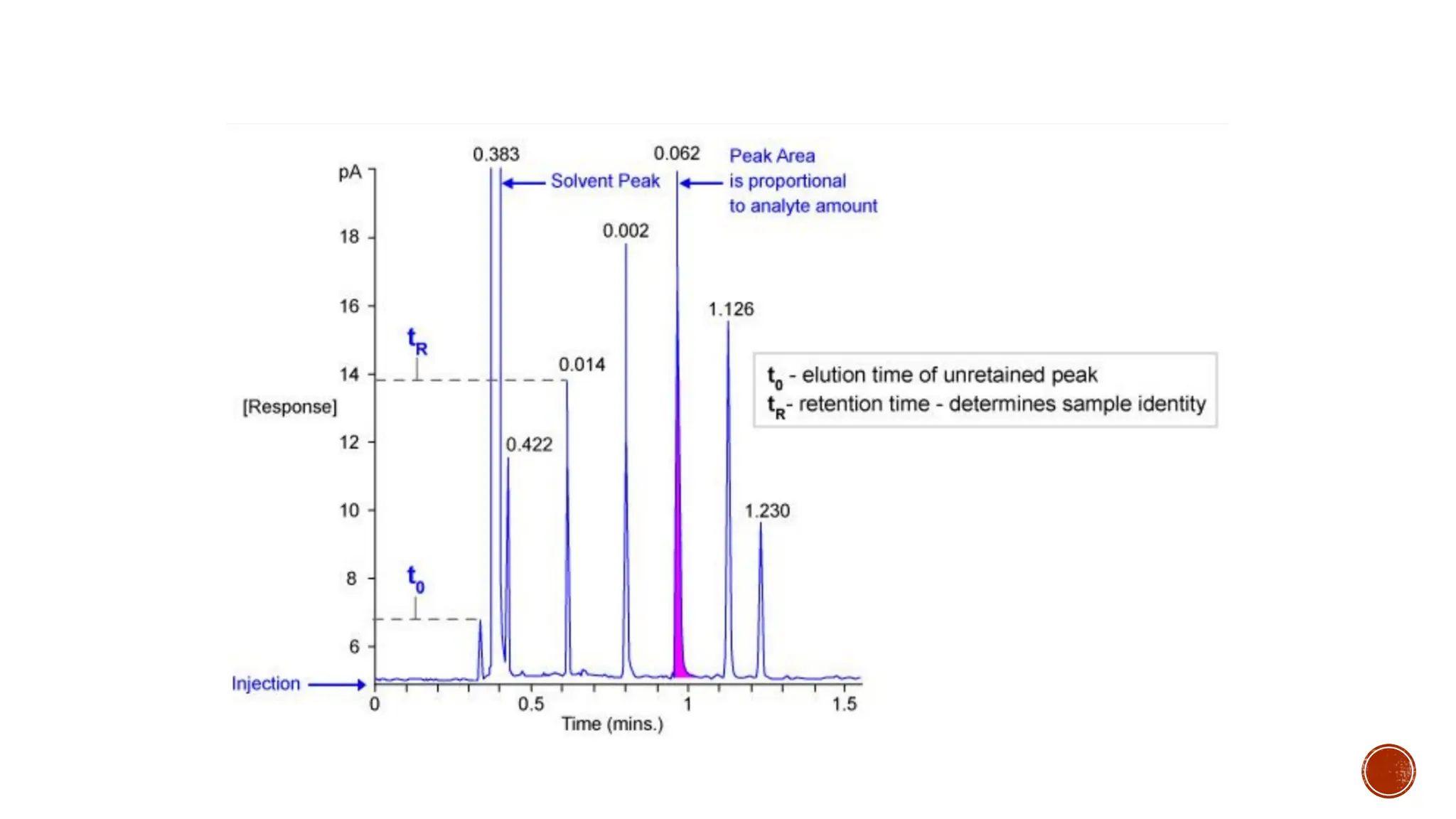
 Compounds that have a greater affinity for the stationary phase spend more time
in the column and thus elute later and have a longer retention time (Rt) than
samples that have a higher affinity for the mobile phase.
 Affinity for the stationary phase is driven mainly by intermolecular interactions
and the polarity of the stationary phase can be chosen to maximize interactions
and thus the separation.
INSTRUMENTATION OF GAS CHROMATOGRAPHY
1. Carrier gas (mobile phase)
 The mobile phase is known as the carrier gas. This is because its purpose is to transport
solute through the column. The mobile phase should have the following properties:
• It should be inert.
• It should be non-flammable.
• It is preferably cheap.
• The carrier gas must be purified.
 Helium and nitrogen are mostly used. However, helium is used in the capillary column
whereas nitrogen is used in the packet column. Note that, helium gives separation efficiency
due to faster mass transfer. Thus, high-pressure carrier gas tanks are attached to the pressure
regulator and flow meter.
 Source of carrier gas
 The carrier gas is supplied from a high-pressure cylinder, with a purity of 99.999% via a
pressure-reducing valve at 10-45psi, which provides flow rates between 1 and 50 cm3
/min.
 The mass-flow controller ensures constant flow rates regardless of back pressure and
temperature. So, a bubble flow meter or rotameter is used to check the flow rate.
 Common contaminants of the carrier gas
 The most common contaminants of the carrier gas are the following:
• Air or oxygen: At a level above about 10 ppm can oxidize sample components. However,
these can be removed by using a cartridge containing a molecular sieve.
• Hydrocarbons: Their presence affects the detector’s performance by producing a large
background signal. This can be removed by using a cartridge containing activated carbon.
• Water vapors: Water vapors can affect some solid and bonded liquid stationary phases.
They can be removed by using a molecular sieve.
2. Sample injection system
 Liquid samples are introduced into the
flowing mobile phase using a micro-syringe
with a hypodermic needle. This needle is
inserted through a self-sealing silicon rubber
septum and the sample is injected smoothly
into a heated metal block at the head of the
column.
 The temperature of the sample port should be
appropriate such that the liquid is rapidly
vaporized but without decomposing the
sample. hence, the rule of thumb is to set the
sample port temperature approximately to the
boiling point of the least volatile component.
 3. Columns
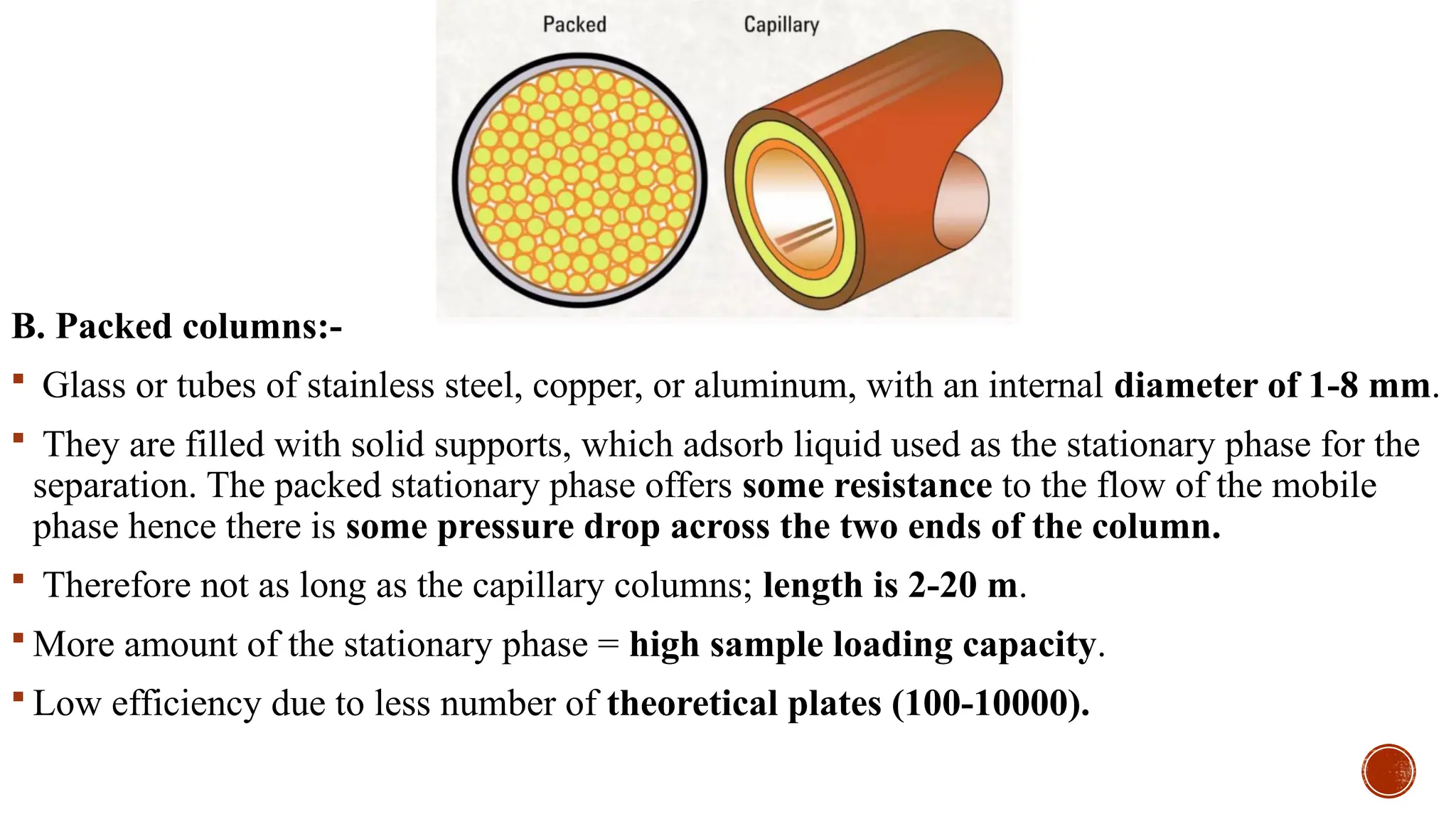
A. Capillary columns/ Open tubular columns:-
 Capillary tubing of internal diameter-0.3-0.5 mm.
 Inner walls are coated with a very thin film of the liquid which acts as the stationary
phase.
 It offers negligible resistance to the flow of the mobile phase hence pressure drop across
the two ends of the capillary column is negligible.
 Therefore, columns as long as 10-100 m or more can be used consisting of several hundred
thousand theoretical plates.
 Limited amount of the stationary phase = very low sample loading capacity. Can be
increased by coating inner walls with porous material such as graphite, metal oxide, or
silicate. This will increase the surface area for coating of the stationary phase which
increases loading capacity.
B. Packed columns:-
 Glass or tubes of stainless steel, copper, or aluminum, with an internal diameter of 1-8 mm.
 They are filled with solid supports, which adsorb liquid used as the stationary phase for the
separation. The packed stationary phase offers some resistance to the flow of the mobile
phase hence there is some pressure drop across the two ends of the column.
 Therefore not as long as the capillary columns; length is 2-20 m.
 More amount of the stationary phase = high sample loading capacity.
 Low efficiency due to less number of theoretical plates (100-10000).
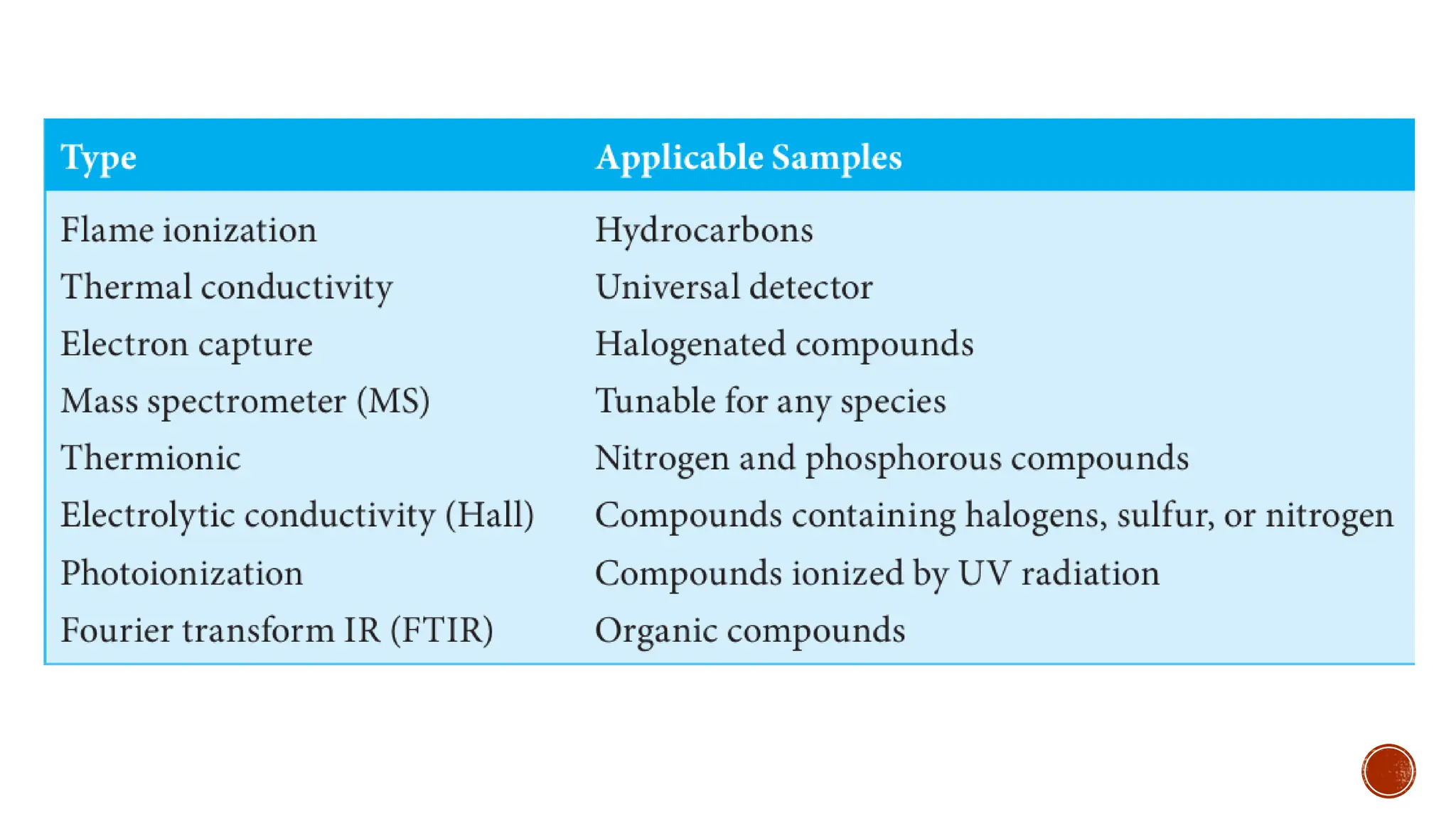
4. Detector
 ideal characteristics for a gas chromatography (GC) detector:
1.Adequate Sensitivity: Sensitivity varies widely but should be suitable for the specific
application.
2.Stability and Reproducibility: Consistent performance over time.
3.Linear Response: A linear response to solutes over several orders of magnitude.
4.Wide Temperature Range: Operates from room temperature to at least 400°C.
5.Short Response Time: Quick response, independent of flow rate.
6.High Reliability and Ease of Use: User-friendly, even for inexperienced operators.
7.Predictable Response: Either a similar response to all solutes or a selective response to
specific classes.
8.Nondestructive: Does not destroy the sample during detection.
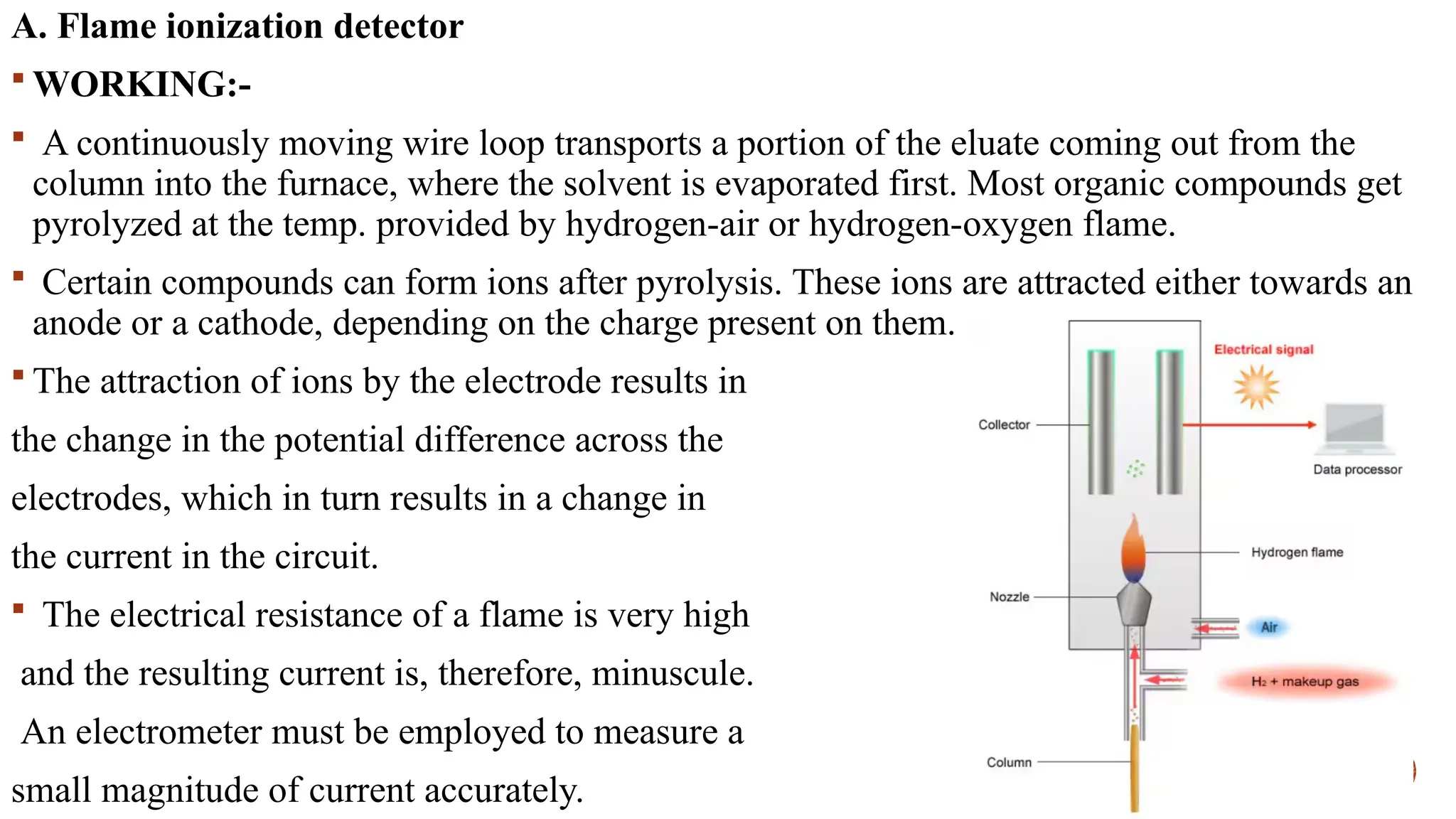
A. Flame ionization detector
 WORKING:-
 A continuously moving wire loop transports a portion of the eluate coming out from the
column into the furnace, where the solvent is evaporated first. Most organic compounds get
pyrolyzed at the temp. provided by hydrogen-air or hydrogen-oxygen flame.
 Certain compounds can form ions after pyrolysis. These ions are attracted either towards an
anode or a cathode, depending on the charge present on them.
 The attraction of ions by the electrode results in
the change in the potential difference across the
electrodes, which in turn results in a change in
the current in the circuit.
 The electrical resistance of a flame is very high
and the resulting current is, therefore, minuscule.
An electrometer must be employed to measure a
small magnitude of current accurately.
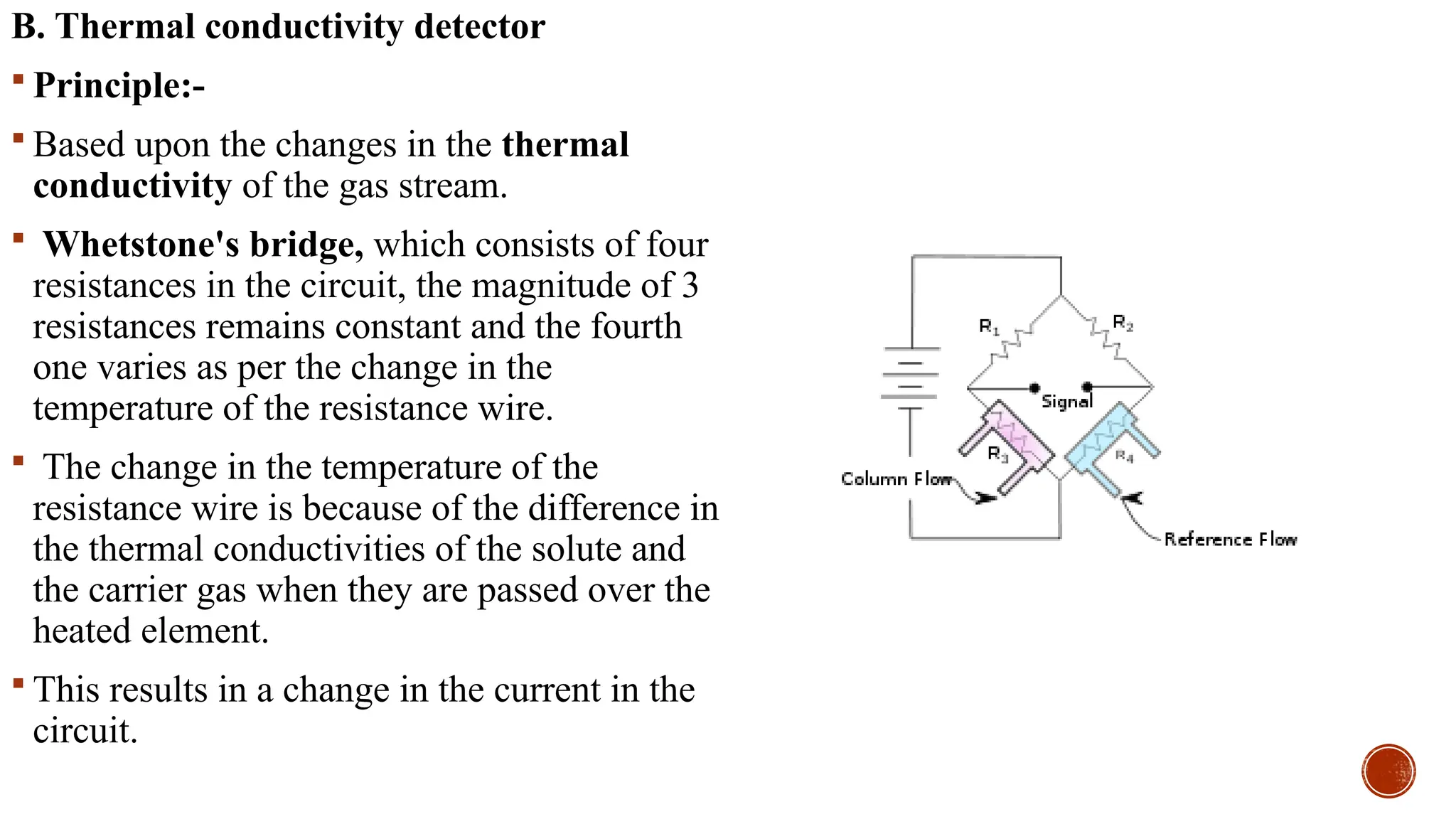
B. Thermal conductivity detector
 Principle:-
 Based upon the changes in the thermal
conductivity of the gas stream.
 Whetstone's bridge, which consists of four
resistances in the circuit, the magnitude of 3
resistances remains constant and the fourth
one varies as per the change in the
temperature of the resistance wire.
 The change in the temperature of the
resistance wire is because of the difference in
the thermal conductivities of the solute and
the carrier gas when they are passed over the
heated element.
 This results in a change in the current in the
circuit.
C. Electron capture detector
 Principle:-
 A beam of electrons is generated from an electron emitter.
 These electrons generate a standing current in the circuit, which remains constant in the
absence of an organic compound.
 If an organic comp. comes in the path of this electron beam, suddenly the number of
electrons decreases, and results in a change in the current in the circuit.
 This indicates the presence of an organic compound in the eluate and also about its cons. in
it.
5. Recorder
 The signal from a gas chromatograph is continuously recorded as a function of time.
 generally by a potentiometric recorder. In a potentiometric recorder, the input response is continuously
balanced by a feedback response; a pen connected to this system moves proportionately along the chart
paper's width, thus recording the signal.
 Even as the chart paper moves at a fixed speed along its length. Before operating a recorder, its zero
should be adjusted with the input zero otherwise the baseline will shift
6. Integrator:
 An integrator is employed to simultaneously measure areas under Chromatographic peaks by
mechanical/electronic means. Manual techniques for peak area measurement are time-consuming,
tedious, and less precise. Electronic integrators print out the peak area digitally and give the highest
precision but they are quite expensive.
 Temperature Control Program
 The temperature program controls regulate the increase of temperature dur the analysis.
 In GC, separation of components differing widely in their boiling point.
 In this system, a lower temperature is selected initially. Then the temperature is increased to
push out the higher boiling point components.
 The temperature is increased immediately after sample injection and kept constant at the
program level until the high boiling components are eluted out. Then the temperature is
returned to normal.
 The initial temperature is maintained for 10 minute and then temperature is increased.
 The third method involves to increase the temperature step by step to reach the final
temperature.
 In linear temperature GC requires a dual column system to compensate the column bleeding.
Separate heaters are needed for heating injection, column oven and detector systems.
 ADVANTAGES OF GAS CHROMATOGRAPHY
1. High sensitivity: One of the significant advantages of gas chromatography is its high
sensitivity. GC can detect even trace amounts of compounds in a mixture, making it a
powerful tool in analytical chemistry. The high sensitivity of GC is due to the use of small
sample sizes and the efficient separation of compounds.
2. High resolution: GC can separate complex mixtures of compounds with high resolution.
The resolution is the ability to distinguish between two adjacent peaks in a chromatogram.
The high resolution of GC is due to the use of narrow-bore capillary columns and the
ability to control the carrier gas flow rate.
3. Rapid analysis: GC is a relatively fast analysis method, allowing for the analysis of
multiple samples in a short time. This speed is due to the use of narrow-bore columns that
have a high surface area-to-volume ratio, allowing for the efficient separation of
compounds.
4. Quantitative analysis: GC can be used to perform quantitative analysis of compounds in
a mixture. The area under a peak chromatogram is proportional to the amount of the
compound present in the sample, allowing for accurate quantification of compounds in a
mixture.
5. Minimal sample preparation: GC requires minimal sample preparation compared to
other analytical techniques, such as liquid chromatography. This advantage is due to the
volatile nature of the compounds analyzed by GC, which do not require complex
extraction or purification steps.
6. Cost-effective: GC analysis is a relatively cost-effective technique compared to other
analytical methods, making it accessible to many researchers and scientists. The low cost
of GC analysis is due to the availability of inexpensive equipment and consumables.
 DISADVANTAGES OF GAS CHROMATOGRAPHY
1. Gas chromatography is limited to volatile compounds.
2. Non-volatile compounds don't vaporize.
3. Analytes can decompose at high temperatures.
4. Analytes can also react with the stationary phase.
5. It is limited to low to medium molecular weight.
6. It is incompatible with aqueous samples.
7. Thermal stability is required during separation through gas chromatography.
8. It is not suitable for polar analytes.
9. It is not suitable for high-boiling compounds.
 APPLICATIONS OF GAS CHROMATOGRAPHY
 1) Gas chromatography is used in the food industry both for quality control and for accurate
quantification of compounds and contaminants in food, such as
Carbohydrates
Proteins
Vitamins
Lipids
Steroids Pesticides
Trace elements
With gas chromatography, food producers can accurately quantify the elements in their food,
and the FDA ensures that it's of sufficient quality and safety.
 2) Environmental Monitoring Gas chromatography is also a popular method for ensuring
that the air and water we breathe are safe for consumption.
 3) Drug Testing
 Gas chromatography is also useful in identifying chemical compounds within the human
body through the analysis of bodily fluids. Gas chromatography is a quick and accurate drug
testing method, which makes it a favored technique for things like law enforcement; in fact,
it's been used to detect blood alcohol levels since the '50s.
 Gas chromatography can accurately identify and quantify alcohol or drug use in athletes.
Sporting bodies like the Olympics and
 4) Manufacturing Quality Control
 Another industry where gas chromatography is common in manufacturing. From automotive
plants to pharmaceuticals, many manufacturers use gas chromatography to test the quality
and safety of their products.
 Pharmaceuticals must test the purity of the compounds within their drugs to ensure every
batch is safe for consumption. Automotive plants use gas chromatography to ensure there is
no harmful chemicals leftover from the manufacturing process that can harm humans within
the vehicle.
 5) Forensics
 Gas chromatography provides the capable identification of compounds in bodily fluids, so
it's also a favored method in forensic analysis.
 Many forensic analysts use gas chromatography to determine a person's death by concluding
whether they were poisoned, intoxicated, or overdosed on a banned substance.
 With gas chromatography, forensic analysts can more accurately determine the
circumstances of a person's death and provide that information to law enforcement.
 6) Environmental Research
 As we mentioned, environmental researchers use gas chromatography often, but it's also
favored by scientists examining things from outside our world. Gas chromatography has
even been commonly used to analyze and research meteorites that have fallen to earth.
 With gas chromatography, scientists can accurately identify and quantify chemicals within
objects from space, deepening our understanding beyond our planet.
 Derivatization
 When a compound is not suitable for analysis using GC, it is chemically modified to produce
a new compound or derivative of the parent compound this process is termed as
Derivatization. This process is often desirable for the following reasons :
To improve thermal stability of compounds.
1. The volatility of the compounds can be adjusted so that the separation
2. properties can be changed and effective resolution can be achieved.
3. To convert the compound suitable for detection.
 The most commonly used derivatization procedures involve the "substitution of active
hydrogens" on the compound to be derivatized with a variety of functional groups.
 These functional groups impart the desired characteristics to the compound, while
eliminating the adverse effects.
 Generally the compound is derivatized with suitable reagent and the resultant mixture is
injected directly into the Gas Chromatography.
 Derivatizing Reagents Common derivatization methods can be classified into 4
 groups depending on the type of reaction applied:
 Silylation
 Acylation
 Alkylation
 Esterification
HIGH PERFORMANCE LIQUID CHROMATOGRAPHY
 1. Introduction
 High-performance liquid chromatography (HPLC; formerly referred to as high-pressure
liquid chromatography) is a technique in analytical chemistry used to separate, identify,
and quantify each component in a mixture. It relies on pumps to pass a pressurized liquid
solvent containing the sample mixture through a column filled with a solid adsorbent
material. Each component in the sample interacts slightly differently with the adsorbent
material, causing different flow rates for the different components and leading to the
separation of the components as they flow out of the column.
 2. Principle
 The purification takes place in a separation column between a stationary and a mobile
phase. The stationary phase is a granular material with very small porous particles in a
separation column.
 The mobile phase on the other hand is a solvent or solvent mixture which is forced at high
pressure through the separation column. Via a valve with a connected sample loop, i.e. a
small tube or a capillary made of stainless steel, the sample is injected into the mobile
phase flow from the pump to the separation column using a syringe. Subsequently the
individual components of the sample migrate through the column at different rates because
they are retained to a varying degree by interactions with the stationary phase.
 After leaving the column the individual substances are detected by a suitable detector and
passed on as a signal to the HPLC software on the computer. At the end of this operation a
chromatogram in the HPLC software on the computer is obtained, which allows the
identification and quantification of the different substances
 3. Types
i. Normal Phase HPLC
 This method separates analytes on the basis of polarity. NP-HPLC uses polar stationary
phase and non-polar mobile phase. Therefore, the stationary phase is usually silica and
typical mobile phases are hexane, methylene chloride, chloroform, diethyl ether, and
mixtures of these. Polar samples are thus retained on the polar surface of the column packing
longer than less polar materials.
ii. Reverse Phase HPLC (C18 & C8)
 The stationary phase is nonpolar (hydrophobic) in nature, while the mobile phase is a polar
liquid, such as mixtures of water and methanol or acetonitrile. It works on the principle of
hydrophobic interactions hence the more nonpolar the material is, the longer it will be
retained.
iii. Size-exclusion HPLC
 The column is filled with material having precisely controlled pore sizes, and the particles
are separated according to its their molecular size. Larger molecules are rapidly washed
through the column; smaller molecules penetrate inside the porous of the packing particles
and elute later.
iv. Ion-Exchange HPLC
 The stationary phase has an ionically charged surface of opposite charge to the sample
ions. This technique is used almost exclusively with ionic or ionizable samples. The
stronger the charge on the sample, the stronger it will be attracted to the ionic surface and
thus, the longer it will take to elute
 4.Instrumentation
 a. Solvent Reservoir : Mobile stage substance are contained in a glass reservoir. The
versatile stage, or dissolvable, in HPLC is typically a blend of polar and non-polar liquid
segments whose particular fixations are changed relying upon the arrangement of the
specimen.
 b. Pump : A pump suctions the versatile stage from the dissolvable reservoir and drives it
through the framework’s column and detector. Contingent upon various components
including column measurements, molecule size of the stationary stage, the stream rate and
synthesis of the versatile stage, working weights of up to 42000 kPa (around 6000 psi) can
be created.
 c. Sample Injector :An injector for a HPLC framework ought to give infusion of the
liquid specimen inside the scope of 0.1–100 mL of volume with high reproducibility and
under high weight (up to 4000 psi).
 d. Columns : Columns are generally made of cleaned stainless steel, are in the vicinity of
50 and 300 mm long and have an inside distance across of in the vicinity of 2 and 5 mm.
They are normally loaded with a stationary stage with a molecule size of 3–10 µm.
 g. Degasser: A degasser removes gases, like oxygen, from the liquid used in LC analysis.
These gases can cause noise and an unstable baseline. The degasser uses a special tube
with tiny pores to let the gas escape while keeping the liquid inside. It's more efficient and
convenient than older methods, as it works continuously during the analysis.
 h. Column Heater: A column heater keeps the temperature consistent during LC analysis,
which is important for getting reliable results. It helps improve separation, especially for
compounds like sugars and acids, by maintaining a stable temperature.
 i. Detector: The detector measures changes in the eluent composition as analytes pass
through the column, generating an electronic signal that reflects the separation. Various
types of detectors are available depending on the analysis.
 J. Recorder: The detector's signal is processed to make the data visible. In the past, pen-
chart recorders were used, but now computer-based systems are common. These systems
not only display data but also offer features like peak-fitting, baseline correction, and
automatic calculations.
Applications
1. Drug Purity Testing - HPLC is widely used to determine the purity of pharmaceutical
compounds and to detect impurities in both raw materials and finished products.
2. Quantitative Analysis of Drugs - It is employed for the quantitative estimation of active
pharmaceutical ingredients (APIs) in formulations such as tablets, capsules, syrups, etc.
3. Stability Studies - HPLC helps assess the stability of drugs by detecting degradation
products during storage or exposure to different environmental.
4. Bioavailability and Pharmacokinetic Studies - Used in analyzing blood plasma or
serum samples to measure drug concentrations, helping in bioavailability and
pharmacokinetic evaluations.
5. Quality Control in Pharmaceutical Manufacturing - Ensures compliance with
regulatory standards by analyzing raw materials, intermediates, and final products to verify
their composition and purity.
6. Detection of Adulterants - HPLC is used to detect adulterants or contaminants in
pharmaceutical formulations, ensuring drug safety.
7. Assay of Drugs in Biological Samples - Employed for the assay of drugs in body fluids
(blood, urine) during clinical trials or therapeutic drug monitoring (TDM).
END

BP701T. INSTRUMENTAL METHODS OF ANALYSIS UNIT-IV

  • 1.
    UNIT-IV Prepared And PresentedBy Mr. Sandip R. Bhoi Assistant Professor KVPS’s Institute of Pharmaceutical Education. College, Boradi
  • 2.
    INTRODUCTION  In gaschromatography, gas is the mobile phase and solid or liquid is the stationary phase.  Two techniques:- 1) Gas solid chromatography- Gas is used as the mobile phase and solid as the stationary phase. The adsorption process takes place. Rarely used. 2) Gas-liquid chromatography- Gas is used as the mobile phase and liquid, which is immobilized by supporting on some solid matrix, is used as the stationary phase. A partition process takes place. Widely used.
  • 3.
    PRINCIPLE OF GLC The equilibrium for gas chromatography is partitioning, and the components of the sample will partition (i.e. distribute) between the two phases: the stationary phase and the mobile phase.  Compounds that have a greater affinity for the stationary phase spend more time in the column and thus elute later and have a longer retention time (Rt) than samples that have a higher affinity for the mobile phase.  Affinity for the stationary phase is driven mainly by intermolecular interactions and the polarity of the stationary phase can be chosen to maximize interactions and thus the separation.
  • 5.
    INSTRUMENTATION OF GASCHROMATOGRAPHY
  • 6.
    1. Carrier gas(mobile phase)  The mobile phase is known as the carrier gas. This is because its purpose is to transport solute through the column. The mobile phase should have the following properties: • It should be inert. • It should be non-flammable. • It is preferably cheap. • The carrier gas must be purified.  Helium and nitrogen are mostly used. However, helium is used in the capillary column whereas nitrogen is used in the packet column. Note that, helium gives separation efficiency due to faster mass transfer. Thus, high-pressure carrier gas tanks are attached to the pressure regulator and flow meter.  Source of carrier gas  The carrier gas is supplied from a high-pressure cylinder, with a purity of 99.999% via a pressure-reducing valve at 10-45psi, which provides flow rates between 1 and 50 cm3 /min.  The mass-flow controller ensures constant flow rates regardless of back pressure and temperature. So, a bubble flow meter or rotameter is used to check the flow rate.
  • 7.
     Common contaminantsof the carrier gas  The most common contaminants of the carrier gas are the following: • Air or oxygen: At a level above about 10 ppm can oxidize sample components. However, these can be removed by using a cartridge containing a molecular sieve. • Hydrocarbons: Their presence affects the detector’s performance by producing a large background signal. This can be removed by using a cartridge containing activated carbon. • Water vapors: Water vapors can affect some solid and bonded liquid stationary phases. They can be removed by using a molecular sieve.
  • 8.
    2. Sample injectionsystem  Liquid samples are introduced into the flowing mobile phase using a micro-syringe with a hypodermic needle. This needle is inserted through a self-sealing silicon rubber septum and the sample is injected smoothly into a heated metal block at the head of the column.  The temperature of the sample port should be appropriate such that the liquid is rapidly vaporized but without decomposing the sample. hence, the rule of thumb is to set the sample port temperature approximately to the boiling point of the least volatile component.
  • 9.
     3. Columns A.Capillary columns/ Open tubular columns:-  Capillary tubing of internal diameter-0.3-0.5 mm.  Inner walls are coated with a very thin film of the liquid which acts as the stationary phase.  It offers negligible resistance to the flow of the mobile phase hence pressure drop across the two ends of the capillary column is negligible.  Therefore, columns as long as 10-100 m or more can be used consisting of several hundred thousand theoretical plates.  Limited amount of the stationary phase = very low sample loading capacity. Can be increased by coating inner walls with porous material such as graphite, metal oxide, or silicate. This will increase the surface area for coating of the stationary phase which increases loading capacity.
  • 10.
    B. Packed columns:- Glass or tubes of stainless steel, copper, or aluminum, with an internal diameter of 1-8 mm.  They are filled with solid supports, which adsorb liquid used as the stationary phase for the separation. The packed stationary phase offers some resistance to the flow of the mobile phase hence there is some pressure drop across the two ends of the column.  Therefore not as long as the capillary columns; length is 2-20 m.  More amount of the stationary phase = high sample loading capacity.  Low efficiency due to less number of theoretical plates (100-10000).
  • 11.
    4. Detector  idealcharacteristics for a gas chromatography (GC) detector: 1.Adequate Sensitivity: Sensitivity varies widely but should be suitable for the specific application. 2.Stability and Reproducibility: Consistent performance over time. 3.Linear Response: A linear response to solutes over several orders of magnitude. 4.Wide Temperature Range: Operates from room temperature to at least 400°C. 5.Short Response Time: Quick response, independent of flow rate. 6.High Reliability and Ease of Use: User-friendly, even for inexperienced operators. 7.Predictable Response: Either a similar response to all solutes or a selective response to specific classes. 8.Nondestructive: Does not destroy the sample during detection.
  • 13.
    A. Flame ionizationdetector  WORKING:-  A continuously moving wire loop transports a portion of the eluate coming out from the column into the furnace, where the solvent is evaporated first. Most organic compounds get pyrolyzed at the temp. provided by hydrogen-air or hydrogen-oxygen flame.  Certain compounds can form ions after pyrolysis. These ions are attracted either towards an anode or a cathode, depending on the charge present on them.  The attraction of ions by the electrode results in the change in the potential difference across the electrodes, which in turn results in a change in the current in the circuit.  The electrical resistance of a flame is very high and the resulting current is, therefore, minuscule. An electrometer must be employed to measure a small magnitude of current accurately.
  • 14.
    B. Thermal conductivitydetector  Principle:-  Based upon the changes in the thermal conductivity of the gas stream.  Whetstone's bridge, which consists of four resistances in the circuit, the magnitude of 3 resistances remains constant and the fourth one varies as per the change in the temperature of the resistance wire.  The change in the temperature of the resistance wire is because of the difference in the thermal conductivities of the solute and the carrier gas when they are passed over the heated element.  This results in a change in the current in the circuit.
  • 15.
    C. Electron capturedetector  Principle:-  A beam of electrons is generated from an electron emitter.  These electrons generate a standing current in the circuit, which remains constant in the absence of an organic compound.  If an organic comp. comes in the path of this electron beam, suddenly the number of electrons decreases, and results in a change in the current in the circuit.  This indicates the presence of an organic compound in the eluate and also about its cons. in it.
  • 16.
    5. Recorder  Thesignal from a gas chromatograph is continuously recorded as a function of time.  generally by a potentiometric recorder. In a potentiometric recorder, the input response is continuously balanced by a feedback response; a pen connected to this system moves proportionately along the chart paper's width, thus recording the signal.  Even as the chart paper moves at a fixed speed along its length. Before operating a recorder, its zero should be adjusted with the input zero otherwise the baseline will shift 6. Integrator:  An integrator is employed to simultaneously measure areas under Chromatographic peaks by mechanical/electronic means. Manual techniques for peak area measurement are time-consuming, tedious, and less precise. Electronic integrators print out the peak area digitally and give the highest precision but they are quite expensive.
  • 17.
     Temperature ControlProgram  The temperature program controls regulate the increase of temperature dur the analysis.  In GC, separation of components differing widely in their boiling point.  In this system, a lower temperature is selected initially. Then the temperature is increased to push out the higher boiling point components.  The temperature is increased immediately after sample injection and kept constant at the program level until the high boiling components are eluted out. Then the temperature is returned to normal.  The initial temperature is maintained for 10 minute and then temperature is increased.  The third method involves to increase the temperature step by step to reach the final temperature.  In linear temperature GC requires a dual column system to compensate the column bleeding. Separate heaters are needed for heating injection, column oven and detector systems.
  • 18.
     ADVANTAGES OFGAS CHROMATOGRAPHY 1. High sensitivity: One of the significant advantages of gas chromatography is its high sensitivity. GC can detect even trace amounts of compounds in a mixture, making it a powerful tool in analytical chemistry. The high sensitivity of GC is due to the use of small sample sizes and the efficient separation of compounds. 2. High resolution: GC can separate complex mixtures of compounds with high resolution. The resolution is the ability to distinguish between two adjacent peaks in a chromatogram. The high resolution of GC is due to the use of narrow-bore capillary columns and the ability to control the carrier gas flow rate. 3. Rapid analysis: GC is a relatively fast analysis method, allowing for the analysis of multiple samples in a short time. This speed is due to the use of narrow-bore columns that have a high surface area-to-volume ratio, allowing for the efficient separation of compounds.
  • 19.
    4. Quantitative analysis:GC can be used to perform quantitative analysis of compounds in a mixture. The area under a peak chromatogram is proportional to the amount of the compound present in the sample, allowing for accurate quantification of compounds in a mixture. 5. Minimal sample preparation: GC requires minimal sample preparation compared to other analytical techniques, such as liquid chromatography. This advantage is due to the volatile nature of the compounds analyzed by GC, which do not require complex extraction or purification steps. 6. Cost-effective: GC analysis is a relatively cost-effective technique compared to other analytical methods, making it accessible to many researchers and scientists. The low cost of GC analysis is due to the availability of inexpensive equipment and consumables.
  • 20.
     DISADVANTAGES OFGAS CHROMATOGRAPHY 1. Gas chromatography is limited to volatile compounds. 2. Non-volatile compounds don't vaporize. 3. Analytes can decompose at high temperatures. 4. Analytes can also react with the stationary phase. 5. It is limited to low to medium molecular weight. 6. It is incompatible with aqueous samples. 7. Thermal stability is required during separation through gas chromatography. 8. It is not suitable for polar analytes. 9. It is not suitable for high-boiling compounds.
  • 21.
     APPLICATIONS OFGAS CHROMATOGRAPHY  1) Gas chromatography is used in the food industry both for quality control and for accurate quantification of compounds and contaminants in food, such as Carbohydrates Proteins Vitamins Lipids Steroids Pesticides Trace elements With gas chromatography, food producers can accurately quantify the elements in their food, and the FDA ensures that it's of sufficient quality and safety.  2) Environmental Monitoring Gas chromatography is also a popular method for ensuring that the air and water we breathe are safe for consumption.
  • 22.
     3) DrugTesting  Gas chromatography is also useful in identifying chemical compounds within the human body through the analysis of bodily fluids. Gas chromatography is a quick and accurate drug testing method, which makes it a favored technique for things like law enforcement; in fact, it's been used to detect blood alcohol levels since the '50s.  Gas chromatography can accurately identify and quantify alcohol or drug use in athletes. Sporting bodies like the Olympics and  4) Manufacturing Quality Control  Another industry where gas chromatography is common in manufacturing. From automotive plants to pharmaceuticals, many manufacturers use gas chromatography to test the quality and safety of their products.  Pharmaceuticals must test the purity of the compounds within their drugs to ensure every batch is safe for consumption. Automotive plants use gas chromatography to ensure there is no harmful chemicals leftover from the manufacturing process that can harm humans within the vehicle.
  • 23.
     5) Forensics Gas chromatography provides the capable identification of compounds in bodily fluids, so it's also a favored method in forensic analysis.  Many forensic analysts use gas chromatography to determine a person's death by concluding whether they were poisoned, intoxicated, or overdosed on a banned substance.  With gas chromatography, forensic analysts can more accurately determine the circumstances of a person's death and provide that information to law enforcement.  6) Environmental Research  As we mentioned, environmental researchers use gas chromatography often, but it's also favored by scientists examining things from outside our world. Gas chromatography has even been commonly used to analyze and research meteorites that have fallen to earth.  With gas chromatography, scientists can accurately identify and quantify chemicals within objects from space, deepening our understanding beyond our planet.
  • 24.
     Derivatization  Whena compound is not suitable for analysis using GC, it is chemically modified to produce a new compound or derivative of the parent compound this process is termed as Derivatization. This process is often desirable for the following reasons : To improve thermal stability of compounds. 1. The volatility of the compounds can be adjusted so that the separation 2. properties can be changed and effective resolution can be achieved. 3. To convert the compound suitable for detection.  The most commonly used derivatization procedures involve the "substitution of active hydrogens" on the compound to be derivatized with a variety of functional groups.  These functional groups impart the desired characteristics to the compound, while eliminating the adverse effects.  Generally the compound is derivatized with suitable reagent and the resultant mixture is injected directly into the Gas Chromatography.
  • 25.
     Derivatizing ReagentsCommon derivatization methods can be classified into 4  groups depending on the type of reaction applied:  Silylation  Acylation  Alkylation  Esterification
  • 26.
  • 27.
     1. Introduction High-performance liquid chromatography (HPLC; formerly referred to as high-pressure liquid chromatography) is a technique in analytical chemistry used to separate, identify, and quantify each component in a mixture. It relies on pumps to pass a pressurized liquid solvent containing the sample mixture through a column filled with a solid adsorbent material. Each component in the sample interacts slightly differently with the adsorbent material, causing different flow rates for the different components and leading to the separation of the components as they flow out of the column.
  • 28.
     2. Principle The purification takes place in a separation column between a stationary and a mobile phase. The stationary phase is a granular material with very small porous particles in a separation column.  The mobile phase on the other hand is a solvent or solvent mixture which is forced at high pressure through the separation column. Via a valve with a connected sample loop, i.e. a small tube or a capillary made of stainless steel, the sample is injected into the mobile phase flow from the pump to the separation column using a syringe. Subsequently the individual components of the sample migrate through the column at different rates because they are retained to a varying degree by interactions with the stationary phase.  After leaving the column the individual substances are detected by a suitable detector and passed on as a signal to the HPLC software on the computer. At the end of this operation a chromatogram in the HPLC software on the computer is obtained, which allows the identification and quantification of the different substances
  • 30.
     3. Types i.Normal Phase HPLC  This method separates analytes on the basis of polarity. NP-HPLC uses polar stationary phase and non-polar mobile phase. Therefore, the stationary phase is usually silica and typical mobile phases are hexane, methylene chloride, chloroform, diethyl ether, and mixtures of these. Polar samples are thus retained on the polar surface of the column packing longer than less polar materials. ii. Reverse Phase HPLC (C18 & C8)  The stationary phase is nonpolar (hydrophobic) in nature, while the mobile phase is a polar liquid, such as mixtures of water and methanol or acetonitrile. It works on the principle of hydrophobic interactions hence the more nonpolar the material is, the longer it will be retained. iii. Size-exclusion HPLC  The column is filled with material having precisely controlled pore sizes, and the particles are separated according to its their molecular size. Larger molecules are rapidly washed through the column; smaller molecules penetrate inside the porous of the packing particles and elute later.
  • 31.
    iv. Ion-Exchange HPLC The stationary phase has an ionically charged surface of opposite charge to the sample ions. This technique is used almost exclusively with ionic or ionizable samples. The stronger the charge on the sample, the stronger it will be attracted to the ionic surface and thus, the longer it will take to elute  4.Instrumentation
  • 32.
     a. SolventReservoir : Mobile stage substance are contained in a glass reservoir. The versatile stage, or dissolvable, in HPLC is typically a blend of polar and non-polar liquid segments whose particular fixations are changed relying upon the arrangement of the specimen.  b. Pump : A pump suctions the versatile stage from the dissolvable reservoir and drives it through the framework’s column and detector. Contingent upon various components including column measurements, molecule size of the stationary stage, the stream rate and synthesis of the versatile stage, working weights of up to 42000 kPa (around 6000 psi) can be created.  c. Sample Injector :An injector for a HPLC framework ought to give infusion of the liquid specimen inside the scope of 0.1–100 mL of volume with high reproducibility and under high weight (up to 4000 psi).  d. Columns : Columns are generally made of cleaned stainless steel, are in the vicinity of 50 and 300 mm long and have an inside distance across of in the vicinity of 2 and 5 mm. They are normally loaded with a stationary stage with a molecule size of 3–10 µm.
  • 33.
     g. Degasser:A degasser removes gases, like oxygen, from the liquid used in LC analysis. These gases can cause noise and an unstable baseline. The degasser uses a special tube with tiny pores to let the gas escape while keeping the liquid inside. It's more efficient and convenient than older methods, as it works continuously during the analysis.  h. Column Heater: A column heater keeps the temperature consistent during LC analysis, which is important for getting reliable results. It helps improve separation, especially for compounds like sugars and acids, by maintaining a stable temperature.  i. Detector: The detector measures changes in the eluent composition as analytes pass through the column, generating an electronic signal that reflects the separation. Various types of detectors are available depending on the analysis.  J. Recorder: The detector's signal is processed to make the data visible. In the past, pen- chart recorders were used, but now computer-based systems are common. These systems not only display data but also offer features like peak-fitting, baseline correction, and automatic calculations.
  • 34.
    Applications 1. Drug PurityTesting - HPLC is widely used to determine the purity of pharmaceutical compounds and to detect impurities in both raw materials and finished products. 2. Quantitative Analysis of Drugs - It is employed for the quantitative estimation of active pharmaceutical ingredients (APIs) in formulations such as tablets, capsules, syrups, etc. 3. Stability Studies - HPLC helps assess the stability of drugs by detecting degradation products during storage or exposure to different environmental. 4. Bioavailability and Pharmacokinetic Studies - Used in analyzing blood plasma or serum samples to measure drug concentrations, helping in bioavailability and pharmacokinetic evaluations. 5. Quality Control in Pharmaceutical Manufacturing - Ensures compliance with regulatory standards by analyzing raw materials, intermediates, and final products to verify their composition and purity. 6. Detection of Adulterants - HPLC is used to detect adulterants or contaminants in pharmaceutical formulations, ensuring drug safety. 7. Assay of Drugs in Biological Samples - Employed for the assay of drugs in body fluids (blood, urine) during clinical trials or therapeutic drug monitoring (TDM).
  • 35.