The Digestive System
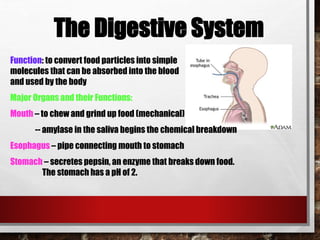
Function: to convert food particles into simple
molecules that can be absorbed into the blood
and used by the body
Major Organs and their Functions:
Mouth – to chew and grind up food (mechanical)
-- amylase in the saliva begins the chemical breakdown
Esophagus – pipe connecting mouth to stomach
Stomach – secretes pepsin, an enzyme that breaks down food.
The stomach has a pH of 2.
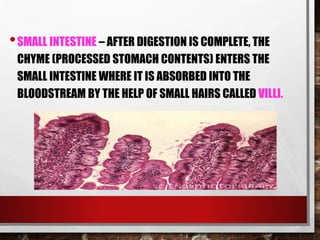
•SMALL INTESTINE – AFTER DIGESTION IS COMPLETE, THE
CHYME (PROCESSED STOMACH CONTENTS) ENTERS THE
SMALL INTESTINE WHERE IT IS ABSORBED INTO THE
BLOODSTREAM BY THE HELP OF SMALL HAIRS CALLED VILLI.
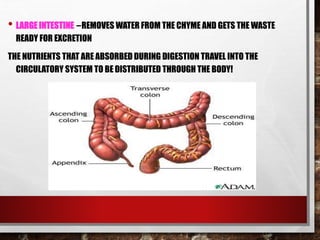
• LARGE INTESTINE – REMOVES WATER FROM THE CHYME AND GETS THE WASTE
READY FOR EXCRETION
THE NUTRIENTS THAT ARE ABSORBED DURING DIGESTION TRAVEL INTO THE
CIRCULATORY SYSTEM TO BE DISTRIBUTED THROUGH THE BODY!
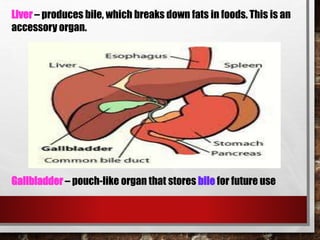
Liver – produces bile, which breaks down fats in foods. This is an
accessory organ.
Gallbladder – pouch-like organ that stores bile for future use

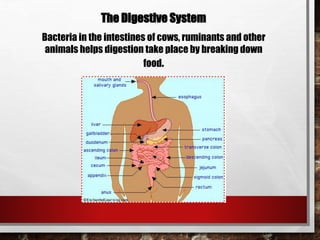
The Digestive System
Bacteria in the intestines of cows, ruminants and other
animals helps digestion take place by breaking down
food.
EXPLAIN HOW THE DIGESTIVE SYSTEM WORKS
CLOSELY WITH THE:
CIRCULATORY SYSTEM
MUSCULAR SYSTEM
ENDOCRINE SYSTEM
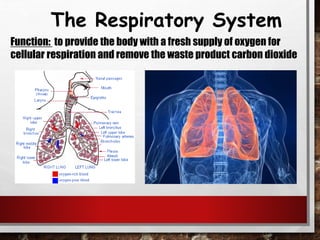
The Respiratory System
Function: to provide the body with a fresh supply of oxygen for
cellular respiration and remove the waste product carbon dioxide
MAJOR ORGANS
•NOSE – INTERNAL ENTRY AND EXIT POINT FOR AIR
•TRACHEA – THE “WINDPIPE”
•BRONCHIAL TUBES – THE TWO LARGE PASSAGEWAYS THAT LEAD
FROM THE TRACHEA TO YOUR LUNGS (ONE FOR EACH LUNG)
•ALVEOLI – CLUSTERS OF TINY SACS WHERE GASES ARE EXCHANGED
WITH THE BLOODSTREAM.
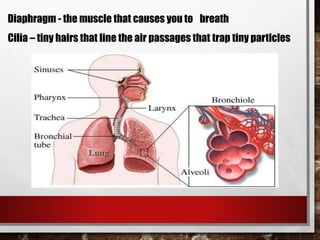
Diaphragm - the muscle that causes you to breath
Cilia – tiny hairs that line the air passages that trap tiny particles
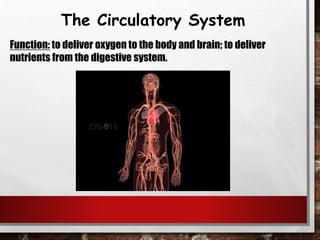
The Circulatory System
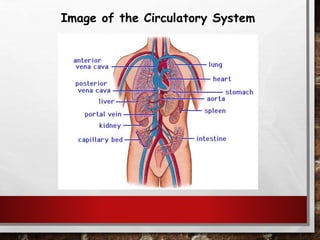
Function: to deliver oxygen to the body and brain; to deliver
nutrients from the digestive system.
Image of the Circulatory System
MAJOR ORGANS
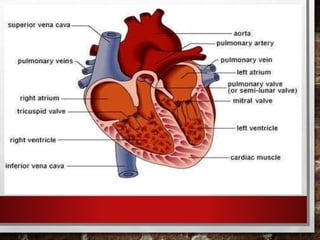
• HEART – THE MAJOR MUSCLE OF THE CIRCULATORY SYSTEM
• PUMPS BLOOD THROUGH ITS FOUR CHAMBERS (TWO VENTRICLES AND TWO
ATRIA)
• PUMPS DEOXYGENATED BLOOD INTO THE LUNGS, WHERE IT GETS OXYGENATED,
RETURNS IT TO THE HEART, AND THEN PUMPS OUT THROUGH THE AORTA TO THE
REST OF THE BODY
• VALVES REGULATE THE FLOW OF BLOOD BETWEEN THE CHAMBERS
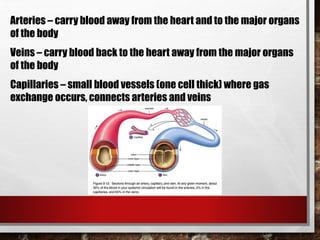
Arteries – carry blood away from the heart and to the major organs
of the body
Veins – carry blood back to the heart away from the major organs
of the body
Capillaries – small blood vessels (one cell thick) where gas
exchange occurs, connects arteries and veins
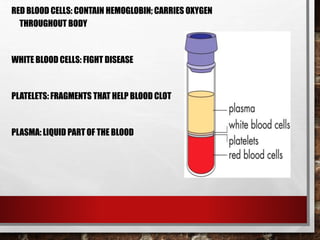
RED BLOOD CELLS: CONTAIN HEMOGLOBIN; CARRIES OXYGEN
THROUGHOUT BODY
WHITE BLOOD CELLS: FIGHT DISEASE
PLATELETS: FRAGMENTS THAT HELP BLOOD CLOT
PLASMA: LIQUID PART OF THE BLOOD
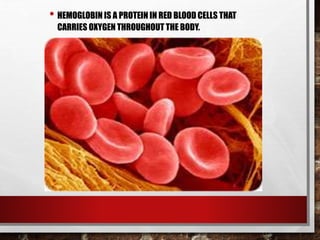
• HEMOGLOBIN IS A PROTEIN IN RED BLOOD CELLS THAT
CARRIES OXYGEN THROUGHOUT THE BODY.
EXERCISE AND
CELLULAR
RESPIRATION
• 1. TAKE RESTING PULSE (COUNT
BEATS FOR 15SECONDS AND
MULTIPLY NUMBER BY 4. RECORD THE
NUMBER UNDER RESTING BEFORE
COLUMN
• EXERCISE (YOU CAN DO JUMPING
JACKS, PUSH UPS, OR JOG QUICKLY IN
PLACE FOR 1 MINUTE.
• TAKE PULSE AGAIN (COUNT BEATS
FOR 15SECONDS AND MULTIPLY
NUMBER BY 4. RECORD THE NUMBER
UNDER AFTER EXERCISE COLUMN)
DIGESTIVE
SYSTEM IN A
BAG
• 1. PLACE CRACKER IN BAG
• POUR A SMALL AMOUNT OF SPRITE
IN BAG
• SEAL BAG CLOSED
• SMASH CRACKER IN BAG WITH
SPRITE(SIMULATING CHEWING)
• OBSERVE REACTION
REPRODUCTIVE AND ENDOCRINE SYSTEM
BELL RINGER
HEALTH-CARE WORKERS ARE EXPOSED TO
MANY DIFFERENT TYPES OF PATHOGENIC
AND NONPATHOGENIC MICROORGANISMS.
WHICH BODY SYSTEMS WORK TOGETHER
TO PROTECT THE BODY FROM PATHOGENS?
A MUSCULAR AND VASCULAR
B DIGESTIVE AND EXCRETORY
C CIRCULATORY AND IMMUNE
D ENDOCRINE AND REPRODUCTIVE
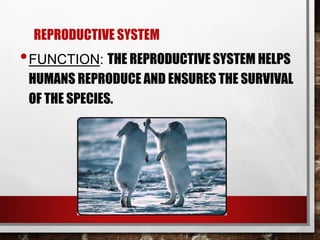
•FUNCTION: THE REPRODUCTIVE SYSTEM HELPS
HUMANS REPRODUCE AND ENSURES THE SURVIVAL
OF THE SPECIES.
REPRODUCTIVE SYSTEM
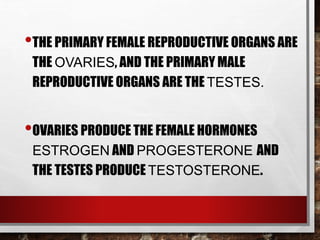
•THE PRIMARY FEMALE REPRODUCTIVE ORGANS ARE
THE OVARIES, AND THE PRIMARY MALE
REPRODUCTIVE ORGANS ARE THE TESTES.
•OVARIES PRODUCE THE FEMALE HORMONES
ESTROGEN AND PROGESTERONE AND
THE TESTES PRODUCE TESTOSTERONE.
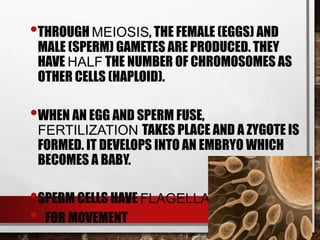
•THROUGH MEIOSIS, THE FEMALE (EGGS) AND
MALE (SPERM) GAMETES ARE PRODUCED. THEY
HAVE HALF THE NUMBER OF CHROMOSOMES AS
OTHER CELLS (HAPLOID).
•WHEN AN EGG AND SPERM FUSE,
FERTILIZATION TAKES PLACE AND A ZYGOTE IS
FORMED. IT DEVELOPS INTO AN EMBRYO WHICH
BECOMES A BABY.
•SPERM CELLS HAVE FLAGELLA
• FOR MOVEMENT
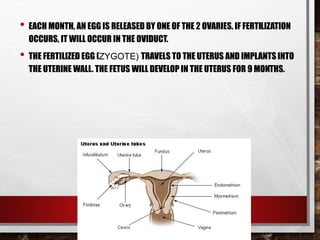
• EACH MONTH, AN EGG IS RELEASED BY ONE OF THE 2 OVARIES. IF FERTILIZATION
OCCURS, IT WILL OCCUR IN THE OVIDUCT.
• THE FERTILIZED EGG (ZYGOTE) TRAVELS TO THE UTERUS AND IMPLANTS INTO
THE UTERINE WALL. THE FETUS WILL DEVELOP IN THE UTERUS FOR 9 MONTHS.
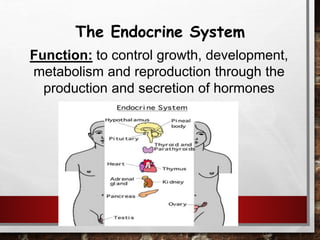
The Endocrine System
Function: to control growth, development,
metabolism and reproduction through the
production and secretion of hormones
Major Organs
Pancreas: secretes insulin which regulates blood
sugar
Pituitary gland (brain): secretes growth hormone
Thyroid: regulates metabolism
Adrenal Glands: prepare body for fight or flight
Testes & Ovaries: produce sex hormones
•PG.998 3,5,6
•PG 1003 3,5
•PG 1007 5,6
•PG 1010 3,5,6
PRODUCT
• IN 3-5 SENTENCES, DESCRIBE THE INTERACTIONS BETWEEN THE
ENDOCRINE AND REPRODUCTIVE SYSTEM. BE SURE TO INCLUDE
HOW THE TWO SYSTEMS HELPS IN AIDING THE BODY
BELL RINGER 4/16/2014 39
33
Which of the following correctly describes an interaction that occurs
between two body systems of a rabbit that helps the rabbit outrun a
pursuing coyote?
F The skeletal system releases additional calcium, and the circulatory
system retains more sodium in the blood to provide muscles with ions for
contraction.
G The digestive system increases the rate of digestion, and the excretory
system ceases to provide tissues with more nutrients.
H The respiratory system increases the breathing rate, and the circulatory
system increases blood pressure to provide tissues with more oxygen.
J The endocrine system releases hormones that prepare the immune
system to deal with possible injuries.
DAILY OBJECTIVE
• WE WILL DESCRIBE THE INTERACTIONS AMONGST THE MUSCULAR AND SKELETAL
SYSTEMS.
• HTTP://GPISD.DISCOVERYEDUCATION.COM/PLAYER/VIEW/ASSETGUID/C560616
C-CF6A-488A-A0F2-A41A54965204
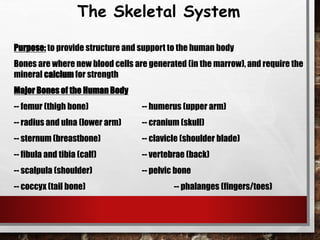
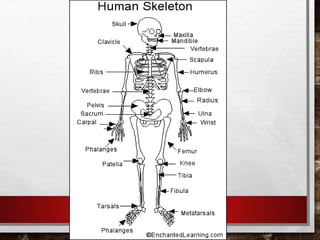
The Skeletal System
Purpose: to provide structure and support to the human body
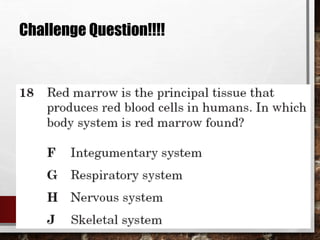
Bones are where new blood cells are generated (in the marrow), and require the
mineral calcium for strength
Major Bones of the Human Body
-- femur (thigh bone) -- humerus (upper arm)
-- radius and ulna (lower arm) -- cranium (skull)
-- sternum (breastbone) -- clavicle (shoulder blade)
-- fibula and tibia (calf) -- vertebrae (back)
-- scalpula (shoulder) -- pelvic bone
-- coccyx (tail bone) -- phalanges (fingers/toes)
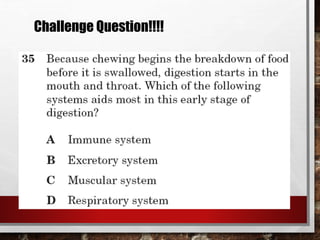
Challenge Question!!!!
The Muscular System
Purpose: works with the skeletal and nervous system to
produce movement, also helps to circulate blood through
the human body
-- muscle cells are fibrous
-- muscle contractions can be voluntary or
involuntary
Major Muscles in the Human Body
-- biceps (flexor) -- triceps (extend) -- deltoids
-- glutes -- hamstrings --quadriceps
Challenge Question!!!!
PRODUCT
• DESCRIBE IN YOUR OWN WORDS THE INTERACTION BETWEEN THE MUSCULAR
SYSTEM AND THE SKELETAL SYSTEM.
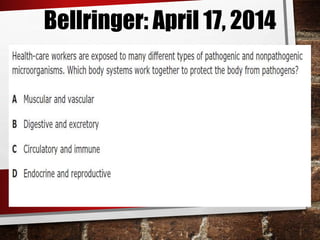
Bellringer: April 17, 2014
INTRO TO THE EXCRETORY SYSTEM!
• HTTPS://WWW.YOUTUBE.COM/WATCH?V=LICKIVT2QI4
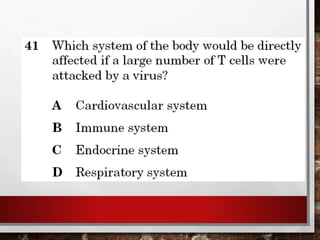
IMMUNE SYSTEM BRAINPOP
• HTTP://WWW.BRAINPOP.COM/HEALTH/BODYSYSTEMS/IMMUNESYSTEM/
• USERNAME:CABRILLOELEM
• PASSWORD: CABRILLO
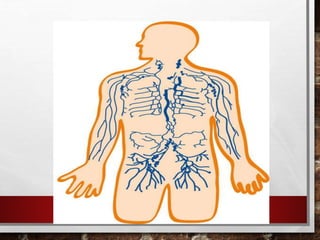
The Lymphatic (Immune) System
Function: to remove infectious diseases and other
pathogens from the human body
The lymphatic system transports tissue fluid
(called lymph) and filters out disease-causing
pathogens (through lymph nodes)
•MAJOR ORGANS
•SKIN –THE BODY’S FIRST LINE OF DEFENSE
•TONSILS – TRAP BACTERIA THAT ENTER
MOUTH/NOSE
•LYMPH NODES – HELP RESTORE FLUID LOST BY THE
BLOOD AND RETURN IT TO THE CIRCULATORY
SYSTEM
•SPLEEN – FILTERS OUT AND DESTROYS BACTERIA
AND WORN OUT BLOOD CELLS
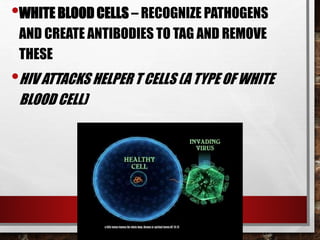
•WHITE BLOOD CELLS – RECOGNIZE PATHOGENS
AND CREATE ANTIBODIES TO TAG AND REMOVE
THESE
•HIV ATTACKS HELPER T CELLS (A TYPE OF WHITE
BLOOD CELL)
EXCRETORY SYSTEM BRAINPOP
• HTTP://WWW.BRAINPOP.COM/HEALTH/BODYSYSTEMS/URINARYSYSTEM/
• USERNAME:CABRILLOELEM
• PASSWORD: CABRILLO
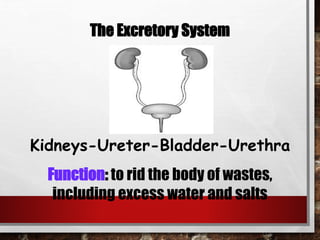
The Excretory System
Kidneys-Ureter-Bladder-Urethra
Function: to rid the body of wastes,
including excess water and salts
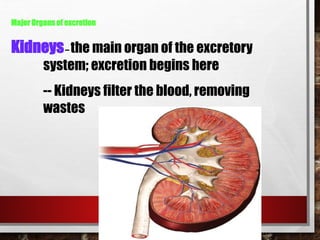
Major Organs of excretion
Kidneys– the main organ of the excretory
system; excretion begins here
-- Kidneys filter the blood, removing
wastes
MORE EXCRETORY ORGANS:
•SKIN – SWEAT GLANDS REMOVE EXCESS
WATER AND SALTS FROM THE BODY
•LUNGS – EXPEL THE WASTE PRODUCT
CARBON DIOXIDE (CELLULAR RESPIRATION)
•QUESTION: CAN ONE ORGAN BE PART OF TWO
SYSTEMS?
Guided Practice
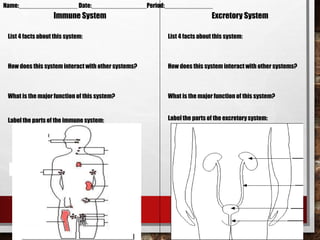
Complete the worksheet to answer questions and
label the parts.
1. EXPLAIN HOW THE LYMPHATIC SYSTEM WORKS
CLOSELY WITH THE :
CIRCULATORY SYSTEM
INTEGUMENTARY SYSTEM
SKELETAL SYSTEM
2. EXPLAIN HOW THE EXCRETORY SYSTEM WORKS
CLOSELY WITH THE :
CIRCULATORY SYSTEM
INTEGUMENTARY SYSTEM
DIGESTIVE SYSTEM
Independent Practice
Immune System Excretory System
List 4 facts about this system:
How does this system interact with other systems?
What is the major function of this system?
List 4 facts about this system:
How does this system interact with other systems?
What is the major function of this system?
Name:_________________ Date:________________Period:______________
Label the parts of the excretorysystem:Label the parts of the immune system:
v
v
v
v
v
v

Body System Review

  • 4.
    The Digestive System Function:to convert food particles into simple molecules that can be absorbed into the blood and used by the body Major Organs and their Functions: Mouth – to chew and grind up food (mechanical) -- amylase in the saliva begins the chemical breakdown Esophagus – pipe connecting mouth to stomach Stomach – secretes pepsin, an enzyme that breaks down food. The stomach has a pH of 2.
  • 5.
    •SMALL INTESTINE –AFTER DIGESTION IS COMPLETE, THE CHYME (PROCESSED STOMACH CONTENTS) ENTERS THE SMALL INTESTINE WHERE IT IS ABSORBED INTO THE BLOODSTREAM BY THE HELP OF SMALL HAIRS CALLED VILLI.
  • 6.
    • LARGE INTESTINE– REMOVES WATER FROM THE CHYME AND GETS THE WASTE READY FOR EXCRETION THE NUTRIENTS THAT ARE ABSORBED DURING DIGESTION TRAVEL INTO THE CIRCULATORY SYSTEM TO BE DISTRIBUTED THROUGH THE BODY!
  • 7.
    Liver – producesbile, which breaks down fats in foods. This is an accessory organ. Gallbladder – pouch-like organ that stores bile for future use
  • 8.
    The Digestive System Bacteriain the intestines of cows, ruminants and other animals helps digestion take place by breaking down food.
  • 9.
    EXPLAIN HOW THEDIGESTIVE SYSTEM WORKS CLOSELY WITH THE: CIRCULATORY SYSTEM MUSCULAR SYSTEM ENDOCRINE SYSTEM
  • 10.
    The Respiratory System Function:to provide the body with a fresh supply of oxygen for cellular respiration and remove the waste product carbon dioxide
  • 11.
    MAJOR ORGANS •NOSE –INTERNAL ENTRY AND EXIT POINT FOR AIR •TRACHEA – THE “WINDPIPE” •BRONCHIAL TUBES – THE TWO LARGE PASSAGEWAYS THAT LEAD FROM THE TRACHEA TO YOUR LUNGS (ONE FOR EACH LUNG) •ALVEOLI – CLUSTERS OF TINY SACS WHERE GASES ARE EXCHANGED WITH THE BLOODSTREAM.
  • 12.
    Diaphragm - themuscle that causes you to breath Cilia – tiny hairs that line the air passages that trap tiny particles
  • 13.
    The Circulatory System Function:to deliver oxygen to the body and brain; to deliver nutrients from the digestive system.
  • 14.
    Image of theCirculatory System
  • 15.
    MAJOR ORGANS • HEART– THE MAJOR MUSCLE OF THE CIRCULATORY SYSTEM • PUMPS BLOOD THROUGH ITS FOUR CHAMBERS (TWO VENTRICLES AND TWO ATRIA) • PUMPS DEOXYGENATED BLOOD INTO THE LUNGS, WHERE IT GETS OXYGENATED, RETURNS IT TO THE HEART, AND THEN PUMPS OUT THROUGH THE AORTA TO THE REST OF THE BODY • VALVES REGULATE THE FLOW OF BLOOD BETWEEN THE CHAMBERS
  • 17.
    Arteries – carryblood away from the heart and to the major organs of the body Veins – carry blood back to the heart away from the major organs of the body Capillaries – small blood vessels (one cell thick) where gas exchange occurs, connects arteries and veins
  • 18.
    RED BLOOD CELLS:CONTAIN HEMOGLOBIN; CARRIES OXYGEN THROUGHOUT BODY WHITE BLOOD CELLS: FIGHT DISEASE PLATELETS: FRAGMENTS THAT HELP BLOOD CLOT PLASMA: LIQUID PART OF THE BLOOD
  • 19.
    • HEMOGLOBIN ISA PROTEIN IN RED BLOOD CELLS THAT CARRIES OXYGEN THROUGHOUT THE BODY.
  • 21.
    EXERCISE AND CELLULAR RESPIRATION • 1.TAKE RESTING PULSE (COUNT BEATS FOR 15SECONDS AND MULTIPLY NUMBER BY 4. RECORD THE NUMBER UNDER RESTING BEFORE COLUMN • EXERCISE (YOU CAN DO JUMPING JACKS, PUSH UPS, OR JOG QUICKLY IN PLACE FOR 1 MINUTE. • TAKE PULSE AGAIN (COUNT BEATS FOR 15SECONDS AND MULTIPLY NUMBER BY 4. RECORD THE NUMBER UNDER AFTER EXERCISE COLUMN) DIGESTIVE SYSTEM IN A BAG • 1. PLACE CRACKER IN BAG • POUR A SMALL AMOUNT OF SPRITE IN BAG • SEAL BAG CLOSED • SMASH CRACKER IN BAG WITH SPRITE(SIMULATING CHEWING) • OBSERVE REACTION
  • 23.
  • 24.
    BELL RINGER HEALTH-CARE WORKERSARE EXPOSED TO MANY DIFFERENT TYPES OF PATHOGENIC AND NONPATHOGENIC MICROORGANISMS. WHICH BODY SYSTEMS WORK TOGETHER TO PROTECT THE BODY FROM PATHOGENS? A MUSCULAR AND VASCULAR B DIGESTIVE AND EXCRETORY C CIRCULATORY AND IMMUNE D ENDOCRINE AND REPRODUCTIVE
  • 25.
    •FUNCTION: THE REPRODUCTIVESYSTEM HELPS HUMANS REPRODUCE AND ENSURES THE SURVIVAL OF THE SPECIES. REPRODUCTIVE SYSTEM
  • 26.
    •THE PRIMARY FEMALEREPRODUCTIVE ORGANS ARE THE OVARIES, AND THE PRIMARY MALE REPRODUCTIVE ORGANS ARE THE TESTES. •OVARIES PRODUCE THE FEMALE HORMONES ESTROGEN AND PROGESTERONE AND THE TESTES PRODUCE TESTOSTERONE.
  • 27.
    •THROUGH MEIOSIS, THEFEMALE (EGGS) AND MALE (SPERM) GAMETES ARE PRODUCED. THEY HAVE HALF THE NUMBER OF CHROMOSOMES AS OTHER CELLS (HAPLOID). •WHEN AN EGG AND SPERM FUSE, FERTILIZATION TAKES PLACE AND A ZYGOTE IS FORMED. IT DEVELOPS INTO AN EMBRYO WHICH BECOMES A BABY. •SPERM CELLS HAVE FLAGELLA • FOR MOVEMENT
  • 28.
    • EACH MONTH,AN EGG IS RELEASED BY ONE OF THE 2 OVARIES. IF FERTILIZATION OCCURS, IT WILL OCCUR IN THE OVIDUCT. • THE FERTILIZED EGG (ZYGOTE) TRAVELS TO THE UTERUS AND IMPLANTS INTO THE UTERINE WALL. THE FETUS WILL DEVELOP IN THE UTERUS FOR 9 MONTHS.
  • 29.
    The Endocrine System Function:to control growth, development, metabolism and reproduction through the production and secretion of hormones
  • 30.
    Major Organs Pancreas: secretesinsulin which regulates blood sugar Pituitary gland (brain): secretes growth hormone Thyroid: regulates metabolism Adrenal Glands: prepare body for fight or flight Testes & Ovaries: produce sex hormones
  • 31.
    •PG.998 3,5,6 •PG 10033,5 •PG 1007 5,6 •PG 1010 3,5,6
  • 32.
    PRODUCT • IN 3-5SENTENCES, DESCRIBE THE INTERACTIONS BETWEEN THE ENDOCRINE AND REPRODUCTIVE SYSTEM. BE SURE TO INCLUDE HOW THE TWO SYSTEMS HELPS IN AIDING THE BODY
  • 33.
    BELL RINGER 4/16/201439 33 Which of the following correctly describes an interaction that occurs between two body systems of a rabbit that helps the rabbit outrun a pursuing coyote? F The skeletal system releases additional calcium, and the circulatory system retains more sodium in the blood to provide muscles with ions for contraction. G The digestive system increases the rate of digestion, and the excretory system ceases to provide tissues with more nutrients. H The respiratory system increases the breathing rate, and the circulatory system increases blood pressure to provide tissues with more oxygen. J The endocrine system releases hormones that prepare the immune system to deal with possible injuries.
  • 34.
    DAILY OBJECTIVE • WEWILL DESCRIBE THE INTERACTIONS AMONGST THE MUSCULAR AND SKELETAL SYSTEMS. • HTTP://GPISD.DISCOVERYEDUCATION.COM/PLAYER/VIEW/ASSETGUID/C560616 C-CF6A-488A-A0F2-A41A54965204
  • 36.
    The Skeletal System Purpose:to provide structure and support to the human body Bones are where new blood cells are generated (in the marrow), and require the mineral calcium for strength Major Bones of the Human Body -- femur (thigh bone) -- humerus (upper arm) -- radius and ulna (lower arm) -- cranium (skull) -- sternum (breastbone) -- clavicle (shoulder blade) -- fibula and tibia (calf) -- vertebrae (back) -- scalpula (shoulder) -- pelvic bone -- coccyx (tail bone) -- phalanges (fingers/toes)
  • 38.
  • 39.
    The Muscular System Purpose:works with the skeletal and nervous system to produce movement, also helps to circulate blood through the human body -- muscle cells are fibrous -- muscle contractions can be voluntary or involuntary Major Muscles in the Human Body -- biceps (flexor) -- triceps (extend) -- deltoids -- glutes -- hamstrings --quadriceps
  • 40.
  • 41.
    PRODUCT • DESCRIBE INYOUR OWN WORDS THE INTERACTION BETWEEN THE MUSCULAR SYSTEM AND THE SKELETAL SYSTEM.
  • 42.
  • 43.
    INTRO TO THEEXCRETORY SYSTEM! • HTTPS://WWW.YOUTUBE.COM/WATCH?V=LICKIVT2QI4
  • 44.
    IMMUNE SYSTEM BRAINPOP •HTTP://WWW.BRAINPOP.COM/HEALTH/BODYSYSTEMS/IMMUNESYSTEM/ • USERNAME:CABRILLOELEM • PASSWORD: CABRILLO
  • 45.
    The Lymphatic (Immune)System Function: to remove infectious diseases and other pathogens from the human body The lymphatic system transports tissue fluid (called lymph) and filters out disease-causing pathogens (through lymph nodes)
  • 47.
    •MAJOR ORGANS •SKIN –THEBODY’S FIRST LINE OF DEFENSE •TONSILS – TRAP BACTERIA THAT ENTER MOUTH/NOSE •LYMPH NODES – HELP RESTORE FLUID LOST BY THE BLOOD AND RETURN IT TO THE CIRCULATORY SYSTEM •SPLEEN – FILTERS OUT AND DESTROYS BACTERIA AND WORN OUT BLOOD CELLS
  • 48.
    •WHITE BLOOD CELLS– RECOGNIZE PATHOGENS AND CREATE ANTIBODIES TO TAG AND REMOVE THESE •HIV ATTACKS HELPER T CELLS (A TYPE OF WHITE BLOOD CELL)
  • 50.
    EXCRETORY SYSTEM BRAINPOP •HTTP://WWW.BRAINPOP.COM/HEALTH/BODYSYSTEMS/URINARYSYSTEM/ • USERNAME:CABRILLOELEM • PASSWORD: CABRILLO
  • 51.
    The Excretory System Kidneys-Ureter-Bladder-Urethra Function:to rid the body of wastes, including excess water and salts
  • 52.
    Major Organs ofexcretion Kidneys– the main organ of the excretory system; excretion begins here -- Kidneys filter the blood, removing wastes
  • 53.
    MORE EXCRETORY ORGANS: •SKIN– SWEAT GLANDS REMOVE EXCESS WATER AND SALTS FROM THE BODY •LUNGS – EXPEL THE WASTE PRODUCT CARBON DIOXIDE (CELLULAR RESPIRATION) •QUESTION: CAN ONE ORGAN BE PART OF TWO SYSTEMS?
  • 55.
    Guided Practice Complete theworksheet to answer questions and label the parts.
  • 56.
    1. EXPLAIN HOWTHE LYMPHATIC SYSTEM WORKS CLOSELY WITH THE : CIRCULATORY SYSTEM INTEGUMENTARY SYSTEM SKELETAL SYSTEM 2. EXPLAIN HOW THE EXCRETORY SYSTEM WORKS CLOSELY WITH THE : CIRCULATORY SYSTEM INTEGUMENTARY SYSTEM DIGESTIVE SYSTEM Independent Practice
  • 57.
    Immune System ExcretorySystem List 4 facts about this system: How does this system interact with other systems? What is the major function of this system? List 4 facts about this system: How does this system interact with other systems? What is the major function of this system? Name:_________________ Date:________________Period:______________ Label the parts of the excretorysystem:Label the parts of the immune system: v v v v v v