FUNCTIONAL RELATIONSHIPS OF THE
DIFFERENT ORGAN SYSTEMS IN
ENSURING ANIMAL SURVIVAL
Every day, you use your body to do a
lot of things. Because of your body, you can
think, move, play and generally go about your
daily activities. There are lot of things
happening inside your body that make life
possible. You are alive because of the many
wonderful systems of organs that work together
perfectly through very complex processes.
These organ systems keep in touch with one
another, exchanging information and working
together to keep you alive.
FUNCTIONAL RELATIONSHIPS OF THE
DIFFERENT ORGAN SYSTEMS IN
ENSURING ANIMAL SURVIVAL
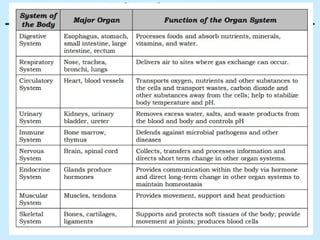
• The body of an animal consist of
various organ systems. Each
contains several specific organs.
An organ is a unique anatomic
structure consisting of groups of
tissues that work in concert to
perform specific function.
GROUP ACTIVITY: 50PTS
The human body systems interact to perform several functions for the
whole organism.
Discuss, then give the functions of the body when two systems work
together.
Group 1: CIRCULATORY & RESPIRATORY SYSTEM
Group 2: IMMUNE & ENDOCRINE & NERVOUS SYSTEM
Group 3: SKELETAL SYSTEM & MUSCULAR SYSTEM
GROUP 4: DIGESTIVE & URINARY SYSTEM
Circulatory and Respiratory Sytem
• Respiratory system
Brings oxygen into the lungs and removes carbon
dioxide. The respiratory system includes the nose,
mouth, trachea, and lungs
• Circulatory system
Moves blood throughout the body, delivering oxygen and
nutrients to cells and organs, and removing carbon
dioxide and waste products. The circulatory system
includes the heart and blood vessels.
How does they work together?
• The respiratory and circulatory systems work
together to exchange oxygen and carbon dioxide
throughout the body
• Breathing in- When you inhale, your diaphragm pulls down, creating more
space in your chest and drawing air into your lungs
• Gas exchange-In the lungs, oxygen from the air passes into the blood through
the walls of the alveoli, which are tiny air sacs surrounded by capillaries.
• Blood circulation-The oxygenated blood is then pumped by the heart
through the body to the cells of tissues and organs.
• Carbon dioxide-As cells use the oxygen, they produce carbon dioxide, which
enters the blood. The blood carries the carbon dioxide back to the lungs, where it's
exhaled.
Immune, Endocrine & Nervous Sytem
• Endocrine system
The endocrine system sends chemical messages called hormones into
the bloodstream to communicate with the body. Hormones can
change the cells in surrounding tissues, or trigger other signaling
pathways in the cell.
• Nervous system
The nervous system communicates with the immune system through
the hypothalamo-pituitary-adrenal (HPA) axis and the sympathetic
nervous system (SNS). The hypothalamus acts as a bridge between
the nervous and endocrine systems.
• Immune system
Immune cells can communicate with the endocrine, nervous, and
gastrointestinal systems by releasing cytokines or
neurotransmitters. The immune system can also regulate CNS
activity through proinflammatory cytokines like IL-1
How does they work together?
• The immune, endocrine, and nervous systems work togetherto
help the body maintain homeostasis and respond to different
events and stresses
• These systems work together to coordinate physiological
functions, such as the stress response, body metabolism, and
the reproductive system.The communication between these
systems can affect immune function, disease development, and
susceptibility to infections.
Muscular and Skeletal Sytem
Skeletal system
Provides structure, protection, and support:
•Bones: Protect organs, support body weight, and store calcium and
phosphorus
•Joints: Connect bones to allow for movement
•Cartilage: Prevents bone ends from rubbing together
Muscular system
Moves the body and assists with other functions:
•Muscles: Attach to bones and contract to pull on them, allowing for movement
•Tendons: Attach muscles to bones and carry the force of muscle contraction to the
bone
•Other functions: Muscles also help with breathing, maintaining body temperature, and
organ protection
How does they work together?
• The muscular and skeletal systems work together to
support and move the body, and are part of the
musculoskeletal system.
• The bones of the skeletal system serve to protect the
body's organs, support the weight of the body, and give
the body shape. The muscles of the muscular system
attach to these bones, pulling on them to allow for
movement of the body.
Digestive and Urinary Sytem
Respiratory system
•Brings oxygen into the lungs and removes carbon
dioxide. The respiratory system includes the nose, mouth,
trachea, and lungs
Circulatory system
•Moves blood throughout the body, delivering oxygen and
nutrients to cells and organs, and removing carbon dioxide
and waste products. The circulatory system includes the
heart and blood vessels.
Digestive and Urinary System
• Waste removal
The digestive system breaks down food and removes undigested solids, while
the urinary system filters the blood and removes waste products in urine.
• Water balance
Both systems work together to control the amount of water in the body. The
large intestine absorbs water to make waste more solid, while the urinary
system filters blood and maintains the correct volume of body fluids.
• Digestion
The circulatory system carries chemical signals from the endocrine system that
control the speed of digestion.
• Urinary tract health
Eating a healthy diet that includes lean proteins, whole grains, fiber-rich
breads, nuts, fruits, and vegetables can help keep the urinary tract healthy
by promoting regular bowel movements.

Human body and its functionality final.ppt

  • 1.
    FUNCTIONAL RELATIONSHIPS OFTHE FUNCTIONAL RELATIONSHIPS OF THE DIFFERENT ORGAN SYSTEMS IN DIFFERENT ORGAN SYSTEMS IN ENSURING ANIMAL SURVIVAL ENSURING ANIMAL SURVIVAL Every day, you use your body to do a lot of things. Because of your body, you can think, move, play and generally go about your daily activities. There are lot of things happening inside your body that make life possible. You are alive because of the many wonderful systems of organs that work together perfectly through very complex processes. These organ systems keep in touch with one another, exchanging information and working together to keep you alive.
  • 2.
    FUNCTIONAL RELATIONSHIPS OFTHE FUNCTIONAL RELATIONSHIPS OF THE DIFFERENT ORGAN SYSTEMS IN DIFFERENT ORGAN SYSTEMS IN ENSURING ANIMAL SURVIVAL ENSURING ANIMAL SURVIVAL • The body of an animal consist of various organ systems. Each contains several specific organs. An organ is a unique anatomic structure consisting of groups of tissues that work in concert to perform specific function.
  • 4.
    GROUP ACTIVITY: 50PTS GROUPACTIVITY: 50PTS The human body systems interact to perform several functions for the whole organism. Discuss, then give the functions of the body when two systems work together. Group 1: CIRCULATORY & RESPIRATORY SYSTEM Group 2: IMMUNE & ENDOCRINE & NERVOUS SYSTEM Group 3: SKELETAL SYSTEM & MUSCULAR SYSTEM GROUP 4: DIGESTIVE & URINARY SYSTEM
  • 5.
    Circulatory and RespiratorySytem Circulatory and Respiratory Sytem • Respiratory system Brings oxygen into the lungs and removes carbon dioxide. The respiratory system includes the nose, mouth, trachea, and lungs • Circulatory system Moves blood throughout the body, delivering oxygen and nutrients to cells and organs, and removing carbon dioxide and waste products. The circulatory system includes the heart and blood vessels.
  • 6.
    How does theywork together? How does they work together? • The respiratory and circulatory systems work together to exchange oxygen and carbon dioxide throughout the body • Breathing in- When you inhale, your diaphragm pulls down, creating more space in your chest and drawing air into your lungs • Gas exchange-In the lungs, oxygen from the air passes into the blood through the walls of the alveoli, which are tiny air sacs surrounded by capillaries. • Blood circulation-The oxygenated blood is then pumped by the heart through the body to the cells of tissues and organs. • Carbon dioxide-As cells use the oxygen, they produce carbon dioxide, which enters the blood. The blood carries the carbon dioxide back to the lungs, where it's exhaled.
  • 7.
    Immune, Endocrine &Nervous Sytem Immune, Endocrine & Nervous Sytem • Endocrine system The endocrine system sends chemical messages called hormones into the bloodstream to communicate with the body. Hormones can change the cells in surrounding tissues, or trigger other signaling pathways in the cell. • Nervous system The nervous system communicates with the immune system through the hypothalamo-pituitary-adrenal (HPA) axis and the sympathetic nervous system (SNS). The hypothalamus acts as a bridge between the nervous and endocrine systems. • Immune system Immune cells can communicate with the endocrine, nervous, and gastrointestinal systems by releasing cytokines or neurotransmitters. The immune system can also regulate CNS activity through proinflammatory cytokines like IL-1
  • 8.
    How does theywork together? How does they work together? • The immune, endocrine, and nervous systems work togetherto help the body maintain homeostasis and respond to different events and stresses • These systems work together to coordinate physiological functions, such as the stress response, body metabolism, and the reproductive system.The communication between these systems can affect immune function, disease development, and susceptibility to infections.
  • 9.
    Muscular and SkeletalSytem Muscular and Skeletal Sytem Skeletal system Provides structure, protection, and support: •Bones: Protect organs, support body weight, and store calcium and phosphorus •Joints: Connect bones to allow for movement •Cartilage: Prevents bone ends from rubbing together Muscular system Moves the body and assists with other functions: •Muscles: Attach to bones and contract to pull on them, allowing for movement •Tendons: Attach muscles to bones and carry the force of muscle contraction to the bone •Other functions: Muscles also help with breathing, maintaining body temperature, and organ protection
  • 10.
    How does theywork together? How does they work together? • The muscular and skeletal systems work together to support and move the body, and are part of the musculoskeletal system. • The bones of the skeletal system serve to protect the body's organs, support the weight of the body, and give the body shape. The muscles of the muscular system attach to these bones, pulling on them to allow for movement of the body.
  • 11.
    Digestive and UrinarySytem Digestive and Urinary Sytem Respiratory system •Brings oxygen into the lungs and removes carbon dioxide. The respiratory system includes the nose, mouth, trachea, and lungs Circulatory system •Moves blood throughout the body, delivering oxygen and nutrients to cells and organs, and removing carbon dioxide and waste products. The circulatory system includes the heart and blood vessels.
  • 12.
    Digestive and UrinarySystem Digestive and Urinary System • Waste removal The digestive system breaks down food and removes undigested solids, while the urinary system filters the blood and removes waste products in urine. • Water balance Both systems work together to control the amount of water in the body. The large intestine absorbs water to make waste more solid, while the urinary system filters blood and maintains the correct volume of body fluids. • Digestion The circulatory system carries chemical signals from the endocrine system that control the speed of digestion. • Urinary tract health Eating a healthy diet that includes lean proteins, whole grains, fiber-rich breads, nuts, fruits, and vegetables can help keep the urinary tract healthy by promoting regular bowel movements.