Year 9 Science
Strathcona BGGS
The Endocrine System
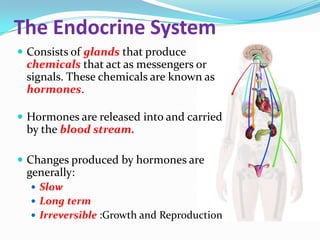
 Consists of glands that produce
 chemicals that act as messengers or
 signals. These chemicals are known as
 hormones.

 Hormones are released into and carried
 by the blood stream.

 Changes produced by hormones are
 generally:
   Slow
   Long term
   Irreversible :Growth and Reproduction
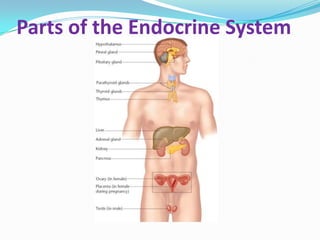
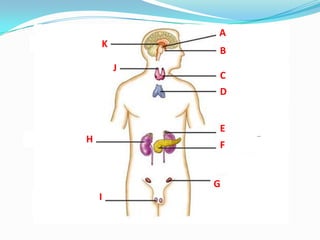
Parts of the Endocrine System
A
    K
            B
        J
            C
            D


            E
H
            F


            G
    I
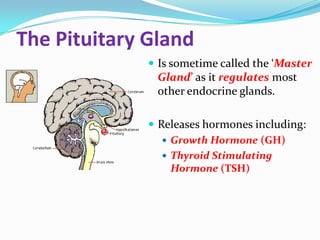
The Pituitary Gland
               Is sometime called the ‘Master
               Gland’ as it regulates most
               other endocrine glands.

               Releases hormones including:
                  Growth Hormone (GH)
                  Thyroid Stimulating
                   Hormone (TSH)
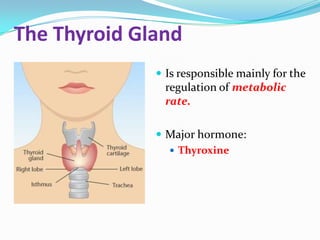
The Thyroid Gland
               Is responsible mainly for the
               regulation of metabolic
               rate.

               Major hormone:
                 Thyroxine
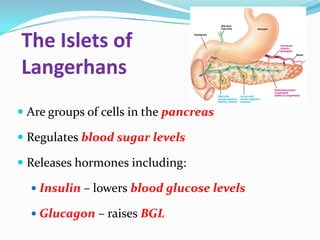
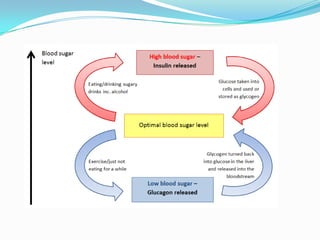
The Islets of
Langerhans
 Are groups of cells in the pancreas

 Regulates blood sugar levels

 Releases hormones including:

   Insulin – lowers blood glucose levels

   Glucagon – raises BGL
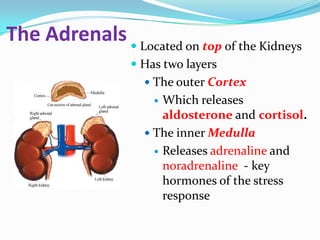
The Adrenals  Located on top of the Kidneys
                   Has two layers
                     The outer Cortex
                       Which releases
                        aldosterone and cortisol.
                     The inner Medulla
                       Releases adrenaline and
                        noradrenaline - key
                        hormones of the stress
                        response
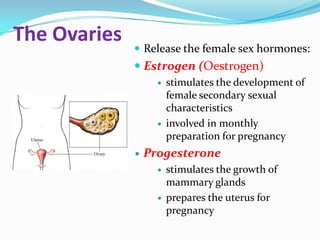
The Ovaries
               Release the female sex hormones:
               Estrogen (Oestrogen)
                       stimulates the development of
                        female secondary sexual
                        characteristics
                       involved in monthly
                        preparation for pregnancy
                 Progesterone
                       stimulates the growth of
                        mammary glands
                       prepares the uterus for
                        pregnancy
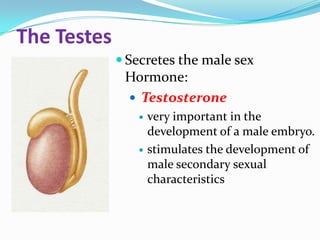
The Testes
              Secretes the male sex
              Hormone:
               Testosterone
                   very important in the
                    development of a male embryo.
                   stimulates the development of
                    male secondary sexual
                    characteristics
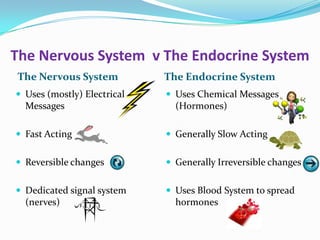
The Nervous System v The Endocrine System
The Nervous System           The Endocrine System
 Uses (mostly) Electrical    Uses Chemical Messages
  Messages                     (Hormones)

 Fast Acting                 Generally Slow Acting


 Reversible changes          Generally Irreversible changes


 Dedicated signal system     Uses Blood System to spread
  (nerves)                     hormones

The Human Endocrine System

  • 1.
  • 2.
    The Endocrine System Consists of glands that produce chemicals that act as messengers or signals. These chemicals are known as hormones.  Hormones are released into and carried by the blood stream.  Changes produced by hormones are generally:  Slow  Long term  Irreversible :Growth and Reproduction
  • 3.
    Parts of theEndocrine System
  • 4.
    A K B J C D E H F G I
  • 5.
    The Pituitary Gland  Is sometime called the ‘Master Gland’ as it regulates most other endocrine glands.  Releases hormones including:  Growth Hormone (GH)  Thyroid Stimulating Hormone (TSH)
  • 6.
    The Thyroid Gland  Is responsible mainly for the regulation of metabolic rate.  Major hormone:  Thyroxine
  • 7.
    The Islets of Langerhans Are groups of cells in the pancreas  Regulates blood sugar levels  Releases hormones including:  Insulin – lowers blood glucose levels  Glucagon – raises BGL
  • 9.
    The Adrenals Located on top of the Kidneys  Has two layers  The outer Cortex  Which releases aldosterone and cortisol.  The inner Medulla  Releases adrenaline and noradrenaline - key hormones of the stress response
  • 10.
    The Ovaries  Release the female sex hormones:  Estrogen (Oestrogen)  stimulates the development of female secondary sexual characteristics  involved in monthly preparation for pregnancy  Progesterone  stimulates the growth of mammary glands  prepares the uterus for pregnancy
  • 11.
    The Testes  Secretes the male sex Hormone:  Testosterone  very important in the development of a male embryo.  stimulates the development of male secondary sexual characteristics
  • 12.
    The Nervous Systemv The Endocrine System The Nervous System The Endocrine System  Uses (mostly) Electrical  Uses Chemical Messages Messages (Hormones)  Fast Acting  Generally Slow Acting  Reversible changes  Generally Irreversible changes  Dedicated signal system  Uses Blood System to spread (nerves) hormones