BMGT 411: Chapter 15 
Designing and Managing Integrated Marketing Communications
Chapter Questions 
• What is the role of marketing communications? 
• What are the major steps in developing effective communications? 
• What is the communications mix and how should it be set? 
• What is an integrated marketing communications program?
Modes of Marketing Communications 
• Advertising 
• Sales promotion 
• Events and experiences 
• Public relations and publicity 
• Direct marketing 
• Interactive marketing 
• Word-of-mouth marketing 
• Personal selling 
• Social Media Marketing
Table 15.1 Communication Platforms: Advertising 
• Print and broadcast ads 
• POP displays 
• Packaging inserts 
• Logos 
• Motion pictures 
• Videotapes 
• Brochures and booklets 
• Posters 
• Billboards
Table 15.1 Communication Platforms - Sales Promotion 
• Contests, games, sweepstakes 
• Premiums 
• Sampling 
• Trade shows, exhibits 
• Coupons 
• Rebates 
• Entertainment 
• Continuity programs
Table 15.1 Communication Platforms: Events and 
Sponsorships 
• Sports 
• Company museums 
• Entertainment 
• Street activities 
• Festivals 
• Art 
• Causes 
• Factory tours
Table 15.1 Communication Platforms: Public Relations 
• Press kits 
• Speeches 
• Seminars 
• Annual reports 
• Charitable donations 
• Publications 
• Community relations 
• Lobbying 
• Identity media
Table 15.1 Communication Platforms: Personal Selling 
• Sales presentations 
• Sales meetings 
• Incentive programs 
• Samples 
• Fairs and trade shows
Table 15.1 Communication Platforms: Direct Marketing 
• Catalogs 
• Mailings 
• Telemarketing 
• Electronic shopping 
• TV shopping 
• E-mail 
• Voice mail 
• Websites
An Ideal Ad Campaign 
• The right consumer is exposed to the message at the right time and 
place 
• The ad causes consumer to pay attention 
• The ad reflects consumer’s level of understanding and behaviors the 
with product 
• The ad correctly positions brand in terms of points-of-difference and 
points-of-parity 
• The ad motivates consumer to consider purchase of the brand
The right consumer is exposed 
to the message at the right time 
and place
The right consumer is exposed 
to the message at the right time 
and place
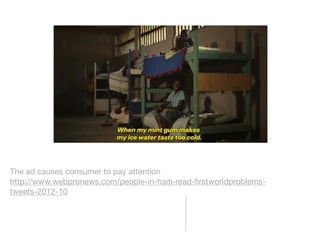
The ad causes consumer to pay attention 
http://www.webpronews.com/people-in-haiti-read-firstworldproblems-tweets- 
2012-10
The ad reflects consumer’s level of 
understanding and behaviors with the 
product 
http://bit.ly/1rh2Z19
The ad correctly positions brand in terms 
of points-of-difference and points-of-parity http://youtu.be/9O2i28DU7fY
The ad motivates consumer to consider 
purchase of the brand http://youtu.be/79gMRVOPcoM
An Ideal Ad Campaign 
• The right consumer is exposed to the message at the right time and 
place 
• The ad causes consumer to pay attention 
• The ad reflects consumer’s level of understanding and behaviors the 
with product 
• The ad correctly positions brand in terms of points-of-difference and 
points-of-parity 
• The ad motivates consumer to consider purchase of the brand
Figure 15.1 Elements in the 
Communications Process
Steps in Developing Effective 
Communications 
1.Identify target audience 
2.Determine objectives 
3.Design communications 
4.Select channels 
5.Establish budget 
6.Decide on media mix 
7. Manage the IMC 
8.Measure results
1. Identify Target Market Often Segment Based - Recall 
Segments from Chapter 7
2. Communications Objectives 
• Category need: Establish a product or service category as 
necessary to remove or satisfy a perceived discrepancy between a 
current motivational state and desired emotional state 
• Brand awareness: Foster the consumer’s ability to recognize or 
recall the brand within a category 
• Brand attitude: Help customers evaluate the brands perceived 
ability to meet a current relevant need 
• Purchase intention: Move consumers to decide to purchase the 
brand or take related action
Brand Awareness http://youtu.be/Q-j7Lk4VvgE? 
list=PLCFM1h5Oz66g7udnOOB-v8- 
1c5TTMYWiH
Purchase Intention
3. Designing the Communications 
• What to say (Message Strategy), how to say it (Creative 
Strategy) and who should say it (Message Source). 
• Lets look at the new Ford Escape 
• Message: Convenience and Technology 
• Creative: Show it in real use, how it can solve problems 
• Source: Delivered by people who represent the target segment 
and Ford Employees
Communication Design http://www.youtube.com/watch? 
v=I1V_rm645S0
4. Select the Channels Personal Channels
4. Select the Channels Mass Communication Channels
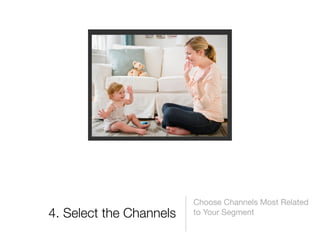
4. Select the Channels Choose Channels Most Related 
to Your Segment
5. Establish the Budget 
• Affordable: Setting the budget on what the managers think the 
company can afford 
• Percentage of Sales Method: Setting the communication budget 
at a specified percentage of current or anticipated sales 
• Competitive Parity: Setting the communication budget to achieve 
share of voice parity with competitors 
• Objective and Task Based: Developing the budget by defining 
specific objectives, determining tasks that must be performed to 
meet those objectives, and estimating the costs associated with 
them
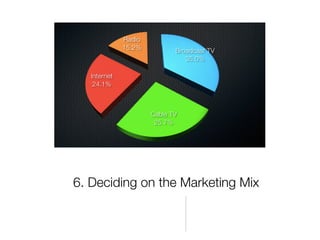
6. Deciding on the Marketing Mix
Characteristics 
of the Mix
7. Managing the IMC
8. Measure Results
Main Categories of Marketing Metrics
Schedules 
• Schedules are time-defined plans for completing a series of tasks or activities 
related to a specific program or objective. 
• Help avoid conflicts. 
• Help measure progress toward completion. 
• http://office.microsoft.com/en-us/templates/results.aspx?qu=marketing 
+plan&ex=1&origin=TC001145556#ai:TC001142853| 
• http://office.microsoft.com/en-us/templates/results.aspx?qu=marketing 
+plan&ex=1&origin=TC001145556#ai:TC001146469|
ROMI Equation 
• ROMI - Return on Marketing Investment 
• ROMI = Net Profit attributed to Marketing Activity/Marketing Investment 
• Example - $20,000 Profit and $6,000 Marketing Spend = 333%

Bmgt 411 chapter_15

  • 1.
    BMGT 411: Chapter15 Designing and Managing Integrated Marketing Communications
  • 2.
    Chapter Questions •What is the role of marketing communications? • What are the major steps in developing effective communications? • What is the communications mix and how should it be set? • What is an integrated marketing communications program?
  • 3.
    Modes of MarketingCommunications • Advertising • Sales promotion • Events and experiences • Public relations and publicity • Direct marketing • Interactive marketing • Word-of-mouth marketing • Personal selling • Social Media Marketing
  • 4.
    Table 15.1 CommunicationPlatforms: Advertising • Print and broadcast ads • POP displays • Packaging inserts • Logos • Motion pictures • Videotapes • Brochures and booklets • Posters • Billboards
  • 5.
    Table 15.1 CommunicationPlatforms - Sales Promotion • Contests, games, sweepstakes • Premiums • Sampling • Trade shows, exhibits • Coupons • Rebates • Entertainment • Continuity programs
  • 6.
    Table 15.1 CommunicationPlatforms: Events and Sponsorships • Sports • Company museums • Entertainment • Street activities • Festivals • Art • Causes • Factory tours
  • 7.
    Table 15.1 CommunicationPlatforms: Public Relations • Press kits • Speeches • Seminars • Annual reports • Charitable donations • Publications • Community relations • Lobbying • Identity media
  • 8.
    Table 15.1 CommunicationPlatforms: Personal Selling • Sales presentations • Sales meetings • Incentive programs • Samples • Fairs and trade shows
  • 9.
    Table 15.1 CommunicationPlatforms: Direct Marketing • Catalogs • Mailings • Telemarketing • Electronic shopping • TV shopping • E-mail • Voice mail • Websites
  • 10.
    An Ideal AdCampaign • The right consumer is exposed to the message at the right time and place • The ad causes consumer to pay attention • The ad reflects consumer’s level of understanding and behaviors the with product • The ad correctly positions brand in terms of points-of-difference and points-of-parity • The ad motivates consumer to consider purchase of the brand
  • 11.
    The right consumeris exposed to the message at the right time and place
  • 12.
    The right consumeris exposed to the message at the right time and place
  • 13.
    The ad causesconsumer to pay attention http://www.webpronews.com/people-in-haiti-read-firstworldproblems-tweets- 2012-10
  • 14.
    The ad reflectsconsumer’s level of understanding and behaviors with the product http://bit.ly/1rh2Z19
  • 15.
    The ad correctlypositions brand in terms of points-of-difference and points-of-parity http://youtu.be/9O2i28DU7fY
  • 16.
    The ad motivatesconsumer to consider purchase of the brand http://youtu.be/79gMRVOPcoM
  • 17.
    An Ideal AdCampaign • The right consumer is exposed to the message at the right time and place • The ad causes consumer to pay attention • The ad reflects consumer’s level of understanding and behaviors the with product • The ad correctly positions brand in terms of points-of-difference and points-of-parity • The ad motivates consumer to consider purchase of the brand
  • 18.
    Figure 15.1 Elementsin the Communications Process
  • 19.
    Steps in DevelopingEffective Communications 1.Identify target audience 2.Determine objectives 3.Design communications 4.Select channels 5.Establish budget 6.Decide on media mix 7. Manage the IMC 8.Measure results
  • 20.
    1. Identify TargetMarket Often Segment Based - Recall Segments from Chapter 7
  • 21.
    2. Communications Objectives • Category need: Establish a product or service category as necessary to remove or satisfy a perceived discrepancy between a current motivational state and desired emotional state • Brand awareness: Foster the consumer’s ability to recognize or recall the brand within a category • Brand attitude: Help customers evaluate the brands perceived ability to meet a current relevant need • Purchase intention: Move consumers to decide to purchase the brand or take related action
  • 22.
    Brand Awareness http://youtu.be/Q-j7Lk4VvgE? list=PLCFM1h5Oz66g7udnOOB-v8- 1c5TTMYWiH
  • 23.
  • 24.
    3. Designing theCommunications • What to say (Message Strategy), how to say it (Creative Strategy) and who should say it (Message Source). • Lets look at the new Ford Escape • Message: Convenience and Technology • Creative: Show it in real use, how it can solve problems • Source: Delivered by people who represent the target segment and Ford Employees
  • 25.
  • 26.
    4. Select theChannels Personal Channels
  • 27.
    4. Select theChannels Mass Communication Channels
  • 28.
    4. Select theChannels Choose Channels Most Related to Your Segment
  • 29.
    5. Establish theBudget • Affordable: Setting the budget on what the managers think the company can afford • Percentage of Sales Method: Setting the communication budget at a specified percentage of current or anticipated sales • Competitive Parity: Setting the communication budget to achieve share of voice parity with competitors • Objective and Task Based: Developing the budget by defining specific objectives, determining tasks that must be performed to meet those objectives, and estimating the costs associated with them
  • 30.
    6. Deciding onthe Marketing Mix
  • 31.
  • 32.
  • 33.
  • 34.
    Main Categories ofMarketing Metrics
  • 35.
    Schedules • Schedulesare time-defined plans for completing a series of tasks or activities related to a specific program or objective. • Help avoid conflicts. • Help measure progress toward completion. • http://office.microsoft.com/en-us/templates/results.aspx?qu=marketing +plan&ex=1&origin=TC001145556#ai:TC001142853| • http://office.microsoft.com/en-us/templates/results.aspx?qu=marketing +plan&ex=1&origin=TC001145556#ai:TC001146469|
  • 36.
    ROMI Equation •ROMI - Return on Marketing Investment • ROMI = Net Profit attributed to Marketing Activity/Marketing Investment • Example - $20,000 Profit and $6,000 Marketing Spend = 333%