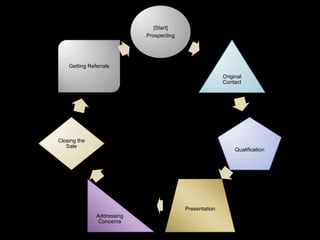





The Seven Step Selling CycleInspired From…Author: Tom Hopkins
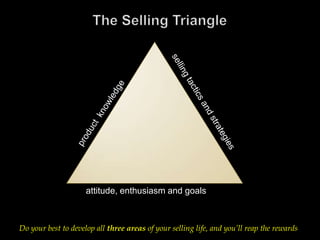
The Selling Triangleproduct  knowledgeselling tactics and strategiesattitude, enthusiasm and goalsDo your best to develop all three areas of your selling life, and you’ll reap the rewards
Step #1: Prospecting
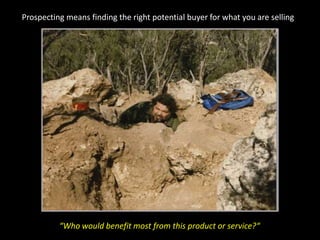
Prospecting means finding the right potential buyer for what you are selling“Who would benefit most from this product or service?“
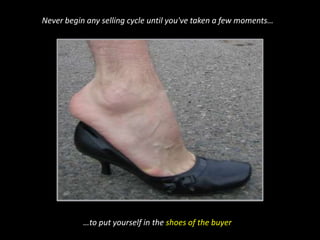
Never begin any selling cycle until you've taken a few moments……to put yourself in the shoes of the buyer
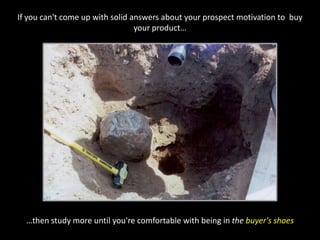
If you can't come up with solid answers about your prospect motivation to  buy your product……then study more until you're comfortable with being in the buyer's shoes
Step #2: Original Contact
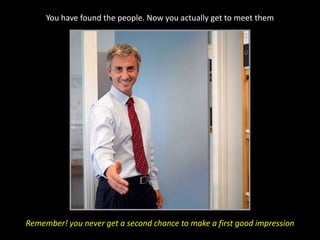
You have found the people. Now you actually get to meet themRemember! you never get a second chance to make a first good impression
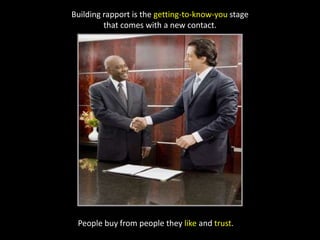
Building rapport is the getting-to-know-you stage that comes with a new contact. People buy from people they like and trust.
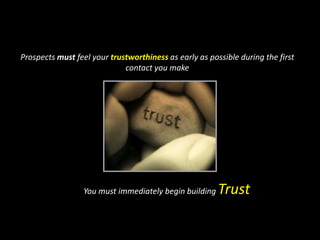
Prospects must feel your trustworthiness as early as possible during the first  contact you makeYou must immediately begin buildingTrust
Step #3: Qualification
When finally sit down with prospect… you need to find out if she's qualified to be your client of choiceQualifying your prospects meaning finding out who they are, what they do, what they have, and what they need
Your prospects will be qualifying you, too. So be aware of what you're showing themMost clients are looking for people whodependable, loyal, trustworthy, intelligent, competent, and even more fun
 The more specific your questions, the more impressed your potential customer will be with your expertiseAsking significant questions now shows that you you're interested in more than just a closed sale and that you're looking into the future as a value business partner with you customer
Step #4: Presentation
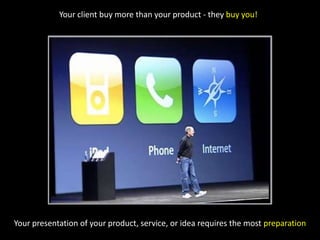
Your client buy more than your product - they buy you!Your presentation of your product, service, or idea requires the most preparation
Prepare very well for presentationsIn your preparation;  practice your answers,  make a list of benefits, and then try out a way to work those points into responseto the common question
To demonstrate personal dependability, tell the prospective client an anecdote from another client situation or even from an outside activity
Step #5: Addressing Concerns
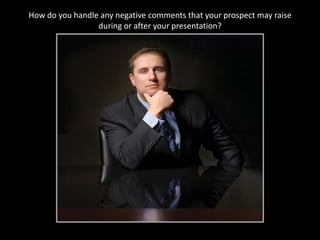
How do you handle any negative comments that your prospect may raise during or after your presentation?
Answer is simpleUse unemotional terms, and have recommendationsin mind
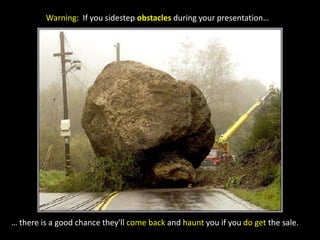
Warning:  If you sidestep obstacles during your presentation…… there is a good chance they'll come back and haunt you if you do get the sale.
Step #6: Closing the Sale
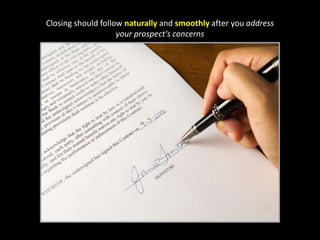
Closing should follow naturally and smoothly after you address your prospect's concerns
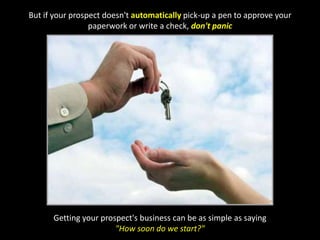
But if your prospect doesn't automatically pick-up a pen to approve your paperwork or write a check, don't panicGetting your prospect's business can be as simple as saying "How soon do we start?"
At this point, if you're confident about being able to give your prospect what she needs, you should begin taking verbalownership of your future business relationship with assumptive statements and questions
Step #7: Getting Referrals
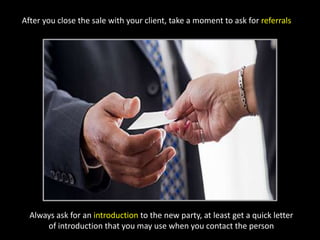
After you close the sale with your client, take a moment to ask for referralsAlways ask for an introduction to the new party, at least get a quick letter of introduction that you may use when you contact the person
In case of no sale, don't ever just walk away without an opportunity to expand your networkMake the contact a part of your network of people who can help you find more people who may benefit from your product or service
And immediately upon leaving the premises, drop a thank-you note in the mail to the person
Next time…Making Selling Your Hobby
Kareem ElHossainyBloghttp://kelhossainy.wordpress.comLinkedInhttp://www.linkedin.com/in/kareemelhossainyFacebookhttp://www.facebook.com/kareem.elhossainyTwitterhttp://twitter/kelhossainy

The Seven Step Selling Cycle

  • 1.
    The Seven StepSelling CycleInspired From…Author: Tom Hopkins
  • 3.
    The Selling Triangleproduct knowledgeselling tactics and strategiesattitude, enthusiasm and goalsDo your best to develop all three areas of your selling life, and you’ll reap the rewards
  • 4.
  • 5.
    Prospecting means findingthe right potential buyer for what you are selling“Who would benefit most from this product or service?“
  • 6.
    Never begin anyselling cycle until you've taken a few moments……to put yourself in the shoes of the buyer
  • 7.
    If you can'tcome up with solid answers about your prospect motivation to buy your product……then study more until you're comfortable with being in the buyer's shoes
  • 8.
  • 9.
    You have foundthe people. Now you actually get to meet themRemember! you never get a second chance to make a first good impression
  • 10.
    Building rapport isthe getting-to-know-you stage that comes with a new contact. People buy from people they like and trust.
  • 11.
    Prospects must feelyour trustworthiness as early as possible during the first contact you makeYou must immediately begin buildingTrust
  • 12.
  • 13.
    When finally sitdown with prospect… you need to find out if she's qualified to be your client of choiceQualifying your prospects meaning finding out who they are, what they do, what they have, and what they need
  • 14.
    Your prospects willbe qualifying you, too. So be aware of what you're showing themMost clients are looking for people whodependable, loyal, trustworthy, intelligent, competent, and even more fun
  • 15.
    The morespecific your questions, the more impressed your potential customer will be with your expertiseAsking significant questions now shows that you you're interested in more than just a closed sale and that you're looking into the future as a value business partner with you customer
  • 16.
  • 17.
    Your client buymore than your product - they buy you!Your presentation of your product, service, or idea requires the most preparation
  • 18.
    Prepare very wellfor presentationsIn your preparation; practice your answers, make a list of benefits, and then try out a way to work those points into responseto the common question
  • 19.
    To demonstrate personaldependability, tell the prospective client an anecdote from another client situation or even from an outside activity
  • 20.
  • 21.
    How do youhandle any negative comments that your prospect may raise during or after your presentation?
  • 22.
    Answer is simpleUseunemotional terms, and have recommendationsin mind
  • 23.
    Warning: Ifyou sidestep obstacles during your presentation…… there is a good chance they'll come back and haunt you if you do get the sale.
  • 24.
  • 25.
    Closing should follownaturally and smoothly after you address your prospect's concerns
  • 26.
    But if yourprospect doesn't automatically pick-up a pen to approve your paperwork or write a check, don't panicGetting your prospect's business can be as simple as saying "How soon do we start?"
  • 27.
    At this point,if you're confident about being able to give your prospect what she needs, you should begin taking verbalownership of your future business relationship with assumptive statements and questions
  • 28.
  • 29.
    After you closethe sale with your client, take a moment to ask for referralsAlways ask for an introduction to the new party, at least get a quick letter of introduction that you may use when you contact the person
  • 30.
    In case ofno sale, don't ever just walk away without an opportunity to expand your networkMake the contact a part of your network of people who can help you find more people who may benefit from your product or service
  • 31.
    And immediately uponleaving the premises, drop a thank-you note in the mail to the person
  • 32.
  • 33.

Editor's Notes

  • #4 Equal sides triangle; the three sides are equally important.Remember: A professional who has failed to develop any one side of the triangle is failing to reach his full potential and letting down clients, who expect to work with a competent person.Do your best to develop all three areas of your selling life, and you’ll reap the rewards.