Chapter 4
Prospecting
and Research
Professional Salesmanship
Presented by
Prince Cielo
 Set up your own network of customers and contacts
 Identify and list prospective customers from among the
numbers of your target market
 Gather the right information about your prospects to help
you anticipate their needs, wants and objections
Learning Objectives
Two Preparatory Steps in Selling
Process
 Prospecting
 Research
Prospecting
Prospecting
 is the first step of selling process which includes
identifying and listing prospective customers that will
approach later on.
 is a method used by insurance underwriters and real
estate brokers.
 Does he/she need or want the product/service?
 Does he/she have enough money to buy?
 Does he/she fall within the social bracket that your
product is aimed at?
 Does he/she have the authority to buy?
Guideline Question
This questions will help you determine whether someone can be considered a
prospect.
Referral Prospecting
are among the most valuable prospecting methods used by
salespeople at small businesses to generate new leads.
acquiring referrals from people you know.
 Ex. Consulting your associates or fellow salespeople who,
through their dealings and their own prospecting.
Nonreferral Prospecting
 this are the future customers which is difficult to convince to
listen to your proposal, much less to buy.
there are nevertheless usually a great percentage of folks from
this group who end up as real clients, so its always worth a
shot to try your luck with them.
Two Types of Prospecting
A. Prospecting among people you know.
 there may be quite a number of prospective buyers among
your friends, relatives, associates and acquaintances.
B. Prospecting among old clients.
 former customers are truly very useful when you are
prospecting, not only because they can refer you to other
possible buyers, but because you can always refer back to
them you’re looking for people to sell to.
C. Prospecting among total strangers.
 this are people who are just waiting for someone like you to
approach them and show them how to satisfy their wants and
needs.
Ways to find Nonreferral Prospects
• By putting up a showroom or public stall where your
product/service can be showcased, and waiting for prospective
customers to come up and take a look.
• By placing an ad and waiting for prospects to respond.
• By keeping an ear on the goings-on in your community, so
you’ll know who needs what and when.
• By hanging out in places where you feel you are bound to meet
the most number of people who will be interested in your
product.
Some tried and tested methods
A large part of your prospecting will be among these strangers. You will have to find
ways and means to get in touch with them.
• By looking up the phone directory.
• By contacting institutions and organizations such as the
Chamber or Commerce, the Department of Trade and Industry
(DTI), the Securities and Exchange Commission (SEC), trade
associations, socio-civic-religious groups, NGOs, cooperative
and even schools regarding the best potential customers to
approach.
• By conducting online searches for individuals companies and
groups who might have a need for your product or service,
either now or in the future.
• By setting up a mailing list and sending out information about
your merchandise.
• By looking up local news and announcements in the
newspapers.
• By making friends with virtually everyone you meet.
Research
• is an integral part of selling process.
• it serves a number of useful purposes, foremost of which is
to save you and your prospects a lot of time and energy
sitting through unnecessary presentations.
• Researching about your prospects helps you determine
whether they truly have the motivation, money and
authority to buy.
Research
1. Discover the best way to approach your prospects by providing
you with relevant information about their tastes, habits and
personal preferences.
2. Obtain vital information that can help you better plan and
execute your sales presentation setting it up in a way that will
best suit your prospect’s tastes and preferences.
3. Anticipate your prospect’s needs and wants and prepare for these
ahead of time.
4. Identify and anticipate possible objections the client may make.
5. Boost your confidence knowing that you are well-prepared for
your encounter with the prospect.
6. Impress the prospect by demonstrating your professionalism and
expertise.
Research also help you:
 Personal Information
 it includes your prospective customer’s name, birthdate, civil
status, sex, religion, addresses and contact number.
 Financial Resources
 it includes financial documents such as income tax returns,
statements of assets and liabilities etc.
 Buying Patterns
 finding out what kind of things your prospect buys or what
services he avails of.
 Personality Type
 know all the facts about your prospect of what kind of
person he/she is.
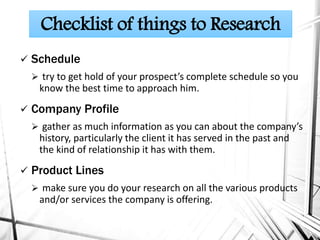
Checklist of things to Research
 Schedule
 try to get hold of your prospect’s complete schedule so you
know the best time to approach him.
 Company Profile
 gather as much information as you can about the company’s
history, particularly the client it has served in the past and
the kind of relationship it has with them.
 Product Lines
 make sure you do your research on all the various products
and/or services the company is offering.
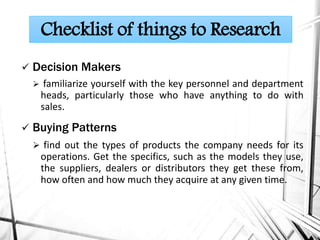
Checklist of things to Research
 Decision Makers
 familiarize yourself with the key personnel and department
heads, particularly those who have anything to do with
sales.
 Buying Patterns
 find out the types of products the company needs for its
operations. Get the specifics, such as the models they use,
the suppliers, dealers or distributors they get these from,
how often and how much they acquire at any given time.
Checklist of things to Research
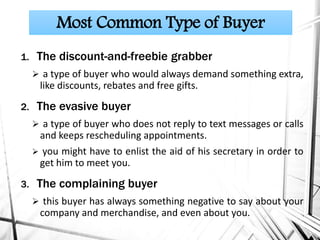
1. The discount-and-freebie grabber
 a type of buyer who would always demand something extra,
like discounts, rebates and free gifts.
2. The evasive buyer
 a type of buyer who does not reply to text messages or calls
and keeps rescheduling appointments.
 you might have to enlist the aid of his secretary in order to
get him to meet you.
3. The complaining buyer
 this buyer has always something negative to say about your
company and merchandise, and even about you.
Most Common Type of Buyer
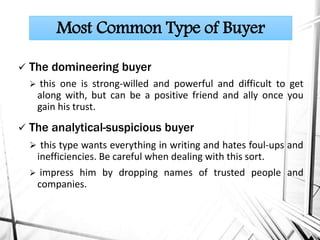
 The domineering buyer
 this one is strong-willed and powerful and difficult to get
along with, but can be a positive friend and ally once you
gain his trust.
 The analytical-suspicious buyer
 this type wants everything in writing and hates foul-ups and
inefficiencies. Be careful when dealing with this sort.
 impress him by dropping names of trusted people and
companies.
Most Common Type of Buyer
Prospecting and Research

Prospecting and Research

  • 1.
    Chapter 4 Prospecting and Research ProfessionalSalesmanship Presented by Prince Cielo
  • 2.
     Set upyour own network of customers and contacts  Identify and list prospective customers from among the numbers of your target market  Gather the right information about your prospects to help you anticipate their needs, wants and objections Learning Objectives
  • 3.
    Two Preparatory Stepsin Selling Process  Prospecting  Research
  • 4.
    Prospecting Prospecting  is thefirst step of selling process which includes identifying and listing prospective customers that will approach later on.  is a method used by insurance underwriters and real estate brokers.
  • 5.
     Does he/sheneed or want the product/service?  Does he/she have enough money to buy?  Does he/she fall within the social bracket that your product is aimed at?  Does he/she have the authority to buy? Guideline Question This questions will help you determine whether someone can be considered a prospect.
  • 6.
    Referral Prospecting are amongthe most valuable prospecting methods used by salespeople at small businesses to generate new leads. acquiring referrals from people you know.  Ex. Consulting your associates or fellow salespeople who, through their dealings and their own prospecting. Nonreferral Prospecting  this are the future customers which is difficult to convince to listen to your proposal, much less to buy. there are nevertheless usually a great percentage of folks from this group who end up as real clients, so its always worth a shot to try your luck with them. Two Types of Prospecting
  • 7.
    A. Prospecting amongpeople you know.  there may be quite a number of prospective buyers among your friends, relatives, associates and acquaintances. B. Prospecting among old clients.  former customers are truly very useful when you are prospecting, not only because they can refer you to other possible buyers, but because you can always refer back to them you’re looking for people to sell to. C. Prospecting among total strangers.  this are people who are just waiting for someone like you to approach them and show them how to satisfy their wants and needs. Ways to find Nonreferral Prospects
  • 8.
    • By puttingup a showroom or public stall where your product/service can be showcased, and waiting for prospective customers to come up and take a look. • By placing an ad and waiting for prospects to respond. • By keeping an ear on the goings-on in your community, so you’ll know who needs what and when. • By hanging out in places where you feel you are bound to meet the most number of people who will be interested in your product. Some tried and tested methods A large part of your prospecting will be among these strangers. You will have to find ways and means to get in touch with them.
  • 9.
    • By lookingup the phone directory. • By contacting institutions and organizations such as the Chamber or Commerce, the Department of Trade and Industry (DTI), the Securities and Exchange Commission (SEC), trade associations, socio-civic-religious groups, NGOs, cooperative and even schools regarding the best potential customers to approach. • By conducting online searches for individuals companies and groups who might have a need for your product or service, either now or in the future. • By setting up a mailing list and sending out information about your merchandise. • By looking up local news and announcements in the newspapers. • By making friends with virtually everyone you meet.
  • 10.
    Research • is anintegral part of selling process. • it serves a number of useful purposes, foremost of which is to save you and your prospects a lot of time and energy sitting through unnecessary presentations. • Researching about your prospects helps you determine whether they truly have the motivation, money and authority to buy. Research
  • 11.
    1. Discover thebest way to approach your prospects by providing you with relevant information about their tastes, habits and personal preferences. 2. Obtain vital information that can help you better plan and execute your sales presentation setting it up in a way that will best suit your prospect’s tastes and preferences. 3. Anticipate your prospect’s needs and wants and prepare for these ahead of time. 4. Identify and anticipate possible objections the client may make. 5. Boost your confidence knowing that you are well-prepared for your encounter with the prospect. 6. Impress the prospect by demonstrating your professionalism and expertise. Research also help you:
  • 12.
     Personal Information it includes your prospective customer’s name, birthdate, civil status, sex, religion, addresses and contact number.  Financial Resources  it includes financial documents such as income tax returns, statements of assets and liabilities etc.  Buying Patterns  finding out what kind of things your prospect buys or what services he avails of.  Personality Type  know all the facts about your prospect of what kind of person he/she is. Checklist of things to Research
  • 13.
     Schedule  tryto get hold of your prospect’s complete schedule so you know the best time to approach him.  Company Profile  gather as much information as you can about the company’s history, particularly the client it has served in the past and the kind of relationship it has with them.  Product Lines  make sure you do your research on all the various products and/or services the company is offering. Checklist of things to Research
  • 14.
     Decision Makers familiarize yourself with the key personnel and department heads, particularly those who have anything to do with sales.  Buying Patterns  find out the types of products the company needs for its operations. Get the specifics, such as the models they use, the suppliers, dealers or distributors they get these from, how often and how much they acquire at any given time. Checklist of things to Research
  • 15.
    1. The discount-and-freebiegrabber  a type of buyer who would always demand something extra, like discounts, rebates and free gifts. 2. The evasive buyer  a type of buyer who does not reply to text messages or calls and keeps rescheduling appointments.  you might have to enlist the aid of his secretary in order to get him to meet you. 3. The complaining buyer  this buyer has always something negative to say about your company and merchandise, and even about you. Most Common Type of Buyer
  • 16.
     The domineeringbuyer  this one is strong-willed and powerful and difficult to get along with, but can be a positive friend and ally once you gain his trust.  The analytical-suspicious buyer  this type wants everything in writing and hates foul-ups and inefficiencies. Be careful when dealing with this sort.  impress him by dropping names of trusted people and companies. Most Common Type of Buyer