BY: DR.HASEEB TARIQ
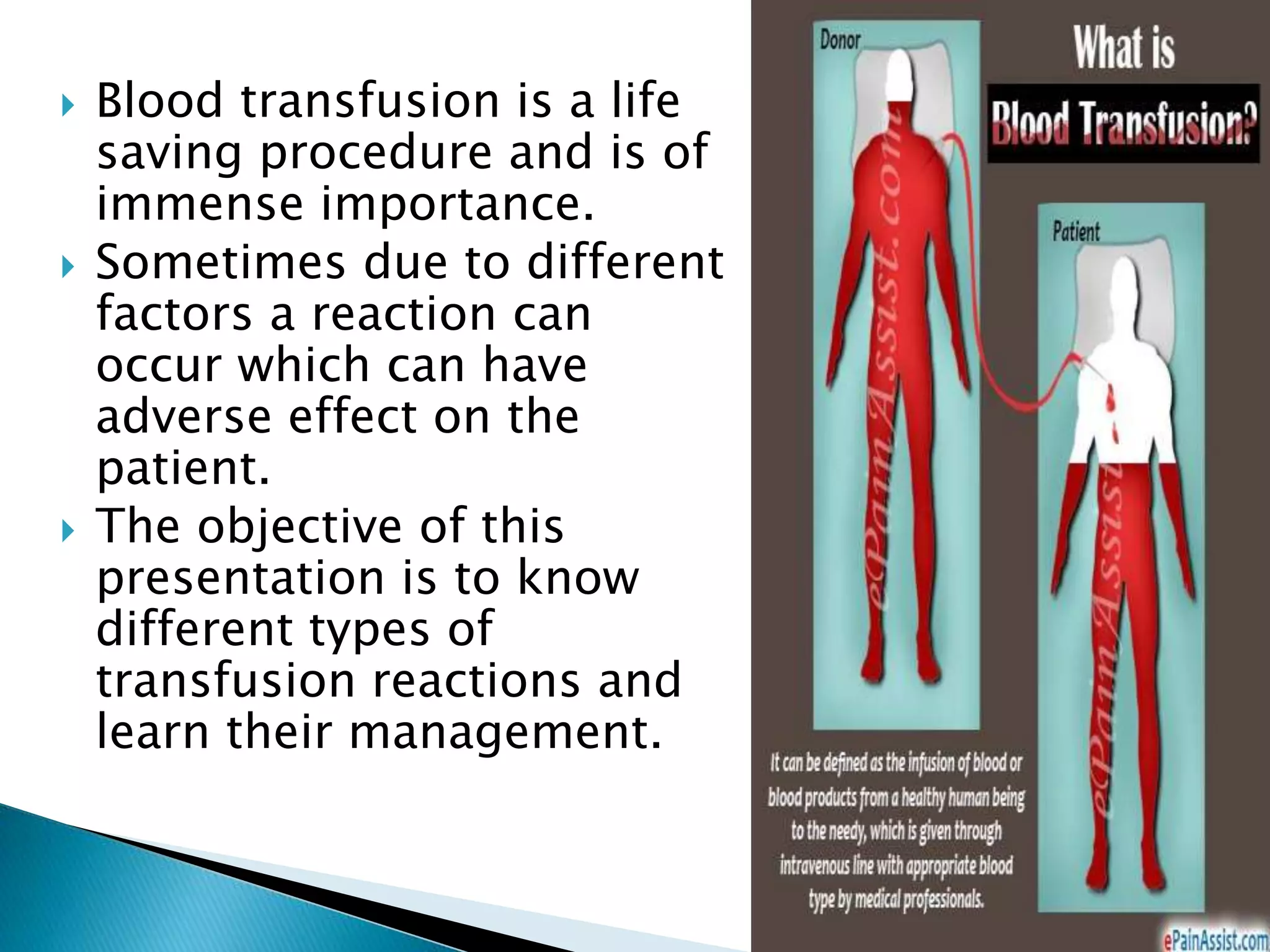
 Blood transfusion is a life
saving procedure and is of
immense importance.
 Sometimes due to different
factors a reaction can
occur which can have
adverse effect on the
patient.
 The objective of this
presentation is to know
different types of
transfusion reactions and
learn their management.
 IMMUNE MEDIATED
 NON-IMMUNE MEDIATED
IMMUNE MEDIATED REACTIONS:
 Febrile non-hemolytic
 Acute hemolytic
 Delayed hemolytic
 Anaphylactic
 GVHD
 Transfusion associated lung injury (TRALI)
 Urticarial transfusion reaction
NON-IMMUNNE MEDIATED:
 Heat/Cold associated injury
 Infections
 Acute hypotensive reaction
 Osmotic injury
 Chemical injury
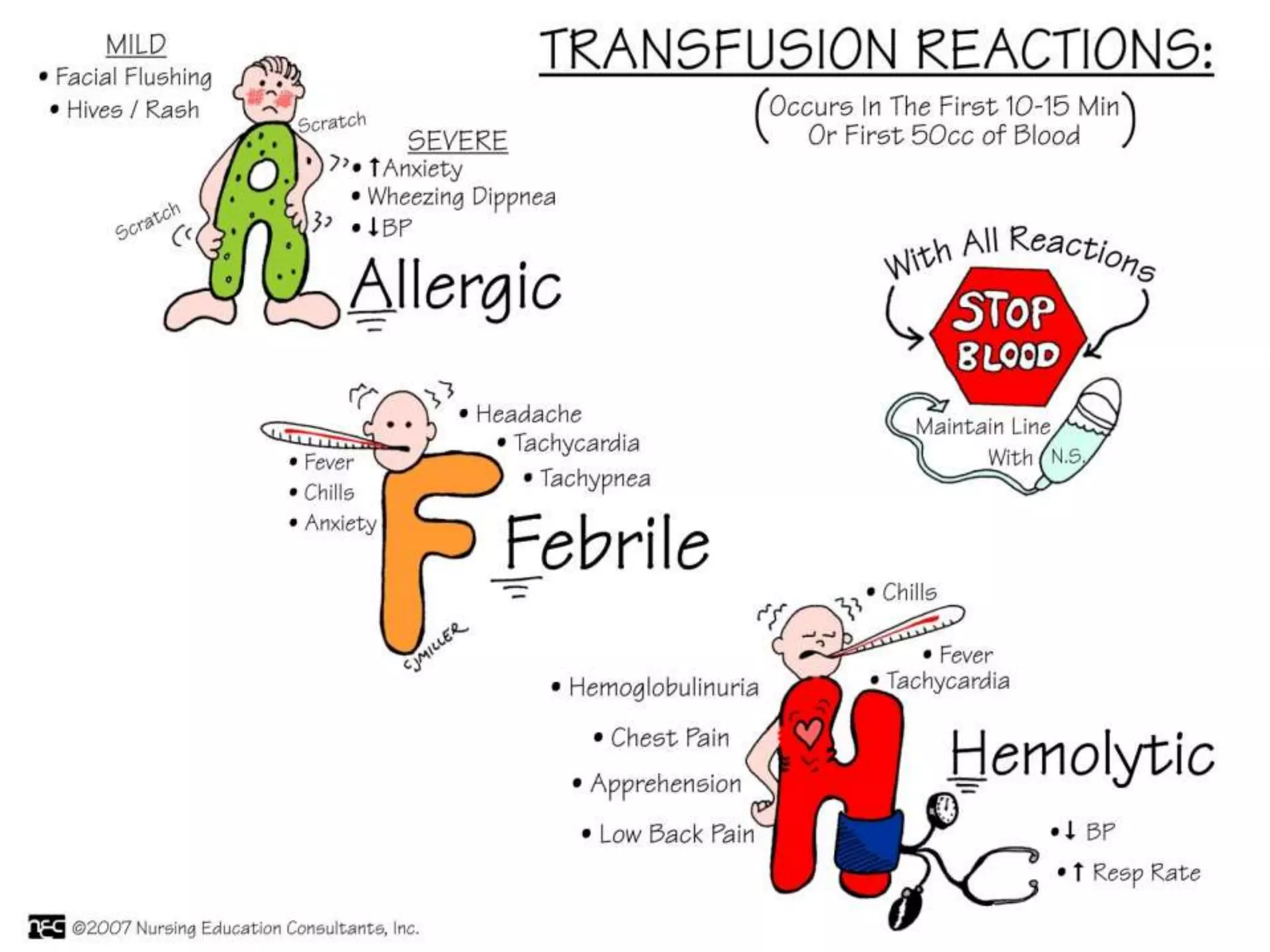
 Stop the transfusion immediately
 Check & Monitor vitals
 Maintain IV access
 Notify Lab for error
 Check right pack has been transfused
 Obtain CBC report & CXR post-reaction
 Most common
 Occurs during or in 24hrs of transfusion
 Caused by Ab. against donor HLA antigens &
leucocytes
 DIAGNOSIS OF EXCLUSION: Fever may be the
only symptom and may show a delayed
reaction!!
SYMPTOMS:
 FEVER
 DYSPNOEA
Consider and exclude other causes, as fever
alone may be the first manifestation of a life
threatening reaction.
INVESTIGATIONS:
 Clinically assess for Rigors & Chills
 Repeat ABO compatibility
 Exclude hemolytic reaction
 Investigate for sepsis
 Treat the fever with an antipyretic.
 Avoid aspirin in thrombocytopenic and
paediatric patients.
 Follow general management for the reaction.
 Medical Emergency!!
 Transfused red cells are destroyed, due to
incompatibility of antigen on transfused cells
with antibody in the recipient circulation.
 Occurs in 24 hrs of transfusion or during
transfusion.
 Mostly caused due to human error.
Signs & Symptoms:
 Haemolysis
 Haemoglobinuria
 Back pain
 Fever
 ARF
 DIC
INVESTIGATIONS:
 Clinically assess patient
 Check clerical records for error
 DAT, IAT
 RFTs, Serum.Haptoglobulin
 Repeat ABO and screening
MANAGEMENT:
 Stop transfusion immediately and follow
other steps for managing suspected
transfusion reactions.
 Seek urgent medical assistance.
 Maintain blood pressure and renal output.
 Induce diuresis with intravenous fluids and
diuretics.
 This may become a medical emergency so
support blood pressure and maintain an open
airway.
 Do not administer additional blood packs
until cleared by haematologist or Transfusion
Service Provider.
 Generally occurs 2-10 days after transfusion.
 One way this can occur is if a person without
a Kidd blood antigen receives a Kidd antigen
in a transfusion.
 DEFINITION:It is defined as fever and other
symptoms/ signs of hemolysis more than 24
hours after transfusion.
CRITERIA:
 Fall in Hb or failure to rise post-transfusion.
 Rise in billrubin (jaundice)
 In-compatible crossmatch not pre detectable.
 Can occur upto 4 weeks after transfusion.
CLINICAL PICTURE:
 Falling Hb
 Hyprbillirubinemia
 Spherocytes on peripheral smear
 Low grade fever
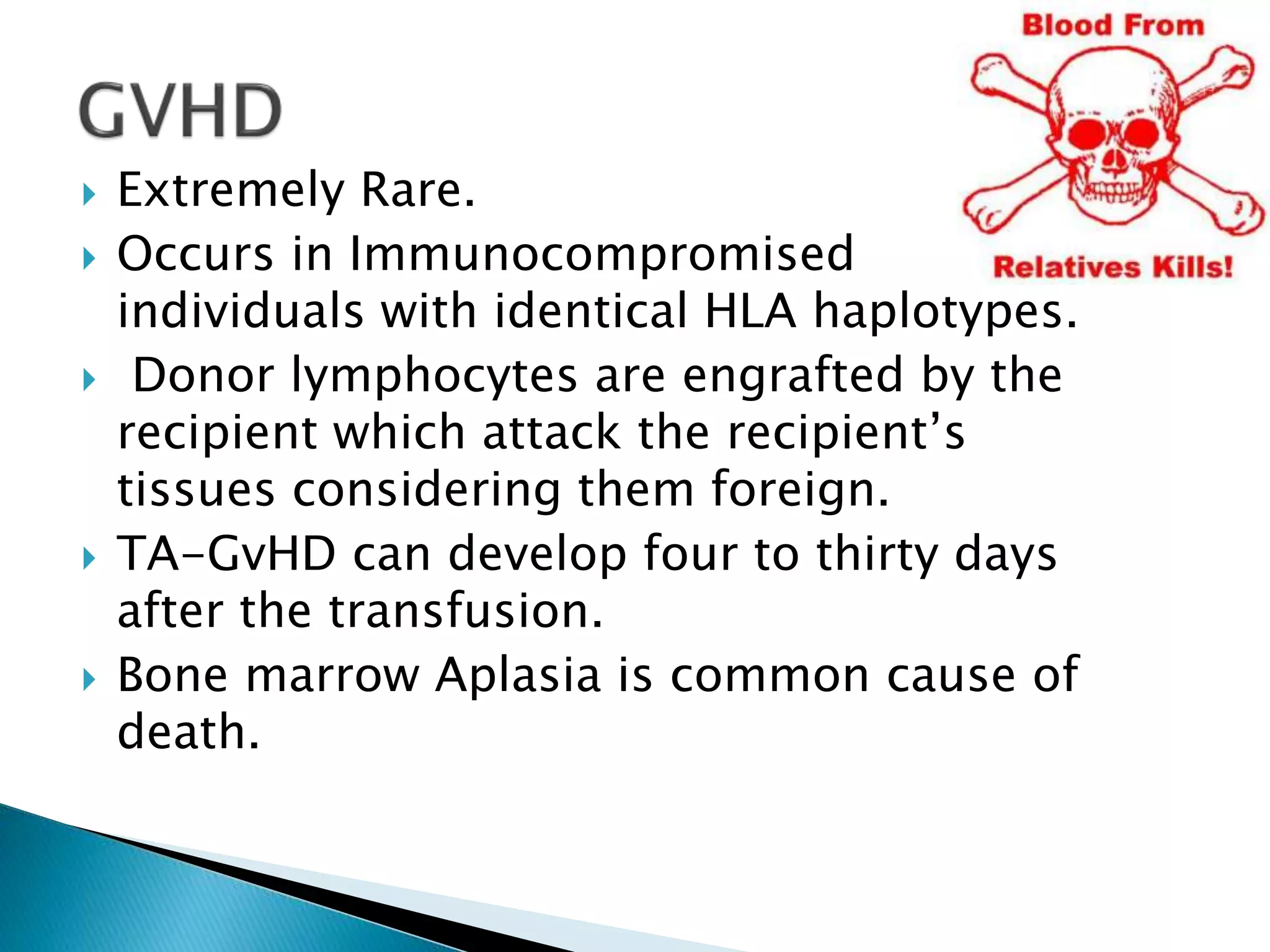
 Extremely Rare.
 Occurs in Immunocompromised
individuals with identical HLA haplotypes.
 Donor lymphocytes are engrafted by the
recipient which attack the recipient’s
tissues considering them foreign.
 TA-GvHD can develop four to thirty days
after the transfusion.
 Bone marrow Aplasia is common cause of
death.
CLINICAL PRESENTATION:
Skin: Erythroderma, Swollen, Bullae
formation(most common)
GIT: Diarrhoea, Abdominal cramps
LIVER: Elevated LFTs, Hyperbillirubinemia
HEME: Bone marrow aplasia, Thrombocytopenia
persistent
Only supportive treatment is given in GVHD. It
can be prevented by giving Gamma-irradiated
blood to those at risk.
 Occurs during or 6hrs after transfusion.
 Can cause ARDS
 Can cause Non-Cardiogenic Pulmonary
edema
 It is explained by 2-Hit hypothesis
 All bllood products can cause it
2-HIT HYPOTHESIS:
 1st hit is pulmonary pathology causing
localisation of neutrophils
 2nd hit is transfusion of blood products with
sensitized neutrophils
CLINICAL PRESENTATION:
 Hypoxemia (acute respiratory distress)
 Fever
 Tachycardia
 Tachypnoea
 CXR shows bilateral pulmonary infiltrates with
normal cardiac size.
CRITERIA OF DIAGNOSIS:
 No acute injury prior to transfusion
 No relation to risk factor for lung injury
 Bilateral pulmonary infiltrates on CXR
 No circulatory overload, PA
pressure<18mmhg
 Oxygen saturation<90%
MANAGEMENT:
 Follow General Guidelines
 Supportive therapy
 Diurectics has no role and can worsen the
condition
 Majority of patients may require mechanical
ventilation
 Notify Blood Bank for the error
Blood transfusion reactions

Blood transfusion reactions

  • 2.
  • 3.
     Blood transfusionis a life saving procedure and is of immense importance.  Sometimes due to different factors a reaction can occur which can have adverse effect on the patient.  The objective of this presentation is to know different types of transfusion reactions and learn their management.
  • 4.
     IMMUNE MEDIATED NON-IMMUNE MEDIATED IMMUNE MEDIATED REACTIONS:  Febrile non-hemolytic  Acute hemolytic  Delayed hemolytic  Anaphylactic  GVHD  Transfusion associated lung injury (TRALI)  Urticarial transfusion reaction
  • 5.
    NON-IMMUNNE MEDIATED:  Heat/Coldassociated injury  Infections  Acute hypotensive reaction  Osmotic injury  Chemical injury
  • 7.
     Stop thetransfusion immediately  Check & Monitor vitals  Maintain IV access  Notify Lab for error  Check right pack has been transfused  Obtain CBC report & CXR post-reaction
  • 8.
     Most common Occurs during or in 24hrs of transfusion  Caused by Ab. against donor HLA antigens & leucocytes  DIAGNOSIS OF EXCLUSION: Fever may be the only symptom and may show a delayed reaction!!
  • 9.
    SYMPTOMS:  FEVER  DYSPNOEA Considerand exclude other causes, as fever alone may be the first manifestation of a life threatening reaction. INVESTIGATIONS:  Clinically assess for Rigors & Chills  Repeat ABO compatibility  Exclude hemolytic reaction  Investigate for sepsis
  • 10.
     Treat thefever with an antipyretic.  Avoid aspirin in thrombocytopenic and paediatric patients.  Follow general management for the reaction.
  • 11.
     Medical Emergency!! Transfused red cells are destroyed, due to incompatibility of antigen on transfused cells with antibody in the recipient circulation.  Occurs in 24 hrs of transfusion or during transfusion.  Mostly caused due to human error.
  • 12.
    Signs & Symptoms: Haemolysis  Haemoglobinuria  Back pain  Fever  ARF  DIC INVESTIGATIONS:  Clinically assess patient  Check clerical records for error  DAT, IAT  RFTs, Serum.Haptoglobulin  Repeat ABO and screening
  • 13.
    MANAGEMENT:  Stop transfusionimmediately and follow other steps for managing suspected transfusion reactions.  Seek urgent medical assistance.  Maintain blood pressure and renal output.  Induce diuresis with intravenous fluids and diuretics.  This may become a medical emergency so support blood pressure and maintain an open airway.  Do not administer additional blood packs until cleared by haematologist or Transfusion Service Provider.
  • 14.
     Generally occurs2-10 days after transfusion.  One way this can occur is if a person without a Kidd blood antigen receives a Kidd antigen in a transfusion.  DEFINITION:It is defined as fever and other symptoms/ signs of hemolysis more than 24 hours after transfusion.
  • 15.
    CRITERIA:  Fall inHb or failure to rise post-transfusion.  Rise in billrubin (jaundice)  In-compatible crossmatch not pre detectable.  Can occur upto 4 weeks after transfusion. CLINICAL PICTURE:  Falling Hb  Hyprbillirubinemia  Spherocytes on peripheral smear  Low grade fever
  • 16.
     Extremely Rare. Occurs in Immunocompromised individuals with identical HLA haplotypes.  Donor lymphocytes are engrafted by the recipient which attack the recipient’s tissues considering them foreign.  TA-GvHD can develop four to thirty days after the transfusion.  Bone marrow Aplasia is common cause of death.
  • 17.
    CLINICAL PRESENTATION: Skin: Erythroderma,Swollen, Bullae formation(most common) GIT: Diarrhoea, Abdominal cramps LIVER: Elevated LFTs, Hyperbillirubinemia HEME: Bone marrow aplasia, Thrombocytopenia persistent Only supportive treatment is given in GVHD. It can be prevented by giving Gamma-irradiated blood to those at risk.
  • 18.
     Occurs duringor 6hrs after transfusion.  Can cause ARDS  Can cause Non-Cardiogenic Pulmonary edema  It is explained by 2-Hit hypothesis  All bllood products can cause it
  • 20.
    2-HIT HYPOTHESIS:  1sthit is pulmonary pathology causing localisation of neutrophils  2nd hit is transfusion of blood products with sensitized neutrophils CLINICAL PRESENTATION:  Hypoxemia (acute respiratory distress)  Fever  Tachycardia  Tachypnoea
  • 21.
     CXR showsbilateral pulmonary infiltrates with normal cardiac size. CRITERIA OF DIAGNOSIS:  No acute injury prior to transfusion  No relation to risk factor for lung injury  Bilateral pulmonary infiltrates on CXR  No circulatory overload, PA pressure<18mmhg  Oxygen saturation<90%
  • 23.
    MANAGEMENT:  Follow GeneralGuidelines  Supportive therapy  Diurectics has no role and can worsen the condition  Majority of patients may require mechanical ventilation  Notify Blood Bank for the error

Editor's Notes

  • #16 No treatment is given in absence of rapid hemolysis. Avoid offending agent in future.
  • #17 Diagnosis is made on skin biopsy and occasionally on liver & bone marrow biopsy.
  • #18 Immunocompromised, those receiving blood from family, leucoreduction filters can prevent but are not documented.
  • #24 Use of male plasma has been shown to reduce the risk of TRALI as females contain more anti-HLA & anti-neutrophil antibodies.