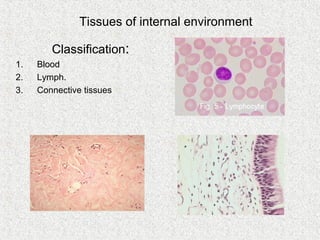
Tissues of internal environment

        Classification:
1.   Blood
2.   Lymph.
3.   Connective tissues
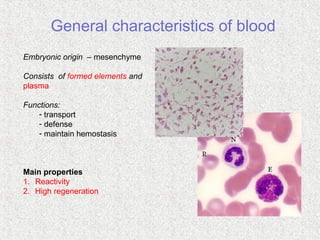
General characteristics of blood
Embryonic origin – mesenchyme

Consists of formed elements and
plasma

Functions:
    - transport
    - defense
    - maintain hemostasis


Main properties
1. Reactivity
2. High regeneration
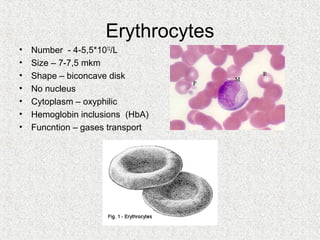
Erythrocytes
•   Number - 4-5,5*1012/L
•   Size – 7-7,5 mkm
•   Shape – biconcave disk
•   No nucleus
•   Cytoplasm – oxyphilic
•   Hemoglobin inclusions (HbA)
•   Funcntion – gases transport
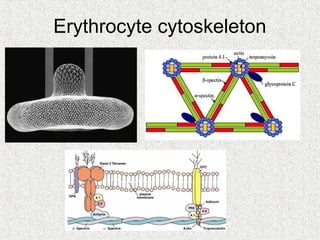
Erythrocyte cytoskeleton
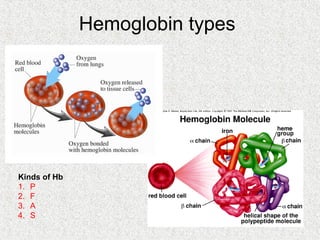
Hemoglobin types


Kinds of Hb
1. P
2. F
3. A
4. S
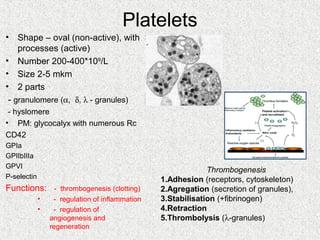
Platelets
•   Shape – oval (non-active), with
    processes (active)
•   Number 200-400*109/L
•   Size 2-5 mkm
•   2 parts
 - granulomere (α, δ, λ - granules)
 - hyslomere
• PM: glycocalyx with numerous Rc
CD42
GPIa
GPIIbIIIa
GPVI
                                                              Thrombogenesis
P-selectin                                       1.Adhesion (receptors, cytoskeleton)
Functions: - thrombogenesis (clotting)           2.Agregation (secretion of granules),
             •    - regulation of inflammation   3.Stabilisation (+fibrinogen)
             •    - regulation of                4.Retraction
                 angiogenesis and                5.Thrombolysis (λ-granules)
                 regeneration
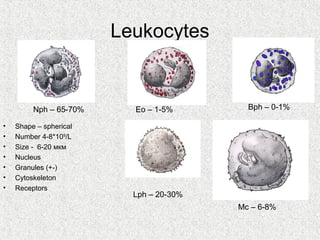
Leukocytes


         Nph – 65-70%     Eo – 1-5%        Bph – 0-1%

•   Shape – spherical
•   Number 4-8*109/L
•   Size - 6-20 мкм
•   Nucleus
•   Granules (+-)
•   Cytoskeleton
•   Receptors
                          Lph – 20-30%
                                         Мc – 6-8%
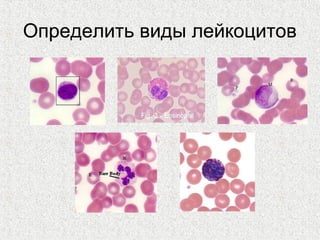
Определить виды лейкоцитов
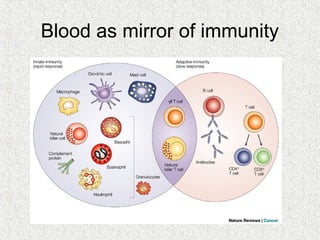
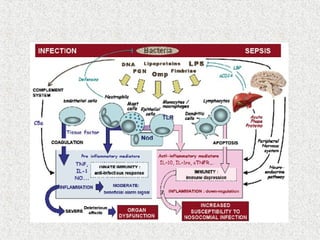
Blood as mirror of immunity
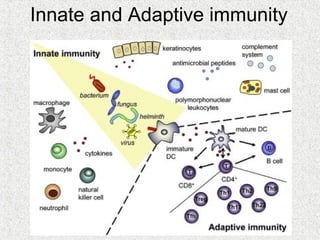
Innate and Adaptive immunity
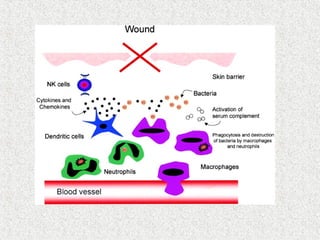
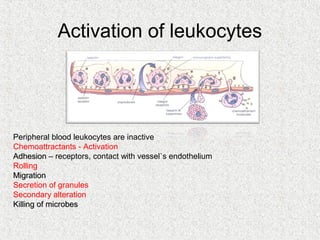
Activation of leukocytes


Peripheral blood leukocytes are inactive
Chemoattractants - Activation
Adhesion – receptors, contact with vessel`s endothelium
Rоlling
Migration
Secretion of granules
Secondary alteration
Killing of microbes
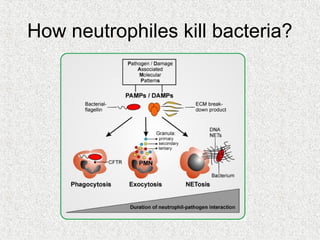
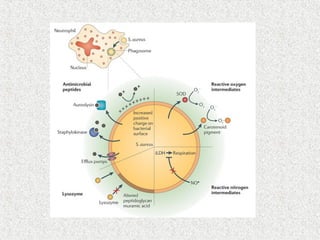
How neutrophiles kill bacteria?
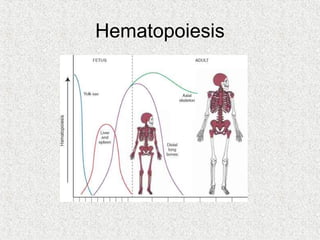
Hematopoiesis
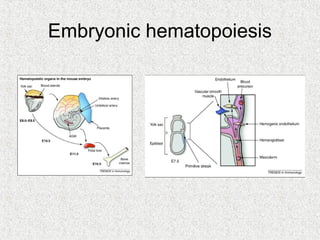
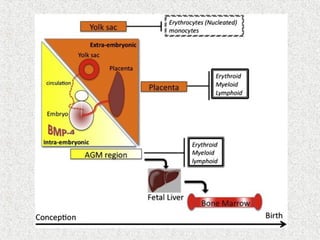
Embryonic hematopoiesis
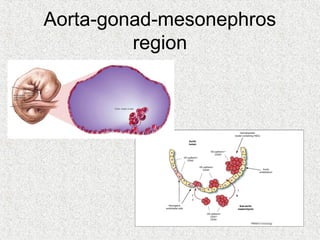
Aorta-gonad-mesonephros
         region
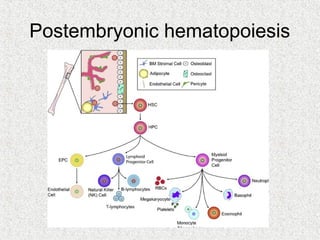
Postembryonic hematopoiesis
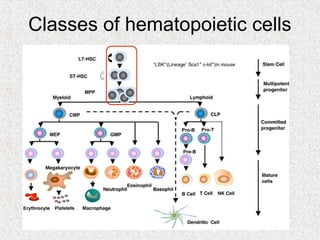
Classes of hematopoietic cells
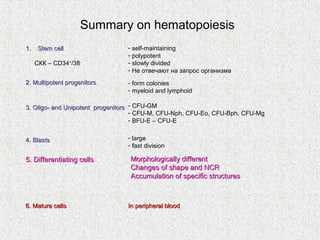
Summary on hematopoiesis
1.    Stem cell                  - self-maintaining
                                 - polypotent
     СКК – CD34+/38-             - slowly divided
                                 - Не отвечают на запрос организма
2. Multipotent progenitors       - form colonies
                                 - myeloid and lymphoid

3. Oligo- and Unipotent progenitors - CFU-GM
                                    - CFU-M, CFU-Nph, CFU-Eo, CFU-Bph, CFU-Mg
                                    - BFU-E – CFU-E


4. Blasts                        - large
                                 - fast division

5. Differentiating cells          Morphologically different
                                  Changes of shape and NCR
                                  Accumulation of specific structures


6. Mature cells                  In peripheral blood

Blood

  • 1.
    Tissues of internalenvironment Classification: 1. Blood 2. Lymph. 3. Connective tissues
  • 2.
    General characteristics ofblood Embryonic origin – mesenchyme Consists of formed elements and plasma Functions: - transport - defense - maintain hemostasis Main properties 1. Reactivity 2. High regeneration
  • 3.
    Erythrocytes • Number - 4-5,5*1012/L • Size – 7-7,5 mkm • Shape – biconcave disk • No nucleus • Cytoplasm – oxyphilic • Hemoglobin inclusions (HbA) • Funcntion – gases transport
  • 4.
  • 5.
    Hemoglobin types Kinds ofHb 1. P 2. F 3. A 4. S
  • 6.
    Platelets • Shape – oval (non-active), with processes (active) • Number 200-400*109/L • Size 2-5 mkm • 2 parts - granulomere (α, δ, λ - granules) - hyslomere • PM: glycocalyx with numerous Rc CD42 GPIa GPIIbIIIa GPVI Thrombogenesis P-selectin 1.Adhesion (receptors, cytoskeleton) Functions: - thrombogenesis (clotting) 2.Agregation (secretion of granules), • - regulation of inflammation 3.Stabilisation (+fibrinogen) • - regulation of 4.Retraction angiogenesis and 5.Thrombolysis (λ-granules) regeneration
  • 7.
    Leukocytes Nph – 65-70% Eo – 1-5% Bph – 0-1% • Shape – spherical • Number 4-8*109/L • Size - 6-20 мкм • Nucleus • Granules (+-) • Cytoskeleton • Receptors Lph – 20-30% Мc – 6-8%
  • 8.
  • 9.
    Blood as mirrorof immunity
  • 10.
  • 13.
    Activation of leukocytes Peripheralblood leukocytes are inactive Chemoattractants - Activation Adhesion – receptors, contact with vessel`s endothelium Rоlling Migration Secretion of granules Secondary alteration Killing of microbes
  • 14.
  • 17.
  • 18.
  • 19.
  • 21.
  • 22.
  • 23.
    Summary on hematopoiesis 1. Stem cell - self-maintaining - polypotent СКК – CD34+/38- - slowly divided - Не отвечают на запрос организма 2. Multipotent progenitors - form colonies - myeloid and lymphoid 3. Oligo- and Unipotent progenitors - CFU-GM - CFU-M, CFU-Nph, CFU-Eo, CFU-Bph, CFU-Mg - BFU-E – CFU-E 4. Blasts - large - fast division 5. Differentiating cells Morphologically different Changes of shape and NCR Accumulation of specific structures 6. Mature cells In peripheral blood