Global Population Growth
By John J. Hidore
Estimates of Early Population Growth
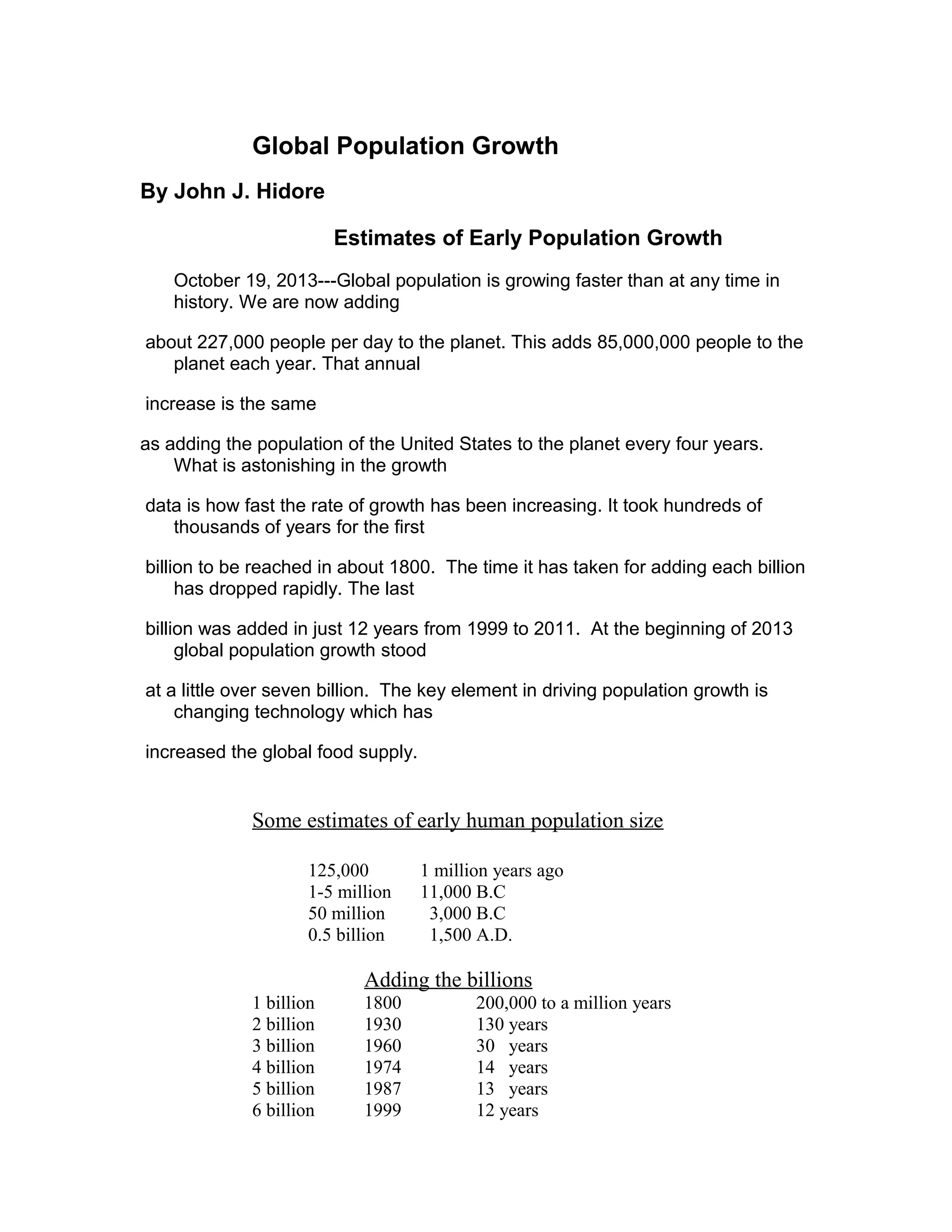
October 19, 2013---Global population is growing faster than at any time in
history. We are now adding
about 227,000 people per day to the planet. This adds 85,000,000 people to the
planet each year. That annual
increase is the same
as adding the population of the United States to the planet every four years.
What is astonishing in the growth
data is how fast the rate of growth has been increasing. It took hundreds of
thousands of years for the first
billion to be reached in about 1800. The time it has taken for adding each billion
has dropped rapidly. The last
billion was added in just 12 years from 1999 to 2011. At the beginning of 2013
global population growth stood
at a little over seven billion. The key element in driving population growth is
changing technology which has
increased the global food supply.

Some estimates of early human population size
125,000
1-5 million
50 million
0.5 billion

1 million years ago
11,000 B.C
3,000 B.C
1,500 A.D.

Adding the billions
1 billion
2 billion
3 billion
4 billion
5 billion
6 billion

1800
1930
1960
1974
1987
1999

200,000 to a million years
130 years
30 years
14 years
13 years
12 years
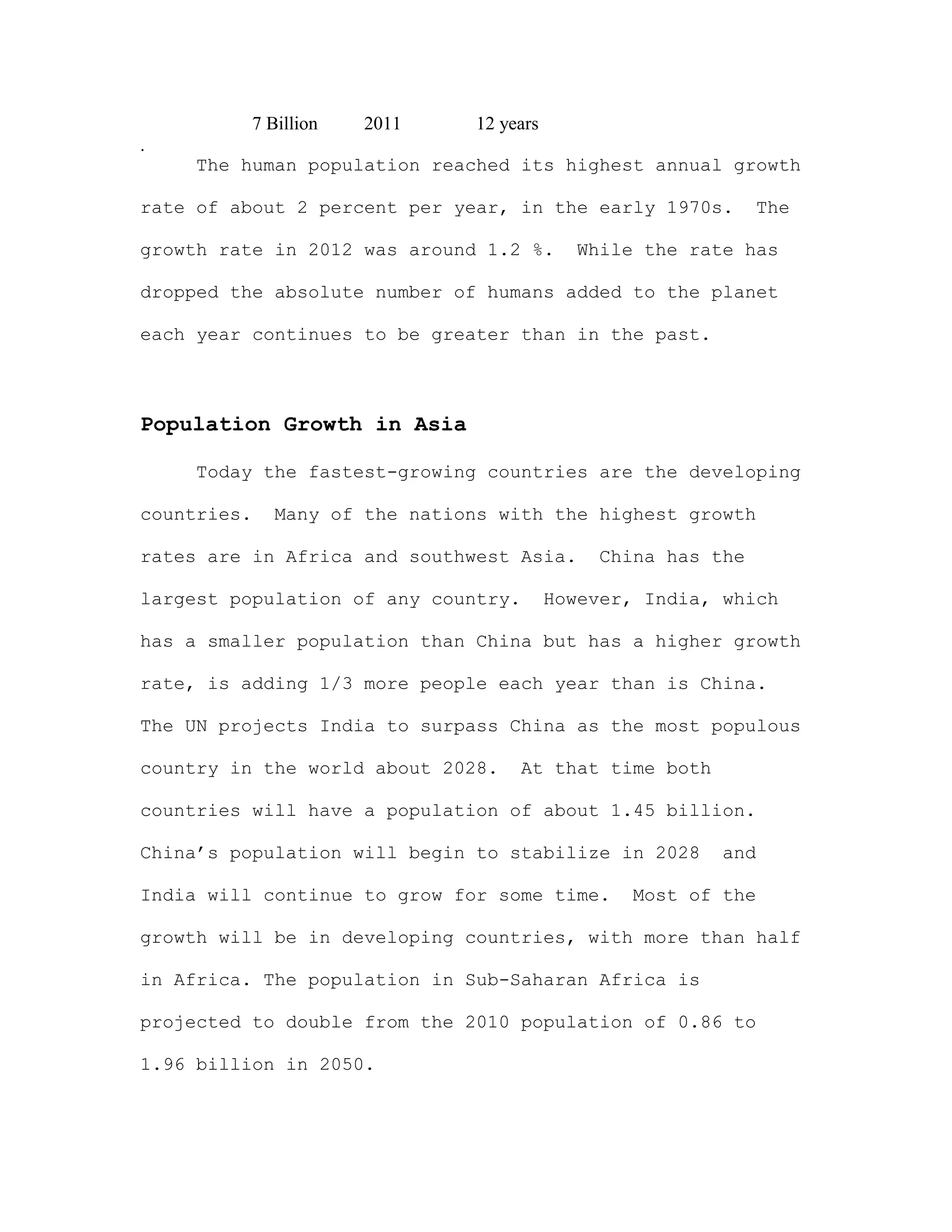
7 Billion

2011

12 years

.
The human population reached its highest annual growth
rate of about 2 percent per year, in the early 1970s.
growth rate in 2012 was around 1.2 %.

The

While the rate has

dropped the absolute number of humans added to the planet
each year continues to be greater than in the past.

Population Growth in Asia
Today the fastest-growing countries are the developing
countries.

Many of the nations with the highest growth

rates are in Africa and southwest Asia.
largest population of any country.

China has the

However, India, which

has a smaller population than China but has a higher growth
rate, is adding 1/3 more people each year than is China.
The UN projects India to surpass China as the most populous
country in the world about 2028.

At that time both

countries will have a population of about 1.45 billion.
China’s population will begin to stabilize in 2028
India will continue to grow for some time.

and

Most of the

growth will be in developing countries, with more than half
in Africa. The population in Sub-Saharan Africa is
projected to double from the 2010 population of 0.86 to
1.96 billion in 2050.
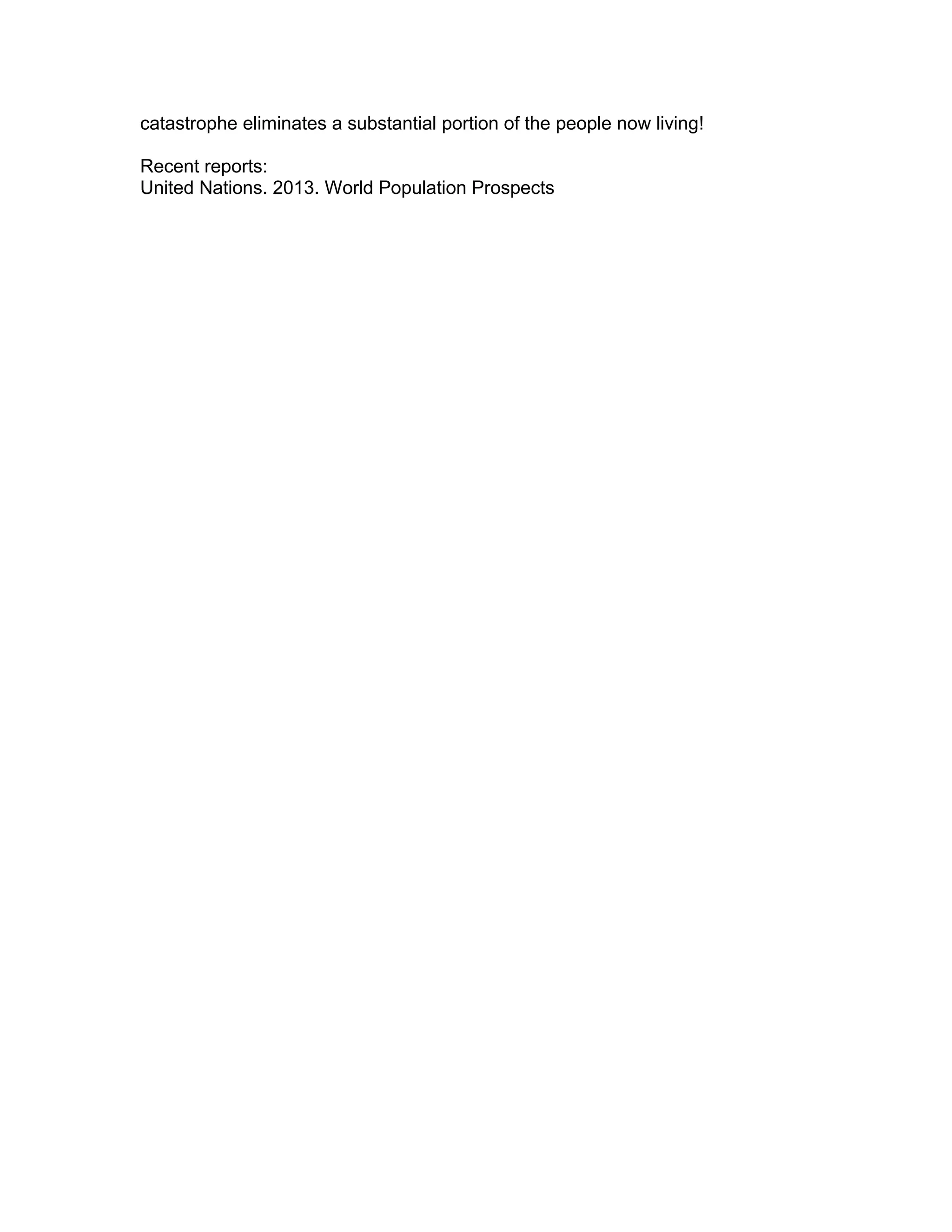
Impact Of Population Growth
The key element in the future relationship between the
human species and the global environment is the continued
rapid growth of the human population. In 1968, Stanford
biologist Paul Ehrlich published the book The Population
Bomb.

At the time he wrote the book the human population

was 3.5 billion. It has more than doubled since.
All data indications are that the population will continue
to grow.

How much it will grow can only be estimated and

the estimates from different organizations vary.

This

year, 2013, the United Nations has forecasted a global
population growth of 8.1 billion by 2025 and 9.6 billion
for 2050.
The next billion people added to the earth will want and expect food,
clothing, shelter, and some means of employment. How are these needs to be
met? There are already a billion people with some degree of malnutrition. Most
of the population supports themselves from agriculture. All good, and even
marginal, land is already occupied, and much productive land is being removed
from agriculture due to erosion and general depletion. How are these
agriculturalists going to find employment? These are critical issues!
The momentum for an increasing population seems to be difficult to
change. Global business thrives on population growth. It seems the options are
limited. Either the human species understands what is taking place and
mandates a change, or these trends will continue until some unpredictable
catastrophe eliminates a substantial portion of the people now living!
Recent reports:
United Nations. 2013. World Population Prospects

Population Growth

  • 1.
    Global Population Growth ByJohn J. Hidore Estimates of Early Population Growth October 19, 2013---Global population is growing faster than at any time in history. We are now adding about 227,000 people per day to the planet. This adds 85,000,000 people to the planet each year. That annual increase is the same as adding the population of the United States to the planet every four years. What is astonishing in the growth data is how fast the rate of growth has been increasing. It took hundreds of thousands of years for the first billion to be reached in about 1800. The time it has taken for adding each billion has dropped rapidly. The last billion was added in just 12 years from 1999 to 2011. At the beginning of 2013 global population growth stood at a little over seven billion. The key element in driving population growth is changing technology which has increased the global food supply. Some estimates of early human population size 125,000 1-5 million 50 million 0.5 billion 1 million years ago 11,000 B.C 3,000 B.C 1,500 A.D. Adding the billions 1 billion 2 billion 3 billion 4 billion 5 billion 6 billion 1800 1930 1960 1974 1987 1999 200,000 to a million years 130 years 30 years 14 years 13 years 12 years
  • 2.
    7 Billion 2011 12 years . Thehuman population reached its highest annual growth rate of about 2 percent per year, in the early 1970s. growth rate in 2012 was around 1.2 %. The While the rate has dropped the absolute number of humans added to the planet each year continues to be greater than in the past. Population Growth in Asia Today the fastest-growing countries are the developing countries. Many of the nations with the highest growth rates are in Africa and southwest Asia. largest population of any country. China has the However, India, which has a smaller population than China but has a higher growth rate, is adding 1/3 more people each year than is China. The UN projects India to surpass China as the most populous country in the world about 2028. At that time both countries will have a population of about 1.45 billion. China’s population will begin to stabilize in 2028 India will continue to grow for some time. and Most of the growth will be in developing countries, with more than half in Africa. The population in Sub-Saharan Africa is projected to double from the 2010 population of 0.86 to 1.96 billion in 2050.
  • 3.
    Impact Of PopulationGrowth The key element in the future relationship between the human species and the global environment is the continued rapid growth of the human population. In 1968, Stanford biologist Paul Ehrlich published the book The Population Bomb. At the time he wrote the book the human population was 3.5 billion. It has more than doubled since. All data indications are that the population will continue to grow. How much it will grow can only be estimated and the estimates from different organizations vary. This year, 2013, the United Nations has forecasted a global population growth of 8.1 billion by 2025 and 9.6 billion for 2050. The next billion people added to the earth will want and expect food, clothing, shelter, and some means of employment. How are these needs to be met? There are already a billion people with some degree of malnutrition. Most of the population supports themselves from agriculture. All good, and even marginal, land is already occupied, and much productive land is being removed from agriculture due to erosion and general depletion. How are these agriculturalists going to find employment? These are critical issues! The momentum for an increasing population seems to be difficult to change. Global business thrives on population growth. It seems the options are limited. Either the human species understands what is taking place and mandates a change, or these trends will continue until some unpredictable
  • 4.
    catastrophe eliminates asubstantial portion of the people now living! Recent reports: United Nations. 2013. World Population Prospects