BLISTER
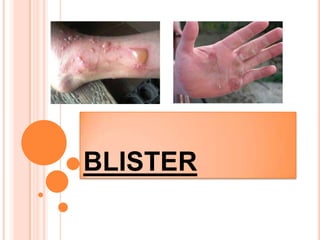
Blister

> a small pocket of fluid
in the upper skin layers
that occurs as a response
to friction or pressure.
SYMPTOMS OF A BLISTER
A blister is usually the body’s attempt to cushion the
underlying skin tissue from further damage during
the healing process. Some common causes of
blister include:
 ill-fitting shoes
 Friction
 Scalds or burns
 Severe sunburn
 Allergic reaction to irritants
 Viral skin infection
 fungal skin infection


To prevent a blister, use
gloves, socks, a bandage
or similar protective
covering over the area
being rubbed.
Wash your
hands and
the blister
with soap and
warm water.

Cut away all the
dead skin after
several days, using
tweezers and
scissors sterilized
with rubbing
alcohol. Apply more
ointment and a
bandage.

Swab the
blister with
iodine or
rubbing
alcohol.

Apply an
antibiotic
ointment to
the blister and
cover with a
bandage or
gauze pad.

Sterilize a
clean, sharp
needle by
wiping it with
rubbing alcohol.

Use the needle
to puncture the
blister. Aim for
several spots
near the blister’s
edge. Let the fluid
drain, but leave
the overlying skin
in place.

Blister first aid

  • 1.
  • 2.
    Blister > a smallpocket of fluid in the upper skin layers that occurs as a response to friction or pressure.
  • 3.
  • 4.
    A blister isusually the body’s attempt to cushion the underlying skin tissue from further damage during the healing process. Some common causes of blister include:  ill-fitting shoes  Friction  Scalds or burns  Severe sunburn  Allergic reaction to irritants  Viral skin infection  fungal skin infection
  • 5.
     To prevent ablister, use gloves, socks, a bandage or similar protective covering over the area being rubbed.
  • 6.
    Wash your hands and theblister with soap and warm water. Cut away all the dead skin after several days, using tweezers and scissors sterilized with rubbing alcohol. Apply more ointment and a bandage. Swab the blister with iodine or rubbing alcohol. Apply an antibiotic ointment to the blister and cover with a bandage or gauze pad. Sterilize a clean, sharp needle by wiping it with rubbing alcohol. Use the needle to puncture the blister. Aim for several spots near the blister’s edge. Let the fluid drain, but leave the overlying skin in place.