

MIRCROTEACHING
ON
MINORSKINAILMENTS
PRESENTED BY:
MONIKA
M.Sc Nursing
NINE, PGIMER, Chnadigarh
INTRODUCTION
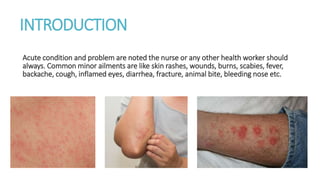
Acute condition and problem are noted the nurse or any other health worker should
always. Common minor ailments are like skin rashes, wounds, burns, scabies, fever,
backache, cough, inflamed eyes, diarrhea, fracture, animal bite, bleeding nose etc.
DEFFINITION
Minor ailments are generally defined as conditions that will resolve on their own and
can be reasonably self-diagnosed.
COMMON MINOR SKIN AILMENTS
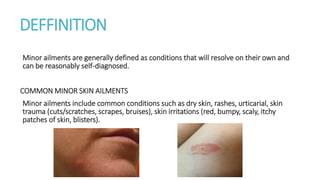
Minor ailments include common conditions such as dry skin, rashes, urticarial, skin
trauma (cuts/scratches, scrapes, bruises), skin irritations (red, bumpy, scaly, itchy
patches of skin, blisters).
DRY SKIN
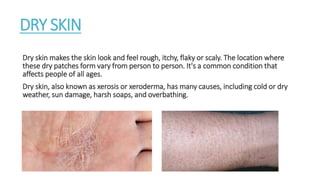
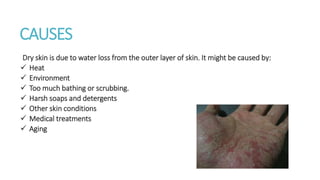
Dry skin makes the skin look and feel rough, itchy, flaky or scaly. The location where
these dry patches form vary from person to person. It's a common condition that
affects people of all ages.
Dry skin, also known as xerosis or xeroderma, has many causes, including cold or dry
weather, sun damage, harsh soaps, and overbathing.
CAUSES
Dry skin is due to water loss from the outer layer of skin. It might be caused by:
 Heat
 Environment
 Too much bathing or scrubbing.
 Harsh soaps and detergents
 Other skin conditions
 Medical treatments
 Aging
SYMPTOMS
Dry skin is often temporary or seasonal — might get it only in winter.
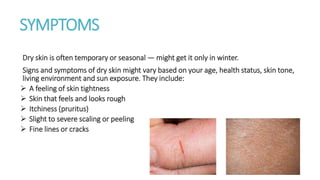
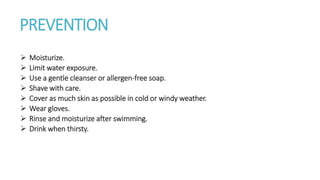
Signs and symptoms of dry skin might vary based on your age, health status, skin tone,
living environment and sun exposure. They include:
 A feeling of skin tightness
 Skin that feels and looks rough
 Itchiness (pruritus)
 Slight to severe scaling or peeling
 Fine lines or cracks
PREVENTION
 Moisturize.
 Limit water exposure.
 Use a gentle cleanser or allergen-free soap.
 Shave with care.
 Cover as much skin as possible in cold or windy weather.
 Wear gloves.
 Rinse and moisturize after swimming.
 Drink when thirsty.
URTICARIA
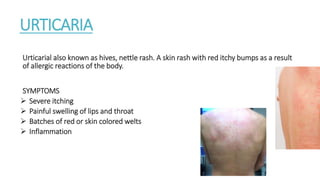
Urticarial also known as hives, nettle rash. A skin rash with red itchy bumps as a result
of allergic reactions of the body.
SYMPTOMS
 Severe itching
 Painful swelling of lips and throat
 Batches of red or skin colored welts
 Inflammation
CAUSES
Caused due to allergic reaction and the triggers include
 Certain medications
 Infection
 Sunlight
 Food - such as allergic to nuts
 Dust
 Fabric texture
 Certain metals
PREVENTION
 Hives can be prevented by adopting certain lifestyle changes.
 Avoid foods that cause allergy
 Avoid drugs that are known to cause allergy
 Avoid scratching
 Avoid using harsh soaps
 Avoid alcohol
 Avoid hot baths, strong sunlight which make symptoms worse
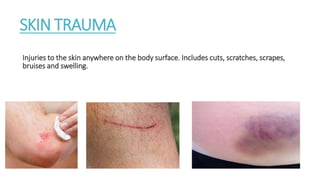
SKIN TRAUMA
Injuries to the skin anywhere on the body surface. Includes cuts, scratches, scrapes,
bruises and swelling.
Types of Skin Injury
Cuts, lacerations and tears. These are wounds that go through the skin to the fat
tissue. Caused by a sharp object.
Scrapes, abrasions and scratches. These are surface wounds that don't go all the way
through the skin. Scrapes are common on the knees, elbows and palms.
Bruises. These are bleeding into the skin from damaged blood vessels. Caused by a
blunt object. They can occur without a cut or scrape.
Care Advice for Minor Cuts, Scrapes or
Bruises
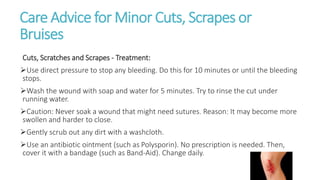
Cuts, Scratches and Scrapes - Treatment:
Use direct pressure to stop any bleeding. Do this for 10 minutes or until the bleeding
stops.
Wash the wound with soap and water for 5 minutes. Try to rinse the cut under
running water.
Caution: Never soak a wound that might need sutures. Reason: It may become more
swollen and harder to close.
Gently scrub out any dirt with a washcloth.
Use an antibiotic ointment (such as Polysporin). No prescription is needed. Then,
cover it with a bandage (such as Band-Aid). Change daily.
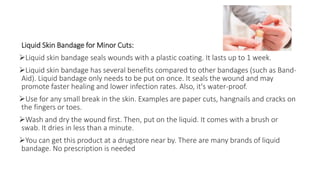
Liquid Skin Bandage for Minor Cuts:
Liquid skin bandage seals wounds with a plastic coating. It lasts up to 1 week.
Liquid skin bandage has several benefits compared to other bandages (such as Band-
Aid). Liquid bandage only needs to be put on once. It seals the wound and may
promote faster healing and lower infection rates. Also, it's water-proof.
Use for any small break in the skin. Examples are paper cuts, hangnails and cracks on
the fingers or toes.
Wash and dry the wound first. Then, put on the liquid. It comes with a brush or
swab. It dries in less than a minute.
You can get this product at a drugstore near by. There are many brands of liquid
bandage. No prescription is needed
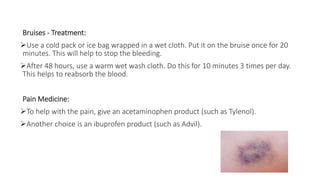
Bruises - Treatment:
Use a cold pack or ice bag wrapped in a wet cloth. Put it on the bruise once for 20
minutes. This will help to stop the bleeding.
After 48 hours, use a warm wet wash cloth. Do this for 10 minutes 3 times per day.
This helps to reabsorb the blood.
Pain Medicine:
To help with the pain, give an acetaminophen product (such as Tylenol).
Another choice is an ibuprofen product (such as Advil).
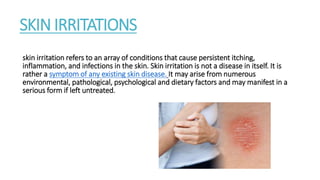
SKIN IRRITATIONS
skin irritation refers to an array of conditions that cause persistent itching,
inflammation, and infections in the skin. Skin irritation is not a disease in itself. It is
rather a symptom of any existing skin disease. It may arise from numerous
environmental, pathological, psychological and dietary factors and may manifest in a
serious form if left untreated.
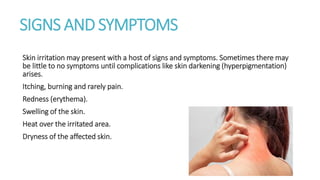
SIGNS AND SYMPTOMS
Skin irritation may present with a host of signs and symptoms. Sometimes there may
be little to no symptoms until complications like skin darkening (hyperpigmentation)
arises.
Itching, burning and rarely pain.
Redness (erythema).
Swelling of the skin.
Heat over the irritated area.
Dryness of the affected skin.
CAUSES
Skin irritation is caused by an irritant – this is any substance or object that is otherwise
harmless but slowly injures, damages and triggers mild inflammation at the point of
contact.
Scratching, Water, Sweat, Clothing
Soap, Shampoo and Detergents
Cosmetics and Skin Care Application
Sand and dust.
Constant pressure on the skin.
Occupational Irritants like organic and non-organic dusts and various chemicals.
TREATMENT
Mild skin irritation usually does not require any treatment. The skin is resilient and the
symptoms quickly resolve once the offending substance is removed.
Treatment options may include:
Emollients to moisturize the irritated area which is prone to drying and barrier creams
to help restore some of the skin’s barrier function until the skin heals.
Topical corticosteroid to reduce the inflammation. Oral corticosteroids are usually not
necessary but may be prescribed in severe cases.
Antimicrobial agents like antibacterial or antifungal ointments in the event of a
secondary bacterial or fungal infection of the skin, respectively.
PREVENTION
Avoid the irritant or at least minimize exposure to it with protective gear or limit to
shorter periods of direct contact. Industrial-grade protective wear must be used as
necessary for occupational exposure to irritants.
Rinse and dry the skin thoroughly after using soaps and shampoos or following
contact with detergents. Do not rub the skin vigorously or use hard objects to scrub the
skin.
Wear loose but properly fitting clothing. Opt for natural textiles that are not rough
Keep the irritated area clean and protected to prevent infections.
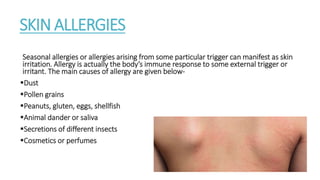
SKIN ALLERGIES
Seasonal allergies or allergies arising from some particular trigger can manifest as skin
irritation. Allergy is actually the body’s immune response to some external trigger or
irritant. The main causes of allergy are given below-
Dust
Pollen grains
Peanuts, gluten, eggs, shellfish
Animal dander or saliva
Secretions of different insects
Cosmetics or perfumes
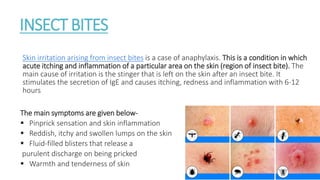
INSECT BITES
Skin irritation arising from insect bites is a case of anaphylaxis. This is a condition in which
acute itching and inflammation of a particular area on the skin (region of insect bite). The
main cause of irritation is the stinger that is left on the skin after an insect bite. It
stimulates the secretion of IgE and causes itching, redness and inflammation with 6-12
hours
The main symptoms are given below-
 Pinprick sensation and skin inflammation
 Reddish, itchy and swollen lumps on the skin
 Fluid-filled blisters that release a
purulent discharge on being pricked
 Warmth and tenderness of skin
PREVENTING SKIN DISORDERS
Wash your hands with soap and warm water frequently.
Avoid sharing eating utensils and drinking glasses with other people.
Avoid direct contact with the skin of other people who have an infection
Clean things before using them.
Don’t share personal items, such as blankets, hairbrushes, or swimsuits.
Sleep for at least seven hours each night.
Drink plenty of water.
Avoid excessive physical or emotional stress.
Eat a nutritious diet.
Get vaccinated for infectious skin conditions, such as chickenpox.
Use moisturizer.
Avoid environmental and dietary allergens.
Avoid contact with harsh chemicals or other irritants.
Protect skin from excessive cold, heat, and wind.
SUMMARY
REFERENCES
https://www.mayoclinic.org/diseases-conditions/dry-skin/symptoms-causes/syc-
20353885
https://www.bing.com/search?q=urticaria&qs=n&form=QBRE&sp=-
1&ghc=2&pq=urti&sc=8-4&sk=&cvid=E4BB4B4DC3CB4ED9891D687DE898699B
https://www.healthhype.com/skin-irritation-causes-symptoms-treatment-and-
prevention.html
https://www.healthline.com/health/skin-disorders#prevention
https://hscbusiness.hscni.net/pdf/Groin%20Area%20Infection%20(Dhobie%20itch)_Ja
n18.pdf
https://www.seattlechildrens.org/conditions/a-z/cut-scrape-or-bruise/
minor skin ailments.pptx

minor skin ailments.pptx

  • 1.
  • 2.
    INTRODUCTION Acute condition andproblem are noted the nurse or any other health worker should always. Common minor ailments are like skin rashes, wounds, burns, scabies, fever, backache, cough, inflamed eyes, diarrhea, fracture, animal bite, bleeding nose etc.
  • 3.
    DEFFINITION Minor ailments aregenerally defined as conditions that will resolve on their own and can be reasonably self-diagnosed. COMMON MINOR SKIN AILMENTS Minor ailments include common conditions such as dry skin, rashes, urticarial, skin trauma (cuts/scratches, scrapes, bruises), skin irritations (red, bumpy, scaly, itchy patches of skin, blisters).
  • 4.
    DRY SKIN Dry skinmakes the skin look and feel rough, itchy, flaky or scaly. The location where these dry patches form vary from person to person. It's a common condition that affects people of all ages. Dry skin, also known as xerosis or xeroderma, has many causes, including cold or dry weather, sun damage, harsh soaps, and overbathing.
  • 5.
    CAUSES Dry skin isdue to water loss from the outer layer of skin. It might be caused by:  Heat  Environment  Too much bathing or scrubbing.  Harsh soaps and detergents  Other skin conditions  Medical treatments  Aging
  • 6.
    SYMPTOMS Dry skin isoften temporary or seasonal — might get it only in winter. Signs and symptoms of dry skin might vary based on your age, health status, skin tone, living environment and sun exposure. They include:  A feeling of skin tightness  Skin that feels and looks rough  Itchiness (pruritus)  Slight to severe scaling or peeling  Fine lines or cracks
  • 7.
    PREVENTION  Moisturize.  Limitwater exposure.  Use a gentle cleanser or allergen-free soap.  Shave with care.  Cover as much skin as possible in cold or windy weather.  Wear gloves.  Rinse and moisturize after swimming.  Drink when thirsty.
  • 8.
    URTICARIA Urticarial also knownas hives, nettle rash. A skin rash with red itchy bumps as a result of allergic reactions of the body. SYMPTOMS  Severe itching  Painful swelling of lips and throat  Batches of red or skin colored welts  Inflammation
  • 9.
    CAUSES Caused due toallergic reaction and the triggers include  Certain medications  Infection  Sunlight  Food - such as allergic to nuts  Dust  Fabric texture  Certain metals
  • 10.
    PREVENTION  Hives canbe prevented by adopting certain lifestyle changes.  Avoid foods that cause allergy  Avoid drugs that are known to cause allergy  Avoid scratching  Avoid using harsh soaps  Avoid alcohol  Avoid hot baths, strong sunlight which make symptoms worse
  • 11.
    SKIN TRAUMA Injuries tothe skin anywhere on the body surface. Includes cuts, scratches, scrapes, bruises and swelling.
  • 12.
    Types of SkinInjury Cuts, lacerations and tears. These are wounds that go through the skin to the fat tissue. Caused by a sharp object. Scrapes, abrasions and scratches. These are surface wounds that don't go all the way through the skin. Scrapes are common on the knees, elbows and palms. Bruises. These are bleeding into the skin from damaged blood vessels. Caused by a blunt object. They can occur without a cut or scrape.
  • 13.
    Care Advice forMinor Cuts, Scrapes or Bruises Cuts, Scratches and Scrapes - Treatment: Use direct pressure to stop any bleeding. Do this for 10 minutes or until the bleeding stops. Wash the wound with soap and water for 5 minutes. Try to rinse the cut under running water. Caution: Never soak a wound that might need sutures. Reason: It may become more swollen and harder to close. Gently scrub out any dirt with a washcloth. Use an antibiotic ointment (such as Polysporin). No prescription is needed. Then, cover it with a bandage (such as Band-Aid). Change daily.
  • 14.
    Liquid Skin Bandagefor Minor Cuts: Liquid skin bandage seals wounds with a plastic coating. It lasts up to 1 week. Liquid skin bandage has several benefits compared to other bandages (such as Band- Aid). Liquid bandage only needs to be put on once. It seals the wound and may promote faster healing and lower infection rates. Also, it's water-proof. Use for any small break in the skin. Examples are paper cuts, hangnails and cracks on the fingers or toes. Wash and dry the wound first. Then, put on the liquid. It comes with a brush or swab. It dries in less than a minute. You can get this product at a drugstore near by. There are many brands of liquid bandage. No prescription is needed
  • 15.
    Bruises - Treatment: Usea cold pack or ice bag wrapped in a wet cloth. Put it on the bruise once for 20 minutes. This will help to stop the bleeding. After 48 hours, use a warm wet wash cloth. Do this for 10 minutes 3 times per day. This helps to reabsorb the blood. Pain Medicine: To help with the pain, give an acetaminophen product (such as Tylenol). Another choice is an ibuprofen product (such as Advil).
  • 16.
    SKIN IRRITATIONS skin irritationrefers to an array of conditions that cause persistent itching, inflammation, and infections in the skin. Skin irritation is not a disease in itself. It is rather a symptom of any existing skin disease. It may arise from numerous environmental, pathological, psychological and dietary factors and may manifest in a serious form if left untreated.
  • 17.
    SIGNS AND SYMPTOMS Skinirritation may present with a host of signs and symptoms. Sometimes there may be little to no symptoms until complications like skin darkening (hyperpigmentation) arises. Itching, burning and rarely pain. Redness (erythema). Swelling of the skin. Heat over the irritated area. Dryness of the affected skin.
  • 18.
    CAUSES Skin irritation iscaused by an irritant – this is any substance or object that is otherwise harmless but slowly injures, damages and triggers mild inflammation at the point of contact. Scratching, Water, Sweat, Clothing Soap, Shampoo and Detergents Cosmetics and Skin Care Application Sand and dust. Constant pressure on the skin. Occupational Irritants like organic and non-organic dusts and various chemicals.
  • 19.
    TREATMENT Mild skin irritationusually does not require any treatment. The skin is resilient and the symptoms quickly resolve once the offending substance is removed. Treatment options may include: Emollients to moisturize the irritated area which is prone to drying and barrier creams to help restore some of the skin’s barrier function until the skin heals. Topical corticosteroid to reduce the inflammation. Oral corticosteroids are usually not necessary but may be prescribed in severe cases. Antimicrobial agents like antibacterial or antifungal ointments in the event of a secondary bacterial or fungal infection of the skin, respectively.
  • 20.
    PREVENTION Avoid the irritantor at least minimize exposure to it with protective gear or limit to shorter periods of direct contact. Industrial-grade protective wear must be used as necessary for occupational exposure to irritants. Rinse and dry the skin thoroughly after using soaps and shampoos or following contact with detergents. Do not rub the skin vigorously or use hard objects to scrub the skin. Wear loose but properly fitting clothing. Opt for natural textiles that are not rough Keep the irritated area clean and protected to prevent infections.
  • 21.
    SKIN ALLERGIES Seasonal allergiesor allergies arising from some particular trigger can manifest as skin irritation. Allergy is actually the body’s immune response to some external trigger or irritant. The main causes of allergy are given below- Dust Pollen grains Peanuts, gluten, eggs, shellfish Animal dander or saliva Secretions of different insects Cosmetics or perfumes
  • 22.
    INSECT BITES Skin irritationarising from insect bites is a case of anaphylaxis. This is a condition in which acute itching and inflammation of a particular area on the skin (region of insect bite). The main cause of irritation is the stinger that is left on the skin after an insect bite. It stimulates the secretion of IgE and causes itching, redness and inflammation with 6-12 hours The main symptoms are given below-  Pinprick sensation and skin inflammation  Reddish, itchy and swollen lumps on the skin  Fluid-filled blisters that release a purulent discharge on being pricked  Warmth and tenderness of skin
  • 23.
    PREVENTING SKIN DISORDERS Washyour hands with soap and warm water frequently. Avoid sharing eating utensils and drinking glasses with other people. Avoid direct contact with the skin of other people who have an infection Clean things before using them. Don’t share personal items, such as blankets, hairbrushes, or swimsuits. Sleep for at least seven hours each night. Drink plenty of water.
  • 24.
    Avoid excessive physicalor emotional stress. Eat a nutritious diet. Get vaccinated for infectious skin conditions, such as chickenpox. Use moisturizer. Avoid environmental and dietary allergens. Avoid contact with harsh chemicals or other irritants. Protect skin from excessive cold, heat, and wind.
  • 25.
  • 26.