A. or other impact,
B. is cut or broken.
C.typically one in which
the skin
D. caused by a cut, blow,
E. an injury to living tissue
D. caused by a cut, blow,
A. or other impact,
C.typically one in which the skin
B. is cut or broken.
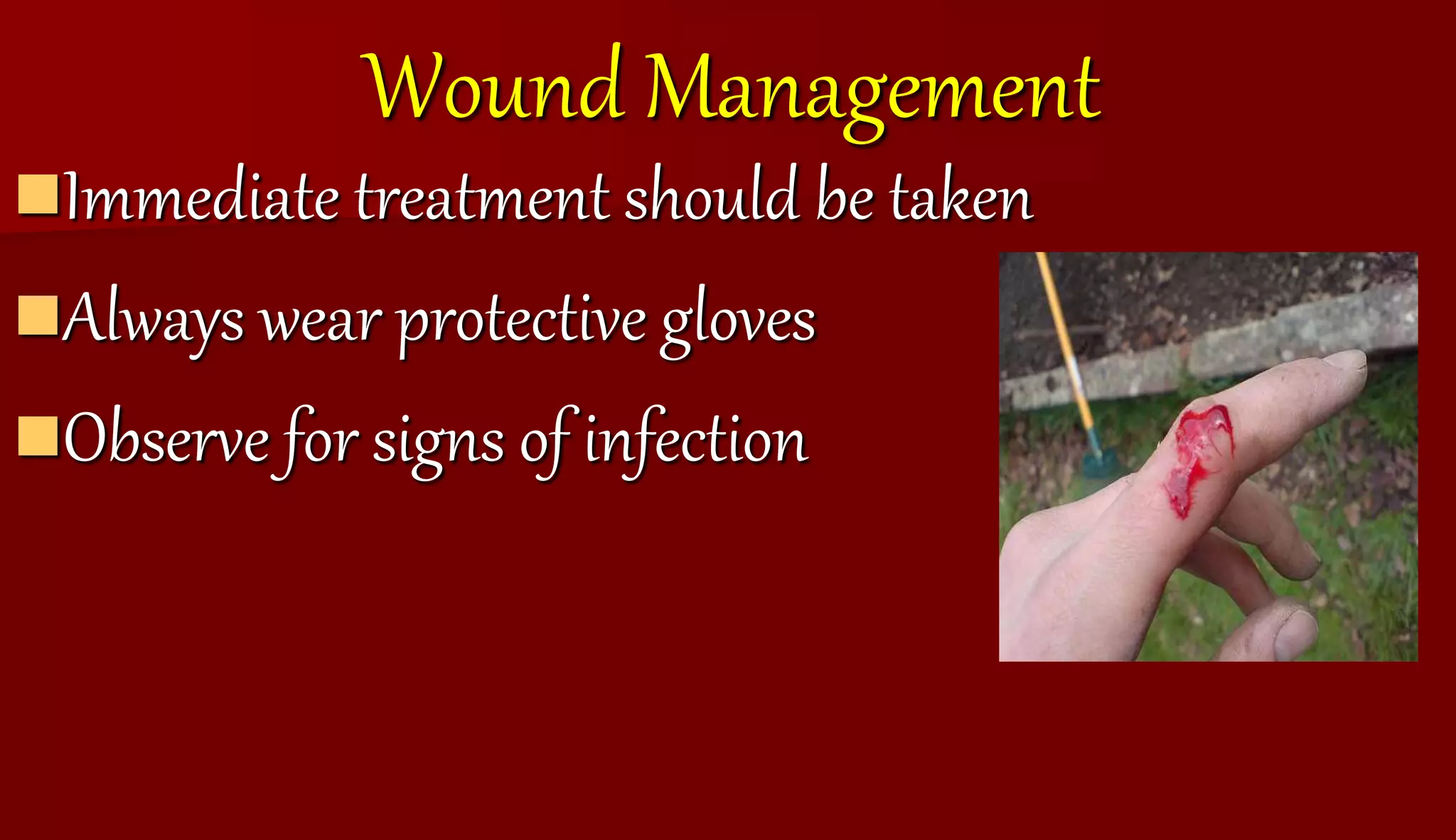
Wound Management
Immediate treatment should be taken
Always wear protective gloves
Observe for signs of infection
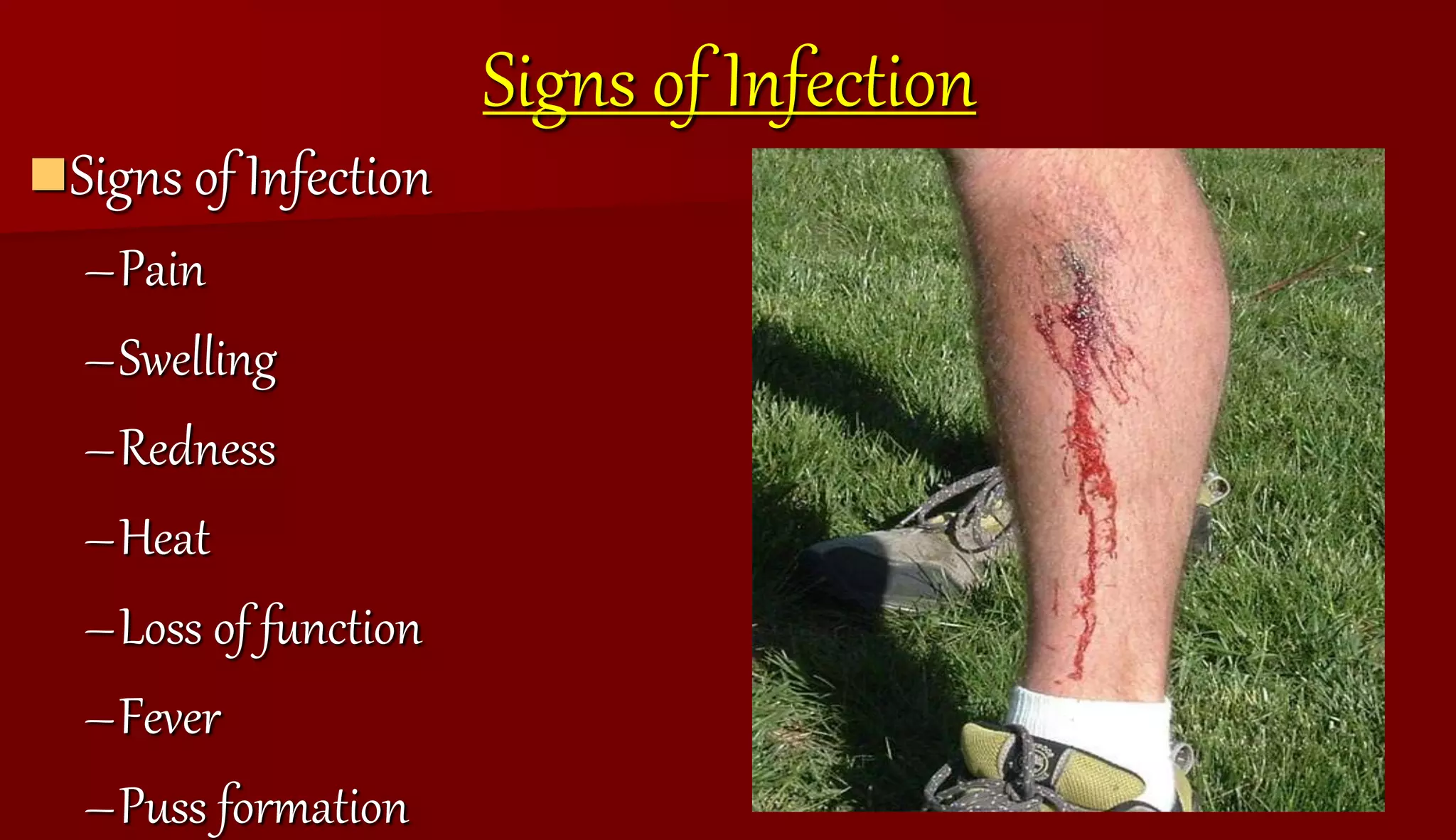
Signs of Infection
Signs of Infection
–Pain
–Swelling
–Redness
–Heat
–Loss of function
–Fever
–Puss formation
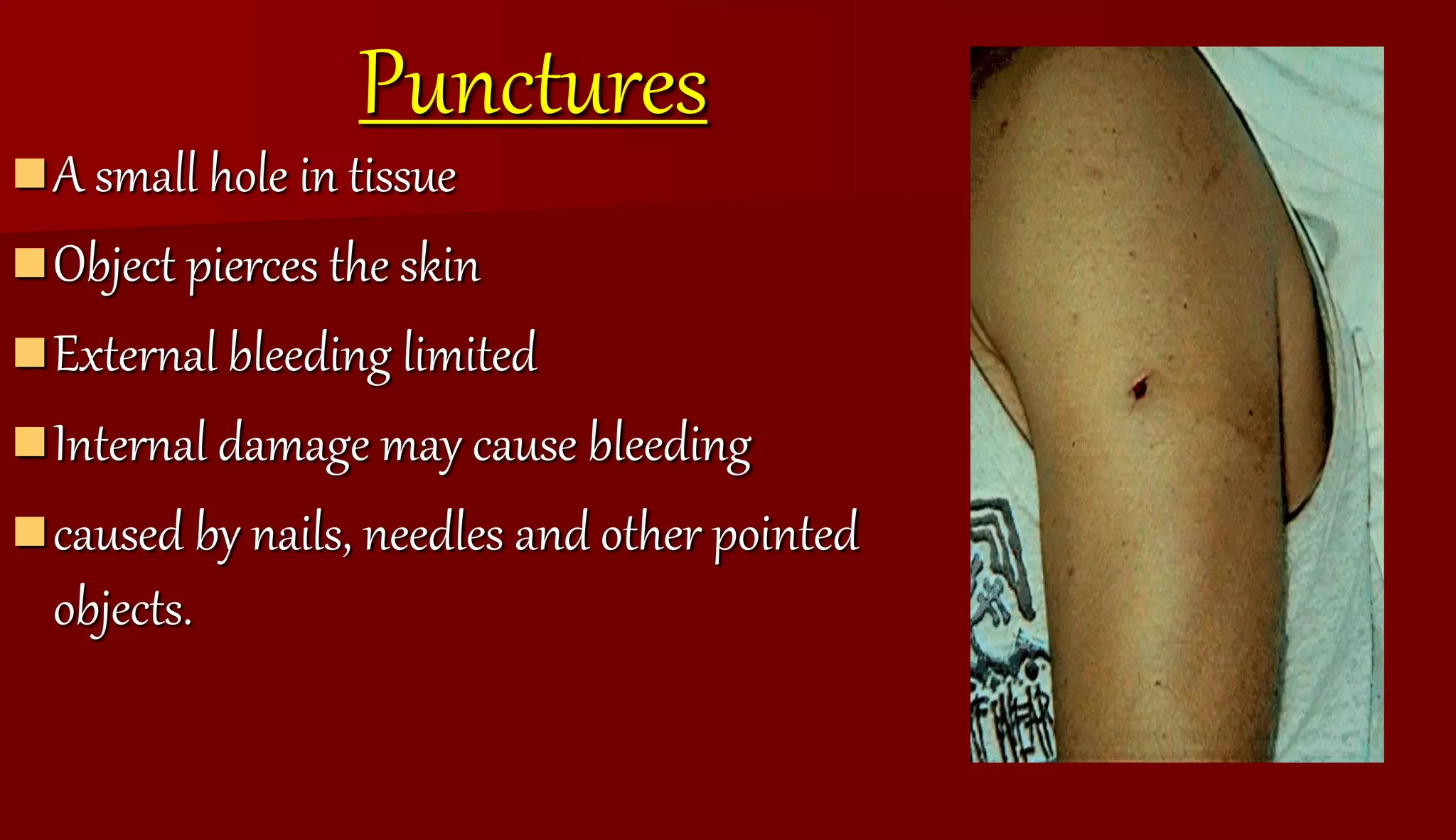
Punctures
A small hole in tissue
Object pierces the skin
External bleeding limited
Internal damage may cause bleeding
caused by nails, needles and other pointed
objects.
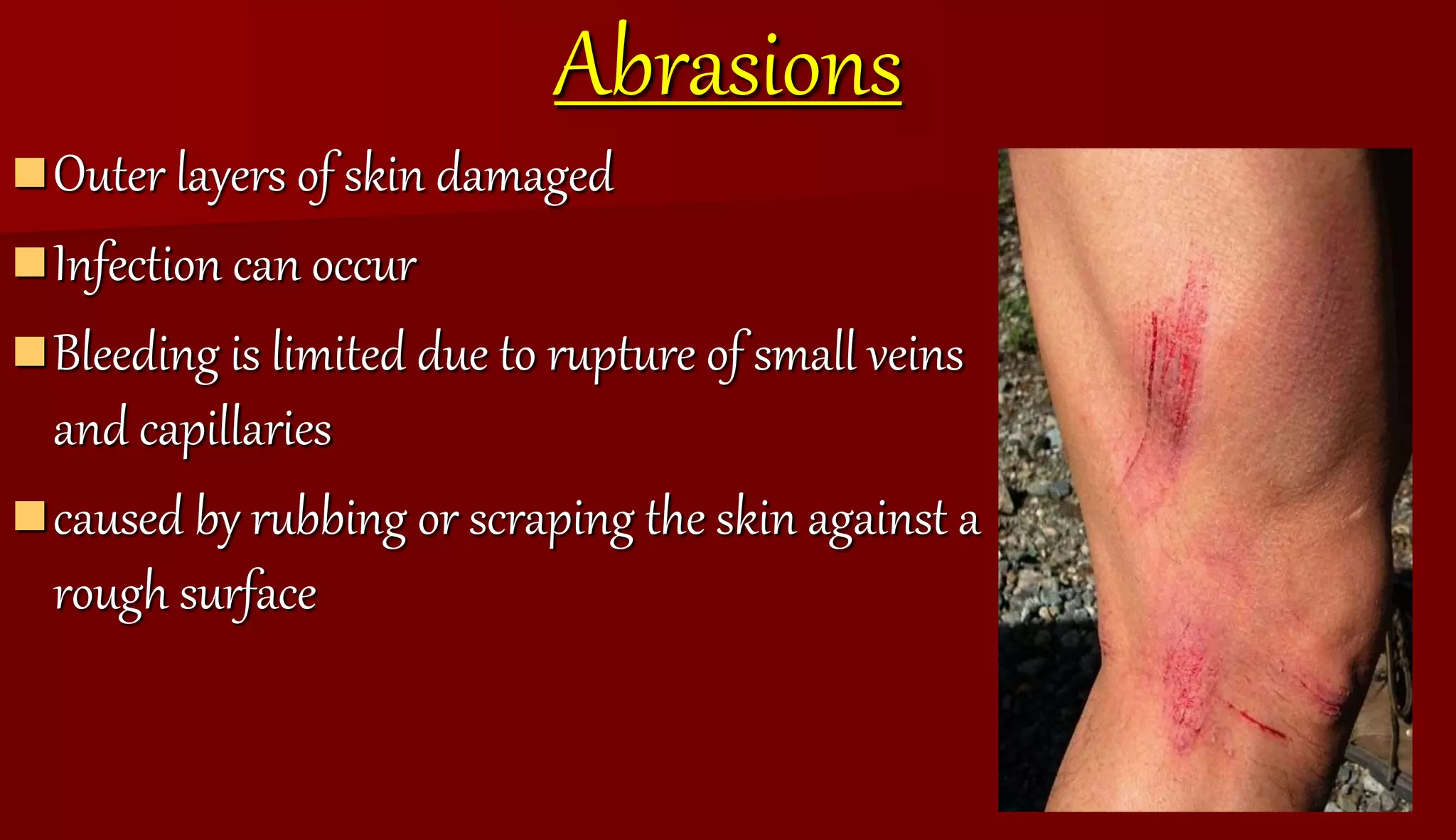
Abrasions
Outer layers of skin damaged
Infection can occur
Bleeding is limited due to rupture of small veins
and capillaries
caused by rubbing or scraping the skin against a
rough surface
Incision
Wound with smooth sides/edges
Severe bleeding can exist
 a cut caused by knife, broken glass or any
sharp object
Avulsions
Forcible separation or tearing of tissue
from the body
Bleeding occurs immediately
a forcible tearing or partial tearing
away of tissues
Laceration
Jagged, irregular tear of soft
tissue
 a blunt breaking or tearing of
soft tissues
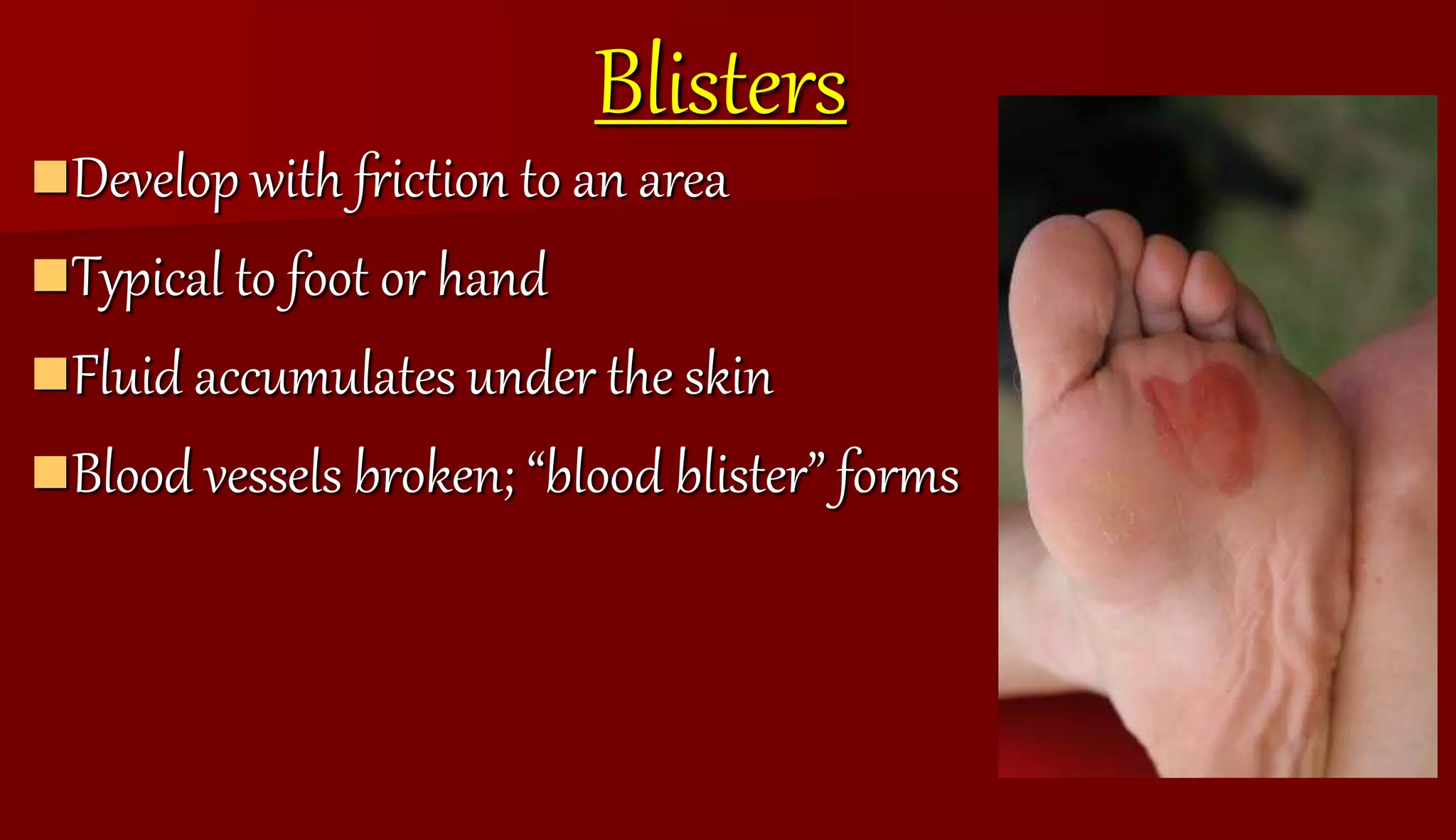
Blisters
Develop with friction to an area
Typical to foot or hand
Fluid accumulates under the skin
Blood vessels broken; “blood blister” forms
Blister Treatment
2 types of treatment
–Pop blister
–Cover without popping
Calluses
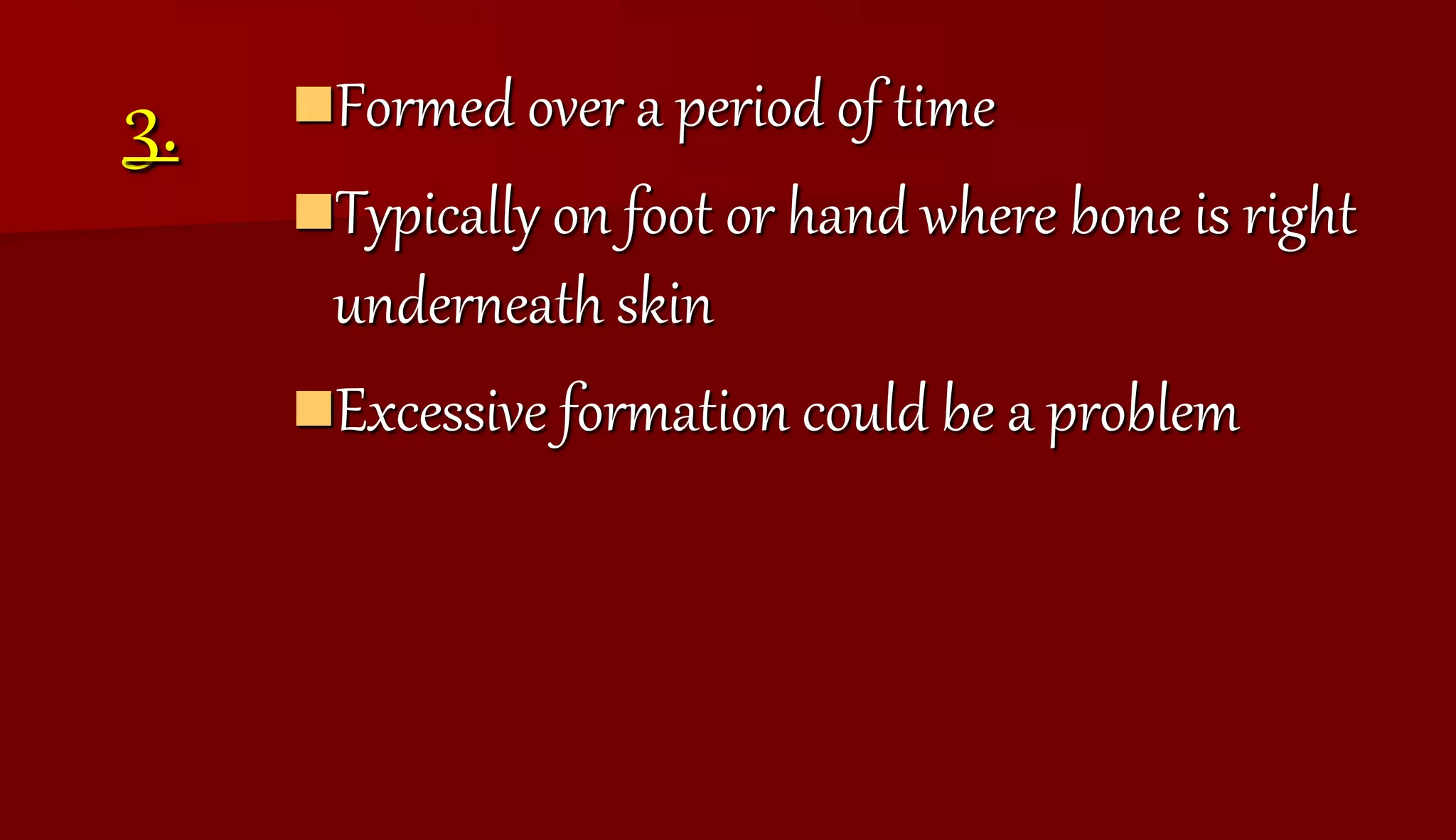
Formed over a period of time
Typically on foot or hand where bone is
right underneath skin
Excessive formation could be a problem
First Aid for Open Wounds with Severe Bleeding
1. Wear gloves and remove or cut clothing as
necessary to expose wound.
2. Control bleeding by applying direct pressure.
First Aid for Open Wounds with Severe Bleeding
3. Elevate the injured part above the heart
except for eye injury and wounds with
embedded object.
First Aid for Open Wounds with Severe Bleeding
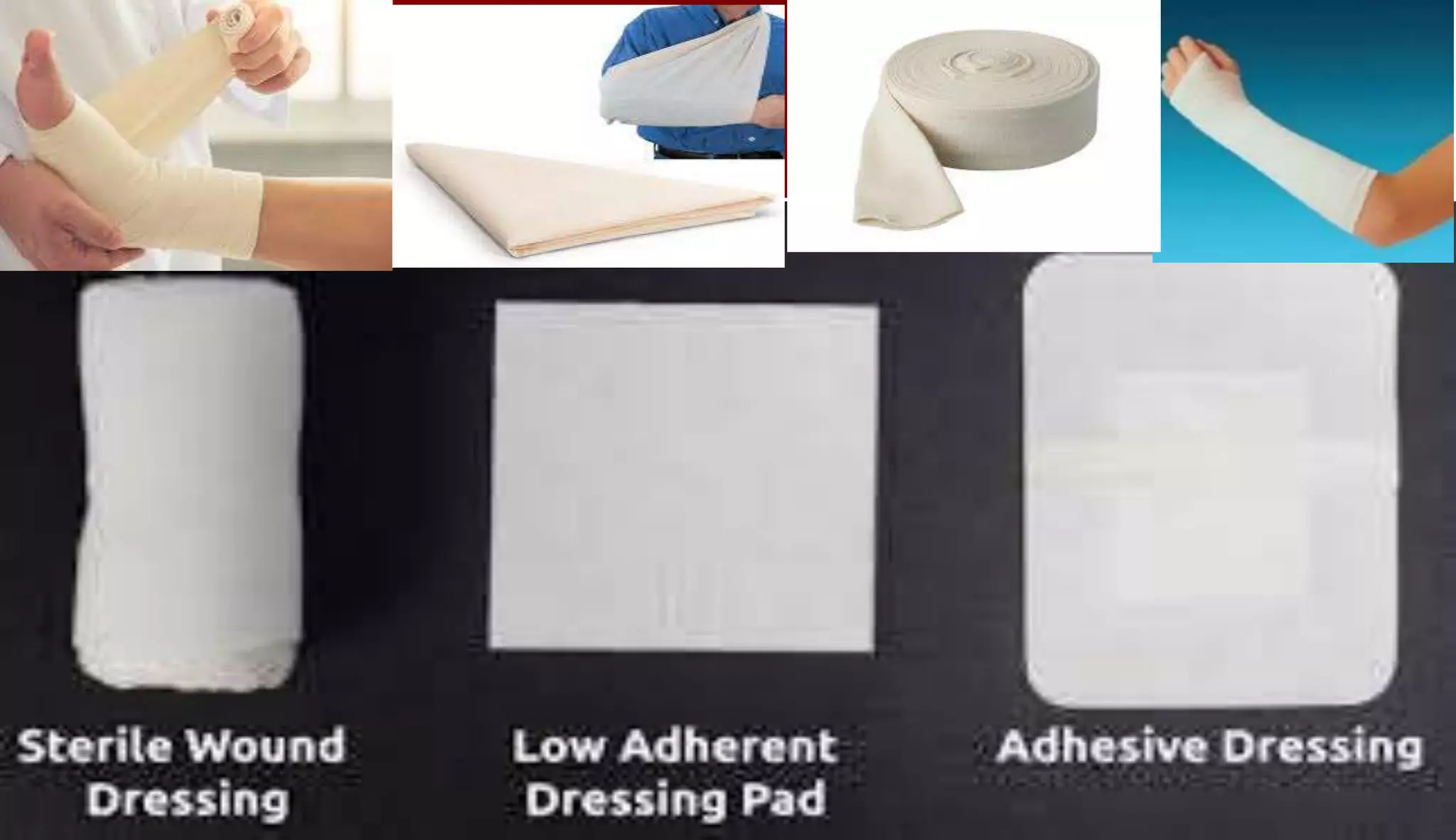
4. Cover wound with sterile dressing and
bandage.
5. Care for shock.
6. Consult a physician immediately.
How to Manage Wounds:
Rest the injured part
Ice application
Compression
Elevation
ASSESSMENT
1. a cut caused by knife, broken
glass or any sharp object
A small hole in tissue
Object pierces the skin
caused by nails, needles and other
pointed objects.
2.
3. Formed over a period of time
Typically on foot or hand where bone is right
underneath skin
Excessive formation could be a problem
4.
5.
6.
7-8.
2 types of treatment
of Blisters
9-10
Signs of Infection of Wounds
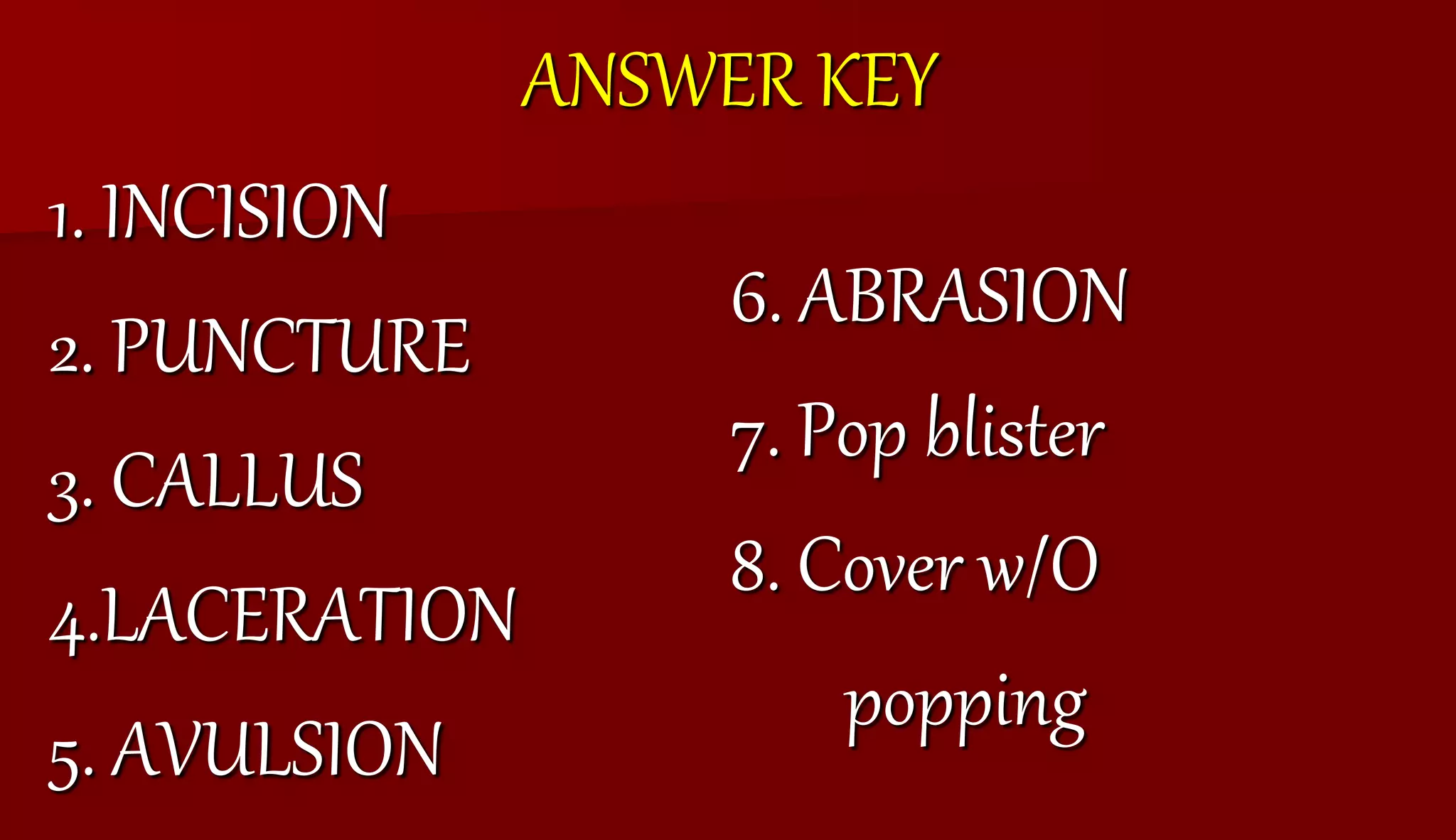
ANSWER KEY
1. INCISION
2. PUNCTURE
3. CALLUS
4.LACERATION
5. AVULSION
6. ABRASION
7. Pop blister
8. Cover w/O
popping
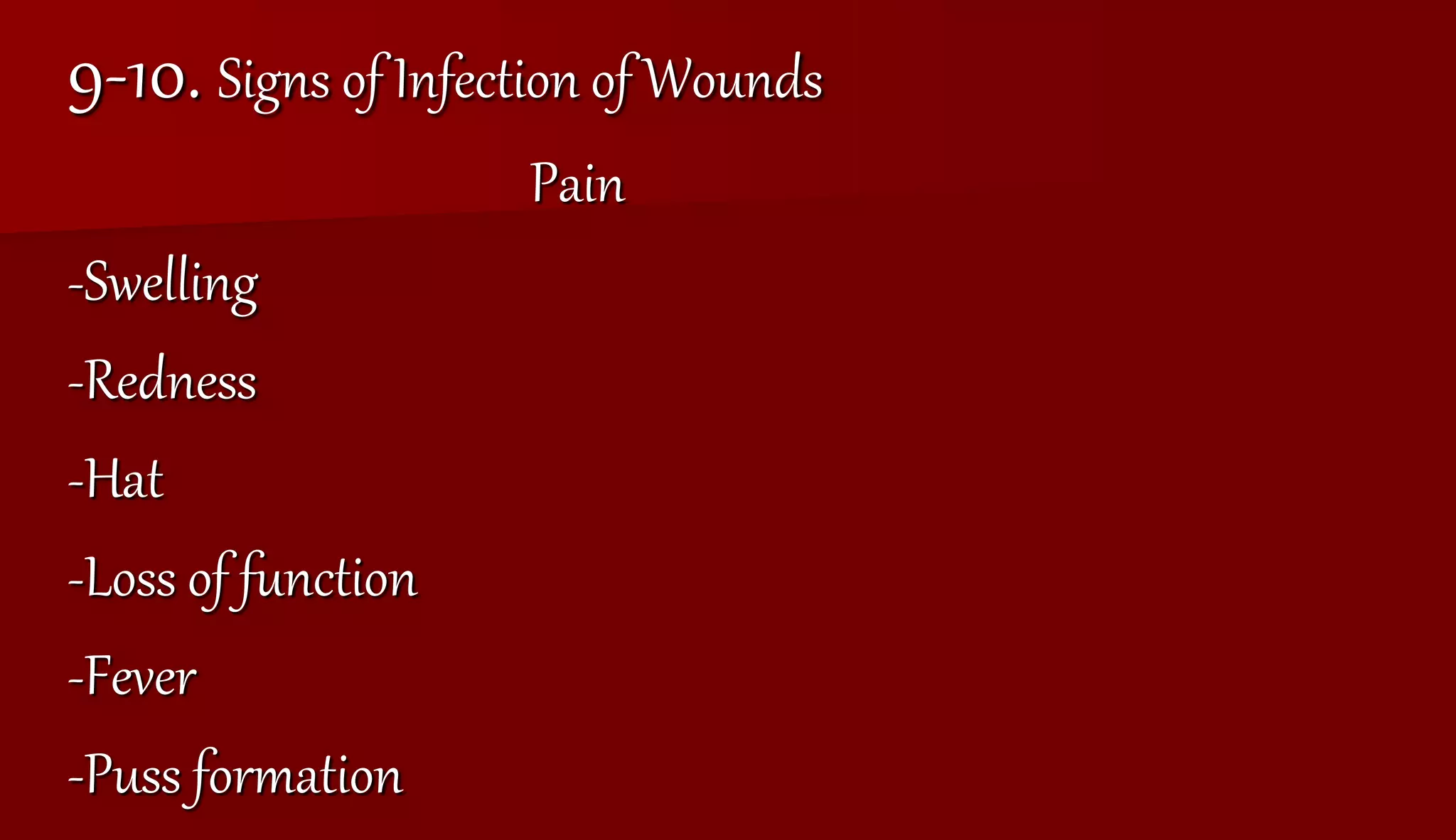
9-10. Signs of Infection of Wounds
Pain
-Swelling
-Redness
-Hat
-Loss of function
-Fever
-Puss formation

Classification of wounds

  • 1.
    A. or otherimpact, B. is cut or broken. C.typically one in which the skin D. caused by a cut, blow, E. an injury to living tissue
  • 2.
    E. an injuryto living tissue D. caused by a cut, blow, A. or other impact, C.typically one in which the skin B. is cut or broken.
  • 3.
    Wound Management Immediate treatmentshould be taken Always wear protective gloves Observe for signs of infection
  • 4.
    Signs of Infection Signsof Infection –Pain –Swelling –Redness –Heat –Loss of function –Fever –Puss formation
  • 5.
    Punctures A small holein tissue Object pierces the skin External bleeding limited Internal damage may cause bleeding caused by nails, needles and other pointed objects.
  • 6.
    Abrasions Outer layers ofskin damaged Infection can occur Bleeding is limited due to rupture of small veins and capillaries caused by rubbing or scraping the skin against a rough surface
  • 7.
    Incision Wound with smoothsides/edges Severe bleeding can exist  a cut caused by knife, broken glass or any sharp object
  • 8.
    Avulsions Forcible separation ortearing of tissue from the body Bleeding occurs immediately a forcible tearing or partial tearing away of tissues
  • 9.
    Laceration Jagged, irregular tearof soft tissue  a blunt breaking or tearing of soft tissues
  • 10.
    Blisters Develop with frictionto an area Typical to foot or hand Fluid accumulates under the skin Blood vessels broken; “blood blister” forms
  • 11.
    Blister Treatment 2 typesof treatment –Pop blister –Cover without popping
  • 12.
    Calluses Formed over aperiod of time Typically on foot or hand where bone is right underneath skin Excessive formation could be a problem
  • 13.
    First Aid forOpen Wounds with Severe Bleeding 1. Wear gloves and remove or cut clothing as necessary to expose wound. 2. Control bleeding by applying direct pressure.
  • 14.
    First Aid forOpen Wounds with Severe Bleeding 3. Elevate the injured part above the heart except for eye injury and wounds with embedded object.
  • 15.
    First Aid forOpen Wounds with Severe Bleeding 4. Cover wound with sterile dressing and bandage. 5. Care for shock. 6. Consult a physician immediately.
  • 17.
    How to ManageWounds: Rest the injured part Ice application Compression Elevation
  • 18.
  • 19.
    1. a cutcaused by knife, broken glass or any sharp object
  • 20.
    A small holein tissue Object pierces the skin caused by nails, needles and other pointed objects. 2.
  • 21.
    3. Formed overa period of time Typically on foot or hand where bone is right underneath skin Excessive formation could be a problem
  • 22.
  • 23.
  • 24.
  • 25.
    7-8. 2 types oftreatment of Blisters
  • 26.
  • 27.
    ANSWER KEY 1. INCISION 2.PUNCTURE 3. CALLUS 4.LACERATION 5. AVULSION 6. ABRASION 7. Pop blister 8. Cover w/O popping
  • 28.
    9-10. Signs ofInfection of Wounds Pain -Swelling -Redness -Hat -Loss of function -Fever -Puss formation