P R E S E N T E D B Y -
M S C . ( I ) F O R E N S I C S C I E N C E
BITE MARKS
WHAT IS A BITE MARK?
• A physical alteration in a medium caused by the
contact of teeth.
 A representative pattern left in an object or tissue
by dental structures of an animal or human.
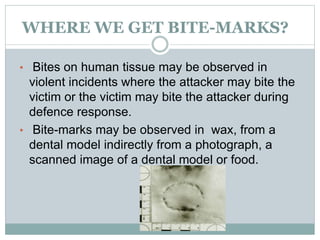
Cutaneous bite-mark
• It is an injury in skin caused by contacting teeth
which shows the representational patter of the
oral structure.
WHERE WE GET BITE-MARKS?
• Bites on human tissue may be observed in
violent incidents where the attacker may bite the
victim or the victim may bite the attacker during
defence response.
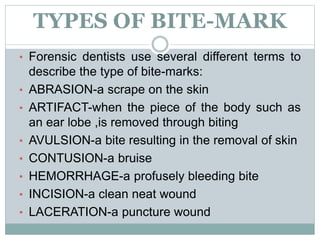
• Bite-marks may be observed in wax, from a
dental model indirectly from a photograph, a
scanned image of a dental model or food.
TYPES OF BITE-MARK
• Forensic dentists use several different terms to
describe the type of bite-marks:
• ABRASION-a scrape on the skin
• ARTIFACT-when the piece of the body such as
an ear lobe ,is removed through biting
• AVULSION-a bite resulting in the removal of skin
• CONTUSION-a bruise
• HEMORRHAGE-a profusely bleeding bite
• INCISION-a clean neat wound
• LACERATION-a puncture wound
CHARACTERISTICS OF BITE-MARK
• BITE MARKS ARE LIKE FINGERPRINTS to
forensic Odontologists.
• Teeth may be considered as tools leaving marks
on skin, food ,wax etc. However, there are often
more characteristics involved in the analysis of
bite-mark
• There are class characteristics to be considered
such as which type of tooth inflicted the bite.
• The biting surface of the individual groups of
teeth are related to their function such as teeth
that incise ,or tear, or grind.
 In addition also seen are individual
characteristics , such as rotations, fractures,
missing or extra teeth.
 The size relationship of bite-marks, as described
by the dental arches, could relate to a child or
adult bite.
 Ability to open the mouth maximally may vary
from individual to individual.
 A human bite mark may be elliptical or circular in
shape and will display specific characteristics of
teeth.
 It can be U-shaped –shows that the biter has
open the mouth to a width.
FACTORS THAT EFFECT ACCURACY
OF BITE-MARK
 Time dependent changes of the bite-mark on living
body
 Effect of where the bite –mark was found
 Damage on soft tissue
 Similarity in dentition among individuals
 OTHER FACTORS-
 Poor photography , impression , measurement of
dentition characteristics.
ANALYSIS OF BITE-MARK
 Bite-mark analysis is extremely complex, with
many factors involved in a forensic dentist's
ability to determine the identity of the perpetrator.
 The movement of a person's jaw and tongue
when he or she bites contributes to the type of
mark that is left.
 Depending on the location of the bite, it's not
typical to find bite marks where both the upper
and lower teeth left clear impressions, usually
one or the other is more visible.
 If the victim is moving while being bitten, the bite
would look different from that inflicted on a still
victim.
 If an investigator sees something on a victim that
even resembles a bite, the forensic dentist must
be called in immediately, because bite marks
change significantly over time. For example, if
the victim is deceased, the skin may slip as the
body decays, causing the bite to move.
 The first step in analyzing the bite is to identify it
as human. Animal teeth are very different from
humans teeth, so they leave very different bite-
mark patterns.
 Next, the bite is swabbed for DNA, which may
have been left in the saliva of the biter.
 Forensic dentists then take measurements of
each individual bite mark and record it.
 They also require many photographs because of
the changing nature of the bites. Bruising can
appear four hours after a bite and disappear after
36 hours.
 The bite photography must be conducted
precisely, using rulers and other scales to
accurately depict the orientation, depth and size
of the bite. The photos are then magnified,
enhanced and corrected for distortions.
 Finally, bite marks on deceased victims are cut
out from the skin in the morgue and preserved in
a compound called formalin, which contains
formaldehyde. Forensic dentists then make a
silicone cast of the bite mark.
 In addition, there are several different types of
impressions that can be left by teeth, depending
on the pressure applied by the biter. A clear
impression means that there was significant
pressure; an obvious bite signifies medium
pressure; and a noticeable impression means
that the biter used violent pressure to bite down.
FORENSIC RELEVENCE
• Bite-mark evidence can assist the justice
system to answer crucial questions about
interactions between people at the scene of a
crime .
• For individualization based on their unique
dentition pattern.
• Plays a crucial role in solving rape cases and
child abuse.
• Describe the violence level of crime.
THANK YOU!

Bitemark

  • 1.
    P R ES E N T E D B Y - M S C . ( I ) F O R E N S I C S C I E N C E BITE MARKS
  • 2.
    WHAT IS ABITE MARK? • A physical alteration in a medium caused by the contact of teeth.  A representative pattern left in an object or tissue by dental structures of an animal or human. Cutaneous bite-mark • It is an injury in skin caused by contacting teeth which shows the representational patter of the oral structure.
  • 3.
    WHERE WE GETBITE-MARKS? • Bites on human tissue may be observed in violent incidents where the attacker may bite the victim or the victim may bite the attacker during defence response. • Bite-marks may be observed in wax, from a dental model indirectly from a photograph, a scanned image of a dental model or food.
  • 4.
    TYPES OF BITE-MARK •Forensic dentists use several different terms to describe the type of bite-marks: • ABRASION-a scrape on the skin • ARTIFACT-when the piece of the body such as an ear lobe ,is removed through biting • AVULSION-a bite resulting in the removal of skin • CONTUSION-a bruise • HEMORRHAGE-a profusely bleeding bite • INCISION-a clean neat wound • LACERATION-a puncture wound
  • 5.
    CHARACTERISTICS OF BITE-MARK •BITE MARKS ARE LIKE FINGERPRINTS to forensic Odontologists. • Teeth may be considered as tools leaving marks on skin, food ,wax etc. However, there are often more characteristics involved in the analysis of bite-mark • There are class characteristics to be considered such as which type of tooth inflicted the bite. • The biting surface of the individual groups of teeth are related to their function such as teeth that incise ,or tear, or grind.
  • 6.
     In additionalso seen are individual characteristics , such as rotations, fractures, missing or extra teeth.  The size relationship of bite-marks, as described by the dental arches, could relate to a child or adult bite.  Ability to open the mouth maximally may vary from individual to individual.  A human bite mark may be elliptical or circular in shape and will display specific characteristics of teeth.  It can be U-shaped –shows that the biter has open the mouth to a width.
  • 7.
    FACTORS THAT EFFECTACCURACY OF BITE-MARK  Time dependent changes of the bite-mark on living body  Effect of where the bite –mark was found  Damage on soft tissue  Similarity in dentition among individuals  OTHER FACTORS-  Poor photography , impression , measurement of dentition characteristics.
  • 8.
    ANALYSIS OF BITE-MARK Bite-mark analysis is extremely complex, with many factors involved in a forensic dentist's ability to determine the identity of the perpetrator.  The movement of a person's jaw and tongue when he or she bites contributes to the type of mark that is left.  Depending on the location of the bite, it's not typical to find bite marks where both the upper and lower teeth left clear impressions, usually one or the other is more visible.  If the victim is moving while being bitten, the bite would look different from that inflicted on a still victim.
  • 9.
     If aninvestigator sees something on a victim that even resembles a bite, the forensic dentist must be called in immediately, because bite marks change significantly over time. For example, if the victim is deceased, the skin may slip as the body decays, causing the bite to move.  The first step in analyzing the bite is to identify it as human. Animal teeth are very different from humans teeth, so they leave very different bite- mark patterns.  Next, the bite is swabbed for DNA, which may have been left in the saliva of the biter.
  • 10.
     Forensic dentiststhen take measurements of each individual bite mark and record it.  They also require many photographs because of the changing nature of the bites. Bruising can appear four hours after a bite and disappear after 36 hours.  The bite photography must be conducted precisely, using rulers and other scales to accurately depict the orientation, depth and size of the bite. The photos are then magnified, enhanced and corrected for distortions.
  • 11.
     Finally, bitemarks on deceased victims are cut out from the skin in the morgue and preserved in a compound called formalin, which contains formaldehyde. Forensic dentists then make a silicone cast of the bite mark.  In addition, there are several different types of impressions that can be left by teeth, depending on the pressure applied by the biter. A clear impression means that there was significant pressure; an obvious bite signifies medium pressure; and a noticeable impression means that the biter used violent pressure to bite down.
  • 12.
    FORENSIC RELEVENCE • Bite-markevidence can assist the justice system to answer crucial questions about interactions between people at the scene of a crime . • For individualization based on their unique dentition pattern. • Plays a crucial role in solving rape cases and child abuse. • Describe the violence level of crime.
  • 13.