Adrenergic
system(catecholamines)
Adrenergic system or Adrenergic nervous system (ANS) is a group of
organs and nerves in which adrenaline (epinephrine) and/or
noradrenaline (norepinephrine) act as neurotransmitters. ANS is
counted as one of the main neurohormonal systems that regulate
cardiovascular function, including smooth muscle tone.
• There are closely related Endogenous catecholamines :
• Adrenaline include increasing the heart rate, increasing blood
pressure, expanding the air passages of the lungs, enlarging the pupil
in the eye , redistributing blood to the muscles and altering the
body’s metabolism, so as to maximise blood glucose levels
• Noradrenaline : act as transmitter at Postganglionic sympathetic sites
except hair follicles and sweat glands and Some vasodilator fibres
• Dopamine : Major transmitter in basal ganglia ,limbic
system,CTZ,anterior pituitary etc…
Catecholamines synthesis
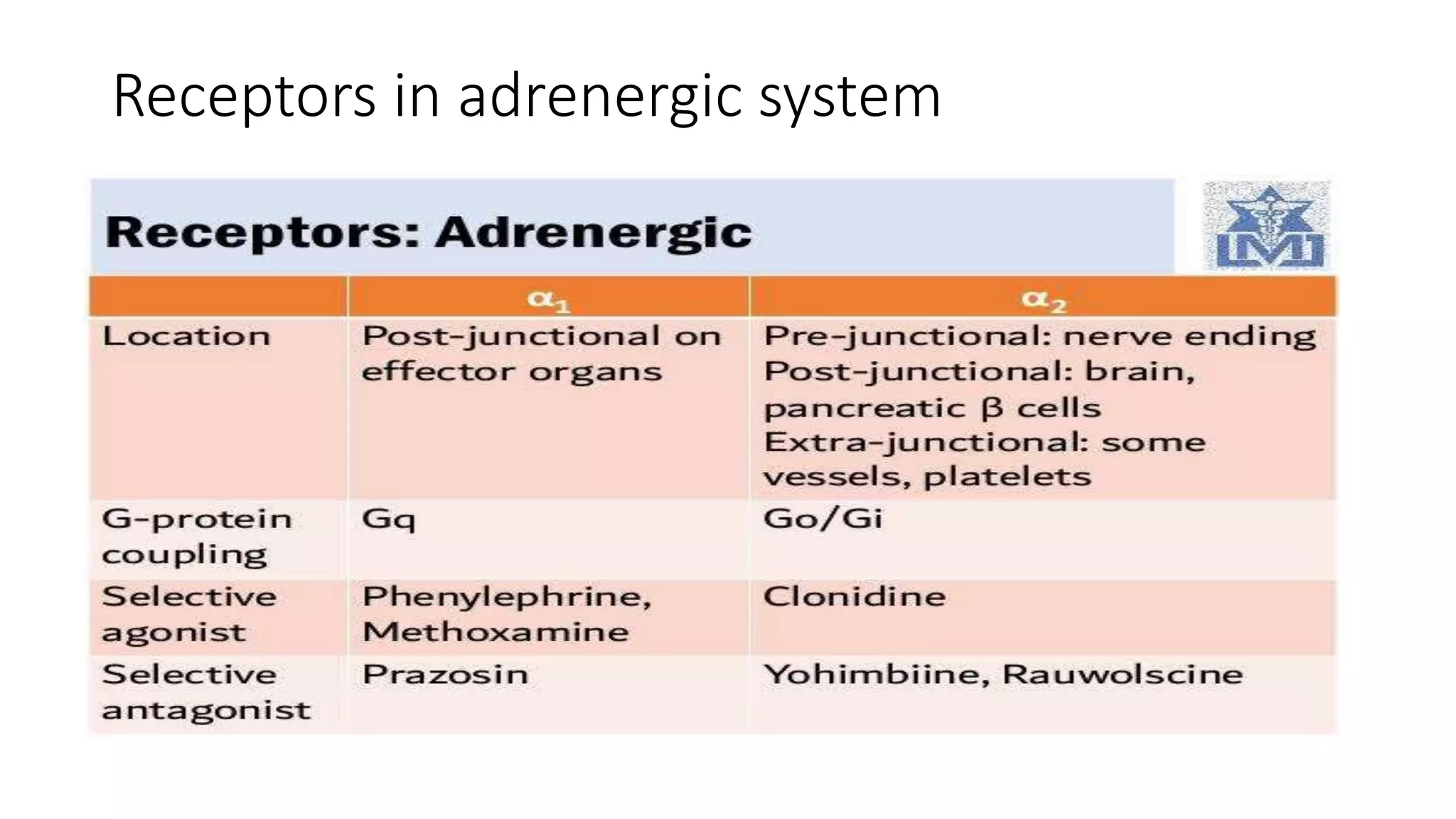
Receptors in adrenergic system
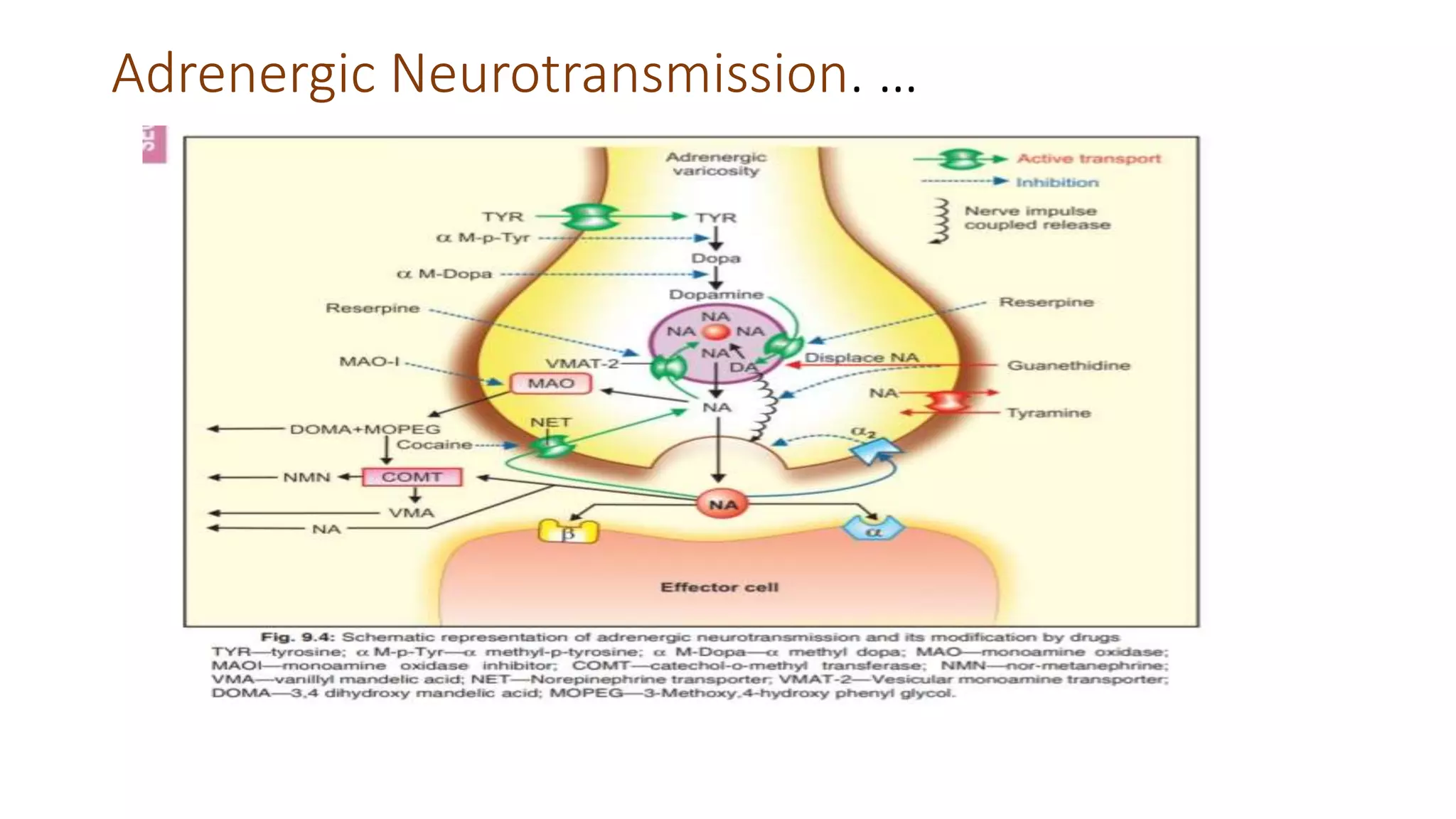
Adrenergic Neurotransmission. …
Classification
Pharmacological actions of Catecholamines
• Effects on Herat : The catecholamines increases all four effects of heart
activity. Increase of the inotropic effect causes contractility of the cardiac
muscle increasing the cardiac output by increasing the stroke volume. …
The catecholamines alter the blood pressure by altering the vascular
resistance.
• Effects on blood vessels :The catecholamines alter the blood pressure by
altering the vascular resistance. Control of the vascular resistance is
achieved through vasoconstriction and vasodilation.
• Effects on Respiration :The results of this study indicate that at control
vascular tone the catecholamines norepinephrine and epinephrine increase
pulmonary vascular resistance large doses of adrenaline produces
pulmonary oedema
• Effects on Eye :effectiveness of catecholamines in lowering ocular
tension produces mydriasis effect
• GIT : Gut relaxation.. Through activation. Of alpha and beta receptors
• Vascular resistance, and a decrease in overall blood flow to the
intestines.
• Bladder .Dtressur is relaxed act on beta.Trigone is constructed act on
alpha
• Uterus .Both contraction and relaxation By alpha and beta
• Skeletal muscle.An increase in phosphorylase a levels preceded the
tissue glycogen loss in both heart and skeletal muscle after
catecholamine administration. … Increased or decreased tissue
catecholamine levels were without effect on cardiac phosphorylase a
values. Reserpine increased the cardiac glycogen content.
• CNS .Catecholamines, including dopamine and norepinephrine, are
the principal neurotransmitters that mediate a variety of the central
nervous system functions, such as motor control, cognition, emotion,
memory processing, and endocrine modulation.
• Metabolism ……Under physiologic conditions, infusing catecholamine
is associated with enhanced rates of aerobic glycolysis (resulting in
adenosine triphosphate production), glucose release (both from
glycogenolysis and gluconeogenesis), and inhibition of insulin-
mediated glycogenesis.
• Dopamine is primarily a dopamine receptor agonist; however, at
higher doses, dopamine activates α- and β-adrenergic receptors, too.
Dopamine is administered as a continuous intravenous infusion. … At
high doses, dopamine stimulates α-adrenergic receptors in the
vasculature.Dopamine increased pulse pressure, heart rate
• Dobutamine is a synthetic catecholamine that acts on alpha-1, beta-1
and beta-2 adrenergic receptors. In the heart, the stimulation of
these receptors produces a relatively strong, additive inotropic effect
and a relatively weak chronotropic effect.
• Ephedrine is a direct and indirect sympathomimetic amine. Ephedrine
activates adrenergic α and β-receptors as well as inhibiting
norepinephrine reuptake, and increasing the release of
norepinephrine from vesicles in nerve cells.
• Amphetamines can also block the reuptake of norepinephrine,
dopamine, and serotonin. Some amphetamines increase the release
of monoamines, such as serotonin and norepinephrine
• Phenylephrine is a selective α1-adrenergic receptor agonist that
increases blood pressure mainly by increasing systemic vascular
resistance, without an associated increase in myocardial contractility
• Isoxsuprine is a phenylethylamine derivative of epinephrine and has
α-adrenergic receptor antagonistic and β-adrenergic receptor
agonistic properties that result in relaxation of vascular smooth
muscle
• Pseudoephedrine is an orally active sympathomimetic amine exerting
its decongestant action by acting directly on α-adrenergic receptors in
the respiratory tract mucosa producing vasoconstriction resulting in
shrinkage of swollen nasal mucous membranes, reduction of tissue
hyperemia, edema, and nasal congestion
• Fenfluramine acts primarily as a serotonin releasing agent. It
increases the level of serotonin, a neurotransmitter that regulates
mood, appetite and other functions. Fenfluramine causes the release
of serotonin by disrupting vesicular storage of the neurotransmitter,
and reversing serotonin transporter function.
• Anorexiants are drugs that act on the brain to suppress appetite. They
have a stimulant effect on the hypothalamic and limbic regions, which
control satiety. Anorexiants are used as therapy for obesity.
• Sibutramine is a synthetic noradrenaline, dopamine, and serotonin
reuptake inhibitor used for the treatment of obesity. FDA and
European Medicines Agency banned it because of its cardiovascular
risk
Adrenergic system
Adrenergic system

Adrenergic system

  • 1.
    Adrenergic system(catecholamines) Adrenergic system orAdrenergic nervous system (ANS) is a group of organs and nerves in which adrenaline (epinephrine) and/or noradrenaline (norepinephrine) act as neurotransmitters. ANS is counted as one of the main neurohormonal systems that regulate cardiovascular function, including smooth muscle tone.
  • 2.
    • There areclosely related Endogenous catecholamines : • Adrenaline include increasing the heart rate, increasing blood pressure, expanding the air passages of the lungs, enlarging the pupil in the eye , redistributing blood to the muscles and altering the body’s metabolism, so as to maximise blood glucose levels • Noradrenaline : act as transmitter at Postganglionic sympathetic sites except hair follicles and sweat glands and Some vasodilator fibres • Dopamine : Major transmitter in basal ganglia ,limbic system,CTZ,anterior pituitary etc…
  • 3.
  • 4.
  • 7.
  • 8.
  • 9.
    Pharmacological actions ofCatecholamines • Effects on Herat : The catecholamines increases all four effects of heart activity. Increase of the inotropic effect causes contractility of the cardiac muscle increasing the cardiac output by increasing the stroke volume. … The catecholamines alter the blood pressure by altering the vascular resistance. • Effects on blood vessels :The catecholamines alter the blood pressure by altering the vascular resistance. Control of the vascular resistance is achieved through vasoconstriction and vasodilation. • Effects on Respiration :The results of this study indicate that at control vascular tone the catecholamines norepinephrine and epinephrine increase pulmonary vascular resistance large doses of adrenaline produces pulmonary oedema
  • 10.
    • Effects onEye :effectiveness of catecholamines in lowering ocular tension produces mydriasis effect • GIT : Gut relaxation.. Through activation. Of alpha and beta receptors • Vascular resistance, and a decrease in overall blood flow to the intestines. • Bladder .Dtressur is relaxed act on beta.Trigone is constructed act on alpha • Uterus .Both contraction and relaxation By alpha and beta
  • 11.
    • Skeletal muscle.Anincrease in phosphorylase a levels preceded the tissue glycogen loss in both heart and skeletal muscle after catecholamine administration. … Increased or decreased tissue catecholamine levels were without effect on cardiac phosphorylase a values. Reserpine increased the cardiac glycogen content. • CNS .Catecholamines, including dopamine and norepinephrine, are the principal neurotransmitters that mediate a variety of the central nervous system functions, such as motor control, cognition, emotion, memory processing, and endocrine modulation.
  • 12.
    • Metabolism ……Underphysiologic conditions, infusing catecholamine is associated with enhanced rates of aerobic glycolysis (resulting in adenosine triphosphate production), glucose release (both from glycogenolysis and gluconeogenesis), and inhibition of insulin- mediated glycogenesis.
  • 13.
    • Dopamine isprimarily a dopamine receptor agonist; however, at higher doses, dopamine activates α- and β-adrenergic receptors, too. Dopamine is administered as a continuous intravenous infusion. … At high doses, dopamine stimulates α-adrenergic receptors in the vasculature.Dopamine increased pulse pressure, heart rate • Dobutamine is a synthetic catecholamine that acts on alpha-1, beta-1 and beta-2 adrenergic receptors. In the heart, the stimulation of these receptors produces a relatively strong, additive inotropic effect and a relatively weak chronotropic effect. • Ephedrine is a direct and indirect sympathomimetic amine. Ephedrine activates adrenergic α and β-receptors as well as inhibiting norepinephrine reuptake, and increasing the release of norepinephrine from vesicles in nerve cells.
  • 14.
    • Amphetamines canalso block the reuptake of norepinephrine, dopamine, and serotonin. Some amphetamines increase the release of monoamines, such as serotonin and norepinephrine • Phenylephrine is a selective α1-adrenergic receptor agonist that increases blood pressure mainly by increasing systemic vascular resistance, without an associated increase in myocardial contractility • Isoxsuprine is a phenylethylamine derivative of epinephrine and has α-adrenergic receptor antagonistic and β-adrenergic receptor agonistic properties that result in relaxation of vascular smooth muscle • Pseudoephedrine is an orally active sympathomimetic amine exerting its decongestant action by acting directly on α-adrenergic receptors in the respiratory tract mucosa producing vasoconstriction resulting in shrinkage of swollen nasal mucous membranes, reduction of tissue hyperemia, edema, and nasal congestion
  • 15.
    • Fenfluramine actsprimarily as a serotonin releasing agent. It increases the level of serotonin, a neurotransmitter that regulates mood, appetite and other functions. Fenfluramine causes the release of serotonin by disrupting vesicular storage of the neurotransmitter, and reversing serotonin transporter function. • Anorexiants are drugs that act on the brain to suppress appetite. They have a stimulant effect on the hypothalamic and limbic regions, which control satiety. Anorexiants are used as therapy for obesity. • Sibutramine is a synthetic noradrenaline, dopamine, and serotonin reuptake inhibitor used for the treatment of obesity. FDA and European Medicines Agency banned it because of its cardiovascular risk