BIOMEDICAL WASTE
MANAGEMENT
Saleem.Sayed,
Final year part-I,
Preventive Social Medicine,
NIMRA INSTITUTE OF MEDICAL SCIENCES.
Saleemsayed092@gmail.com
DEFINITION
According to Bio-medical Waste(Management and Handling )
Rules, 1998 of India, Bio-medical Waste means –
2
“Any waste, which is generated during the diagnosis ,
treatment or immunization of human being or animal, or in
research activity or testing of biologicals, and including
categories as mentioned in schedule I.”
• Medical care is vital for our life, health and well being.
• But the waste generated from medical activities can be
hazardous, toxic and even lethal.
• Its contaminate other nonhazardous municipal waste and cause
failure of measures taken for overall municipal waste
management.
• In the absence of reliable data, it is difficult to quantify the
dimension of the problem.
Let the waste of the “sick”
not contaminate the lives of
“The Healthy”
Government/private hospitals
Nursing homes
Physician/dentist or clinic
Primary health care centers
Medical research & training centers
Labs / research organizations
Vaccinating centers
Bio tech institutions
Sources of health care waste:
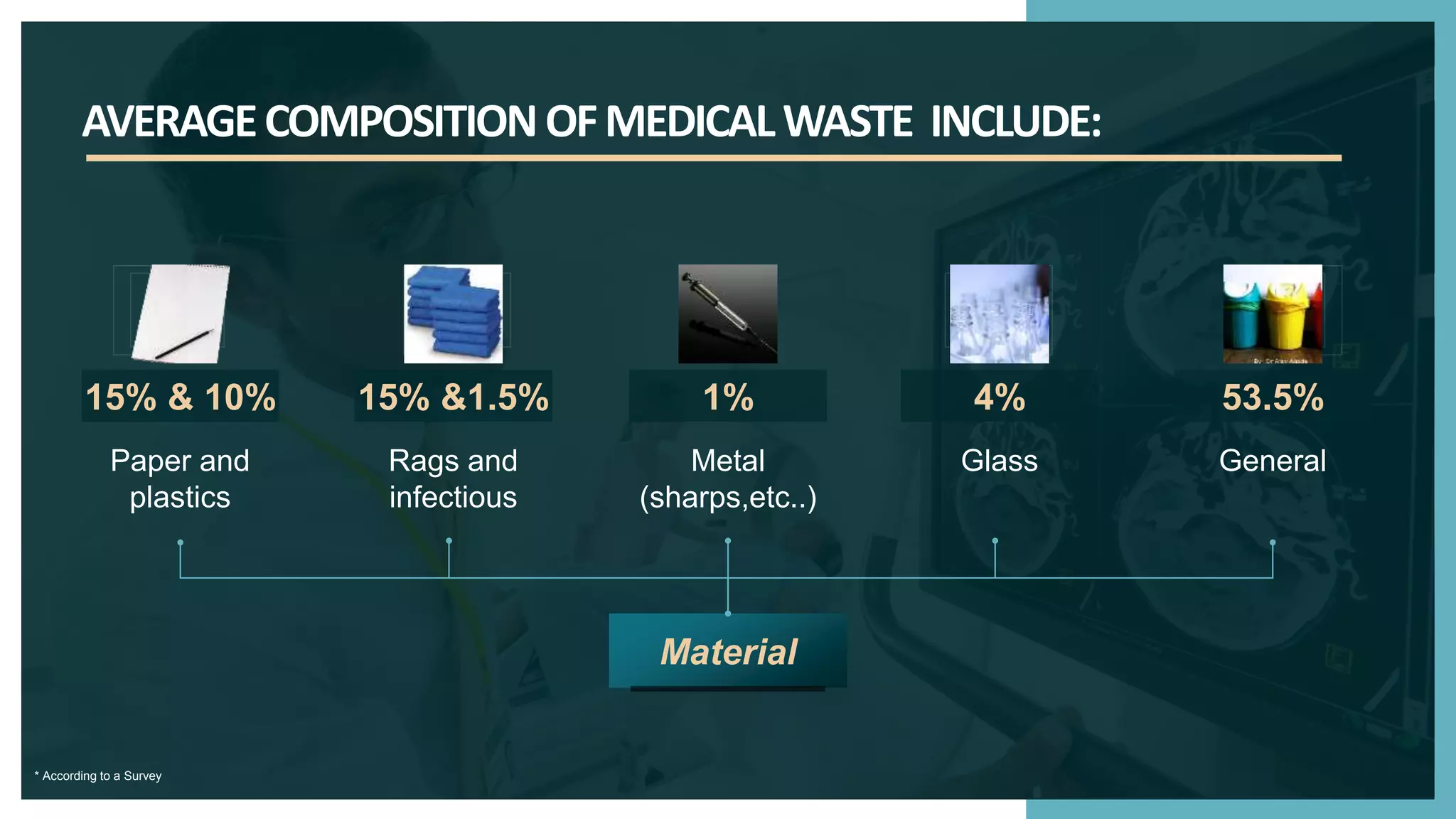
AVERAGECOMPOSITIONOFMEDICALWASTE INCLUDE:
* According to a Survey
15% & 10%
Paper and
plastics
15% &1.5%
Rags and
infectious
1%
Metal
(sharps,etc..)
4%
Glass
53.5%
General
Material
85%
• of the hospital wastes
are nonhazardous.
10%
• are infective (hence,
hazardous), and
5%
• are non-infectious but
hazardous
According to a WHO report :
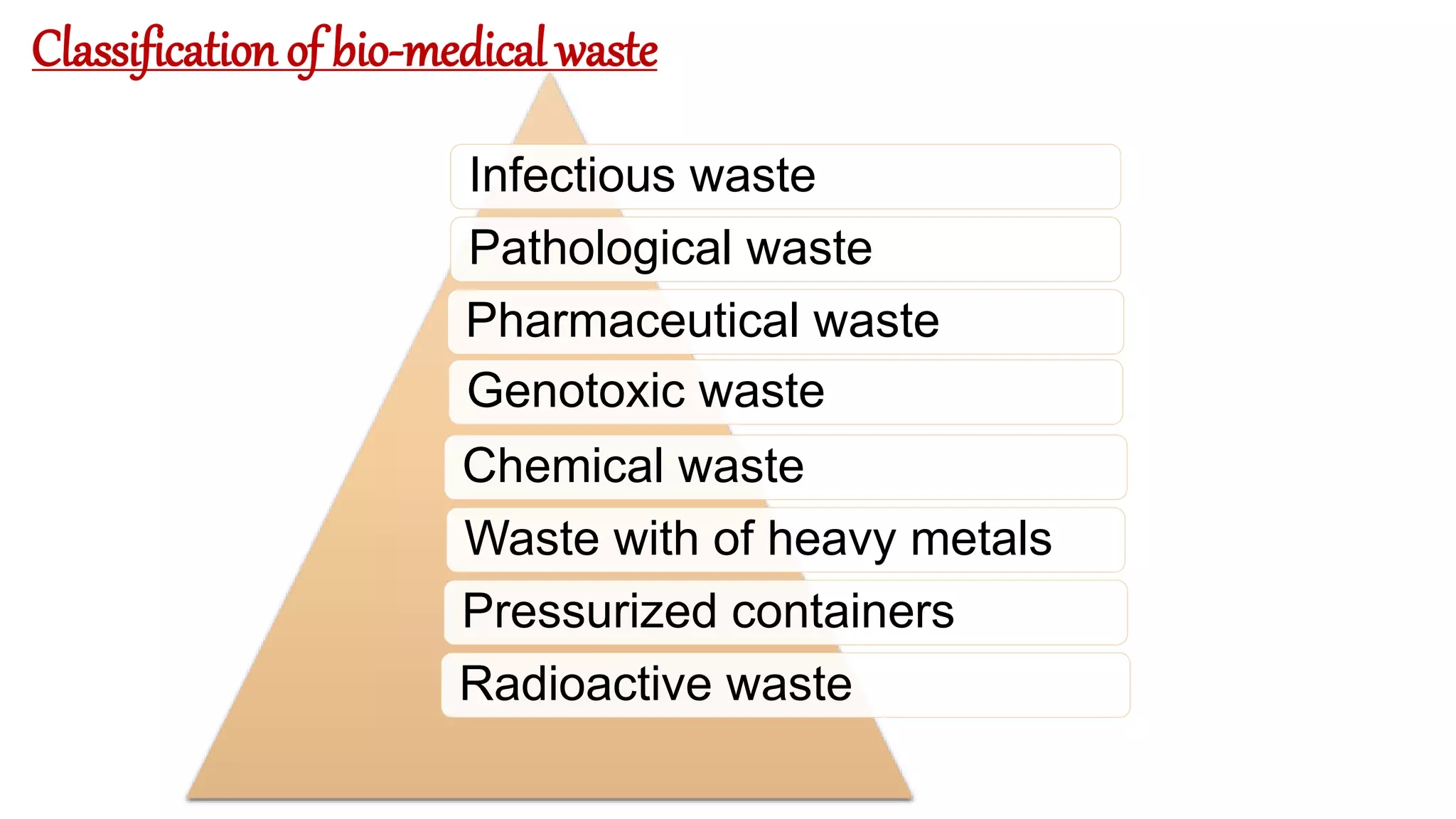
Classification of bio-medical waste
Infectious waste
Pathological waste
Pharmaceutical waste
Genotoxic waste
Chemical waste
Waste with of heavy metals
Pressurized containers
Radioactive waste
2.Pathological waste-
• Lab cultures, tissues, swabs,
equipments and excreta.
• Human tissue or fluids e.g.
body parts, blood, other body
fluids.
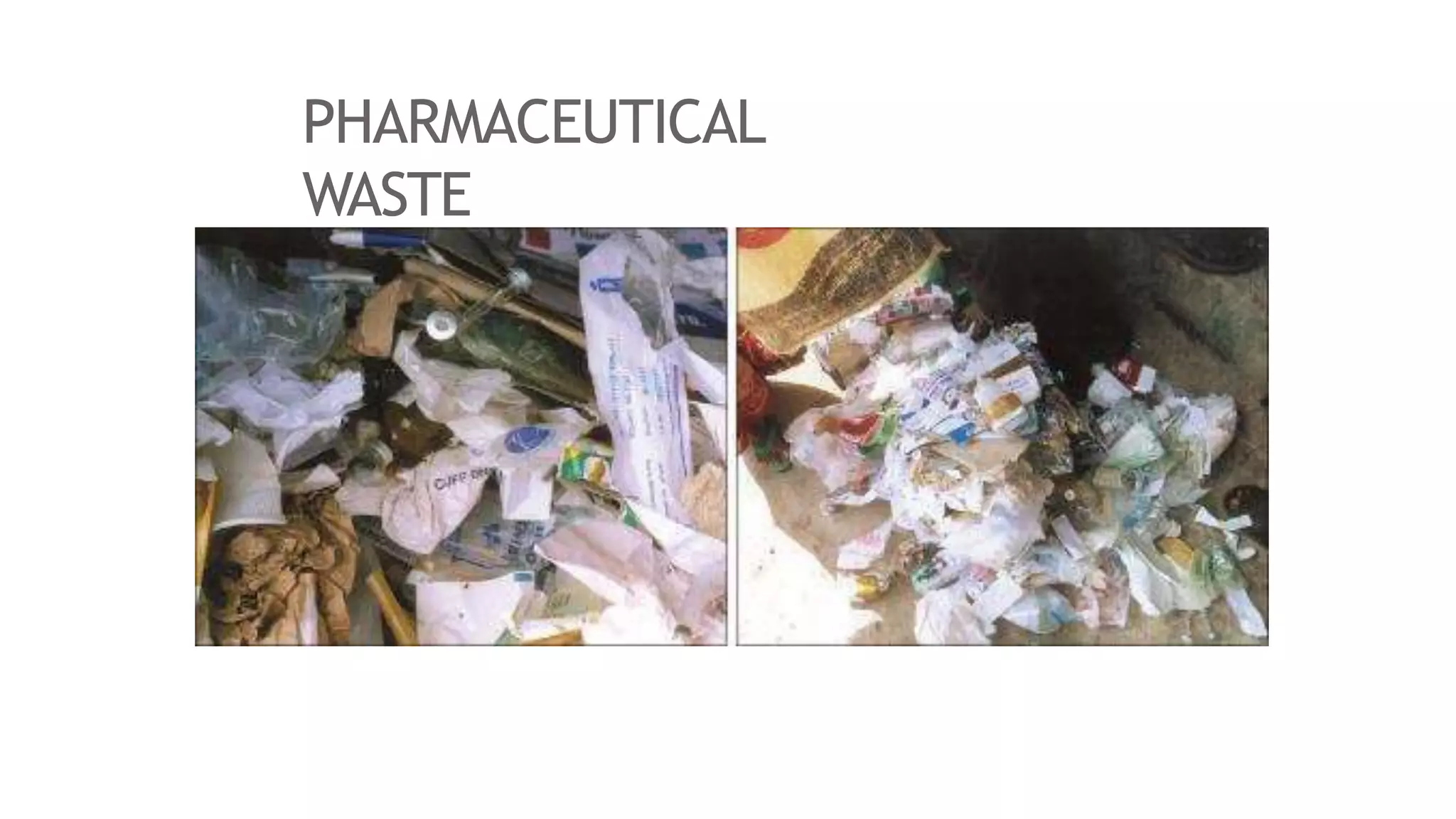
3. pharmaceutical waste
1.Infectious waste-
• Expired and contaminated
medicines
PATHOLOGICAL
WASTE
PHARMACEUTICAL
WASTE
5.Chemical waste-
6.Waste with heavy metals-
• Cytotoxic drugs, genotoxic
chemicals.
• Expired Lab reagents, film developer,
disinfectants.
• Batteries, broken thermometers.
4.Genotoxic waste-
GENOTOXIC WASTE
WASTE CONTAINING HEAVY METALS
8.Radioactivewaste- Unusedliquidinradiotherapy or
labresearch.
7.Pressurizedcontainers- Gas cylinders, gas cartridges.
RADIOACTIVE WASTEPRESSURISED CONTAINERS
17
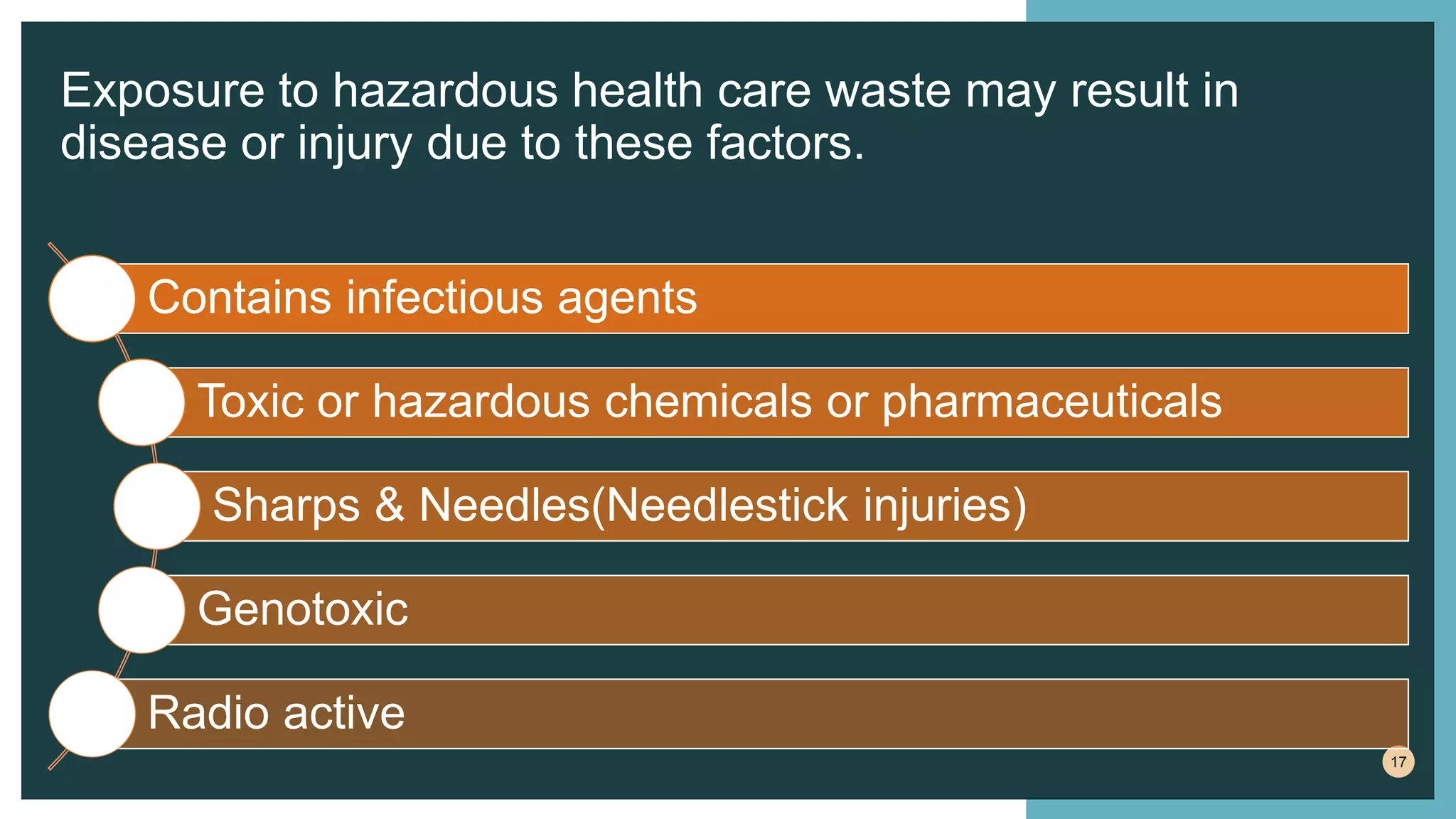
Contains infectious agents
Toxic or hazardous chemicals or pharmaceuticals
Sharps & Needles(Needlestick injuries)
Genotoxic
Radio active
Exposure to hazardous health care waste may result in
disease or injury due to these factors.
Health hazards of health care waste
Infectious wastes
and sharps.
Hazards from
chemical and
pharmaceutical
waste
Hazards from
genotoxic waste
Hazards from radio
active waste
Public sensitivity
Hazards of biomedical waste
1. Infectious wastes and sharps cause transmission of
infections like
• HIV, Hepatitis B ,C.
2. Chemical and Pharma waste are:
• toxic, corrosive, flammable, reactive, shock sensitive.
• 3. Genotoxic and Radioactive wastes are responsible for
• headache , nausea and vomiting , skinreactions & malignancies.
With a judicious planning and management,
However,
the risk can be considerably reduced.
THANK
YOU

Biomedical waste management

  • 1.
    BIOMEDICAL WASTE MANAGEMENT Saleem.Sayed, Final yearpart-I, Preventive Social Medicine, NIMRA INSTITUTE OF MEDICAL SCIENCES. Saleemsayed092@gmail.com
  • 2.
    DEFINITION According to Bio-medicalWaste(Management and Handling ) Rules, 1998 of India, Bio-medical Waste means – 2 “Any waste, which is generated during the diagnosis , treatment or immunization of human being or animal, or in research activity or testing of biologicals, and including categories as mentioned in schedule I.”
  • 3.
    • Medical careis vital for our life, health and well being. • But the waste generated from medical activities can be hazardous, toxic and even lethal. • Its contaminate other nonhazardous municipal waste and cause failure of measures taken for overall municipal waste management. • In the absence of reliable data, it is difficult to quantify the dimension of the problem.
  • 4.
    Let the wasteof the “sick” not contaminate the lives of “The Healthy”
  • 5.
    Government/private hospitals Nursing homes Physician/dentistor clinic Primary health care centers Medical research & training centers Labs / research organizations Vaccinating centers Bio tech institutions Sources of health care waste:
  • 6.
    AVERAGECOMPOSITIONOFMEDICALWASTE INCLUDE: * Accordingto a Survey 15% & 10% Paper and plastics 15% &1.5% Rags and infectious 1% Metal (sharps,etc..) 4% Glass 53.5% General Material
  • 7.
    85% • of thehospital wastes are nonhazardous. 10% • are infective (hence, hazardous), and 5% • are non-infectious but hazardous According to a WHO report :
  • 8.
    Classification of bio-medicalwaste Infectious waste Pathological waste Pharmaceutical waste Genotoxic waste Chemical waste Waste with of heavy metals Pressurized containers Radioactive waste
  • 9.
    2.Pathological waste- • Labcultures, tissues, swabs, equipments and excreta. • Human tissue or fluids e.g. body parts, blood, other body fluids. 3. pharmaceutical waste 1.Infectious waste- • Expired and contaminated medicines
  • 10.
  • 11.
  • 12.
    5.Chemical waste- 6.Waste withheavy metals- • Cytotoxic drugs, genotoxic chemicals. • Expired Lab reagents, film developer, disinfectants. • Batteries, broken thermometers. 4.Genotoxic waste-
  • 13.
  • 14.
  • 15.
  • 16.
  • 17.
    17 Contains infectious agents Toxicor hazardous chemicals or pharmaceuticals Sharps & Needles(Needlestick injuries) Genotoxic Radio active Exposure to hazardous health care waste may result in disease or injury due to these factors.
  • 18.
    Health hazards ofhealth care waste Infectious wastes and sharps. Hazards from chemical and pharmaceutical waste Hazards from genotoxic waste Hazards from radio active waste Public sensitivity
  • 19.
    Hazards of biomedicalwaste 1. Infectious wastes and sharps cause transmission of infections like • HIV, Hepatitis B ,C. 2. Chemical and Pharma waste are: • toxic, corrosive, flammable, reactive, shock sensitive. • 3. Genotoxic and Radioactive wastes are responsible for • headache , nausea and vomiting , skinreactions & malignancies.
  • 20.
    With a judiciousplanning and management, However, the risk can be considerably reduced.
  • 21.