BIOMEDICAL WASTE
MANAGEMENT
DEFINITION
 “Biomedical Waste Management" means any waste
which is generated during the diagnosis, treatment or
immunization of human beings or animals or in
research activities pertaining to there or in the
production or testing of biological, infection,
pathological, sharps, pharmaceuticals, genotoxic,
chemical, and radioactive wastes”.
 According to Roles, 1998 of India; In simple words
biomedical waste is the waste generated by the
medical and health care institutes or agencies
Importance of Biomedical
Waste Management
 Management of biomedical waste is very important to
protect and maintain hygienic environment. Now-a-
days air/environment pollution is on rise. Every effort
is being taken by government biomedical waste.
 Promotes the health of human beings and other living
creatures. As biomedical waste contributes infection
(HIV, Hep-B infection, T.B)
 It is very important to dispose of biomedical waste in
right way to prevent hazards to human beings and
other living organisms
 As biomedical waste management rules are notified by
government on time to time (1998), Biomedical waste
management become a statutory legal obligation
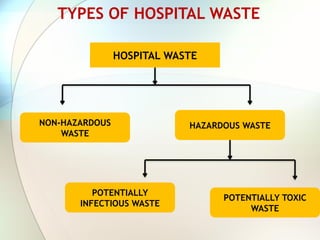
TYPES OF HOSPITAL WASTE
HOSPITAL WASTE
NON-HAZARDOUS
WASTE
HAZARDOUS WASTE
POTENTIALLY
INFECTIOUS WASTE
POTENTIALLY TOXIC
WASTE
The hospital waste consists of non-
hazardous and hazardous waste.
The hazardous waste consists of potentially
infections waste and potentially toxic
waste.
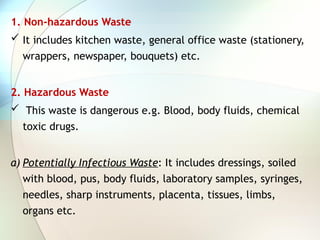
1. Non-hazardous Waste
 It includes kitchen waste, general office waste (stationery,
wrappers, newspaper, bouquets) etc.
2. Hazardous Waste
 This waste is dangerous e.g. Blood, body fluids, chemical
toxic drugs.
a) Potentially Infectious Waste: It includes dressings, soiled
with blood, pus, body fluids, laboratory samples, syringes,
needles, sharp instruments, placenta, tissues, limbs,
organs etc.
b) Potentially Toxic Waste: It includes radioactive waste
(solids, liquids), chemical waste (toxics, corrosive,
inflammable), pharmaceutical waste (expired drugs).
CATEGORY OF WASTE
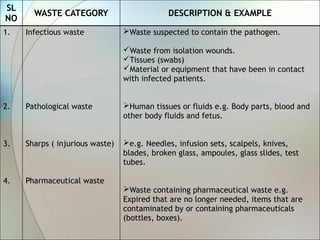
SL
NO
WASTE CATEGORY DESCRIPTION & EXAMPLE
1.
2.
3.
4.
Infectious waste
Pathological waste
Sharps ( injurious waste)
Pharmaceutical waste
Waste suspected to contain the pathogen.
Waste from isolation wounds.
Tissues (swabs)
Material or equipment that have been in contact
with infected patients.
Human tissues or fluids e.g. Body parts, blood and
other body fluids and fetus.
e.g. Needles, infusion sets, scalpels, knives,
blades, broken glass, ampoules, glass slides, test
tubes.
Waste containing pharmaceutical waste e.g.
Expired that are no longer needed, items that are
contaminated by or containing pharmaceuticals
(bottles, boxes).
SL
NO
WASTE CATEGORY DESCRIPTION & EXAMPLE
5.
6.
7.
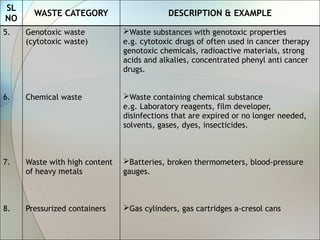
8.
Genotoxic waste
(cytotoxic waste)
Chemical waste
Waste with high content
of heavy metals
Pressurized containers
Waste substances with genotoxic properties
e.g. cytotoxic drugs of often used in cancer therapy
genotoxic chemicals, radioactive materials, strong
acids and alkalies, concentrated phenyl anti cancer
drugs.
Waste containing chemical substance
e.g. Laboratory reagents, film developer,
disinfections that are expired or no longer needed,
solvents, gases, dyes, insecticides.
Batteries, broken thermometers, blood-pressure
gauges.
Gas cylinders, gas cartridges a-cresol cans
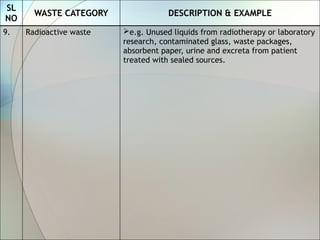
SL
NO
WASTE CATEGORY DESCRIPTION & EXAMPLE
9. Radioactive waste e.g. Unused liquids from radiotherapy or laboratory
research, contaminated glass, waste packages,
absorbent paper, urine and excreta from patient
treated with sealed sources.

BIOMEDICAL WASTE MANAGEMENT ppt nursing ppt slideshow SlideShare

  • 1.
  • 2.
    DEFINITION  “Biomedical WasteManagement" means any waste which is generated during the diagnosis, treatment or immunization of human beings or animals or in research activities pertaining to there or in the production or testing of biological, infection, pathological, sharps, pharmaceuticals, genotoxic, chemical, and radioactive wastes”.  According to Roles, 1998 of India; In simple words biomedical waste is the waste generated by the medical and health care institutes or agencies
  • 3.
    Importance of Biomedical WasteManagement  Management of biomedical waste is very important to protect and maintain hygienic environment. Now-a- days air/environment pollution is on rise. Every effort is being taken by government biomedical waste.  Promotes the health of human beings and other living creatures. As biomedical waste contributes infection (HIV, Hep-B infection, T.B)
  • 4.
     It isvery important to dispose of biomedical waste in right way to prevent hazards to human beings and other living organisms  As biomedical waste management rules are notified by government on time to time (1998), Biomedical waste management become a statutory legal obligation
  • 5.
    TYPES OF HOSPITALWASTE HOSPITAL WASTE NON-HAZARDOUS WASTE HAZARDOUS WASTE POTENTIALLY INFECTIOUS WASTE POTENTIALLY TOXIC WASTE
  • 6.
    The hospital wasteconsists of non- hazardous and hazardous waste. The hazardous waste consists of potentially infections waste and potentially toxic waste.
  • 7.
    1. Non-hazardous Waste It includes kitchen waste, general office waste (stationery, wrappers, newspaper, bouquets) etc. 2. Hazardous Waste  This waste is dangerous e.g. Blood, body fluids, chemical toxic drugs. a) Potentially Infectious Waste: It includes dressings, soiled with blood, pus, body fluids, laboratory samples, syringes, needles, sharp instruments, placenta, tissues, limbs, organs etc.
  • 8.
    b) Potentially ToxicWaste: It includes radioactive waste (solids, liquids), chemical waste (toxics, corrosive, inflammable), pharmaceutical waste (expired drugs).
  • 9.
  • 10.
    SL NO WASTE CATEGORY DESCRIPTION& EXAMPLE 1. 2. 3. 4. Infectious waste Pathological waste Sharps ( injurious waste) Pharmaceutical waste Waste suspected to contain the pathogen. Waste from isolation wounds. Tissues (swabs) Material or equipment that have been in contact with infected patients. Human tissues or fluids e.g. Body parts, blood and other body fluids and fetus. e.g. Needles, infusion sets, scalpels, knives, blades, broken glass, ampoules, glass slides, test tubes. Waste containing pharmaceutical waste e.g. Expired that are no longer needed, items that are contaminated by or containing pharmaceuticals (bottles, boxes).
  • 11.
    SL NO WASTE CATEGORY DESCRIPTION& EXAMPLE 5. 6. 7. 8. Genotoxic waste (cytotoxic waste) Chemical waste Waste with high content of heavy metals Pressurized containers Waste substances with genotoxic properties e.g. cytotoxic drugs of often used in cancer therapy genotoxic chemicals, radioactive materials, strong acids and alkalies, concentrated phenyl anti cancer drugs. Waste containing chemical substance e.g. Laboratory reagents, film developer, disinfections that are expired or no longer needed, solvents, gases, dyes, insecticides. Batteries, broken thermometers, blood-pressure gauges. Gas cylinders, gas cartridges a-cresol cans
  • 12.
    SL NO WASTE CATEGORY DESCRIPTION& EXAMPLE 9. Radioactive waste e.g. Unused liquids from radiotherapy or laboratory research, contaminated glass, waste packages, absorbent paper, urine and excreta from patient treated with sealed sources.