Good afternoon
BIOLOGY PROJECT
RESPIRATION
S.Hari krishnaa
X-C
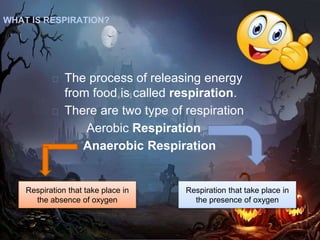
WHAT IS RESPIRATION?
� The process of releasing energy
from food is called respiration.
� There are two type of respiration
Aerobic Respiration
Anaerobic Respiration
Respiration that take place in
the presence of oxygen
Respiration that take place in
the absence of oxygen
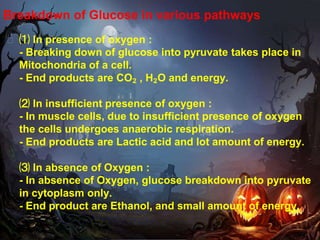
Breakdown of Glucose in various pathways
� ⑴ In presence of oxygen :
- Breaking down of glucose into pyruvate takes place in
Mitochondria of a cell.
- End products are CO₂ , H₂O and energy.
⑵ In insufficient presence of oxygen :
- In muscle cells, due to insufficient presence of oxygen
the cells undergoes anaerobic respiration.
- End products are Lactic acid and lot amount of energy.
⑶ In absence of Oxygen :
- In absence of Oxygen, glucose breakdown into pyruvate
in cytoplasm only.
- End product are Ethanol, and small amount of energy.
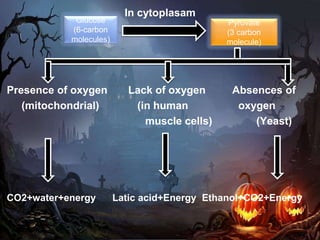
Glucose
(6-carbon
molecules)
In cytoplasam
Presence of oxygen Lack of oxygen Absences of
(mitochondrial) (in human oxygen
muscle cells) (Yeast)
CO2+water+energy Latic acid+Energy Ethanol+CO2+Energy
Pyruvate
(3 carbon
molecule)
Respiration in animals:-
What is the Respiratory System?
� inhaling of oxygen and exhaling of
carbon dioxide is called respiration.
� The human being use respiratory
system for the process of respiration.
� The human respiratory system consists
of a group of organs and tissues that
help us to breathe.
� Lungs are the primary organs of the
respiratory system which help in the
exchange of gases.
ABOUT RESPIRATORY SYSTEM
� In Human being air is taken into the body through the
nostrils.
� The air passing through the nostrils is filtered by fine
hairs.then the air passes through the throat and into the
lungs.
� Rings of cartilage are present in the throat which ensures
that the air-passage does not collapse.
� In lungs the passage divides into smaller and smaller
tubes finally terminate in balloon-like structure it is called
alveoil.
� The alveoile provide the surface where the exchange of
gases take place.The wall of aveoile contain an extensive
network of blood vessels.
� When we breathe in,chest cavity becomes large due to
lifting of our ribs and flattening of diaphragm.
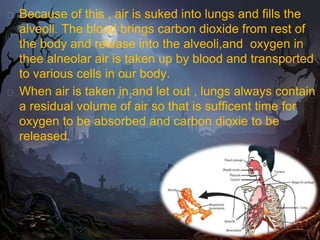
� Because of this , air is suked into lungs and fills the
alveoli. The blood brings carbon dioxide from rest of
the body and release into the alveoli,and oxygen in
thee alneolar air is taken up by blood and transported
to various cells in our body.
� When air is taken in and let out , lungs always contain
a residual volume of air so that is sufficent time for
oxygen to be absorbed and carbon dioxie to be
released.
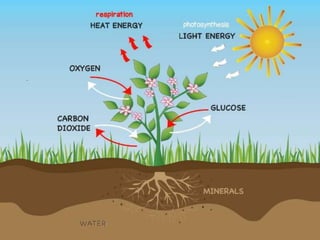
Respiration in plants:-
Biology project
Biology project

Biology project

  • 1.
  • 2.
    WHAT IS RESPIRATION? �The process of releasing energy from food is called respiration. � There are two type of respiration Aerobic Respiration Anaerobic Respiration Respiration that take place in the presence of oxygen Respiration that take place in the absence of oxygen
  • 3.
    Breakdown of Glucosein various pathways � ⑴ In presence of oxygen : - Breaking down of glucose into pyruvate takes place in Mitochondria of a cell. - End products are CO₂ , H₂O and energy. ⑵ In insufficient presence of oxygen : - In muscle cells, due to insufficient presence of oxygen the cells undergoes anaerobic respiration. - End products are Lactic acid and lot amount of energy. ⑶ In absence of Oxygen : - In absence of Oxygen, glucose breakdown into pyruvate in cytoplasm only. - End product are Ethanol, and small amount of energy.
  • 4.
    Glucose (6-carbon molecules) In cytoplasam Presence ofoxygen Lack of oxygen Absences of (mitochondrial) (in human oxygen muscle cells) (Yeast) CO2+water+energy Latic acid+Energy Ethanol+CO2+Energy Pyruvate (3 carbon molecule)
  • 5.
    Respiration in animals:- Whatis the Respiratory System? � inhaling of oxygen and exhaling of carbon dioxide is called respiration. � The human being use respiratory system for the process of respiration. � The human respiratory system consists of a group of organs and tissues that help us to breathe. � Lungs are the primary organs of the respiratory system which help in the exchange of gases.
  • 6.
    ABOUT RESPIRATORY SYSTEM �In Human being air is taken into the body through the nostrils. � The air passing through the nostrils is filtered by fine hairs.then the air passes through the throat and into the lungs. � Rings of cartilage are present in the throat which ensures that the air-passage does not collapse. � In lungs the passage divides into smaller and smaller tubes finally terminate in balloon-like structure it is called alveoil. � The alveoile provide the surface where the exchange of gases take place.The wall of aveoile contain an extensive network of blood vessels. � When we breathe in,chest cavity becomes large due to lifting of our ribs and flattening of diaphragm.
  • 7.
    � Because ofthis , air is suked into lungs and fills the alveoli. The blood brings carbon dioxide from rest of the body and release into the alveoli,and oxygen in thee alneolar air is taken up by blood and transported to various cells in our body. � When air is taken in and let out , lungs always contain a residual volume of air so that is sufficent time for oxygen to be absorbed and carbon dioxie to be released.
  • 8.