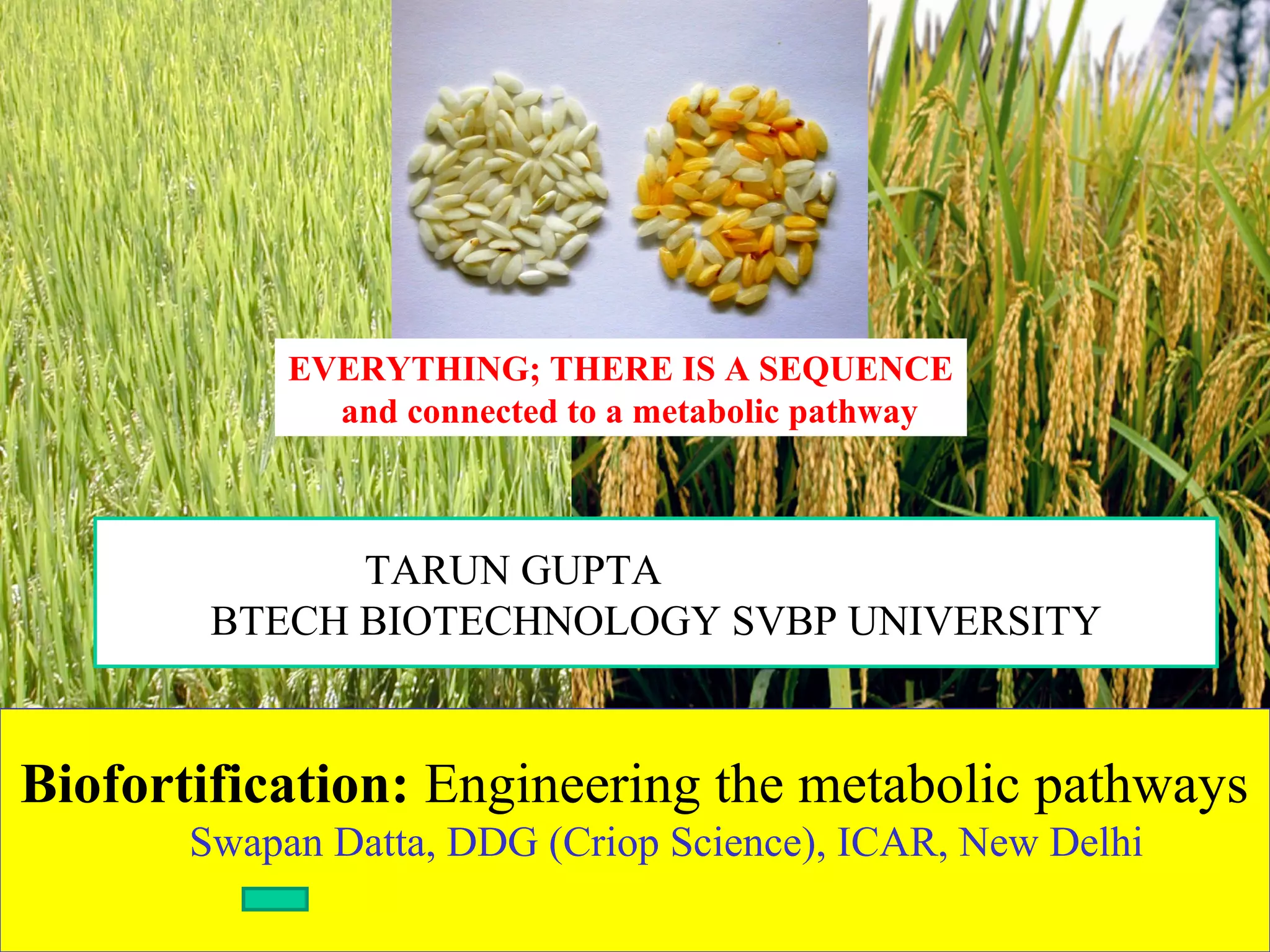
Biofortification: Engineering the metabolic pathways
Swapan Datta, DDG (Criop Science), ICAR, New Delhi
EVERYTHING; THERE IS A SEQUENCE
and connected to a metabolic pathway
TARUN GUPTA
BTECH BIOTECHNOLOGY SVBP UNIVERSITY
Nutrition enriched food crop:
Engineering metabolic pathways
• Importance of Nutrition Rice
• Why genetic engineering to alter the pathways?
• What and how do we understand the pathways
• Can pathways relate to functional gene
expression?
• Plant breeding, Cross-talk and phenotyping
• Dream Nutrition-Rice
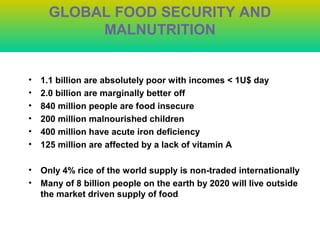
GLOBAL FOOD SECURITY AND
MALNUTRITION
• 1.1 billion are absolutely poor with incomes < 1U$ day
• 2.0 billion are marginally better off
• 840 million people are food insecure
• 200 million malnourished children
• 400 million have acute iron deficiency
• 125 million are affected by a lack of vitamin A
• Only 4% rice of the world supply is non-traded internationally
• Many of 8 billion people on the earth by 2020 will live outside
the market driven supply of food
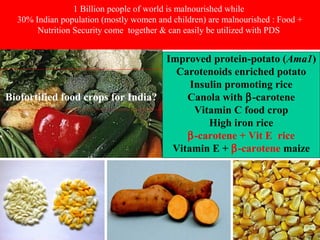
1 Billion people of world is malnourished while
30% Indian population (mostly women and children) are malnourished : Food +
Nutrition Security come together & can easily be utilized with PDS
Improved protein-potato (Ama1)
Carotenoids enriched potato
Insulin promoting rice
Canola with β-carotene
Vitamin C food crop
High iron rice
β-carotene + Vit E rice
Vitamin E + β-carotene maize
Biofortified food crops for India?
0
10
20
30
40
50
60
70
80
90
C
am
bodiaM
yanm
ar
Laos
B
angladeshVietN
amIndonesiaThailandSriLanka
Philippines
N
epal
India
K
orea
D
P
R
p
K
orea
R
epM
alaysia
C
hina
Japan
AfghanistanPakistan
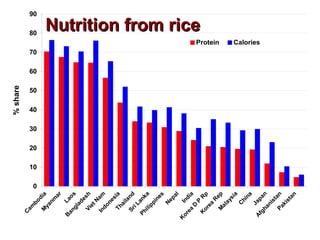
%share
Protein Calories
Nutrition from riceNutrition from rice
Lutein Zeaxanthin
GGPP β-carotene biosynthesis
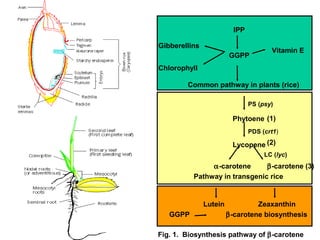
Pathway in transgenic rice
α-carotene β-carotene (3)
LC (lyc)
PDS (crt1)
PS (psy)
(1)
(2)
Phytoene
Lycopene
Vitamin E
Gibberellins
Chlorophyll
IPP
GGPP
Common pathway in plants (rice)
Fig. 1. Biosynthesis pathway of β-carotene
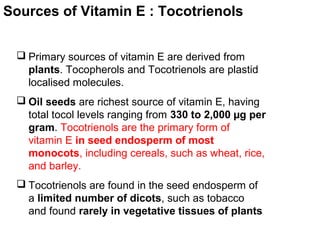
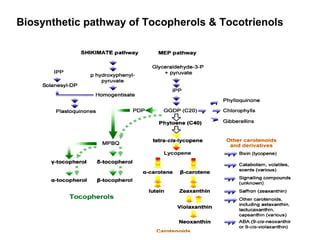
Sources of Vitamin E : Tocotrienols
 Primary sources of vitamin E are derived from
plants. Tocopherols and Tocotrienols are plastid
localised molecules.
 Oil seeds are richest source of vitamin E, having
total tocol levels ranging from 330 to 2,000 µg per
gram. Tocotrienols are the primary form of
vitamin E in seed endosperm of most
monocots, including cereals, such as wheat, rice,
and barley.
 Tocotrienols are found in the seed endosperm of
a limited number of dicots, such as tobacco
and found rarely in vegetative tissues of plants
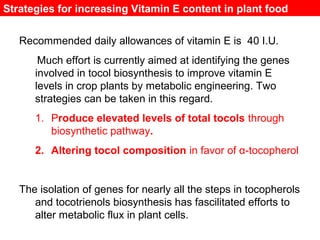
Strategies for increasing Vitamin E content in plant food
Recommended daily allowances of vitamin E is 40 I.U.
Much effort is currently aimed at identifying the genes
involved in tocol biosynthesis to improve vitamin E
levels in crop plants by metabolic engineering. Two
strategies can be taken in this regard.
1. Produce elevated levels of total tocols through
biosynthetic pathway.
2. Altering tocol composition in favor of α-tocopherol
The isolation of genes for nearly all the steps in tocopherols
and tocotrienols biosynthesis has fascilitated efforts to
alter metabolic flux in plant cells.
Biosynthetic pathway of Tocopherols & Tocotrienols
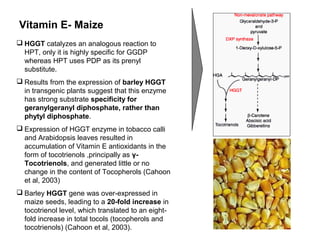
Vitamin E- Maize
 HGGT catalyzes an analogous reaction to
HPT, only it is highly specific for GGDP
whereas HPT uses PDP as its prenyl
substitute.
 Results from the expression of barley HGGT
in transgenic plants suggest that this enzyme
has strong substrate specificity for
geranylgeranyl diphosphate, rather than
phytyl diphosphate.
 Expression of HGGT enzyme in tobacco calli
and Arabidopsis leaves resulted in
accumulation of Vitamin E antioxidants in the
form of tocotrienols ,principally as γ-
Tocotrienols, and generated little or no
change in the content of Tocopherols (Cahoon
et al, 2003)
 Barley HGGT gene was over-expressed in
maize seeds, leading to a 20-fold increase in
tocotrienol level, which translated to an eight-
fold increase in total tocols (tocopherols and
tocotrienols) (Cahoon et al, 2003).
Genotype screening for the carotenoids in brown and milled rice
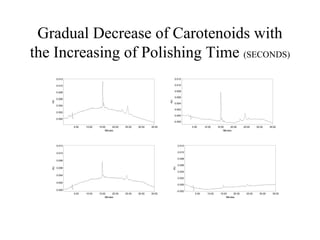
Gradual Decrease of Carotenoids with
the Increasing of Polishing Time (SECONDS)AU
0.000
0.002
0.004
0.006
0.008
0.010
0.012
Minutes
5.00 10.00 15.00 20.00 25.00 30.00 35.00
AU
-0.002
0.000
0.002
0.004
0.006
0.008
0.010
0.012
Minutes
5.00 10.00 15.00 20.00 25.00 30.00 35.00
AU
0.000
0.002
0.004
0.006
0.008
0.010
0.012
Minutes
5.00 10.00 15.00 20.00 25.00 30.00 35.00
AU
-0.002
0.000
0.002
0.004
0.006
0.008
0.010
0.012
Minutes
5.00 10.00 15.00 20.00 25.00 30.00 35.00
Genes
involved in
carotenoid
biosynthesis
Cloned/
transferred
Crop
species
Remarks Reference
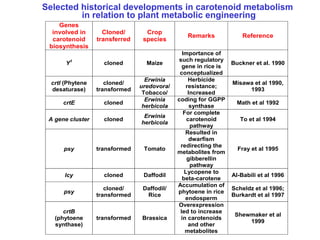
Y1
cloned Maize
Importance of
such regulatory
gene in rice is
conceptualized
Buckner et al. 1990
crtI (Phytene
desaturase)
cloned/
transformed
Erwinia
uredovora/
Tobacco/
Herbicide
resistance;
Increased
Misawa et al 1990,
1993
crtE cloned
Erwinia
herbicola
coding for GGPP
synthase
Math et al 1992
A gene cluster cloned
Erwinia
herbicola
For complete
carotenoid
pathway
To et al 1994
psy transformed Tomato
Resulted in
dwarfism
redirecting the
metabolites from
gibberellin
pathway
Fray et al 1995
lcy cloned Daffodil
Lycopene to
beta-carotene
Al-Babili et al 1996
psy
cloned/
transformed
Daffodil/
Rice
Accumulation of
phytoene in rice
endosperm
Scheldz et al 1996;
Burkardt et al 1997
crtB
(phytoene
synthase)
transformed Brassica
Overexpression
led to increase
in carotenoids
and other
metabolites
Shewmaker et al
1999
Selected historical developments in carotenoid metabolism
in relation to plant metabolic engineering
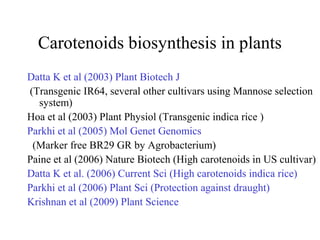
Carotenoids biosynthesis in plants
Datta K et al (2003) Plant Biotech J
(Transgenic IR64, several other cultivars using Mannose selection
system)
Hoa et al (2003) Plant Physiol (Transgenic indica rice )
Parkhi et al (2005) Mol Genet Genomics
(Marker free BR29 GR by Agrobacterium)
Paine et al (2006) Nature Biotech (High carotenoids in US cultivar)
Datta K et al. (2006) Current Sci (High carotenoids indica rice)
Parkhi et al (2006) Plant Sci (Protection against draught)
Krishnan et al (2009) Plant Science
3.2 kb
(crtI)
1.5 kb
(hph)
VPBR29-9
56 59 61 64 65 66 69 70 71 72 74 1 2 3 19 27 47 51 57 NT P
VPBR29-32
Fig 3
Fig 4
VPBR29-9 VPBR29-31
P NT
3.2 kb
(crtI)
1.5 kb
(psy)
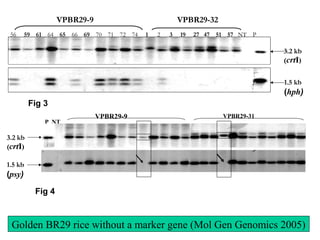
Golden BR29 rice without a marker gene (Mol Gen Genomics 2005)
3.0-9.1µg/g,DHhomozygouslinesdeveloped
Datta K et al PBJ, 2003/2005,2006
Parkhi et al MGG, 2005,2006
Rai et al 2003,2006
Ye et al Science, 2000
Painie et al Nature Biotech, 2005
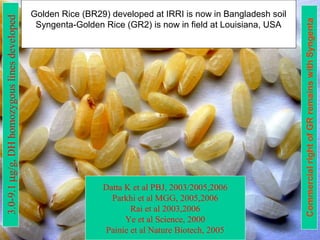
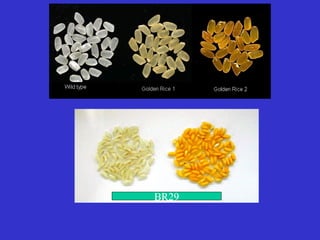
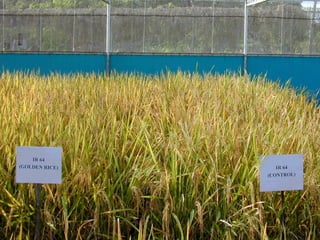
Golden Rice (BR29) developed at IRRI is now in Bangladesh soil
Syngenta-Golden Rice (GR2) is now in field at Louisiana, USA
CommercialrightofGRremainswithSyngenta
BR29
AU
0.00
0.02
0.04
0.06
0.08
0.10
0.12
Minutes
5.00 10.00 15.00 20.00 25.00 30.00
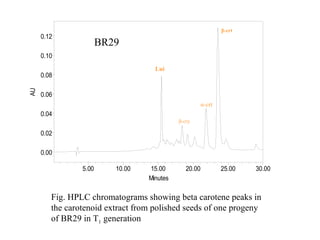
Fig. HPLC chromatograms showing beta carotene peaks in
the carotenoid extract from polished seeds of one progeny
of BR29 in T1 generation
Lui
β-cry
α-crt
β-crt
BR29
Co-transformationLBA4404/pZPsC
+
LBA4404/pZLcyH
Anther culture
Hemizygous T309 GoldenRice
(Ye et al. 2000)
Dihaploid homozygous T309 GoldenRice
(Baisakh et al. 2001b)
IR64
1st
Backcrossing
F1
IR64 x
IR64BC1F1
x
x
2nd
Backcrossing
BC2F1
Marker-free
Selfing
BC2F2
Marker-free
PCR analysis
Molecular analysis
Phenotyping
Molecular
analysis
Selection of hph negative
transgenic progenies
PCR screening
and Southern confirmation
IR64 NILs
Marker-free
Phenotyping
HPLC
BC1F1 progenies
Marker-free
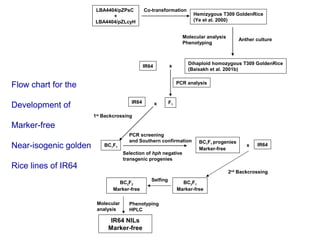
Flow chart for the
Development of
Marker-free
Near-isogenic golden
Rice lines of IR64
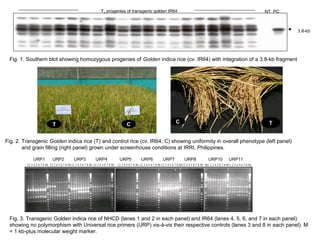
Fig. 3. Transgenic Golden indica rice of NHCD (lanes 1 and 2 in each panel) and IR64 (lanes 4, 5, 6, and 7 in each panel)
showing no polymorphism with Universal rice primers (URP) vis-à-vis their respective controls (lanes 3 and 8 in each panel). M
= 1 kb-plus molecular weight marker.
Fig. 1. Southern blot showing homozygous progenies of Golden indica rice (cv. IR64) with integration of a 3.8-kb fragment
12 3 4 5 6 7 8 M 12 3 4 5 6 7 8 M 12 3 4 5 6 7 8 M 12 3 4 5 6 7 8 M 12 3 4 5 6 7 8 M 12 3 4 5 6 7 8 M 12 3 4 5 6 7 8 M12 3 4 5 6 7 8 M M1 2 3 4 5 6 7 8 M 1 2 3 4 5 6 7 8 M
URP1 URP2 URP3 URP4 URP5 URP6 URP7 URP8 URP10 URP11
Fig. 2. Transgenic Golden indica rice (T) and control rice (cv. IR64; C) showing uniformity in overall phenotype (left panel)
and grain filling (right panel) grown under screenhouse conditions at IRRI, Philippines.
T C
C T
NT PCT3 progenies of transgenic golden IR64
3.8-kb
Essential Minerals: Iron
Iron deficiency is the most widespread micronutrient
deficiency worldwide.
Approx. 30% of world population suffers from
serious nutritional problems caused by insufficient
intake of iron (WHO 1992).
It is the important constituent of hemoglobin, the
oxygen carrying component of blood, and also a part of
myoglobin that helps muscle cells to store oxygen.
It is present in food in both inorganic (ferric and
ferrous) and organic (heme and nonheme) forms.
Highly bioavailable heme iron is derived primarily from
animal source.
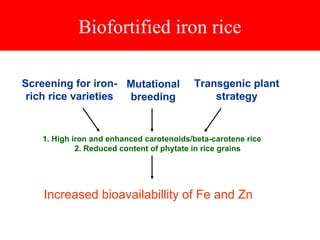
Biofortified iron rice
1. High iron and enhanced carotenoids/beta-carotene rice
2. Reduced content of phytate in rice grains
Mutational
breeding
Transgenic plant
strategy
Screening for iron-
rich rice varieties
Increased bioavailabillity of Fe and Zn
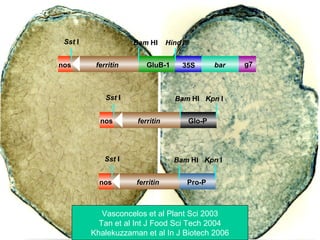
ferritin 35S g7barGluB-1nos
Sst I Bam HI Hind III
ferritin Glo-Pnos
Sst I Bam HI Kpn I
ferritin Pro-Pnos
Sst I Bam HI Kpn I
Vasconcelos et al Plant Sci 2003
Tan et al Int J Food Sci Tech 2004
Khalekuzzaman et al In J Biotech 2006
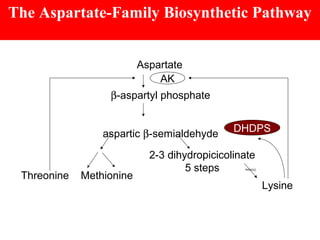
The Aspartate-Family Biosynthetic Pathway
Aspartate
β-aspartyl phosphate
aspartic β-semialdehyde
AK
2-3 dihydropicicolinate
5 steps
Threonine Methionine
Lysine
DHDPS
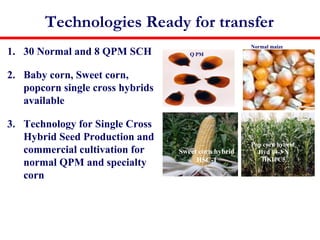
Technologies Ready for transfer
1. 30 Normal and 8 QPM SCH
2. Baby corn, Sweet corn,
popcorn single cross hybrids
available
3. Technology for Single Cross
Hybrid Seed Production and
commercial cultivation for
normal QPM and specialty
corn
Sweet corn hybrid
HSC-1
Pop corn hybrid
Hyd 14-3 X
HKIPC5
Normal maize
SCH Seed production
Q PM
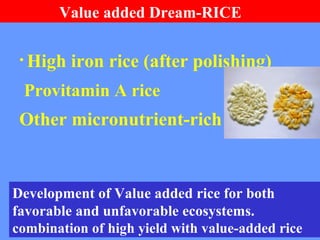
Value added Dream-RICE
• High iron rice (after polishing)
Provitamin A rice
Other micronutrient-rich rice
Development of Value added rice for both
favorable and unfavorable ecosystems.
combination of high yield with value-added rice
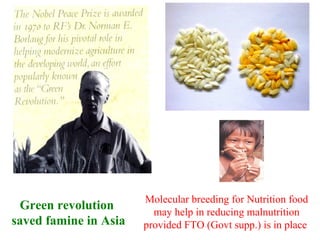
Green revolution
saved famine in Asia
Molecular breeding for Nutrition food
may help in reducing malnutrition
provided FTO (Govt supp.) is in place

Biofortification

  • 1.
    Biofortification: Engineering themetabolic pathways Swapan Datta, DDG (Criop Science), ICAR, New Delhi EVERYTHING; THERE IS A SEQUENCE and connected to a metabolic pathway TARUN GUPTA BTECH BIOTECHNOLOGY SVBP UNIVERSITY
  • 2.
    Nutrition enriched foodcrop: Engineering metabolic pathways • Importance of Nutrition Rice • Why genetic engineering to alter the pathways? • What and how do we understand the pathways • Can pathways relate to functional gene expression? • Plant breeding, Cross-talk and phenotyping • Dream Nutrition-Rice
  • 3.
    GLOBAL FOOD SECURITYAND MALNUTRITION • 1.1 billion are absolutely poor with incomes < 1U$ day • 2.0 billion are marginally better off • 840 million people are food insecure • 200 million malnourished children • 400 million have acute iron deficiency • 125 million are affected by a lack of vitamin A • Only 4% rice of the world supply is non-traded internationally • Many of 8 billion people on the earth by 2020 will live outside the market driven supply of food
  • 4.
    1 Billion peopleof world is malnourished while 30% Indian population (mostly women and children) are malnourished : Food + Nutrition Security come together & can easily be utilized with PDS Improved protein-potato (Ama1) Carotenoids enriched potato Insulin promoting rice Canola with β-carotene Vitamin C food crop High iron rice β-carotene + Vit E rice Vitamin E + β-carotene maize Biofortified food crops for India?
  • 5.
  • 6.
    Lutein Zeaxanthin GGPP β-carotenebiosynthesis Pathway in transgenic rice α-carotene β-carotene (3) LC (lyc) PDS (crt1) PS (psy) (1) (2) Phytoene Lycopene Vitamin E Gibberellins Chlorophyll IPP GGPP Common pathway in plants (rice) Fig. 1. Biosynthesis pathway of β-carotene
  • 7.
    Sources of VitaminE : Tocotrienols  Primary sources of vitamin E are derived from plants. Tocopherols and Tocotrienols are plastid localised molecules.  Oil seeds are richest source of vitamin E, having total tocol levels ranging from 330 to 2,000 µg per gram. Tocotrienols are the primary form of vitamin E in seed endosperm of most monocots, including cereals, such as wheat, rice, and barley.  Tocotrienols are found in the seed endosperm of a limited number of dicots, such as tobacco and found rarely in vegetative tissues of plants
  • 8.
    Strategies for increasingVitamin E content in plant food Recommended daily allowances of vitamin E is 40 I.U. Much effort is currently aimed at identifying the genes involved in tocol biosynthesis to improve vitamin E levels in crop plants by metabolic engineering. Two strategies can be taken in this regard. 1. Produce elevated levels of total tocols through biosynthetic pathway. 2. Altering tocol composition in favor of α-tocopherol The isolation of genes for nearly all the steps in tocopherols and tocotrienols biosynthesis has fascilitated efforts to alter metabolic flux in plant cells.
  • 9.
    Biosynthetic pathway ofTocopherols & Tocotrienols
  • 10.
    Vitamin E- Maize HGGT catalyzes an analogous reaction to HPT, only it is highly specific for GGDP whereas HPT uses PDP as its prenyl substitute.  Results from the expression of barley HGGT in transgenic plants suggest that this enzyme has strong substrate specificity for geranylgeranyl diphosphate, rather than phytyl diphosphate.  Expression of HGGT enzyme in tobacco calli and Arabidopsis leaves resulted in accumulation of Vitamin E antioxidants in the form of tocotrienols ,principally as γ- Tocotrienols, and generated little or no change in the content of Tocopherols (Cahoon et al, 2003)  Barley HGGT gene was over-expressed in maize seeds, leading to a 20-fold increase in tocotrienol level, which translated to an eight- fold increase in total tocols (tocopherols and tocotrienols) (Cahoon et al, 2003).
  • 11.
    Genotype screening forthe carotenoids in brown and milled rice
  • 12.
    Gradual Decrease ofCarotenoids with the Increasing of Polishing Time (SECONDS)AU 0.000 0.002 0.004 0.006 0.008 0.010 0.012 Minutes 5.00 10.00 15.00 20.00 25.00 30.00 35.00 AU -0.002 0.000 0.002 0.004 0.006 0.008 0.010 0.012 Minutes 5.00 10.00 15.00 20.00 25.00 30.00 35.00 AU 0.000 0.002 0.004 0.006 0.008 0.010 0.012 Minutes 5.00 10.00 15.00 20.00 25.00 30.00 35.00 AU -0.002 0.000 0.002 0.004 0.006 0.008 0.010 0.012 Minutes 5.00 10.00 15.00 20.00 25.00 30.00 35.00
  • 13.
    Genes involved in carotenoid biosynthesis Cloned/ transferred Crop species Remarks Reference Y1 clonedMaize Importance of such regulatory gene in rice is conceptualized Buckner et al. 1990 crtI (Phytene desaturase) cloned/ transformed Erwinia uredovora/ Tobacco/ Herbicide resistance; Increased Misawa et al 1990, 1993 crtE cloned Erwinia herbicola coding for GGPP synthase Math et al 1992 A gene cluster cloned Erwinia herbicola For complete carotenoid pathway To et al 1994 psy transformed Tomato Resulted in dwarfism redirecting the metabolites from gibberellin pathway Fray et al 1995 lcy cloned Daffodil Lycopene to beta-carotene Al-Babili et al 1996 psy cloned/ transformed Daffodil/ Rice Accumulation of phytoene in rice endosperm Scheldz et al 1996; Burkardt et al 1997 crtB (phytoene synthase) transformed Brassica Overexpression led to increase in carotenoids and other metabolites Shewmaker et al 1999 Selected historical developments in carotenoid metabolism in relation to plant metabolic engineering
  • 14.
    Carotenoids biosynthesis inplants Datta K et al (2003) Plant Biotech J (Transgenic IR64, several other cultivars using Mannose selection system) Hoa et al (2003) Plant Physiol (Transgenic indica rice ) Parkhi et al (2005) Mol Genet Genomics (Marker free BR29 GR by Agrobacterium) Paine et al (2006) Nature Biotech (High carotenoids in US cultivar) Datta K et al. (2006) Current Sci (High carotenoids indica rice) Parkhi et al (2006) Plant Sci (Protection against draught) Krishnan et al (2009) Plant Science
  • 15.
    3.2 kb (crtI) 1.5 kb (hph) VPBR29-9 5659 61 64 65 66 69 70 71 72 74 1 2 3 19 27 47 51 57 NT P VPBR29-32 Fig 3 Fig 4 VPBR29-9 VPBR29-31 P NT 3.2 kb (crtI) 1.5 kb (psy) Golden BR29 rice without a marker gene (Mol Gen Genomics 2005)
  • 16.
    3.0-9.1µg/g,DHhomozygouslinesdeveloped Datta K etal PBJ, 2003/2005,2006 Parkhi et al MGG, 2005,2006 Rai et al 2003,2006 Ye et al Science, 2000 Painie et al Nature Biotech, 2005 Golden Rice (BR29) developed at IRRI is now in Bangladesh soil Syngenta-Golden Rice (GR2) is now in field at Louisiana, USA CommercialrightofGRremainswithSyngenta
  • 17.
  • 18.
    AU 0.00 0.02 0.04 0.06 0.08 0.10 0.12 Minutes 5.00 10.00 15.0020.00 25.00 30.00 Fig. HPLC chromatograms showing beta carotene peaks in the carotenoid extract from polished seeds of one progeny of BR29 in T1 generation Lui β-cry α-crt β-crt BR29
  • 19.
    Co-transformationLBA4404/pZPsC + LBA4404/pZLcyH Anther culture Hemizygous T309GoldenRice (Ye et al. 2000) Dihaploid homozygous T309 GoldenRice (Baisakh et al. 2001b) IR64 1st Backcrossing F1 IR64 x IR64BC1F1 x x 2nd Backcrossing BC2F1 Marker-free Selfing BC2F2 Marker-free PCR analysis Molecular analysis Phenotyping Molecular analysis Selection of hph negative transgenic progenies PCR screening and Southern confirmation IR64 NILs Marker-free Phenotyping HPLC BC1F1 progenies Marker-free Flow chart for the Development of Marker-free Near-isogenic golden Rice lines of IR64
  • 22.
    Fig. 3. TransgenicGolden indica rice of NHCD (lanes 1 and 2 in each panel) and IR64 (lanes 4, 5, 6, and 7 in each panel) showing no polymorphism with Universal rice primers (URP) vis-à-vis their respective controls (lanes 3 and 8 in each panel). M = 1 kb-plus molecular weight marker. Fig. 1. Southern blot showing homozygous progenies of Golden indica rice (cv. IR64) with integration of a 3.8-kb fragment 12 3 4 5 6 7 8 M 12 3 4 5 6 7 8 M 12 3 4 5 6 7 8 M 12 3 4 5 6 7 8 M 12 3 4 5 6 7 8 M 12 3 4 5 6 7 8 M 12 3 4 5 6 7 8 M12 3 4 5 6 7 8 M M1 2 3 4 5 6 7 8 M 1 2 3 4 5 6 7 8 M URP1 URP2 URP3 URP4 URP5 URP6 URP7 URP8 URP10 URP11 Fig. 2. Transgenic Golden indica rice (T) and control rice (cv. IR64; C) showing uniformity in overall phenotype (left panel) and grain filling (right panel) grown under screenhouse conditions at IRRI, Philippines. T C C T NT PCT3 progenies of transgenic golden IR64 3.8-kb
  • 23.
    Essential Minerals: Iron Irondeficiency is the most widespread micronutrient deficiency worldwide. Approx. 30% of world population suffers from serious nutritional problems caused by insufficient intake of iron (WHO 1992). It is the important constituent of hemoglobin, the oxygen carrying component of blood, and also a part of myoglobin that helps muscle cells to store oxygen. It is present in food in both inorganic (ferric and ferrous) and organic (heme and nonheme) forms. Highly bioavailable heme iron is derived primarily from animal source.
  • 24.
    Biofortified iron rice 1.High iron and enhanced carotenoids/beta-carotene rice 2. Reduced content of phytate in rice grains Mutational breeding Transgenic plant strategy Screening for iron- rich rice varieties Increased bioavailabillity of Fe and Zn
  • 26.
    ferritin 35S g7barGluB-1nos SstI Bam HI Hind III ferritin Glo-Pnos Sst I Bam HI Kpn I ferritin Pro-Pnos Sst I Bam HI Kpn I Vasconcelos et al Plant Sci 2003 Tan et al Int J Food Sci Tech 2004 Khalekuzzaman et al In J Biotech 2006
  • 27.
    The Aspartate-Family BiosyntheticPathway Aspartate β-aspartyl phosphate aspartic β-semialdehyde AK 2-3 dihydropicicolinate 5 steps Threonine Methionine Lysine DHDPS
  • 28.
    Technologies Ready fortransfer 1. 30 Normal and 8 QPM SCH 2. Baby corn, Sweet corn, popcorn single cross hybrids available 3. Technology for Single Cross Hybrid Seed Production and commercial cultivation for normal QPM and specialty corn Sweet corn hybrid HSC-1 Pop corn hybrid Hyd 14-3 X HKIPC5 Normal maize SCH Seed production Q PM
  • 29.
    Value added Dream-RICE •High iron rice (after polishing) Provitamin A rice Other micronutrient-rich rice Development of Value added rice for both favorable and unfavorable ecosystems. combination of high yield with value-added rice
  • 30.
    Green revolution saved faminein Asia Molecular breeding for Nutrition food may help in reducing malnutrition provided FTO (Govt supp.) is in place

Editor's Notes

  • #14 Top left: unpolished Amarillo Cuba Top right: polished for 5 seconds Bottom left: polished for 10 seconds Bottom right: polished for 40 seconds.