BIODIVERSITY IN A CHANGING CLIMATE: ECOSYSTEM BASED ADAPTATION AND MITIGATION Adriana Dinu, Regional Environment and Energy Practice Leader, Europe and CIS Putoransky, Taimyr© 2010 UNDP. All Rights Reserved Worldwide.Proprietary and Confidential. Not For Distribution Without Prior Written Permission.
OverviewContext:Biodiversity and Climate Change – linkages
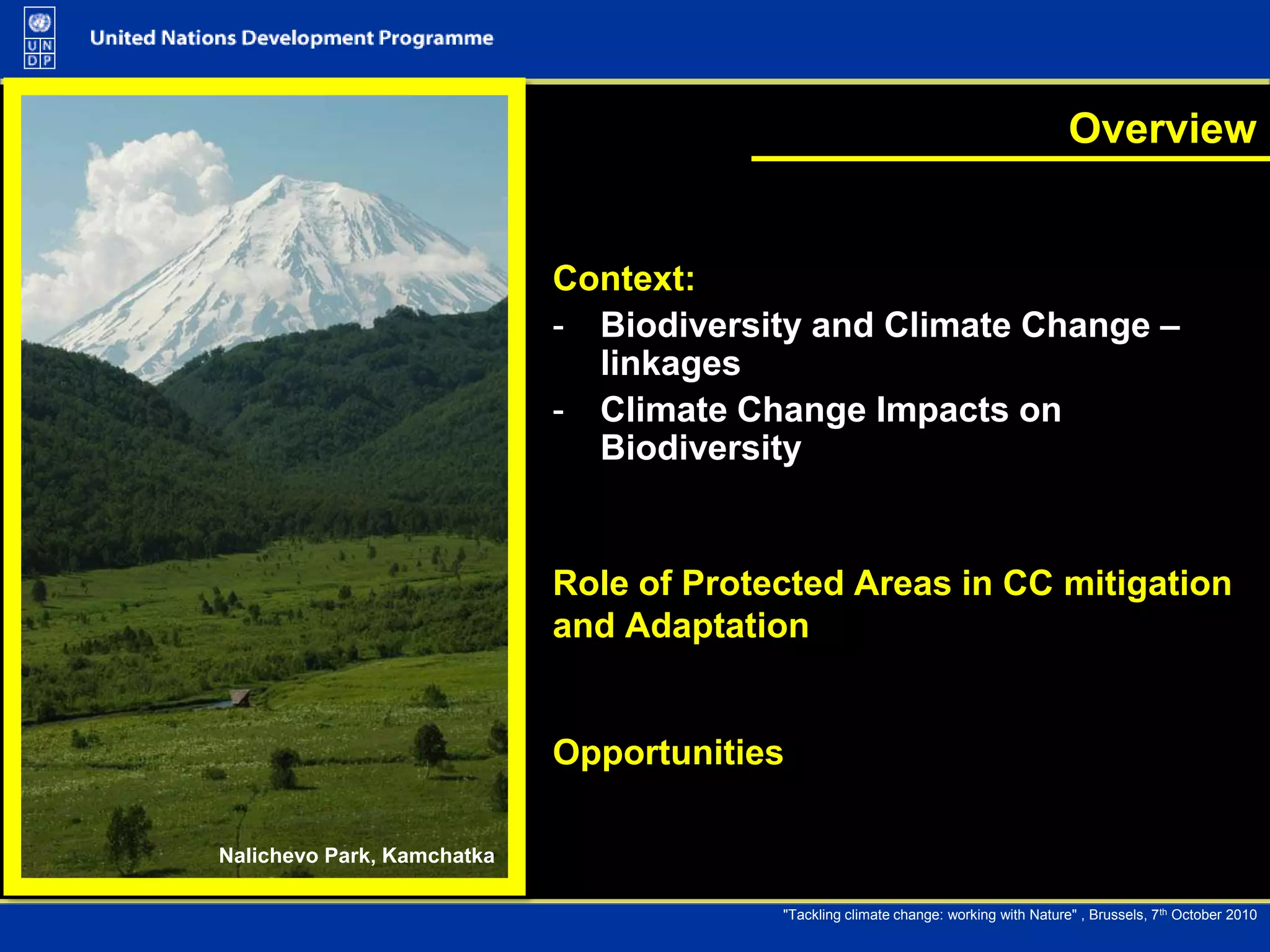
Climate Change Impacts on Biodiversity Role of Protected Areas in CC mitigation and AdaptationOpportunitiesNalichevo Park, Kamchatka
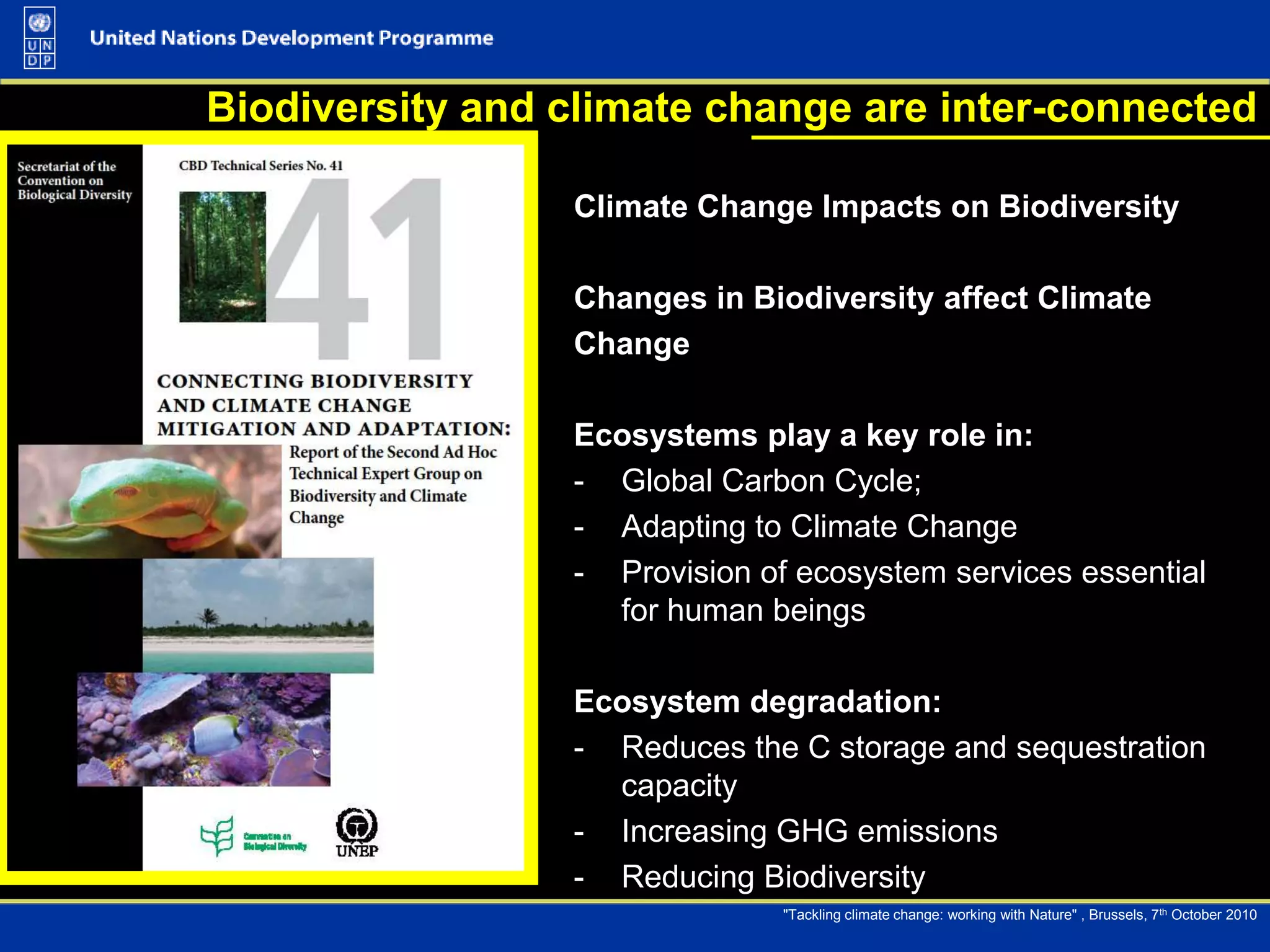
Biodiversity and climate change are inter-connectedClimate Change Impacts on BiodiversityChanges in Biodiversity affect Climate ChangeEcosystems play a key role in:Global Carbon Cycle;
Adapting to Climate Change
Provision of ecosystem services essential for human beingsEcosystem degradation:Reduces the C storage and sequestration capacity
Increasing GHG emissions
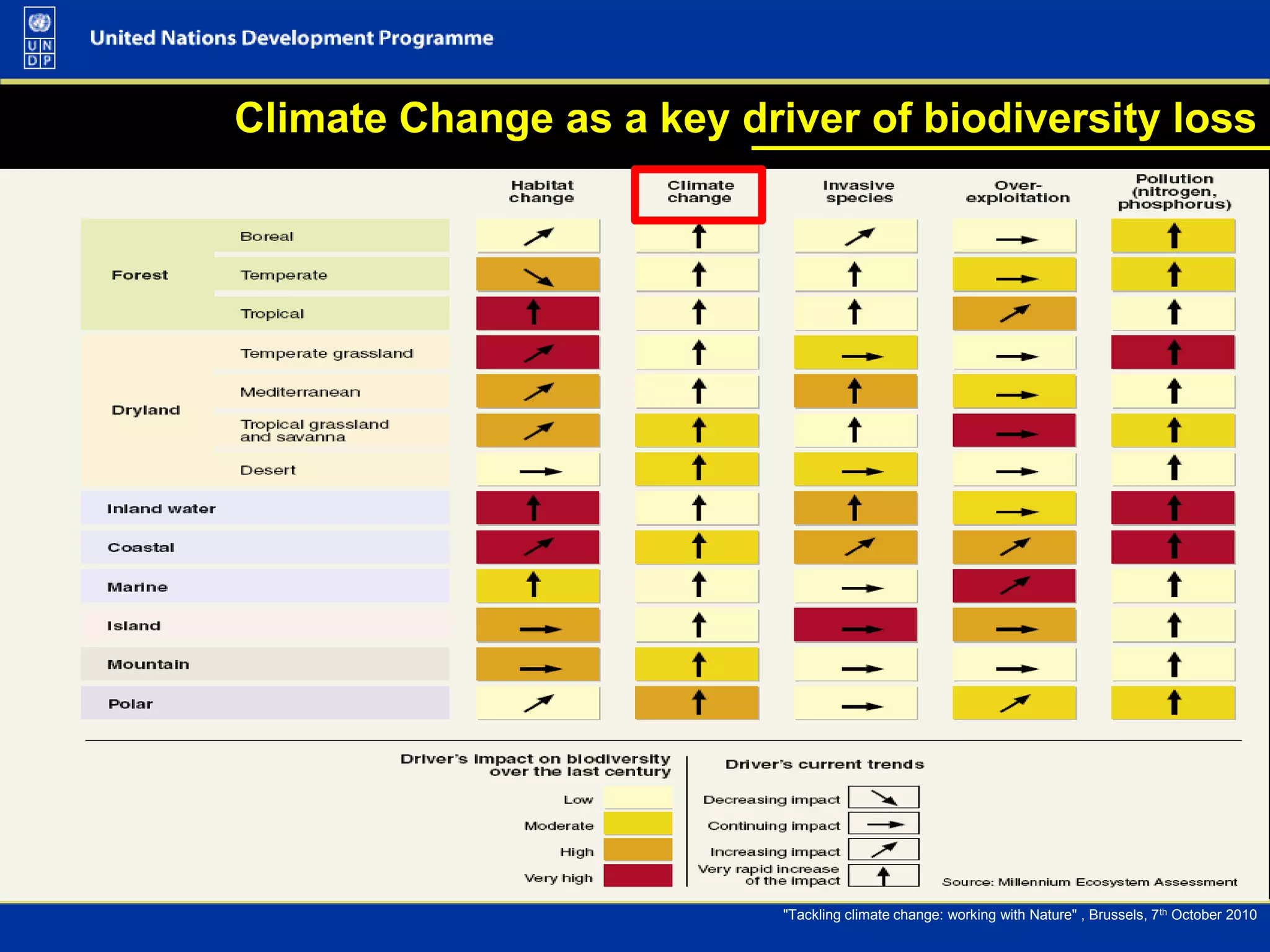
Reducing BiodiversityClimate Change as a key driver of biodiversity loss
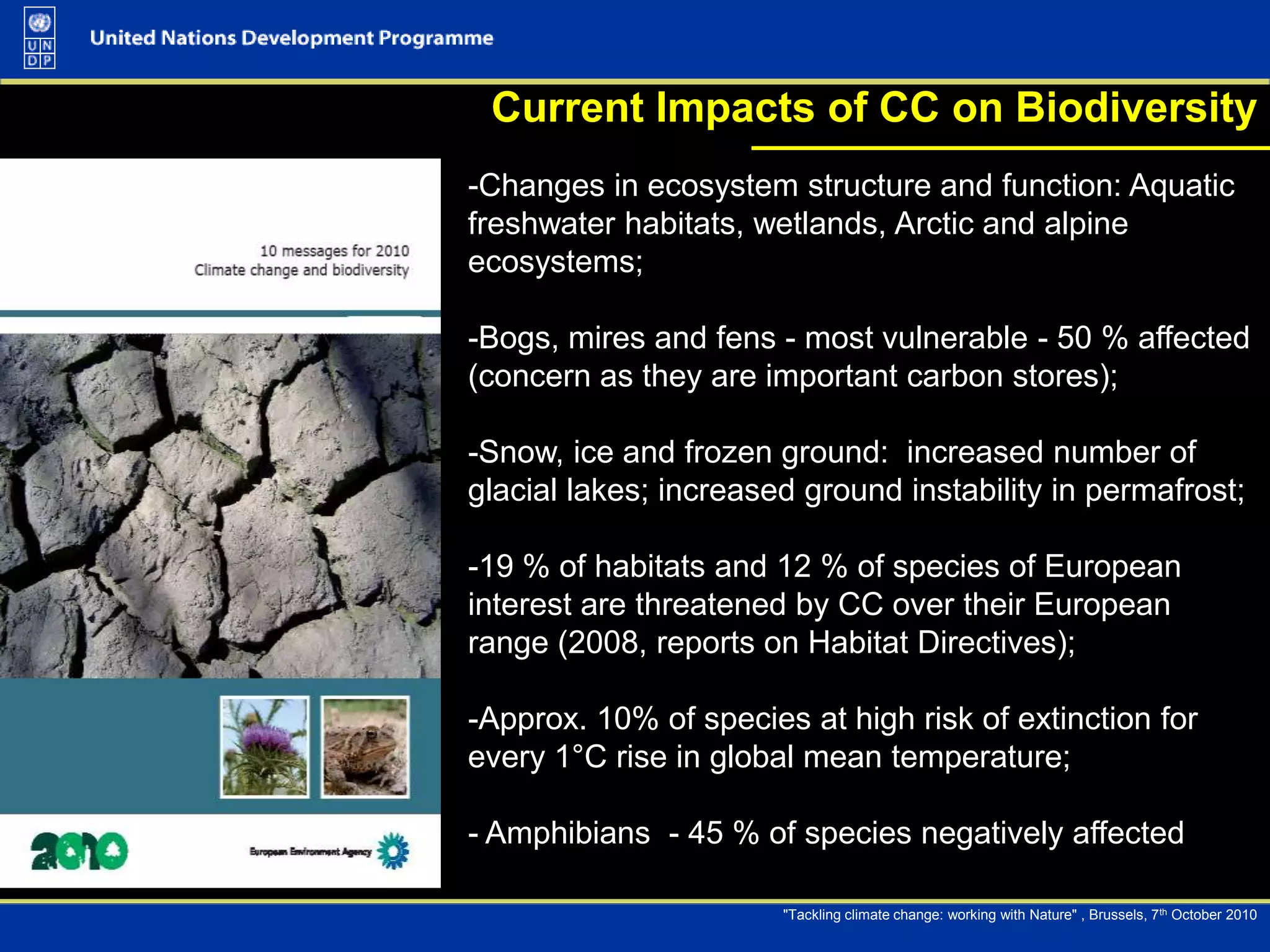
Current Impacts of CC on BiodiversityChanges in ecosystem structure and function: Aquatic freshwater habitats, wetlands, Arctic and alpine ecosystems;
Bogs, mires and fens - most vulnerable - 50 % affected (concern as they are important carbon stores);
Snow, ice and frozen ground:  increased number of glacial lakes; increased ground instability in permafrost;
19 % of habitats and 12 % of species of European interest are threatened by CC over their European range (2008, reports on Habitat Directives);
Approx. 10% of species at high risk of extinction for every 1°C rise in global mean temperature;- Amphibians  - 45 % of species negatively affected
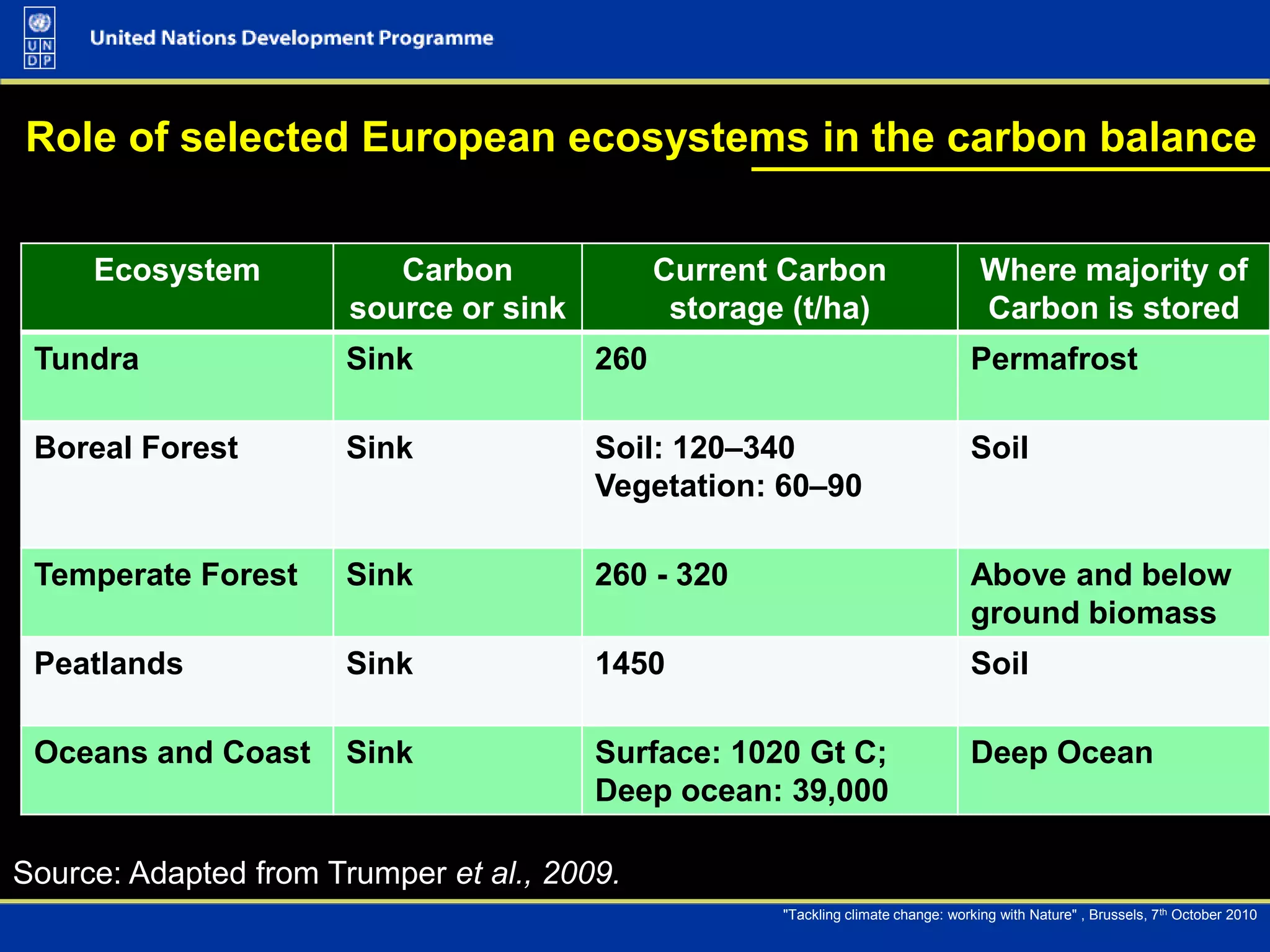
Role of selected European ecosystems in the carbon balance Source: Adapted from Trumperet al., 2009.
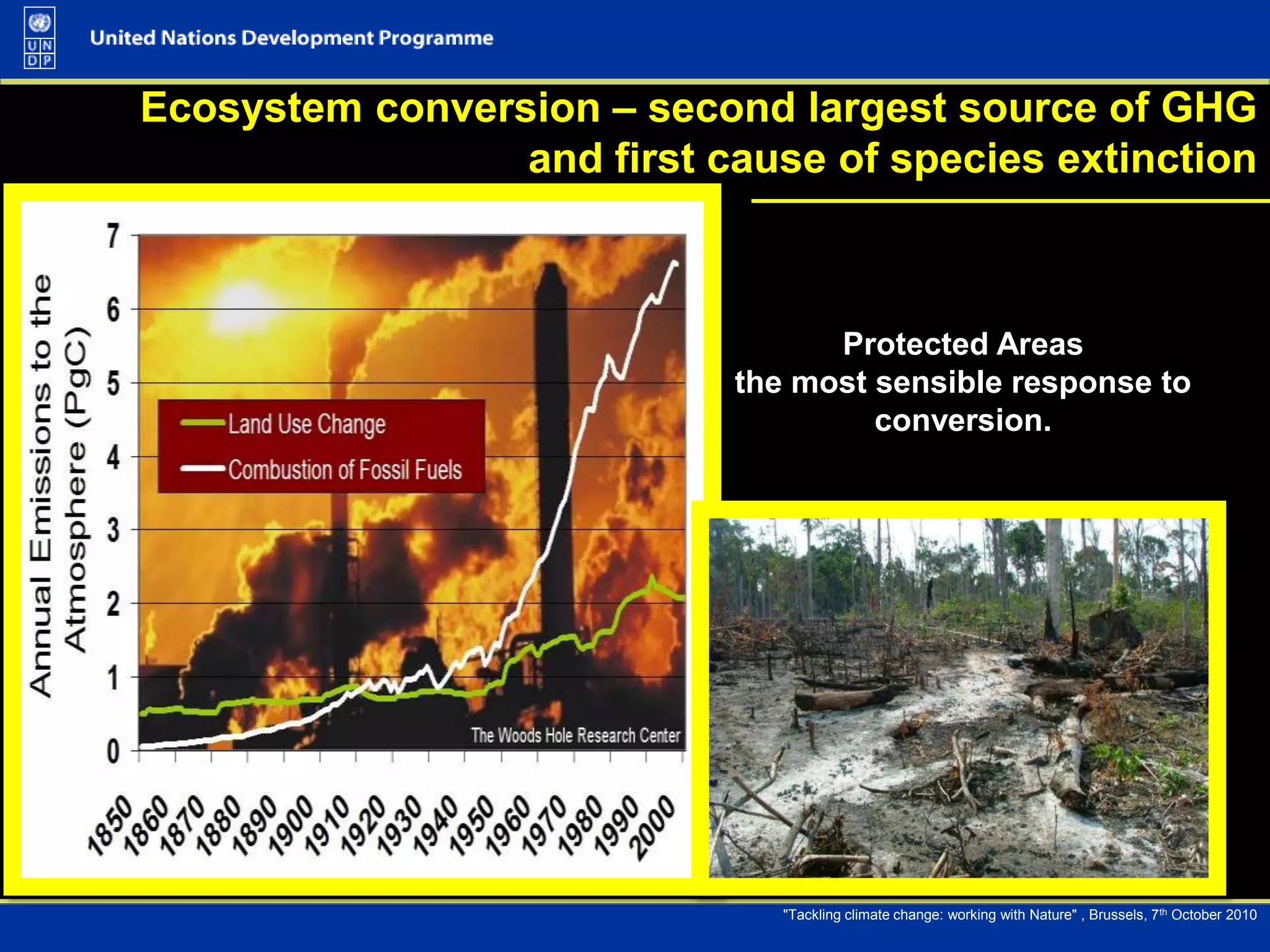
Ecosystem conversion – second largest source of GHG and first cause of species extinction Protected Areas the most sensible response to conversion.

Biodiversity in a changing climate: Ecosystem based adaptation and mitigation (UNDP presentation)

  • 1.
    BIODIVERSITY IN ACHANGING CLIMATE: ECOSYSTEM BASED ADAPTATION AND MITIGATION Adriana Dinu, Regional Environment and Energy Practice Leader, Europe and CIS Putoransky, Taimyr© 2010 UNDP. All Rights Reserved Worldwide.Proprietary and Confidential. Not For Distribution Without Prior Written Permission.
  • 2.
  • 3.
    Climate Change Impactson Biodiversity Role of Protected Areas in CC mitigation and AdaptationOpportunitiesNalichevo Park, Kamchatka
  • 4.
    Biodiversity and climatechange are inter-connectedClimate Change Impacts on BiodiversityChanges in Biodiversity affect Climate ChangeEcosystems play a key role in:Global Carbon Cycle;
  • 5.
  • 6.
    Provision of ecosystemservices essential for human beingsEcosystem degradation:Reduces the C storage and sequestration capacity
  • 7.
  • 8.
    Reducing BiodiversityClimate Changeas a key driver of biodiversity loss
  • 9.
    Current Impacts ofCC on BiodiversityChanges in ecosystem structure and function: Aquatic freshwater habitats, wetlands, Arctic and alpine ecosystems;
  • 10.
    Bogs, mires andfens - most vulnerable - 50 % affected (concern as they are important carbon stores);
  • 11.
    Snow, ice andfrozen ground: increased number of glacial lakes; increased ground instability in permafrost;
  • 12.
    19 % ofhabitats and 12 % of species of European interest are threatened by CC over their European range (2008, reports on Habitat Directives);
  • 13.
    Approx. 10% ofspecies at high risk of extinction for every 1°C rise in global mean temperature;- Amphibians - 45 % of species negatively affected
  • 14.
    Role of selectedEuropean ecosystems in the carbon balance Source: Adapted from Trumperet al., 2009.
  • 15.
    Ecosystem conversion –second largest source of GHG and first cause of species extinction Protected Areas the most sensible response to conversion.
  • 16.
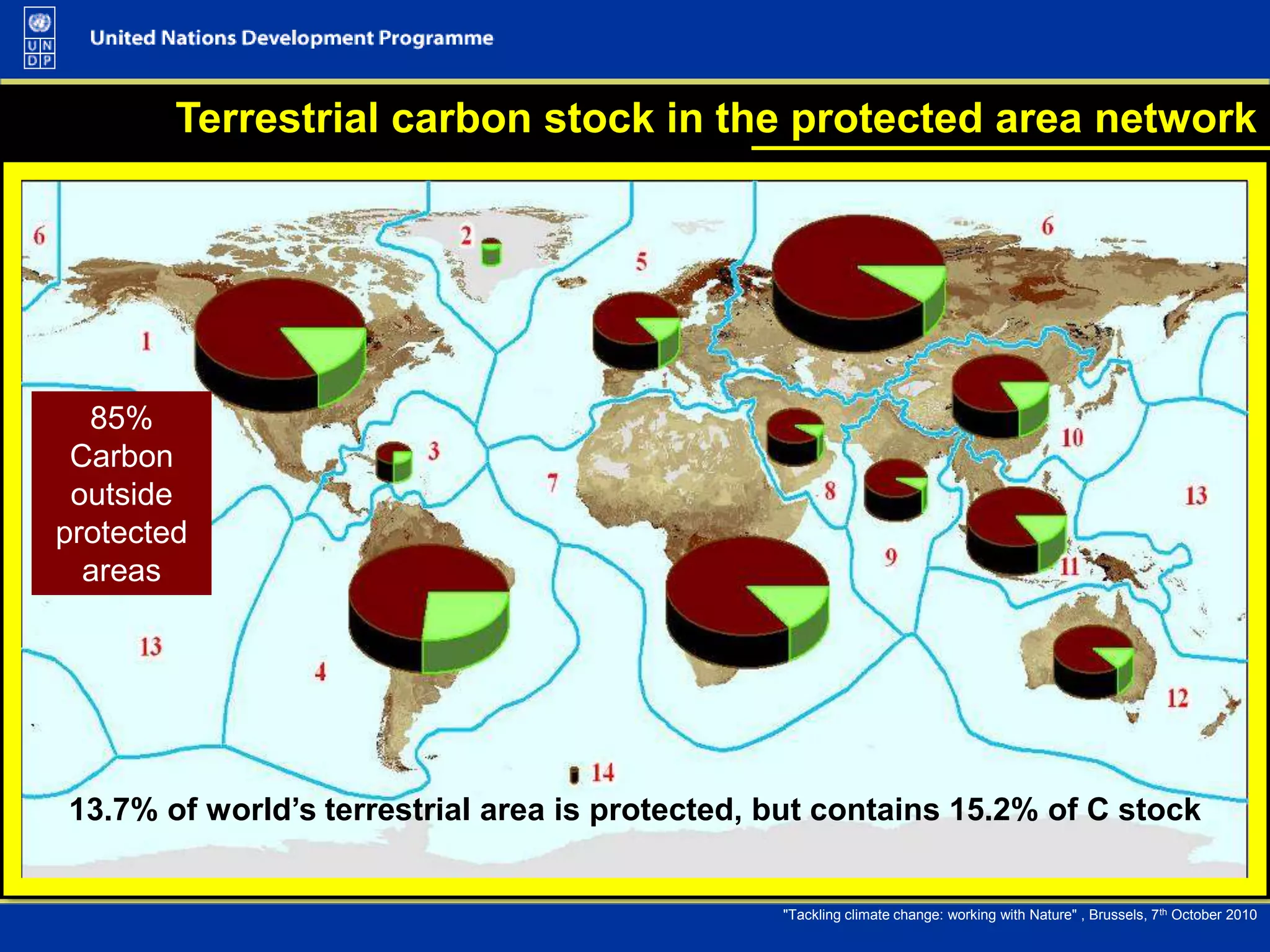
    Terrestrial carbon stockin the protected area network85% Carbon outside protected areas13.7% of world’s terrestrial area is protected, but contains 15.2% of C stock
  • 17.
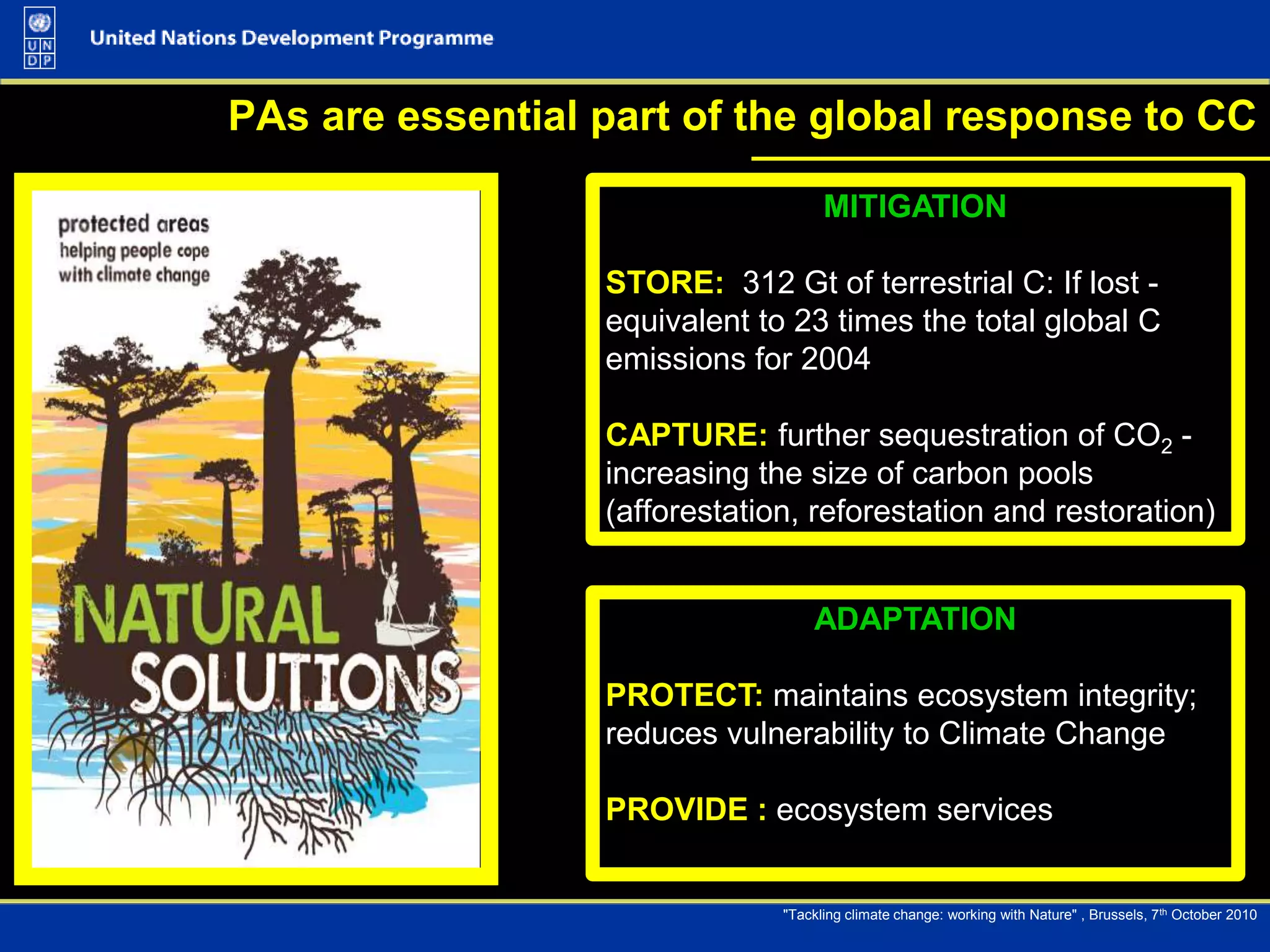
    PAs are essentialpart of the global response to CCMITIGATIONSTORE: 312 Gt of terrestrial C: If lost - equivalent to 23 times the total global C emissions for 2004CAPTURE: further sequestration of CO2 - increasing the size of carbon pools (afforestation, reforestation and restoration)Mitigation dividend: existing and potential forest PAs are richest carbon pools.ADAPTATIONPROTECT: maintains ecosystem integrity; reduces vulnerability to Climate ChangePROVIDE : ecosystem services
  • 18.
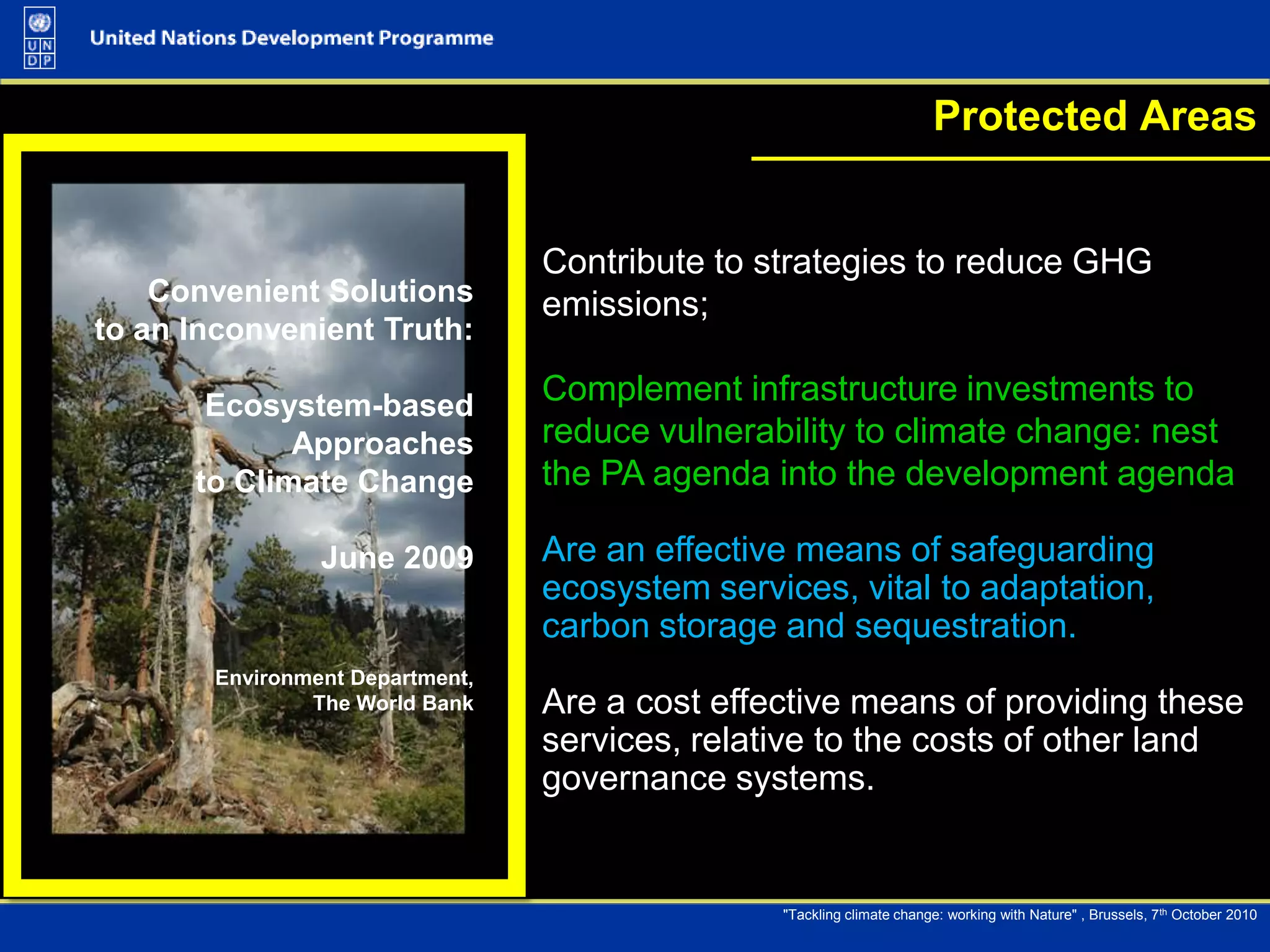
    Protected AreasContribute tostrategies to reduce GHG emissions;Complement infrastructure investments to reduce vulnerability to climate change: nest the PA agenda into the development agendaAre an effective means of safeguarding ecosystem services, vital to adaptation, carbon storage and sequestration.Are a cost effective means of providing these services, relative to the costs of other land governance systems.Convenient Solutionsto an Inconvenient Truth:Ecosystem-basedApproachesto Climate ChangeJune 2009Environment Department,The World Bank
  • 19.
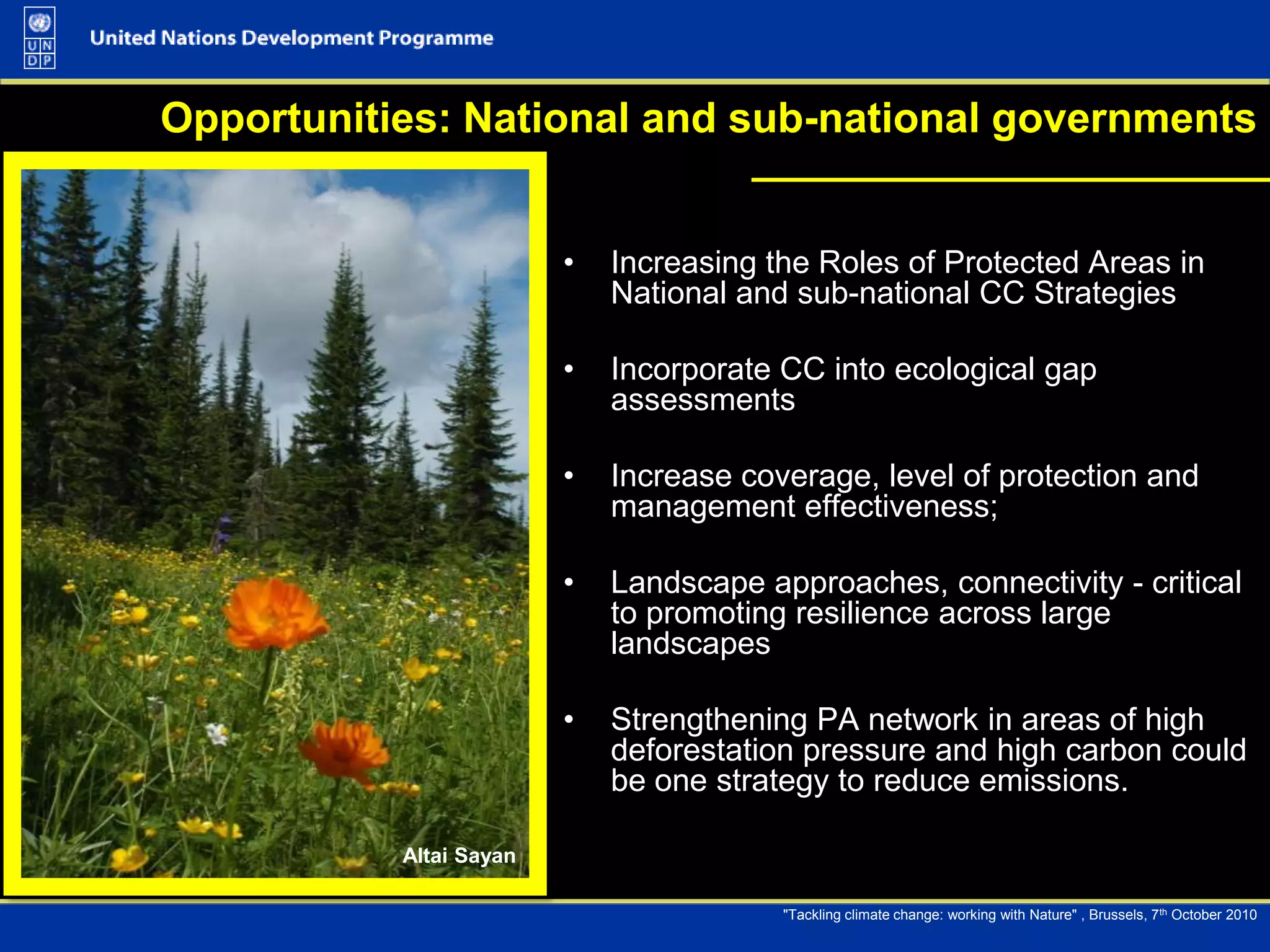
    Opportunities: National andsub-national governmentsIncreasing the Roles of Protected Areas in National and sub-national CC Strategies Incorporate CC into ecological gap assessmentsIncrease coverage, level of protection and management effectiveness;Landscape approaches, connectivity - critical to promoting resilience across large landscapesStrengthening PA network in areas of high deforestation pressure and high carbon could be one strategy to reduce emissions.Altai Sayan
  • 20.
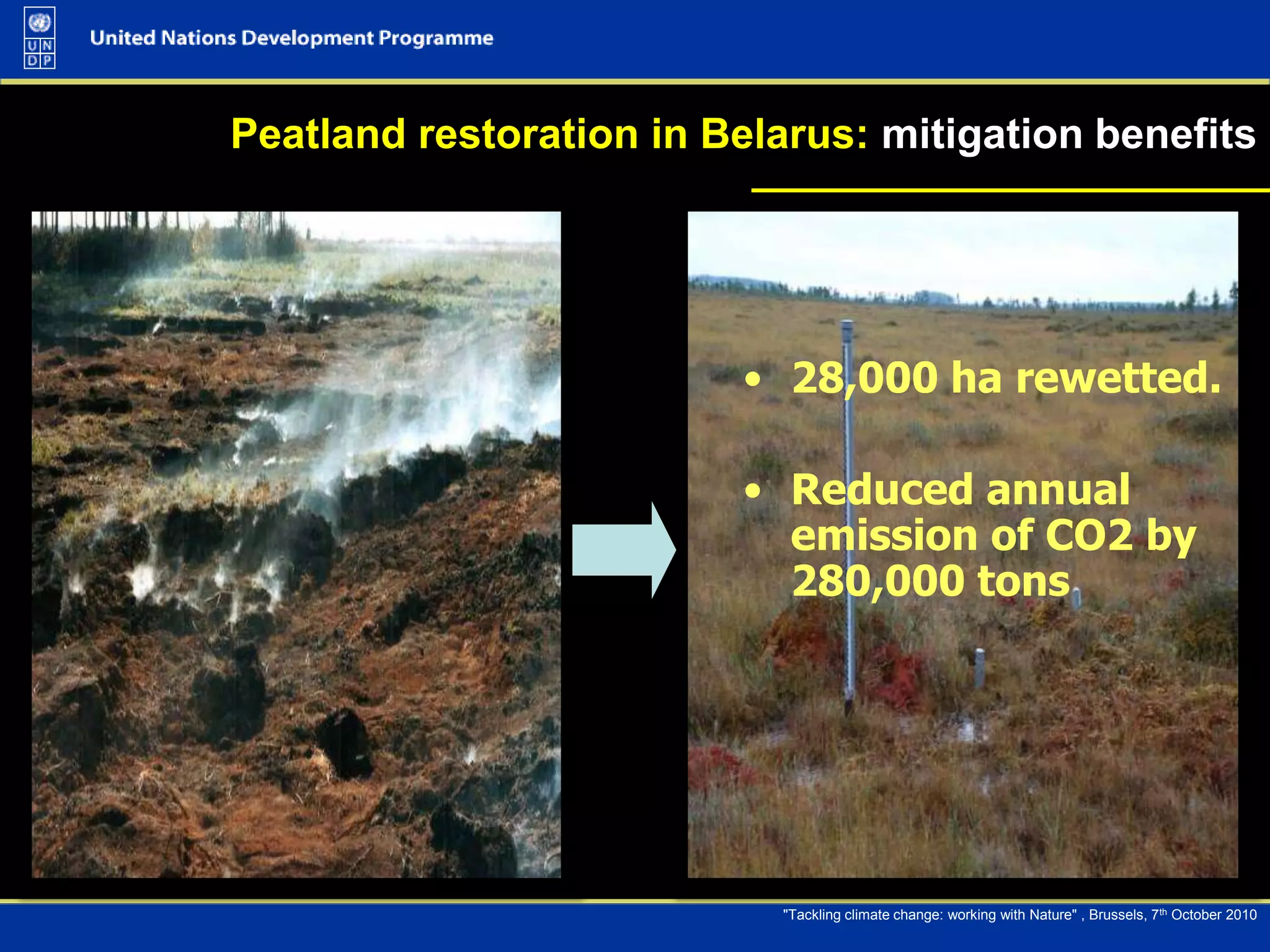
    Peatland restoration inBelarus: mitigation benefits28,000 ha rewetted. Reduced annual emission of CO2 by 280,000 tons
  • 21.
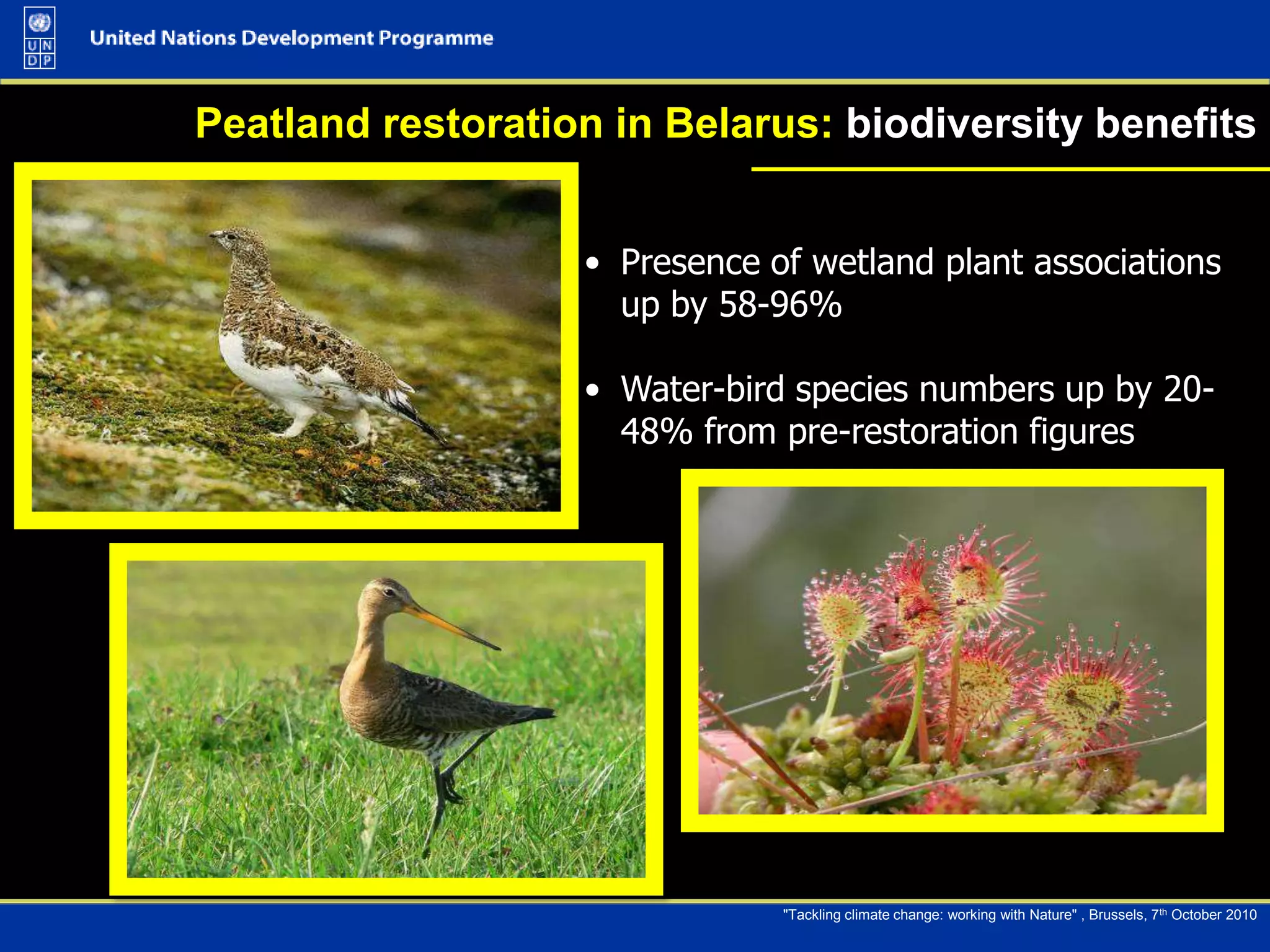
    Peatland restoration inBelarus: biodiversity benefitsPresence of wetland plant associations up by 58-96%
  • 22.
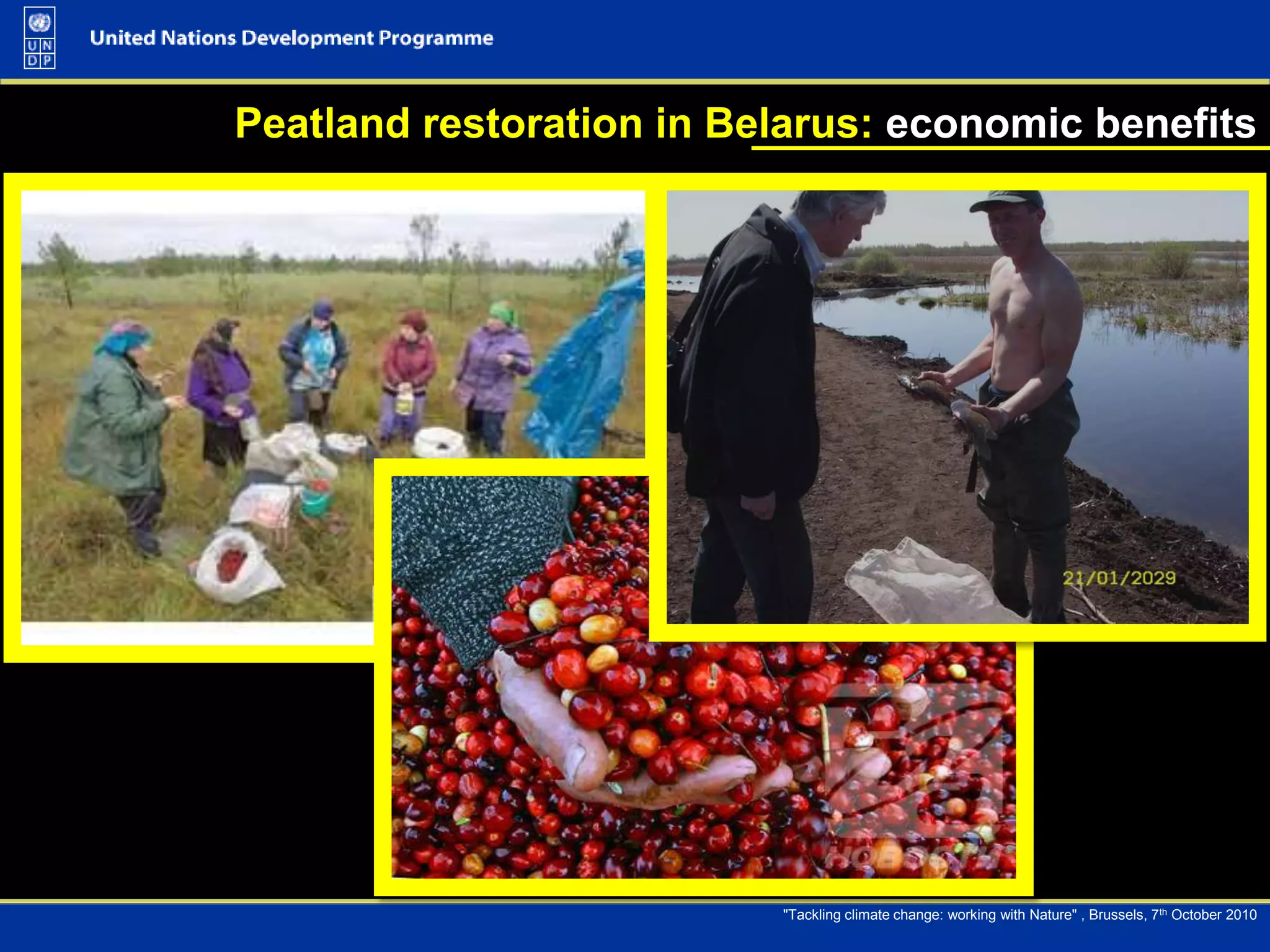
    Water-bird species numbersup by 20-48% from pre-restoration figuresPeatland restoration in Belarus: economic benefits
  • 23.

Editor's Notes

  • #6 Europe has experienced an increase in temperature by more than 1.2 °C so far (IPCC, 2007), with a further increase of 1.0–5.5 °C expected by the end of the 21st century (Christensen et al., 2007). Already southern Europe has experienced extremely dry weather conditions, with rainfall decreasing by up to 20 % during the 20th century. In northern European countries, meanwhile, precipitation increased by 10–40 %. The frequency of extreme weather conditions is expected to increase (EEA‑JRC‑WHO, 2008). Europe's snow cover has decreased by 1.3 % per decade during the past 40 years. And the average duration of ice cover on lakes and rivers in the northern hemisphere has been decreasing at a rate of 12 days per hundred years (EEA‑JRC‑WHO, 2008).An indicator based on observed populations of 122 common bird species across 18 European countries alongside climatic envelopes shows that rapid climate change in Europe in the past 20 years has strongly impacted these bird populations. Three‑quarters of the populations declined as a result of climate change,