International Conventions and protocols
1972 -UNEP United Nations Environment Programme
 An organisation under United Nations (1972)
 The United Nations General Assembly elects the UNEP
governing council members
 HQ – Nairobi ,Kenya
 Two programmes
Earth watch : constant surveillance on environment
Global Environment outlook(GEO): publishes this report
 Late 80’s ,Worked on a draft agreement (Nairobi
conference)
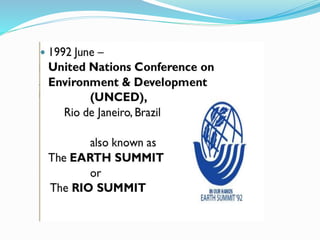
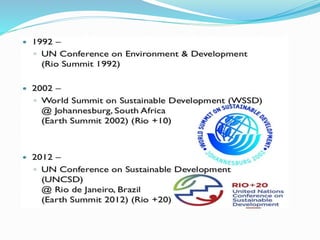
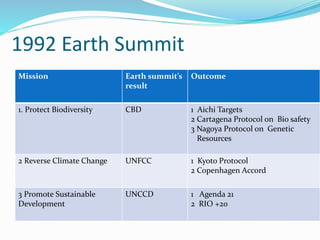
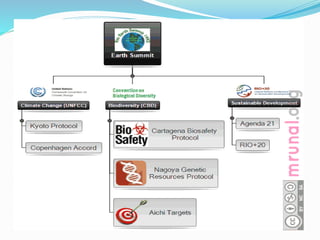
1992 Earth Summit
Mission Earth summit’s
result
Outcome
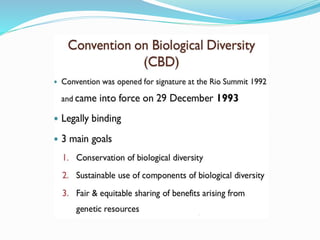
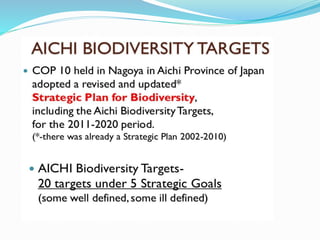
1. Protect Biodiversity CBD 1 Aichi Targets
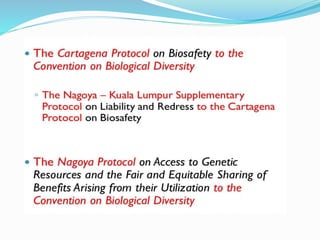
2 Cartagena Protocol on Bio safety
3 Nagoya Protocol on Genetic
Resources
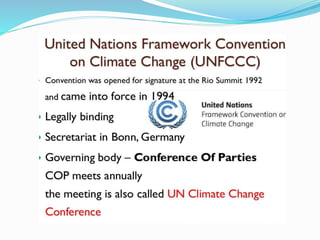
2 Reverse Climate Change UNFCC 1 Kyoto Protocol
2 Copenhagen Accord
3 Promote Sustainable
Development
UNCCD 1 Agenda 21
2 RIO +20
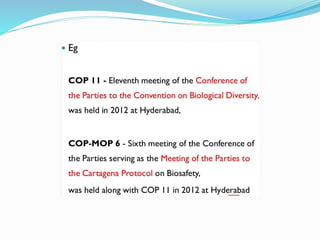
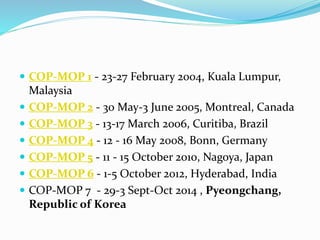
 COP-MOP 1 - 23-27 February 2004, Kuala Lumpur,
Malaysia
 COP-MOP 2 - 30 May-3 June 2005, Montreal, Canada
 COP-MOP 3 - 13-17 March 2006, Curitiba, Brazil
 COP-MOP 4 - 12 - 16 May 2008, Bonn, Germany
 COP-MOP 5 - 11 - 15 October 2010, Nagoya, Japan
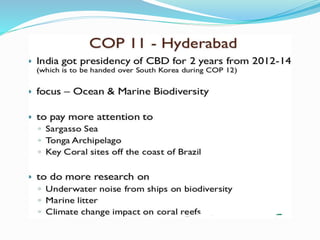
 COP-MOP 6 - 1-5 October 2012, Hyderabad, India
 COP-MOP 7 - 29-3 Sept-Oct 2014 , Pyeongchang,
Republic of Korea
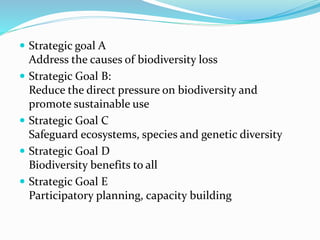
 Strategic goal A
Address the causes of biodiversity loss
 Strategic Goal B:
Reduce the direct pressure on biodiversity and
promote sustainable use
 Strategic Goal C
Safeguard ecosystems, species and genetic diversity
 Strategic Goal D
Biodiversity benefits to all
 Strategic Goal E
Participatory planning, capacity building
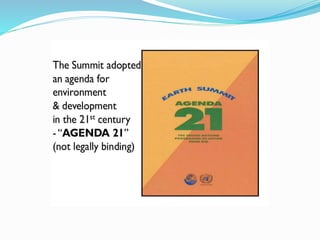
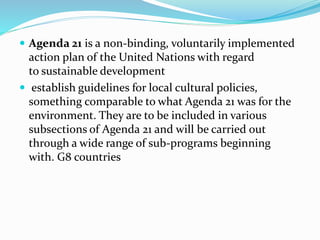
 Agenda 21 is a non-binding, voluntarily implemented
action plan of the United Nations with regard
to sustainable development
 establish guidelines for local cultural policies,
something comparable to what Agenda 21 was for the
environment. They are to be included in various
subsections of Agenda 21 and will be carried out
through a wide range of sub-programs beginning
with. G8 countries
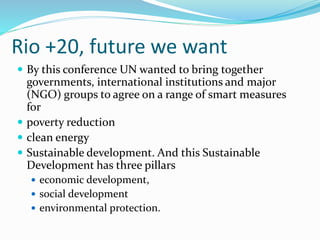
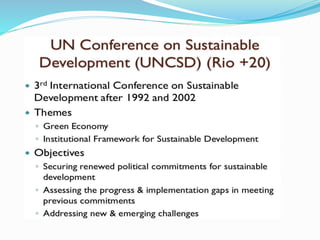
Rio +20, future we want
 By this conference UN wanted to bring together
governments, international institutions and major
(NGO) groups to agree on a range of smart measures
for
 poverty reduction
 clean energy
 Sustainable development. And this Sustainable
Development has three pillars
 economic development,
 social development
 environmental protection.
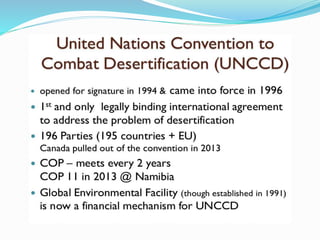
 The Convention addresses specifically the arid, semi-
arid and dry sub-humid areas, known as the drylands,
where some of the most vulnerable ecosystem and
people can be found.
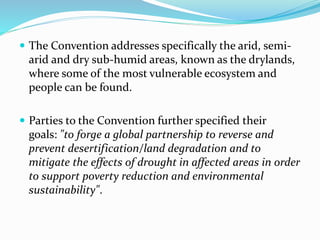
 Parties to the Convention further specified their
goals: "to forge a global partnership to reverse and
prevent desertification/land degradation and to
mitigate the effects of drought in affected areas in order
to support poverty reduction and environmental
sustainability".
 To improve the living conditions for people in dry
lands, to maintain and restore land and soil
productivity, and to mitigate the effects of drought.
 bottom-up approach
 The implementation of the UNCCD is geared
around five regional implementation annexes:
 Annex 1 for Africa,
 Annex 2 for Asia,
 Annex 3 for Latin America and the Caribbean,
 Annex 4 for Northern Mediterranean
 Annex 5 for Central and Eastern Europe.
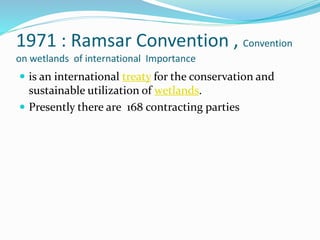
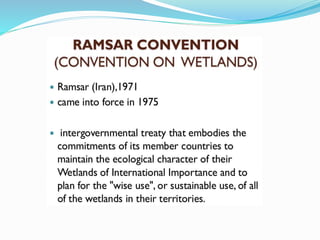
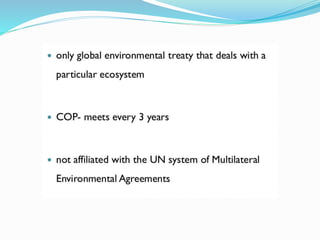
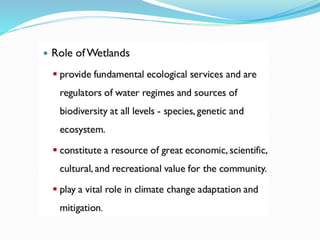
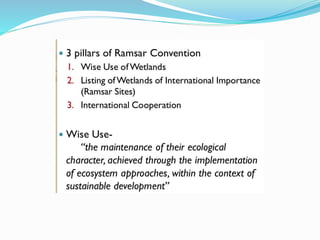
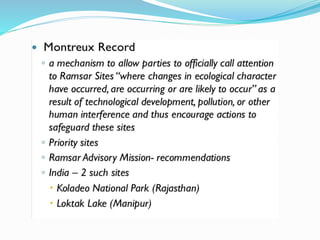
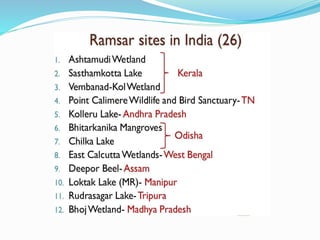
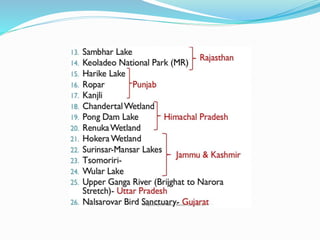
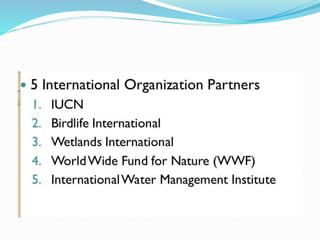
1971 : Ramsar Convention , Convention
on wetlands of international Importance
 is an international treaty for the conservation and
sustainable utilization of wetlands.
 Presently there are 168 contracting parties
Biodiversity conservation, Climate Change mitigation efforts

Biodiversity conservation, Climate Change mitigation efforts

  • 1.
  • 2.
    1972 -UNEP UnitedNations Environment Programme  An organisation under United Nations (1972)  The United Nations General Assembly elects the UNEP governing council members  HQ – Nairobi ,Kenya  Two programmes Earth watch : constant surveillance on environment Global Environment outlook(GEO): publishes this report  Late 80’s ,Worked on a draft agreement (Nairobi conference)
  • 17.
    1992 Earth Summit MissionEarth summit’s result Outcome 1. Protect Biodiversity CBD 1 Aichi Targets 2 Cartagena Protocol on Bio safety 3 Nagoya Protocol on Genetic Resources 2 Reverse Climate Change UNFCC 1 Kyoto Protocol 2 Copenhagen Accord 3 Promote Sustainable Development UNCCD 1 Agenda 21 2 RIO +20
  • 24.
     COP-MOP 1- 23-27 February 2004, Kuala Lumpur, Malaysia  COP-MOP 2 - 30 May-3 June 2005, Montreal, Canada  COP-MOP 3 - 13-17 March 2006, Curitiba, Brazil  COP-MOP 4 - 12 - 16 May 2008, Bonn, Germany  COP-MOP 5 - 11 - 15 October 2010, Nagoya, Japan  COP-MOP 6 - 1-5 October 2012, Hyderabad, India  COP-MOP 7 - 29-3 Sept-Oct 2014 , Pyeongchang, Republic of Korea
  • 35.
     Strategic goalA Address the causes of biodiversity loss  Strategic Goal B: Reduce the direct pressure on biodiversity and promote sustainable use  Strategic Goal C Safeguard ecosystems, species and genetic diversity  Strategic Goal D Biodiversity benefits to all  Strategic Goal E Participatory planning, capacity building
  • 57.
     Agenda 21is a non-binding, voluntarily implemented action plan of the United Nations with regard to sustainable development  establish guidelines for local cultural policies, something comparable to what Agenda 21 was for the environment. They are to be included in various subsections of Agenda 21 and will be carried out through a wide range of sub-programs beginning with. G8 countries
  • 58.
    Rio +20, futurewe want  By this conference UN wanted to bring together governments, international institutions and major (NGO) groups to agree on a range of smart measures for  poverty reduction  clean energy  Sustainable development. And this Sustainable Development has three pillars  economic development,  social development  environmental protection.
  • 64.
     The Conventionaddresses specifically the arid, semi- arid and dry sub-humid areas, known as the drylands, where some of the most vulnerable ecosystem and people can be found.  Parties to the Convention further specified their goals: "to forge a global partnership to reverse and prevent desertification/land degradation and to mitigate the effects of drought in affected areas in order to support poverty reduction and environmental sustainability".
  • 65.
     To improvethe living conditions for people in dry lands, to maintain and restore land and soil productivity, and to mitigate the effects of drought.  bottom-up approach  The implementation of the UNCCD is geared around five regional implementation annexes:  Annex 1 for Africa,  Annex 2 for Asia,  Annex 3 for Latin America and the Caribbean,  Annex 4 for Northern Mediterranean  Annex 5 for Central and Eastern Europe.
  • 83.
    1971 : RamsarConvention , Convention on wetlands of international Importance  is an international treaty for the conservation and sustainable utilization of wetlands.  Presently there are 168 contracting parties