Biochemistry

          An Introduction to the Chemistry of
          Life for Biochemistry Students
          International school or National plus
          school
          Adapted by Tielumphd
          source: harper et al
          Good luck!!!
What is Life Made of?

  Physical and Chemical sciences alone
   may not completely explain the nature of
   life, but they at least provide the essential
   framework for such an explanation.
  All students of life must have a
   fundamental understanding of organic
   chemistry and biochemistry.
Organic Chemistry

  Organic chemistry is the study of Carbon
   compounds.
  Organic compounds are compounds
   composed primarily of a Carbon
   skeleton.
  All living things are composed of organic
   compounds.
Organic Chemistry

  What makes Carbon Special? Why is
   Carbon so different from all the other
   elements on the periodic table?

  The answer derives from the ability of
   Carbon atoms to bond together to form
   long chains and rings.
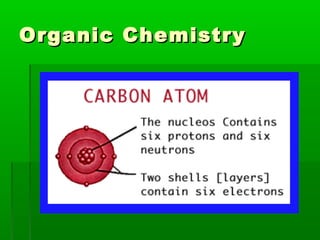
Organic Chemistry
Organic Chemistry


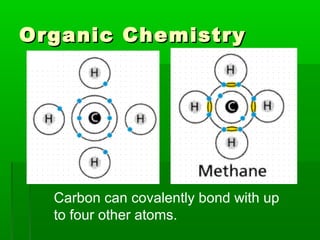
  Carbon can covalently bond with up
  to four other atoms.
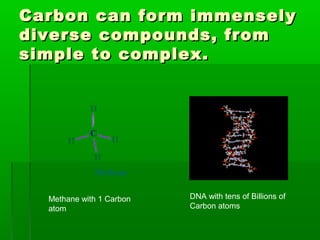
Carbon can form immensely
diverse compounds, from
simple to complex.


  Methane with 1 Carbon   DNA with tens of Billions of
  atom                    Carbon atoms
Biochemistry

 Biochemistry is a special branch of
  organic chemistry that deals with matter
  inside the living cell called Protoplasm.

 Protoplasm is an enormously complex
  mixture of organic compounds where
  high levels of chemical activity occur.
Biochemistry
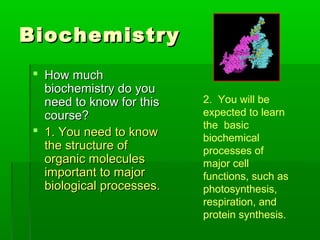
 How much
  biochemistry do you
  need to know for this   2. You will be
  course?                 expected to learn
                          the basic
 1. You need to know
                          biochemical
  the structure of        processes of
  organic molecules       major cell
  important to major      functions, such as
  biological processes.   photosynthesis,
                          respiration, and
                          protein synthesis.
Primary Organic
Compounds
You are expected     1.   Carbohydrates
to learn the
                     2.   Lipids
structure and
functions of these   3.   Proteins
organic              4.   Nucleic Acids
compounds:
Polymers ands
Monomers
 Each of these types of molecules are
  polymers that are assembled from single
  units called monomers.
 Each type of macromolecule is an
  assemblage of a different type of
  monomer.
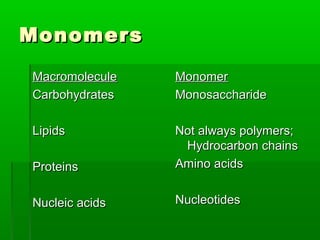
Monomers

Macromolecule   Monomer
Carbohydrates   Monosaccharide

Lipids          Not always polymers;
                 Hydrocarbon chains
Proteins        Amino acids


Nucleic acids   Nucleotides
How    do monomers
form   polymers?
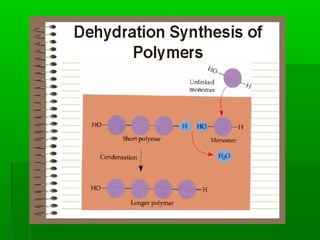
 In condensation reactions (also called
  dehydration synthesis), a molecule of
  water is removed from two monomers as
  they are connected together.
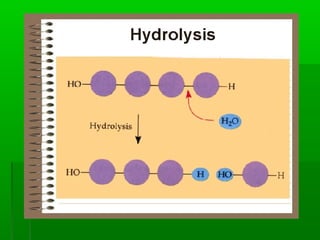
Hydrolysis

  In a reaction opposite to condensation, a
   water molecule can be added (along with
   the use of an enzyme) to split a polymer
   in two.
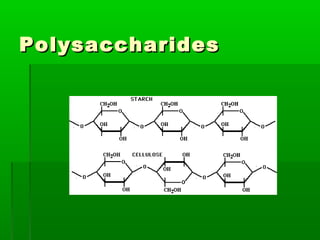
Carbohydrates

 Carbohydrates are made of carbon,
  hydrogen, and oxygen atoms, always in
  a ratio of 1:2:1.
 Carbohydrates are the key source of
  energy used by living things.
 The building blocks of carbohydrates are
  sugars, such as glucose and fructose.
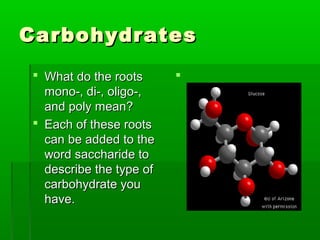
Carbohydrates
 What do the roots      
  mono-, di-, oligo-,
  and poly mean?
 Each of these roots
  can be added to the
  word saccharide to
  describe the type of
  carbohydrate you
  have.
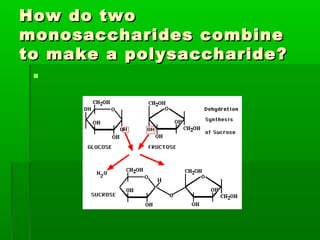
How do two
monosaccharides combine
to make a polysaccharide?
 
Polysaccharides
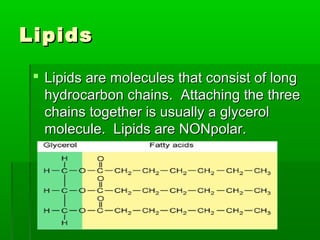
Lipids

  Lipids are molecules that consist of long
   hydrocarbon chains. Attaching the three
   chains together is usually a glycerol
   molecule. Lipids are NONpolar.
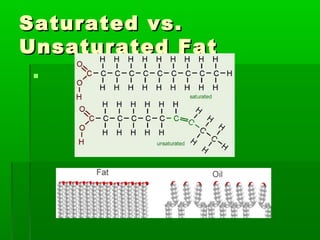
Saturated vs.
Unsaturated Fat
 
Proteins

  Proteins are building blocks of structures
   called amino acids. Proteins are what
   your DNA codes to make (we will talk
   about this in great detail in a month or
   so).
  A peptide bond forms between amino
   acids by dehydration synthesis.
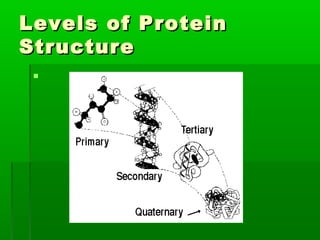
Levels of Protein
Structure
 
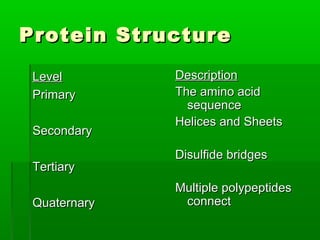
Protein Structure

 Level        Description
 Primary      The amino acid
                sequence
              Helices and Sheets
 Secondary
              Disulfide bridges
 Tertiary
              Multiple polypeptides
 Quaternary    connect
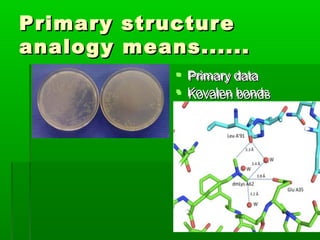
Primary   structure
analogy   means......
                 Primary data
                  Primary data
                 Kovalen bonds
                  Kovalen bonds
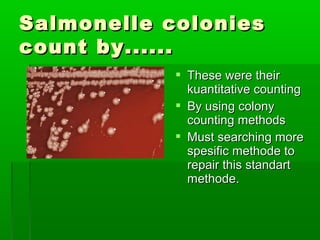
Salmonelle colonies
count by......
             These were their
              kuantitative counting
             By using colony
              counting methods
             Must searching more
              spesific methode to
              repair this standart
              methode.
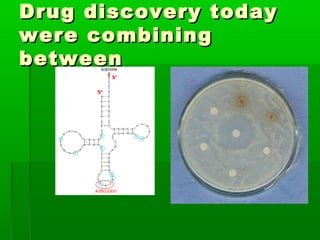
Drug discovery today
were combining
between

Biochemistry biomolecules

  • 1.
    Biochemistry An Introduction to the Chemistry of Life for Biochemistry Students International school or National plus school Adapted by Tielumphd source: harper et al Good luck!!!
  • 2.
    What is LifeMade of?  Physical and Chemical sciences alone may not completely explain the nature of life, but they at least provide the essential framework for such an explanation.  All students of life must have a fundamental understanding of organic chemistry and biochemistry.
  • 3.
    Organic Chemistry Organic chemistry is the study of Carbon compounds.  Organic compounds are compounds composed primarily of a Carbon skeleton.  All living things are composed of organic compounds.
  • 4.
    Organic Chemistry What makes Carbon Special? Why is Carbon so different from all the other elements on the periodic table?  The answer derives from the ability of Carbon atoms to bond together to form long chains and rings.
  • 5.
  • 6.
    Organic Chemistry Carbon can covalently bond with up to four other atoms.
  • 7.
    Carbon can formimmensely diverse compounds, from simple to complex. Methane with 1 Carbon DNA with tens of Billions of atom Carbon atoms
  • 8.
    Biochemistry  Biochemistry isa special branch of organic chemistry that deals with matter inside the living cell called Protoplasm.  Protoplasm is an enormously complex mixture of organic compounds where high levels of chemical activity occur.
  • 9.
    Biochemistry  How much biochemistry do you need to know for this 2. You will be course? expected to learn the basic  1. You need to know biochemical the structure of processes of organic molecules major cell important to major functions, such as biological processes. photosynthesis, respiration, and protein synthesis.
  • 10.
    Primary Organic Compounds You areexpected 1. Carbohydrates to learn the 2. Lipids structure and functions of these 3. Proteins organic 4. Nucleic Acids compounds:
  • 11.
    Polymers ands Monomers  Eachof these types of molecules are polymers that are assembled from single units called monomers.  Each type of macromolecule is an assemblage of a different type of monomer.
  • 12.
    Monomers Macromolecule Monomer Carbohydrates Monosaccharide Lipids Not always polymers; Hydrocarbon chains Proteins Amino acids Nucleic acids Nucleotides
  • 13.
    How do monomers form polymers?  In condensation reactions (also called dehydration synthesis), a molecule of water is removed from two monomers as they are connected together.
  • 15.
    Hydrolysis  Ina reaction opposite to condensation, a water molecule can be added (along with the use of an enzyme) to split a polymer in two.
  • 17.
    Carbohydrates  Carbohydrates aremade of carbon, hydrogen, and oxygen atoms, always in a ratio of 1:2:1.  Carbohydrates are the key source of energy used by living things.  The building blocks of carbohydrates are sugars, such as glucose and fructose.
  • 18.
    Carbohydrates  What dothe roots  mono-, di-, oligo-, and poly mean?  Each of these roots can be added to the word saccharide to describe the type of carbohydrate you have.
  • 19.
    How do two monosaccharidescombine to make a polysaccharide? 
  • 20.
  • 21.
    Lipids  Lipidsare molecules that consist of long hydrocarbon chains. Attaching the three chains together is usually a glycerol molecule. Lipids are NONpolar.
  • 22.
  • 23.
    Proteins  Proteinsare building blocks of structures called amino acids. Proteins are what your DNA codes to make (we will talk about this in great detail in a month or so).  A peptide bond forms between amino acids by dehydration synthesis.
  • 24.
  • 25.
    Protein Structure Level Description Primary The amino acid sequence Helices and Sheets Secondary Disulfide bridges Tertiary Multiple polypeptides Quaternary connect
  • 26.
    Primary structure analogy means......  Primary data Primary data  Kovalen bonds Kovalen bonds
  • 27.
    Salmonelle colonies count by......  These were their kuantitative counting  By using colony counting methods  Must searching more spesific methode to repair this standart methode.
  • 28.
    Drug discovery today werecombining between