Bioremediation
Dr. Sajithkumar K.J
• Bioremediation is a branch of biotechnology that
employs the use of living organisms, like microbes
and bacteria, in the removal of contaminants,
pollutants, and toxins from soil, water, and other
environments.
• Bioremediation is a process used to treat
contaminated media, including water, soil and
subsurface material, by altering environmental
conditions to stimulate growth of microorganisms
and degrade the target pollutants.
• It is less expensive and more sustainable than
other remediation alternatives.
• Similar to Biological waste treatment method
• Most bioremediation processes involve
oxidation-reduction reactions
• Electron acceptor (commonly oxygen) is added to
stimulate oxidation of a reduced pollutant (e.g.
hydrocarbons)
• Electron donor (commonly an organic substrate)
is added to reduce oxidized pollutants
(nitrate, perchlorate, oxidized metals, chlorinated
solvents, explosives and propellants).
• Phytoremediation: Plants
• Mycoremediation: Fungi
• Bioventing: Ground water remediation
• bioleaching: Extraction of metals from their
ores using bio
• landfarming, Exsitu waste treatment process
• bioreactor,
• composting,
• bioaugmentation,
• rhizofiltration, and biostimulation.
• Principle of Bioremediation
• Most bioremediation processes involve
oxidation-reduction (Redox) reactions
• a chemical species donates an electron
(electron donor) to a different species that
accepts the electron (electron acceptor).
• Common electron acceptors in bioremediation
processes : oxygen, nitrate, manganese (III and
IV), iron (III), sulfate, carbon dioxide and some
pollutants (chlorinated solvents, explosives,
oxidized metals, and radionuclides).
• Electron donors include sugars, fats, alcohols,
natural organic material, fuel hydrocarbons and
a variety of reduced organic pollutants.
• Aerobic & Anaerobic Bioremediation
• Heavy metals
The Role of Microorganisms in
Bioremediation
• Nowadays, the world is facing the problem of different environmental
pollution.
• Microorganisms are essential for a key alternative solution to overcome
challenges.
Why Microbes?
Survive in all place on the biosphere-metabolic activity
The nutritional versatility of microorganisms
They are restoring the original natural surroundings and preventing
further pollution
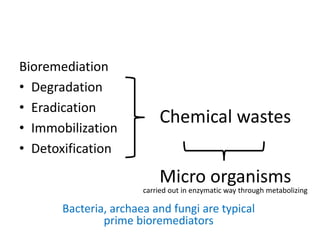
Chemical wastes
Bioremediation
• Degradation
• Eradication
• Immobilization
• Detoxification
Micro organisms
carried out in enzymatic way through metabolizing
Bacteria, archaea and fungi are typical
prime bioremediators
How Microbes?
• Microorganisms are involved through their enzymatic
pathways act as biocatalysts and facilitate the progress
of biochemical reactions that degrade the desired
pollutant.
• Microorganisms are act against the pollutants only
when they have access to a variety of materials
compounds to help them generate energy and
nutrients to build more cells.
• For bioremediation to be effective, microorganisms
must enzymatically attack the pollutants and convert
them to harmless products.
Factors affecting microbial bioremediation
• Biological factors
• Environmental factors
Availability of nutrients
Temperature
Concentration of oxygen
Moisture content
pH
Metal ions
Toxic compounds
Site characterization and selection
Biological factors
• Biological factors are affect the degradation of organic
compounds through competition between microorganisms
for limited carbon sources, antagonistic interactions between
microorganisms or the predation of microorganisms by
protozoa and bacteriophages.
• The rate of degradation is often dependent on the
concentration of the contaminant and the amount of catalyst
present.
– “catalyst” represents the number of organisms able to metabolize the
contaminant as well as the amount of enzymes(s) produced by each
cell.
• Availability of the contaminant and affinity of the metabolism
specific enzymes are largely needed
The major biological factors are
• mutation,
• horizontal gene transfer,
• enzyme activity,
• Interaction (competition, succession,
and predation),
• Its own growth until critical biomass is
reached,
• population size and composition
Environmental factors
• pH
• Temperature
• Moisture
• Soil structure
• Solubility in water
• Nutrients
• Site characteristics
• Redox potential and oxygen content
• Lack of trained human resources in this field
• Physico-chemical bioavailability of pollutants (contaminant
concentration, type, solubility, chemical structure and
toxicity).
The advantage of Bioremediation
• It is a natural process
• It requires a very less effort and can often be carried out on site, often
without causing a major disruption of normal activities.
• It is applied in a cost effective process as it lost less than the other
conventional methods
• It also helps in complete destruction of the pollutants
• It does not use any dangerous chemicals.
• Simple, less labor intensive and cheap due to their
natural role in the environment
• Eco-friendly and sustainable
• Contaminants are destroyed, not simply transferred to
different environmental media.
• Nonintrusive, potentially allowing for continued site
use.
• Relative ease of implementation
The disadvantage of Bioremediation
• It is limited to those compounds that are biodegradable.
• There are some concerns that the products of biodegradation
may be more persistent or toxic than the parent compound.
• Biological processes are often highly specific
• It is difficult to extrapolate from bench and pilot-scale studies
to full-scale field operations.
• Research is needed to develop and engineer bioremediation
technologies that are appropriate for sites with complex
mixtures of contaminants that are not evenly dispersed in the
environment. Contaminants may be present as solids, liquids
and gases.
• It often takes longer than other treatment options, such
as excavation and removal of soil or incineration.
• Bioremediation is a process that uses microorganisms or their
enzymes to promote degradation and/or removal of
contaminants from the environment.
• Generally, bioremediation technologies can be classified as in
situ or ex situ.
• In situ bioremediation involves treating the contaminated
material at the site while ex situ involves the removal of the
contaminated material to be treated elsewhere.
• Bioremediation strategies rely on the catabolic capacities
of microbes to transform harmful pollutants to harmless
compounds
Most of the inherent soil microbes posses
catabolic enzymes which are capable of utilizing pollutants as
their growth substrates
Genetic response of microorganisms 11/09/2020
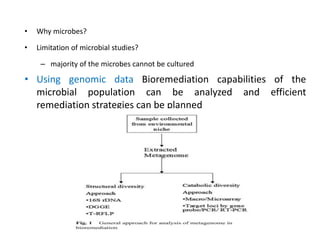
• Why microbes?
• Limitation of microbial studies?
– majority of the microbes cannot be cultured
• Using genomic data Bioremediation capabilities of the
microbial population can be analyzed and efficient
remediation strategies can be planned
• Various genomic tools in bioremediation process.
• Eg:PCR and DNA- or oligonucleotide-based microarray technology
molecular tools have facilitated the analysis of the natural microbial populations
without cultivation
The biochemical potential of natural micro flora can be assessed by monitoring the
available catabolic gene pool using target catabolic genes or a target genotype can be
tracked in environmental niches using PCR.
The molecular approach of analyzing the 16S rRNA libraries gave more insight into the
world of the microbial communities existing in a particular environmental niche (The
phylogenetic approach defines the population of the microbial community)
metabolizing capacity can be assessed by the use of the polymerase chain reaction
(PCR)
The application of genomic tools in identification of the microbial community has led to
the discovery of unique bacteria that were not accessible by culture-based techniques.
Nucleic acid extraction from target niches and amplification of the 16S rRNA gene by
polymerase chain reaction (PCR) has proved extremely useful in assessing the microbial
community
Understanding the microbial community of an environmental niche using modern molecular
techniques provides
• Drawbacks of the culture-based analysis
• Understanding of microbial diversity and functionality in the
environment
These new methods rely on the characterization of cellular constituents
such as fatty acids, proteins and nucleic acids that can be extracted
directly from environmental samples without the need for culturing
However, these are not without their drawbacks.
The most popular cell constituent used in microbial
analysis is the nucleic acid
DNA sequences provide the basis for our current
classification of microbial species and most tools focus on
the use of DNA for analyzing the microbial secrets.
Analysis of the molecular composition can be used to elucidate the
composition of the microbial community
PLFA (phospholipids fatty acids analysis)-Phospholipids
GLC (gas-liquid chromatography)-analysis of fatty acids
• In the process of bioremediation, different microbes
render the key metabolic activities, which together set the rules for
removal of pollutants.
• The community analysis of these microbes can be carried out using
molecular tools such as denaturing gradient gel electrophoresis (DGGE),
temperature gradient gel electrophoresis (TGGE), terminal restriction
fragment length polymorphism (T-RFLP).
• The general trend in community can be understood by using overall DNA
profiling by DGGE/TGGE analysis or T-RFLP, whereas, by constructing the
PCR amplified 16S rDNA library, the specific of the community and its
composition can be understood
• To assess the possible metabolic network or key microbes present in
these environments, the metagenome extracted from that sample is
analyzed.
Solid-Phase Bioremediation
Solid-phase bioremediation is a process that
treats soils in above-ground treatment areas
equipped with collection systems to prevent any
contaminant from escaping the treatment.
Moisture, Heat, Nutrients, or Oxygen are controlled to enhance biodegradation for the
application of this treatment
15/09/2020
• Solid-phase biological treatment processes
involve establishing an environment conducive to
microbiological growth and degradation of
organic contaminants.
• Solid-phase biotreatment relies on principles
applied in agriculture in the biocycling of natural
compounds.
• The conditions for biodegradation are optimized
by regular tilling of the soil and by the addition of
nutrients and water.
The Natural indigenous microbial populations of soil are diverse, and many of the
appropriate microorganisms that degrade many contaminants are found in the
contaminated soils.
The rates of bioremediation of contaminated soils are enhanced by
optimizing the conditions of the site for oxygen levels, moisture content,
available nutrients such as nitrogen and phosphorous, pH, and contact
between the appropriate microorganisms and the contaminants.
This technique has been successfully used for years in the managed disposal of oily
sludge and other petroleum refinery wastes through a process called‘ landfarming."
Solid-phase bio treatment of contaminated soils is probably the most widely used and
cost effective bio treatment technology currently in application today.
Typically the process is used for petroleum- and creosote-contaminated soils.
Factors affecting the cost of treatment are the type and levels of contamination, cleanup
criteria, requirements for materials handling and debris segregation, and excavation conditions
of the site.
Advantage of solid-phase biotreatment
• Generally more cost effective than other methods such as excavation and
landfill disposal, solidification, or incineration
• solid-phase bioremediation is typically conducted on-site, which
eliminates snort-term liability associated with transportation of
contaminated materials off-site and is a permanent remedy that reduces
or eliminates long-term liability
• Besides the significant costs related to excavation and landfill disposal,
short-term transportation liability and long-term disposal liability
represent significant hidden costs associated with this type of remedial
action
Soil Tilling to Increase Oxygen
A solid-phase bio treatment program involves careful manipulation of oxygen, nutrient, and
water levels in -the soil within the treatment unit to promote optimal degradation rates.
Addition of Nutrient Formulations Control of MoisturceContent
Site-Specific Modifications
• Include systems for control of volatile
emissions and leachate collection as well as
composting and heap leaching.
Soil heap bioremediation is a modification of solid-phase treatment
used when available space (area) is limited.
• Contaminated soil is excavated and stockpiled into a heap on a lined
treatment area to prevent further contamination.
• Microbial inoculum (as needed) and nutrients are applied to the
surface of the stockpile and allowed to percolate down through the
soil.
• The pile can be covered and an air emissions recovery system
installed as described above.
• A leachate collection system is used to collect the fluid, which is
recycled.
• An internal piping system may also be installed in order to blow air
upward through the soil and thus accelerate the biodegradation
process through the addition of oxygen.
• During operation, pH and moisture content are maintained within
ranges conducive to microbial activity.
Composting processes
• Composting processes are another modification of solid-
phase treatment in which the system is operated at a higher
temperature because of increased biological activity.
• This technology is used for highly contaminated soils,
treatment of poorly textured soils, and in areas where
temperature is critical to the sustained treatment process.
• Contaminated soils are mixed with suitable bulking agents,
such as straw, bark, or wood chips, and piled in mounds.
• The bulking agent improves soil texture for aeration and
drainage. The system is optimized for pH, moisture, and
nutrients using irrigation techniques and can be enclosed to
contain volatile emissions.
• Care must be taken for leaching control and volatile emissions
control, and to ensure that the bulking agent does not
interfere with the biodegradation of the contaminants
(preferential carbon source).
• It is an engineered process for treating
contaminated soils or sludge.
• Treatment of soils and sediments in slurry
bioremediation has become one of the best
options for the bioremediation of soils polluted
by recalcitrant pollutants under controlled
environmental conditions
• Under slurry conditions, the pollutant depletion
rates depend mainly on the degradation activity
of the microorganisms available in the system
Slurry‐Phase bioremediation
23/09/20
Slurry Bioreactors
• The reactors used in Slurry phase Bioremediation is
termed as slurry bioreactors (SB)
• Slurry bioreactor technology is an engineered complex
that generally comprises four parts:
1. installations for polluted soil handling and
conditioning,
2. the bioreactor battery itself,
3. installations for treated soil handling and disposal,
4. auxiliary equipment for treatment of process by-
streams
• The SB can be classified as batch, semi-
continuous, and continuous from the
operation point of view.
• Another useful classification relies on the
main electron acceptor used in the
biodegradation process: aerobic (molecular
oxygen), anoxic (nitrate and some metal
cations), anaerobic (sulfate-reducing,
methanogenic, fermentation)
Advantages
• Interesting and distinctive features of SBs are that soil is treated in
aqueous suspension, typically 10 to 30% w/v and that mechanical
or pneumatic mixing is provided.
These characteristics, in turn, lead to several process advantages:
(i) increased mass transfer rates and increased contact
microorganisms/pollutant/nutrients;
(ii) increased rates of pollutant biodegradation compared to in situ
bioremediation or solid phase biotreatment
(iii)control and optimization of several environmental parameters such
as temperature, pH, etc.;
(iv) effective use of biostimulation and bioaugmentaion;
(v) increase pollutant desorption and availability through the addition
of surfactants and solvents
. In spite of this, SBs has resulted more cost effective than incineration,
solvent extraction and thermal desorption in many cases
Disadvantages
• related to requirements for soil excavation,
handling, and conditioning, and bioreactor
construction/operation that typically increase
treatment costs compared to most simple
bioremediation techniques
Module 5
Microbial cleaning of gases
biofiltration and bioscrubbing
29/9/20
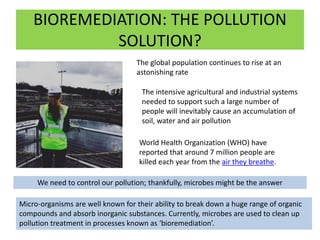
BIOREMEDIATION: THE POLLUTION
SOLUTION?
The global population continues to rise at an
astonishing rate
The intensive agricultural and industrial systems
needed to support such a large number of
people will inevitably cause an accumulation of
soil, water and air pollution
World Health Organization (WHO) have
reported that around 7 million people are
killed each year from the air they breathe.
We need to control our pollution; thankfully, microbes might be the answer
Micro-organisms are well known for their ability to break down a huge range of organic
compounds and absorb inorganic substances. Currently, microbes are used to clean up
pollution treatment in processes known as ‘bioremediation’.
There are three categories of bioremediation
techniques:
in situ land treatment for soil and groundwater
biofiltration of the air;
bioreactors, predominantly involved in water
treatment.
biofiltration of the air
Air
• Air is polluted by a variety of volatile organic
compounds created by a range of industrial processes.
• chemical scrubbing has been used to clean gases
emitted from chimneys
• biofiltration’ is helping to clean industrial gases using
microorganisms
• This method involves passing polluted air over a
replaceable culture medium containing micro-
organisms that degrade contaminates into products
such as carbon dioxide, water or salts.
Bio-Filtration
• Biofiltration is the process of utilizing natural
biological oxidation for the destruction and
removal of VOCs, odors and hydrocarbons
• Simply put, biofiltration is the degradation of
organic and inorganic substances by
microorganisms.
• The air flows through what is called a packed bed
of media causing the pollutants to transfer into a
thin biofilm on the surface of the packed media.
• The microorganisms are housed in the microfilm
and degrade the pollutants.
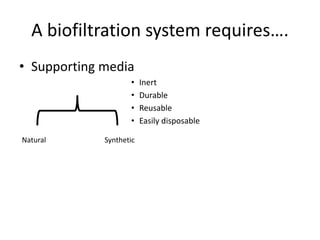
A biofiltration system requires….
• Supporting media
• Inert
• Durable
• Reusable
• Easily disposable
Natural Synthetic
The Biofiltration Process……..
• In biofiltration, the biofilter is a bed
microorganism filled media.
• These microorganisms attach themselves and
grow to form the biofilm, a biological layer.
• The biofilm contains a community of various
microorganisms including bacteria, fungi, yeast,
macro-organisms such as protozoa, worms,
insect’s larvae, etc., as well as extracellular
polymeric substances (ESP).
• The texture of the biofilm is often described as
slimy and muddy
The three phases of biofiltration include:
1. The solid phase (media)
2. The liquid phase (water)
3. A gaseous phase (air)
During the biofiltration water is applied intermittently or continuously over the
media.
Organic matter and the components of water diffuse into the biofilm where the
treatment occurs during the biodegradation process.
This is an aerobic process which means the microorganisms require oxygen for
metabolism to occur.
Oxygen is either supplied or enters the biofilter as water passes through.
Microorganism activity is important to the process performance.
The factors that are most integral to the process include
• biofilter hydraulic loading,
• the type of media,
• the feeding strategy (options include percolation or submerged media),
• the age of the biofilm,
• temperature,
• aeration, etc.
• While biological filters have a simple superficial structure. their
internal hydrodynamics and microorganisms’ are complex in their
biology. These features allow the process to have a high capability in
maintaining their performance and rapidly return to initial levels
following a period of low use, no use, intense use, toxic shocks, and
media backwash, which is a high rate of biofiltration processes.
Additional advantages include:
• Because microorganisms are retained within the biofilm, biofiltration
allows the development of microorganisms with relatively low specific
growth rates
• Biofilters are less subject to changes such as hydraulic shock and
variable or intermittent loading
• Operational costs are usually lower than option such as activated
sludge
• Final treatment result is less influenced by biomass separation since
the biomass concentration at the effluent is much lower than for
suspended biomass processes;
• Attached biomass becomes more specialized at a given point in the
process train as a result of the lack of biomass return
Advantages
Drawbacks
• Because filtration and growth of biomass leads to an
accumulation of matter in the filtering media, this type
of fixed-film process is subject to bioclogging and flow
channeling.
• Depending on the type of application and on the
media used for microbial growth, bioclogging can be
controlled using physical and/or chemical methods.
• Whenever possible, backwash steps can be
implemented using air and/or water to disrupt the
biomat and recover flow.
• Chemicals such as oxidizing (peroxide, ozone) or
biocide agents can also be used.
Biological waste gas purification systems
There are three types of system in operation:
• Biofilters, Biobeds
• Bioscrubbers
• Biotrickling filters
Bioscrubbers
• Design: It consists of an absorption column and
one or more bioreactors.
• Operation: The reaction tanks are aerated and
supplied with nutrient solution. The microbial
mass remains in the circulating liquor which
passes through the absorption column. Waster air
to be aerated is first brought to a temperature
range of 10-43oC suitable for microorganisms.
Dust in air, if any, should be removed by the filter
in the line.
• Use: Applied in the food industry, in rendering plants,
livestock farming, foundries.
• Advantages: it is suitable for water soluble hydrocarbons.
Use of activated carbon in the absorber improves mass
transfer, buffer capacity and immobilization of
microorganisms.
• Disadvantages: require a lot of skilled attention. Emission of
microorganisms is considered to be the risk involved.
• Status: considered to be of concern by the food industry and
pharmaceutical industry.
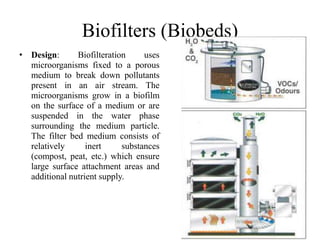
Biofilters (Biobeds)
• Design: Biofilteration uses
microorganisms fixed to a porous
medium to break down pollutants
present in an air stream. The
microorganisms grow in a biofilm
on the surface of a medium or are
suspended in the water phase
surrounding the medium particle.
The filter bed medium consists of
relatively inert substances
(compost, peat, etc.) which ensure
large surface attachment areas and
additional nutrient supply.
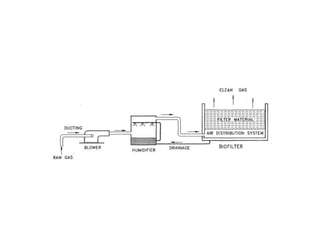
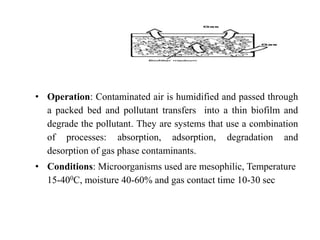
• Operation: Contaminated air is humidified and passed through
a packed bed and pollutant transfers into a thin biofilm and
degrade the pollutant. They are systems that use a combination
of processes: absorption, adsorption, degradation and
desorption of gas phase contaminants.
• Conditions: Microorganisms used are mesophilic, Temperature
15-400C, moisture 40-60% and gas contact time 10-30 sec
o Use: used in treating malodorous compounds and water soluble
Volatile organic compounds (VOCs) Industries employing this
technology include food and animal products, pharmaceuticals,
wood products, paint and coating applications, resin
manufacturing. Compounds treated are typically mixed VOCs
and sulfur compounds, including hydrogen sulfide.
• Advantages: simple design to construct and operate and offer a
cost effective solution provided the pollutant is biodegradable
within a moderate time frame. There is no secondary pollution
• Disadvantages: high loading and degradation rate,
humidification is problematic. Chlorinated hydrocarbons
can not be removed by biofilters as dechlorination cause
acidification of packing material.
• It is most accepted technique among three techniques
• Expected developments:
- use of specific microorganisms
- reduction in cost
-Process control (pH, moisture, rate
limiting nutrients)
- more standardization
- use for air flows over 100,000 m3/h
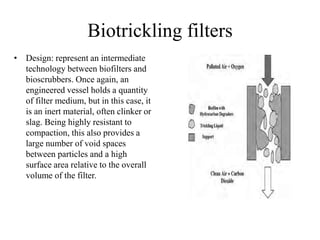
Biotrickling filters
• Design: represent an intermediate
technology between biofilters and
bioscrubbers. Once again, an
engineered vessel holds a quantity
of filter medium, but in this case, it
is an inert material, often clinker or
slag. Being highly resistant to
compaction, this also provides a
large number of void spaces
between particles and a high
surface area relative to the overall
volume of the filter.
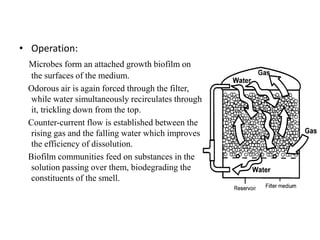
• Operation:
Microbes form an attached growth biofilm on
the surfaces of the medium.
Odorous air is again forced through the filter,
while water simultaneously recirculates through
it, trickling down from the top.
Counter-current flow is established between the
rising gas and the falling water which improves
the efficiency of dissolution.
Biofilm communities feed on substances in the
solution passing over them, biodegrading the
constituents of the smell.
• They have limited applications. Degradation of halogenated
hydrocarbons, NH3, H2S etc., encounters situation of acid
production. They will have to be neutralized, otherwise it has
an inhibitory effect on the microbiological process, e.g.,
CH2Cl2 + 2HCl  CO2 +2HCl (Hypomicrobium spp).
• Trickling filters can be used to solve the problem of acid, acid
being inhibitory.
Factors affecting biological treatment
• It depends on physical phenomena and microbiological
phenomena.
• Physical phenomena include:
- Mass transfer between gas and liquid phase
- Mass transfer to microrganisms
- Average residence time of mobile phase.
• Microbiological phenomena include:
- Rate of degradation
- Substrate/ product inhibition
- Diauxy
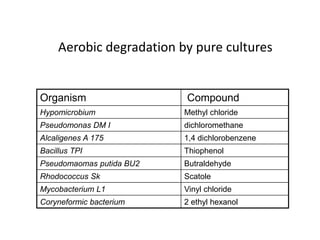
Aerobic degradation by pure cultures
Organism Compound
Hypomicrobium Methyl chloride
Pseudomonas DM I dichloromethane
Alcaligenes A 175 1,4 dichlorobenzene
Bacillus TPI Thiophenol
Pseudomaomas putida BU2 Butraldehyde
Rhodococcus Sk Scatole
Mycobacterium L1 Vinyl chloride
Coryneformic bacterium 2 ethyl hexanol
Recent work
• The Envirogen Inc., has developed a biocatalytic route for
degradation of trichloroethylene (TCE). A pure culture of
Pseudomonas is used. Bacteria are kept alive on toulene and
phenol. First field trial was carried out in New York and 90%
of TCE in contaminated air from air stripper treating ground
water was successfully degraded
• The company also has a process where genetically engineered
E.coli can be fed on glucose and is not a competitive substrate
as phenol and toulene for Pseudomonas.
• Biocube:
The EG and G Rotron (New York) and US Department of
Energy’s Idaho National Engineering Lab have developed a
process of aerobic Biofilteration (biocube). It employs naturally
occurring microorganisms, mostly Actinomycetes and
Pseudomonas to remove more than 90% of aliphatic and
aromatic substances and their derivatives from gas streams.
Biocube filter beds are modular trays filled with soil; compost
mixture containing microorganisms. Beds are kept moist and at
proper temperature so that biofilm develops on the surface.
• Styrene is a hazardous air pollutant. Envirogen Inc. is scaling up
their Biofilteration system. Here naturally occurring
microorganisms are immobilized on a porous filter substrate
such as compost or peat. Concentrated vapour stream passes
through the filter bed, pollutants from vapour phase are
transferred to the biofilm and are oxidized to CO2 and water.
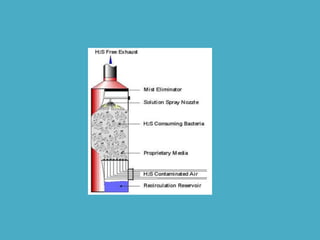
• The Dowa mining company, Japan uses Thiobacillus
ferrooxidans, oxidizes Fe+2 to Fe+3 for energy and gives solid
sulphur from H2S. It is used as exhaust system for H2S. It has
potential applications In petroleum and chemical based
industries and works on one third of the cost.
Biotransformation
• Biotransformation means chemical alteration of chemicals
such as nutrients, amino acids, toxins, and drugs in the
body.
• It is also needed to render non-polar compounds polar so
that they are not reabsorbed in renal tubules and are
excreted.
• Biotransformation is a process by which organic
compounds are transformed from one form to another to
reduce the persistence and toxicity of the chemical
compounds.
• Structural modifications in a chemical compound by
organisms /enzyme systems that lead to the formation of
molecules with relatively greater polarity
• Biotransformation is of two types: Enzymatic and
Non-enzymatic.
• Enzymatic are further divided into Microsomal
and Non-microsomal
Enzymatic Elimination
is the biotransformation occurring due to various
enzymes present in the body.
Microsomal biotransformation is caused by
enzymes present within the lipophilic membranes
of smooth endoplasmic reticulum.
Non-Microsomal Biotransformation involves the
enzymes which are present within the
mitochondria
• Microbial biotransformation is widely used in
the transformation of various pollutants or a
large variety of compounds including
hydrocarbons, pharmaceutical substances
and metals
• These transformations can be congregated
under the categories: oxidation, reduction,
hydrolysis, isomerisation, condensation,
formation of new carbon bonds, and
introduction of functional groups.

Bio remediation

  • 1.
  • 2.
    • Bioremediation isa branch of biotechnology that employs the use of living organisms, like microbes and bacteria, in the removal of contaminants, pollutants, and toxins from soil, water, and other environments. • Bioremediation is a process used to treat contaminated media, including water, soil and subsurface material, by altering environmental conditions to stimulate growth of microorganisms and degrade the target pollutants.
  • 3.
    • It isless expensive and more sustainable than other remediation alternatives. • Similar to Biological waste treatment method • Most bioremediation processes involve oxidation-reduction reactions • Electron acceptor (commonly oxygen) is added to stimulate oxidation of a reduced pollutant (e.g. hydrocarbons) • Electron donor (commonly an organic substrate) is added to reduce oxidized pollutants (nitrate, perchlorate, oxidized metals, chlorinated solvents, explosives and propellants).
  • 4.
    • Phytoremediation: Plants •Mycoremediation: Fungi • Bioventing: Ground water remediation • bioleaching: Extraction of metals from their ores using bio • landfarming, Exsitu waste treatment process • bioreactor, • composting, • bioaugmentation, • rhizofiltration, and biostimulation.
  • 5.
    • Principle ofBioremediation • Most bioremediation processes involve oxidation-reduction (Redox) reactions • a chemical species donates an electron (electron donor) to a different species that accepts the electron (electron acceptor). • Common electron acceptors in bioremediation processes : oxygen, nitrate, manganese (III and IV), iron (III), sulfate, carbon dioxide and some pollutants (chlorinated solvents, explosives, oxidized metals, and radionuclides).
  • 6.
    • Electron donorsinclude sugars, fats, alcohols, natural organic material, fuel hydrocarbons and a variety of reduced organic pollutants. • Aerobic & Anaerobic Bioremediation • Heavy metals
  • 7.
    The Role ofMicroorganisms in Bioremediation • Nowadays, the world is facing the problem of different environmental pollution. • Microorganisms are essential for a key alternative solution to overcome challenges. Why Microbes? Survive in all place on the biosphere-metabolic activity The nutritional versatility of microorganisms They are restoring the original natural surroundings and preventing further pollution
  • 8.
    Chemical wastes Bioremediation • Degradation •Eradication • Immobilization • Detoxification Micro organisms carried out in enzymatic way through metabolizing Bacteria, archaea and fungi are typical prime bioremediators
  • 9.
    How Microbes? • Microorganismsare involved through their enzymatic pathways act as biocatalysts and facilitate the progress of biochemical reactions that degrade the desired pollutant. • Microorganisms are act against the pollutants only when they have access to a variety of materials compounds to help them generate energy and nutrients to build more cells. • For bioremediation to be effective, microorganisms must enzymatically attack the pollutants and convert them to harmless products.
  • 10.
    Factors affecting microbialbioremediation • Biological factors • Environmental factors Availability of nutrients Temperature Concentration of oxygen Moisture content pH Metal ions Toxic compounds Site characterization and selection
  • 11.
    Biological factors • Biologicalfactors are affect the degradation of organic compounds through competition between microorganisms for limited carbon sources, antagonistic interactions between microorganisms or the predation of microorganisms by protozoa and bacteriophages. • The rate of degradation is often dependent on the concentration of the contaminant and the amount of catalyst present. – “catalyst” represents the number of organisms able to metabolize the contaminant as well as the amount of enzymes(s) produced by each cell. • Availability of the contaminant and affinity of the metabolism specific enzymes are largely needed
  • 12.
    The major biologicalfactors are • mutation, • horizontal gene transfer, • enzyme activity, • Interaction (competition, succession, and predation), • Its own growth until critical biomass is reached, • population size and composition
  • 13.
    Environmental factors • pH •Temperature • Moisture • Soil structure • Solubility in water • Nutrients • Site characteristics • Redox potential and oxygen content • Lack of trained human resources in this field • Physico-chemical bioavailability of pollutants (contaminant concentration, type, solubility, chemical structure and toxicity).
  • 14.
    The advantage ofBioremediation • It is a natural process • It requires a very less effort and can often be carried out on site, often without causing a major disruption of normal activities. • It is applied in a cost effective process as it lost less than the other conventional methods • It also helps in complete destruction of the pollutants • It does not use any dangerous chemicals. • Simple, less labor intensive and cheap due to their natural role in the environment • Eco-friendly and sustainable • Contaminants are destroyed, not simply transferred to different environmental media. • Nonintrusive, potentially allowing for continued site use. • Relative ease of implementation
  • 15.
    The disadvantage ofBioremediation • It is limited to those compounds that are biodegradable. • There are some concerns that the products of biodegradation may be more persistent or toxic than the parent compound. • Biological processes are often highly specific • It is difficult to extrapolate from bench and pilot-scale studies to full-scale field operations. • Research is needed to develop and engineer bioremediation technologies that are appropriate for sites with complex mixtures of contaminants that are not evenly dispersed in the environment. Contaminants may be present as solids, liquids and gases. • It often takes longer than other treatment options, such as excavation and removal of soil or incineration.
  • 16.
    • Bioremediation isa process that uses microorganisms or their enzymes to promote degradation and/or removal of contaminants from the environment. • Generally, bioremediation technologies can be classified as in situ or ex situ. • In situ bioremediation involves treating the contaminated material at the site while ex situ involves the removal of the contaminated material to be treated elsewhere. • Bioremediation strategies rely on the catabolic capacities of microbes to transform harmful pollutants to harmless compounds Most of the inherent soil microbes posses catabolic enzymes which are capable of utilizing pollutants as their growth substrates Genetic response of microorganisms 11/09/2020
  • 17.
    • Why microbes? •Limitation of microbial studies? – majority of the microbes cannot be cultured • Using genomic data Bioremediation capabilities of the microbial population can be analyzed and efficient remediation strategies can be planned
  • 18.
    • Various genomictools in bioremediation process. • Eg:PCR and DNA- or oligonucleotide-based microarray technology molecular tools have facilitated the analysis of the natural microbial populations without cultivation The biochemical potential of natural micro flora can be assessed by monitoring the available catabolic gene pool using target catabolic genes or a target genotype can be tracked in environmental niches using PCR. The molecular approach of analyzing the 16S rRNA libraries gave more insight into the world of the microbial communities existing in a particular environmental niche (The phylogenetic approach defines the population of the microbial community) metabolizing capacity can be assessed by the use of the polymerase chain reaction (PCR)
  • 19.
    The application ofgenomic tools in identification of the microbial community has led to the discovery of unique bacteria that were not accessible by culture-based techniques. Nucleic acid extraction from target niches and amplification of the 16S rRNA gene by polymerase chain reaction (PCR) has proved extremely useful in assessing the microbial community Understanding the microbial community of an environmental niche using modern molecular techniques provides • Drawbacks of the culture-based analysis • Understanding of microbial diversity and functionality in the environment These new methods rely on the characterization of cellular constituents such as fatty acids, proteins and nucleic acids that can be extracted directly from environmental samples without the need for culturing
  • 20.
    However, these arenot without their drawbacks. The most popular cell constituent used in microbial analysis is the nucleic acid DNA sequences provide the basis for our current classification of microbial species and most tools focus on the use of DNA for analyzing the microbial secrets. Analysis of the molecular composition can be used to elucidate the composition of the microbial community PLFA (phospholipids fatty acids analysis)-Phospholipids GLC (gas-liquid chromatography)-analysis of fatty acids
  • 21.
    • In theprocess of bioremediation, different microbes render the key metabolic activities, which together set the rules for removal of pollutants. • The community analysis of these microbes can be carried out using molecular tools such as denaturing gradient gel electrophoresis (DGGE), temperature gradient gel electrophoresis (TGGE), terminal restriction fragment length polymorphism (T-RFLP). • The general trend in community can be understood by using overall DNA profiling by DGGE/TGGE analysis or T-RFLP, whereas, by constructing the PCR amplified 16S rDNA library, the specific of the community and its composition can be understood • To assess the possible metabolic network or key microbes present in these environments, the metagenome extracted from that sample is analyzed.
  • 22.
    Solid-Phase Bioremediation Solid-phase bioremediationis a process that treats soils in above-ground treatment areas equipped with collection systems to prevent any contaminant from escaping the treatment. Moisture, Heat, Nutrients, or Oxygen are controlled to enhance biodegradation for the application of this treatment 15/09/2020
  • 23.
    • Solid-phase biologicaltreatment processes involve establishing an environment conducive to microbiological growth and degradation of organic contaminants. • Solid-phase biotreatment relies on principles applied in agriculture in the biocycling of natural compounds. • The conditions for biodegradation are optimized by regular tilling of the soil and by the addition of nutrients and water. The Natural indigenous microbial populations of soil are diverse, and many of the appropriate microorganisms that degrade many contaminants are found in the contaminated soils.
  • 24.
    The rates ofbioremediation of contaminated soils are enhanced by optimizing the conditions of the site for oxygen levels, moisture content, available nutrients such as nitrogen and phosphorous, pH, and contact between the appropriate microorganisms and the contaminants. This technique has been successfully used for years in the managed disposal of oily sludge and other petroleum refinery wastes through a process called‘ landfarming." Solid-phase bio treatment of contaminated soils is probably the most widely used and cost effective bio treatment technology currently in application today. Typically the process is used for petroleum- and creosote-contaminated soils. Factors affecting the cost of treatment are the type and levels of contamination, cleanup criteria, requirements for materials handling and debris segregation, and excavation conditions of the site.
  • 25.
    Advantage of solid-phasebiotreatment • Generally more cost effective than other methods such as excavation and landfill disposal, solidification, or incineration • solid-phase bioremediation is typically conducted on-site, which eliminates snort-term liability associated with transportation of contaminated materials off-site and is a permanent remedy that reduces or eliminates long-term liability • Besides the significant costs related to excavation and landfill disposal, short-term transportation liability and long-term disposal liability represent significant hidden costs associated with this type of remedial action Soil Tilling to Increase Oxygen A solid-phase bio treatment program involves careful manipulation of oxygen, nutrient, and water levels in -the soil within the treatment unit to promote optimal degradation rates. Addition of Nutrient Formulations Control of MoisturceContent
  • 26.
    Site-Specific Modifications • Includesystems for control of volatile emissions and leachate collection as well as composting and heap leaching.
  • 27.
    Soil heap bioremediationis a modification of solid-phase treatment used when available space (area) is limited. • Contaminated soil is excavated and stockpiled into a heap on a lined treatment area to prevent further contamination. • Microbial inoculum (as needed) and nutrients are applied to the surface of the stockpile and allowed to percolate down through the soil. • The pile can be covered and an air emissions recovery system installed as described above. • A leachate collection system is used to collect the fluid, which is recycled. • An internal piping system may also be installed in order to blow air upward through the soil and thus accelerate the biodegradation process through the addition of oxygen. • During operation, pH and moisture content are maintained within ranges conducive to microbial activity.
  • 28.
    Composting processes • Compostingprocesses are another modification of solid- phase treatment in which the system is operated at a higher temperature because of increased biological activity. • This technology is used for highly contaminated soils, treatment of poorly textured soils, and in areas where temperature is critical to the sustained treatment process. • Contaminated soils are mixed with suitable bulking agents, such as straw, bark, or wood chips, and piled in mounds. • The bulking agent improves soil texture for aeration and drainage. The system is optimized for pH, moisture, and nutrients using irrigation techniques and can be enclosed to contain volatile emissions. • Care must be taken for leaching control and volatile emissions control, and to ensure that the bulking agent does not interfere with the biodegradation of the contaminants (preferential carbon source).
  • 29.
    • It isan engineered process for treating contaminated soils or sludge. • Treatment of soils and sediments in slurry bioremediation has become one of the best options for the bioremediation of soils polluted by recalcitrant pollutants under controlled environmental conditions • Under slurry conditions, the pollutant depletion rates depend mainly on the degradation activity of the microorganisms available in the system Slurry‐Phase bioremediation 23/09/20
  • 30.
    Slurry Bioreactors • Thereactors used in Slurry phase Bioremediation is termed as slurry bioreactors (SB) • Slurry bioreactor technology is an engineered complex that generally comprises four parts: 1. installations for polluted soil handling and conditioning, 2. the bioreactor battery itself, 3. installations for treated soil handling and disposal, 4. auxiliary equipment for treatment of process by- streams
  • 31.
    • The SBcan be classified as batch, semi- continuous, and continuous from the operation point of view. • Another useful classification relies on the main electron acceptor used in the biodegradation process: aerobic (molecular oxygen), anoxic (nitrate and some metal cations), anaerobic (sulfate-reducing, methanogenic, fermentation)
  • 32.
    Advantages • Interesting anddistinctive features of SBs are that soil is treated in aqueous suspension, typically 10 to 30% w/v and that mechanical or pneumatic mixing is provided. These characteristics, in turn, lead to several process advantages: (i) increased mass transfer rates and increased contact microorganisms/pollutant/nutrients; (ii) increased rates of pollutant biodegradation compared to in situ bioremediation or solid phase biotreatment (iii)control and optimization of several environmental parameters such as temperature, pH, etc.; (iv) effective use of biostimulation and bioaugmentaion; (v) increase pollutant desorption and availability through the addition of surfactants and solvents . In spite of this, SBs has resulted more cost effective than incineration, solvent extraction and thermal desorption in many cases
  • 33.
    Disadvantages • related torequirements for soil excavation, handling, and conditioning, and bioreactor construction/operation that typically increase treatment costs compared to most simple bioremediation techniques
  • 34.
    Module 5 Microbial cleaningof gases biofiltration and bioscrubbing 29/9/20
  • 35.
    BIOREMEDIATION: THE POLLUTION SOLUTION? Theglobal population continues to rise at an astonishing rate The intensive agricultural and industrial systems needed to support such a large number of people will inevitably cause an accumulation of soil, water and air pollution World Health Organization (WHO) have reported that around 7 million people are killed each year from the air they breathe. We need to control our pollution; thankfully, microbes might be the answer Micro-organisms are well known for their ability to break down a huge range of organic compounds and absorb inorganic substances. Currently, microbes are used to clean up pollution treatment in processes known as ‘bioremediation’.
  • 36.
    There are threecategories of bioremediation techniques: in situ land treatment for soil and groundwater biofiltration of the air; bioreactors, predominantly involved in water treatment. biofiltration of the air
  • 37.
    Air • Air ispolluted by a variety of volatile organic compounds created by a range of industrial processes. • chemical scrubbing has been used to clean gases emitted from chimneys • biofiltration’ is helping to clean industrial gases using microorganisms • This method involves passing polluted air over a replaceable culture medium containing micro- organisms that degrade contaminates into products such as carbon dioxide, water or salts.
  • 38.
    Bio-Filtration • Biofiltration isthe process of utilizing natural biological oxidation for the destruction and removal of VOCs, odors and hydrocarbons • Simply put, biofiltration is the degradation of organic and inorganic substances by microorganisms. • The air flows through what is called a packed bed of media causing the pollutants to transfer into a thin biofilm on the surface of the packed media. • The microorganisms are housed in the microfilm and degrade the pollutants.
  • 39.
    A biofiltration systemrequires…. • Supporting media • Inert • Durable • Reusable • Easily disposable Natural Synthetic
  • 40.
    The Biofiltration Process…….. •In biofiltration, the biofilter is a bed microorganism filled media. • These microorganisms attach themselves and grow to form the biofilm, a biological layer. • The biofilm contains a community of various microorganisms including bacteria, fungi, yeast, macro-organisms such as protozoa, worms, insect’s larvae, etc., as well as extracellular polymeric substances (ESP). • The texture of the biofilm is often described as slimy and muddy
  • 42.
    The three phasesof biofiltration include: 1. The solid phase (media) 2. The liquid phase (water) 3. A gaseous phase (air) During the biofiltration water is applied intermittently or continuously over the media. Organic matter and the components of water diffuse into the biofilm where the treatment occurs during the biodegradation process. This is an aerobic process which means the microorganisms require oxygen for metabolism to occur. Oxygen is either supplied or enters the biofilter as water passes through. Microorganism activity is important to the process performance. The factors that are most integral to the process include • biofilter hydraulic loading, • the type of media, • the feeding strategy (options include percolation or submerged media), • the age of the biofilm, • temperature, • aeration, etc.
  • 43.
    • While biologicalfilters have a simple superficial structure. their internal hydrodynamics and microorganisms’ are complex in their biology. These features allow the process to have a high capability in maintaining their performance and rapidly return to initial levels following a period of low use, no use, intense use, toxic shocks, and media backwash, which is a high rate of biofiltration processes. Additional advantages include: • Because microorganisms are retained within the biofilm, biofiltration allows the development of microorganisms with relatively low specific growth rates • Biofilters are less subject to changes such as hydraulic shock and variable or intermittent loading • Operational costs are usually lower than option such as activated sludge • Final treatment result is less influenced by biomass separation since the biomass concentration at the effluent is much lower than for suspended biomass processes; • Attached biomass becomes more specialized at a given point in the process train as a result of the lack of biomass return Advantages
  • 44.
    Drawbacks • Because filtrationand growth of biomass leads to an accumulation of matter in the filtering media, this type of fixed-film process is subject to bioclogging and flow channeling. • Depending on the type of application and on the media used for microbial growth, bioclogging can be controlled using physical and/or chemical methods. • Whenever possible, backwash steps can be implemented using air and/or water to disrupt the biomat and recover flow. • Chemicals such as oxidizing (peroxide, ozone) or biocide agents can also be used.
  • 45.
    Biological waste gaspurification systems There are three types of system in operation: • Biofilters, Biobeds • Bioscrubbers • Biotrickling filters
  • 46.
    Bioscrubbers • Design: Itconsists of an absorption column and one or more bioreactors. • Operation: The reaction tanks are aerated and supplied with nutrient solution. The microbial mass remains in the circulating liquor which passes through the absorption column. Waster air to be aerated is first brought to a temperature range of 10-43oC suitable for microorganisms. Dust in air, if any, should be removed by the filter in the line.
  • 48.
    • Use: Appliedin the food industry, in rendering plants, livestock farming, foundries. • Advantages: it is suitable for water soluble hydrocarbons. Use of activated carbon in the absorber improves mass transfer, buffer capacity and immobilization of microorganisms. • Disadvantages: require a lot of skilled attention. Emission of microorganisms is considered to be the risk involved. • Status: considered to be of concern by the food industry and pharmaceutical industry.
  • 49.
    Biofilters (Biobeds) • Design:Biofilteration uses microorganisms fixed to a porous medium to break down pollutants present in an air stream. The microorganisms grow in a biofilm on the surface of a medium or are suspended in the water phase surrounding the medium particle. The filter bed medium consists of relatively inert substances (compost, peat, etc.) which ensure large surface attachment areas and additional nutrient supply.
  • 50.
    • Operation: Contaminatedair is humidified and passed through a packed bed and pollutant transfers into a thin biofilm and degrade the pollutant. They are systems that use a combination of processes: absorption, adsorption, degradation and desorption of gas phase contaminants. • Conditions: Microorganisms used are mesophilic, Temperature 15-400C, moisture 40-60% and gas contact time 10-30 sec
  • 51.
    o Use: usedin treating malodorous compounds and water soluble Volatile organic compounds (VOCs) Industries employing this technology include food and animal products, pharmaceuticals, wood products, paint and coating applications, resin manufacturing. Compounds treated are typically mixed VOCs and sulfur compounds, including hydrogen sulfide. • Advantages: simple design to construct and operate and offer a cost effective solution provided the pollutant is biodegradable within a moderate time frame. There is no secondary pollution • Disadvantages: high loading and degradation rate, humidification is problematic. Chlorinated hydrocarbons can not be removed by biofilters as dechlorination cause acidification of packing material. • It is most accepted technique among three techniques
  • 52.
    • Expected developments: -use of specific microorganisms - reduction in cost -Process control (pH, moisture, rate limiting nutrients) - more standardization - use for air flows over 100,000 m3/h
  • 53.
    Biotrickling filters • Design:represent an intermediate technology between biofilters and bioscrubbers. Once again, an engineered vessel holds a quantity of filter medium, but in this case, it is an inert material, often clinker or slag. Being highly resistant to compaction, this also provides a large number of void spaces between particles and a high surface area relative to the overall volume of the filter.
  • 54.
    • Operation: Microbes forman attached growth biofilm on the surfaces of the medium. Odorous air is again forced through the filter, while water simultaneously recirculates through it, trickling down from the top. Counter-current flow is established between the rising gas and the falling water which improves the efficiency of dissolution. Biofilm communities feed on substances in the solution passing over them, biodegrading the constituents of the smell.
  • 55.
    • They havelimited applications. Degradation of halogenated hydrocarbons, NH3, H2S etc., encounters situation of acid production. They will have to be neutralized, otherwise it has an inhibitory effect on the microbiological process, e.g., CH2Cl2 + 2HCl  CO2 +2HCl (Hypomicrobium spp). • Trickling filters can be used to solve the problem of acid, acid being inhibitory.
  • 56.
    Factors affecting biologicaltreatment • It depends on physical phenomena and microbiological phenomena. • Physical phenomena include: - Mass transfer between gas and liquid phase - Mass transfer to microrganisms - Average residence time of mobile phase. • Microbiological phenomena include: - Rate of degradation - Substrate/ product inhibition - Diauxy
  • 57.
    Aerobic degradation bypure cultures Organism Compound Hypomicrobium Methyl chloride Pseudomonas DM I dichloromethane Alcaligenes A 175 1,4 dichlorobenzene Bacillus TPI Thiophenol Pseudomaomas putida BU2 Butraldehyde Rhodococcus Sk Scatole Mycobacterium L1 Vinyl chloride Coryneformic bacterium 2 ethyl hexanol
  • 58.
    Recent work • TheEnvirogen Inc., has developed a biocatalytic route for degradation of trichloroethylene (TCE). A pure culture of Pseudomonas is used. Bacteria are kept alive on toulene and phenol. First field trial was carried out in New York and 90% of TCE in contaminated air from air stripper treating ground water was successfully degraded • The company also has a process where genetically engineered E.coli can be fed on glucose and is not a competitive substrate as phenol and toulene for Pseudomonas.
  • 59.
    • Biocube: The EGand G Rotron (New York) and US Department of Energy’s Idaho National Engineering Lab have developed a process of aerobic Biofilteration (biocube). It employs naturally occurring microorganisms, mostly Actinomycetes and Pseudomonas to remove more than 90% of aliphatic and aromatic substances and their derivatives from gas streams. Biocube filter beds are modular trays filled with soil; compost mixture containing microorganisms. Beds are kept moist and at proper temperature so that biofilm develops on the surface.
  • 60.
    • Styrene isa hazardous air pollutant. Envirogen Inc. is scaling up their Biofilteration system. Here naturally occurring microorganisms are immobilized on a porous filter substrate such as compost or peat. Concentrated vapour stream passes through the filter bed, pollutants from vapour phase are transferred to the biofilm and are oxidized to CO2 and water. • The Dowa mining company, Japan uses Thiobacillus ferrooxidans, oxidizes Fe+2 to Fe+3 for energy and gives solid sulphur from H2S. It is used as exhaust system for H2S. It has potential applications In petroleum and chemical based industries and works on one third of the cost.
  • 61.
    Biotransformation • Biotransformation meanschemical alteration of chemicals such as nutrients, amino acids, toxins, and drugs in the body. • It is also needed to render non-polar compounds polar so that they are not reabsorbed in renal tubules and are excreted. • Biotransformation is a process by which organic compounds are transformed from one form to another to reduce the persistence and toxicity of the chemical compounds. • Structural modifications in a chemical compound by organisms /enzyme systems that lead to the formation of molecules with relatively greater polarity
  • 62.
    • Biotransformation isof two types: Enzymatic and Non-enzymatic. • Enzymatic are further divided into Microsomal and Non-microsomal Enzymatic Elimination is the biotransformation occurring due to various enzymes present in the body. Microsomal biotransformation is caused by enzymes present within the lipophilic membranes of smooth endoplasmic reticulum. Non-Microsomal Biotransformation involves the enzymes which are present within the mitochondria
  • 63.
    • Microbial biotransformationis widely used in the transformation of various pollutants or a large variety of compounds including hydrocarbons, pharmaceutical substances and metals • These transformations can be congregated under the categories: oxidation, reduction, hydrolysis, isomerisation, condensation, formation of new carbon bonds, and introduction of functional groups.