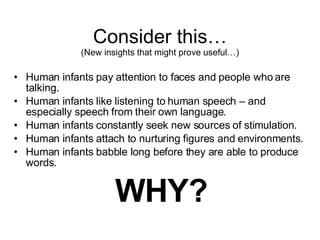
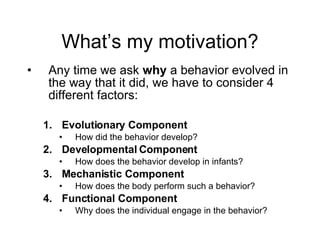
The document discusses theories around how and why humans acquire language. It describes two main perspectives:
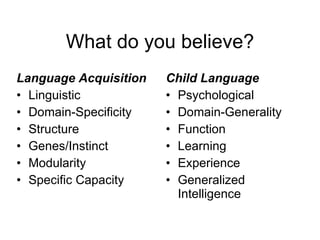
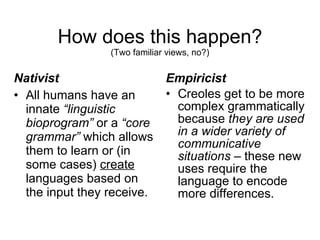
1) Nativism argues that humans have an innate language module or bioprogram that allows them to learn or create language based on input.
2) Empiricism argues that language becomes more complex as it is used in more communicative situations, requiring the encoding of more differences.
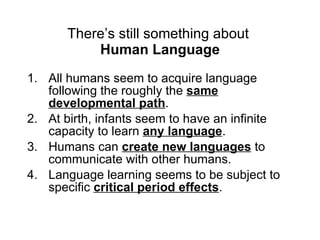
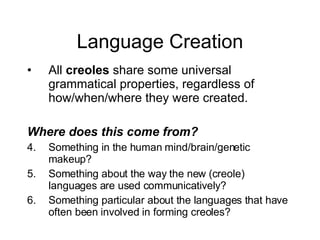
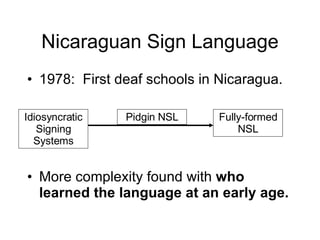
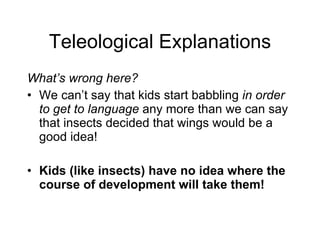
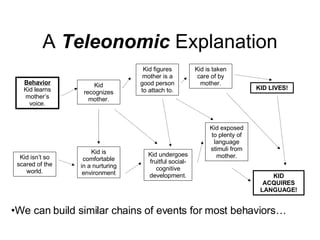
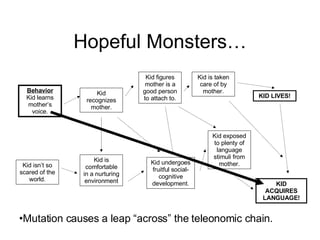
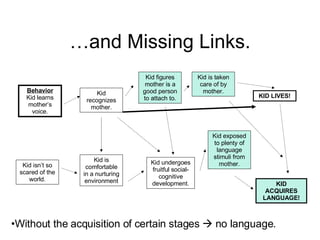
The document also discusses pidgins and creoles, critical period effects in language acquisition, and proposes a teleonomic approach to explain language development as a series of complementary advances rather than a single goal.