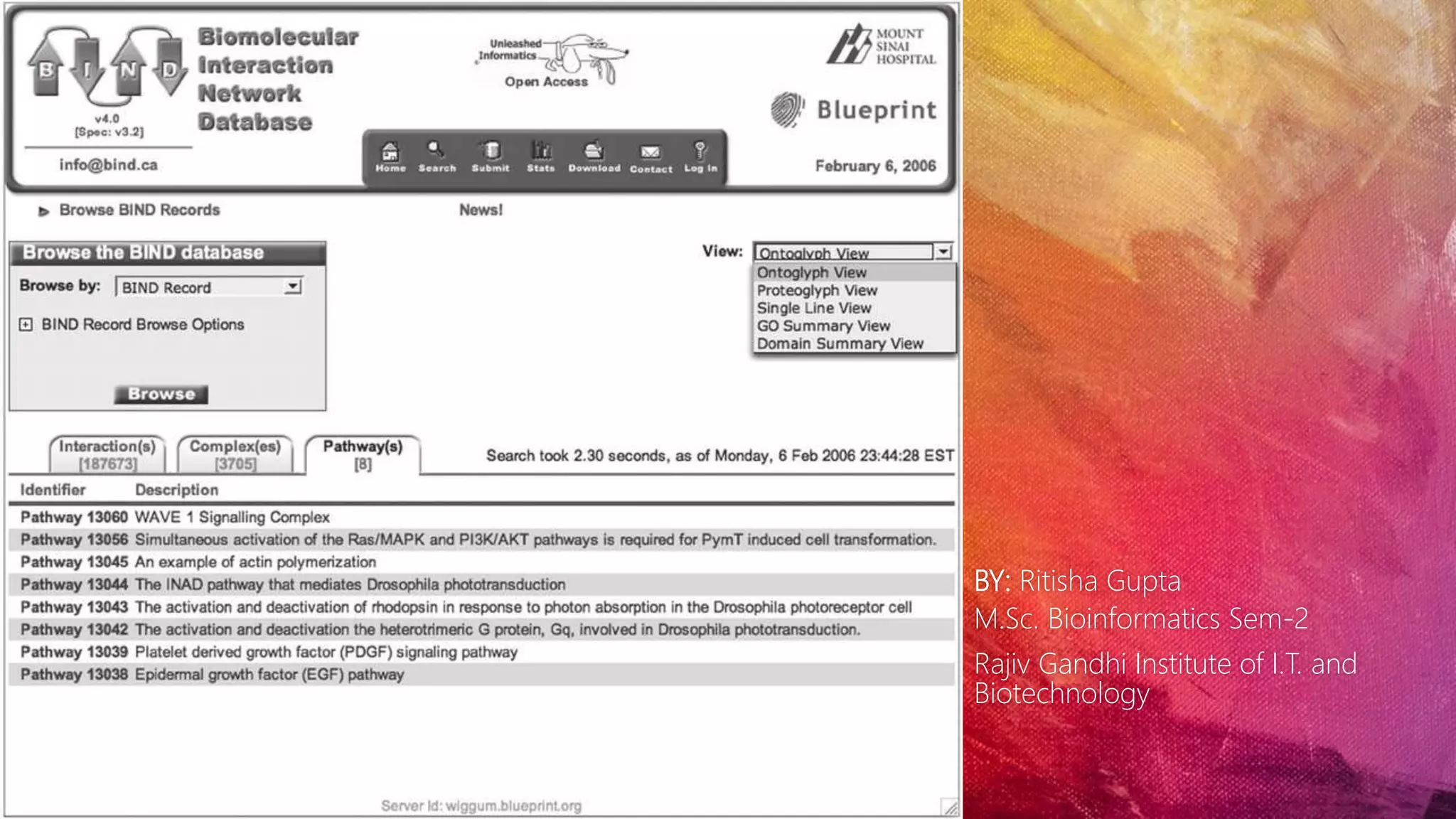
BY: Ritisha Gupta
M.Sc. Bioinformatics Sem-2
Rajiv Gandhi Institute of I.T. and
Biotechnology
Introduction:
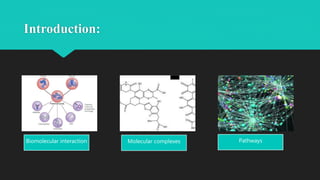
Biomolecular interaction Molecular complexes Pathways
SPECIFICATION
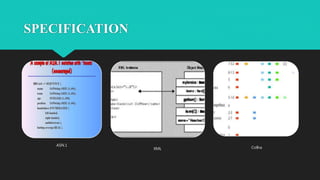
ASN.1
XML CoBra
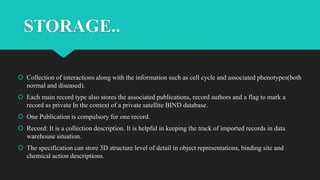
STORAGE..
 Collection of interactions along with the information such as cell cycle and associated phenotypes(both
normal and diseased).
 Each main record type also stores the associated publications, record authors and a flag to mark a
record as private In the context of a private satellite BIND database.
 One Publication is compulsory for one record.
 Record: It is a collection description. It is helpful in keeping the track of imported records in data
warehouse situation.
 The specification can store 3D structure level of detail in object representations, binding site and
chemical action descriptions.
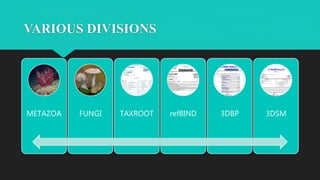
VARIOUS DIVISIONS
METAZOA FUNGI TAXROOT refBIND 3DBP 3DSM
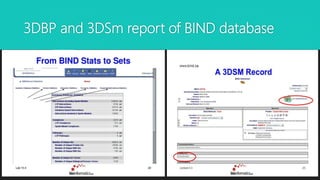
3DBP and 3DSm report of BIND database
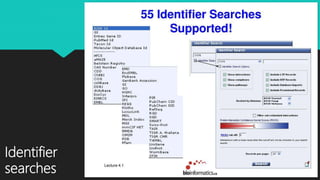
Identifier
searches
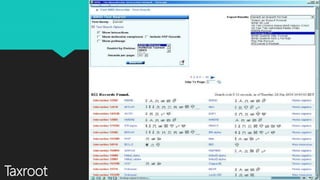
Taxroot
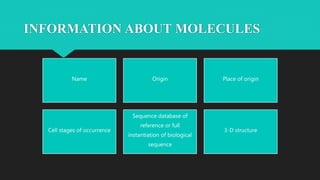
INFORMATION ABOUT MOLECULES
Name Origin Place of origin
Cell stages of occurrence
Sequence database of
reference or full
instantiation of biological
sequence
3-D structure
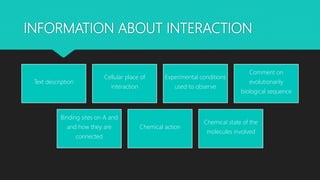
INFORMATION ABOUT INTERACTION
Text description
Cellular place of
interaction
Experimental conditions
used to observe
Comment on
evolutionarily
biological sequence
Binding sites on A and
and how they are
connected
Chemical action
Chemical state of the
molecules involved
VARIOUS ADDITIONS IN VERSION 2.0
 Photon is included as a type of object, which allows photochemical activation to be described.
 Inter- and intra-molecular interaction can be unambiguously differentiated.
 The description of cellular localization was reexamined.
 A simple enumerated list of 13 general cellular locations was replaced by a hierarchical description of
locations in the cell that enumerates at least 182 locations in plant and animal cells.
 In addition, standard ontologies (10) were referenced to indicate cellular locations more precisely.
Continued..
 The experimental condition data type, the experimental form of an object in an interaction were added.
 The ability to describe experiments using a profile matrix as described by PROSITE.
 This allowed experiments that predict interactions to be stored, e.g. searching for transcription factor binding sites in a genome
using a consensus sequence stored in a profile.
 It became easy to describe the interactions with specific sub-units of a molecular complex.
 Space was allocated to define links from many data types in BIND to other databases, whether they store experimental method,
phenotype or sequence information.
 An NCBI user-object, which can store arbitrary user-defined data, was also added to the publication data type so that private
BIND databases may store any information, such as an SDS–PAGE picture, as experimental evidence for information in the
system.
 The minimum information required for an interaction record is a reference to another database for each molecule, such as
GenBank if the molecule is a biological sequence, and a PubMed publication reference.
POST TRANSLATIONAL MODIFICATION
 Mass spectrometry provided much information about post- translationally modified proteins and how these
post-translational modifications affect interactions.
 An extension to the IUPAC amino acid codes using the infrastructure of the NCBI toolkit to represent 60
common naturally occurring post-translationally modified amino acids were developed.
 Representative structures for each amino acid in both residue, N- and C-terminal forms were integrated into
the version of the NCBI8aa encoding rules and the amino acid structure look up table files for Cn3D.
 Classes of modifications were also represented.
 Each modified amino acid had a standard symbol in this scheme.
DATA SUBMISSION
 Manual or automatic
 Tools may also be written using the BIND API to import data from other sources.
 Such tools have been written to import information from the DIP database and from recent yeast two-hybrid
protein–protein interaction mapping projects.
 Databases that contain subsets of the interaction information that can be stored in BIND are increasing in
number and are prime candidates for data import tools.
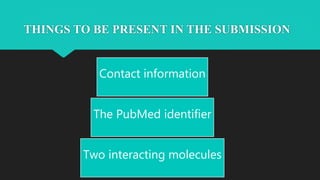
THINGS TO BE PRESENT IN THE SUBMISSION
Contact information
The PubMed identifier
Two interacting molecules
VARIOUS TOOLS USED
 Pajek: It is for visualizing and analyzing large networks.
 Molecular Complex Detection (MCODE): An interaction network clustering tool, which was developed to
help focus on the regions of biological interest. MCODE detects densely interconnected regions of a
molecular interaction network, which may represent molecular complexes .
 FAST: It is an application that displays the domain annotation for a group of functionally related proteins.
FAST
 FAST has a web-based graphical interface, based on Macromedia Flash vector graphics, that displays a set of
proteins and their domains. Vector graphics format was chosen as it provides improved resolution and
zooming ability over bitmap images.
 FAST is accessible from BIND via interaction and molecular complex records.
1. When accessed from an interaction record, the protein and its protein interactors in BIND are displayed.
2. When accessed from a complex record, the protein subunits are displayed. Domain composition is Functional
Alignment Search Tool (FAST).
 FAST can also be used to study the topology and function of molecular complexes.
 A number of protein complexes were recently identified in large-scale mass-spectrometry studiesFAST can
help decipher the interaction topology of these complexes by grouping proteins according to their domain
composition.
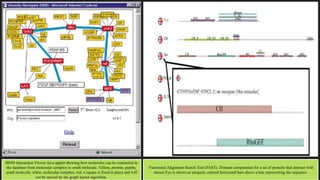
BIND Interaction Viewer Java applet showing how molecules can be connected in
the database from molecular complex to small molecule. Yellow, protein; purple,
small molecule; white, molecular complex; red, a square is fixed in place and will
not be moved by the graph layout algorithm.
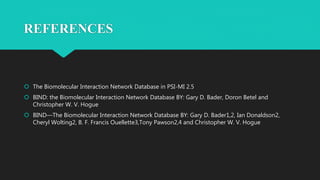
Functional Alignment Search Tool (FAST). Domain composition for a set of proteins that interact with
mouse Fyn is shown as uniquely colored horizontal bars above a line representing the sequence.
REFERENCES
 The Biomolecular Interaction Network Database in PSI-MI 2.5
 BIND: the Biomolecular Interaction Network Database BY: Gary D. Bader, Doron Betel and
Christopher W. V. Hogue
 BIND—The Biomolecular Interaction Network Database BY: Gary D. Bader1,2, Ian Donaldson2,
Cheryl Wolting2, B. F. Francis Ouellette3,Tony Pawson2,4 and Christopher W. V. Hogue
THANK YOU
 E-mail i.d.: ritisha.gupta9719@gmail.com

Bind database

  • 1.
    BY: Ritisha Gupta M.Sc.Bioinformatics Sem-2 Rajiv Gandhi Institute of I.T. and Biotechnology
  • 2.
  • 3.
  • 4.
    STORAGE..  Collection ofinteractions along with the information such as cell cycle and associated phenotypes(both normal and diseased).  Each main record type also stores the associated publications, record authors and a flag to mark a record as private In the context of a private satellite BIND database.  One Publication is compulsory for one record.  Record: It is a collection description. It is helpful in keeping the track of imported records in data warehouse situation.  The specification can store 3D structure level of detail in object representations, binding site and chemical action descriptions.
  • 5.
    VARIOUS DIVISIONS METAZOA FUNGITAXROOT refBIND 3DBP 3DSM
  • 6.
    3DBP and 3DSmreport of BIND database
  • 7.
  • 8.
  • 9.
    INFORMATION ABOUT MOLECULES NameOrigin Place of origin Cell stages of occurrence Sequence database of reference or full instantiation of biological sequence 3-D structure
  • 10.
    INFORMATION ABOUT INTERACTION Textdescription Cellular place of interaction Experimental conditions used to observe Comment on evolutionarily biological sequence Binding sites on A and and how they are connected Chemical action Chemical state of the molecules involved
  • 11.
    VARIOUS ADDITIONS INVERSION 2.0  Photon is included as a type of object, which allows photochemical activation to be described.  Inter- and intra-molecular interaction can be unambiguously differentiated.  The description of cellular localization was reexamined.  A simple enumerated list of 13 general cellular locations was replaced by a hierarchical description of locations in the cell that enumerates at least 182 locations in plant and animal cells.  In addition, standard ontologies (10) were referenced to indicate cellular locations more precisely.
  • 12.
    Continued..  The experimentalcondition data type, the experimental form of an object in an interaction were added.  The ability to describe experiments using a profile matrix as described by PROSITE.  This allowed experiments that predict interactions to be stored, e.g. searching for transcription factor binding sites in a genome using a consensus sequence stored in a profile.  It became easy to describe the interactions with specific sub-units of a molecular complex.  Space was allocated to define links from many data types in BIND to other databases, whether they store experimental method, phenotype or sequence information.  An NCBI user-object, which can store arbitrary user-defined data, was also added to the publication data type so that private BIND databases may store any information, such as an SDS–PAGE picture, as experimental evidence for information in the system.  The minimum information required for an interaction record is a reference to another database for each molecule, such as GenBank if the molecule is a biological sequence, and a PubMed publication reference.
  • 13.
    POST TRANSLATIONAL MODIFICATION Mass spectrometry provided much information about post- translationally modified proteins and how these post-translational modifications affect interactions.  An extension to the IUPAC amino acid codes using the infrastructure of the NCBI toolkit to represent 60 common naturally occurring post-translationally modified amino acids were developed.  Representative structures for each amino acid in both residue, N- and C-terminal forms were integrated into the version of the NCBI8aa encoding rules and the amino acid structure look up table files for Cn3D.  Classes of modifications were also represented.  Each modified amino acid had a standard symbol in this scheme.
  • 14.
    DATA SUBMISSION  Manualor automatic  Tools may also be written using the BIND API to import data from other sources.  Such tools have been written to import information from the DIP database and from recent yeast two-hybrid protein–protein interaction mapping projects.  Databases that contain subsets of the interaction information that can be stored in BIND are increasing in number and are prime candidates for data import tools.
  • 15.
    THINGS TO BEPRESENT IN THE SUBMISSION Contact information The PubMed identifier Two interacting molecules
  • 16.
    VARIOUS TOOLS USED Pajek: It is for visualizing and analyzing large networks.  Molecular Complex Detection (MCODE): An interaction network clustering tool, which was developed to help focus on the regions of biological interest. MCODE detects densely interconnected regions of a molecular interaction network, which may represent molecular complexes .  FAST: It is an application that displays the domain annotation for a group of functionally related proteins.
  • 17.
    FAST  FAST hasa web-based graphical interface, based on Macromedia Flash vector graphics, that displays a set of proteins and their domains. Vector graphics format was chosen as it provides improved resolution and zooming ability over bitmap images.  FAST is accessible from BIND via interaction and molecular complex records. 1. When accessed from an interaction record, the protein and its protein interactors in BIND are displayed. 2. When accessed from a complex record, the protein subunits are displayed. Domain composition is Functional Alignment Search Tool (FAST).  FAST can also be used to study the topology and function of molecular complexes.  A number of protein complexes were recently identified in large-scale mass-spectrometry studiesFAST can help decipher the interaction topology of these complexes by grouping proteins according to their domain composition.
  • 18.
    BIND Interaction ViewerJava applet showing how molecules can be connected in the database from molecular complex to small molecule. Yellow, protein; purple, small molecule; white, molecular complex; red, a square is fixed in place and will not be moved by the graph layout algorithm. Functional Alignment Search Tool (FAST). Domain composition for a set of proteins that interact with mouse Fyn is shown as uniquely colored horizontal bars above a line representing the sequence.
  • 19.
    REFERENCES  The BiomolecularInteraction Network Database in PSI-MI 2.5  BIND: the Biomolecular Interaction Network Database BY: Gary D. Bader, Doron Betel and Christopher W. V. Hogue  BIND—The Biomolecular Interaction Network Database BY: Gary D. Bader1,2, Ian Donaldson2, Cheryl Wolting2, B. F. Francis Ouellette3,Tony Pawson2,4 and Christopher W. V. Hogue
  • 20.
    THANK YOU  E-maili.d.: ritisha.gupta9719@gmail.com

Editor's Notes

  • #6 refBIND (reference quality interactions) 3DBP (interaction automatically extracted from structure data containing proteins, RNA or DNA) 3DSM (interactions automatically extracted from structure data where one of the molecules is a small molecule)