External Costs and Public Health Threats
from Nutrient Pollution in
Agriculture Watersheds
Bill Stowe
CEO and General Manager
O
H
H
H O2
Iowa: “First in the Nation”
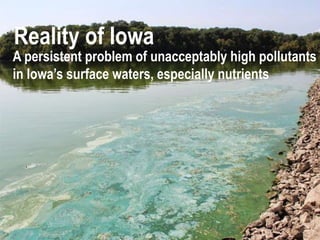
Reality of Iowa
A persistent problem of unacceptably high pollutants
in Iowa’s surface waters, especially nutrients
Agriculture Myth:
The Family Farm that “Feeds the World”
Approximately 90,000 Iowa farms
Nearly 90% of Iowa’s food is imported
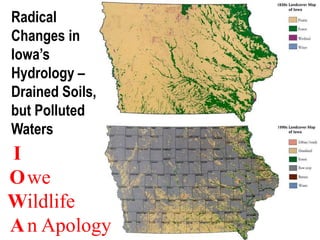
Radical
Changes in
Iowa’s
Hydrology –
Drained Soils,
but Polluted
Waters
I
O
W
A
we
ildlife
n Apology
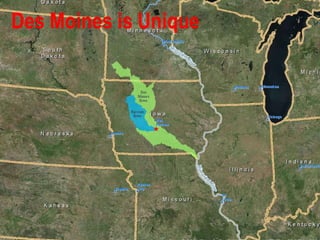
Des Moines is Unique
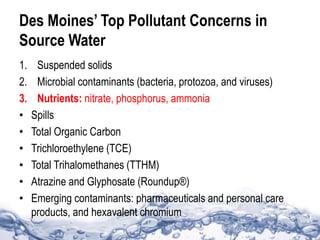
Des Moines’ Top Pollutant Concerns in
Source Water
1. Suspended solids
2. Microbial contaminants (bacteria, protozoa, and viruses)
3. Nutrients: nitrate, phosphorus, ammonia
• Spills
• Total Organic Carbon
• Trichloroethylene (TCE)
• Total Trihalomethanes (TTHM)
• Atrazine and Glyphosate (Roundup®)
• Emerging contaminants: pharmaceuticals and personal care
products, and hexavalent chromium
Treatment Plant
Recharge Ponds
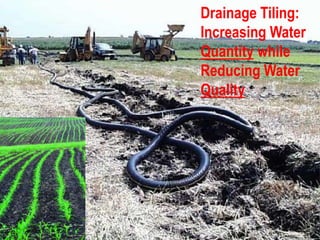
Drainage Tiling:
Increasing Water
Quantity while
Reducing Water
Quality
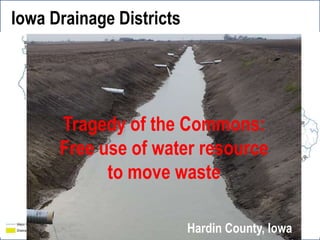
Iowa Drainage Districts
Hardin County, Iowa
Tragedy of the Commons:
Free use of water resource
to move waste
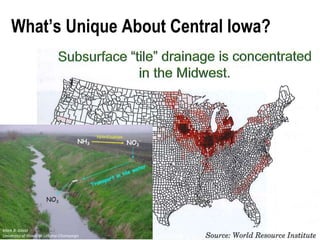
What’s Unique About Central Iowa?
Mark B. David
University of Illinois at Urbana-Champaign
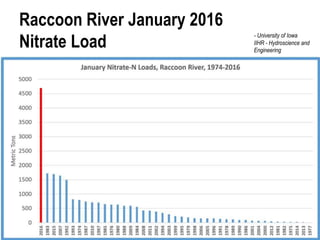
Raccoon River January 2016
Nitrate Load
- University of Iowa
IIHR - Hydroscience and
Engineering
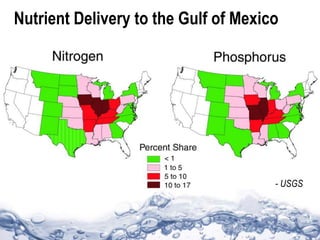
Nutrient Delivery to the Gulf of Mexico
- USGS
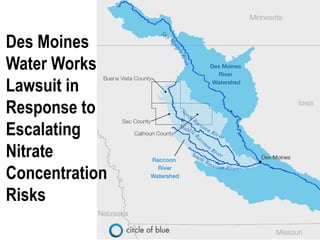
Des Moines
Water Works
Lawsuit in
Response to
Escalating
Nitrate
Concentration
Risks
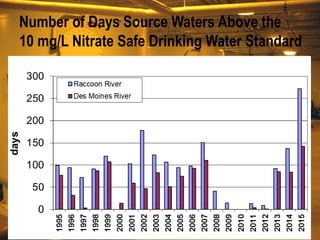
Number of Days Source Waters Above the
10 mg/L Nitrate Safe Drinking Water Standard
Lawsuit Key Points/Basic Legal Premise
• High nitrate effluent from artificial drainage tile is not
agricultural stormwater discharge but groundwater rapidly
removed from the soil by means of the drainage infrastructure.
• Artificial drainage systems in portions of Sac County transport
concentrations of nitrate greater than 10 mg/L into surface water
streams.
• Subsurface drainage systems that transport nitrate from the
field to a navigable body of water are point sources by
definition but have been erroneously considered exempt from
regulation under the Clean Water Act.
• If successful, this lawsuit would put agricultural drainage
systems on the same regulatory footing as other point sources.
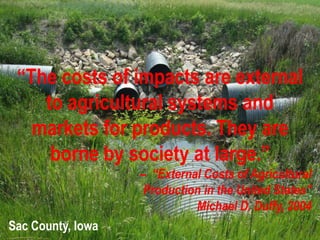
Sac County, Iowa
“The costs of impacts are external
to agricultural systems and
markets for products. They are
borne by society at large.”
– “External Costs of Agricultural
Production in the United States”
Michael D. Duffy, 2004
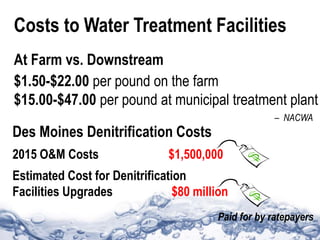
Costs to Water Treatment Facilities
At Farm vs. Downstream
Des Moines Denitrification Costs
2015 O&M Costs $1,500,000
Estimated Cost for Denitrification
Facilities Upgrades $80 million
Paid for by ratepayers
$1.50-$22.00 per pound on the farm
$15.00-$47.00 per pound at municipal treatment plant
– NACWA
Costs to Quality of Life
(Future Research Topics)
• Increased public health risks
• Recreation – closed beaches, impaired water ways
• Gulf Hypoxia
Agricultural sources have been responsible
for nearly three times more degradation of
lake and reservoir acreage on average than
have municipal sources. – NACWA
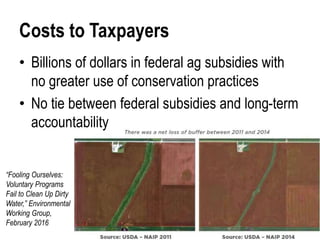
Costs to Taxpayers
• Billions of dollars in federal ag subsidies with
no greater use of conservation practices
• No tie between federal subsidies and long-term
accountability
“Fooling Ourselves:
Voluntary Programs
Fail to Clean Up Dirty
Water,” Environmental
Working Group,
February 2016
Solutions for Water Quality Improvement
1. Treat pollution at the source: in-field or
edge-of-field solutions.
2. Transparent measuring and monitoring of
protection of public health – NPDES compliance.
3. Agricultural accountability for environmental
protection – resources follow accountability,
not vice versa.
4. EPA enforcement of Nutrient Reduction Strategies
for Iowa and other Mississippi River Basin states
____ THINK DOWNSTREAM ____

Bill Stowe - Water

  • 1.
    External Costs andPublic Health Threats from Nutrient Pollution in Agriculture Watersheds Bill Stowe CEO and General Manager O H H H O2
  • 2.
    Iowa: “First inthe Nation”
  • 3.
    Reality of Iowa Apersistent problem of unacceptably high pollutants in Iowa’s surface waters, especially nutrients
  • 4.
    Agriculture Myth: The FamilyFarm that “Feeds the World” Approximately 90,000 Iowa farms Nearly 90% of Iowa’s food is imported
  • 5.
    Radical Changes in Iowa’s Hydrology – DrainedSoils, but Polluted Waters I O W A we ildlife n Apology
  • 6.
  • 7.
    Des Moines’ TopPollutant Concerns in Source Water 1. Suspended solids 2. Microbial contaminants (bacteria, protozoa, and viruses) 3. Nutrients: nitrate, phosphorus, ammonia • Spills • Total Organic Carbon • Trichloroethylene (TCE) • Total Trihalomethanes (TTHM) • Atrazine and Glyphosate (Roundup®) • Emerging contaminants: pharmaceuticals and personal care products, and hexavalent chromium
  • 8.
    Treatment Plant Recharge Ponds DrainageTiling: Increasing Water Quantity while Reducing Water Quality
  • 9.
    Iowa Drainage Districts HardinCounty, Iowa Tragedy of the Commons: Free use of water resource to move waste
  • 10.
    What’s Unique AboutCentral Iowa? Mark B. David University of Illinois at Urbana-Champaign
  • 11.
    Raccoon River January2016 Nitrate Load - University of Iowa IIHR - Hydroscience and Engineering
  • 12.
    Nutrient Delivery tothe Gulf of Mexico - USGS
  • 13.
    Des Moines Water Works Lawsuitin Response to Escalating Nitrate Concentration Risks
  • 14.
    Number of DaysSource Waters Above the 10 mg/L Nitrate Safe Drinking Water Standard
  • 15.
    Lawsuit Key Points/BasicLegal Premise • High nitrate effluent from artificial drainage tile is not agricultural stormwater discharge but groundwater rapidly removed from the soil by means of the drainage infrastructure. • Artificial drainage systems in portions of Sac County transport concentrations of nitrate greater than 10 mg/L into surface water streams. • Subsurface drainage systems that transport nitrate from the field to a navigable body of water are point sources by definition but have been erroneously considered exempt from regulation under the Clean Water Act. • If successful, this lawsuit would put agricultural drainage systems on the same regulatory footing as other point sources.
  • 16.
    Sac County, Iowa “Thecosts of impacts are external to agricultural systems and markets for products. They are borne by society at large.” – “External Costs of Agricultural Production in the United States” Michael D. Duffy, 2004
  • 17.
    Costs to WaterTreatment Facilities At Farm vs. Downstream Des Moines Denitrification Costs 2015 O&M Costs $1,500,000 Estimated Cost for Denitrification Facilities Upgrades $80 million Paid for by ratepayers $1.50-$22.00 per pound on the farm $15.00-$47.00 per pound at municipal treatment plant – NACWA
  • 18.
    Costs to Qualityof Life (Future Research Topics) • Increased public health risks • Recreation – closed beaches, impaired water ways • Gulf Hypoxia Agricultural sources have been responsible for nearly three times more degradation of lake and reservoir acreage on average than have municipal sources. – NACWA
  • 19.
    Costs to Taxpayers •Billions of dollars in federal ag subsidies with no greater use of conservation practices • No tie between federal subsidies and long-term accountability “Fooling Ourselves: Voluntary Programs Fail to Clean Up Dirty Water,” Environmental Working Group, February 2016
  • 20.
    Solutions for WaterQuality Improvement 1. Treat pollution at the source: in-field or edge-of-field solutions. 2. Transparent measuring and monitoring of protection of public health – NPDES compliance. 3. Agricultural accountability for environmental protection – resources follow accountability, not vice versa. 4. EPA enforcement of Nutrient Reduction Strategies for Iowa and other Mississippi River Basin states
  • 21.