is a processing technique and a
program model for distributed computing based
on java. The map reduce algorithm contains two
important tasks, namely map and Reduce.
 Map takes a set of a data and converts it into
another set of a data, where individual elements
are broken down into task.
, which takes the output from a map as
an input and combines those data into a smaller set
of data, and it will always performed after the map
job.
Map and Reduce Task has Two Processes That is:
 Job trackers
 Task trackers
 The is the service within Hadoop that
farms out MapReduce tasks to specific nodes in the
cluster, identically the nodes that have the data.
 Client applications submit jobs to the Job tracker.
 The Job tracker talks to the NameNode to determine
the location of the data
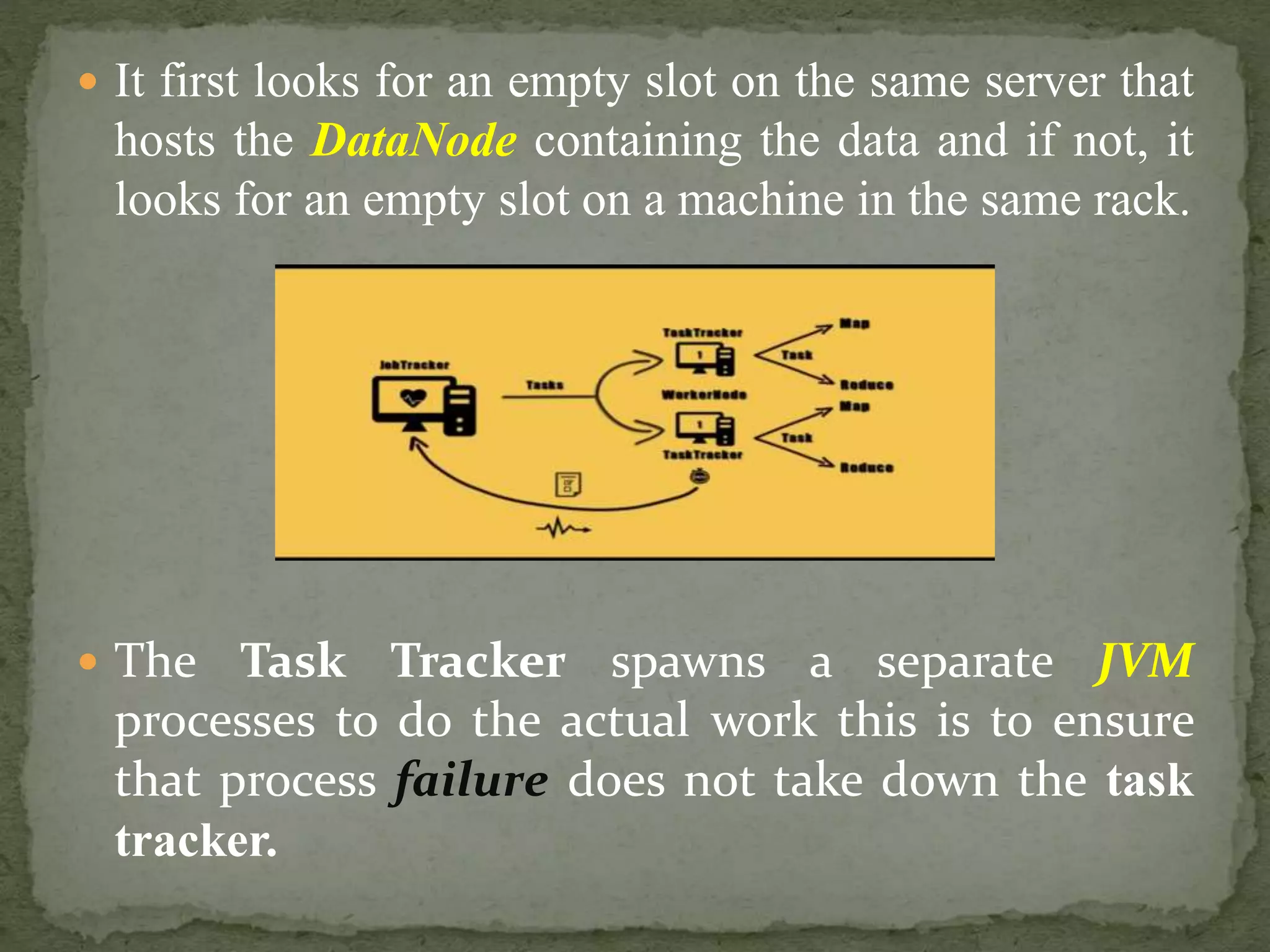
 The Job tracker locates Task Tracker nodes with
available slots st or near the data
 The Job Trackers submits the work to the chosen
Task Tracker nodes.
 The Task trackers nodes are mentioned if they do not
submit heartbeat signals often the time enough.They
are determine to have failed and the work is scheduled
on a different Task Tracker.
 A task Tracker will notify the Job Tracker when a
task fails.the Job Tracker decides what to do then it
may resubmit the job elsewhere,
it may, mark that specific record as something to
avoid, and it may even blacklist the Task tracker as
unreliable.
 When the work is completed. The Job tracker
updates its status.
 Client applications can poll the Job Tracker for
information.
 A is a node in the cluster that accepts
tasks. Map Reduce and shuffle operations from a Job
Tracker.
 Every is configuded with a set of slots,
these indicates the number of tasks that it can
accept.when the tries to find
somewhere to schedule a tsk within the MapReduce
operations.
 It first looks for an empty slot on the same server that
hosts the DataNode containing the data and if not, it
looks for an empty slot on a machine in the same rack.
 The Task Tracker spawns a separate JVM
processes to do the actual work this is to ensure
that process failure does not take down the task
tracker.
 The task tracker monitors these spawned processes,
capturing the output and exit codes.
 When the process finishes successfully or not, the
tracker notifies the Job Tracker.
 The also sends also send out
heartbeat messages to the Job Trackers, usaslly every
few minutes, to reassure the that it is
still alive.
 The also sends also send out
heartbeat messages to the Job Trackers, usaslly every
few minutes, to reassure the Job Trackers that it is
still alive.
 There message also inform the of the
number of available slots, so the can
stay up to date with where in the cluster work can be
delegated.
BIG DATA ANALYTICS

BIG DATA ANALYTICS

  • 2.
    is a processingtechnique and a program model for distributed computing based on java. The map reduce algorithm contains two important tasks, namely map and Reduce.  Map takes a set of a data and converts it into another set of a data, where individual elements are broken down into task.
  • 3.
    , which takesthe output from a map as an input and combines those data into a smaller set of data, and it will always performed after the map job.
  • 4.
    Map and ReduceTask has Two Processes That is:  Job trackers  Task trackers
  • 5.
     The isthe service within Hadoop that farms out MapReduce tasks to specific nodes in the cluster, identically the nodes that have the data.  Client applications submit jobs to the Job tracker.  The Job tracker talks to the NameNode to determine the location of the data
  • 6.
     The Jobtracker locates Task Tracker nodes with available slots st or near the data  The Job Trackers submits the work to the chosen Task Tracker nodes.  The Task trackers nodes are mentioned if they do not submit heartbeat signals often the time enough.They are determine to have failed and the work is scheduled on a different Task Tracker.
  • 7.
     A taskTracker will notify the Job Tracker when a task fails.the Job Tracker decides what to do then it may resubmit the job elsewhere, it may, mark that specific record as something to avoid, and it may even blacklist the Task tracker as unreliable.
  • 8.
     When thework is completed. The Job tracker updates its status.  Client applications can poll the Job Tracker for information.
  • 9.
     A isa node in the cluster that accepts tasks. Map Reduce and shuffle operations from a Job Tracker.  Every is configuded with a set of slots, these indicates the number of tasks that it can accept.when the tries to find somewhere to schedule a tsk within the MapReduce operations.
  • 10.
     It firstlooks for an empty slot on the same server that hosts the DataNode containing the data and if not, it looks for an empty slot on a machine in the same rack.  The Task Tracker spawns a separate JVM processes to do the actual work this is to ensure that process failure does not take down the task tracker.
  • 11.
     The tasktracker monitors these spawned processes, capturing the output and exit codes.  When the process finishes successfully or not, the tracker notifies the Job Tracker.  The also sends also send out heartbeat messages to the Job Trackers, usaslly every few minutes, to reassure the that it is still alive.
  • 12.
     The alsosends also send out heartbeat messages to the Job Trackers, usaslly every few minutes, to reassure the Job Trackers that it is still alive.  There message also inform the of the number of available slots, so the can stay up to date with where in the cluster work can be delegated.