The document discusses the principles and benefits of on-farm composting and vermicomposting, emphasizing the importance of compost in enhancing soil fertility and structure through the recycling of organic waste. It outlines the processes for creating and using compost, including key requirements for successful composting and the role of soil microbes. Additionally, it addresses vermicomposting with worms and the advantages of worm castings, highlighting both traditional composting and vermicomposting as sustainable agricultural practices.
In this document
Powered by AI
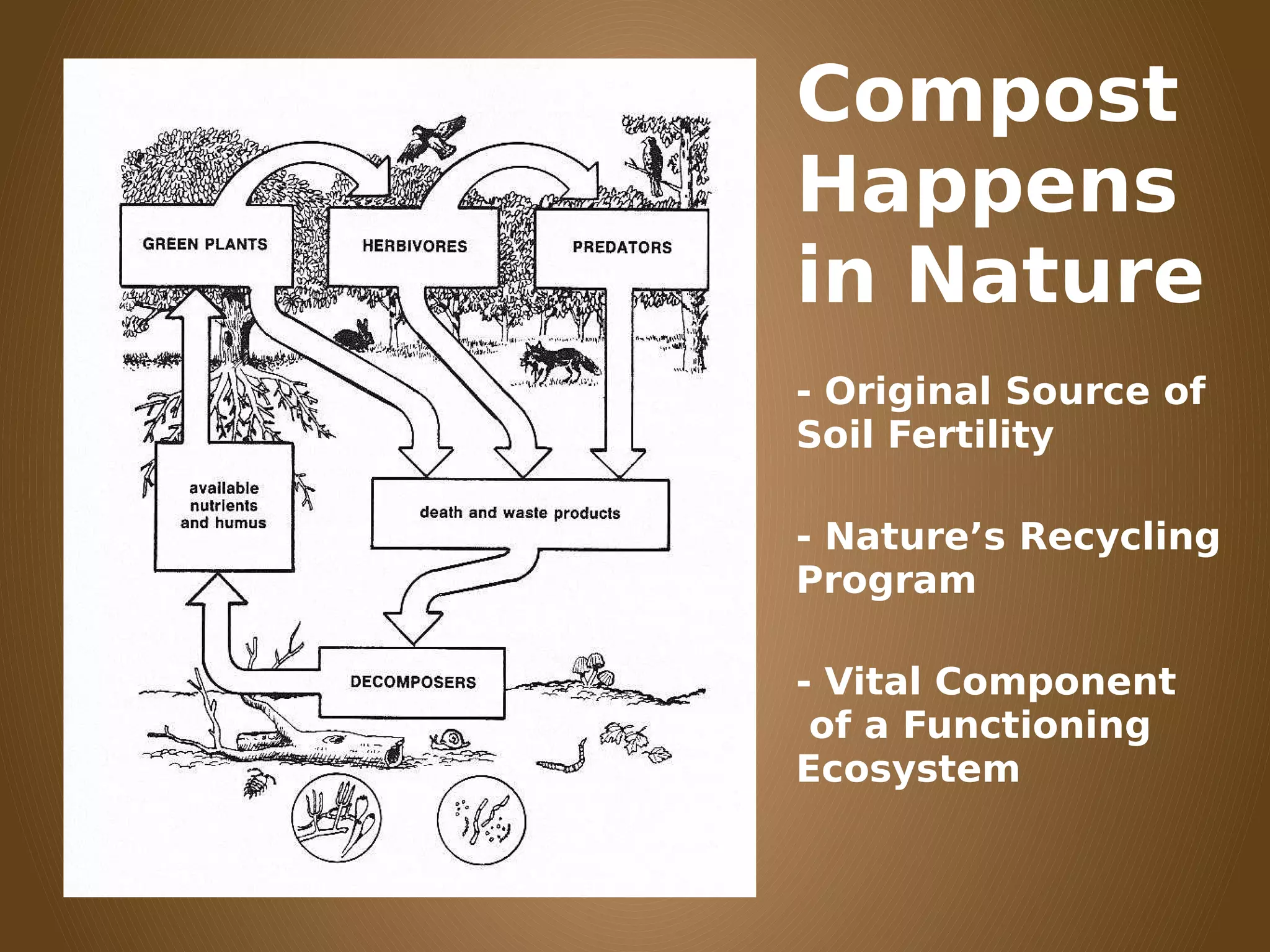
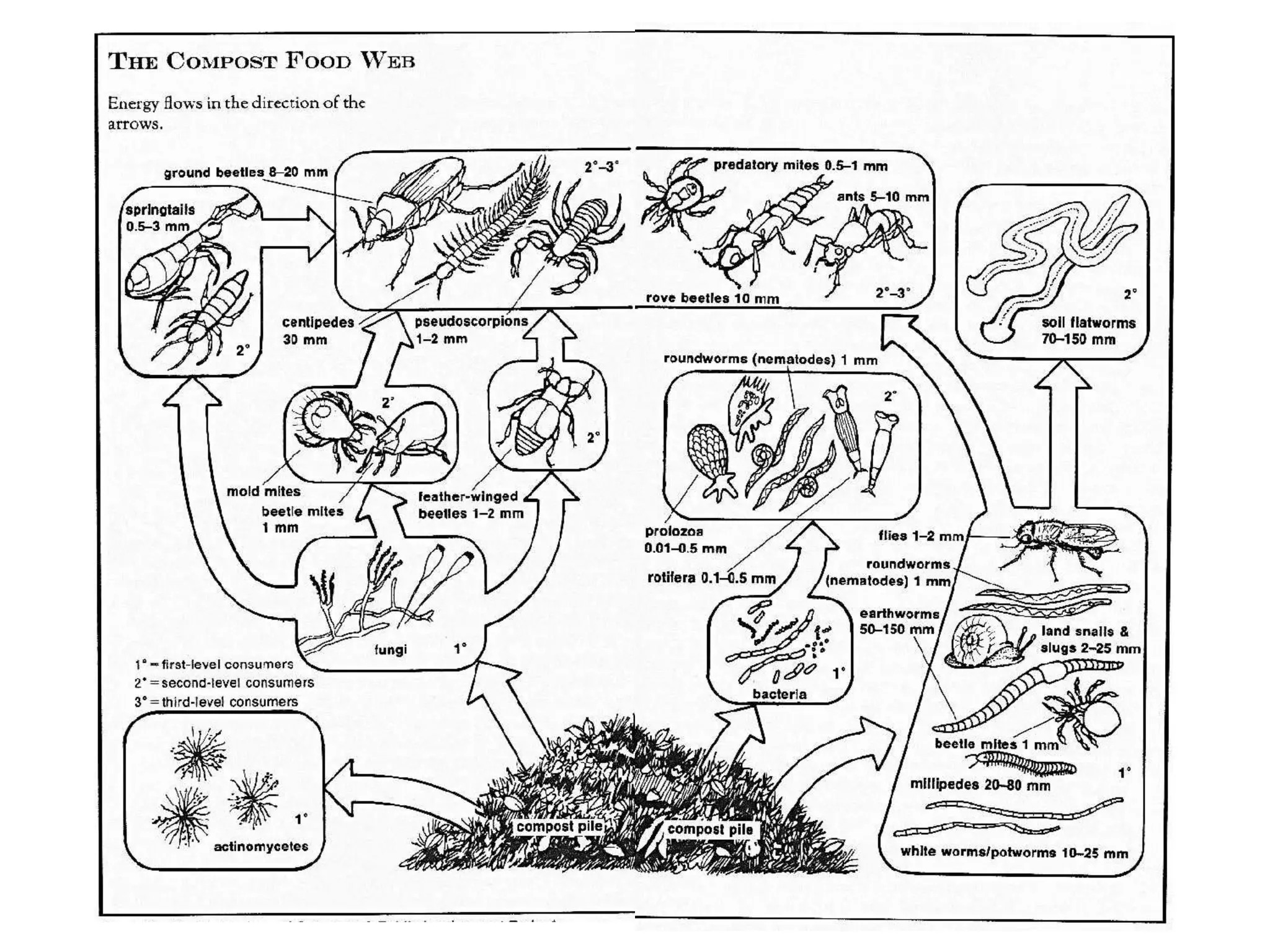
Overview of composting and its natural processes, explaining the role of organic matter and microbes in soil fertility.
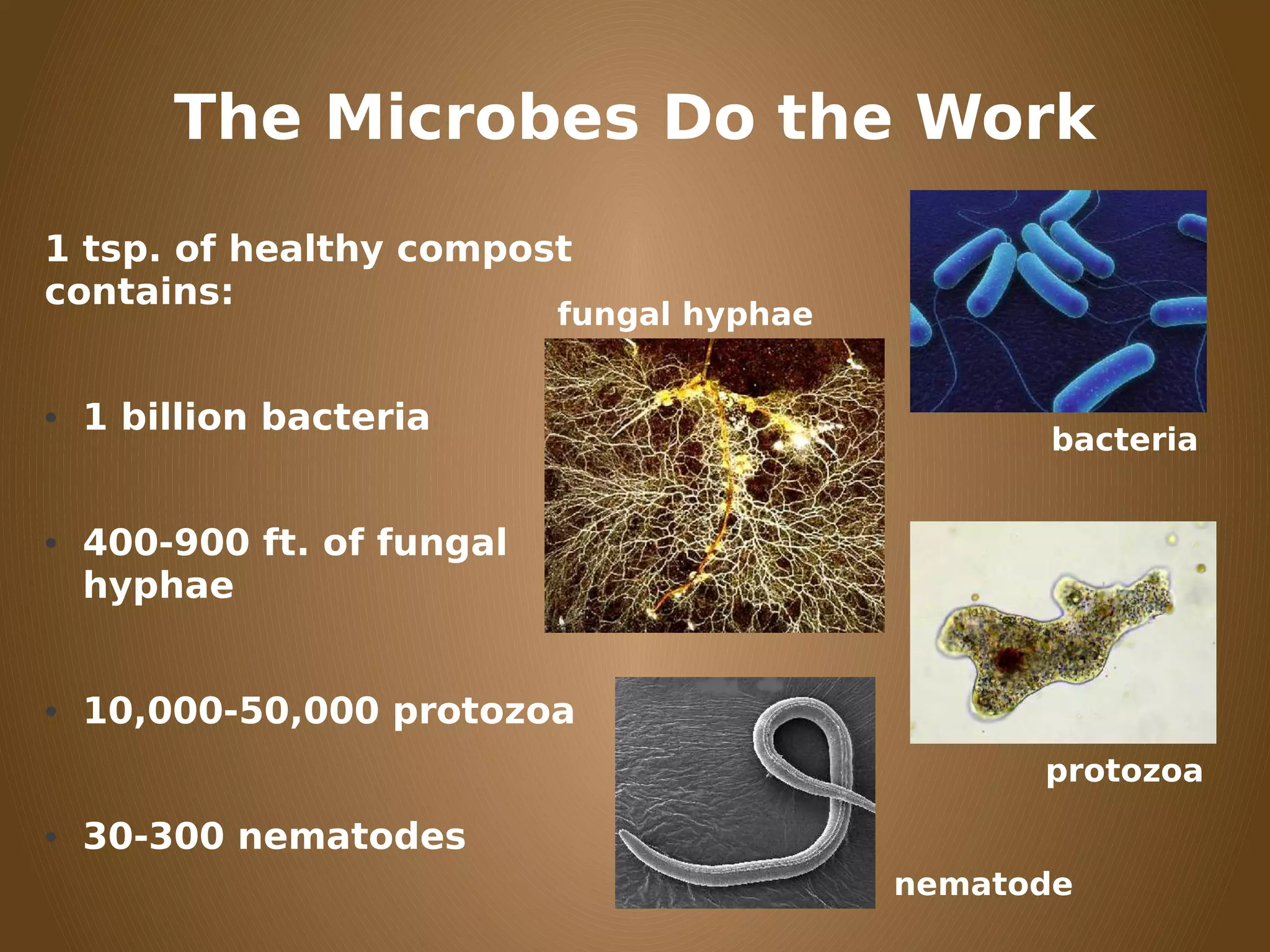
Details about soil microbes essential for compost, highlighting their populations and roles in soil health.
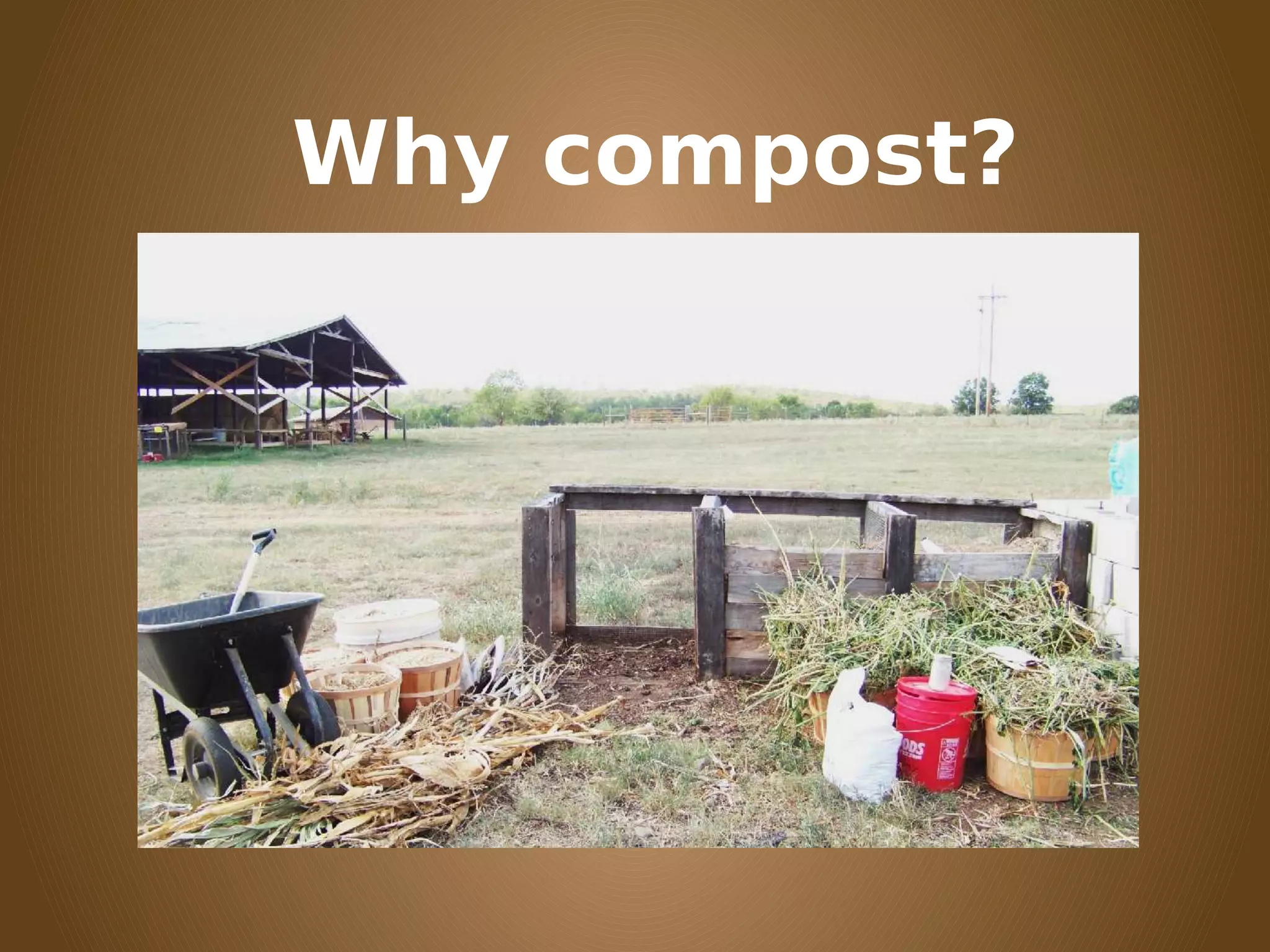
Reasons to compost for improving soil, its applications, and initial fertilizer value for crops.
Key steps and conditions for effective composting, including materials, moisture, aeration, and temperature.
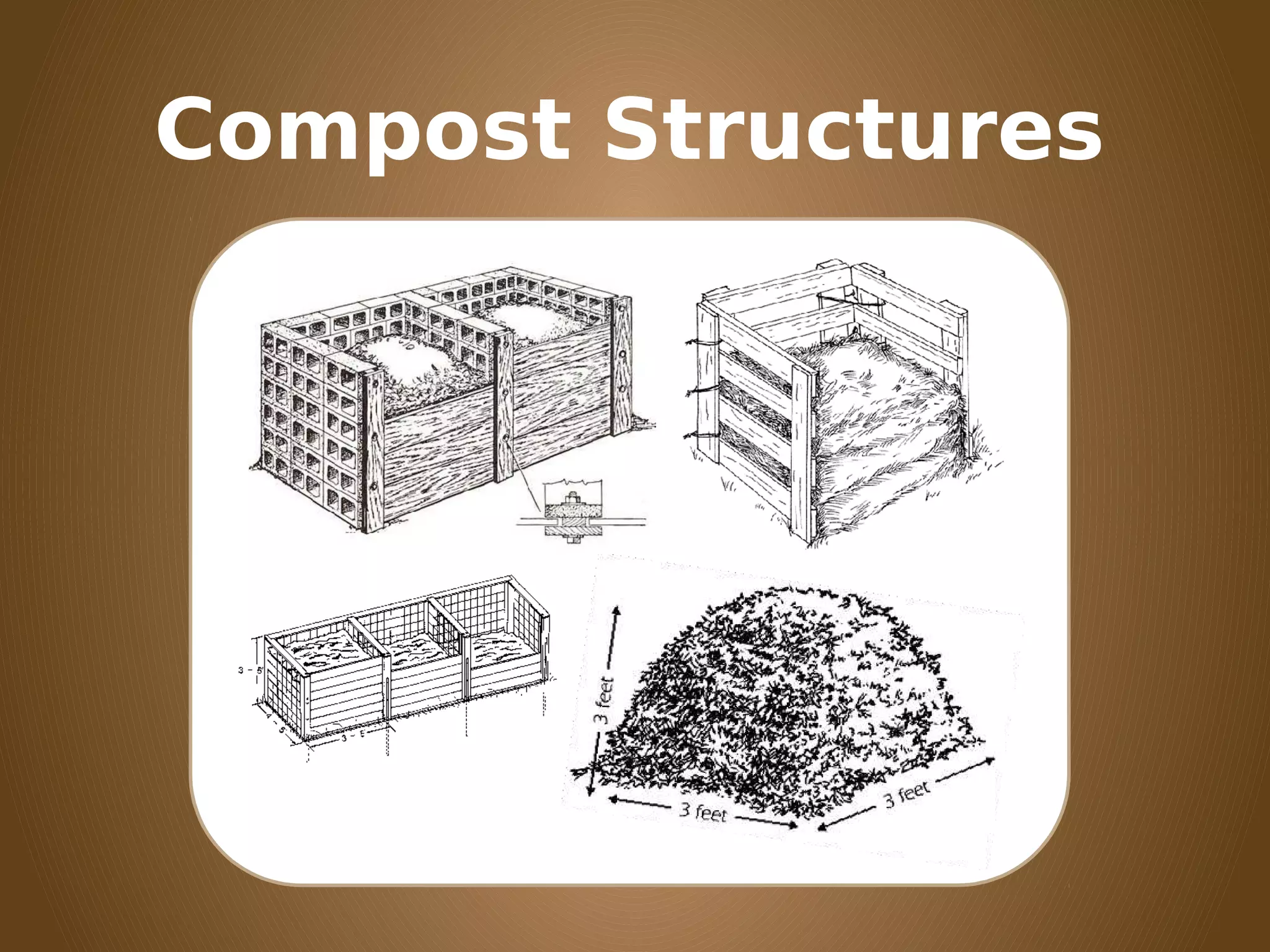
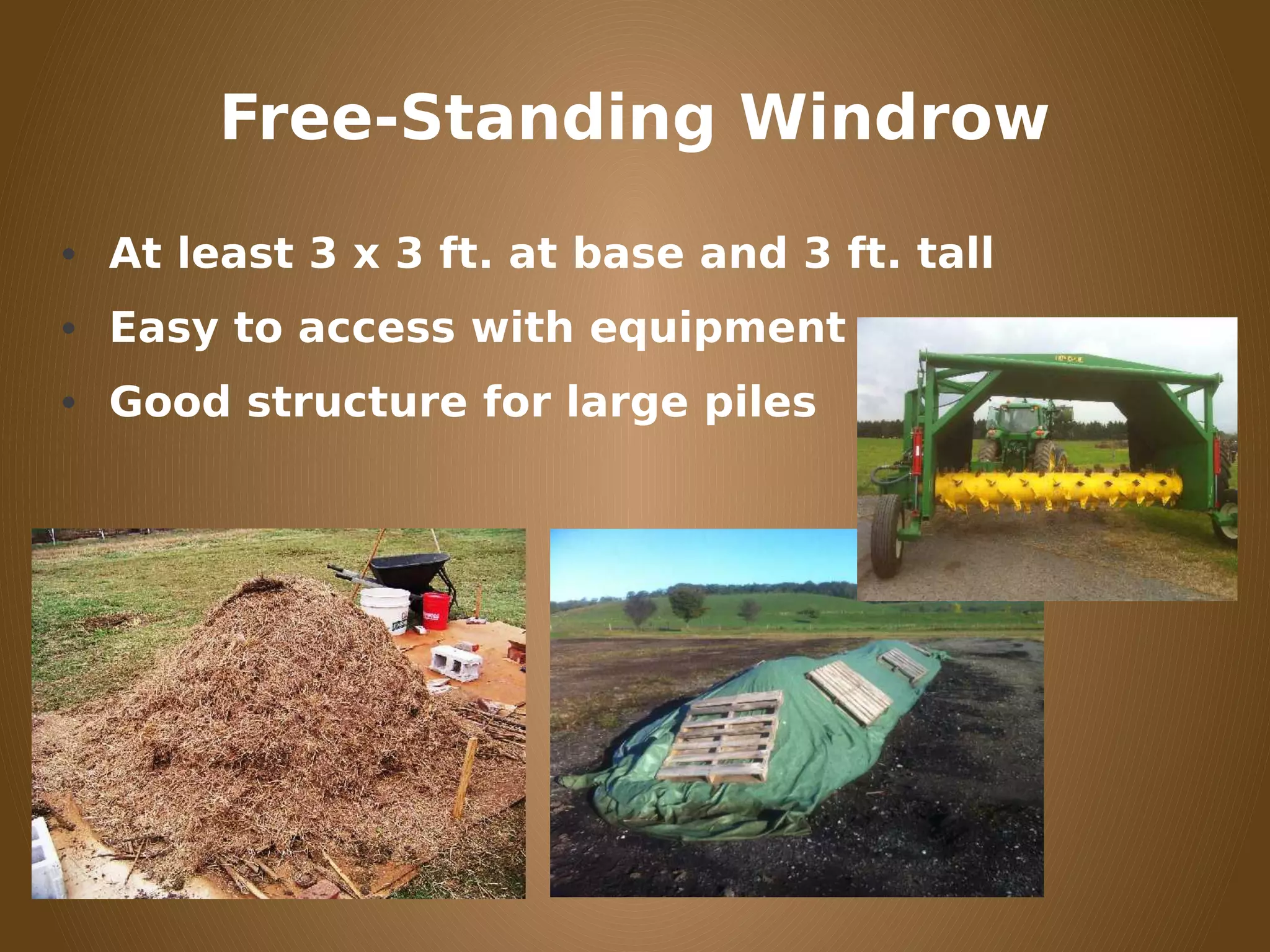
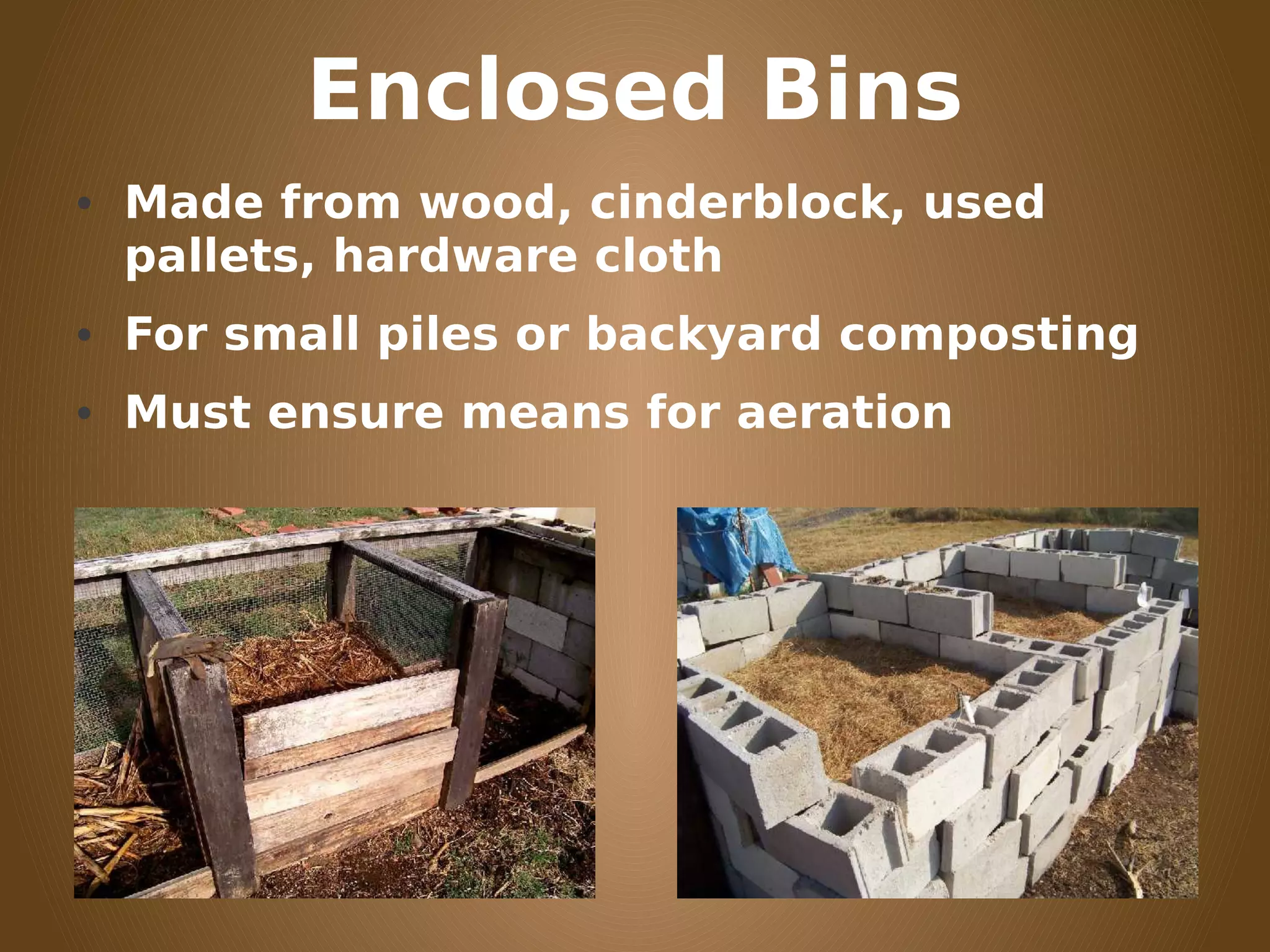
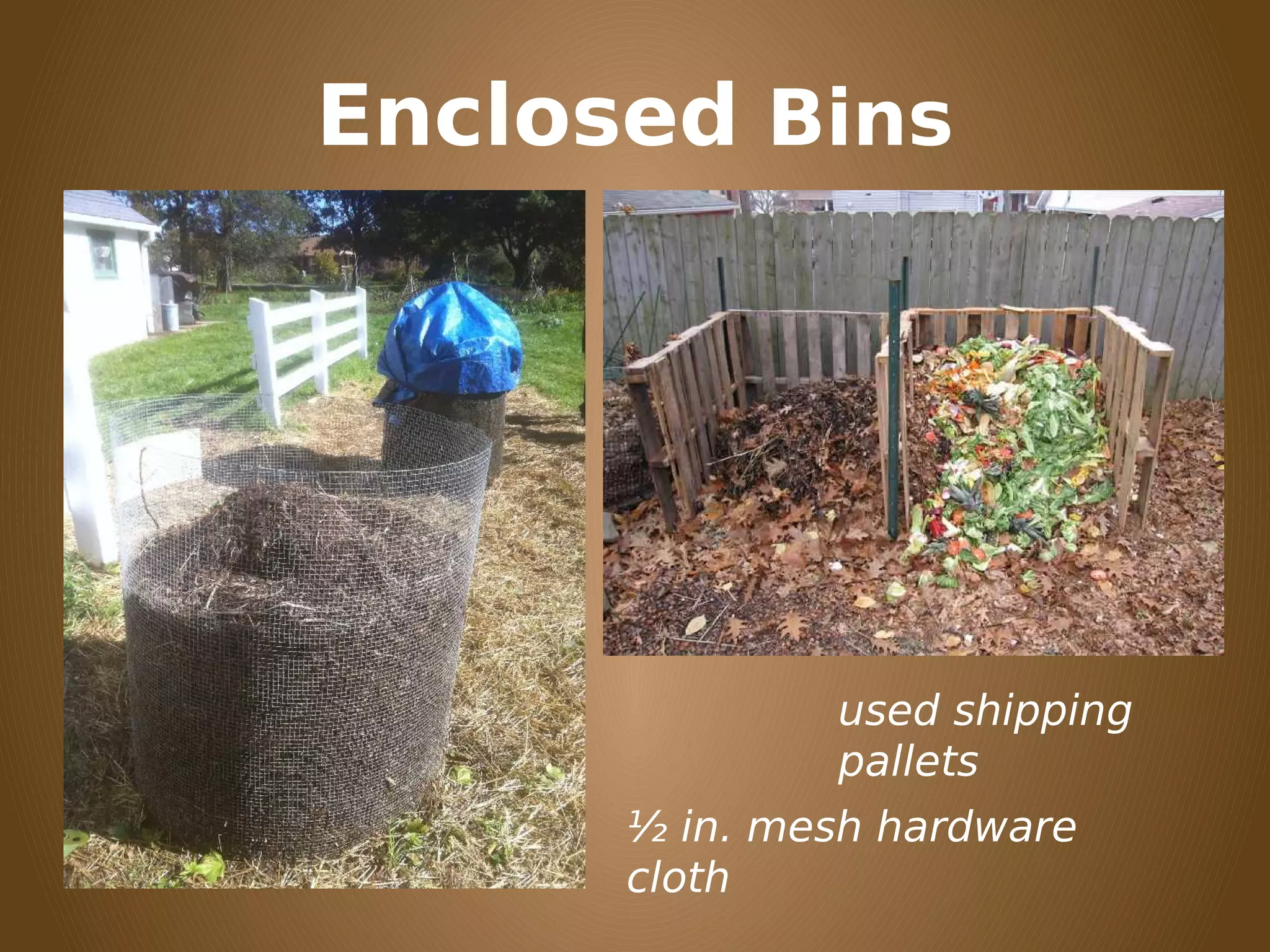
Guidance on constructing compost piles and bins and ensuring proper aeration and structure.
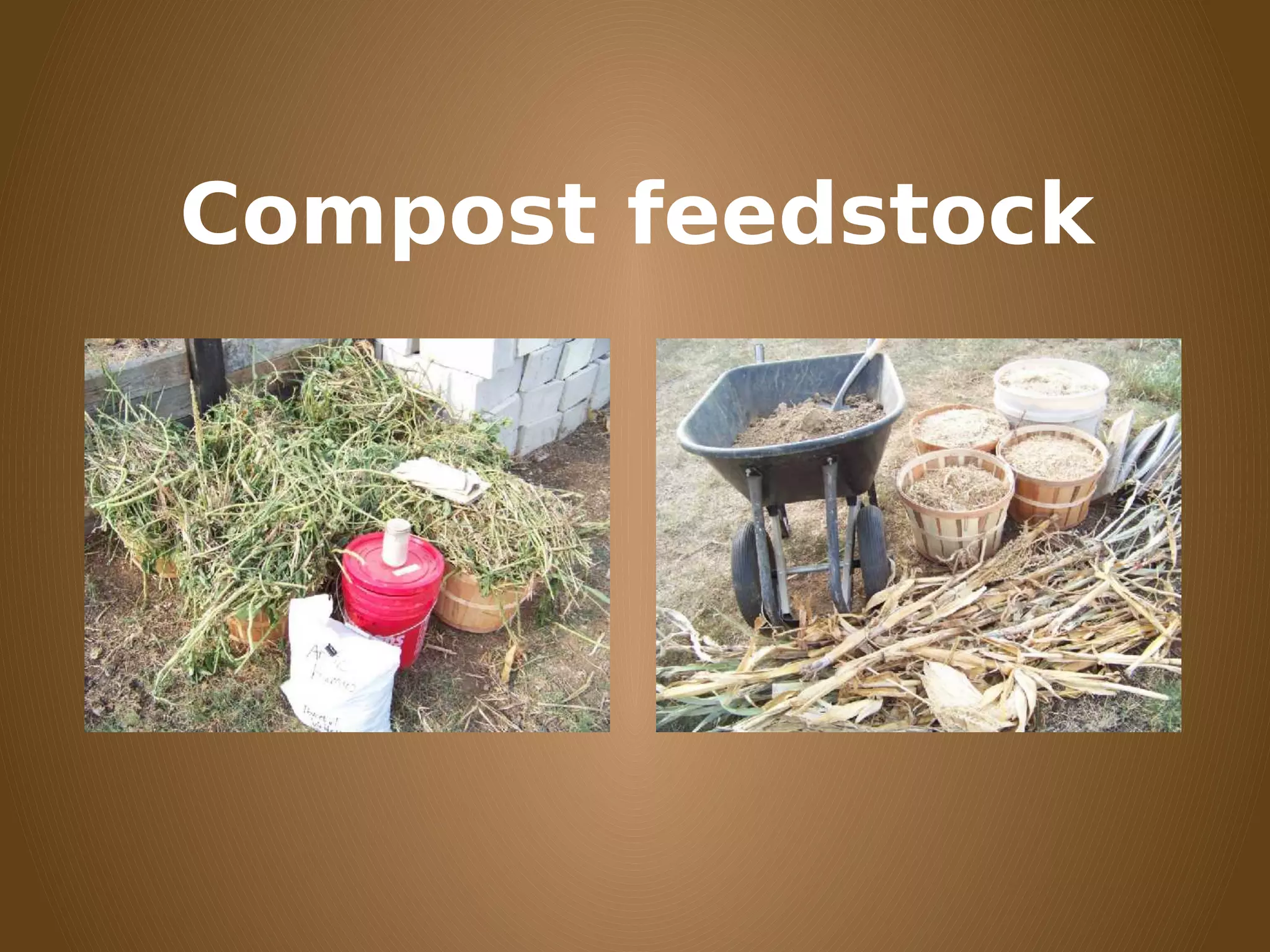
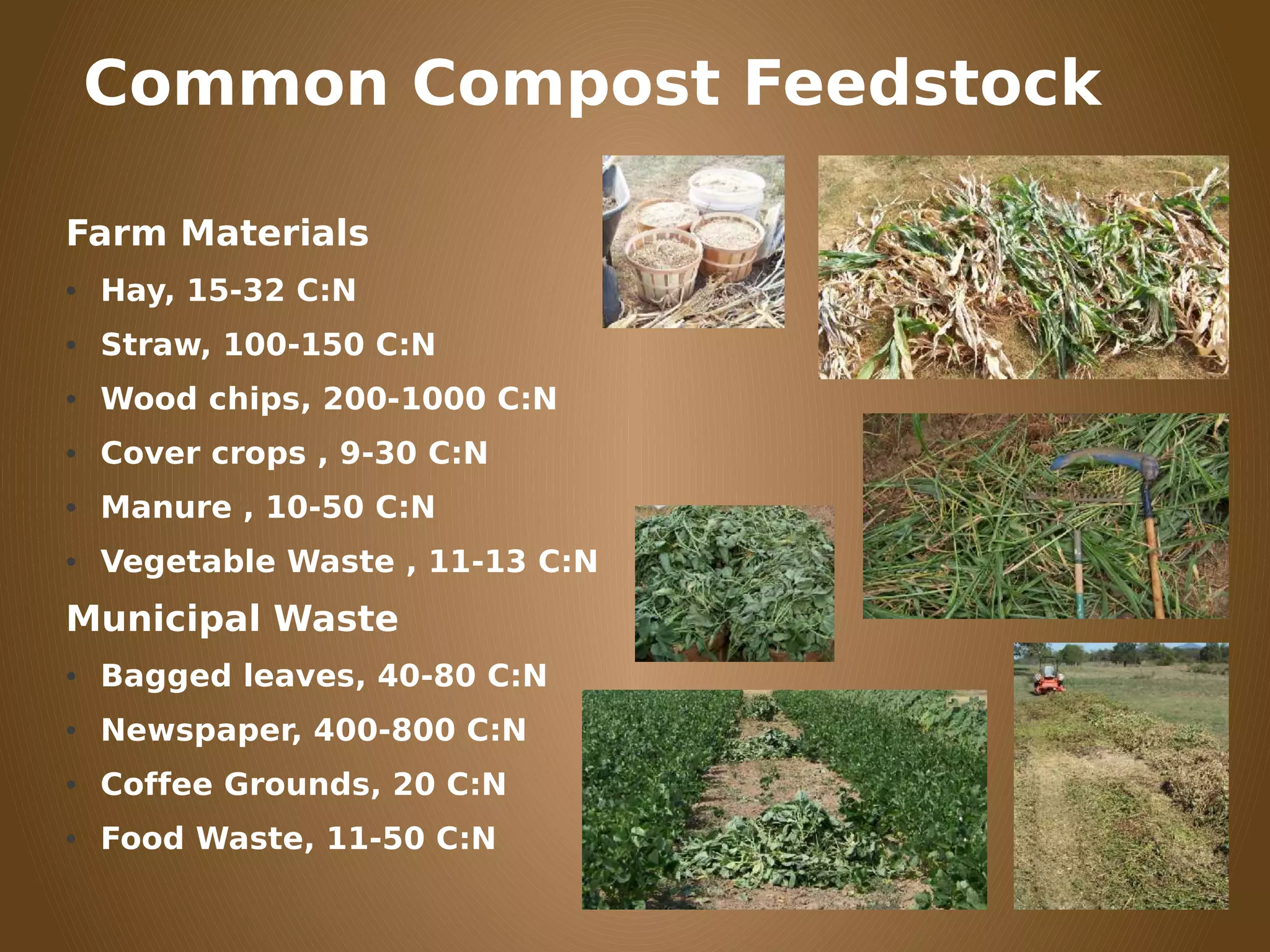
Common feedstock options for composting, emphasizing their carbon to nitrogen ratios and sources.
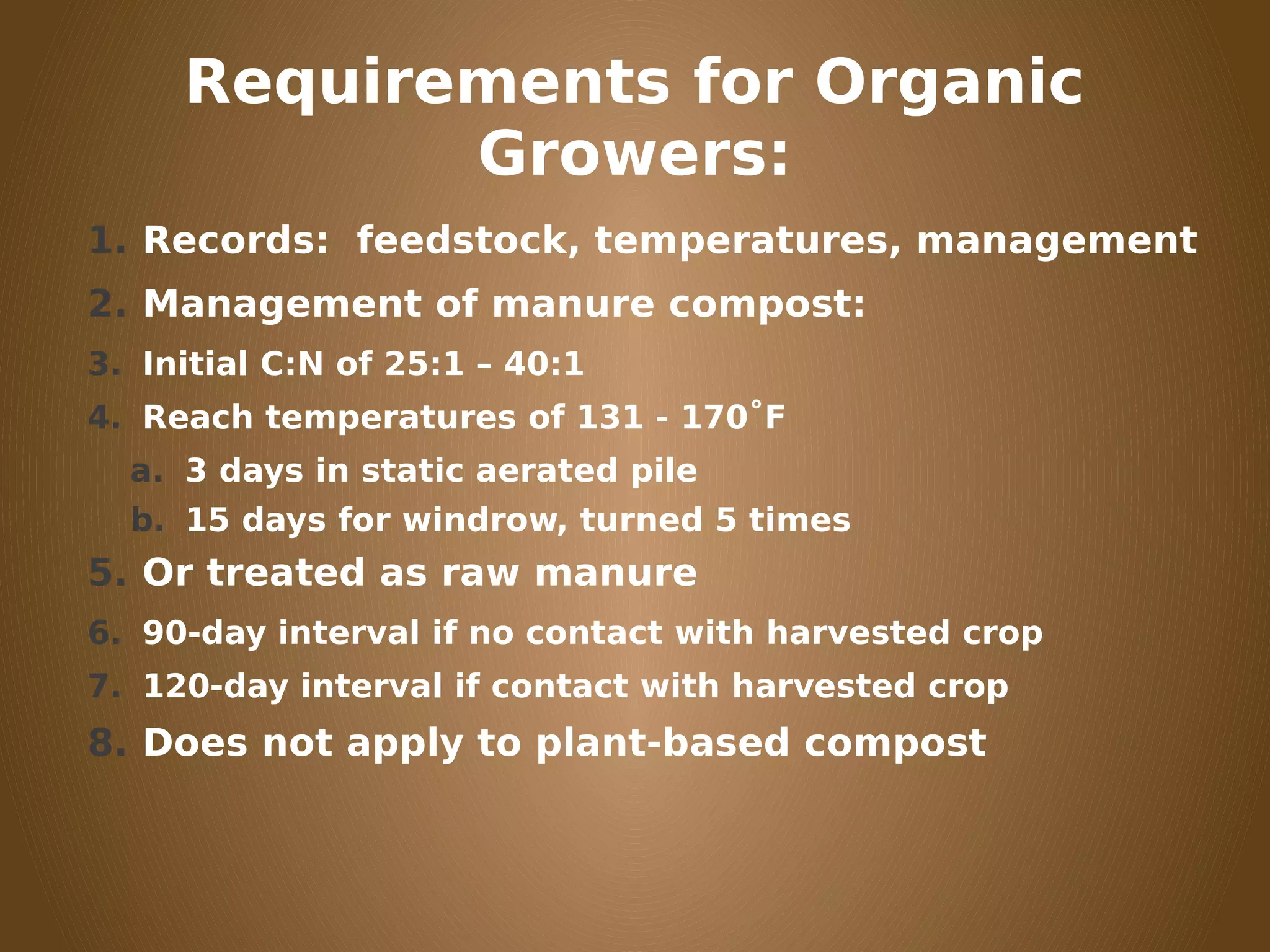
Requirements for organic growers in managing composting processes and monitoring conditions.
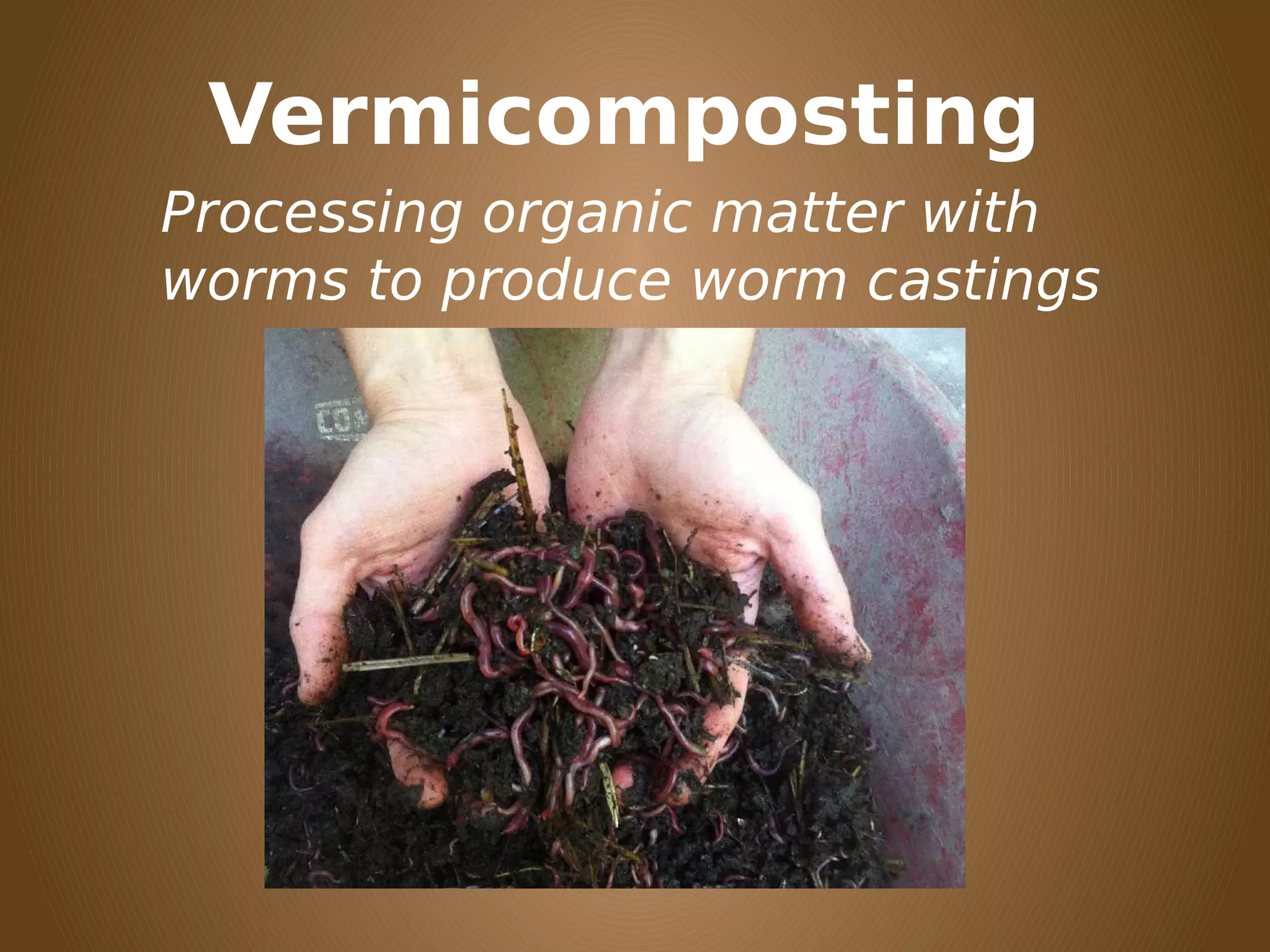
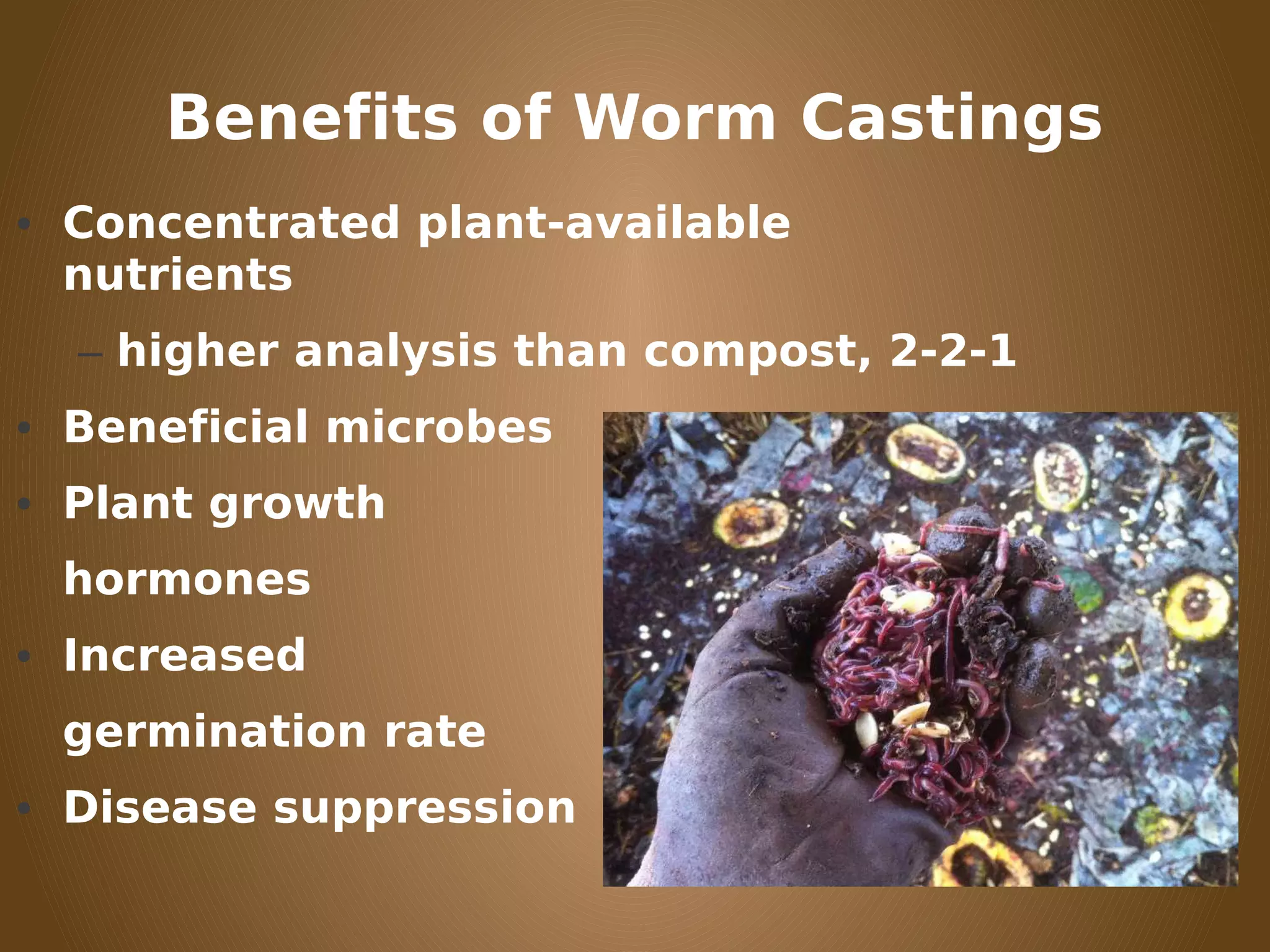
Introduction to vermicomposting and its benefits, focusing on nutrient availability and plant growth.
Uses and methods for incorporating vermicompost into gardening, along with maintaining worm bins.
Overview of sustained benefits of compost, emphasizing soil fertility, microbial health, and cost savings.
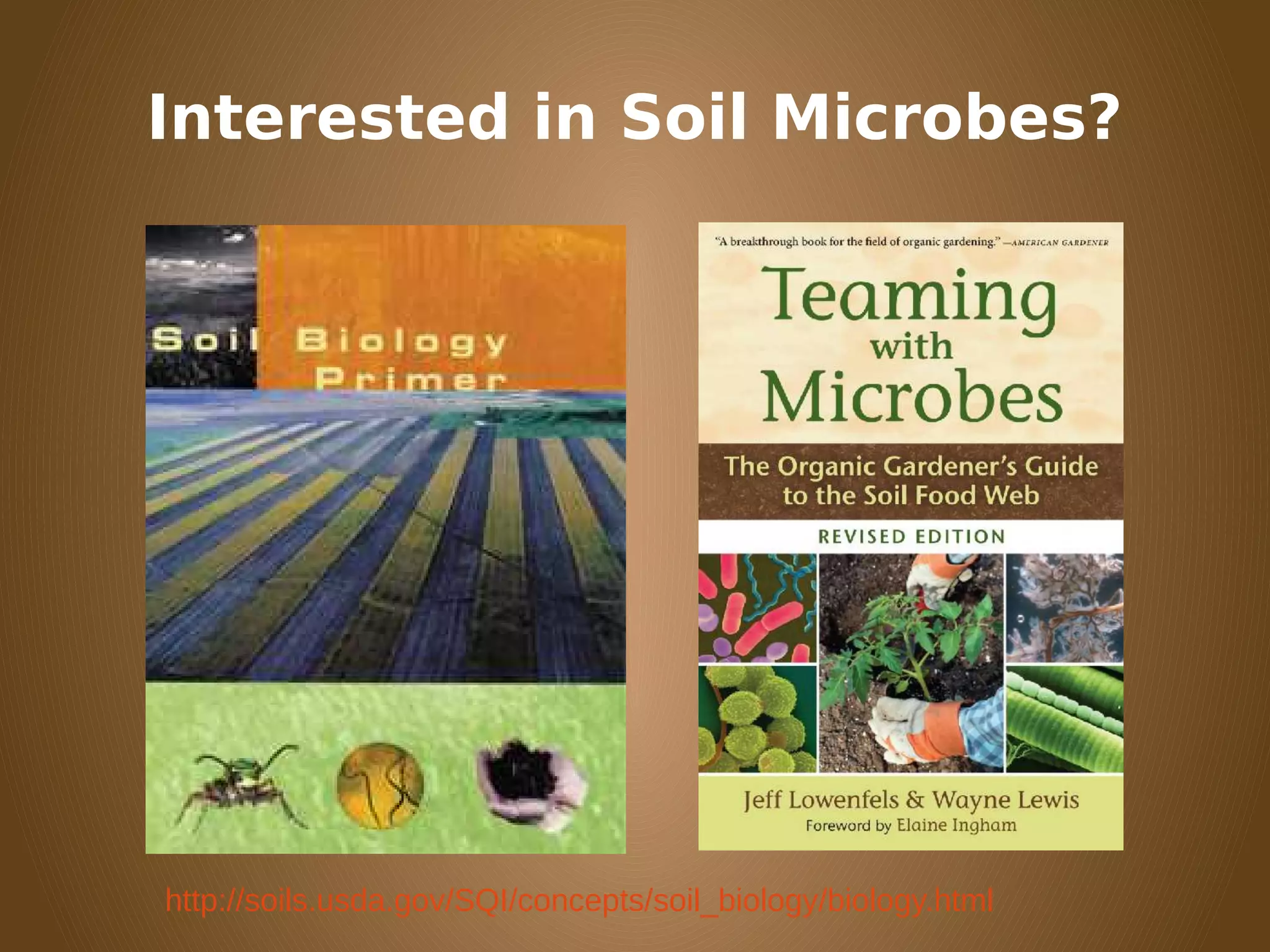
Resources for further information on composting and an opportunity for audience questions.
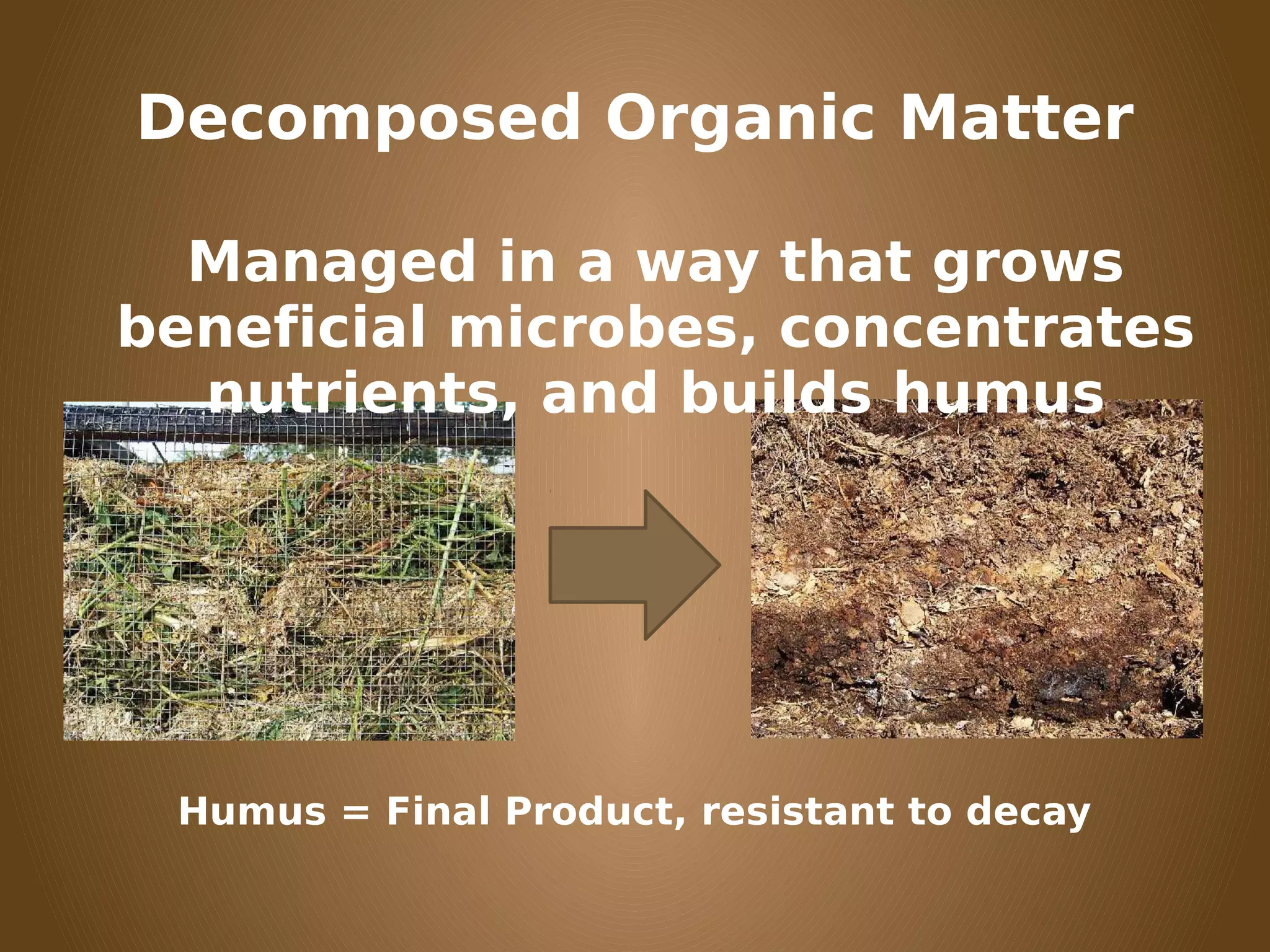
Decomposed Organic Matter
Humus= Final Product, resistant to decay
Managed in a way that grows
beneficial microbes, concentrates
nutrients, and builds humus
Reasons to Compost
•Build soil fertility by recycling farm waste
• Benefits of compost as soil amendment:
1. Builds soil structure
2. Increase water holding capacity of soil
3. Improved aeration of soil
4. Nutrients when your crops need them
5. Initial fertilizer value of about 1-1-1
6. Plant growth stimulant
7. Beneficial microbes that promote plant growth
and suppress pathogens
10.
Compost Uses
1. Incorporateinto Soil before Planting
– at 5 - 20 tons/acre
2. Apply as Mulch or Top-dress
3. Brew Compost Tea or Extract
– Promotes nutrient cycling, plant growth,
and suppresses pathogens
– Foliar spray or soil drench
4. Make Your Own Potting Mix
– Promotes seedling germination, growth
– Reduces need for fertilization
11.
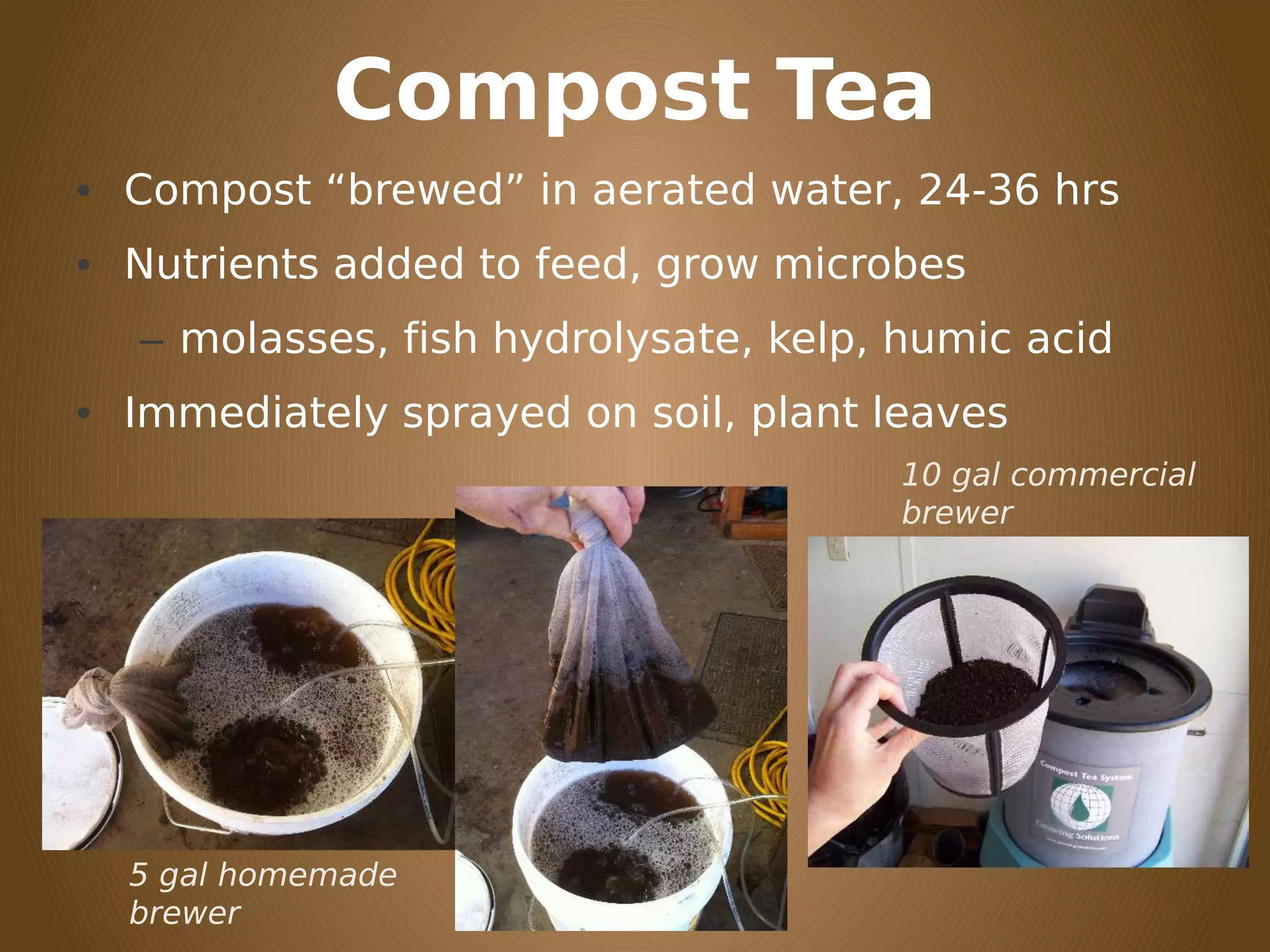
Compost Tea
• Compost“brewed” in aerated water, 24-36 hrs
• Nutrients added to feed, grow microbes
– molasses, fish hydrolysate, kelp, humic acid
• Immediately sprayed on soil, plant leaves
5 gal homemade
brewer
10 gal commercial
brewer
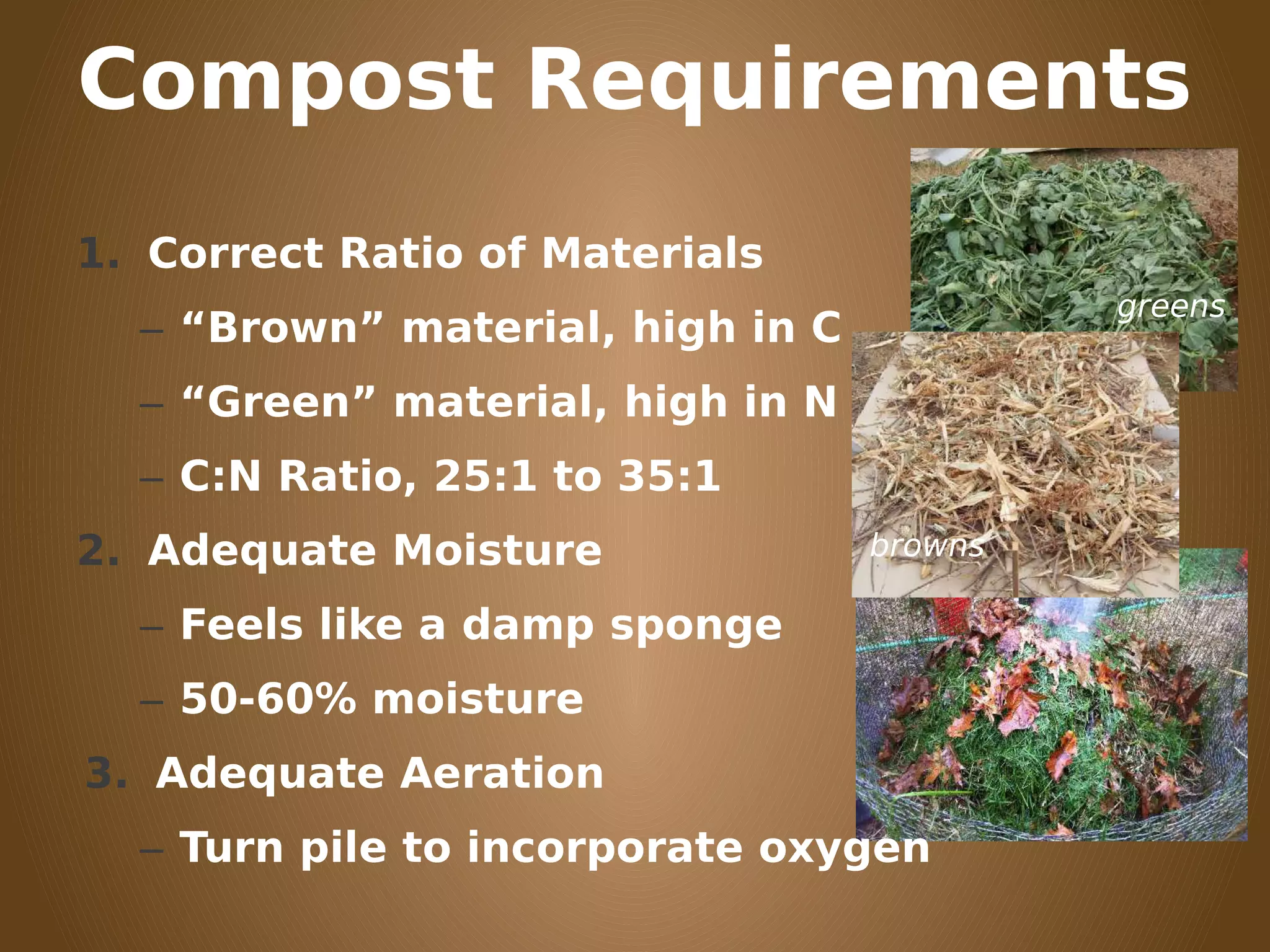
Compost Requirements
1. CorrectRatio of Materials
– “Brown” material, high in C
– “Green” material, high in N
– C:N Ratio, 25:1 to 35:1
2. Adequate Moisture
– Feels like a damp sponge
– 50-60% moisture
3. Adequate Aeration
– Turn pile to incorporate oxygen
greens
browns
14.
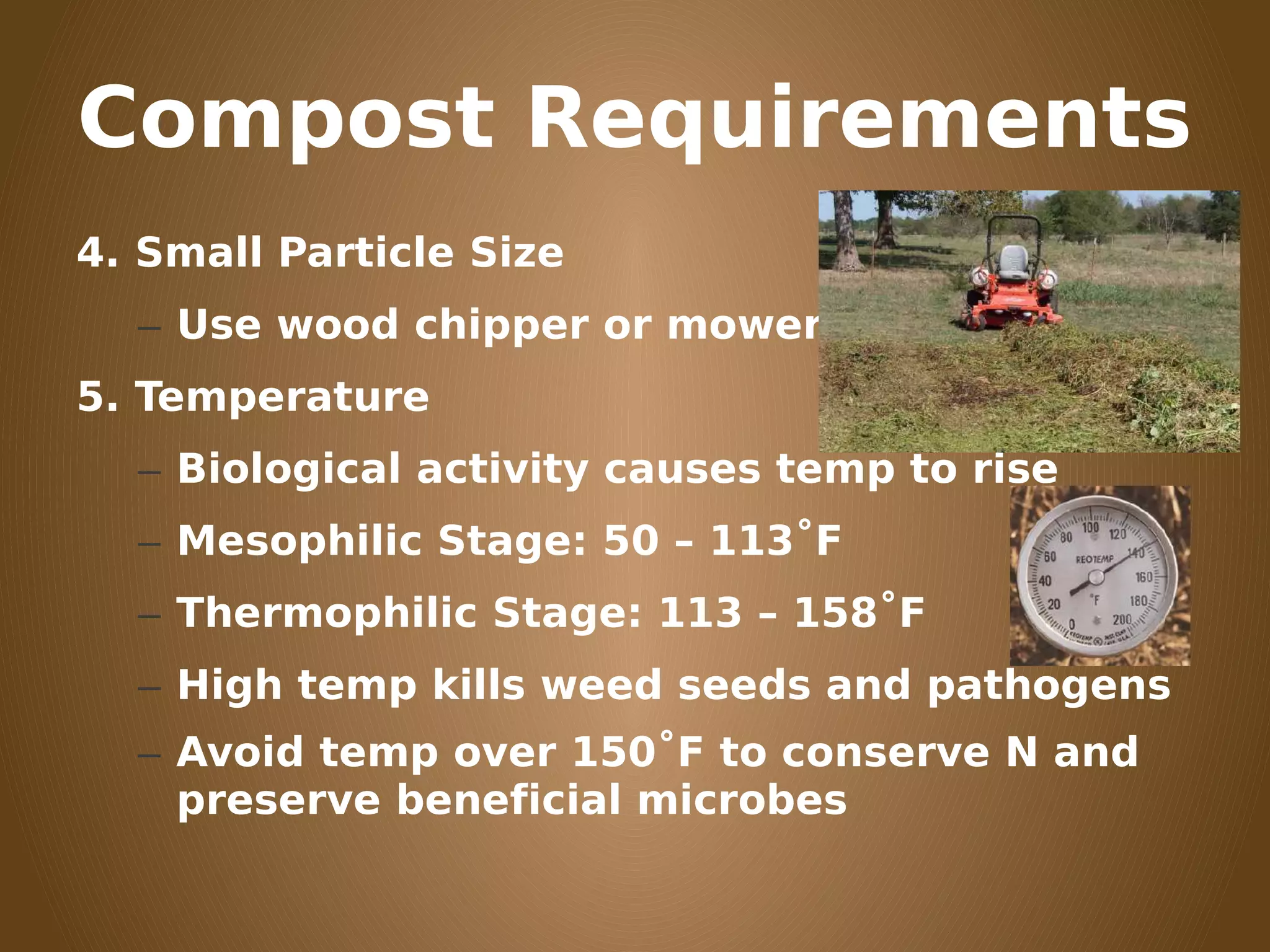
Compost Requirements
4. SmallParticle Size
– Use wood chipper or mower
5. Temperature
– Biological activity causes temp to rise
– Mesophilic Stage: 50 – 113˚F
– Thermophilic Stage: 113 – 158˚F
– High temp kills weed seeds and pathogens
– Avoid temp over 150˚F to conserve N and
preserve beneficial microbes
15.
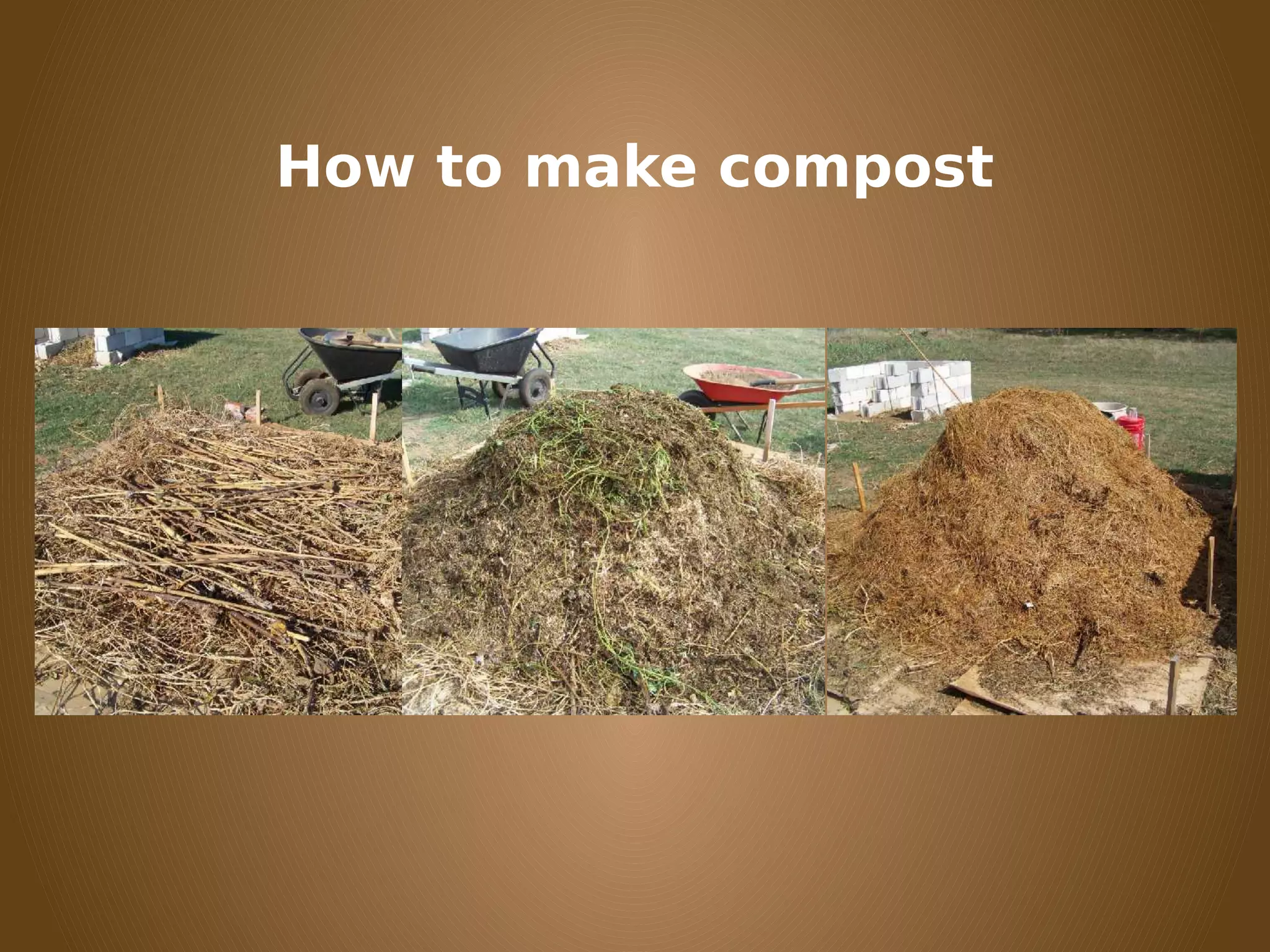
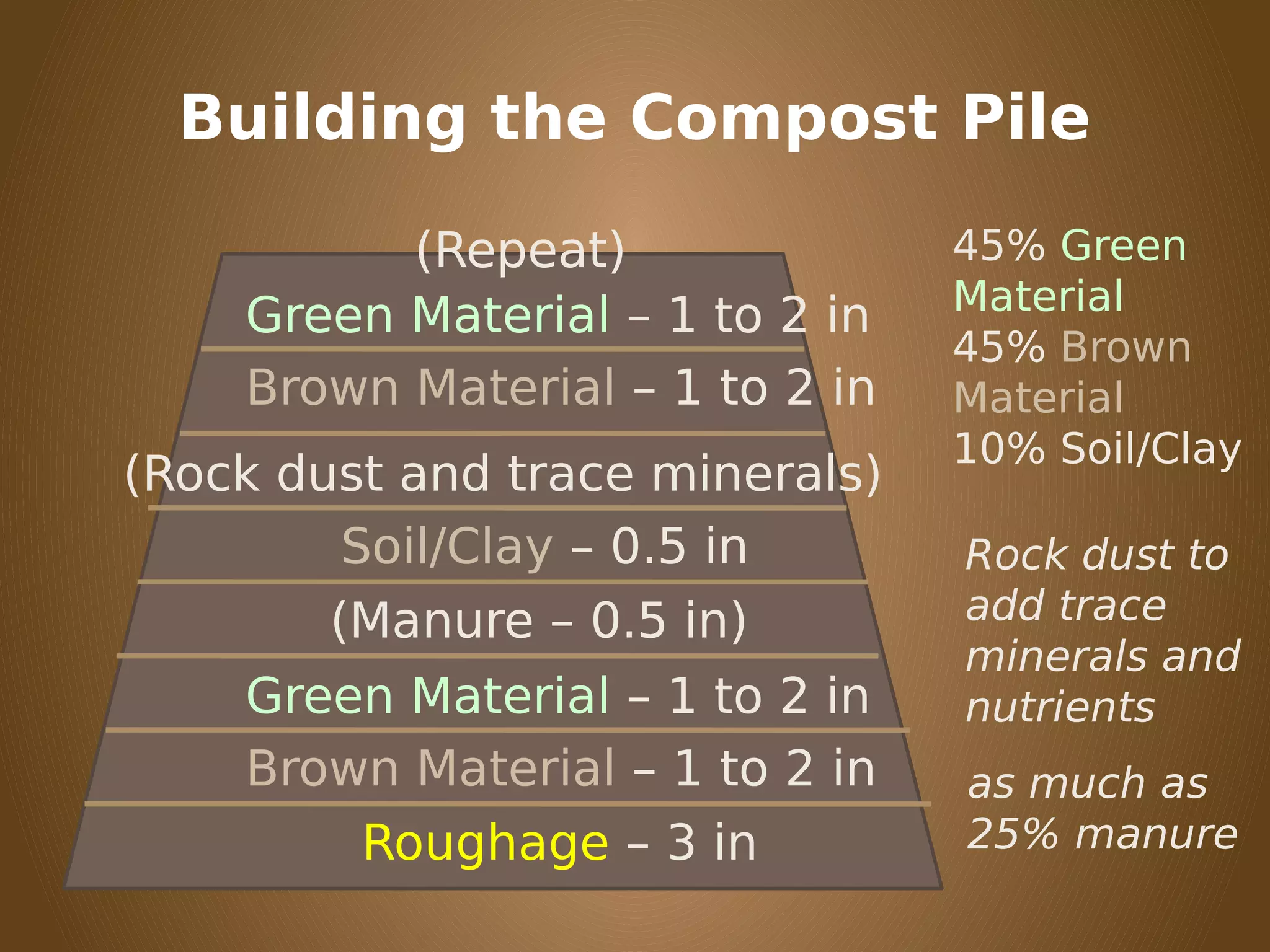
Building the CompostPile
Roughage – 3 in
Brown Material – 1 to 2 in
Green Material – 1 to 2 in
Soil/Clay – 0.5 in
(Manure – 0.5 in)
(Rock dust and trace minerals)
Brown Material – 1 to 2 in
Green Material – 1 to 2 in
(Repeat) 45% Green
Material
45% Brown
Material
10% Soil/Clay
Rock dust to
add trace
minerals and
nutrients
as much as
25% manure
16.
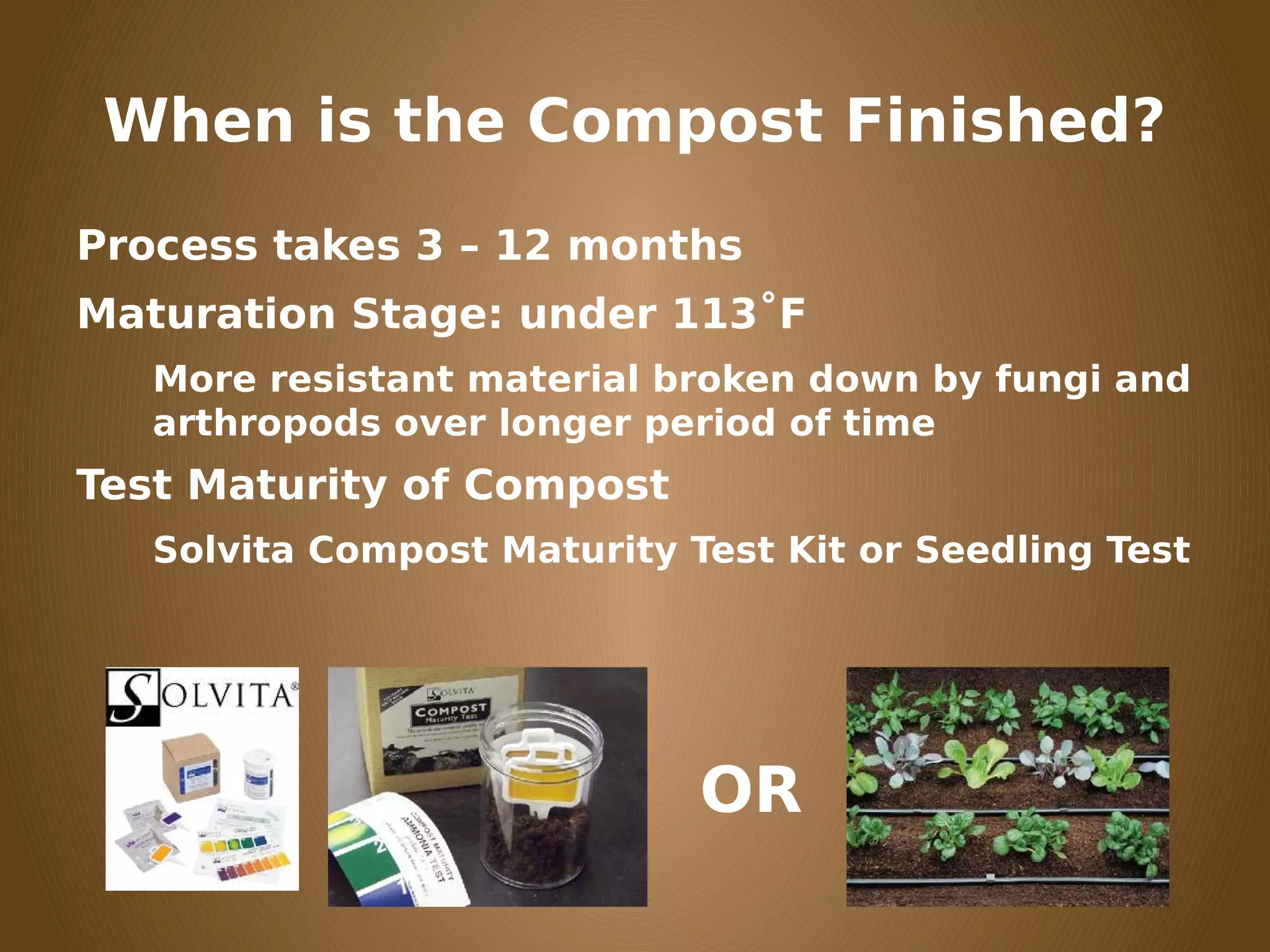
When is theCompost Finished?
Process takes 3 – 12 months
Maturation Stage: under 113˚F
More resistant material broken down by fungi and
arthropods over longer period of time
Test Maturity of Compost
Solvita Compost Maturity Test Kit or Seedling Test
OR
Requirements for Organic
Growers:
1.Records: feedstock, temperatures, management
2. Management of manure compost:
3. Initial C:N of 25:1 – 40:1
4. Reach temperatures of 131 - 170˚F
a. 3 days in static aerated pile
b. 15 days for windrow, turned 5 times
5. Or treated as raw manure
6. 90-day interval if no contact with harvested crop
7. 120-day interval if contact with harvested crop
8. Does not apply to plant-based compost
Vermicompost Uses
1. Incorporateinto Soil before Planting
– cost prohibitive for large acreage
2. Apply as Top-dress Fertilizer
– spread ¼ - ½ inch thick
3. Brew Vermicompost Tea or Extract
– Can mix with compost in tea
– Most economical way to apply vermicompost
4. Make Your Own Potting Mix
– Better germination rates than thermo compost
– Use 5-10% in potting mix
28.
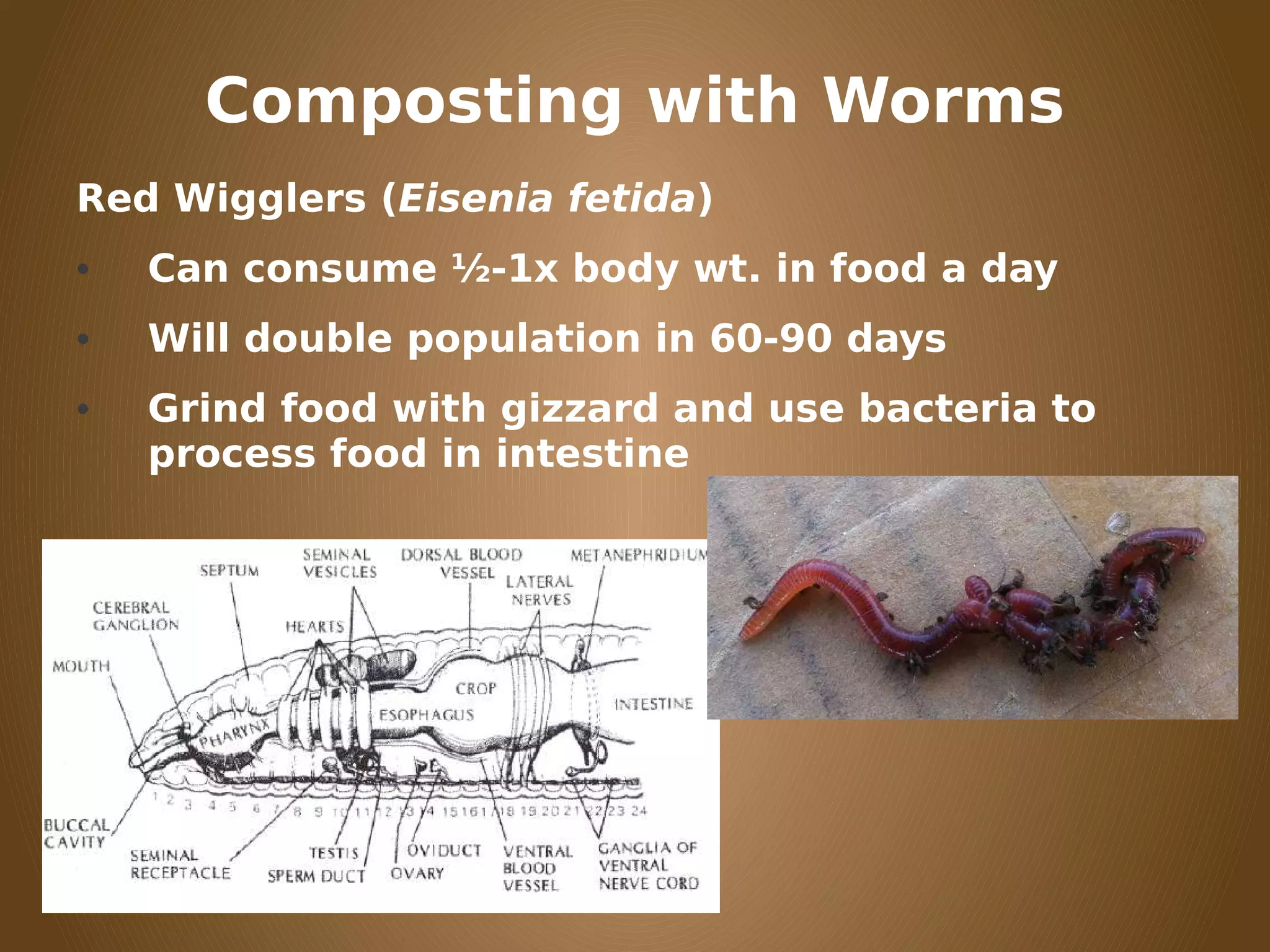
Composting with Worms
RedWigglers (Eisenia fetida)
• Can consume ½-1x body wt. in food a day
• Will double population in 60-90 days
• Grind food with gizzard and use bacteria to
process food in intestine
29.
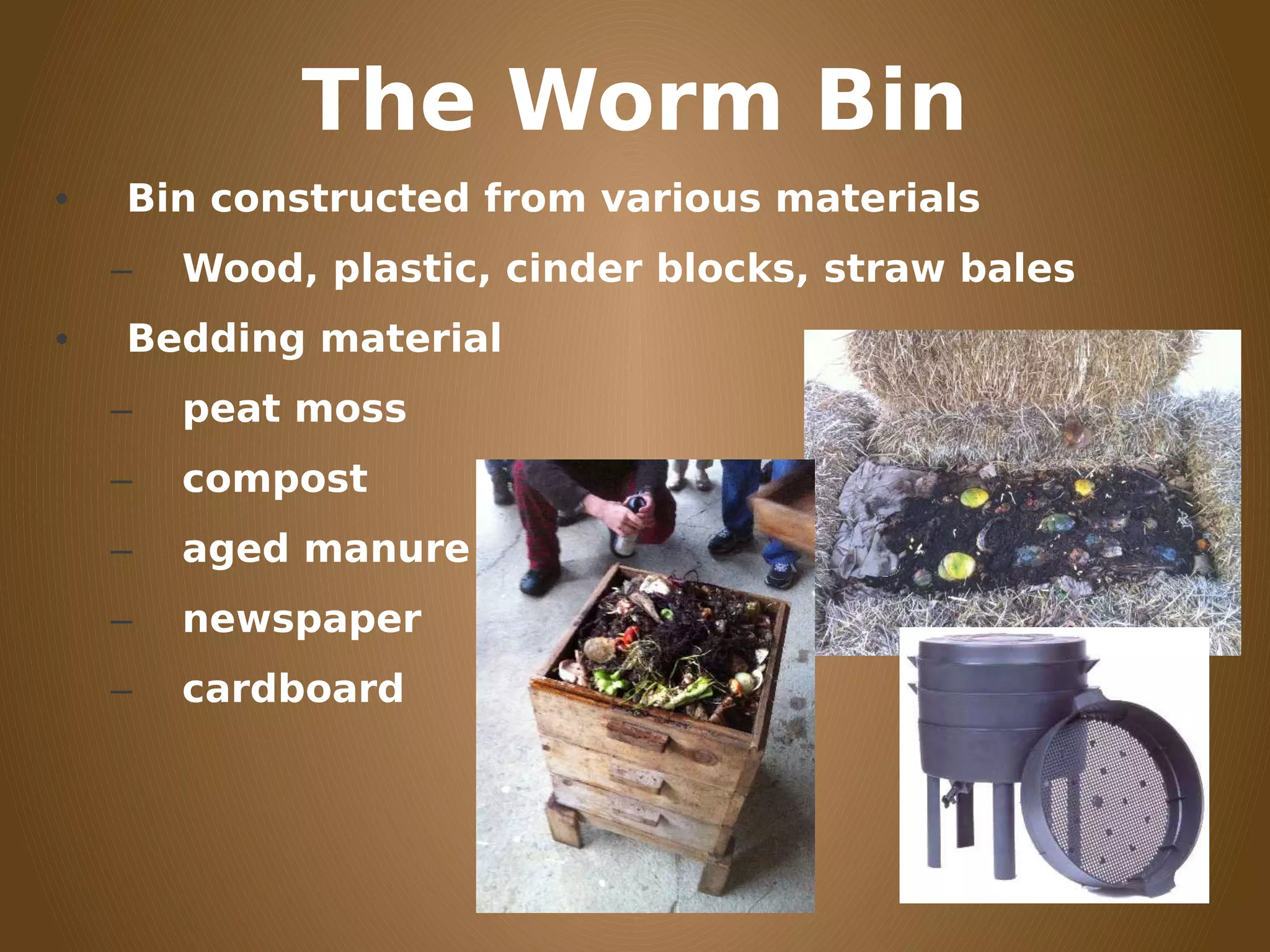
The Worm Bin
•Bin constructed from various materials
– Wood, plastic, cinder blocks, straw bales
• Bedding material
– peat moss
– compost
– aged manure
– newspaper
– cardboard
30.
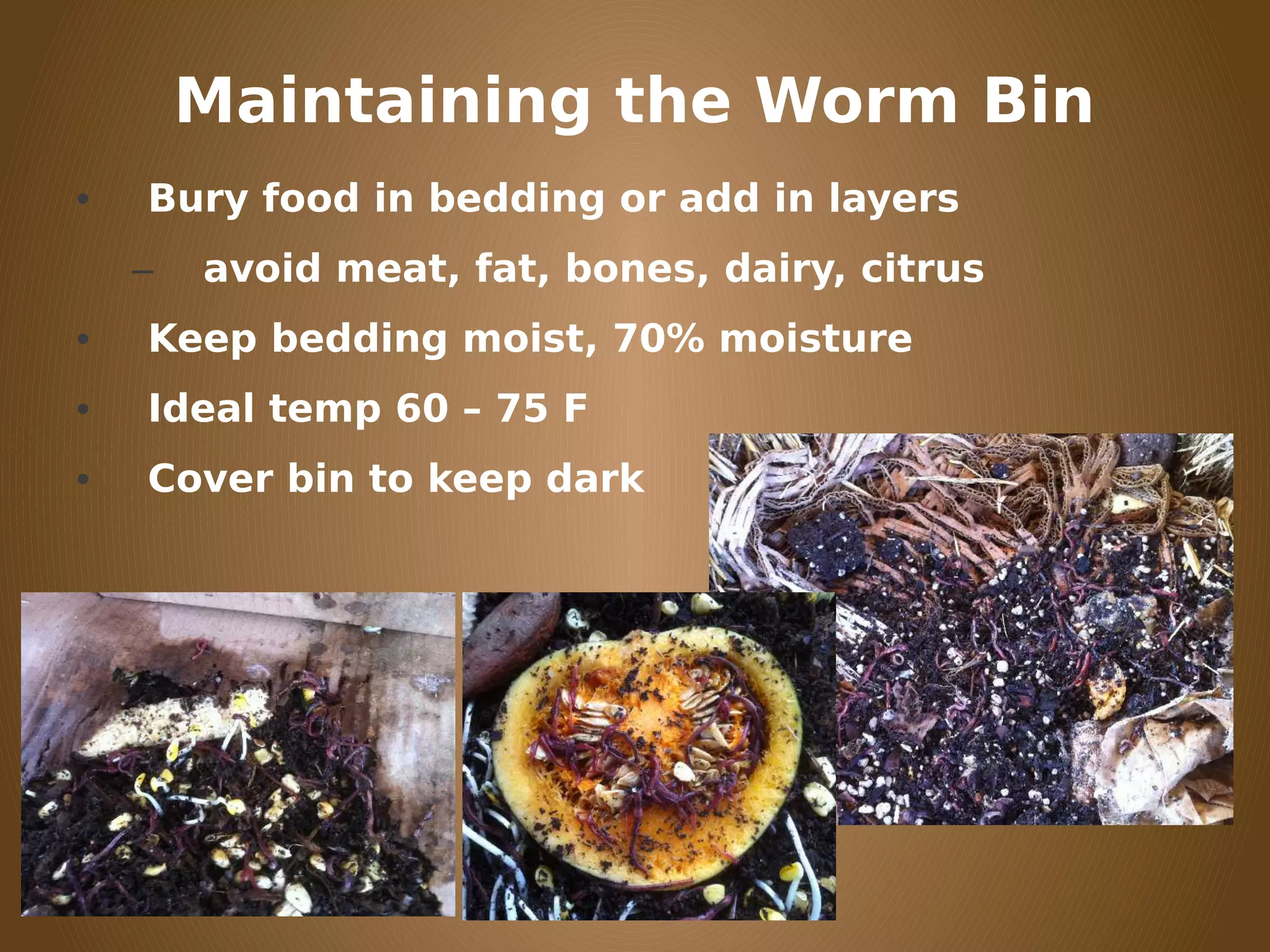
Maintaining the WormBin
• Bury food in bedding or add in layers
– avoid meat, fat, bones, dairy, citrus
• Keep bedding moist, 70% moisture
• Ideal temp 60 – 75 F
• Cover bin to keep dark
31.
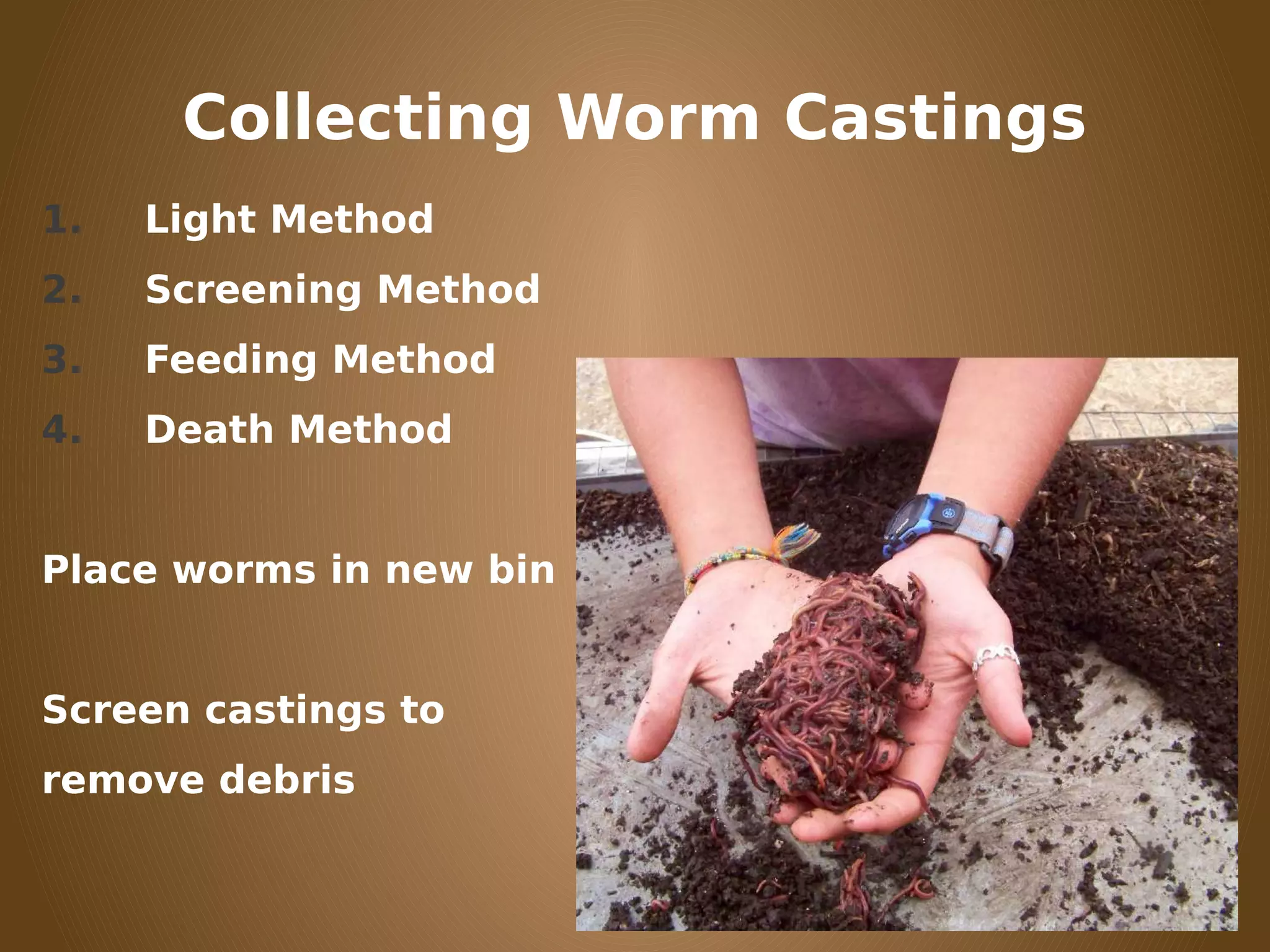
Collecting Worm Castings
1.Light Method
2. Screening Method
3. Feeding Method
4. Death Method
Place worms in new bin
Screen castings to
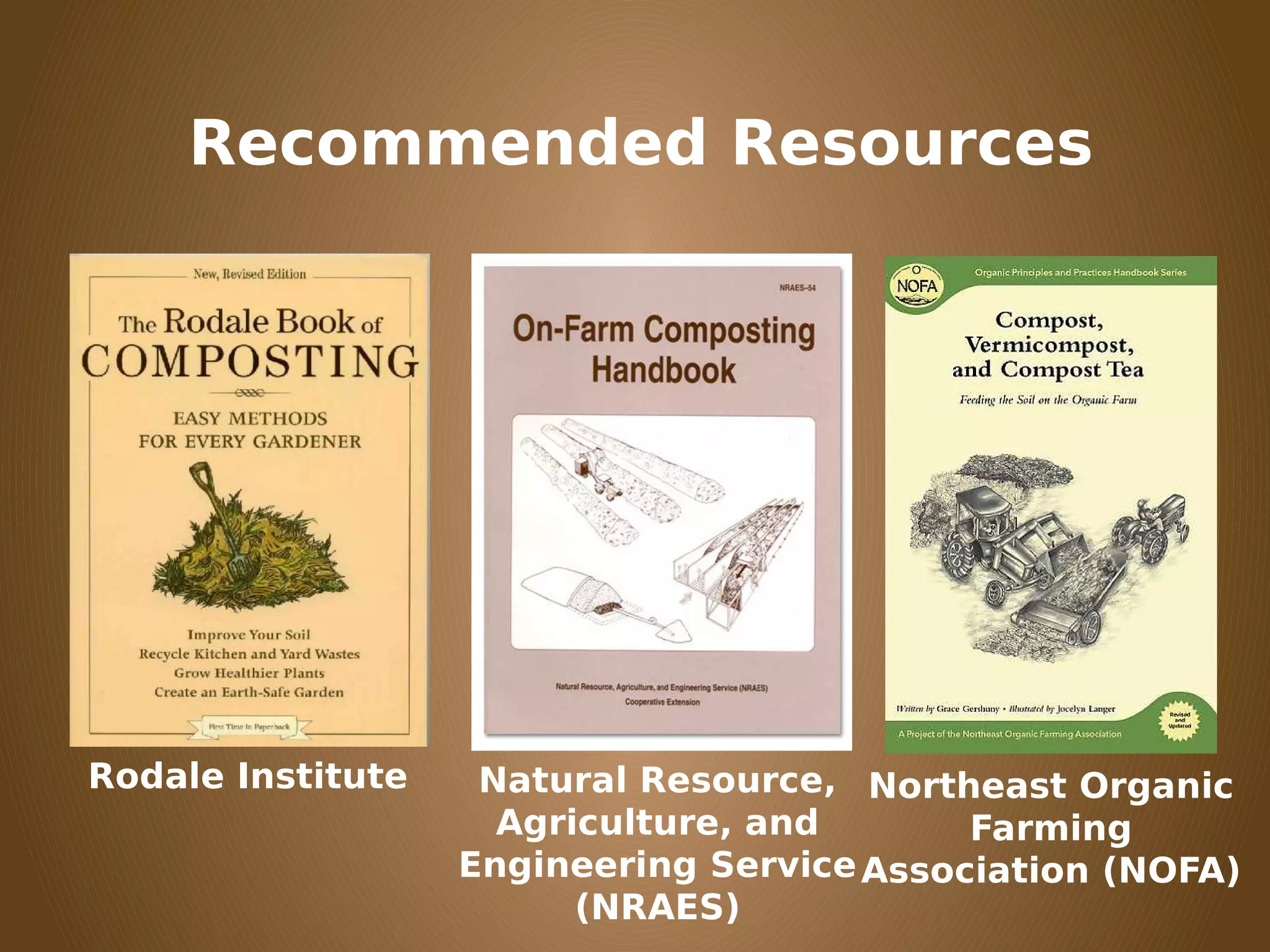
remove debris