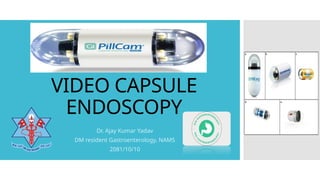
VIDEO CAPSULE
ENDOSCOPY
Dr. Ajay Kumar Yadav
DM resident Gastroenterology, NAMS
2081/10/10
CONTENTS
 Introduction and brief history of VCE
 Indications and contraindications of VCE
 Complications of VCE
 Small bowel VCE
 VCE for colon, esophageal and gastric conditions
 Limitations of VCE
 Unmet needs
INTRODUCTIO
N
 Capsule endoscopy vision began in 1991: Gavriel Iddan,
an engineer from the Israeli Defense Ministry +
gastroenterologist Eitan Scapa
 Further collaboration with Paul Swain, an English
gastroenterologist, and Shuji Nakamura’s invention of
the LED as a light source for optical devices (Nobel Prize
in 2014) further refinement of the capsule endoscope
 The small bowel is the most extended part of GIT, with an
average length of 9 - 15 feet: duodenum (1st 9 inches)
f/b jejunum (proximal 2/5th or 40%) and ileum (3/5th
or 60%)
 “Dark world” or “Black box” of the GIT
INTRODUCTIO
N
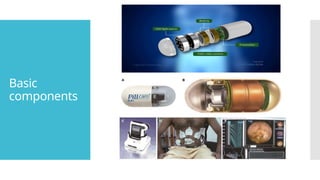
 Capsule endoscopes measure 24 to 32 mm in length and 11 to
13 mm in diameter, depending on the manufacturer and product
line.
 All capsule endoscopes have similar components: a disposable
plastic-coated capsule + metal oxide semiconductor or high-
resolution charge-coupled device (CCD) image capture system
+ a compact lens + LED illumination sources + internal battery
source.
 The mode of data transmission from the capsule is either via
ultra-high frequency band radio telemetry (PillCam [Medtronic,
USA], EndoCapsule [USA]) or human body communications
(Mirocam, Intromedic Seoul, Seoul, South Korea).

 All available software can identify red pixels to facilitate detection
of bleeding lesions
Basic
components
Basic
components
of Capsule
Endoscopy
1) The capsule: one or more cameras + light source + battery +
transmitter
2) Sensors: placed on the surface of the abdomen or contained in a belt
worn by the patient that is connected to a recorder
3) Software: to process and display images
 Devices have improved over the years, with wider field of view (140°–360°),
more cameras (up to 4 in some models), longer battery life, and variable
frame rates: 2 fps when traveling slowly through the stomach and
intestines and up to 35 fps when traveling quickly through the distal
esophagus.
 In its journey through the GI tract, the capsule can acquire 50,000 to
60,000 images, which can take from 30 to 90 minutes to review.
 Real-time viewing is particularly important in detecting active GI
bleeding.
 RAPID Real-Time [Given Imaging/Medtronic,USA], Real Time Viewer [Olympus,
USA], and MiroView Express [IntroMedic, Seoul, South Korea])
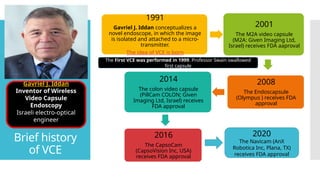
Brief history
of VCE
1991
Gavriel J. Iddan conceptualizes a
novel endoscope, in which the image
is isolated and attached to a micro-
transmitter.
The idea of VCE is born
2001
The M2A video capsule
(M2A: Given Imaging Ltd,
Israel) receives FDA aaproval
2008
The Endoscapsule
(Olympus ) receives FDA
approval
2014
The colon video capsule
(PillCam COLON; Given
Imaging Ltd, Israel) receives
FDA approval
2016
The CapsoCam
(CapsoVision Inc, USA)
receives FDA approval
2020
The Navicam (AnX
Robotica Inc, Plana, TX)
receives FDA approval
Gavriel J. Iddan
Inventor of Wireless
Video Capsule
Endoscopy
Israeli electro-optical
engineer
The First VCE was performed in 1999. Professor Swain swallowed
first capsule
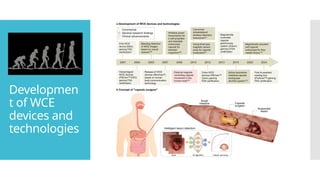
Developmen
t of WCE
devices and
technologies
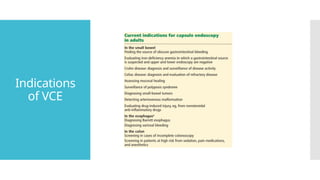
Indications
of VCE
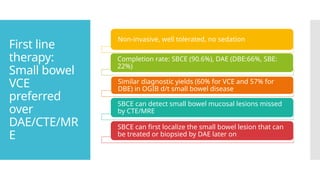
First line
therapy:
Small bowel
VCE
preferred
over
DAE/CTE/MR
E
Non-invasive, well tolerated, no sedation
Completion rate: SBCE (90.6%), DAE (DBE:66%, SBE:
22%)
Similar diagnostic yields (60% for VCE and 57% for
DBE) in OGIB d/t small bowel disease
SBCE can detect small bowel mucosal lesions missed
by CTE/MRE
SBCE can first localize the small bowel lesion that can
be treated or biopsied by DAE later on
Contraindication
s
Stenosis or stricture
of intestine
Intestinal obstruction
Fistulae in bowel
Cardiac devices e.g.
pacemakers, AICD,
LVAD
relative C/I (ASGE),
safe (ESGE)
Pregnancy
Safety not established
Cognitive
impairment
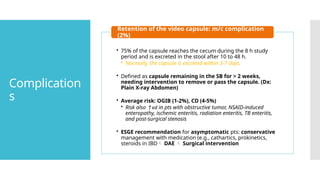
Complication
s
• 75% of the capsule reaches the cecum during the 8 h study
period and is excreted in the stool after 10 to 48 h.
• Normally, the capsule is excreted within 3-7 days.
• Defined as capsule remaining in the SB for > 2 weeks,
needing intervention to remove or pass the capsule. (Dx:
Plain X-ray Abdomen)
• Average risk: OGIB (1-2%), CD (4-5%)
• Risk also ↑ed in pts with obstructive tumor, NSAID-induced
enteropathy, ischemic enteritis, radiation enteritis, TB enteritis,
and post-surgical stenosis
• ESGE recommendation for asymptomatic pts: conservative
management with medication (e.g., cathartics, prokinetics,
steroids in IBD DAE  Surgical intervention
Retention of the video capsule: m/c complication
(2%)
Patency
Capsule
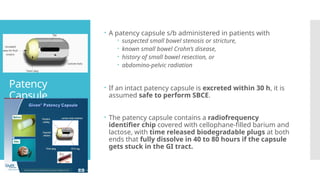
 A patency capsule s/b administered in patients with
 suspected small bowel stenosis or stricture,
 known small bowel Crohn’s disease,
 history of small bowel resection, or
 abdomino-pelvic radiation
 If an intact patency capsule is excreted within 30 h, it is
assumed safe to perform SBCE.
 The patency capsule contains a radiofrequency
identifier chip covered with cellophane-filled barium and
lactose, with time released biodegradable plugs at both
ends that fully dissolve in 40 to 80 hours if the capsule
gets stuck in the GI tract.
Complication
s
• For SB, it means capsule has not reached the cecum
Incomplete examination of the bowel
(15%)
• The capsule stays in the same part of the stomach or
intestine for more than 2 h
• Patients with delayed gastric emptying (diabetic
gastroparesis, inpatient status, opioid use) and
prolonged SB transit time are at increased risk
Delayed transit
• Air bubbles, mucus, intestinal fluid, bile, and food
materials in the small bowel may decrease small bowel
visualization
Poor quality images
Rare complications:
• Battery failure
• Bowel
perforation/obstructi
on
• Aspiration of capsule
into trachea and
bronchial tree (0.1%)
Preparation
for small
bowel VCE
 On the day before procedure:
 avoid any tobacco products, stop Iron supplements at least 7 days
prior
 clear liquid diet after lunch
 bowel prep with 2 L PEG (ESGE
 NPO after midnight
 On the morning of procedure:
 Defoaming agent (Simethicon tablets): ↓intraluminal bubbles and
increase visibility (ESGE)
 s/b performed as an outpatient Procedure: higher completion rate
(ESGE)
 After ingesting the video capsule: (ESGE)
 nothing by mouth for at least 2 h
 clear liquid diet allowed 2 h and light snack after 4 h
 remain ambulatory but should avoid strenuous exercise for 8 h
 stay away from any strong electromagnetic field like MRI, amateur (HAM)
radio, and airport security during this period.
Technical
aspects of
Small Bowel
(SB) Capsule
PillCam SB (M2A, 2001)
11×26 mm, weigh <4g, 2 fps, 50K images (8h),
magnification 8X, depth of view: 1 to 30 mm, viewing angle:
1400
PillCam SB2
Better image resolution due to its wider viewing angle (156o
vs. 1400
), more image capture per second (4 vs. 2), and longer
battery life (9 vs. 8 h) compared to PillCam SB
Recorded data stored in manual mode
PillCam SB3
Can increase the number of images from 2 to 6 fps and has 30%
more image resolution than PillCam SB2 along with blood
detector software
Recorded data stored in review mode
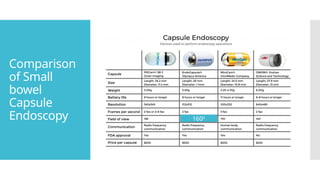
Comparison
of Small
bowel
Capsule
Endoscopy 1600
OGIB and
chronic IDA
 Bleeding from the small bowel is uncommon, accounting for only 5% to 10%
of cases of GI bleeding, but it is responsible for up to 80% of cases of OGIB
and can manifest as IDA
 Most of these lesions are angiodysplasias  small, bleed intermittently
 In a meta-analysis of 10 studies (n = 757) comparing SB-VCE and DBE for
suspected small-bowel bleeding, the pooled yield for SB-VCE and DBE was
24% for both modalities.
 In a meta-analysis of 26 studies (n= 3657) that evaluated SB-VCE in both
overt and occult small-bowel bleeding, the pooled rate of rebleeding after
negative SB-VCE was 19% (95% CI, .14-.25; P < .0001) and not different for
occult versus overt bleeding.
 Negative SB-VCE may be reassuring and obviate the need for further testing unless
rebleeding occurs.
 The timing of capsule endoscopy is important in detecting the source of OGIB.
 Detection rate decreases with time: 55% within 1 day of admission vs 18% 5 days
after admission
VCE guiding
DAE
(antegrade
vs
retrograde)
 2006 Gay et al: SBCE transit time-based index was used
to decide the DBE insertion route.
 Retrograde DBE was performed if the capsule transit time
from ingestion to lesion detection was > 75 % of the total
time from ingestion to caecal visualization.
 PPV and NPV of this SBCE transit time-based index were 94.7 %
and 96.7 % respectively.
 Li et al. proposed a time-based location index, defined
as the time from the pylorus to the lesion as a
percentage of the time from the pylorus to the
ileocecal valve.
 In a study of 60 patients who underwent both SBCE and DAE, a
cutoff of 60 % was highly accurate in guiding the choice of
DAE insertion route.
Role of VCE
in Celiac
Disease
 When is VCE indicated in Celiac Disease ?
 Positive serology or symptoms s/o celiac disease but are unable
or unwilling to undergo routine upper endoscopy.
 Normal duodenal histology to identify distal small-bowel
lesions.
 Clinical symptoms highly s/o celiac disease despite negative
serology (5% ).
 To detect serious complications such as ulcerative
jejunoileitis, celiac-associated lymphoma, and
adenocarcinoma @ 48% of patients with nonresponsive
celiac disease.
 A meta-analysis of 6 studies involving 166 patients with
celiac disease reported a pooled sensitivity of 89% (95%
CI, 82-94) and pooled specificity of 95% (95% CI, 89-98)
for celiac disease detection by VCE using a pathology
reference standard.
VCE in Crohn
Disease (CD)
 About 50% of patients have disease in the colon and terminal
ileum, 30% in the small bowel, and 20% in the colon only.
 The disease is complicated by fistulas, strictures, obstruction, and risk
of colonic malignancies
 Capsule endoscopy can detect CD through 3 findings: mucosal
inflammation, disease extension, and strictures.
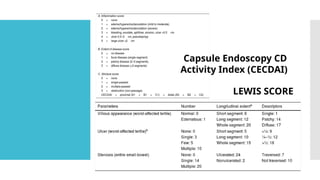
 2 scoring systems: 1. Lewis score 2. Capsule Endoscopy
Crohn’s Disease Activity Index
 Capsule endoscopy can detect disease in the terminal ileum
with a sensitivity approaching 100%, superior to that of CTE
and MRE.
 It can detect jejunal lesions, which have a high risk of relapse
 VCE is recommended in
 Pts with known, suspected, or relapsed CD with unexplained
symptoms when ileocolonoscopy and imaging studies are negative
or when reassessment is beyond the reach of ileocolonoscopy.
 CD recurrence or progression after small-bowel colectomy
Capsule Endoscopy CD
Activity Index (CECDAI)
LEWIS SCORE
Small bowel
tumors
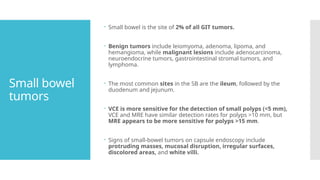
 Small bowel is the site of 2% of all GIT tumors.
 Benign tumors include leiomyoma, adenoma, lipoma, and
hemangioma, while malignant lesions include adenocarcinoma,
neuroendocrine tumors, gastrointestinal stromal tumors, and
lymphoma.
 The most common sites in the SB are the ileum, followed by the
duodenum and jejunum.
 VCE is more sensitive for the detection of small polyps (<5 mm),
VCE and MRE have similar detection rates for polyps >10 mm, but
MRE appears to be more sensitive for polyps >15 mm.
 Signs of small-bowel tumors on capsule endoscopy include
protruding masses, mucosal disruption, irregular surfaces,
discolored areas, and white villi.
NSAID-
induced
Enteropathy
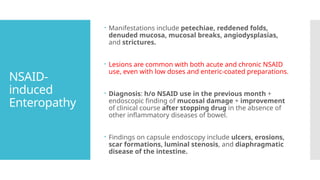
 Manifestations include petechiae, reddened folds,
denuded mucosa, mucosal breaks, angiodysplasias,
and strictures.
 Lesions are common with both acute and chronic NSAID
use, even with low doses and enteric-coated preparations.
 Diagnosis: h/o NSAID use in the previous month +
endoscopic finding of mucosal damage + improvement
of clinical course after stopping drug in the absence of
other inflammatory diseases of bowel.
 Findings on capsule endoscopy include ulcers, erosions,
scar formations, luminal stenosis, and diaphragmatic
disease of the intestine.
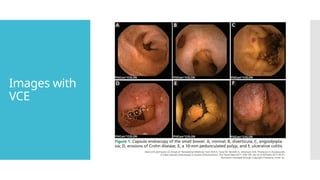
Images with
VCE
How to read
Small Bowel
VCE?
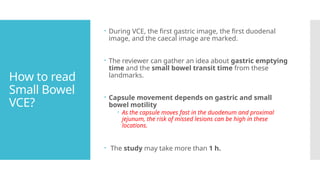
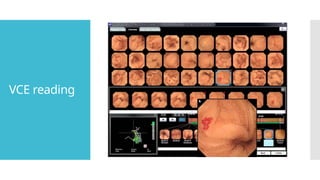
 During VCE, the first gastric image, the first duodenal
image, and the caecal image are marked.
 The reviewer can gather an idea about gastric emptying
time and the small bowel transit time from these
landmarks.
 Capsule movement depends on gastric and small
bowel motility
 As the capsule moves fast in the duodenum and proximal
jejunum, the risk of missed lesions can be high in these
locations.
 The study may take more than 1 h.
Cont..
 It is recommended to view the study in the double or quadruple
video to improve the visibility of any lesion with max. speed of
20 fps and slowing down when evaluating proximal SB (ESGE)
 Automatic mode:
 Eliminates similar images, significant reduction of reading time (up to
50%), very low diagnostic miss rate.
 QuickView mode:
 number of images of interest can be set as a percentage (e.g., 5%, 15%,
25%, and 35%) of all images.
 Shiotani et al: shorten the capsule reading time but with unacceptably
high missed rate
 Suspected blood indicator (SBI):
 Software developed to detect bleeding in the small bowel.
 Suboptimal performance: sensitivity of detecting active bleed < 60%
VCE reading
Capsule
Endoscopy
Deployment
Device
Endoscopic
Capsule
Placement
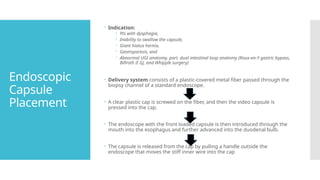
 Indication:
 Pts with dysphagia,
 Inability to swallow the capsule,
 Giant hiatus hernia,
 Gastroparesis, and
 Abnormal UGI anatomy, part. dual intestinal loop anatomy (Roux-en-Y gastric bypass,
Billroth II GJ, and Whipple surgery)
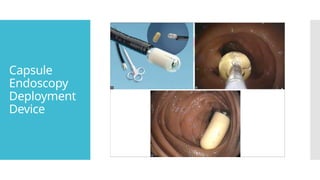
 Delivery system consists of a plastic-covered metal fiber passed through the
biopsy channel of a standard endoscope.
 A clear plastic cap is screwed on the fiber, and then the video capsule is
pressed into the cap.
 The endoscope with the front loaded capsule is then introduced through the
mouth into the esophagus and further advanced into the duodenal bulb.
 The capsule is released from the cap by pulling a handle outside the
endoscope that moves the stiff inner wire into the cap
Colonoscopi
c Capsule
Endoscopy
(CCE)
 Two CCE systems (PillCam COLON 2 and PillCam Crohn’s, USA)
have been cleared by the FDA for colon visualization.
 PillCam COLON 2 is designed for visualization of the colon, whereas
PillCam Crohn’s is designed for the visualization of both the SB and
the colon and specifically for the assessment of CD activity.
 To ensure adequate colon imaging while maintaining battery life (>10
hours), the CCE-2 captures images at 14 frames per minute after
duodenal recognition
 Preparation of CCE:
 Low residue diet for 3 days before the procedure and a clear liquid
diet the day before the procedure.
 4 L PEG solution: 2 L in the evening before the day of the procedure + 2
L on the morning of the procedure.
 The patient swallows the capsule around 9 AM on the day of the
procedure.
 A real-time viewer is used: when the capsule reaches the SB, the data
recorder vibrates and buzzes and gives instructions on the LCD.
CCE
 A 1st
booster dose of SUPREP (6 oz added to 10 oz of
water) given  2nd
booster dose of SUPREP (3 oz added
to 5 oz water) given if capsule not excreted within 3 h of
ingestion of 1st
booster dose  If capsule remains in the
colon 2 h after ingestion of 2nd
booster dose  10 mg of
bisacodyl suppository given.
 2nd
-generation pillCam COLON capsule 2 (aka CCE-2)
 Two cameras, each with viewing angle of 1720
 total 3600
views
 11.6 × 31.5 mm in size, battery life-saving adaptive function
 Images of 4 fps when virtually static and 35 fps when in motion
Indications
of CCE
• To detect colonic polyp only in patients with
incomplete colonoscopy
USFDA (2014)
• ACG + AGA + ASGE
• Third tier screening test for colon cancer screening 5
yearly
Multi-Society Task Force (2017)
• Screening test for colon cancer screening in average-
risk individuals when optical colonoscopy is
contraindicated, vehemently opposed by the
patient, or technically impossible
ESGE (2018)
Capsule
Endoscopy
of the
Esophagus
and Stomach
 PillCam ESO: developed by Given Imaging; USFDA approved in
2004
 Shape, size, and weight are similar to PillCam SB2.
 PillCam ESO (3rd
-generation) can take pictures of 35 fps and has a wider
angle of view of 1740
 Diseases like esophagitis, Barrett’s esophagus, esophageal
cancer, and esophageal varices can be detected by ECE.
 In one study, the sensitivity and specificity of recognizing
Barrett’s esophagus were 60% and 100%, respectively.
 The diagnostic pooled sensitivity and specificity of detecting
esophageal varices were 83% and 85%, respectively. The
diagnostic accuracy of grading medium to large varices was 92%.
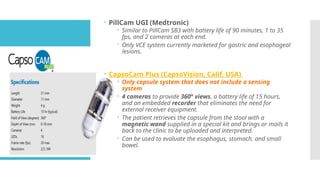
 PillCam UGI (Medtronic)
 Similar to PillCam SB3 with battery life of 90 minutes, 1 to 35
fps, and 2 cameras at each end.
 Only VCE system currently marketed for gastric and esophageal
lesions.
 CapsoCam Plus (CapsoVision, Calif, USA)
 Only capsule system that does not include a sensing
system
 4 cameras to provide 360° views, a battery life of 15 hours,
and an embedded recorder that eliminates the need for
external receiver equipment.
 The patient retrieves the capsule from the stool with a
magnetic wand supplied in a special kit and brings or mails it
back to the clinic to be uploaded and interpreted.
 Can be used to evaluate the esophagus, stomach, and small
bowel.
Procedure
protocol for
ECE
 Fasting for at least 2 hours
 The patient drinks 100 mL of water in a standing
position.
 Then he or she swallows the capsule in the supine
position. The patient can sip 10 mL of water at this time.
 The recording is done in the supine position for 2 min, at
a 30° inclined position for 2 min, and at a 60° inclined
position for 1 min. Then recording is done in a standing
position for 15 min.
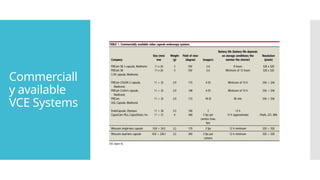
Commerciall
y available
VCE Systems
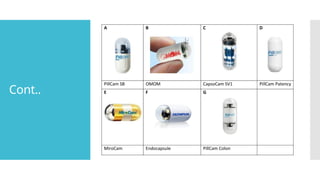
Cont..
REPORTING
 Patient name, demographic and contact details, referrer
details
 Procedure indications, brief history of previous
investigations, and relevant medical details.
 Procedure-related data: gastric transit time, small-
bowel transit time, and overall recording time
 Bowel preparation used, if any and quality of bowel
preparation
 Completion/extent of examination
 Clinical findings: should include (when applicable):
 estimated lesion size and estimated location
 objective reporting of any visualized inflammatory changes
by means of the Lewis score or CECDAI in CD
 Advice.
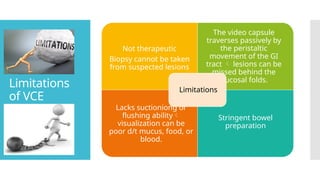
Limitations
of VCE
Not therapeutic
Biopsy cannot be taken
from suspected lesions
The video capsule
traverses passively by
the peristaltic
movement of the GI
tract  lesions can be
missed behind the
mucosal folds.
Lacks suctioniong or
flushing ability
visualization can be
poor d/t mucus, food, or
blood.
Stringent bowel
preparation
Limitations
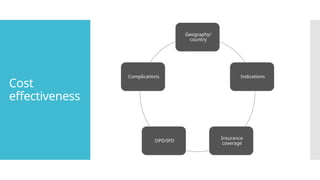
Cost
effectiveness
Geography/
country
Indications
Insurance
coverage
OPD/IPD
Complications
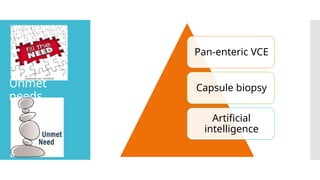
Unmet
needs
Pan-enteric VCE
Capsule biopsy
Artificial
intelligence
References
 Capsule endoscopy in gastrointestinal disease: Evaluation,
diagnosis, and treatment. CLEVELAND CLINIC JOURNAL
OF MEDICINE 2022
 Video Capsule Endoscopy in Gastroenterology Review
article Gastroenterol Res. 2022
 Small-bowel capsule endoscopy and device-assisted
enteroscopy for diagnosis and treatment of small-bowel
disorders: ESGE Technical Review 2018
 Video capsule endoscopy: ASGE TECHNOLOGY STATUS
EVALUATION REPORT 2021

VIDEO CAPSULE ENDOSCOPY (VCE): Introduction, Evolution, Indications

  • 1.
    VIDEO CAPSULE ENDOSCOPY Dr. AjayKumar Yadav DM resident Gastroenterology, NAMS 2081/10/10
  • 2.
    CONTENTS  Introduction andbrief history of VCE  Indications and contraindications of VCE  Complications of VCE  Small bowel VCE  VCE for colon, esophageal and gastric conditions  Limitations of VCE  Unmet needs
  • 3.
    INTRODUCTIO N  Capsule endoscopyvision began in 1991: Gavriel Iddan, an engineer from the Israeli Defense Ministry + gastroenterologist Eitan Scapa  Further collaboration with Paul Swain, an English gastroenterologist, and Shuji Nakamura’s invention of the LED as a light source for optical devices (Nobel Prize in 2014) further refinement of the capsule endoscope  The small bowel is the most extended part of GIT, with an average length of 9 - 15 feet: duodenum (1st 9 inches) f/b jejunum (proximal 2/5th or 40%) and ileum (3/5th or 60%)  “Dark world” or “Black box” of the GIT
  • 4.
    INTRODUCTIO N  Capsule endoscopesmeasure 24 to 32 mm in length and 11 to 13 mm in diameter, depending on the manufacturer and product line.  All capsule endoscopes have similar components: a disposable plastic-coated capsule + metal oxide semiconductor or high- resolution charge-coupled device (CCD) image capture system + a compact lens + LED illumination sources + internal battery source.  The mode of data transmission from the capsule is either via ultra-high frequency band radio telemetry (PillCam [Medtronic, USA], EndoCapsule [USA]) or human body communications (Mirocam, Intromedic Seoul, Seoul, South Korea).   All available software can identify red pixels to facilitate detection of bleeding lesions
  • 5.
  • 6.
    Basic components of Capsule Endoscopy 1) Thecapsule: one or more cameras + light source + battery + transmitter 2) Sensors: placed on the surface of the abdomen or contained in a belt worn by the patient that is connected to a recorder 3) Software: to process and display images  Devices have improved over the years, with wider field of view (140°–360°), more cameras (up to 4 in some models), longer battery life, and variable frame rates: 2 fps when traveling slowly through the stomach and intestines and up to 35 fps when traveling quickly through the distal esophagus.  In its journey through the GI tract, the capsule can acquire 50,000 to 60,000 images, which can take from 30 to 90 minutes to review.  Real-time viewing is particularly important in detecting active GI bleeding.  RAPID Real-Time [Given Imaging/Medtronic,USA], Real Time Viewer [Olympus, USA], and MiroView Express [IntroMedic, Seoul, South Korea])
  • 7.
    Brief history of VCE 1991 GavrielJ. Iddan conceptualizes a novel endoscope, in which the image is isolated and attached to a micro- transmitter. The idea of VCE is born 2001 The M2A video capsule (M2A: Given Imaging Ltd, Israel) receives FDA aaproval 2008 The Endoscapsule (Olympus ) receives FDA approval 2014 The colon video capsule (PillCam COLON; Given Imaging Ltd, Israel) receives FDA approval 2016 The CapsoCam (CapsoVision Inc, USA) receives FDA approval 2020 The Navicam (AnX Robotica Inc, Plana, TX) receives FDA approval Gavriel J. Iddan Inventor of Wireless Video Capsule Endoscopy Israeli electro-optical engineer The First VCE was performed in 1999. Professor Swain swallowed first capsule
  • 8.
  • 9.
  • 10.
    First line therapy: Small bowel VCE preferred over DAE/CTE/MR E Non-invasive,well tolerated, no sedation Completion rate: SBCE (90.6%), DAE (DBE:66%, SBE: 22%) Similar diagnostic yields (60% for VCE and 57% for DBE) in OGIB d/t small bowel disease SBCE can detect small bowel mucosal lesions missed by CTE/MRE SBCE can first localize the small bowel lesion that can be treated or biopsied by DAE later on
  • 11.
    Contraindication s Stenosis or stricture ofintestine Intestinal obstruction Fistulae in bowel Cardiac devices e.g. pacemakers, AICD, LVAD relative C/I (ASGE), safe (ESGE) Pregnancy Safety not established Cognitive impairment
  • 12.
    Complication s • 75% ofthe capsule reaches the cecum during the 8 h study period and is excreted in the stool after 10 to 48 h. • Normally, the capsule is excreted within 3-7 days. • Defined as capsule remaining in the SB for > 2 weeks, needing intervention to remove or pass the capsule. (Dx: Plain X-ray Abdomen) • Average risk: OGIB (1-2%), CD (4-5%) • Risk also ↑ed in pts with obstructive tumor, NSAID-induced enteropathy, ischemic enteritis, radiation enteritis, TB enteritis, and post-surgical stenosis • ESGE recommendation for asymptomatic pts: conservative management with medication (e.g., cathartics, prokinetics, steroids in IBD DAE  Surgical intervention Retention of the video capsule: m/c complication (2%)
  • 13.
    Patency Capsule  A patencycapsule s/b administered in patients with  suspected small bowel stenosis or stricture,  known small bowel Crohn’s disease,  history of small bowel resection, or  abdomino-pelvic radiation  If an intact patency capsule is excreted within 30 h, it is assumed safe to perform SBCE.  The patency capsule contains a radiofrequency identifier chip covered with cellophane-filled barium and lactose, with time released biodegradable plugs at both ends that fully dissolve in 40 to 80 hours if the capsule gets stuck in the GI tract.
  • 14.
    Complication s • For SB,it means capsule has not reached the cecum Incomplete examination of the bowel (15%) • The capsule stays in the same part of the stomach or intestine for more than 2 h • Patients with delayed gastric emptying (diabetic gastroparesis, inpatient status, opioid use) and prolonged SB transit time are at increased risk Delayed transit • Air bubbles, mucus, intestinal fluid, bile, and food materials in the small bowel may decrease small bowel visualization Poor quality images Rare complications: • Battery failure • Bowel perforation/obstructi on • Aspiration of capsule into trachea and bronchial tree (0.1%)
  • 15.
    Preparation for small bowel VCE On the day before procedure:  avoid any tobacco products, stop Iron supplements at least 7 days prior  clear liquid diet after lunch  bowel prep with 2 L PEG (ESGE  NPO after midnight  On the morning of procedure:  Defoaming agent (Simethicon tablets): ↓intraluminal bubbles and increase visibility (ESGE)  s/b performed as an outpatient Procedure: higher completion rate (ESGE)  After ingesting the video capsule: (ESGE)  nothing by mouth for at least 2 h  clear liquid diet allowed 2 h and light snack after 4 h  remain ambulatory but should avoid strenuous exercise for 8 h  stay away from any strong electromagnetic field like MRI, amateur (HAM) radio, and airport security during this period.
  • 16.
    Technical aspects of Small Bowel (SB)Capsule PillCam SB (M2A, 2001) 11×26 mm, weigh <4g, 2 fps, 50K images (8h), magnification 8X, depth of view: 1 to 30 mm, viewing angle: 1400 PillCam SB2 Better image resolution due to its wider viewing angle (156o vs. 1400 ), more image capture per second (4 vs. 2), and longer battery life (9 vs. 8 h) compared to PillCam SB Recorded data stored in manual mode PillCam SB3 Can increase the number of images from 2 to 6 fps and has 30% more image resolution than PillCam SB2 along with blood detector software Recorded data stored in review mode
  • 17.
  • 18.
    OGIB and chronic IDA Bleeding from the small bowel is uncommon, accounting for only 5% to 10% of cases of GI bleeding, but it is responsible for up to 80% of cases of OGIB and can manifest as IDA  Most of these lesions are angiodysplasias  small, bleed intermittently  In a meta-analysis of 10 studies (n = 757) comparing SB-VCE and DBE for suspected small-bowel bleeding, the pooled yield for SB-VCE and DBE was 24% for both modalities.  In a meta-analysis of 26 studies (n= 3657) that evaluated SB-VCE in both overt and occult small-bowel bleeding, the pooled rate of rebleeding after negative SB-VCE was 19% (95% CI, .14-.25; P < .0001) and not different for occult versus overt bleeding.  Negative SB-VCE may be reassuring and obviate the need for further testing unless rebleeding occurs.  The timing of capsule endoscopy is important in detecting the source of OGIB.  Detection rate decreases with time: 55% within 1 day of admission vs 18% 5 days after admission
  • 19.
    VCE guiding DAE (antegrade vs retrograde)  2006Gay et al: SBCE transit time-based index was used to decide the DBE insertion route.  Retrograde DBE was performed if the capsule transit time from ingestion to lesion detection was > 75 % of the total time from ingestion to caecal visualization.  PPV and NPV of this SBCE transit time-based index were 94.7 % and 96.7 % respectively.  Li et al. proposed a time-based location index, defined as the time from the pylorus to the lesion as a percentage of the time from the pylorus to the ileocecal valve.  In a study of 60 patients who underwent both SBCE and DAE, a cutoff of 60 % was highly accurate in guiding the choice of DAE insertion route.
  • 20.
    Role of VCE inCeliac Disease  When is VCE indicated in Celiac Disease ?  Positive serology or symptoms s/o celiac disease but are unable or unwilling to undergo routine upper endoscopy.  Normal duodenal histology to identify distal small-bowel lesions.  Clinical symptoms highly s/o celiac disease despite negative serology (5% ).  To detect serious complications such as ulcerative jejunoileitis, celiac-associated lymphoma, and adenocarcinoma @ 48% of patients with nonresponsive celiac disease.  A meta-analysis of 6 studies involving 166 patients with celiac disease reported a pooled sensitivity of 89% (95% CI, 82-94) and pooled specificity of 95% (95% CI, 89-98) for celiac disease detection by VCE using a pathology reference standard.
  • 21.
    VCE in Crohn Disease(CD)  About 50% of patients have disease in the colon and terminal ileum, 30% in the small bowel, and 20% in the colon only.  The disease is complicated by fistulas, strictures, obstruction, and risk of colonic malignancies  Capsule endoscopy can detect CD through 3 findings: mucosal inflammation, disease extension, and strictures.  2 scoring systems: 1. Lewis score 2. Capsule Endoscopy Crohn’s Disease Activity Index  Capsule endoscopy can detect disease in the terminal ileum with a sensitivity approaching 100%, superior to that of CTE and MRE.  It can detect jejunal lesions, which have a high risk of relapse  VCE is recommended in  Pts with known, suspected, or relapsed CD with unexplained symptoms when ileocolonoscopy and imaging studies are negative or when reassessment is beyond the reach of ileocolonoscopy.  CD recurrence or progression after small-bowel colectomy
  • 22.
    Capsule Endoscopy CD ActivityIndex (CECDAI) LEWIS SCORE
  • 23.
    Small bowel tumors  Smallbowel is the site of 2% of all GIT tumors.  Benign tumors include leiomyoma, adenoma, lipoma, and hemangioma, while malignant lesions include adenocarcinoma, neuroendocrine tumors, gastrointestinal stromal tumors, and lymphoma.  The most common sites in the SB are the ileum, followed by the duodenum and jejunum.  VCE is more sensitive for the detection of small polyps (<5 mm), VCE and MRE have similar detection rates for polyps >10 mm, but MRE appears to be more sensitive for polyps >15 mm.  Signs of small-bowel tumors on capsule endoscopy include protruding masses, mucosal disruption, irregular surfaces, discolored areas, and white villi.
  • 24.
    NSAID- induced Enteropathy  Manifestations includepetechiae, reddened folds, denuded mucosa, mucosal breaks, angiodysplasias, and strictures.  Lesions are common with both acute and chronic NSAID use, even with low doses and enteric-coated preparations.  Diagnosis: h/o NSAID use in the previous month + endoscopic finding of mucosal damage + improvement of clinical course after stopping drug in the absence of other inflammatory diseases of bowel.  Findings on capsule endoscopy include ulcers, erosions, scar formations, luminal stenosis, and diaphragmatic disease of the intestine.
  • 25.
  • 26.
    How to read SmallBowel VCE?  During VCE, the first gastric image, the first duodenal image, and the caecal image are marked.  The reviewer can gather an idea about gastric emptying time and the small bowel transit time from these landmarks.  Capsule movement depends on gastric and small bowel motility  As the capsule moves fast in the duodenum and proximal jejunum, the risk of missed lesions can be high in these locations.  The study may take more than 1 h.
  • 27.
    Cont..  It isrecommended to view the study in the double or quadruple video to improve the visibility of any lesion with max. speed of 20 fps and slowing down when evaluating proximal SB (ESGE)  Automatic mode:  Eliminates similar images, significant reduction of reading time (up to 50%), very low diagnostic miss rate.  QuickView mode:  number of images of interest can be set as a percentage (e.g., 5%, 15%, 25%, and 35%) of all images.  Shiotani et al: shorten the capsule reading time but with unacceptably high missed rate  Suspected blood indicator (SBI):  Software developed to detect bleeding in the small bowel.  Suboptimal performance: sensitivity of detecting active bleed < 60%
  • 28.
  • 29.
  • 30.
    Endoscopic Capsule Placement  Indication:  Ptswith dysphagia,  Inability to swallow the capsule,  Giant hiatus hernia,  Gastroparesis, and  Abnormal UGI anatomy, part. dual intestinal loop anatomy (Roux-en-Y gastric bypass, Billroth II GJ, and Whipple surgery)  Delivery system consists of a plastic-covered metal fiber passed through the biopsy channel of a standard endoscope.  A clear plastic cap is screwed on the fiber, and then the video capsule is pressed into the cap.  The endoscope with the front loaded capsule is then introduced through the mouth into the esophagus and further advanced into the duodenal bulb.  The capsule is released from the cap by pulling a handle outside the endoscope that moves the stiff inner wire into the cap
  • 31.
    Colonoscopi c Capsule Endoscopy (CCE)  TwoCCE systems (PillCam COLON 2 and PillCam Crohn’s, USA) have been cleared by the FDA for colon visualization.  PillCam COLON 2 is designed for visualization of the colon, whereas PillCam Crohn’s is designed for the visualization of both the SB and the colon and specifically for the assessment of CD activity.  To ensure adequate colon imaging while maintaining battery life (>10 hours), the CCE-2 captures images at 14 frames per minute after duodenal recognition  Preparation of CCE:  Low residue diet for 3 days before the procedure and a clear liquid diet the day before the procedure.  4 L PEG solution: 2 L in the evening before the day of the procedure + 2 L on the morning of the procedure.  The patient swallows the capsule around 9 AM on the day of the procedure.  A real-time viewer is used: when the capsule reaches the SB, the data recorder vibrates and buzzes and gives instructions on the LCD.
  • 32.
    CCE  A 1st boosterdose of SUPREP (6 oz added to 10 oz of water) given  2nd booster dose of SUPREP (3 oz added to 5 oz water) given if capsule not excreted within 3 h of ingestion of 1st booster dose  If capsule remains in the colon 2 h after ingestion of 2nd booster dose  10 mg of bisacodyl suppository given.  2nd -generation pillCam COLON capsule 2 (aka CCE-2)  Two cameras, each with viewing angle of 1720  total 3600 views  11.6 × 31.5 mm in size, battery life-saving adaptive function  Images of 4 fps when virtually static and 35 fps when in motion
  • 33.
    Indications of CCE • Todetect colonic polyp only in patients with incomplete colonoscopy USFDA (2014) • ACG + AGA + ASGE • Third tier screening test for colon cancer screening 5 yearly Multi-Society Task Force (2017) • Screening test for colon cancer screening in average- risk individuals when optical colonoscopy is contraindicated, vehemently opposed by the patient, or technically impossible ESGE (2018)
  • 34.
    Capsule Endoscopy of the Esophagus and Stomach PillCam ESO: developed by Given Imaging; USFDA approved in 2004  Shape, size, and weight are similar to PillCam SB2.  PillCam ESO (3rd -generation) can take pictures of 35 fps and has a wider angle of view of 1740  Diseases like esophagitis, Barrett’s esophagus, esophageal cancer, and esophageal varices can be detected by ECE.  In one study, the sensitivity and specificity of recognizing Barrett’s esophagus were 60% and 100%, respectively.  The diagnostic pooled sensitivity and specificity of detecting esophageal varices were 83% and 85%, respectively. The diagnostic accuracy of grading medium to large varices was 92%.
  • 35.
     PillCam UGI(Medtronic)  Similar to PillCam SB3 with battery life of 90 minutes, 1 to 35 fps, and 2 cameras at each end.  Only VCE system currently marketed for gastric and esophageal lesions.  CapsoCam Plus (CapsoVision, Calif, USA)  Only capsule system that does not include a sensing system  4 cameras to provide 360° views, a battery life of 15 hours, and an embedded recorder that eliminates the need for external receiver equipment.  The patient retrieves the capsule from the stool with a magnetic wand supplied in a special kit and brings or mails it back to the clinic to be uploaded and interpreted.  Can be used to evaluate the esophagus, stomach, and small bowel.
  • 36.
    Procedure protocol for ECE  Fastingfor at least 2 hours  The patient drinks 100 mL of water in a standing position.  Then he or she swallows the capsule in the supine position. The patient can sip 10 mL of water at this time.  The recording is done in the supine position for 2 min, at a 30° inclined position for 2 min, and at a 60° inclined position for 1 min. Then recording is done in a standing position for 15 min.
  • 37.
  • 38.
  • 39.
    REPORTING  Patient name,demographic and contact details, referrer details  Procedure indications, brief history of previous investigations, and relevant medical details.  Procedure-related data: gastric transit time, small- bowel transit time, and overall recording time  Bowel preparation used, if any and quality of bowel preparation  Completion/extent of examination  Clinical findings: should include (when applicable):  estimated lesion size and estimated location  objective reporting of any visualized inflammatory changes by means of the Lewis score or CECDAI in CD  Advice.
  • 40.
    Limitations of VCE Not therapeutic Biopsycannot be taken from suspected lesions The video capsule traverses passively by the peristaltic movement of the GI tract  lesions can be missed behind the mucosal folds. Lacks suctioniong or flushing ability visualization can be poor d/t mucus, food, or blood. Stringent bowel preparation Limitations
  • 41.
  • 42.
  • 43.
    References  Capsule endoscopyin gastrointestinal disease: Evaluation, diagnosis, and treatment. CLEVELAND CLINIC JOURNAL OF MEDICINE 2022  Video Capsule Endoscopy in Gastroenterology Review article Gastroenterol Res. 2022  Small-bowel capsule endoscopy and device-assisted enteroscopy for diagnosis and treatment of small-bowel disorders: ESGE Technical Review 2018  Video capsule endoscopy: ASGE TECHNOLOGY STATUS EVALUATION REPORT 2021