HEART FAILURE
PROF. SANJAY KHATTRI
PROFESSOR
DEPARTMENT OF PHARMACOLOGY & THERAPEUTICS
KING GEORGE’S MEDICAL UNIVERSITY
LUCKNOW, UP
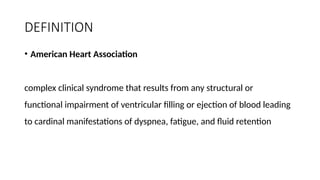
DEFINITION
• American Heart Association
complex clinical syndrome that results from any structural or
functional impairment of ventricular filling or ejection of blood leading
to cardinal manifestations of dyspnea, fatigue, and fluid retention
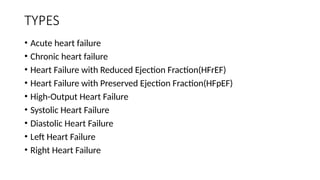
TYPES
• Acute heart failure
• Chronic heart failure
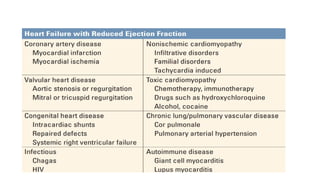
• Heart Failure with Reduced Ejection Fraction(HFrEF)
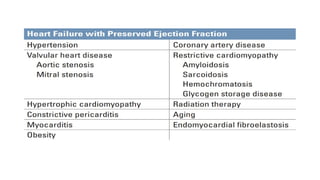
• Heart Failure with Preserved Ejection Fraction(HFpEF)
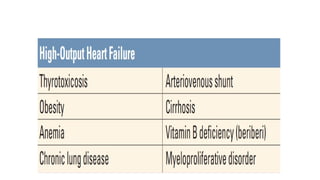
• High-Output Heart Failure
• Systolic Heart Failure
• Diastolic Heart Failure
• Left Heart Failure
• Right Heart Failure
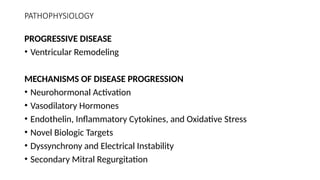
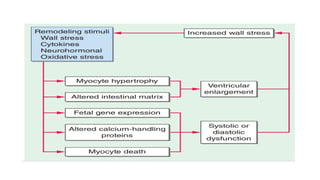
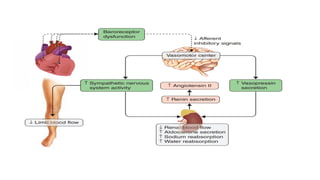
PATHOPHYSIOLOGY
PROGRESSIVE DISEASE
• Ventricular Remodeling
MECHANISMS OF DISEASE PROGRESSION
• Neurohormonal Activation
• Vasodilatory Hormones
• Endothelin, Inflammatory Cytokines, and Oxidative Stress
• Novel Biologic Targets
• Dyssynchrony and Electrical Instability
• Secondary Mitral Regurgitation
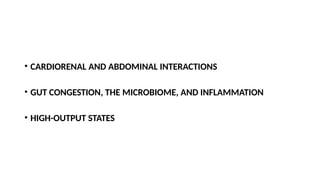
• CARDIORENAL AND ABDOMINAL INTERACTIONS
• GUT CONGESTION, THE MICROBIOME, AND INFLAMMATION
• HIGH-OUTPUT STATES
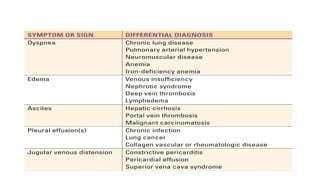
SYMPTOMS
• Symptoms of Congestion: Pulmonary Versus Systemic
• Symptoms of Reduced Perfusion
• Other Symptoms
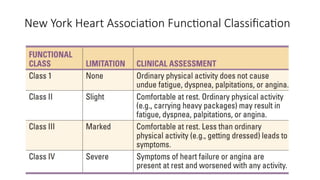
New York Heart Association Functional Classification
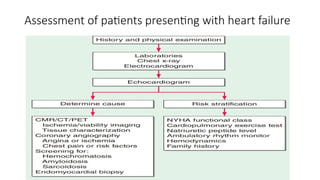
Assessment of patients presenting with heart failure
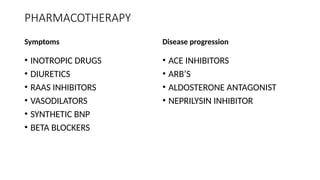
PHARMACOTHERAPY
Symptoms
• INOTROPIC DRUGS
• DIURETICS
• RAAS INHIBITORS
• VASODILATORS
• SYNTHETIC BNP
• BETA BLOCKERS
Disease progression
• ACE INHIBITORS
• ARB’S
• ALDOSTERONE ANTAGONIST
• NEPRILYSIN INHIBITOR
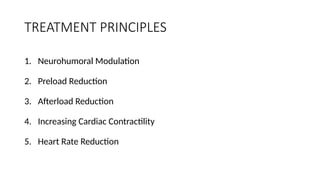
TREATMENT PRINCIPLES
1. Neurohumoral Modulation
2. Preload Reduction
3. Afterload Reduction
4. Increasing Cardiac Contractility
5. Heart Rate Reduction
Neurohumoral Modulation
• ACEIs
• ARBs
• β blockers
• MRAs
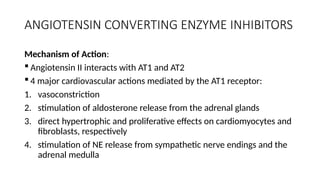
ANGIOTENSIN CONVERTING ENZYME INHIBITORS
Mechanism of Action:
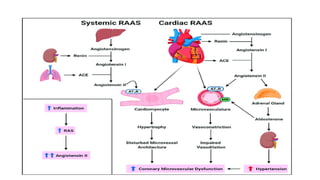
 Angiotensin II interacts with AT1 and AT2
 4 major cardiovascular actions mediated by the AT1 receptor:
1. vasoconstriction
2. stimulation of aldosterone release from the adrenal glands
3. direct hypertrophic and proliferative effects on cardiomyocytes and
fibroblasts, respectively
4. stimulation of NE release from sympathetic nerve endings and the
adrenal medulla
• Other Actions:
• ACE inactivates bradykinin and substance P
• ACEIs increase bradykinin and substance P levels
• 2 prominent consequences:
cough, the most frequent ADR (~5%); and
angioedema, a rare (~0.7%), but life-threatening condition presenting
with swelling of the skin and mucous membranes of the throat and
asphyxia
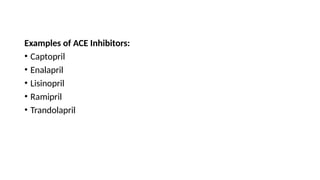
Examples of ACE Inhibitors:
• Captopril
• Enalapril
• Lisinopril
• Ramipril
• Trandolapril
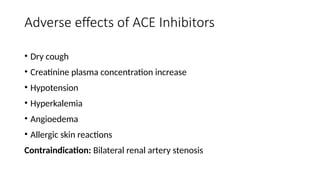
Adverse effects of ACE Inhibitors
• Dry cough
• Creatinine plasma concentration increase
• Hypotension
• Hyperkalemia
• Angioedema
• Allergic skin reactions
Contraindication: Bilateral renal artery stenosis
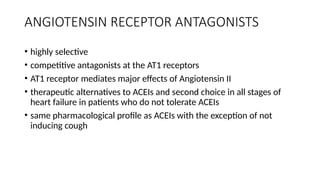
ANGIOTENSIN RECEPTOR ANTAGONISTS
• highly selective
• competitive antagonists at the AT1 receptors
• AT1 receptor mediates major effects of Angiotensin II
• therapeutic alternatives to ACEIs and second choice in all stages of
heart failure in patients who do not tolerate ACEIs
• same pharmacological profile as ACEIs with the exception of not
inducing cough
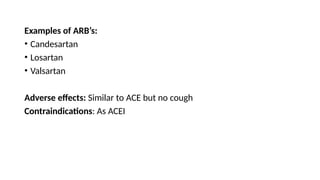
Examples of ARB’s:
• Candesartan
• Losartan
• Valsartan
Adverse effects: Similar to ACE but no cough
Contraindications: As ACEI
ΒETA ADRENERGIC RECEPTOR ANTAGONISTS
Major Effects of catecholamines on heart(beta 1):
• Increase heart rate (chronotropy)
• Increase force of contraction (inotropy)
• Quicken the rate of force development (clinotropy)
• Accelerate cardiac muscle relaxation (lusitropy)
• Acceleration of the atrial-ventricular conduction rate (dromotropy)
• Enhance cardiac myocyte automaticity
• Lower the threshold for arrhythmias (bathmotropy)
β blockers competitively:
• reduce heart rate and force
• slow relaxation
• slow AV conduction
• suppress arrhythmia
• lower renin levels
• therapy must be initiated in a clinically stable condition and at very
low doses (1/8 of target)
• dose escalation requires time (e.g., doubling every 4 weeks in
ambulatory settings)
• “start low, go slow”
Available Agents:
1. Metoprolol - β1 -selective agents
2. Bisoprolol - β1 -selective agents
3. Nebivolol - β1 selective additional vasodilatory actions
4. Carvedilol - nonselective β blocker and α1 receptor antagonist
Clinical Use:
• All patients with symptomatic heart failure and all patients with left
ventricular dysfunction after myocardial infarction should be treated
with a β blocker
• Should not be administered in new-onset or acutely decompensated
heart failure
Precautions:
• Heart rate lowering( 60-70 desirable)
• AV block (consider pacemaker)
• Bronchoconstriction (C/I in allergic bronchial asthma)
• Peripheral vasoconstriction (cold extremities)
MINERALOCORTICOID RECEPTOR ANTAGONISTS
Mechanism of Action:
• MRAs act as antagonists of nuclear receptors of aldosterone
• are K+-sparing diuretics
• additional efficacy in suppressing the consequences of neurohumoral
activation
Examples:
• spironolactone
• Eplerenone( FDA approved)
Adverse effect:
• Hyperkalemia
Guidelines for the use of MRAs in patients with heart failure are:
• Administer no more than 50 mg/day
• Do not use if the GFR is less than 30 mL/min (creatinine ~ 2 mg/dL)
• Be careful with elderly patients
• Be careful with diabetics, who carry a higher risk of hyperkalemia
• Do not combine with other K+-sparing diuretics
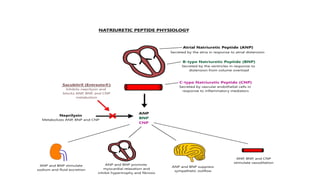
ANGIOTENSIN RECEPTOR AND NEPRILYSIN
INHIBITOR( ARNI)
• Sacubitril/Valsartan
• made by cocrystallizing valsartan with sacubritril
• prodrug that inhibits neprilysin
• peptidase - mediates enzymatic degradation and inactivation of
natriuretic peptides, bradykinin, and substance P
• inhibition of the RAAS
• natriuresis, diuresis and vasodilation
• inhibit thrombosis, fibrosis, cardiac myocyte hypertrophy, and renin
release
PRELOAD REDUCTION
Loop Diuretics
MOA:
inhibit the Na+-K+-2Cl symporter in the ascending limb of the loop of
Henle
Examples:
furosemide
torasemide
Bumetanide
Adverse effects: hypokalemia, hyponatremia, hypomagnesemia,
hyperuricemia, hypocalcemia , glucose intolerance
Thiazide Diuretics
MOA:
Blocks Na+-Cl cotransporter in the distal convoluted tubule
Examples:
hydrochlorothiazide, chlorthalidone
Adverse effects:
Hypokalemia, hyponatremia, hypomagnesemia, hyperuricemia,
hypercalcemia, glucose intolerance
K+-Sparing Diuretics
MOA:
• inhibit apical Na+ channels in distal segments of the tubule directly
(ENaC; e.g., amiloride, triamterene)
• or reduce its gene expression (MRAs spironolactone and eplerenone)
• weak diuretics
Adverse effects:
Hyperkalemia, gynecomastia, erectile dysfunction and menstrual
bleeding disorders (spironolactone)
AFTERLOAD REDUCTION
• Failing heart is exquisitely sensitive to increased arterial resistance
• Vasodilators are beneficial in heart failure by reducing afterload and
allowing the heart to expel blood against lower resistance
Hydralazine–Isosorbide Dinitrate
fixed-combination formulation in use contains 37.5 mg hydralazine and
20 mg ISDN and is uptitrated
Adverse effects:
• Hypotension
• Dizziness
• Headache
• Hydralazine doses greater than 200 mg have been associated with
lupus erythematosus
INCREASING CARDIAC CONTRACTILITY
• Failing heart is unable to generate force sufficient to meet the needs of
the body for perfusion of oxygenated blood
• Unfortunately, when used chronically, these agents do not improve life
expectancy or cardiac performance
• Chronic use is associated with excess mortality
• Only cardiac glycosides are used in the treatment of chronic heart failure
Cardiac Glycosides
Digoxin
• Digitalis lanata
• Only glycoside currently in use
• Increases force of contraction
• Decreases heart rate
• Other use- control of ventricular rate in atrial fibrillation/flutter
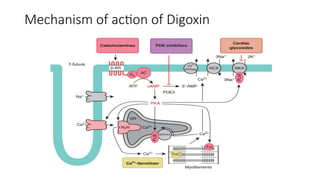
Mechanism of action of Digoxin
Adverse Effects:
• Therapeutic index extremely narrow
• 0.5 and 0.8 ng/ml - beneficial effects
• 1.2 ng/ml and greater- increased mortality
• Arrythmias- most frequent and dangerous
• GI symptoms- anorexia, nausea and vomiting
• Visual effects-altered color perception and coronas (halos)
Antidote:
• Antidigoxin immunotherapy
• Purified fab fragments from ovine antidigoxin antisera (digibind)
HEART RATE REDUCTION
Ivabradine
• selective inhibitor of cardiac pacemaker channels / funny currents
• given to patients with sinus rhythm with hr> 70 bpm with with systolic
dysfunction (EF<35%)
Drug Treatment of Acutely Decompensated
Heart Failure
• Diuretics
• Vasodilators- Nitroglycerin, Nitroprusside and Neseritide
• Positive Inotropic Agents- Dobutamine, Epinephrine, Nor-epinephrine,
Dopamine
• Phosphodiesterase Inhibitors- Milrinone and Enoximone
• Myofilament Calcium Sensitizers- Levosimendan and Pimobendan
• Other Drugs- Tolvaptan, Heparin and other anticoagulants

congestive heart failure.pptx, heart failure

  • 1.
    HEART FAILURE PROF. SANJAYKHATTRI PROFESSOR DEPARTMENT OF PHARMACOLOGY & THERAPEUTICS KING GEORGE’S MEDICAL UNIVERSITY LUCKNOW, UP
  • 2.
    DEFINITION • American HeartAssociation complex clinical syndrome that results from any structural or functional impairment of ventricular filling or ejection of blood leading to cardinal manifestations of dyspnea, fatigue, and fluid retention
  • 3.
    TYPES • Acute heartfailure • Chronic heart failure • Heart Failure with Reduced Ejection Fraction(HFrEF) • Heart Failure with Preserved Ejection Fraction(HFpEF) • High-Output Heart Failure • Systolic Heart Failure • Diastolic Heart Failure • Left Heart Failure • Right Heart Failure
  • 8.
    PATHOPHYSIOLOGY PROGRESSIVE DISEASE • VentricularRemodeling MECHANISMS OF DISEASE PROGRESSION • Neurohormonal Activation • Vasodilatory Hormones • Endothelin, Inflammatory Cytokines, and Oxidative Stress • Novel Biologic Targets • Dyssynchrony and Electrical Instability • Secondary Mitral Regurgitation
  • 9.
    • CARDIORENAL ANDABDOMINAL INTERACTIONS • GUT CONGESTION, THE MICROBIOME, AND INFLAMMATION • HIGH-OUTPUT STATES
  • 12.
    SYMPTOMS • Symptoms ofCongestion: Pulmonary Versus Systemic • Symptoms of Reduced Perfusion • Other Symptoms
  • 13.
    New York HeartAssociation Functional Classification
  • 14.
    Assessment of patientspresenting with heart failure
  • 16.
    PHARMACOTHERAPY Symptoms • INOTROPIC DRUGS •DIURETICS • RAAS INHIBITORS • VASODILATORS • SYNTHETIC BNP • BETA BLOCKERS Disease progression • ACE INHIBITORS • ARB’S • ALDOSTERONE ANTAGONIST • NEPRILYSIN INHIBITOR
  • 17.
    TREATMENT PRINCIPLES 1. NeurohumoralModulation 2. Preload Reduction 3. Afterload Reduction 4. Increasing Cardiac Contractility 5. Heart Rate Reduction
  • 18.
    Neurohumoral Modulation • ACEIs •ARBs • β blockers • MRAs
  • 19.
    ANGIOTENSIN CONVERTING ENZYMEINHIBITORS Mechanism of Action:  Angiotensin II interacts with AT1 and AT2  4 major cardiovascular actions mediated by the AT1 receptor: 1. vasoconstriction 2. stimulation of aldosterone release from the adrenal glands 3. direct hypertrophic and proliferative effects on cardiomyocytes and fibroblasts, respectively 4. stimulation of NE release from sympathetic nerve endings and the adrenal medulla
  • 21.
    • Other Actions: •ACE inactivates bradykinin and substance P • ACEIs increase bradykinin and substance P levels • 2 prominent consequences: cough, the most frequent ADR (~5%); and angioedema, a rare (~0.7%), but life-threatening condition presenting with swelling of the skin and mucous membranes of the throat and asphyxia
  • 22.
    Examples of ACEInhibitors: • Captopril • Enalapril • Lisinopril • Ramipril • Trandolapril
  • 23.
    Adverse effects ofACE Inhibitors • Dry cough • Creatinine plasma concentration increase • Hypotension • Hyperkalemia • Angioedema • Allergic skin reactions Contraindication: Bilateral renal artery stenosis
  • 24.
    ANGIOTENSIN RECEPTOR ANTAGONISTS •highly selective • competitive antagonists at the AT1 receptors • AT1 receptor mediates major effects of Angiotensin II • therapeutic alternatives to ACEIs and second choice in all stages of heart failure in patients who do not tolerate ACEIs • same pharmacological profile as ACEIs with the exception of not inducing cough
  • 25.
    Examples of ARB’s: •Candesartan • Losartan • Valsartan Adverse effects: Similar to ACE but no cough Contraindications: As ACEI
  • 26.
    ΒETA ADRENERGIC RECEPTORANTAGONISTS Major Effects of catecholamines on heart(beta 1): • Increase heart rate (chronotropy) • Increase force of contraction (inotropy) • Quicken the rate of force development (clinotropy) • Accelerate cardiac muscle relaxation (lusitropy) • Acceleration of the atrial-ventricular conduction rate (dromotropy) • Enhance cardiac myocyte automaticity • Lower the threshold for arrhythmias (bathmotropy)
  • 27.
    β blockers competitively: •reduce heart rate and force • slow relaxation • slow AV conduction • suppress arrhythmia • lower renin levels
  • 28.
    • therapy mustbe initiated in a clinically stable condition and at very low doses (1/8 of target) • dose escalation requires time (e.g., doubling every 4 weeks in ambulatory settings) • “start low, go slow”
  • 29.
    Available Agents: 1. Metoprolol- β1 -selective agents 2. Bisoprolol - β1 -selective agents 3. Nebivolol - β1 selective additional vasodilatory actions 4. Carvedilol - nonselective β blocker and α1 receptor antagonist
  • 30.
    Clinical Use: • Allpatients with symptomatic heart failure and all patients with left ventricular dysfunction after myocardial infarction should be treated with a β blocker • Should not be administered in new-onset or acutely decompensated heart failure Precautions: • Heart rate lowering( 60-70 desirable) • AV block (consider pacemaker) • Bronchoconstriction (C/I in allergic bronchial asthma) • Peripheral vasoconstriction (cold extremities)
  • 31.
    MINERALOCORTICOID RECEPTOR ANTAGONISTS Mechanismof Action: • MRAs act as antagonists of nuclear receptors of aldosterone • are K+-sparing diuretics • additional efficacy in suppressing the consequences of neurohumoral activation Examples: • spironolactone • Eplerenone( FDA approved) Adverse effect: • Hyperkalemia
  • 32.
    Guidelines for theuse of MRAs in patients with heart failure are: • Administer no more than 50 mg/day • Do not use if the GFR is less than 30 mL/min (creatinine ~ 2 mg/dL) • Be careful with elderly patients • Be careful with diabetics, who carry a higher risk of hyperkalemia • Do not combine with other K+-sparing diuretics
  • 33.
    ANGIOTENSIN RECEPTOR ANDNEPRILYSIN INHIBITOR( ARNI) • Sacubitril/Valsartan • made by cocrystallizing valsartan with sacubritril • prodrug that inhibits neprilysin • peptidase - mediates enzymatic degradation and inactivation of natriuretic peptides, bradykinin, and substance P • inhibition of the RAAS • natriuresis, diuresis and vasodilation • inhibit thrombosis, fibrosis, cardiac myocyte hypertrophy, and renin release
  • 35.
    PRELOAD REDUCTION Loop Diuretics MOA: inhibitthe Na+-K+-2Cl symporter in the ascending limb of the loop of Henle Examples: furosemide torasemide Bumetanide Adverse effects: hypokalemia, hyponatremia, hypomagnesemia, hyperuricemia, hypocalcemia , glucose intolerance
  • 36.
    Thiazide Diuretics MOA: Blocks Na+-Clcotransporter in the distal convoluted tubule Examples: hydrochlorothiazide, chlorthalidone Adverse effects: Hypokalemia, hyponatremia, hypomagnesemia, hyperuricemia, hypercalcemia, glucose intolerance
  • 37.
    K+-Sparing Diuretics MOA: • inhibitapical Na+ channels in distal segments of the tubule directly (ENaC; e.g., amiloride, triamterene) • or reduce its gene expression (MRAs spironolactone and eplerenone) • weak diuretics Adverse effects: Hyperkalemia, gynecomastia, erectile dysfunction and menstrual bleeding disorders (spironolactone)
  • 38.
    AFTERLOAD REDUCTION • Failingheart is exquisitely sensitive to increased arterial resistance • Vasodilators are beneficial in heart failure by reducing afterload and allowing the heart to expel blood against lower resistance
  • 39.
    Hydralazine–Isosorbide Dinitrate fixed-combination formulationin use contains 37.5 mg hydralazine and 20 mg ISDN and is uptitrated Adverse effects: • Hypotension • Dizziness • Headache • Hydralazine doses greater than 200 mg have been associated with lupus erythematosus
  • 40.
    INCREASING CARDIAC CONTRACTILITY •Failing heart is unable to generate force sufficient to meet the needs of the body for perfusion of oxygenated blood • Unfortunately, when used chronically, these agents do not improve life expectancy or cardiac performance • Chronic use is associated with excess mortality • Only cardiac glycosides are used in the treatment of chronic heart failure
  • 41.
    Cardiac Glycosides Digoxin • Digitalislanata • Only glycoside currently in use • Increases force of contraction • Decreases heart rate • Other use- control of ventricular rate in atrial fibrillation/flutter
  • 42.
  • 43.
    Adverse Effects: • Therapeuticindex extremely narrow • 0.5 and 0.8 ng/ml - beneficial effects • 1.2 ng/ml and greater- increased mortality • Arrythmias- most frequent and dangerous • GI symptoms- anorexia, nausea and vomiting • Visual effects-altered color perception and coronas (halos) Antidote: • Antidigoxin immunotherapy • Purified fab fragments from ovine antidigoxin antisera (digibind)
  • 44.
    HEART RATE REDUCTION Ivabradine •selective inhibitor of cardiac pacemaker channels / funny currents • given to patients with sinus rhythm with hr> 70 bpm with with systolic dysfunction (EF<35%)
  • 45.
    Drug Treatment ofAcutely Decompensated Heart Failure • Diuretics • Vasodilators- Nitroglycerin, Nitroprusside and Neseritide • Positive Inotropic Agents- Dobutamine, Epinephrine, Nor-epinephrine, Dopamine • Phosphodiesterase Inhibitors- Milrinone and Enoximone • Myofilament Calcium Sensitizers- Levosimendan and Pimobendan • Other Drugs- Tolvaptan, Heparin and other anticoagulants