Daniel Medimorec:
                The Austrian E-Democracy Approach
                                    Workshop
                   „Vitalizing Democracy through Participation“
                     Bertelsmann Stiftung, Berlin, 09.06.2010


Danube University Krems
Centre for E-Government
Overview

 1. EU
 2. Austria
 3. Southeast Europe
 4. Outlook


Danube University Krems
Centre for E-Government
EU

Danube University Krems
Centre for E-Government
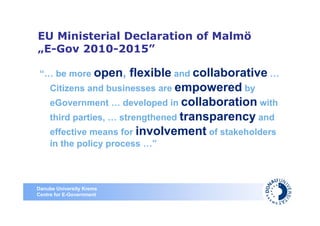
EU Ministerial Declaration of Malmö
„E-Gov 2010-2015”

 “… be more open,        flexible and collaborative …
     Citizens and businesses are empowered by
     eGovernment … developed in collaboration with
     third parties, … strengthened transparency and
     effective means for involvement of stakeholders
     in the policy process …”


Danube University Krems
Centre for E-Government
Austria

Danube University Krems
Centre for E-Government
Official E-Government Vision 2020

 E-Democracy elements include
      Establish transparency & strengthen trust (active data
      protection)
       • Insight into processes & data (registries)
       • Trust and security in services
       • Facilitate access to information
      Participation & interactive information systems
       • Make available selected public data [focus: content]
       • Mashups with private services (maps, route planer, fora,…)
       • Follow & use the innovative developments in society &
         business for administration
 E-Government and E-Democracy are merging

Danube University Krems
Centre for E-Government
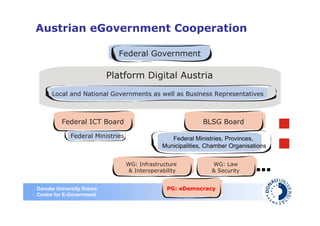
Austrian eGovernment Cooperation

                            Federal Government

                          Platform Digital Austria
     Local and National Governments as well as Business Representatives


         Federal ICT Board                                  BLSG Board

            Federal Ministries                   Federal Ministries, Provinces,
                                              Municipalities, Chamber Organisations


                                 WG: Infrastructure
                                  & Interoperability
                                                               WG: Law
                                                               & Security      …
Danube University Krems                         PG: eDemocracy
Centre for E-Government
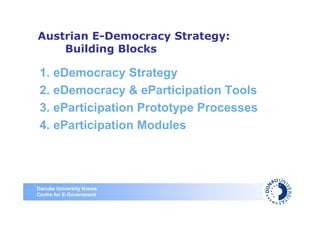
Austrian E-Democracy Strategy:
    Building Blocks

 1. eDemocracy Strategy
 2. eDemocracy & eParticipation Tools
 3. eParticipation Prototype Processes
 4. eParticipation Modules


Danube University Krems
Centre for E-Government
Austrian E-Democracy Strategy:
    Main objective

Strengthening and enhancement
of democracy by incorporation of citizens and
their knowledge to improve processes and
results in politics, administration and
society
through the use of interactive media


Danube University Krems
Centre for E-Government
Austrian E-Democracy Strategy:
    Aims

 1.   Increase transparency & traceability
 2.   Improve eParticipation & communication
 3.   More efficient participation projects
 4.   Develop new cooperation models
 5.   Promote social networks


Danube University Krems
Centre for E-Government
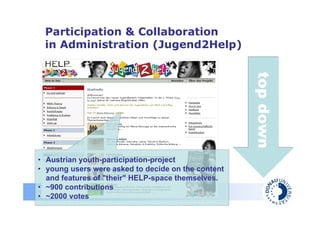
Participation & Collaboration
  in Administration (Jugend2Help)


                                                    top down
• Austrian youth-participation-project
• young users were asked to decide on the content
   and features of "their" HELP-space themselves.
• ~900 contributions
Danube University Krems
Centre for E-Government
• ~2000 votes
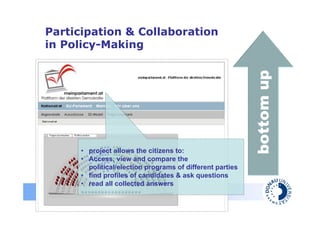
Participation & Collaboration
   in Policy-Making


                                                                     bottom up
                • project allows the citizens to:
                • Access, view and compare the
                  political/election programs of different parties
                • find profiles of candidates & ask questions
                • read all collected answers
Danube University Krems
Centre for E-Government
South East Europe

Danube University Krems
Centre for E-Government
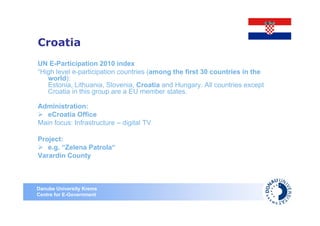
Croatia
UN E-Participation 2010 index
“High level e-participation countries (among the first 30 countries in the
   world):
   Estonia, Lithuania, Slovenia, Croatia and Hungary. All countries except
   Croatia in this group are a EU member states.

Administration:
   eCroatia Office
Main focus: Infrastructure – digital TV

Project:
   e.g. “Zelena Patrola“
Varardin County


Danube University Krems
Centre for E-Government
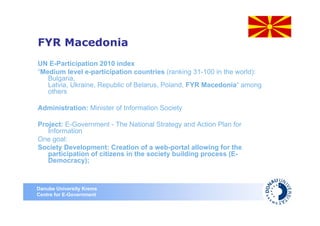
FYR Macedonia
UN E-Participation 2010 index
“Medium level e-participation countries (ranking 31-100 in the world):
   Bulgaria,
   Latvia, Ukraine, Republic of Belarus, Poland, FYR Macedonia“ among
   others

Administration: Minister of Information Society

Project: E-Government - The National Strategy and Action Plan for
   Information
One goal:
Society Development: Creation of a web-portal allowing for the
   participation of citizens in the society building process (E-
   Democracy);


Danube University Krems
Centre for E-Government
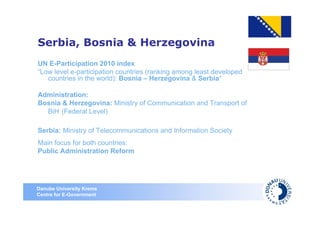
Serbia, Bosnia & Herzegovina
UN E-Participation 2010 index
“Low level e-participation countries (ranking among least developed
   countries in the world): Bosnia – Herzegovina & Serbia“

Administration:
Bosnia & Herzegovina: Ministry of Communication and Transport of
  BiH (Federal Level)

Serbia: Ministry of Telecommunications and Information Society
Main focus for both countries:
Public Administration Reform


Danube University Krems
Centre for E-Government
Outlook

Danube University Krems
Centre for E-Government
Outlook - Policy recommendation:


    Open Government principles
    Transparency in politics & administration
    Innovation in society - cooperation & coproduction
    New mindsets of decision makers & officials
    Address & solve complex political questions -
    innovative strength of society


Danube University Krems
Centre for E-Government
Thank you for
                          your attention!


                      Danube-University Krems
                  daniel.medimorec@donau-uni.ac.at
                      www.donau-uni.ac.at/egov
Danube University Krems
Centre for E-Government

Bertelsmann stiftung participation final_20100609dm

  • 1.
    Daniel Medimorec: The Austrian E-Democracy Approach Workshop „Vitalizing Democracy through Participation“ Bertelsmann Stiftung, Berlin, 09.06.2010 Danube University Krems Centre for E-Government
  • 2.
    Overview 1. EU 2. Austria 3. Southeast Europe 4. Outlook Danube University Krems Centre for E-Government
  • 3.
  • 4.
    EU Ministerial Declarationof Malmö „E-Gov 2010-2015” “… be more open, flexible and collaborative … Citizens and businesses are empowered by eGovernment … developed in collaboration with third parties, … strengthened transparency and effective means for involvement of stakeholders in the policy process …” Danube University Krems Centre for E-Government
  • 5.
  • 6.
    Official E-Government Vision2020 E-Democracy elements include Establish transparency & strengthen trust (active data protection) • Insight into processes & data (registries) • Trust and security in services • Facilitate access to information Participation & interactive information systems • Make available selected public data [focus: content] • Mashups with private services (maps, route planer, fora,…) • Follow & use the innovative developments in society & business for administration E-Government and E-Democracy are merging Danube University Krems Centre for E-Government
  • 7.
    Austrian eGovernment Cooperation Federal Government Platform Digital Austria Local and National Governments as well as Business Representatives Federal ICT Board BLSG Board Federal Ministries Federal Ministries, Provinces, Municipalities, Chamber Organisations WG: Infrastructure & Interoperability WG: Law & Security … Danube University Krems PG: eDemocracy Centre for E-Government
  • 8.
    Austrian E-Democracy Strategy: Building Blocks 1. eDemocracy Strategy 2. eDemocracy & eParticipation Tools 3. eParticipation Prototype Processes 4. eParticipation Modules Danube University Krems Centre for E-Government
  • 9.
    Austrian E-Democracy Strategy: Main objective Strengthening and enhancement of democracy by incorporation of citizens and their knowledge to improve processes and results in politics, administration and society through the use of interactive media Danube University Krems Centre for E-Government
  • 10.
    Austrian E-Democracy Strategy: Aims 1. Increase transparency & traceability 2. Improve eParticipation & communication 3. More efficient participation projects 4. Develop new cooperation models 5. Promote social networks Danube University Krems Centre for E-Government
  • 11.
    Participation & Collaboration in Administration (Jugend2Help) top down • Austrian youth-participation-project • young users were asked to decide on the content and features of "their" HELP-space themselves. • ~900 contributions Danube University Krems Centre for E-Government • ~2000 votes
  • 12.
    Participation & Collaboration in Policy-Making bottom up • project allows the citizens to: • Access, view and compare the political/election programs of different parties • find profiles of candidates & ask questions • read all collected answers Danube University Krems Centre for E-Government
  • 13.
    South East Europe DanubeUniversity Krems Centre for E-Government
  • 14.
    Croatia UN E-Participation 2010index “High level e-participation countries (among the first 30 countries in the world): Estonia, Lithuania, Slovenia, Croatia and Hungary. All countries except Croatia in this group are a EU member states. Administration: eCroatia Office Main focus: Infrastructure – digital TV Project: e.g. “Zelena Patrola“ Varardin County Danube University Krems Centre for E-Government
  • 15.
    FYR Macedonia UN E-Participation2010 index “Medium level e-participation countries (ranking 31-100 in the world): Bulgaria, Latvia, Ukraine, Republic of Belarus, Poland, FYR Macedonia“ among others Administration: Minister of Information Society Project: E-Government - The National Strategy and Action Plan for Information One goal: Society Development: Creation of a web-portal allowing for the participation of citizens in the society building process (E- Democracy); Danube University Krems Centre for E-Government
  • 16.
    Serbia, Bosnia &Herzegovina UN E-Participation 2010 index “Low level e-participation countries (ranking among least developed countries in the world): Bosnia – Herzegovina & Serbia“ Administration: Bosnia & Herzegovina: Ministry of Communication and Transport of BiH (Federal Level) Serbia: Ministry of Telecommunications and Information Society Main focus for both countries: Public Administration Reform Danube University Krems Centre for E-Government
  • 17.
  • 18.
    Outlook - Policyrecommendation: Open Government principles Transparency in politics & administration Innovation in society - cooperation & coproduction New mindsets of decision makers & officials Address & solve complex political questions - innovative strength of society Danube University Krems Centre for E-Government
  • 19.
    Thank you for your attention! Danube-University Krems daniel.medimorec@donau-uni.ac.at www.donau-uni.ac.at/egov Danube University Krems Centre for E-Government