CO-OPERATIVE SOCIETIES
Course: BBA I
Subject : Introduction to Business Organization
Unit: I
‘Co-operation’
 Derived from the Latin word ‘co-
operari’
 ‘co’ means ‘with’ and ‘operari’ means
‘to work’
 ‘Co-operation’ means working together
Open membership
 Membership open to all with common
interest;
 Minimum of ten members;
 No restriction on the maximum number;
 Members may specify the maximum
number for their Society
Voluntary Association
• Members coming together voluntarily;
• by choice, not by force;
• Continues for as long as he likes;
• May leave at his will.
State control
 Registration compulsory;
 Statutes, Rules and Bye Laws to protect the
interest of members;
 Has to maintain books and records;
 Subject to statutory audit of books by
qualified Chartered Accountants;
 Functions under the regulatory supervision of
Registrar of Co-operative Societies
Sources of Finance
 Capital contributed by all the members;
 May raise loans and secure grants from
government;
 after its registration.
Democratic Management
Governed by a ‘Managing Committee’ or
‘Board of Directors’ elected by the members
of the society;
Managed on democratic lines;
One member one vote, irrespective of no. of
shares held;
Service motive
 Co-operatives not to maximize profit but to
provide service to its members;
 A Consumer Co-operative Store sells quality
goods to members at a reasonable price
retaining a small margin of profit;
 In a Housing Co-Operative, members reside
by sharing expenses on maintenance and
repairs.
Separate Legal Entity
 Separate legal entity;
 Limited liability of its members;
 Continuity of existence;
 Death, insolvency or lunacy of a member not
to affect the existence of a society
 Can enter into agreements;
 Can purchase or sell properties in its
own name;
 Can sue and be sued.
Distribution of Surplus
 Distributes Profits earned among Members
on the basis of members’ participation in
the business of the society;
 Profits generated are not at the cost of its
members;
 Example:
– in a Consumer Society, profit generated by sale
of goods to general public is paid as purchase
bonus to members on the basis of goods
purchased by them from the society.
Self-help through mutual
cooperation
• Co-operative Societies thrive on the principle of
mutual help;
• They are the organizations of financially weaker
sections of society;
• converts Weakness to strength by ‘self-help
through mutual co-operation’;
• Fights exploitation and secure a place in society
through “Each for all and all for each”.
Consumers’ Co-operative Society
 For protecting interest of general consumers;
 by making consumer goods available at a
reasonable price;
 Source goods directly from the producers or
manufacturers;
 eliminates middlemen in the distribution
process.
 Some examples:
- Kendriya Bhandar,
- Apna Bazar
- Employees consumer co-
operative societies; Etc.
Producers’ Co-operative
Society
 to protect interest of small producers;
 By making available raw materials, tools
and equipments, machinery, etc.;
 Arranging Marketing & Distribution
channels, etc.
• Examples:
• Amul
• APPCO,
• Haryana Handloom,
• Co-optex
Co-operative Marketing Society
 Society of small producers and manufacturers;
 collects the products from members
 makes available better marketing & distribution
channels economically;
 sells in the market.
 Examples:
 Anand Milk Union Ltd., (Amul);
 Co-optex
 UP Handloom
Co-operative Credit Society
 formed to provide financial
support to members
 accepts deposits from members;
 grants loans to members at
reasonable rates of interest
 Examples:
 Village Service Co-operative Credit Societies,
 Employees co-operative credit societies, etc.
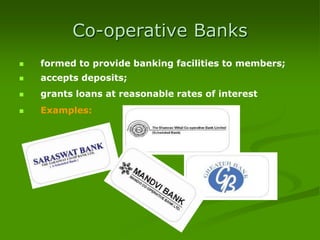
Co-operative Banks
 formed to provide banking facilities to members;
 accepts deposits;
 grants loans at reasonable rates of interest
 Examples:
Co-operative Farming Society
formed by small farmers;
to pool small holdings and work
to benefits of large-scale
farming;
Examples:
Lift-irrigation Cooperative Societies;
pani-panchayats
Housing Co-operative Society
 provide residential accommodation to
members
 Constructs houses or apartments for
members;
 Provides amenities;
 Takes care of maintenance and repairs.
References
1. Fundamentals of Business
Organization and
Management by Y.K.Bhushan- Sultan
Chand publications
2. Principles & Practices Of
Management by L M Prasad –
Himalaya Publishing House
Thank You!!

Bba 1 ibo u 1.3 co-operativesocieties

  • 1.
    CO-OPERATIVE SOCIETIES Course: BBAI Subject : Introduction to Business Organization Unit: I
  • 2.
    ‘Co-operation’  Derived fromthe Latin word ‘co- operari’  ‘co’ means ‘with’ and ‘operari’ means ‘to work’  ‘Co-operation’ means working together
  • 4.
    Open membership  Membershipopen to all with common interest;  Minimum of ten members;  No restriction on the maximum number;  Members may specify the maximum number for their Society
  • 5.
    Voluntary Association • Memberscoming together voluntarily; • by choice, not by force; • Continues for as long as he likes; • May leave at his will.
  • 6.
    State control  Registrationcompulsory;  Statutes, Rules and Bye Laws to protect the interest of members;  Has to maintain books and records;  Subject to statutory audit of books by qualified Chartered Accountants;  Functions under the regulatory supervision of Registrar of Co-operative Societies
  • 7.
    Sources of Finance Capital contributed by all the members;  May raise loans and secure grants from government;  after its registration.
  • 8.
    Democratic Management Governed bya ‘Managing Committee’ or ‘Board of Directors’ elected by the members of the society; Managed on democratic lines; One member one vote, irrespective of no. of shares held;
  • 9.
    Service motive  Co-operativesnot to maximize profit but to provide service to its members;  A Consumer Co-operative Store sells quality goods to members at a reasonable price retaining a small margin of profit;  In a Housing Co-Operative, members reside by sharing expenses on maintenance and repairs.
  • 10.
    Separate Legal Entity Separate legal entity;  Limited liability of its members;  Continuity of existence;  Death, insolvency or lunacy of a member not to affect the existence of a society  Can enter into agreements;  Can purchase or sell properties in its own name;  Can sue and be sued.
  • 11.
    Distribution of Surplus Distributes Profits earned among Members on the basis of members’ participation in the business of the society;  Profits generated are not at the cost of its members;  Example: – in a Consumer Society, profit generated by sale of goods to general public is paid as purchase bonus to members on the basis of goods purchased by them from the society.
  • 12.
    Self-help through mutual cooperation •Co-operative Societies thrive on the principle of mutual help; • They are the organizations of financially weaker sections of society; • converts Weakness to strength by ‘self-help through mutual co-operation’; • Fights exploitation and secure a place in society through “Each for all and all for each”.
  • 14.
    Consumers’ Co-operative Society For protecting interest of general consumers;  by making consumer goods available at a reasonable price;  Source goods directly from the producers or manufacturers;  eliminates middlemen in the distribution process.  Some examples: - Kendriya Bhandar, - Apna Bazar - Employees consumer co- operative societies; Etc.
  • 15.
    Producers’ Co-operative Society  toprotect interest of small producers;  By making available raw materials, tools and equipments, machinery, etc.;  Arranging Marketing & Distribution channels, etc. • Examples: • Amul • APPCO, • Haryana Handloom, • Co-optex
  • 16.
    Co-operative Marketing Society Society of small producers and manufacturers;  collects the products from members  makes available better marketing & distribution channels economically;  sells in the market.  Examples:  Anand Milk Union Ltd., (Amul);  Co-optex  UP Handloom
  • 17.
    Co-operative Credit Society formed to provide financial support to members  accepts deposits from members;  grants loans to members at reasonable rates of interest  Examples:  Village Service Co-operative Credit Societies,  Employees co-operative credit societies, etc.
  • 18.
    Co-operative Banks  formedto provide banking facilities to members;  accepts deposits;  grants loans at reasonable rates of interest  Examples:
  • 19.
    Co-operative Farming Society formedby small farmers; to pool small holdings and work to benefits of large-scale farming; Examples: Lift-irrigation Cooperative Societies; pani-panchayats
  • 20.
    Housing Co-operative Society provide residential accommodation to members  Constructs houses or apartments for members;  Provides amenities;  Takes care of maintenance and repairs.
  • 21.
    References 1. Fundamentals ofBusiness Organization and Management by Y.K.Bhushan- Sultan Chand publications 2. Principles & Practices Of Management by L M Prasad – Himalaya Publishing House
  • 22.