Prepared By
Prasanth.S.R
The occupation of the people or economic
activities can be classified into three broad
categories as followers;
Business
Profession
Employment
Business refers to those economic
activities consist of production or purchase of
goods for sales or exchange goods or
providing services with the object of earning
profit. Those who are engaged in the business
activities earn income in the form of profit.
A profession may be defined as an
occupation which involves the rendering of
personal services of special and expert nature
, legal profession practiced by lawyers,
medical profession by doctors. Those
engaged in professions are known as
professionals. The specialised services are
rendered to their clients for a remuneration
called fees.
Employment is a kind of human
occupation where a person perform the work
assigned to him by his employer under an
agreement or rules of services in return for a
remuneration called salary or wages .
Basis Of Distinction Profession Employment Business
1 Establishment Membership Of Professional
Body
Service Contract Entrepreneur’s Decision
And Legal Formalities, If
Any
2 Nature OfWork Expert Professionalised
Service
Performing The Work
Assigned ByThe Employer
Production And Purchase
And Sale Of Goods And
Services
3 Basic Motive Service Income Profit
4 Qualification Professional Qualification
AndTraining
Qualification As Prescribed
ByThe Employer
Normal Qualification
Required
5 Investment Limited Capital For
EstablishmentOf Office
No Capital Required Capital Needed According
To Nature And Size Of
Business
6 Reward Fees Wages Or Salary Profit
7 Risk Very Less No Risk Risk Is Inherent
8TransferOf Interest Not Possible Not Possible Possible
9. Code Of Conduct As Laid Down By The
Professional Bodies
Terms And Conditions Of
Services
No Specific Code Prescribed
Industry refers to economic activities
connected with the raising , production,
conversion, processing or fabrication of
products. An industry may be primary or
secondary.
Which are concerned with the
extracting, producing, and processing of
natural resources. Such type of industry may
be further sub divided into two;
 Extractive Industry
 Genetic Industry
Which are engaged in the extraction or
production of wealth from soil, water or air
extracting minerals from under the earth,
fishing, procuring timber from forests, etc...
are activities of extractive industries.
Genetic industries refers to those
activities which are undertaken for
producing, breeding, multiplying certain
species of plants or animals with the object of
earning profits from their sales. Eg; cattle
breeding, poultry farmimg etc...
Secondary industries classified into;
 Manufacturing Industries
 Construction Industries.
Manufacturing industries refers to those
activities concerned with the conversion of
raw materials or semi-finished products
into finished goods. The manufacturing
activities may be undertaken on a small scale
using simple tools and equipments. But it is
usually done in factories.
 Analytical Industry : This industry analyse and
separates different element from the same minerals
eg.. oil refinery
 Synthetical Industry : This kind of industry
combines various ingredients into new product
eg...cement industry
 Processing Industry: Here involves successive stages
of manufacturing process to get finished goods eg..
sugar or paper industry.
 Assembling Industry : assembles different
components into a new product.eg.. computer or
television industry etc...
It refers to those
activities concerned
with the construction
of building, roads,
bridges, canals, etc..
their products are not
marketed like other
industries.
It provide support service to primary and
secondary industries. They also include
various activities relating to trade.
Commerce may be defined as “ the sum
total of all those processes which are engaged in
the removal of the hindrances of person , place
and time in the exchange of commodities”. It
includes trade & auxiliaries to trade. Buying and
selling of goods is termed as trade. Activities that
are required to facilitate the purchase and sale of
goods are called services or auxiliaries to trade
and include transport, banking, insurance,
communication, advertisement, packaging and
warehousing.
Trade is an essential part of commerce. It
refers to sale, transfer or exchange of goods. It
helps in making the goods produced available to
ultimate consumers or users. Trade may be
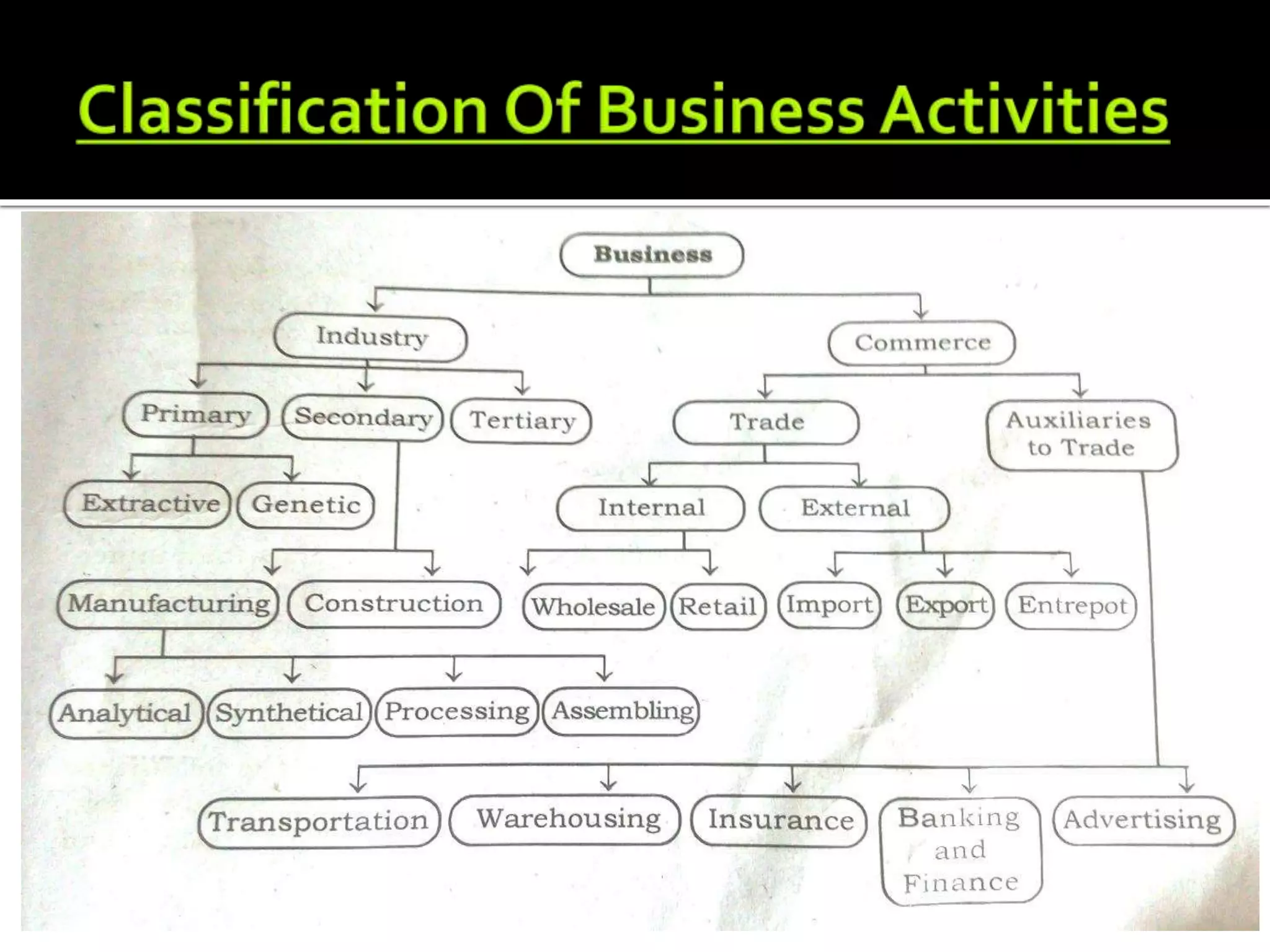
classified into two broad categories — internal and
external.
Types of trade
 Home trade(internal trade)
 Foreign trade (external trade)
It also called internal trade or domestic
trade consist of sale, transfer or exchange of
goods within country. The primary object of a
home trade is to bring about equitable
distribution of goods within the country.
Types of HomeTrade
 WholesaleTrade
 RetailTrade
 Wholesale trade
It involves buying goods from producers in
large quantities and selling them to retailers in
small quantities.
 Retail trade
Retail trade consists in the supply of the
requirements of the consumers in small
quantities needed by them . they buy large
quantity from whole salers and give to small
quantity to customers.
Wholesale
Trade
Retail
Trade
Foreign trade consists of trade among
different nations. Here goods are moved from
one country to another. Foreign trade is mostly
conducted on wholesale basis. It is also known
as international trade. It may be further divided
into;
 ImportTrade
 ExportTrade
 EntrepotTrade
 Import trade : which consist of purchasing of
goods from supplier of a foreign country for
home use.
 Export trade : which consist of the selling of
home goods to foreign countries
 Entrepot trade : which consists of importing of
foreign produced goods from some countries
with the object of re-exporting them to some
other countries.
Activities which are meant for assisting
trade are known as auxiliaries to trade. These
activities are generally referred to as services
because these are in the nature of facilitating
the activities relating to industry and trade.
Transport, banking, insurance, warehousing,
and advertising are regarded as auxiliaries to
trade.
Production usually takes place in particular
locations. Here there is an obstacle or barrier of place.
This is removed by transport through various modes_
road, rail, or coastal shipping transport makes possible
the physical movements of materials and goods from
the points of production to the place where they are
needed for consumption. Along with transport facility
there arises the need for communication facilities.
These will help producers, traders and consumers
exchange information with one another. Postal
services, Telephone facilities and various modern means
of communication
Business requires funds for acquiring
assets, purchasing raw materials and
meeting day to day expenses. Finance or
fund which is the foundations of business
activities is provides by banks. They accept
deposit from the public and provided credit
to the public.
In business , there are innumerable risk
such as destruction of property by fire,
earthquake, theft, damages of goods held in
stock, loss of goods in transit, etc... so,
insurance has been protects property and
human beings. On payment of a nominal
amount called premium, the amount of loss or
damages is compensates by the insurance
company.
Usually goods are produced in factories
or small scale business units are not sold or
consumed immediately . there are to be kept
in good condition and make them available
as and when needed. Measures should be
taken for storage of goods to prevent loss or
damage. Warehouse is help to storage and
stabilize price by equalizing supplies.
It is one of thee most important devices of
promoting sales, especially consumer goods
like soaps, detergent, electronic goods etc...it
helps in provide required information and
inducing them to buy particular items.

Basics of business

  • 1.
  • 2.
    The occupation ofthe people or economic activities can be classified into three broad categories as followers; Business Profession Employment
  • 3.
    Business refers tothose economic activities consist of production or purchase of goods for sales or exchange goods or providing services with the object of earning profit. Those who are engaged in the business activities earn income in the form of profit.
  • 4.
    A profession maybe defined as an occupation which involves the rendering of personal services of special and expert nature , legal profession practiced by lawyers, medical profession by doctors. Those engaged in professions are known as professionals. The specialised services are rendered to their clients for a remuneration called fees.
  • 5.
    Employment is akind of human occupation where a person perform the work assigned to him by his employer under an agreement or rules of services in return for a remuneration called salary or wages .
  • 6.
    Basis Of DistinctionProfession Employment Business 1 Establishment Membership Of Professional Body Service Contract Entrepreneur’s Decision And Legal Formalities, If Any 2 Nature OfWork Expert Professionalised Service Performing The Work Assigned ByThe Employer Production And Purchase And Sale Of Goods And Services 3 Basic Motive Service Income Profit 4 Qualification Professional Qualification AndTraining Qualification As Prescribed ByThe Employer Normal Qualification Required 5 Investment Limited Capital For EstablishmentOf Office No Capital Required Capital Needed According To Nature And Size Of Business 6 Reward Fees Wages Or Salary Profit 7 Risk Very Less No Risk Risk Is Inherent 8TransferOf Interest Not Possible Not Possible Possible 9. Code Of Conduct As Laid Down By The Professional Bodies Terms And Conditions Of Services No Specific Code Prescribed
  • 8.
    Industry refers toeconomic activities connected with the raising , production, conversion, processing or fabrication of products. An industry may be primary or secondary.
  • 10.
    Which are concernedwith the extracting, producing, and processing of natural resources. Such type of industry may be further sub divided into two;  Extractive Industry  Genetic Industry
  • 11.
    Which are engagedin the extraction or production of wealth from soil, water or air extracting minerals from under the earth, fishing, procuring timber from forests, etc... are activities of extractive industries.
  • 13.
    Genetic industries refersto those activities which are undertaken for producing, breeding, multiplying certain species of plants or animals with the object of earning profits from their sales. Eg; cattle breeding, poultry farmimg etc...
  • 15.
    Secondary industries classifiedinto;  Manufacturing Industries  Construction Industries.
  • 16.
    Manufacturing industries refersto those activities concerned with the conversion of raw materials or semi-finished products into finished goods. The manufacturing activities may be undertaken on a small scale using simple tools and equipments. But it is usually done in factories.
  • 18.
     Analytical Industry: This industry analyse and separates different element from the same minerals eg.. oil refinery  Synthetical Industry : This kind of industry combines various ingredients into new product eg...cement industry  Processing Industry: Here involves successive stages of manufacturing process to get finished goods eg.. sugar or paper industry.  Assembling Industry : assembles different components into a new product.eg.. computer or television industry etc...
  • 19.
    It refers tothose activities concerned with the construction of building, roads, bridges, canals, etc.. their products are not marketed like other industries.
  • 20.
    It provide supportservice to primary and secondary industries. They also include various activities relating to trade.
  • 21.
    Commerce may bedefined as “ the sum total of all those processes which are engaged in the removal of the hindrances of person , place and time in the exchange of commodities”. It includes trade & auxiliaries to trade. Buying and selling of goods is termed as trade. Activities that are required to facilitate the purchase and sale of goods are called services or auxiliaries to trade and include transport, banking, insurance, communication, advertisement, packaging and warehousing.
  • 22.
    Trade is anessential part of commerce. It refers to sale, transfer or exchange of goods. It helps in making the goods produced available to ultimate consumers or users. Trade may be classified into two broad categories — internal and external. Types of trade  Home trade(internal trade)  Foreign trade (external trade)
  • 23.
    It also calledinternal trade or domestic trade consist of sale, transfer or exchange of goods within country. The primary object of a home trade is to bring about equitable distribution of goods within the country. Types of HomeTrade  WholesaleTrade  RetailTrade
  • 24.
     Wholesale trade Itinvolves buying goods from producers in large quantities and selling them to retailers in small quantities.  Retail trade Retail trade consists in the supply of the requirements of the consumers in small quantities needed by them . they buy large quantity from whole salers and give to small quantity to customers.
  • 25.
  • 26.
    Foreign trade consistsof trade among different nations. Here goods are moved from one country to another. Foreign trade is mostly conducted on wholesale basis. It is also known as international trade. It may be further divided into;  ImportTrade  ExportTrade  EntrepotTrade
  • 27.
     Import trade: which consist of purchasing of goods from supplier of a foreign country for home use.  Export trade : which consist of the selling of home goods to foreign countries  Entrepot trade : which consists of importing of foreign produced goods from some countries with the object of re-exporting them to some other countries.
  • 28.
    Activities which aremeant for assisting trade are known as auxiliaries to trade. These activities are generally referred to as services because these are in the nature of facilitating the activities relating to industry and trade. Transport, banking, insurance, warehousing, and advertising are regarded as auxiliaries to trade.
  • 29.
    Production usually takesplace in particular locations. Here there is an obstacle or barrier of place. This is removed by transport through various modes_ road, rail, or coastal shipping transport makes possible the physical movements of materials and goods from the points of production to the place where they are needed for consumption. Along with transport facility there arises the need for communication facilities. These will help producers, traders and consumers exchange information with one another. Postal services, Telephone facilities and various modern means of communication
  • 30.
    Business requires fundsfor acquiring assets, purchasing raw materials and meeting day to day expenses. Finance or fund which is the foundations of business activities is provides by banks. They accept deposit from the public and provided credit to the public.
  • 31.
    In business ,there are innumerable risk such as destruction of property by fire, earthquake, theft, damages of goods held in stock, loss of goods in transit, etc... so, insurance has been protects property and human beings. On payment of a nominal amount called premium, the amount of loss or damages is compensates by the insurance company.
  • 32.
    Usually goods areproduced in factories or small scale business units are not sold or consumed immediately . there are to be kept in good condition and make them available as and when needed. Measures should be taken for storage of goods to prevent loss or damage. Warehouse is help to storage and stabilize price by equalizing supplies.
  • 33.
    It is oneof thee most important devices of promoting sales, especially consumer goods like soaps, detergent, electronic goods etc...it helps in provide required information and inducing them to buy particular items.