CONCEPT OF BUSINESS
The term business is derived from the word ‘busy’ .Thus business mean being busy .
Business refers to an occupation in which people regularly engage in activities related
to purchase, production and sale of goods and services with a view to earning profits .
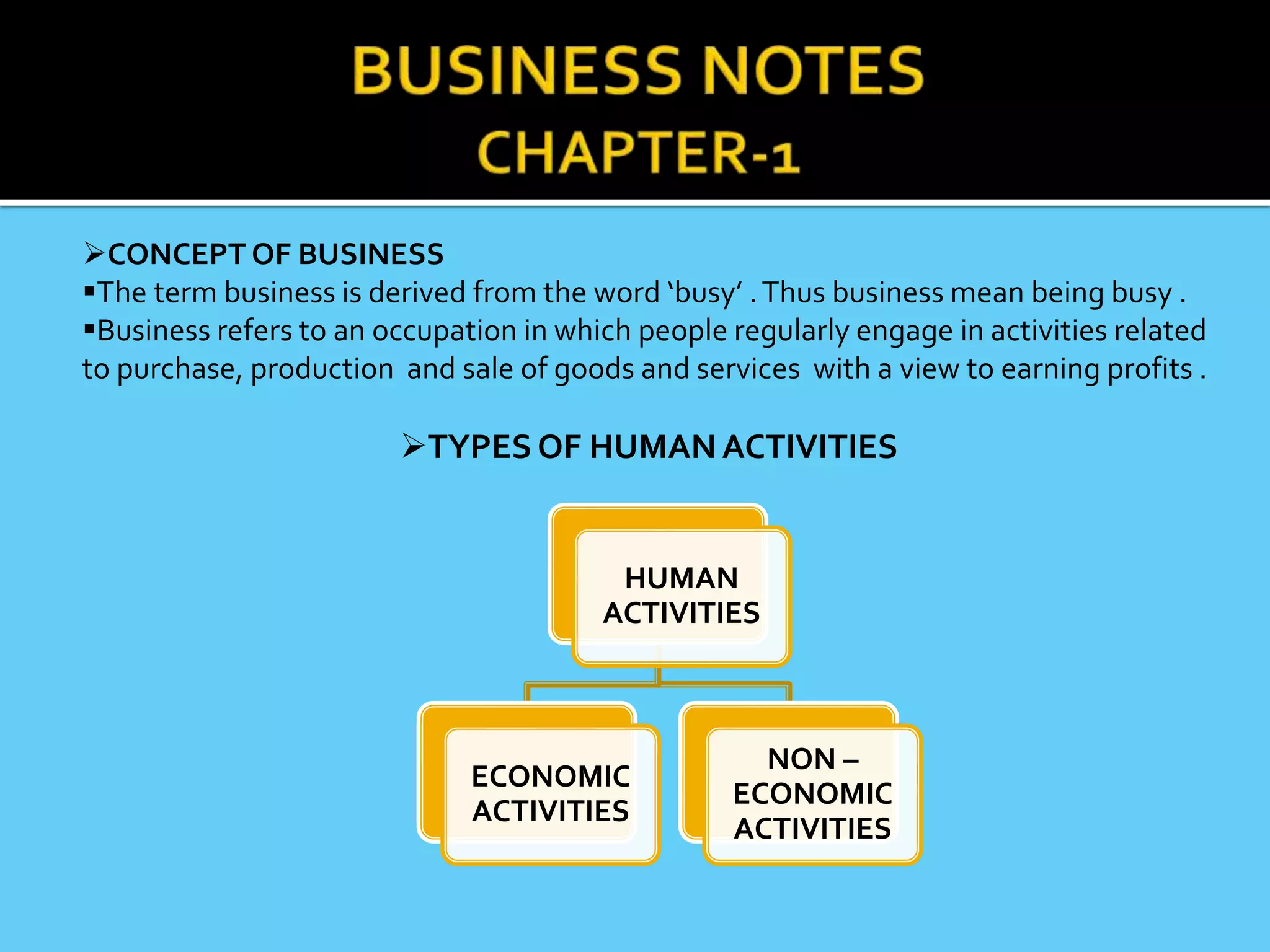
TYPES OF HUMANACTIVITIES
HUMAN
ACTIVITIES
ECONOMIC
ACTIVITIES
NON –
ECONOMIC
ACTIVITIES
ECONOMIC ACTIVITIES
 These are those human activities
which are performed to earn
livelihood are called economic
activities .
 The main aim of these activities
is to earn profit.
 The end result of economic
activity is production of goods
and services .
NON –ECONOMIC ACTIVITIES
 These are those human activities
which are performed out of love
,sympathy and sentimental etc.
are called non-economic
activities
 The main aim of these activities
is psychological satisfaction.
 The end result of the non-
economic activity is mental
satisfaction.
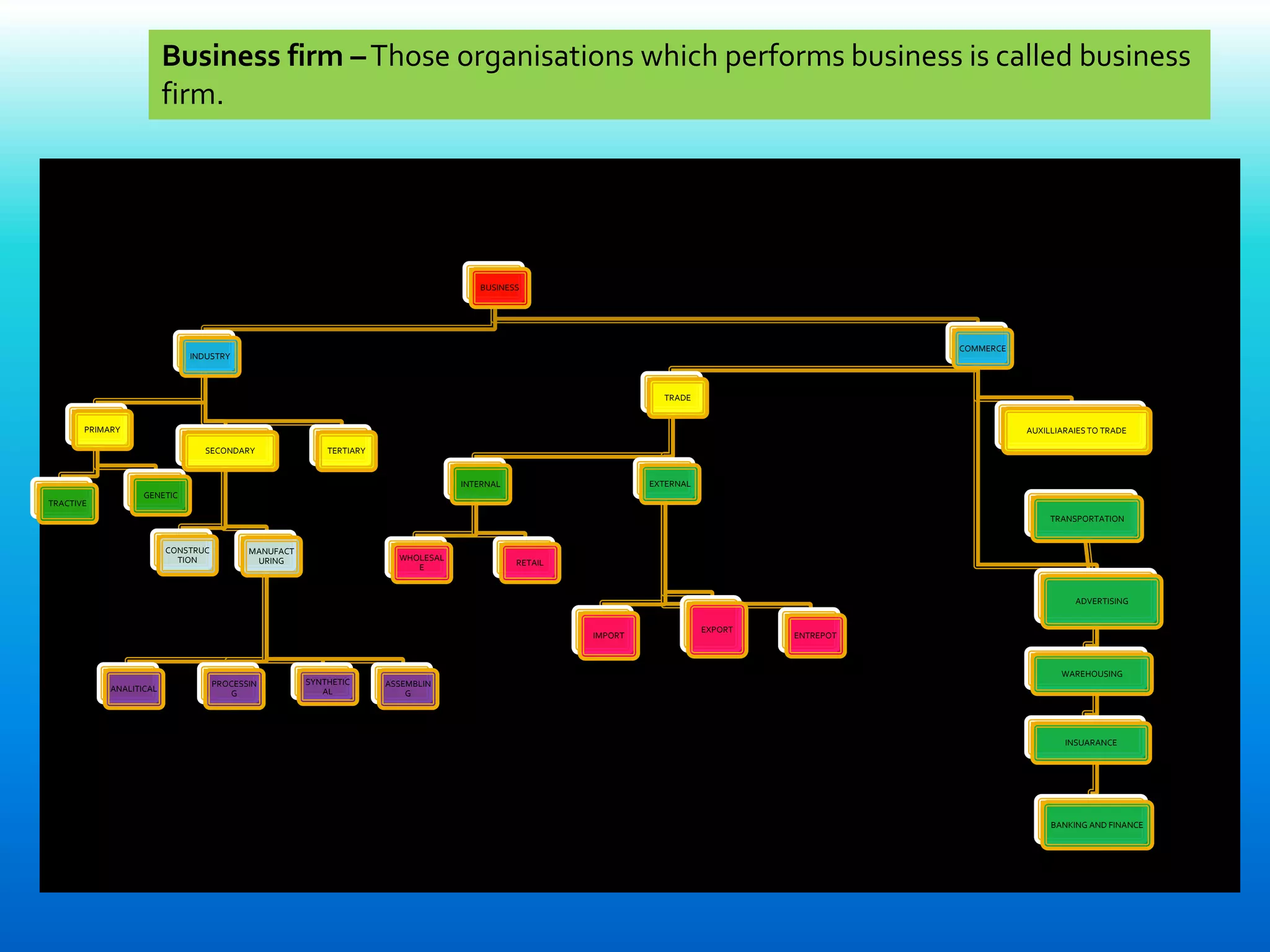
Business firm –Those organisations which performs business is called business
firm.
BUSINESS
INDUSTRY
PRIMARY
TRACTIVE
GENETIC
SECONDARY
CONSTRUC
TION
MANUFACT
URING
ANALITICAL
PROCESSIN
G
SYNTHETIC
AL
ASSEMBLIN
G
TERTIARY
COMMERCE
TRADE
INTERNAL
WHOLESAL
E
RETAIL
EXTERNAL
IMPORT
EXPORT
ENTREPOT
AUXILLIARAIESTO TRADE
ADVERTISING
TRANSPORTATION
WAREHOUSING
INSUARANCE
BANKING AND FINANCE
 Industry refers to economic activities , which are connected with conversion of
resources into useful goods . Activities like producing , processing of goods and
breeding raising of animals are also included in industry.
Groups or firms producing similar or related goods are come under industry . For eg .
Electronic industry would include all firms producing electronic goods , and so on .
INDUSTRY
PRIMARY SECONDARY TERTIARY
PRIMARY INDUSTRIES :
It refers to those industries which are
concerned with the extraction and
development of living organisms , plants
, etc.
These are derived as follows :
EXTRACTION INDUSTRIES:
This industry involves extraction of
products from natural sources .
These industries provide such
products which are used as raw
material by many manufacturing
industries .
For e.g. –mining ,agriculture ,fishing
,farming etc.
GENETIC INDUSRTIES
Genetic industries are concerned
with the breeding of plants and
animals for their use in future
reproduction .
For e.g.-seeds and nursery
companies ,cattle breeding farms
,dairy farms ,poultry farms etc.
SECONDARY INDUSTRIES :
These are concerned with using materials ,which have
already been extracted at the primary state and process
such goods for final consumption.
For e.g.- Mining of iron ore is a primary industry, but
manufacturing of steel is a part of secondary industry.
Secondary industries are further divided as:
Construction industries:
The industries which are involved in
engineering and architectural skills
with the purpose of constructing
dams , bridges ,buildings etc.
MANUFACTURING
INDUSTRIES:
These are those which involve
conversing and processing of
these materials into finished
goods .They creates utilities .
For e.g.- conversion of iron into
steel, sugarcane into sugar etc.
Processing Industries: These industries involve processing of raw
material through various stages of production for getting finished
goods .
For e.g.- paper industry, textile industries , sugar industry etc.
Assembling industries : These industries are concerned with
assembling different parts to make a new product .
For e.g.- television , car, computer etc .
Analytical Industries :These industries are concerned with
analysing and separating different elements from the same
materials .
For e.g. – Oil refinery.
Synthetical industries :These industries are combines various
products to make a new product .
For e.g.-cement , paint etc.
TERTIARY INDUSTARIES :
It provides various services to the primary and
secondary industries .They also provide help to trading
activities.
For e.g.-transport, banking , insurance , warehousing ,
communication and advertising etc.
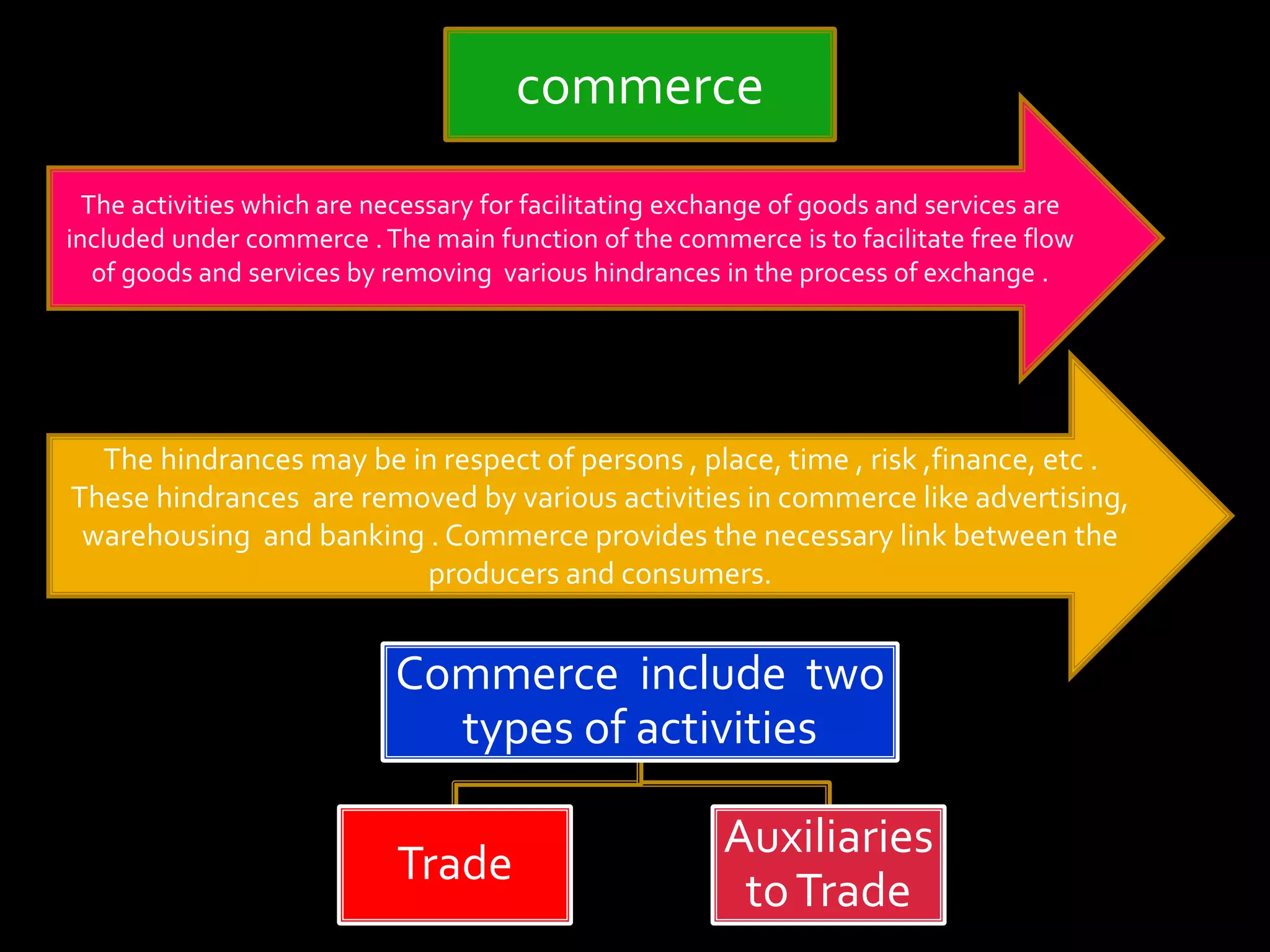
commerce
The activities which are necessary for facilitating exchange of goods and services are
included under commerce .The main function of the commerce is to facilitate free flow
of goods and services by removing various hindrances in the process of exchange .
The hindrances may be in respect of persons , place, time , risk ,finance, etc .
These hindrances are removed by various activities in commerce like advertising,
warehousing and banking . Commerce provides the necessary link between the
producers and consumers.
Commerce include two
types of activities
Trade
Auxiliaries
toTrade
TRADE
• Activities relating to sale , transfer or exchange of goods are known as
components of trade.Trade is that part of business activities which is involves in
buying and selling of goods .
Types ofTrade
Trade can be
classified into
two categories :
Internal trade or
home trade
External trade
or foreign trade
Internal trade: it refers to buying and selling of goods with the geographical
boundaries of the country .It may be divided in two as:
Whole sale : when goods are bought and sold in large quantities is known as wholesale
trade.
Retail trade : when goods are bought and sold in smaller quantities ,it is known as retail
trade .
External trade : It refers to buying and selling of goods and services between persons and
organizations belonging to different countries .It is further divided into three categories:
Export: It means selling of goods to other countries .
Import: It means purchasing of goods from other
countries.
Entrepot : It means importing of goods for the
purpose of exporting them to other countries.
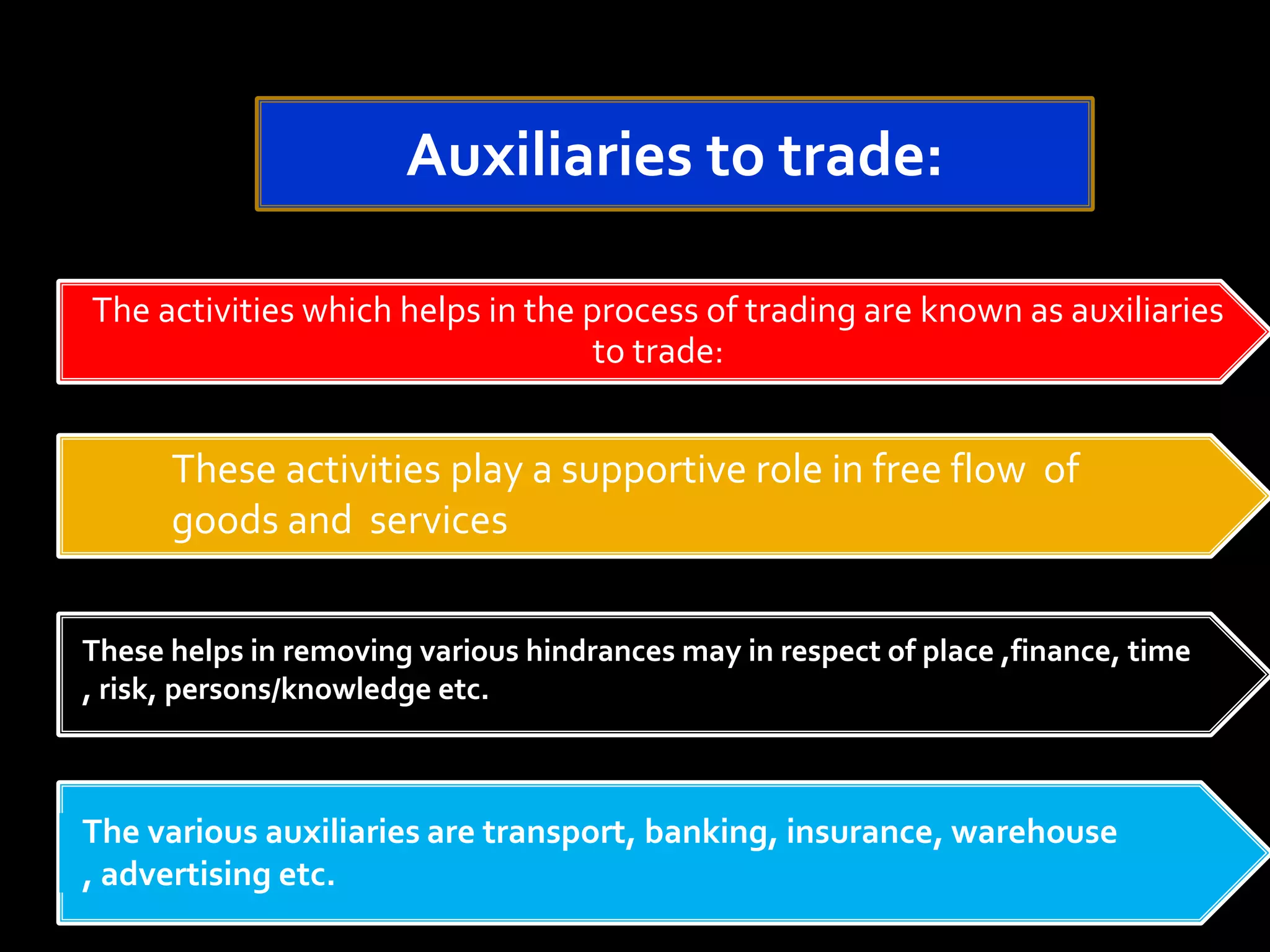
The activities which helps in the process of trading are known as auxiliaries
to trade:
Auxiliaries to trade:
These activities play a supportive role in free flow of
goods and services
These helps in removing various hindrances may in respect of place ,finance, time
, risk, persons/knowledge etc.
The various auxiliaries are transport, banking, insurance, warehouse
, advertising etc.
Thank you

BUSINESS NOTES chapter -1

  • 1.
    CONCEPT OF BUSINESS Theterm business is derived from the word ‘busy’ .Thus business mean being busy . Business refers to an occupation in which people regularly engage in activities related to purchase, production and sale of goods and services with a view to earning profits . TYPES OF HUMANACTIVITIES HUMAN ACTIVITIES ECONOMIC ACTIVITIES NON – ECONOMIC ACTIVITIES
  • 2.
    ECONOMIC ACTIVITIES  Theseare those human activities which are performed to earn livelihood are called economic activities .  The main aim of these activities is to earn profit.  The end result of economic activity is production of goods and services . NON –ECONOMIC ACTIVITIES  These are those human activities which are performed out of love ,sympathy and sentimental etc. are called non-economic activities  The main aim of these activities is psychological satisfaction.  The end result of the non- economic activity is mental satisfaction.
  • 3.
    Business firm –Thoseorganisations which performs business is called business firm. BUSINESS INDUSTRY PRIMARY TRACTIVE GENETIC SECONDARY CONSTRUC TION MANUFACT URING ANALITICAL PROCESSIN G SYNTHETIC AL ASSEMBLIN G TERTIARY COMMERCE TRADE INTERNAL WHOLESAL E RETAIL EXTERNAL IMPORT EXPORT ENTREPOT AUXILLIARAIESTO TRADE ADVERTISING TRANSPORTATION WAREHOUSING INSUARANCE BANKING AND FINANCE
  • 4.
     Industry refersto economic activities , which are connected with conversion of resources into useful goods . Activities like producing , processing of goods and breeding raising of animals are also included in industry. Groups or firms producing similar or related goods are come under industry . For eg . Electronic industry would include all firms producing electronic goods , and so on . INDUSTRY PRIMARY SECONDARY TERTIARY
  • 5.
    PRIMARY INDUSTRIES : Itrefers to those industries which are concerned with the extraction and development of living organisms , plants , etc. These are derived as follows : EXTRACTION INDUSTRIES: This industry involves extraction of products from natural sources . These industries provide such products which are used as raw material by many manufacturing industries . For e.g. –mining ,agriculture ,fishing ,farming etc. GENETIC INDUSRTIES Genetic industries are concerned with the breeding of plants and animals for their use in future reproduction . For e.g.-seeds and nursery companies ,cattle breeding farms ,dairy farms ,poultry farms etc.
  • 6.
    SECONDARY INDUSTRIES : Theseare concerned with using materials ,which have already been extracted at the primary state and process such goods for final consumption. For e.g.- Mining of iron ore is a primary industry, but manufacturing of steel is a part of secondary industry. Secondary industries are further divided as: Construction industries: The industries which are involved in engineering and architectural skills with the purpose of constructing dams , bridges ,buildings etc. MANUFACTURING INDUSTRIES: These are those which involve conversing and processing of these materials into finished goods .They creates utilities . For e.g.- conversion of iron into steel, sugarcane into sugar etc.
  • 7.
    Processing Industries: Theseindustries involve processing of raw material through various stages of production for getting finished goods . For e.g.- paper industry, textile industries , sugar industry etc. Assembling industries : These industries are concerned with assembling different parts to make a new product . For e.g.- television , car, computer etc . Analytical Industries :These industries are concerned with analysing and separating different elements from the same materials . For e.g. – Oil refinery. Synthetical industries :These industries are combines various products to make a new product . For e.g.-cement , paint etc.
  • 8.
    TERTIARY INDUSTARIES : Itprovides various services to the primary and secondary industries .They also provide help to trading activities. For e.g.-transport, banking , insurance , warehousing , communication and advertising etc.
  • 9.
    commerce The activities whichare necessary for facilitating exchange of goods and services are included under commerce .The main function of the commerce is to facilitate free flow of goods and services by removing various hindrances in the process of exchange . The hindrances may be in respect of persons , place, time , risk ,finance, etc . These hindrances are removed by various activities in commerce like advertising, warehousing and banking . Commerce provides the necessary link between the producers and consumers. Commerce include two types of activities Trade Auxiliaries toTrade
  • 10.
    TRADE • Activities relatingto sale , transfer or exchange of goods are known as components of trade.Trade is that part of business activities which is involves in buying and selling of goods . Types ofTrade Trade can be classified into two categories : Internal trade or home trade External trade or foreign trade
  • 11.
    Internal trade: itrefers to buying and selling of goods with the geographical boundaries of the country .It may be divided in two as: Whole sale : when goods are bought and sold in large quantities is known as wholesale trade. Retail trade : when goods are bought and sold in smaller quantities ,it is known as retail trade . External trade : It refers to buying and selling of goods and services between persons and organizations belonging to different countries .It is further divided into three categories: Export: It means selling of goods to other countries . Import: It means purchasing of goods from other countries. Entrepot : It means importing of goods for the purpose of exporting them to other countries.
  • 12.
    The activities whichhelps in the process of trading are known as auxiliaries to trade: Auxiliaries to trade: These activities play a supportive role in free flow of goods and services These helps in removing various hindrances may in respect of place ,finance, time , risk, persons/knowledge etc. The various auxiliaries are transport, banking, insurance, warehouse , advertising etc.
  • 13.