ACQUISITION OF DIGITAL LITERACY:
A POWERFUL TRANSACTION
COMPETENCY OF TEACHERS IN
DIGITAL LEARNING SPACE
S.R.Prasanth
Research Scholar
Dept. of Life Long Learning,
Alagappa University, Karaikud
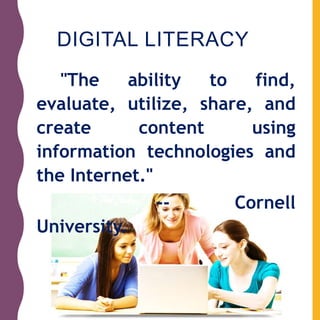
DIGITAL LITERACY
"The ability to find,
evaluate, utilize, share, and
create content using
information technologies and
the Internet."
-- Cornell
University.
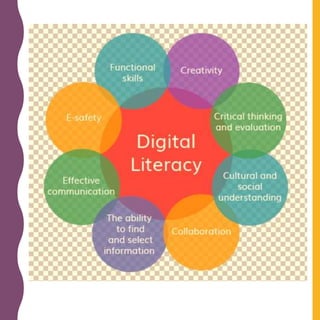
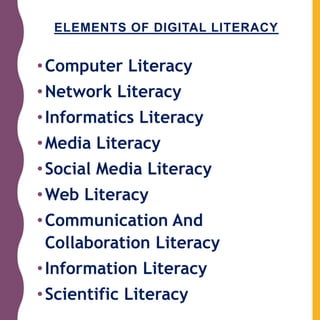
ELEMENTS OF DIGITAL LITERACY
•Computer Literacy
•Network Literacy
•Informatics Literacy
•Media Literacy
•Social Media Literacy
•Web Literacy
•Communication And
Collaboration Literacy
•Information Literacy
•Scientific Literacy
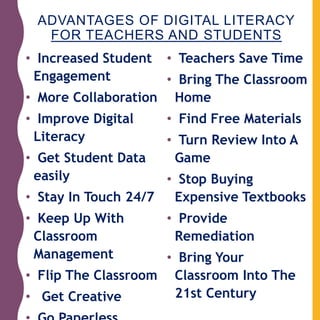
ADVANTAGES OF DIGITAL LITERACY
FOR TEACHERS AND STUDENTS
• Increased Student
Engagement
• More Collaboration
• Improve Digital
Literacy
• Get Student Data
easily
• Stay In Touch 24/7
• Keep Up With
Classroom
Management
• Flip The Classroom
• Get Creative
• Teachers Save Time
• Bring The Classroom
Home
• Find Free Materials
• Turn Review Into A
Game
• Stop Buying
Expensive Textbooks
• Provide
Remediation
• Bring Your
Classroom Into The
21st Century
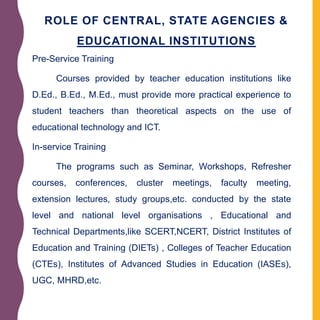
ROLE OF CENTRAL, STATE AGENCIES &
EDUCATIONAL INSTITUTIONS
Pre-Service Training
Courses provided by teacher education institutions like
D.Ed., B.Ed., M.Ed., must provide more practical experience to
student teachers than theoretical aspects on the use of
educational technology and ICT.
In-service Training
The programs such as Seminar, Workshops, Refresher
courses, conferences, cluster meetings, faculty meeting,
extension lectures, study groups,etc. conducted by the state
level and national level organisations , Educational and
Technical Departments,like SCERT,NCERT, District Institutes of
Education and Training (DIETs) , Colleges of Teacher Education
(CTEs), Institutes of Advanced Studies in Education (IASEs),
UGC, MHRD,etc.
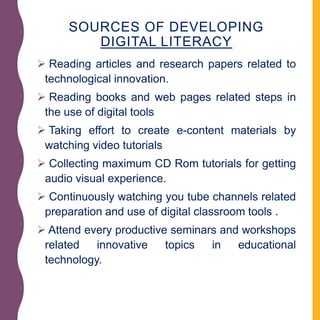
SOURCES OF DEVELOPING
DIGITAL LITERACY
 Reading articles and research papers related to
technological innovation.
 Reading books and web pages related steps in
the use of digital tools
 Taking effort to create e-content materials by
watching video tutorials
 Collecting maximum CD Rom tutorials for getting
audio visual experience.
 Continuously watching you tube channels related
preparation and use of digital classroom tools .
 Attend every productive seminars and workshops
related innovative topics in educational
technology.
Digital Literacy for Teachers

Digital Literacy for Teachers

  • 2.
    ACQUISITION OF DIGITALLITERACY: A POWERFUL TRANSACTION COMPETENCY OF TEACHERS IN DIGITAL LEARNING SPACE S.R.Prasanth Research Scholar Dept. of Life Long Learning, Alagappa University, Karaikud
  • 3.
    DIGITAL LITERACY "The abilityto find, evaluate, utilize, share, and create content using information technologies and the Internet." -- Cornell University.
  • 5.
    ELEMENTS OF DIGITALLITERACY •Computer Literacy •Network Literacy •Informatics Literacy •Media Literacy •Social Media Literacy •Web Literacy •Communication And Collaboration Literacy •Information Literacy •Scientific Literacy
  • 6.
    ADVANTAGES OF DIGITALLITERACY FOR TEACHERS AND STUDENTS • Increased Student Engagement • More Collaboration • Improve Digital Literacy • Get Student Data easily • Stay In Touch 24/7 • Keep Up With Classroom Management • Flip The Classroom • Get Creative • Teachers Save Time • Bring The Classroom Home • Find Free Materials • Turn Review Into A Game • Stop Buying Expensive Textbooks • Provide Remediation • Bring Your Classroom Into The 21st Century
  • 7.
    ROLE OF CENTRAL,STATE AGENCIES & EDUCATIONAL INSTITUTIONS Pre-Service Training Courses provided by teacher education institutions like D.Ed., B.Ed., M.Ed., must provide more practical experience to student teachers than theoretical aspects on the use of educational technology and ICT. In-service Training The programs such as Seminar, Workshops, Refresher courses, conferences, cluster meetings, faculty meeting, extension lectures, study groups,etc. conducted by the state level and national level organisations , Educational and Technical Departments,like SCERT,NCERT, District Institutes of Education and Training (DIETs) , Colleges of Teacher Education (CTEs), Institutes of Advanced Studies in Education (IASEs), UGC, MHRD,etc.
  • 8.
    SOURCES OF DEVELOPING DIGITALLITERACY  Reading articles and research papers related to technological innovation.  Reading books and web pages related steps in the use of digital tools  Taking effort to create e-content materials by watching video tutorials  Collecting maximum CD Rom tutorials for getting audio visual experience.  Continuously watching you tube channels related preparation and use of digital classroom tools .  Attend every productive seminars and workshops related innovative topics in educational technology.