










Mr. Adeel Abbas
MB; MS; MRCS (Edinburgh); MRCS (Ireland)
Basics of Assessment
Prof. A. Majeed Ch Prof. Abdul Sattar Memon
Prof. Abul Fazal Ali Khan Prof. M. Amer Mian
My Teachers
• Measurement?
• Assessment?
• Evaluation?
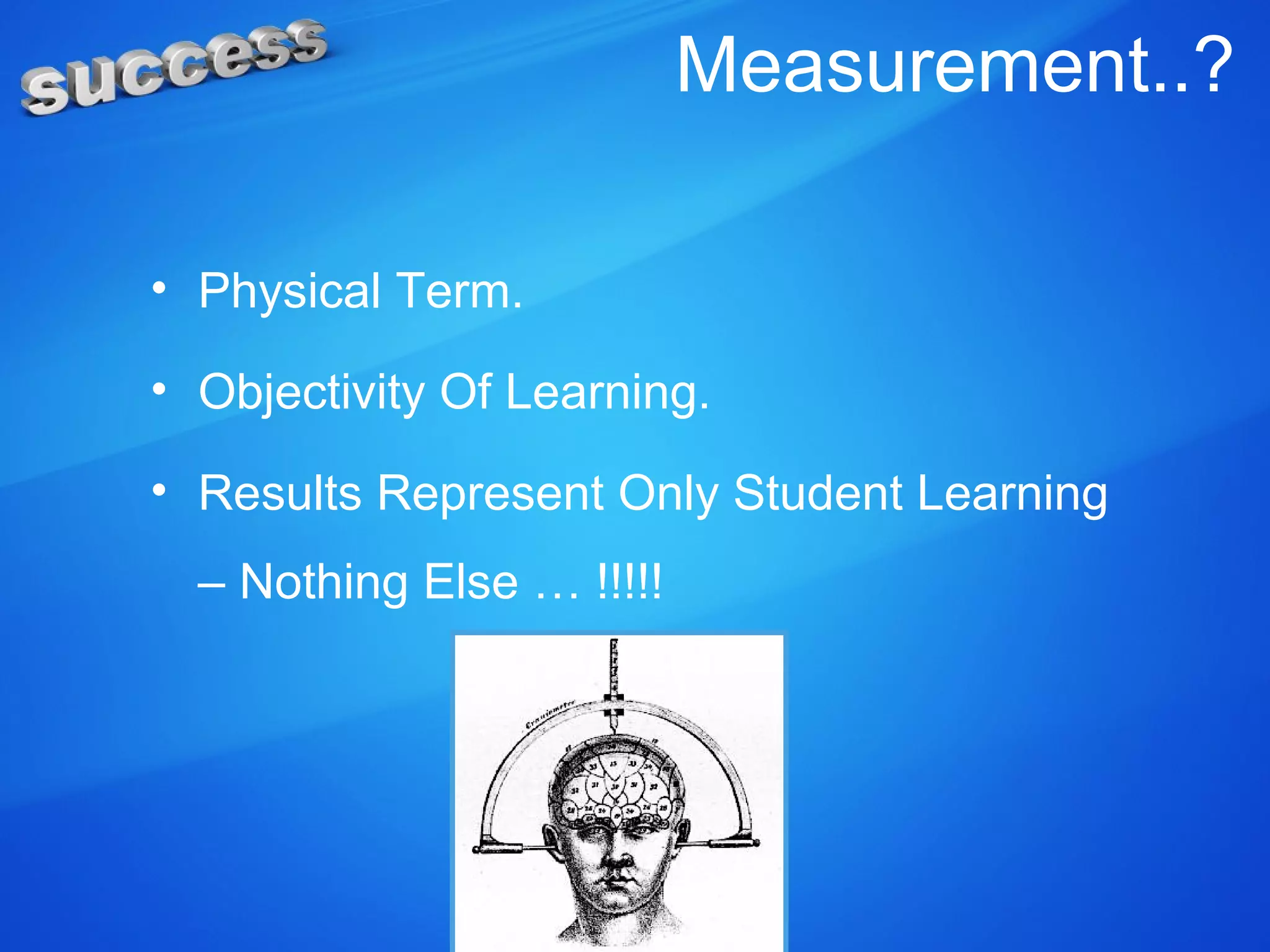
Measurement..?
• Physical Term.
• Objectivity Of Learning.
• Results Represent Only Student Learning
– Nothing Else … !!!!!
• Measurement Does Not Capture The
Essence Of Educational Attainments.
• What Qualities We Want Our Students To
Develop Which Are Not Amenable To
Accurate Measurement?
1. Health Care Provider.
2. Decision Maker.
3. Communicator.
4. Community Leader.
5. Manager.
6. Researcher.
7. Life Long Learner.
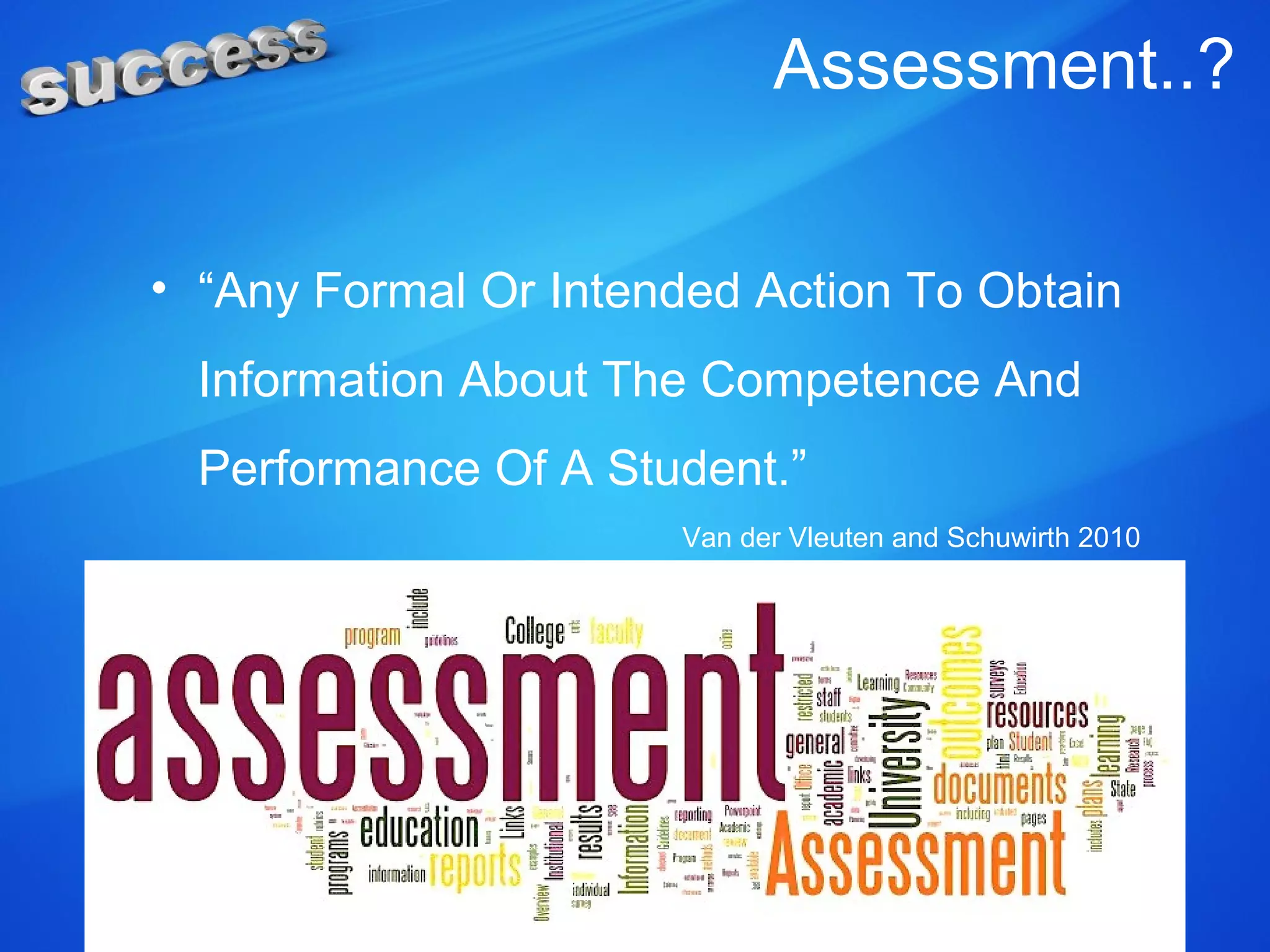
Assessment..?
• “Any Formal Or Intended Action To Obtain
Information About The Competence And
Performance Of A Student.”
Van der Vleuten and Schuwirth 2010
04:40 AM 13
Assessment
The act of judging or deciding the
amount, value, quality, or
importance of something, or the
judgment or decision that is made
Cambridge Advanced Learners Dictionary &
Thesaurus © Cambridge University Press
• In Assessment:
– Objectively Measure Some Aspects,
Subjectively Interpret Others Form A
Judgment.
• Evaluation?
To judge or calculate the
quality, importance,
amount, or value of
something
Cambridge Advanced Learners
Dictionary & Thesaurus ©
Cambridge University Press
Assessment
• Used In Context Of
Student Learning.
Evaluation
• Used In Context Of The
Educational Programs.
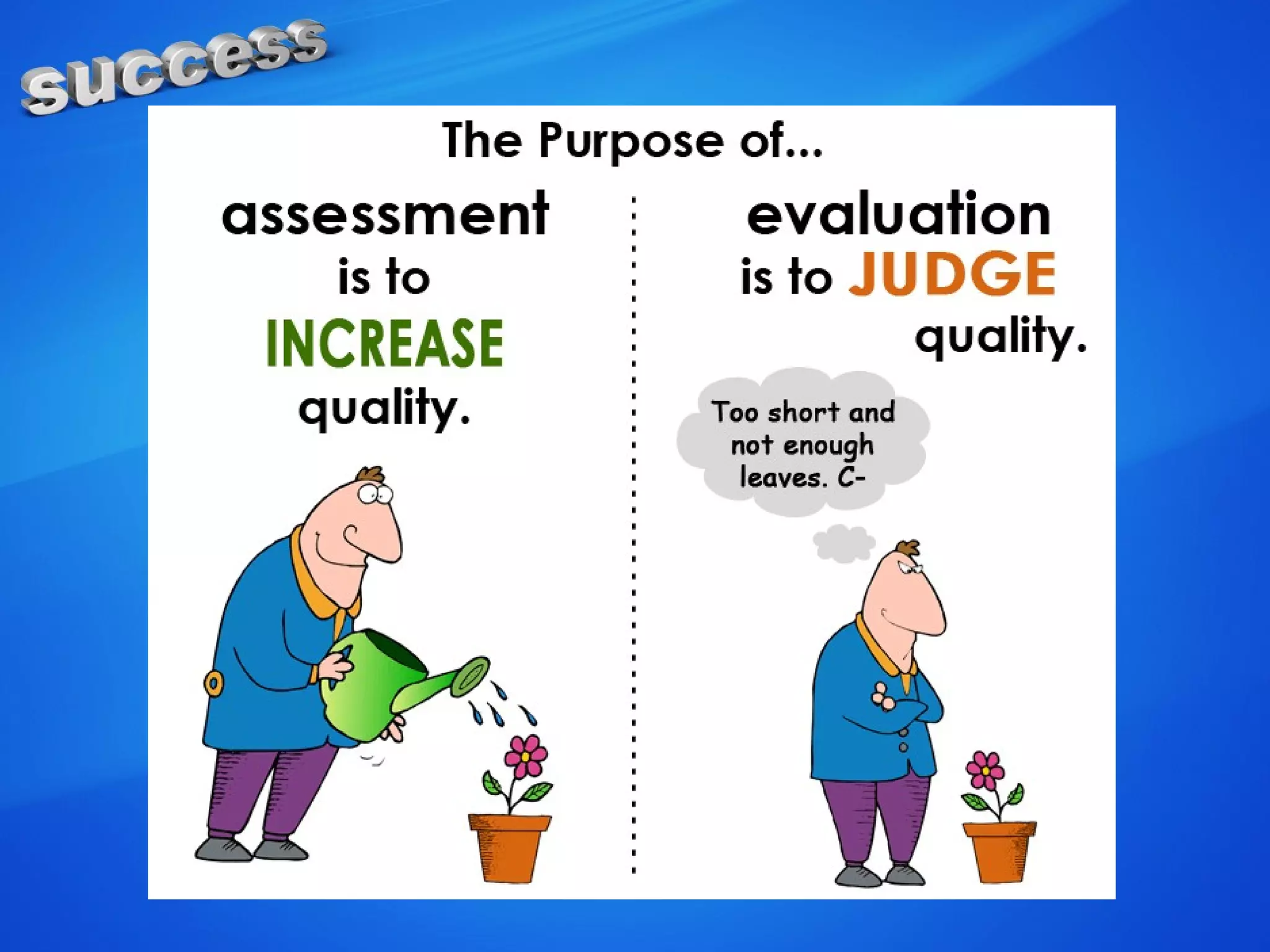
• Assessment Of Students Is A Very
Important Input To Judge The Value Of An
Educational Program.
• Test?
• Tool?
• Score?
• Why Do We Need to Assess Students?
• Pass Or Fail.
• Rank Ordering.
• Measuring Improvement.
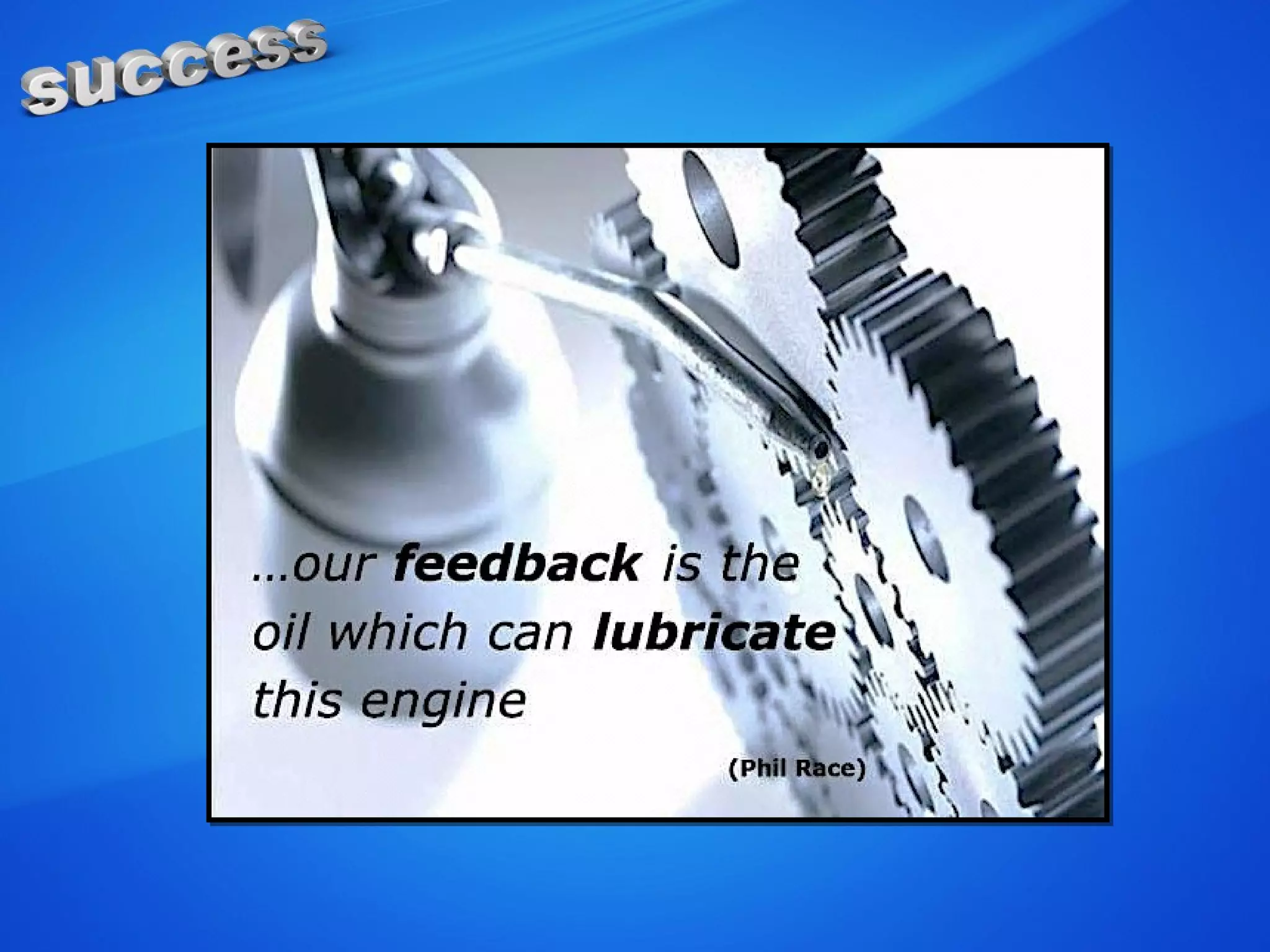
• Providing Feedback To Students And
Teachers.
• Maintaining The Quality Of Educational
Programs
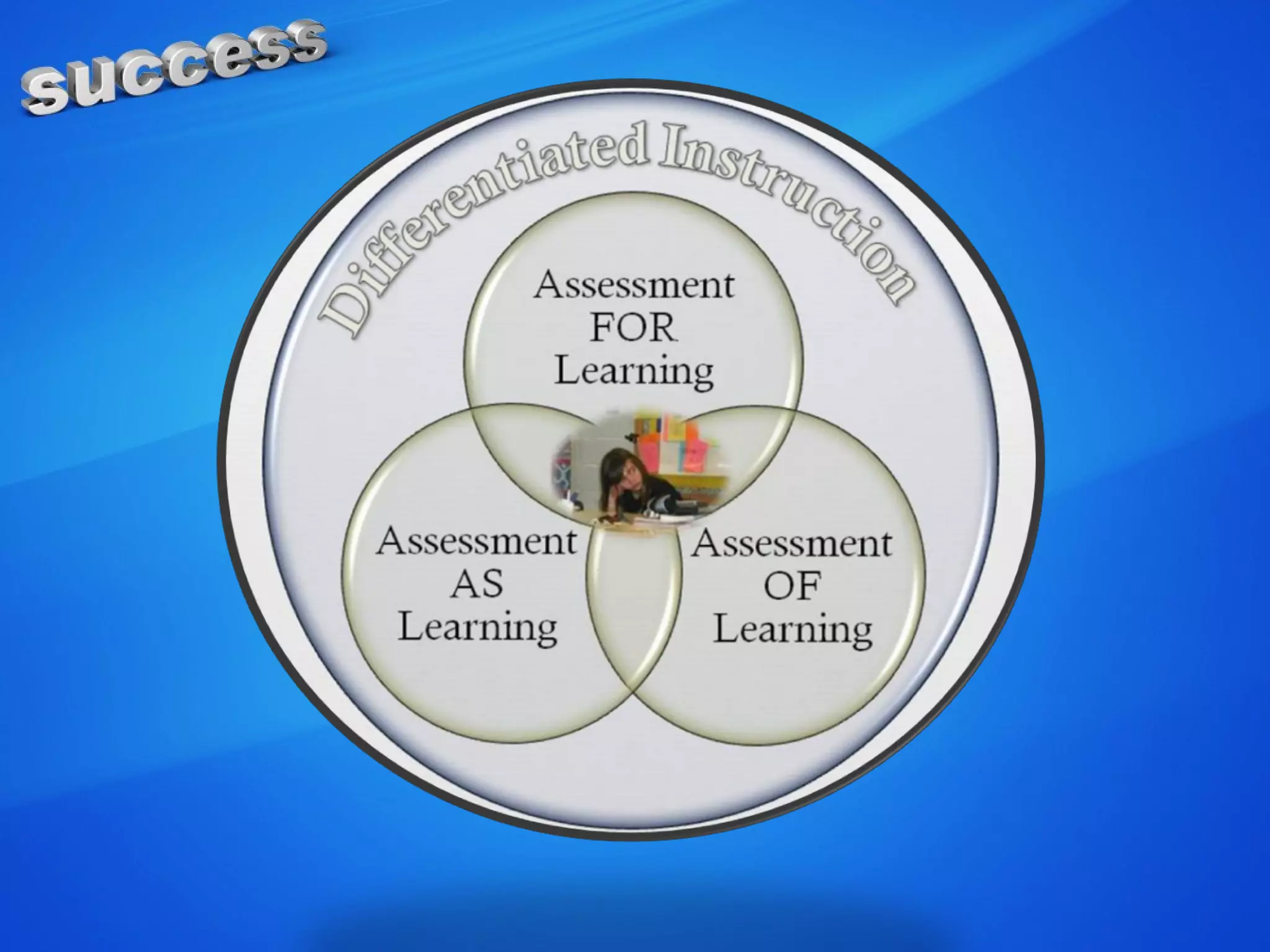
• Types of Assessment?
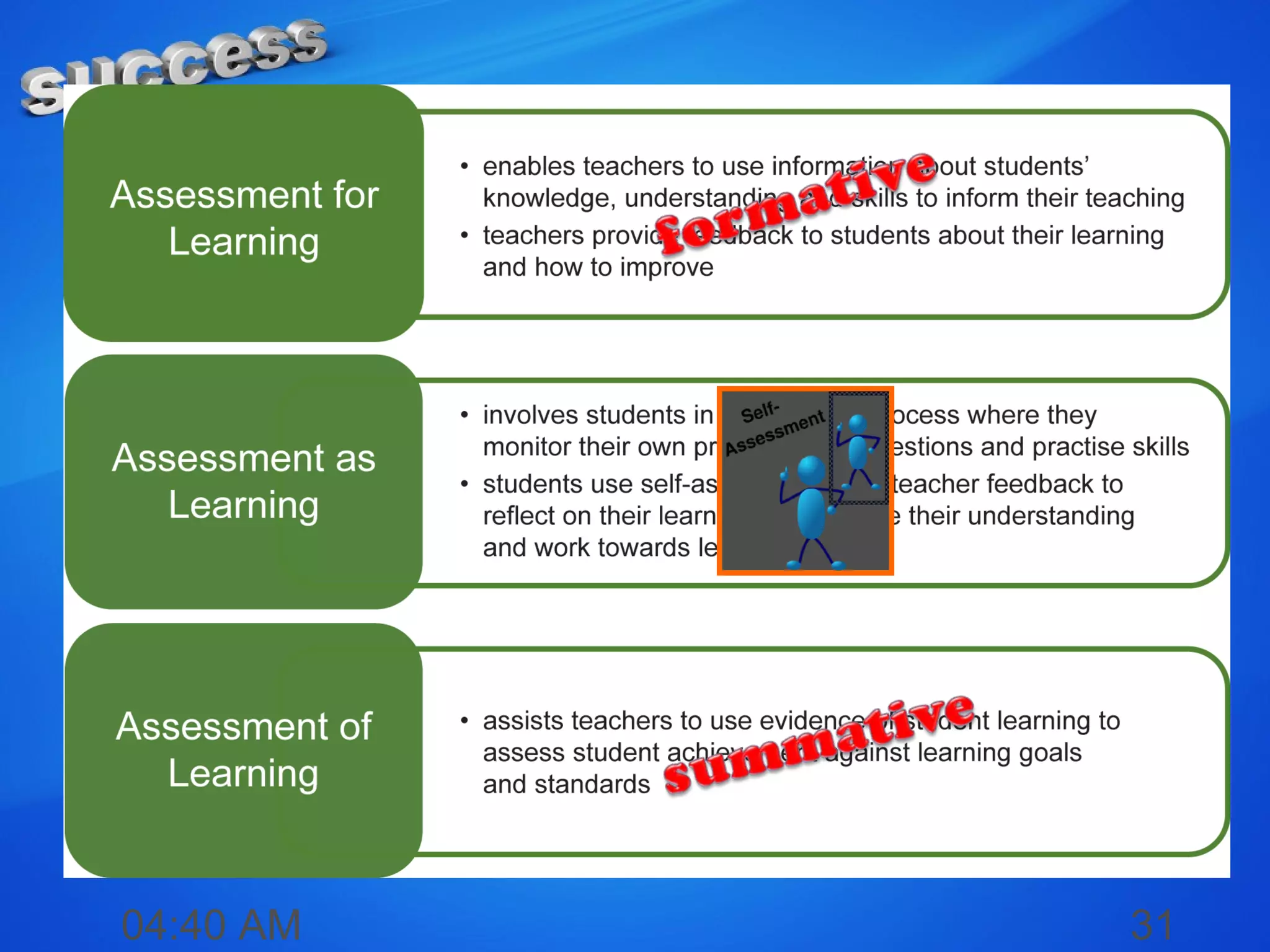
1. Formative Assessment.
2. Summative Assessment.
3. Self Assessment.
Formative Assessment
• Primary Purpose Feedback.
• Brings Out Strength And Weakness Of Student.
• Should Happen As Often As Possible.
• Should Not Be Used For Final Certification.
• Need Not Be Graded..
Summative Assessment
• Testing At The End Of Unit/Semester/Course.
• Used For Certification And Registration
Purposes.
• Assessment Is Summative If Results Are Going
To Be Used To Make Educational Decisions.
• Tests That If Students Have Attained The
Objectives.
Self Assessment
• Student Chooses;
– What He Or She Believes Is Important To Assess.
– Selects How The Assessment Will Be Done.
– Uses The Results To Confirm Strengths And
Weakness.
3104:40 AM
• Suggestions To Make Self-assessment
Effective;
i. Should Not Be Completely Self Selected.
ii. Should Be Directly Linked To Educational
Experiences.
iii. Results Should Be Periodically Validated.
• Galbraith et al 2008
• Qualities of a Good Assessment?
Qualities of Good Assessment
1. Validity.
2. Reliability.
3. Acceptability.
4. Consequences Of Assessment.
Van der Vleuten & Schuwirth (2005)
Validity
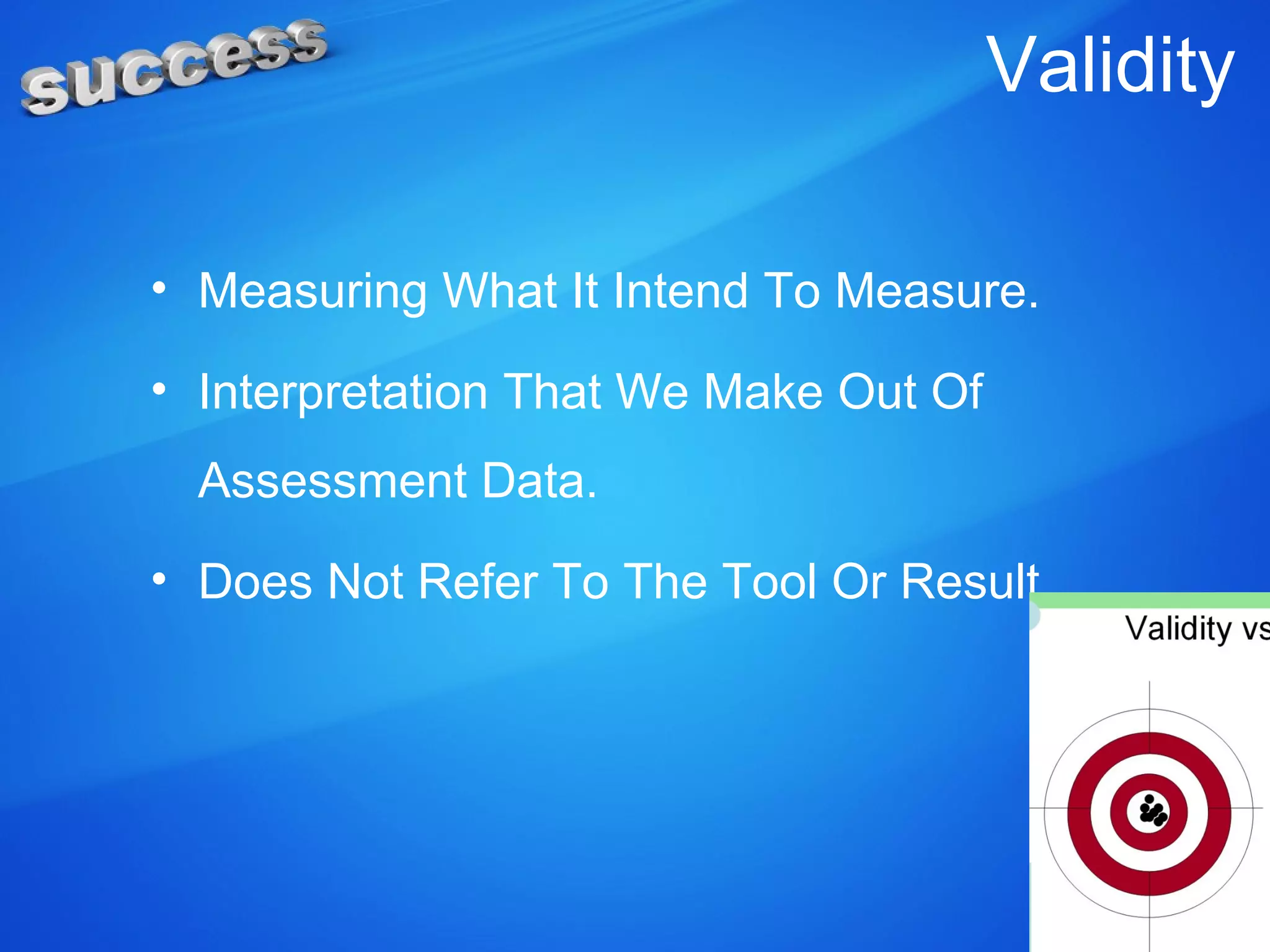
• Measuring What It Intend To Measure.
• Interpretation That We Make Out Of
Assessment Data.
• Does Not Refer To The Tool Or Result.
• Degree To Which A Test Measures What It
Purports (Apparently Appears) To Measure.
 Extent To Which Certain Inferences
Can Be Made From Test Scores,
Difficult To Quantitate, Qualitative
Measurement From Different Sources.
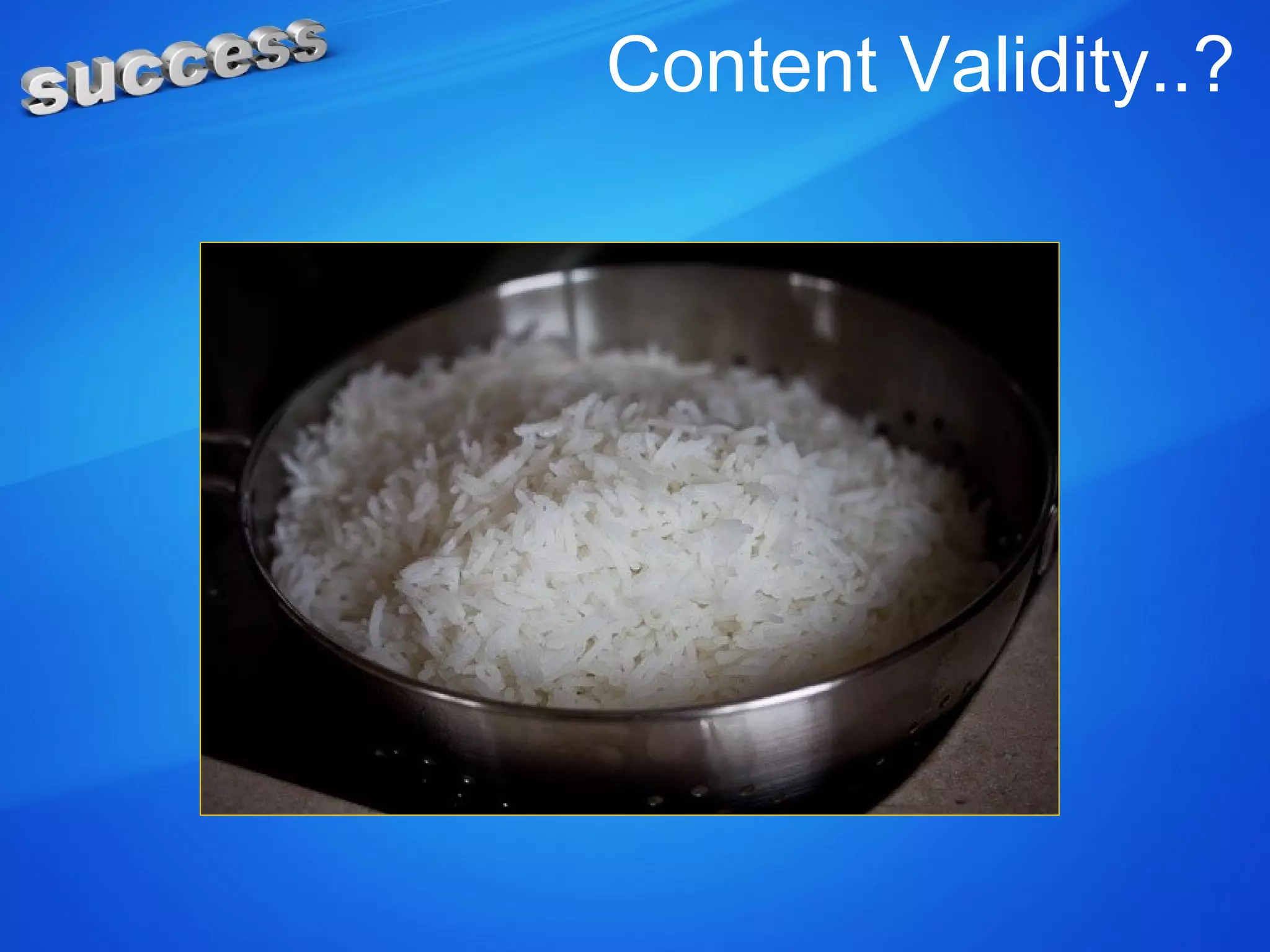
Content Validity..?
Does It Include (All) The Right Items?
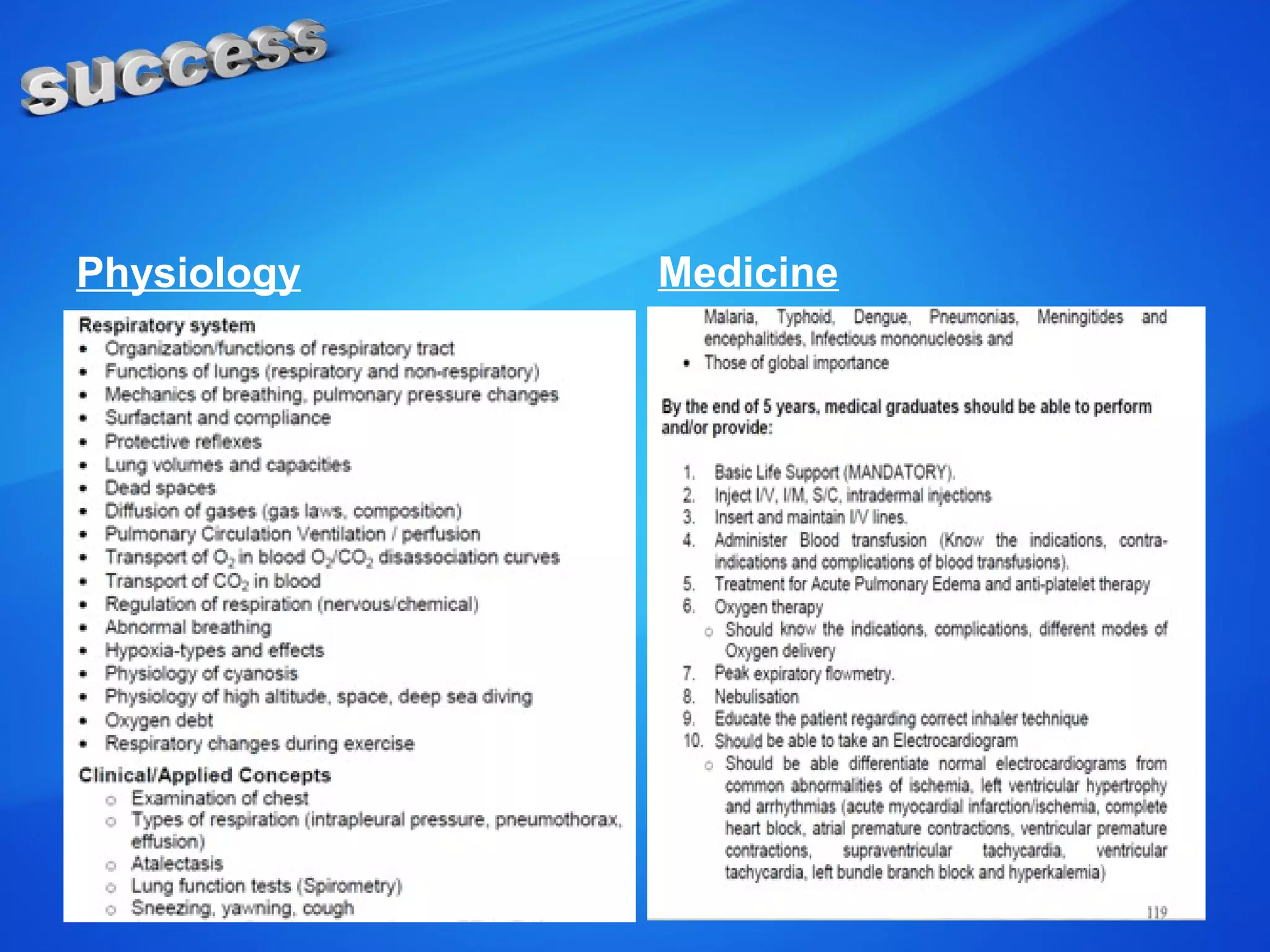
Physiology Medicine
• How Can We Build A Validity?
• Assessment Should Match The Contents Of
The Course.
• Provide Proportional Weightage To Each Of
The Contents.
• Table Of Specification (TOS).
• Faculty Training.
• Screening of Items.
• Let The Student Know What Is Expected!!!
• Neither Too Difficult Nor Too Easy.
• Appropriate Wording To The Level Of
Students.
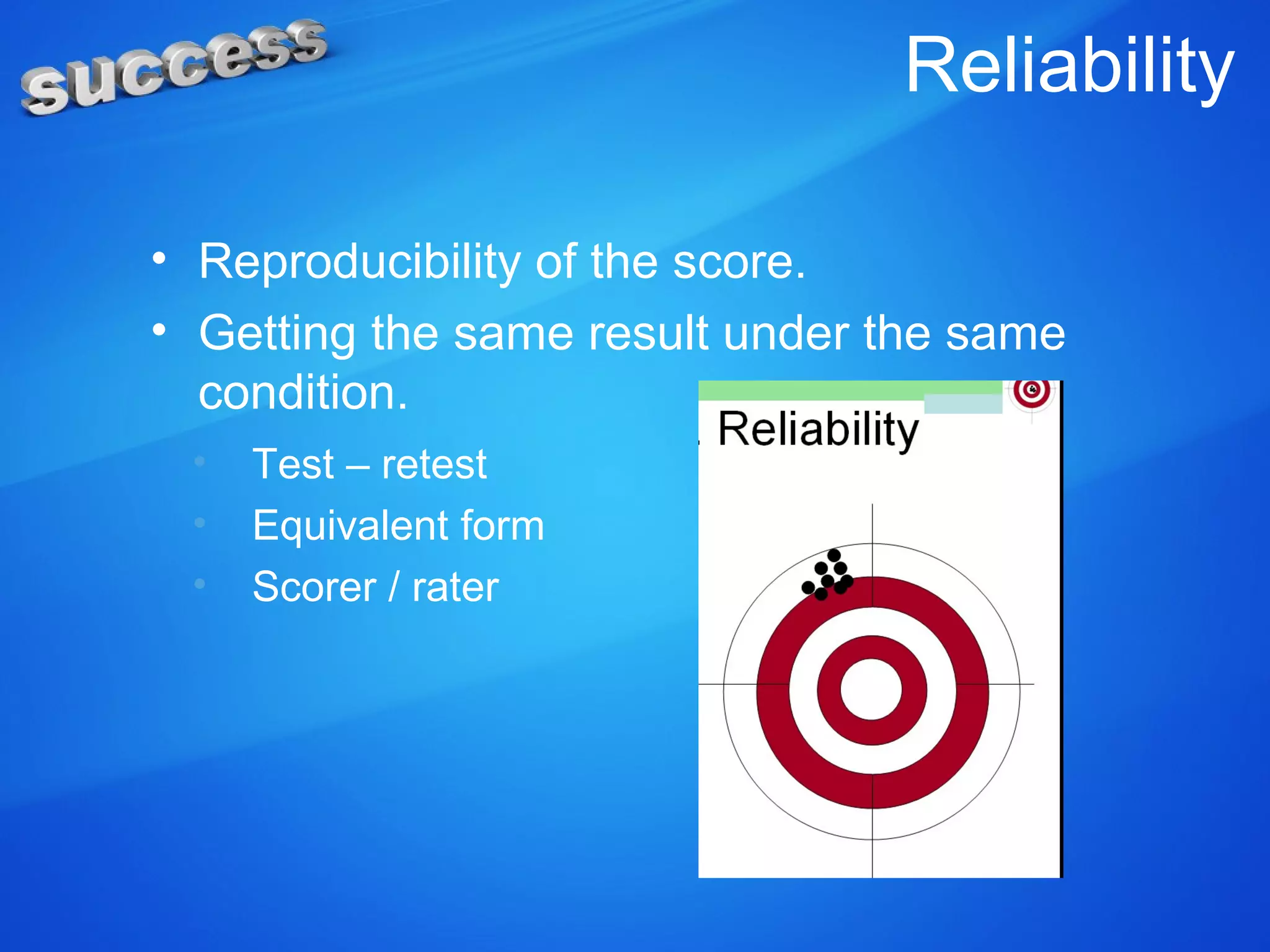
Reliability
• Reproducibility of the score.
• Getting the same result under the same
condition.
• Test – retest
• Equivalent form
• Scorer / rater
Reliability Degree To Which A Test Is
Consistent And Reproducible.
Measure Of How Stable, Dependable,
Trustworthy, And Consistent A Test Is In
Measuring The Same Thing Each Time.
• To Be Valid, A Test Has To Be Reliable.
• Reliability Is Precondition For Validity.
• Objective vs Subjective Assessment…
Objective Assessment
• Have one or more clearly
correct or incorrect
responses.
– MCQs.
Subjective Assessment
• Require judgments about
a response.
– SEQs.
The gem cannot be polished without friction, nor man
perfected without trials or problems or exams..!
04:40 AM 54
Basics of assessment   for slide share

Basics of assessment for slide share

  • 1.
    Mr. Adeel Abbas MB;MS; MRCS (Edinburgh); MRCS (Ireland) Basics of Assessment
  • 4.
    Prof. A. MajeedCh Prof. Abdul Sattar Memon Prof. Abul Fazal Ali Khan Prof. M. Amer Mian My Teachers
  • 8.
  • 9.
    Measurement..? • Physical Term. •Objectivity Of Learning. • Results Represent Only Student Learning – Nothing Else … !!!!!
  • 10.
    • Measurement DoesNot Capture The Essence Of Educational Attainments. • What Qualities We Want Our Students To Develop Which Are Not Amenable To Accurate Measurement?
  • 11.
    1. Health CareProvider. 2. Decision Maker. 3. Communicator. 4. Community Leader. 5. Manager. 6. Researcher. 7. Life Long Learner.
  • 12.
    Assessment..? • “Any FormalOr Intended Action To Obtain Information About The Competence And Performance Of A Student.” Van der Vleuten and Schuwirth 2010
  • 13.
  • 14.
    Assessment The act ofjudging or deciding the amount, value, quality, or importance of something, or the judgment or decision that is made Cambridge Advanced Learners Dictionary & Thesaurus © Cambridge University Press
  • 16.
    • In Assessment: –Objectively Measure Some Aspects, Subjectively Interpret Others Form A Judgment.
  • 17.
    • Evaluation? To judgeor calculate the quality, importance, amount, or value of something Cambridge Advanced Learners Dictionary & Thesaurus © Cambridge University Press
  • 18.
    Assessment • Used InContext Of Student Learning. Evaluation • Used In Context Of The Educational Programs.
  • 21.
    • Assessment OfStudents Is A Very Important Input To Judge The Value Of An Educational Program.
  • 22.
  • 23.
    • Why DoWe Need to Assess Students?
  • 24.
    • Pass OrFail. • Rank Ordering. • Measuring Improvement. • Providing Feedback To Students And Teachers. • Maintaining The Quality Of Educational Programs
  • 25.
    • Types ofAssessment?
  • 26.
    1. Formative Assessment. 2.Summative Assessment. 3. Self Assessment.
  • 27.
    Formative Assessment • PrimaryPurpose Feedback. • Brings Out Strength And Weakness Of Student. • Should Happen As Often As Possible. • Should Not Be Used For Final Certification. • Need Not Be Graded..
  • 28.
    Summative Assessment • TestingAt The End Of Unit/Semester/Course. • Used For Certification And Registration Purposes. • Assessment Is Summative If Results Are Going To Be Used To Make Educational Decisions. • Tests That If Students Have Attained The Objectives.
  • 29.
    Self Assessment • StudentChooses; – What He Or She Believes Is Important To Assess. – Selects How The Assessment Will Be Done. – Uses The Results To Confirm Strengths And Weakness.
  • 31.
  • 33.
    • Suggestions ToMake Self-assessment Effective; i. Should Not Be Completely Self Selected. ii. Should Be Directly Linked To Educational Experiences. iii. Results Should Be Periodically Validated. • Galbraith et al 2008
  • 35.
    • Qualities ofa Good Assessment?
  • 36.
    Qualities of GoodAssessment 1. Validity. 2. Reliability. 3. Acceptability. 4. Consequences Of Assessment. Van der Vleuten & Schuwirth (2005)
  • 37.
    Validity • Measuring WhatIt Intend To Measure. • Interpretation That We Make Out Of Assessment Data. • Does Not Refer To The Tool Or Result.
  • 38.
    • Degree ToWhich A Test Measures What It Purports (Apparently Appears) To Measure.  Extent To Which Certain Inferences Can Be Made From Test Scores, Difficult To Quantitate, Qualitative Measurement From Different Sources.
  • 39.
  • 40.
    Does It Include(All) The Right Items?
  • 41.
  • 42.
    • How CanWe Build A Validity?
  • 43.
    • Assessment ShouldMatch The Contents Of The Course. • Provide Proportional Weightage To Each Of The Contents. • Table Of Specification (TOS). • Faculty Training. • Screening of Items.
  • 44.
    • Let TheStudent Know What Is Expected!!! • Neither Too Difficult Nor Too Easy. • Appropriate Wording To The Level Of Students.
  • 45.
    Reliability • Reproducibility ofthe score. • Getting the same result under the same condition. • Test – retest • Equivalent form • Scorer / rater
  • 46.
    Reliability Degree ToWhich A Test Is Consistent And Reproducible. Measure Of How Stable, Dependable, Trustworthy, And Consistent A Test Is In Measuring The Same Thing Each Time.
  • 47.
    • To BeValid, A Test Has To Be Reliable. • Reliability Is Precondition For Validity.
  • 48.
    • Objective vsSubjective Assessment…
  • 49.
    Objective Assessment • Haveone or more clearly correct or incorrect responses. – MCQs. Subjective Assessment • Require judgments about a response. – SEQs.
  • 54.
    The gem cannotbe polished without friction, nor man perfected without trials or problems or exams..! 04:40 AM 54