Basic Trauma Life
Support
Definition of
Trauma
• A term derived from the Greek for “WOUND”
• It refers to any bodily injury.
• It defined as tissue injury due to direct effects of externally
applied energy.
• Energy may be mechanical, thermal, electrical,
electromagnatic or nuclear.
• An emotional wound or shock that creates substantial, lasting
damage to the psychological development of a person, often
leading to neurosis.
• An event or situation that causes great distress and disruption.
• Included:burns, drowning, smoke, inhalation, slip & fall.
• Excluded: poisoning/toxic ingestion.
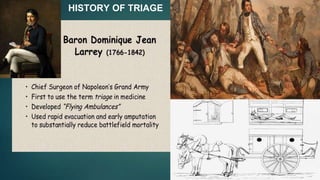
HISTORY OF TRIAGE
RESPONSE - TRIAGE
FRENCH VERB “TRIER” MEANING TO SEPARATE, SORT,
SIFT OR SELECT
CLASSIFIED – SEVERITY AND NATURE OF INJURIES
OBJECTIVE :
PRIORITIZATION – “RIGHT PATIENT GETS
RIGHT TREATMENT AT THE RIGHT TIME”
THREE ESSENTIAL PHASES :
1: PRE-HOSPITAL TRIAGE – TO DESPATCH
AMBULANCE
2 : AT THE SCENE OF TRAUMA
3 : ON ARRIVAL AT THE RECEIVING HOSPITAL
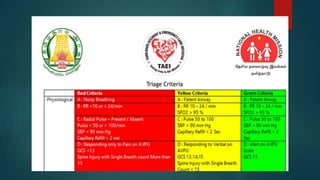
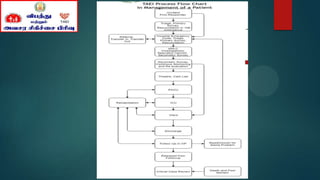
TRIAGE
ALL PATIENTS ENTERING INTO ER ARE AT FIRST
TRIAGED & SORTED OUT INTO RED, YELLOW OR
GREEN CATEGORIES AS PER THE GUIDELINES.
AR ENTRY AND REGISTRATION ARE MADE AFTER
TRIAGE
TRIAGE
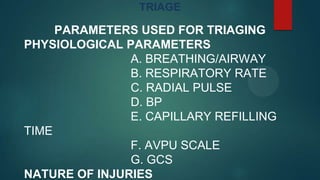
PARAMETERS USED FOR TRIAGING
PHYSIOLOGICAL PARAMETERS
A. BREATHING/AIRWAY
B. RESPIRATORY RATE
C. RADIAL PULSE
D. BP
E. CAPILLARY REFILLING
TIME
F. AVPU SCALE
G. GCS
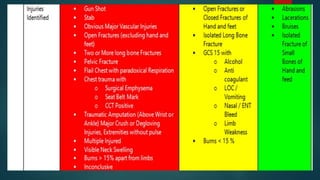
NATURE OF INJURIES
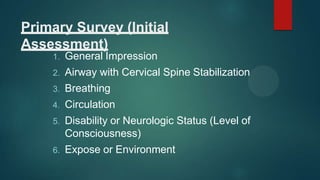
Primary Survey (Initial
Assessment)
1. General Impression
2. Airway with Cervical Spine Stabilization
3. Breathing
4. Circulation
5. Disability or Neurologic Status (Level of
Consciousness)
6. Expose or Environment
General
Impressio
n
• Impression of the
patient's condition that
is formed on first
approach, based on
patient's environment,
chief complaint, and
appearance.
Airway with Cervical Spine
Stabilization
• Protection of the spine & spinal cord is the important
management principle.
• Neurological exam alone does not exclude a cervical
spine injury.
• Always assume a cervical spine injury in any patient
with multi-system trauma, especially with an altered
level of consciousness or blunt injury above the
clavicle.
Breathing
& Ventilation
• Airway patency
does not assure
adequate
ventilation
Circulation
1. Blood Volume & Cardiac
Output
a. level of consciousness
b. skin color
c. Pulse
2. Bleeding
• external bleeding is
identified & controlled in
the
• primary survey.
Disability orNeurologic
Status (Level of
Consciousness)
Simple Mnemonic to describe level of
consciousness
A - Alert
V - Responds to Vocal stimuli
P - Responds to Painful stimuli
U - Unresponsive to all stimuli
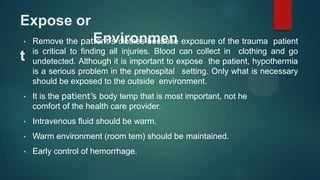
Expose or
Environmen
t
• Remove the patient’s clothes because exposure of the trauma patient
is critical to finding all injuries. Blood can collect in clothing and go
undetected. Although it is important to expose the patient, hypothermia
is a serious problem in the prehospital setting. Only what is necessary
should be exposed to the outside environment.
• It is the patient’s body temp that is most important, not he
comfort of the health care provider.
• Intravenous fluid should be warm.
• Warm environment (room tem) should be maintained.
• Early control of hemorrhage.
Transpor
t
If life-threatening conditions are
identified during primary survey, the
patient should be rapidly packaged after
initiating limited field intervention. Unless
extenuating circumstances exist, limit
scene time to 10 minutes or less.
Secondary Survey (Focused
History and Physical Exam)
Rapid Trauma Assessment
• It is a quick method, (60 to 90 seconds), to
identify hidden and obvious injuries in a
trauma victim. The goal is to identify and treat
immediate threats to life that may not have
been obvious during an initial assessment.
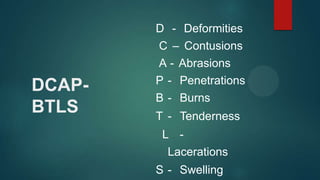
DCAP-
BTLS
D - Deformities
C – Contusions
A - Abrasions
P - Penetrations
B - Burns
T - Tenderness
L -
Lacerations
S - Swelling
Focused History Assessment
S - signs and symptoms
A - allergies
M - medications
P - past or pertinent medical history
L - last oral intake
E - events
Closed Soft
Tissue
Injuries
Management
(RICE)
R - rest
I - ice
C - compression
E - elevation
Bleeding Management
D. - Direct Pressure
E. - Elevation
P - Pressure
T - Tourniquets
Bandaging and Splinting
Functio
n of
Bandaging
1. First Aid
• Reduce Patient Pain/Discomfort
2. Protection of wound
• Dressing of open wound
• Decrease incidence of wound infection
• Stabilization or compression of tissues
3. Absorption of Exudates
• Enhancement of wound healing
4. Debridement of Wound
5. Immobilize Body Part
• Support or protection of body parts
 coaptation (e.g. splints, casts)
 prevent weight bearing
General
Principle
of
Bandaging
• Must not be too lose
• or too tight
 Must not restrict circulation
• Should be absorptive if
necessary
• Should avoid distortion of
tissues
• Never leave foot or toes
outside of bandage
• Requires serial examination
and changing
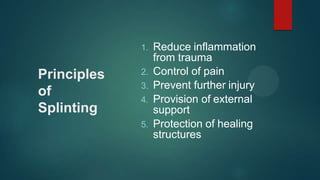
Principles
of
Splinting
1. Reduce inflammation
from trauma
2. Control of pain
3. Prevent further injury
4. Provision of external
support
5. Protection of healing
structures
General plan for treatment of fractures
THANK YOU

Basic trauma life support

  • 1.
  • 2.
    Definition of Trauma • Aterm derived from the Greek for “WOUND” • It refers to any bodily injury. • It defined as tissue injury due to direct effects of externally applied energy. • Energy may be mechanical, thermal, electrical, electromagnatic or nuclear. • An emotional wound or shock that creates substantial, lasting damage to the psychological development of a person, often leading to neurosis. • An event or situation that causes great distress and disruption. • Included:burns, drowning, smoke, inhalation, slip & fall. • Excluded: poisoning/toxic ingestion.
  • 3.
  • 4.
    RESPONSE - TRIAGE FRENCHVERB “TRIER” MEANING TO SEPARATE, SORT, SIFT OR SELECT CLASSIFIED – SEVERITY AND NATURE OF INJURIES OBJECTIVE : PRIORITIZATION – “RIGHT PATIENT GETS RIGHT TREATMENT AT THE RIGHT TIME” THREE ESSENTIAL PHASES : 1: PRE-HOSPITAL TRIAGE – TO DESPATCH AMBULANCE 2 : AT THE SCENE OF TRAUMA 3 : ON ARRIVAL AT THE RECEIVING HOSPITAL
  • 5.
    TRIAGE ALL PATIENTS ENTERINGINTO ER ARE AT FIRST TRIAGED & SORTED OUT INTO RED, YELLOW OR GREEN CATEGORIES AS PER THE GUIDELINES. AR ENTRY AND REGISTRATION ARE MADE AFTER TRIAGE
  • 7.
    TRIAGE PARAMETERS USED FORTRIAGING PHYSIOLOGICAL PARAMETERS A. BREATHING/AIRWAY B. RESPIRATORY RATE C. RADIAL PULSE D. BP E. CAPILLARY REFILLING TIME F. AVPU SCALE G. GCS NATURE OF INJURIES
  • 12.
    Primary Survey (Initial Assessment) 1.General Impression 2. Airway with Cervical Spine Stabilization 3. Breathing 4. Circulation 5. Disability or Neurologic Status (Level of Consciousness) 6. Expose or Environment
  • 13.
    General Impressio n • Impression ofthe patient's condition that is formed on first approach, based on patient's environment, chief complaint, and appearance.
  • 14.
    Airway with CervicalSpine Stabilization • Protection of the spine & spinal cord is the important management principle. • Neurological exam alone does not exclude a cervical spine injury. • Always assume a cervical spine injury in any patient with multi-system trauma, especially with an altered level of consciousness or blunt injury above the clavicle.
  • 15.
    Breathing & Ventilation • Airwaypatency does not assure adequate ventilation
  • 16.
    Circulation 1. Blood Volume& Cardiac Output a. level of consciousness b. skin color c. Pulse 2. Bleeding • external bleeding is identified & controlled in the • primary survey.
  • 17.
    Disability orNeurologic Status (Levelof Consciousness) Simple Mnemonic to describe level of consciousness A - Alert V - Responds to Vocal stimuli P - Responds to Painful stimuli U - Unresponsive to all stimuli
  • 18.
    Expose or Environmen t • Removethe patient’s clothes because exposure of the trauma patient is critical to finding all injuries. Blood can collect in clothing and go undetected. Although it is important to expose the patient, hypothermia is a serious problem in the prehospital setting. Only what is necessary should be exposed to the outside environment. • It is the patient’s body temp that is most important, not he comfort of the health care provider. • Intravenous fluid should be warm. • Warm environment (room tem) should be maintained. • Early control of hemorrhage.
  • 19.
    Transpor t If life-threatening conditionsare identified during primary survey, the patient should be rapidly packaged after initiating limited field intervention. Unless extenuating circumstances exist, limit scene time to 10 minutes or less.
  • 20.
    Secondary Survey (Focused Historyand Physical Exam) Rapid Trauma Assessment • It is a quick method, (60 to 90 seconds), to identify hidden and obvious injuries in a trauma victim. The goal is to identify and treat immediate threats to life that may not have been obvious during an initial assessment.
  • 21.
    DCAP- BTLS D - Deformities C– Contusions A - Abrasions P - Penetrations B - Burns T - Tenderness L - Lacerations S - Swelling
  • 22.
    Focused History Assessment S- signs and symptoms A - allergies M - medications P - past or pertinent medical history L - last oral intake E - events
  • 23.
    Closed Soft Tissue Injuries Management (RICE) R -rest I - ice C - compression E - elevation
  • 24.
    Bleeding Management D. -Direct Pressure E. - Elevation P - Pressure T - Tourniquets
  • 25.
  • 26.
    Functio n of Bandaging 1. FirstAid • Reduce Patient Pain/Discomfort 2. Protection of wound • Dressing of open wound • Decrease incidence of wound infection • Stabilization or compression of tissues 3. Absorption of Exudates • Enhancement of wound healing 4. Debridement of Wound 5. Immobilize Body Part • Support or protection of body parts  coaptation (e.g. splints, casts)  prevent weight bearing
  • 27.
    General Principle of Bandaging • Must notbe too lose • or too tight  Must not restrict circulation • Should be absorptive if necessary • Should avoid distortion of tissues • Never leave foot or toes outside of bandage • Requires serial examination and changing
  • 28.
    Principles of Splinting 1. Reduce inflammation fromtrauma 2. Control of pain 3. Prevent further injury 4. Provision of external support 5. Protection of healing structures
  • 29.
    General plan fortreatment of fractures
  • 30.