Assessment and Initial Management of the Trauma Patient
INTRODUCTIO N Rapid systematic assessment is the key Interventions identified as lifesaving measures are initiated immediately A-B-C’s - first step in initial assessment
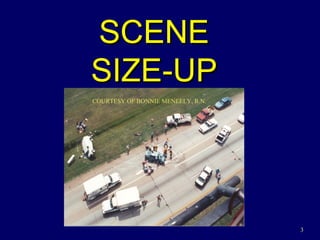
SCENE SIZE-UP COURTESY OF BONNIE MENEELY, R.N.
SCENE  SAFETY/ SECURITY Medic situational assessment differs from civilian scene size-up. Centers around an awareness of the tactical situation and current hostilities. Examine Battlefield: Determine zones of fire Routes of access and egress Casualties occur over time changing   demands
CARE UNDER FIRE What care can be offered at casualty’s side Effects of  movement, noise, and light Movement to safety Cover and Concealment
ENTERING A FIRE ZONE Seek cover and concealment Survey for small arms fire Detect for fire or explosives Determine NBC status Survey structures for stability
MOVING CASUALTY TO SAFE AREA FOR TREATMENT Low profile for casualty and yourself May need to request assistance Protection outweighs risk of aggravating injuries NEVER hesitate to move a casualty who is under fire. If casualty is not under fire, you may elect to delay movement if C-spine injury likely.
MECHANISM OF INJURY Determine how injury occurred Burns Ballistics Falls NBC Blast
NUMBER OF PATIENTS Consider Mass casualty situation Triage patients accordingly Need for assistance or additional supplies Manage time, equipment, and resources
ADDITIONAL HELP Direct self-aid/buddy aid Request of suppressive fire for movement of casualties Plan evacuation routes
C-SPINE STABILIZATION/ OTHER EQUIPMENT Spineboard C-collar Factors or Limitations of NBC environment Other equipment: Airway adjuncts Oxygen Extrication devices
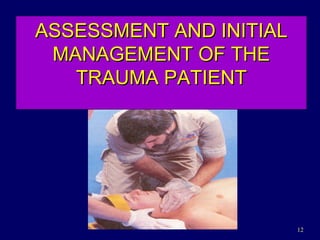
ASSESSMENT AND INITIAL MANAGEMENT OF THE TRAUMA PATIENT
BTLS PRIMARY SURVEY Scene Size-up Initial Assessment Rapid Trauma Survey or Focused Exam
PURPOSES OF INITIAL ASSESSMENT Prioritize casualties Determine immediate life threatening conditions Information gathered used to make decisions concerning critical interventions and time of transport No secondary interventions implemented before completion of  initial assessment
NO SECONDARY INTERVENTIONS WILL BE IMPLEMENTED BEFORE COMPLETION OF INITIAL ASSESSMENT EXCEPT FOR: Airway Obstruction Cardiac Arrest
FORM GENERAL   IMPRESSION Observe position of casualty posture accessibility Appearance of casualty Begin to establish priorities of care
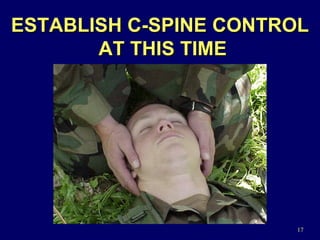
ESTABLISH C-SPINE CONTROL AT THIS TIME
LEVELS OF   CONSCIOUSNESS A  –  A LERT AND ORIENTED V  –  RESPONDS TO  V ERBAL      STIMULI P  –  RESPONDS TO  P AIN U   –  U NRESPONSIVE (NO    COUGH OR GAG REFLEX)
ASSESS AIRWAY If patient is unable to speak or is unconscious then evaluate further
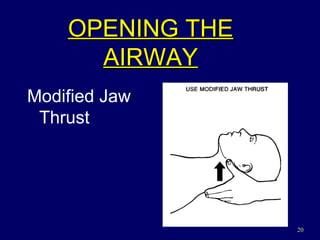
OPENING THE AIRWAY Modified Jaw Thrust
OBSTRUCTED AIRWAY Attempt to ventilate; if unsuccessful Reposition and attempt to ventilate again Visualize observing for obvious obstruction Suction, if needed

Assessment And Initial Management

  • 1.
    Assessment and InitialManagement of the Trauma Patient
  • 2.
    INTRODUCTIO N Rapidsystematic assessment is the key Interventions identified as lifesaving measures are initiated immediately A-B-C’s - first step in initial assessment
  • 3.
    SCENE SIZE-UP COURTESYOF BONNIE MENEELY, R.N.
  • 4.
    SCENE SAFETY/SECURITY Medic situational assessment differs from civilian scene size-up. Centers around an awareness of the tactical situation and current hostilities. Examine Battlefield: Determine zones of fire Routes of access and egress Casualties occur over time changing demands
  • 5.
    CARE UNDER FIREWhat care can be offered at casualty’s side Effects of movement, noise, and light Movement to safety Cover and Concealment
  • 6.
    ENTERING A FIREZONE Seek cover and concealment Survey for small arms fire Detect for fire or explosives Determine NBC status Survey structures for stability
  • 7.
    MOVING CASUALTY TOSAFE AREA FOR TREATMENT Low profile for casualty and yourself May need to request assistance Protection outweighs risk of aggravating injuries NEVER hesitate to move a casualty who is under fire. If casualty is not under fire, you may elect to delay movement if C-spine injury likely.
  • 8.
    MECHANISM OF INJURYDetermine how injury occurred Burns Ballistics Falls NBC Blast
  • 9.
    NUMBER OF PATIENTSConsider Mass casualty situation Triage patients accordingly Need for assistance or additional supplies Manage time, equipment, and resources
  • 10.
    ADDITIONAL HELP Directself-aid/buddy aid Request of suppressive fire for movement of casualties Plan evacuation routes
  • 11.
    C-SPINE STABILIZATION/ OTHEREQUIPMENT Spineboard C-collar Factors or Limitations of NBC environment Other equipment: Airway adjuncts Oxygen Extrication devices
  • 12.
    ASSESSMENT AND INITIALMANAGEMENT OF THE TRAUMA PATIENT
  • 13.
    BTLS PRIMARY SURVEYScene Size-up Initial Assessment Rapid Trauma Survey or Focused Exam
  • 14.
    PURPOSES OF INITIALASSESSMENT Prioritize casualties Determine immediate life threatening conditions Information gathered used to make decisions concerning critical interventions and time of transport No secondary interventions implemented before completion of initial assessment
  • 15.
    NO SECONDARY INTERVENTIONSWILL BE IMPLEMENTED BEFORE COMPLETION OF INITIAL ASSESSMENT EXCEPT FOR: Airway Obstruction Cardiac Arrest
  • 16.
    FORM GENERAL IMPRESSION Observe position of casualty posture accessibility Appearance of casualty Begin to establish priorities of care
  • 17.
  • 18.
    LEVELS OF CONSCIOUSNESS A – A LERT AND ORIENTED V – RESPONDS TO V ERBAL STIMULI P – RESPONDS TO P AIN U – U NRESPONSIVE (NO COUGH OR GAG REFLEX)
  • 19.
    ASSESS AIRWAY Ifpatient is unable to speak or is unconscious then evaluate further
  • 20.
    OPENING THE AIRWAYModified Jaw Thrust
  • 21.
    OBSTRUCTED AIRWAY Attemptto ventilate; if unsuccessful Reposition and attempt to ventilate again Visualize observing for obvious obstruction Suction, if needed