Alabama Fire College
Basic SCBA
Self-Contained Breathing
Apparatus
Alabama Fire College
Introduction
• Failure to use the SCBA properly can
result in injury or death
• Respiratory system extremely
vulnerable
• Fire departments must have a mask
rule
• Wear and use SCBA in IDLH
atmosphere
• SCBA necessary even during exterior
defensive operations
7.2
Alabama Fire College
Introduction (cont’d.)
• Any inhaled toxic gas can directly
cause disease of the lung tissue
• One in 12 firefighters is injured in
the line of duty each year
• Smoke inhalation accounts for 18
percent of fatalities
– 21 percent of fireground injuries
7.3
Alabama Fire College
Conditions Requiring
Respiratory Protection
• Oxygen deficiency
• High temperatures
• Smoke or by-products of
combustion
• Toxic environments
7.4
Alabama Fire College
Oxygen-Deficient
Environments
• Fire consumes oxygen
– Produces toxic gases
– Displace or dilute oxygen
• Oxygen concentrations below 19.5
percent are oxygen-deficient
atmospheres
• Affects on the human body:
– Muscular impairment
– Mental confusion
– Death 7.5
Alabama Fire College
7.6
Table 7-1 Effects of Hypoxia (Reduced Oxygen)
Alabama Fire College
Elevated Temperatures
• Respiratory system sensitive to
temperature
• Air temperatures as low as 165°F can
cause death within 1 minute
• Inhaling gases causes:
– Pulmonary edema
– Asphyxiation
– Long-term damage
• Temperatures in structure fire reach
1000°F
– One unprotected breath will cause death or
severe damage to respiratory system
7.7
Alabama Fire College
Smoke
• Unburned products of combustion,
particles of carbon, tar, associated gases
• Large amounts of gases due to use of
plastics
• Inhalation of small amounts may be fatal
• Four causes of damage by smoke:
– Asphyxiation
– Chemical irritation
– Chemical asphyxiation
– Any combination of these
7.8
Alabama Fire College
Effects of Toxic Gases
and Toxic Environments
• Combustion produces toxic gases and
irritants
– Affect short- and long-term health
• When combustion products combine may
form lethal toxins
• Some common gases affect circulatory
system
• Commercial occupancies may produce
additional toxins
– Requires higher level of protection
7.9
Alabama Fire College
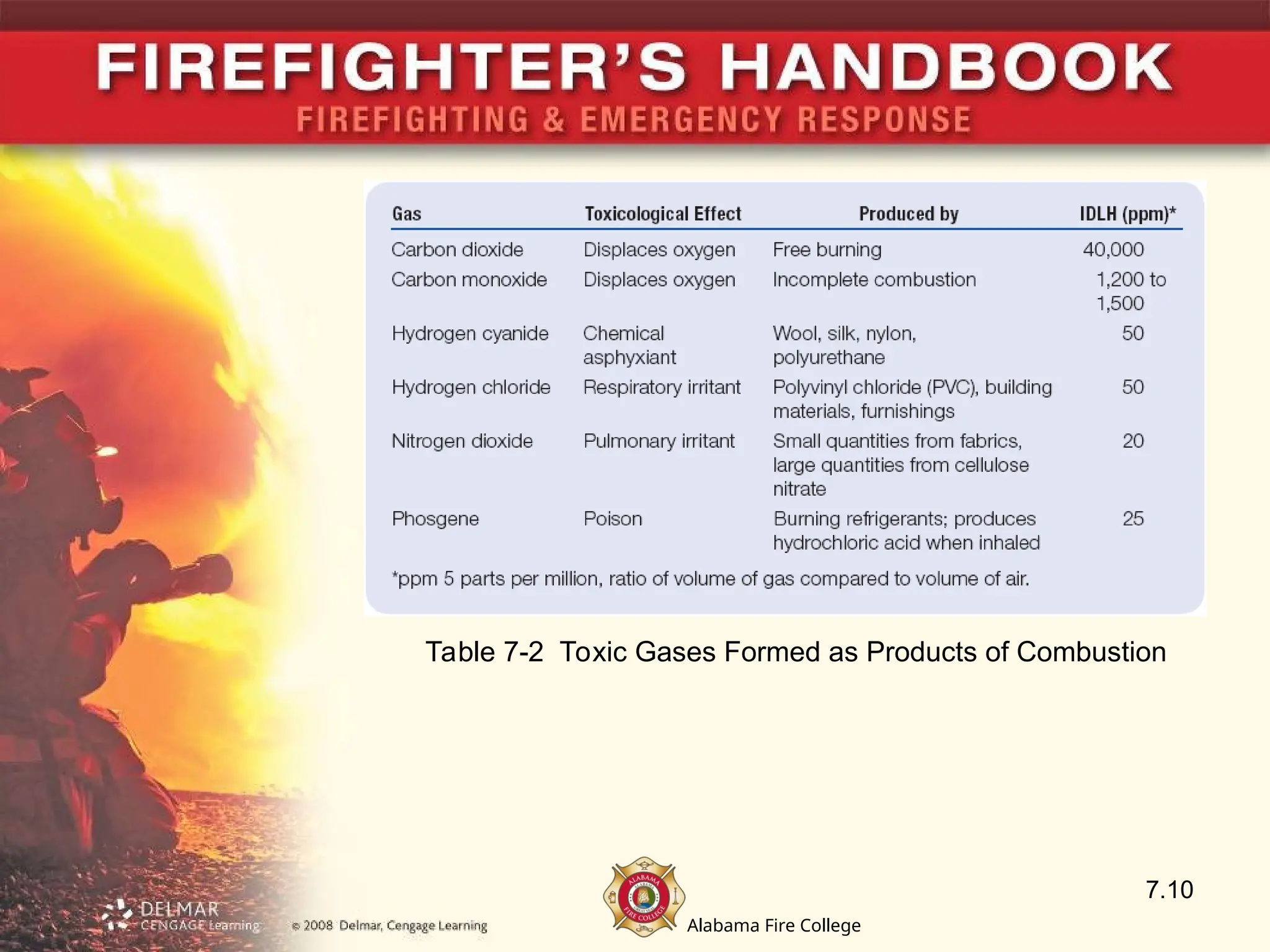
7.10
Table 7-2 Toxic Gases Formed as Products of Combustion
Alabama Fire College
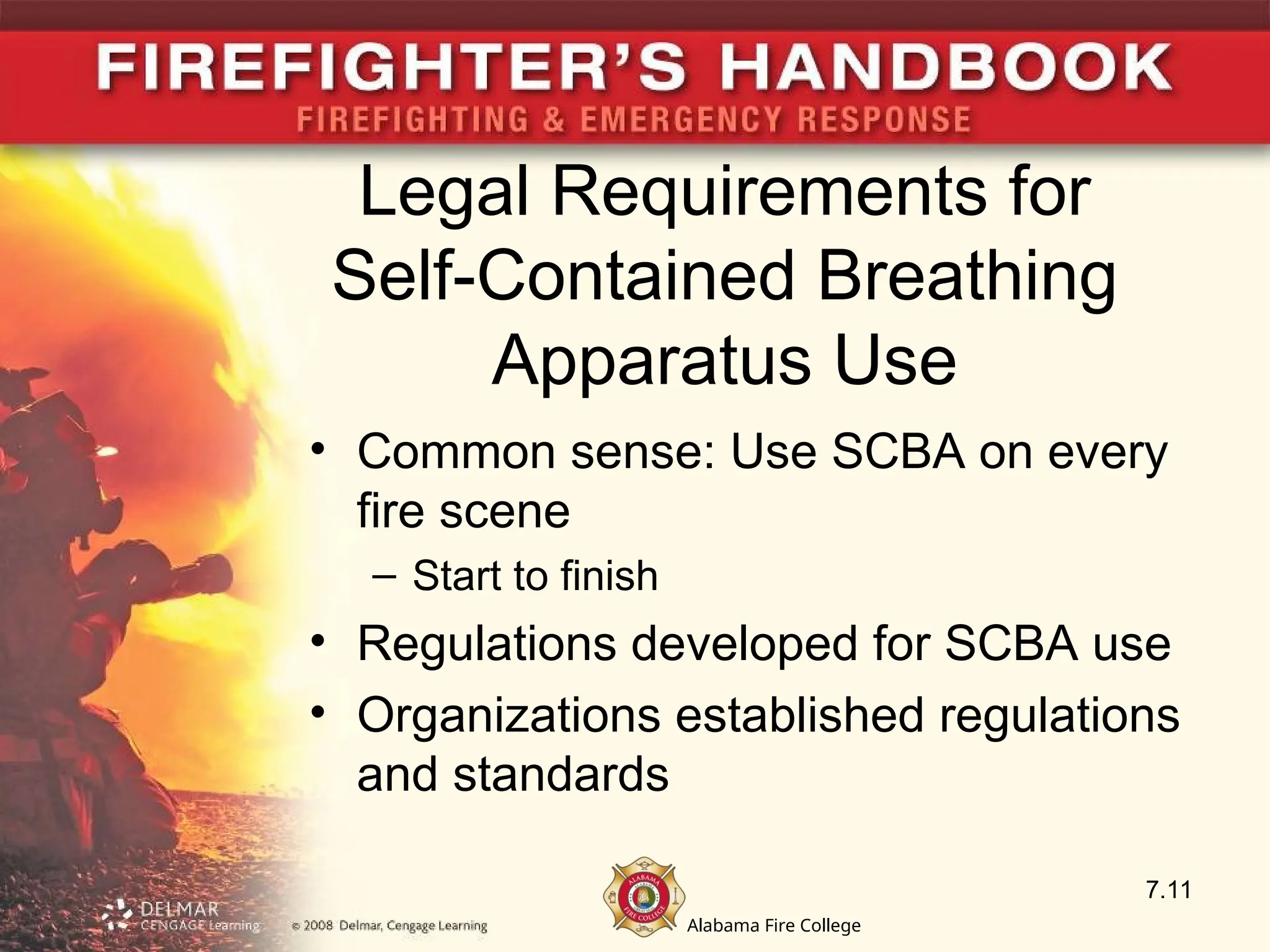
Legal Requirements for
Self-Contained Breathing
Apparatus Use
• Common sense: Use SCBA on every
fire scene
– Start to finish
• Regulations developed for SCBA use
• Organizations established regulations
and standards
7.11
Alabama Fire College
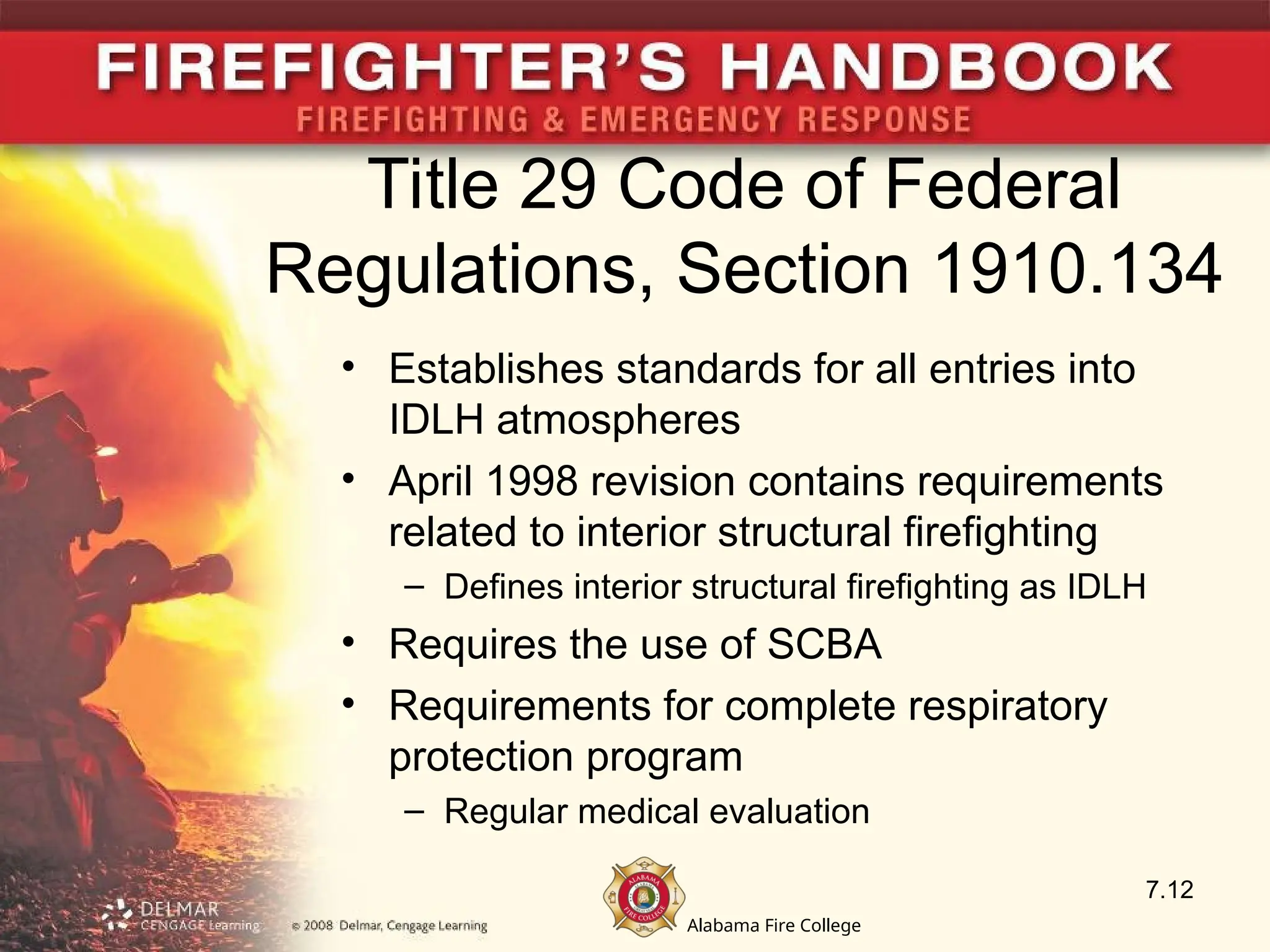
Title 29 Code of Federal
Regulations, Section 1910.134
• Establishes standards for all entries into
IDLH atmospheres
• April 1998 revision contains requirements
related to interior structural firefighting
– Defines interior structural firefighting as IDLH
• Requires the use of SCBA
• Requirements for complete respiratory
protection program
– Regular medical evaluation
7.12
Alabama Fire College
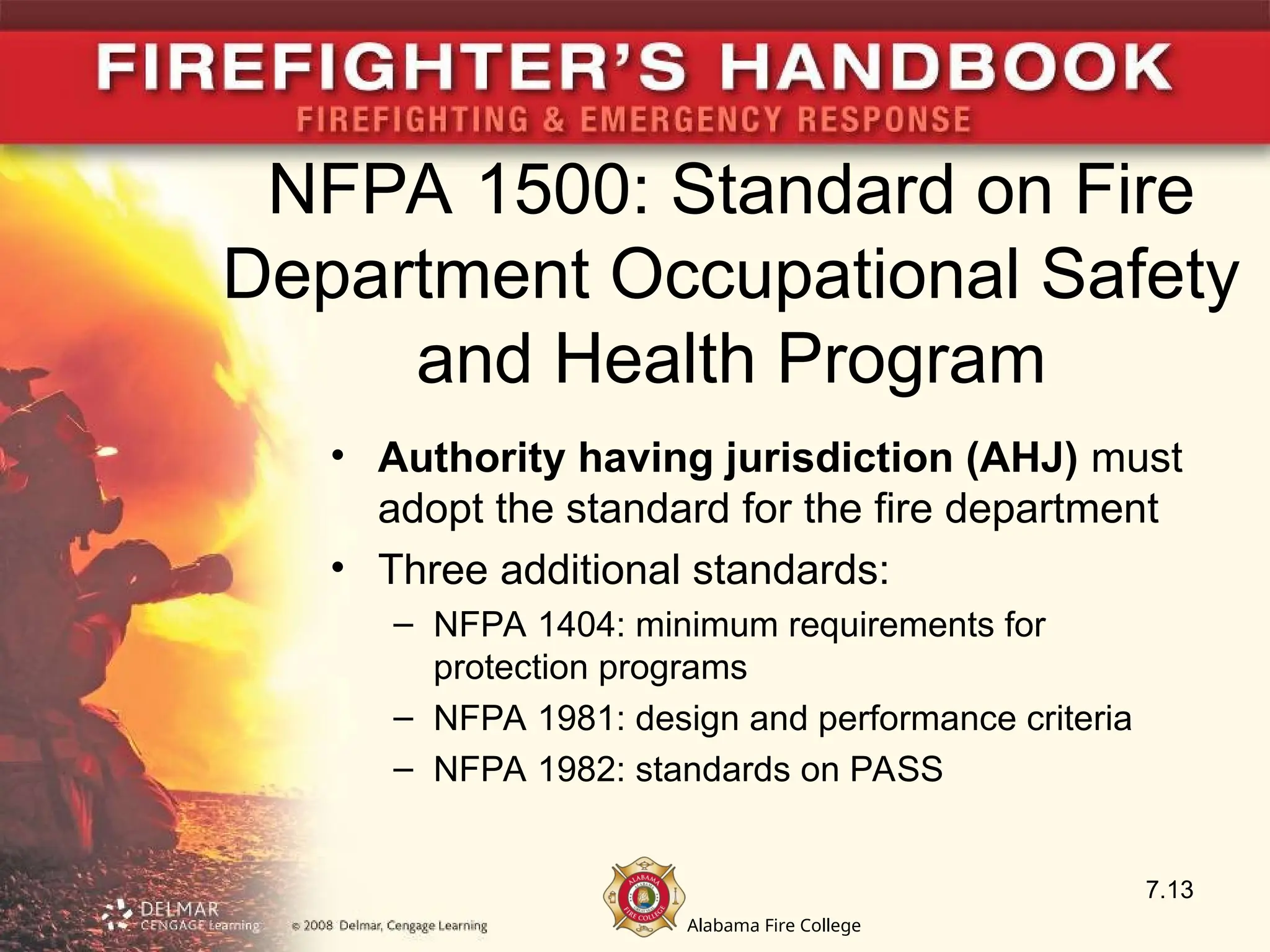
NFPA 1500: Standard on Fire
Department Occupational Safety
and Health Program
• Authority having jurisdiction (AHJ) must
adopt the standard for the fire department
• Three additional standards:
– NFPA 1404: minimum requirements for
protection programs
– NFPA 1981: design and performance criteria
– NFPA 1982: standards on PASS
7.13
Alabama Fire College
Limitations of Self-Contained
Breathing Apparatus
• Understand limitations to use unit
effectively and safely
• Limitations of the SCBA unit itself
– Size, weight, air supply
• Physiological limitations of the user
7.14
Alabama Fire College
7.15
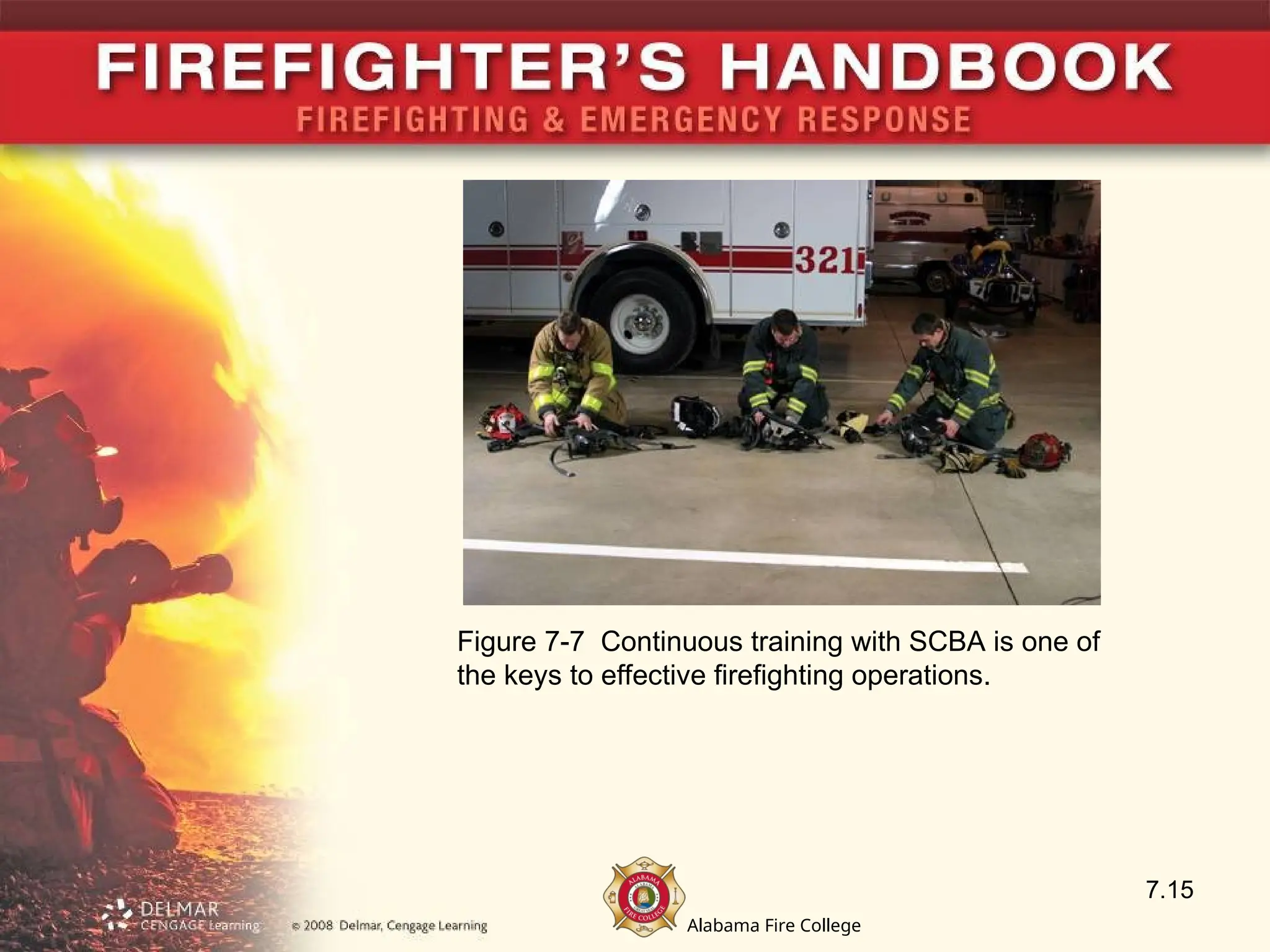
Figure 7-7 Continuous training with SCBA is one of
the keys to effective firefighting operations.
Alabama Fire College
SCBA Design and Size
• SCBA units add weight and bulk to PPE
• SCBA cylinder consumed more quickly
than length of time rated for:
– Limits advance into building
– More frequent crew rotations
• Other concerns:
– Restricted visibility
– Added weight and bulk
– Firefighter’s voice muffled
– Limited air quantity
7.16
Alabama Fire College
Limitations of the SCBA User
• Physical, mental, emotional state
cause usage problems
– Physical limitations: added weight and
bulk
– Physiological limitations
• Lack of confidence in SCBA unit
• Physical stress and anxiety
• Emotional conditions
7.17
Alabama Fire College
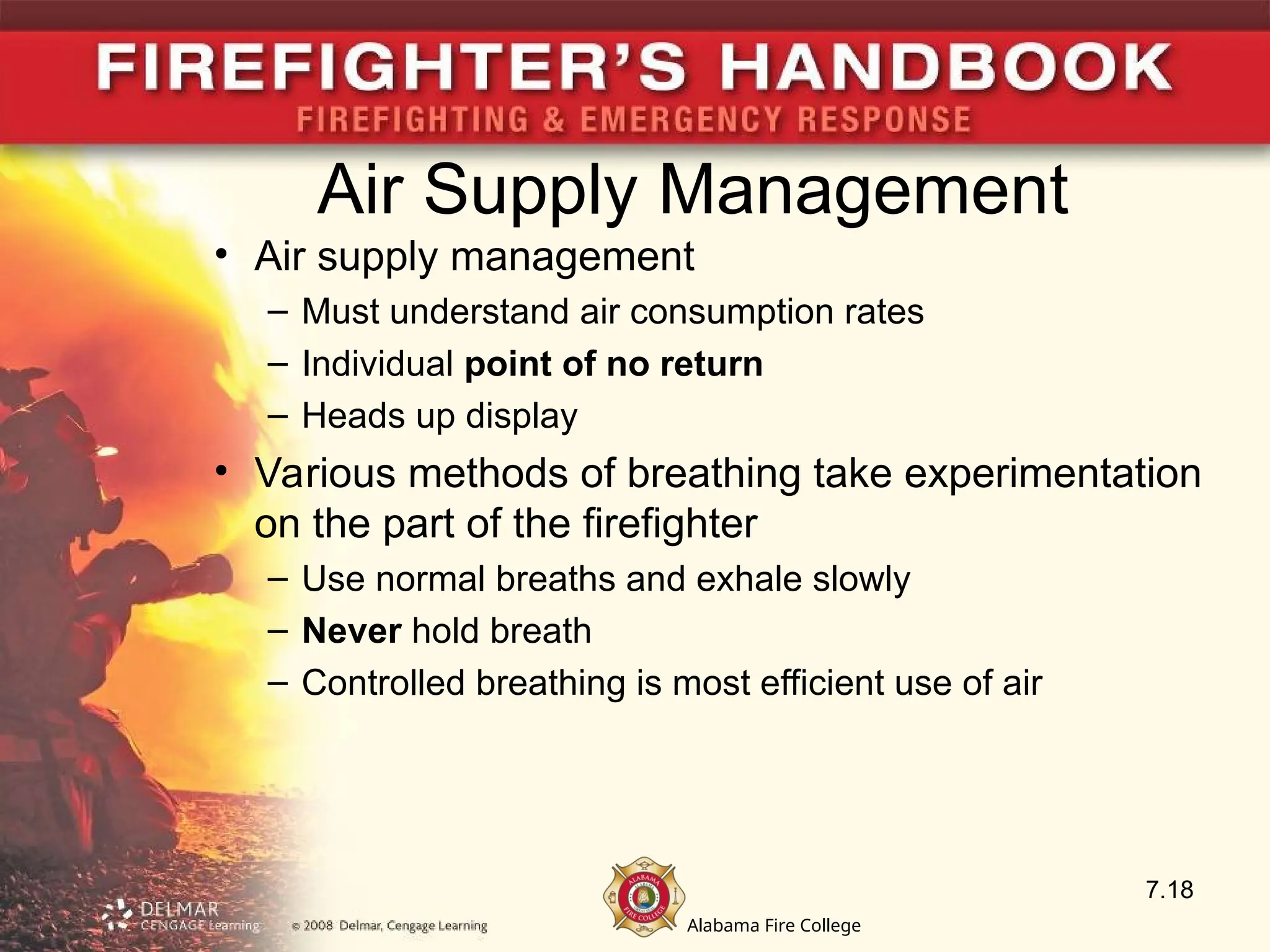
Air Supply Management
• Air supply management
– Must understand air consumption rates
– Individual point of no return
– Heads up display
• Various methods of breathing take experimentation
on the part of the firefighter
– Use normal breaths and exhale slowly
– Never hold breath
– Controlled breathing is most efficient use of air
7.18
Alabama Fire College
7.19
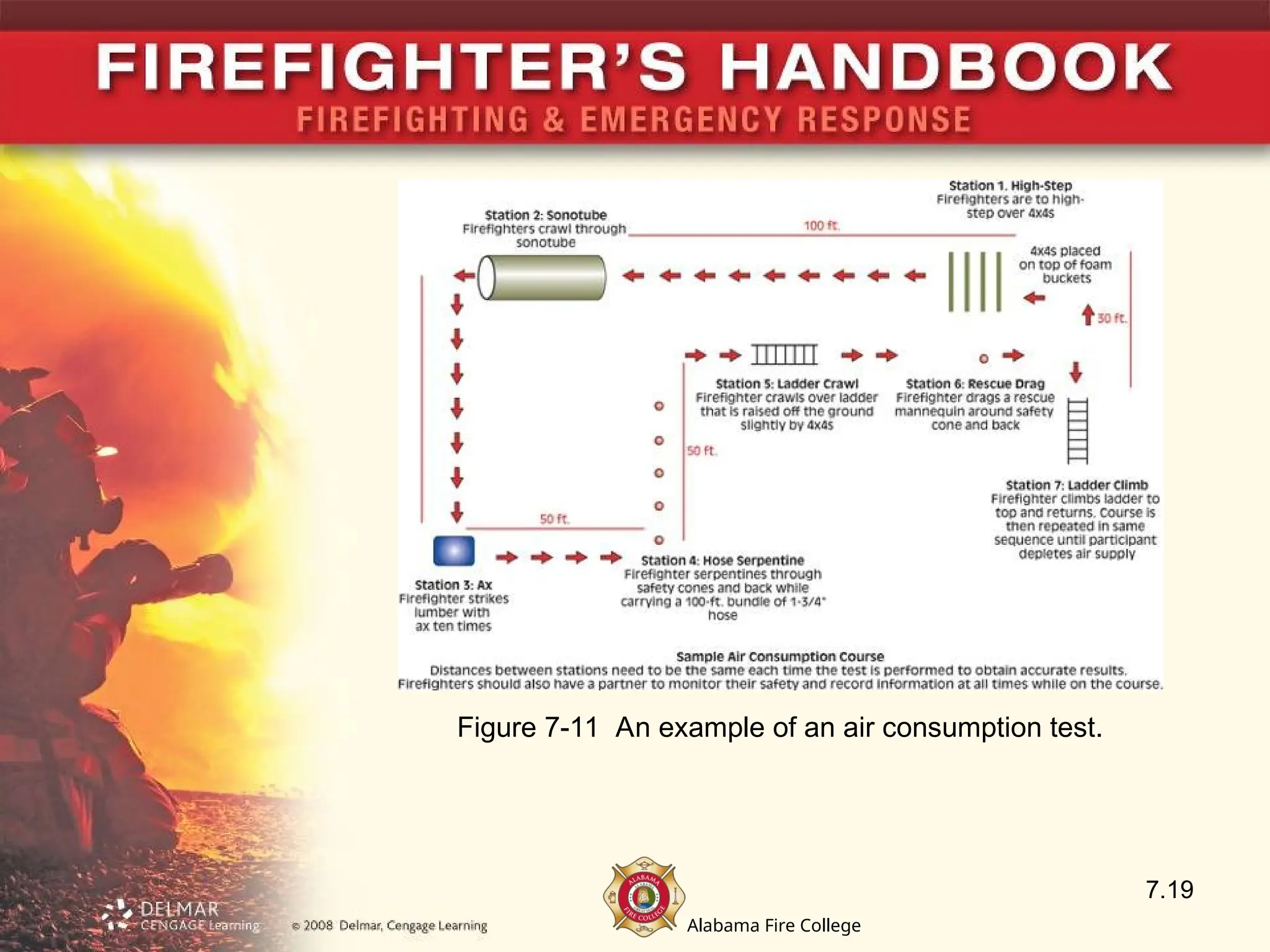
Figure 7-11 An example of an air consumption test.
Alabama Fire College
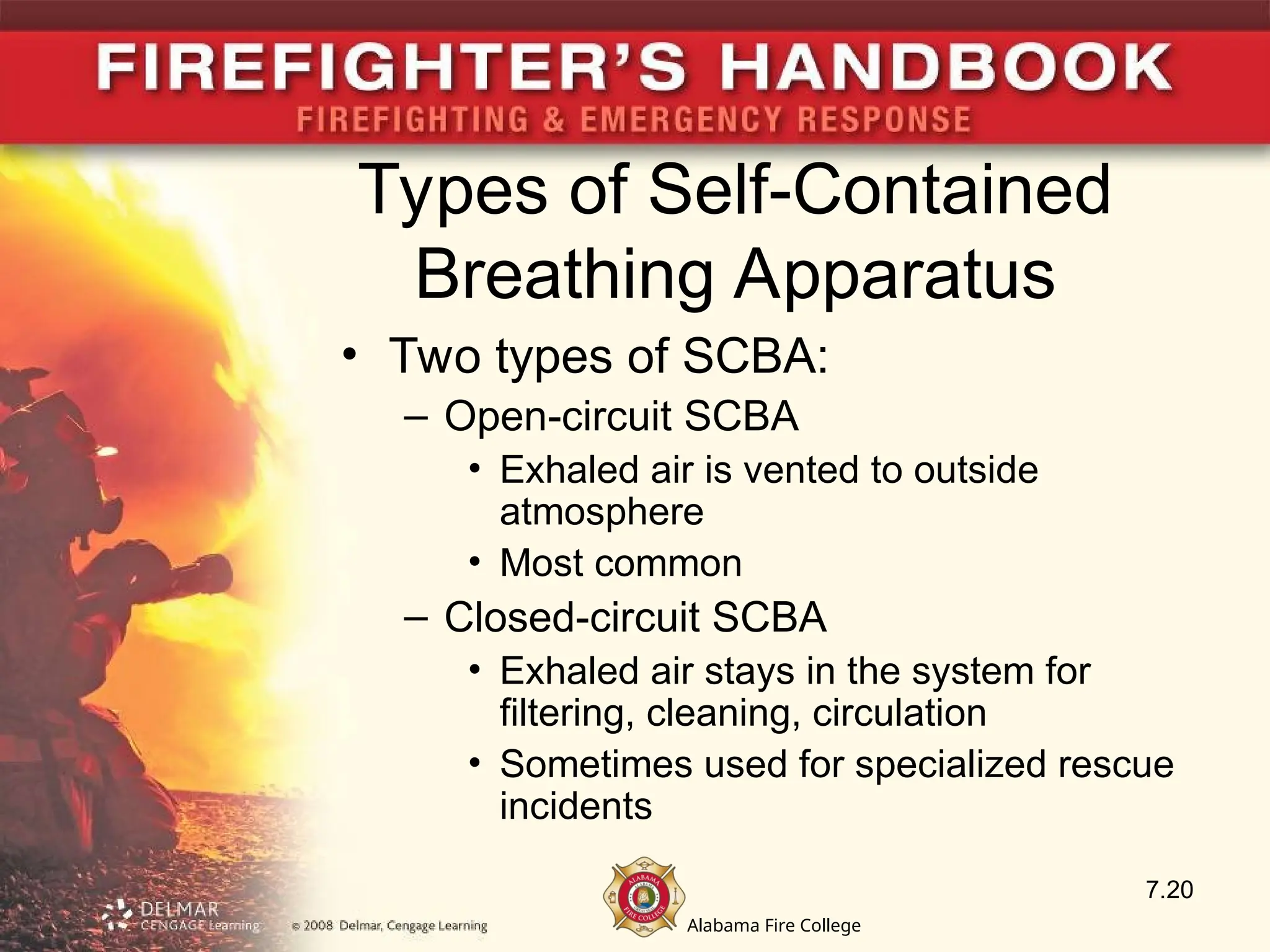
Types of Self-Contained
Breathing Apparatus
• Two types of SCBA:
– Open-circuit SCBA
• Exhaled air is vented to outside
atmosphere
• Most common
– Closed-circuit SCBA
• Exhaled air stays in the system for
filtering, cleaning, circulation
• Sometimes used for specialized rescue
incidents
7.20
Alabama Fire College
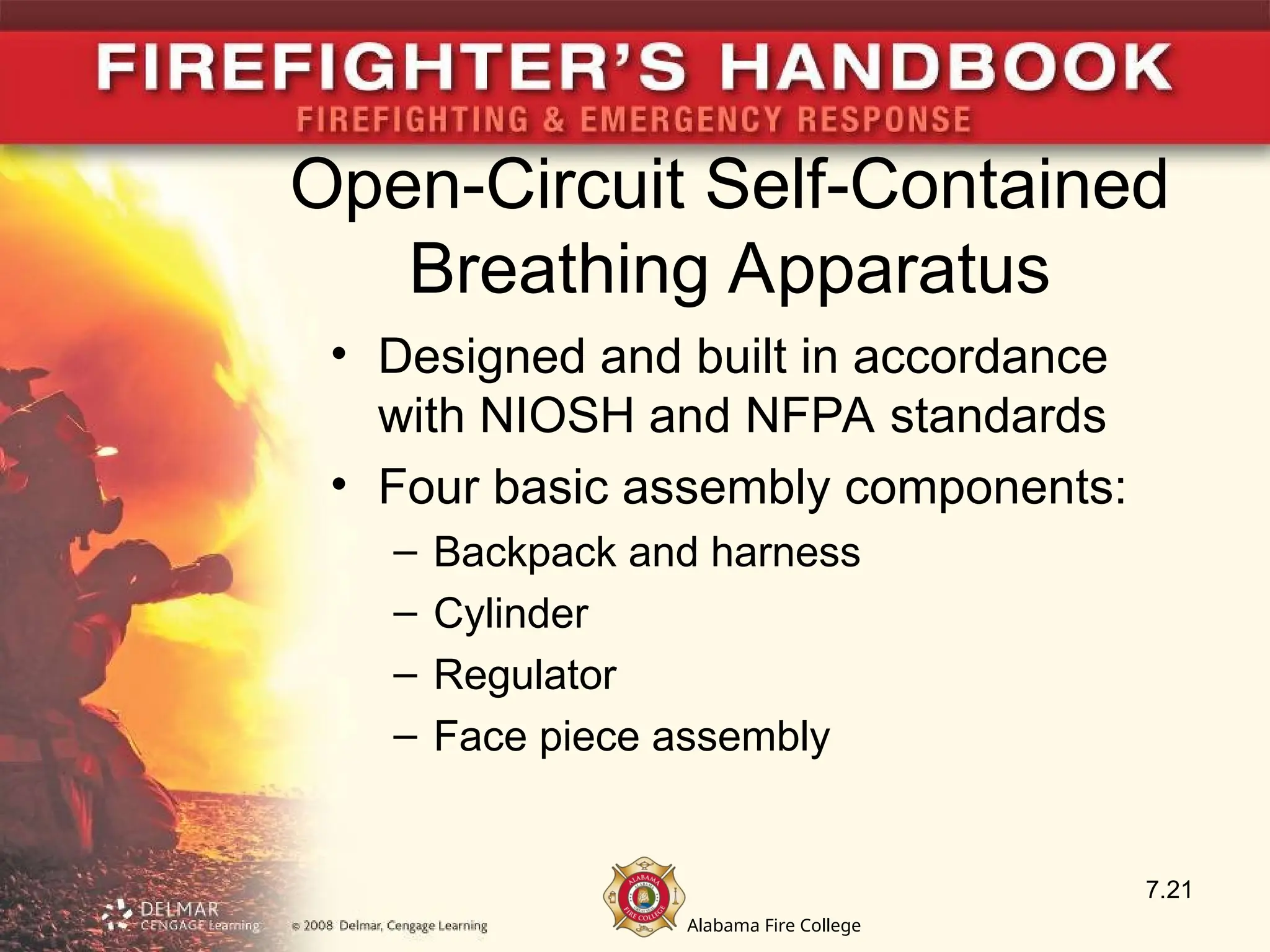
Open-Circuit Self-Contained
Breathing Apparatus
• Designed and built in accordance
with NIOSH and NFPA standards
• Four basic assembly components:
– Backpack and harness
– Cylinder
– Regulator
– Face piece assembly
7.21
Alabama Fire College
7.22
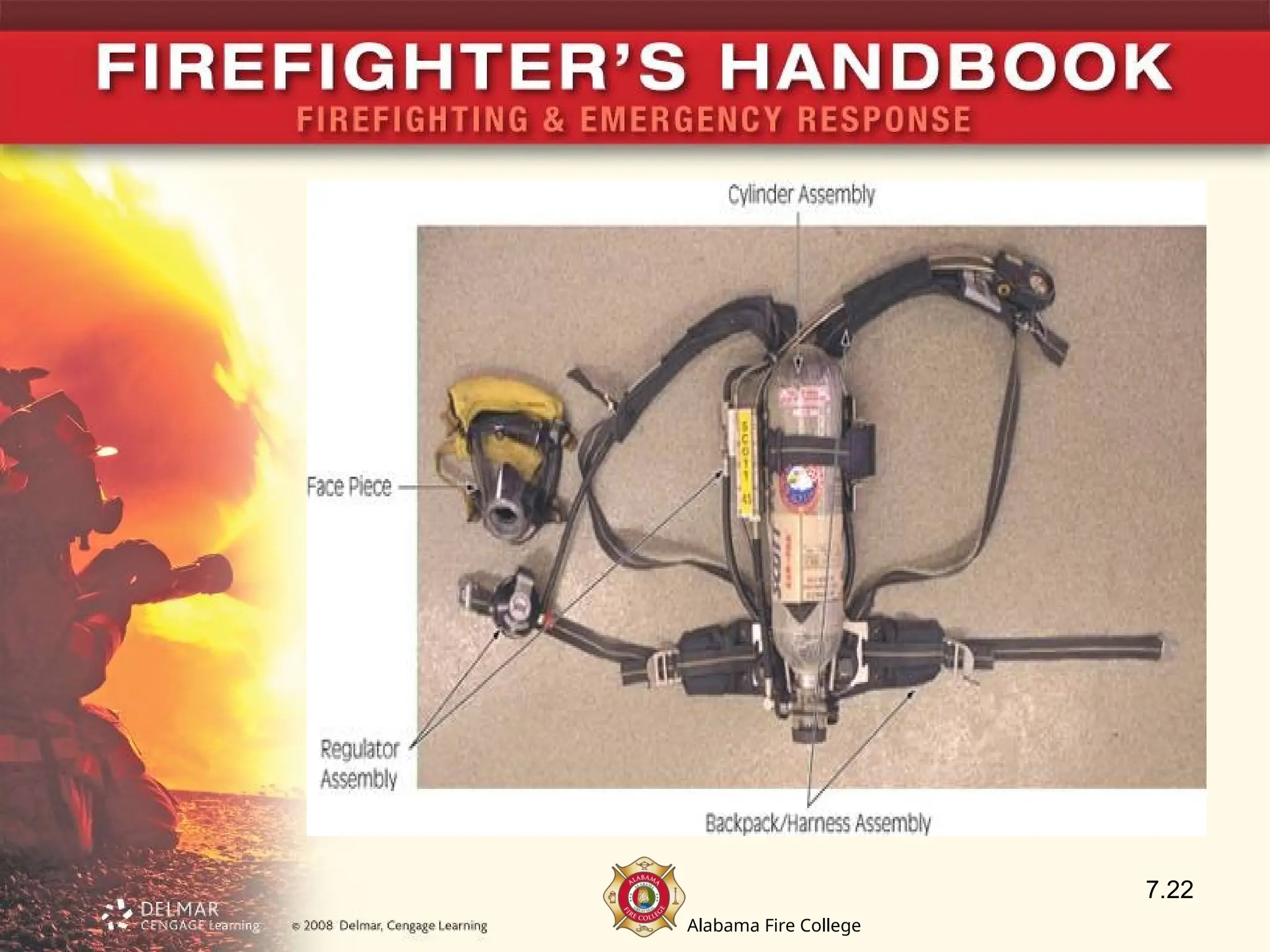
Figure 7-13 The four components of the open-circuit SCBA
are the backpack/harness, cylinder, regulator, and face piece
assemblies.
Alabama Fire College
7.23
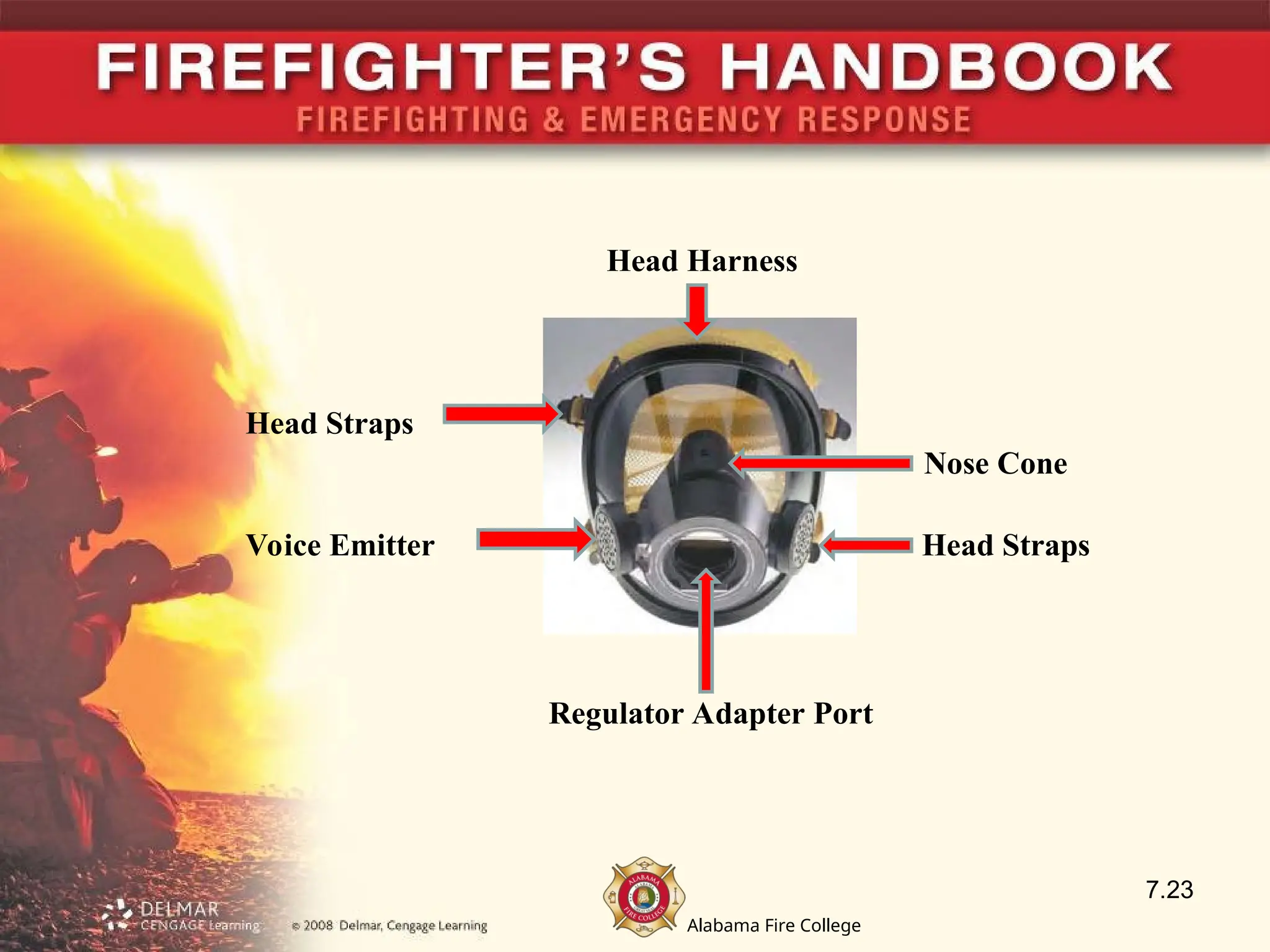
Head Harness
Head Straps
Voice Emitter
Regulator Adapter Port
Nose Cone
Head Straps
Alabama Fire College
7.24
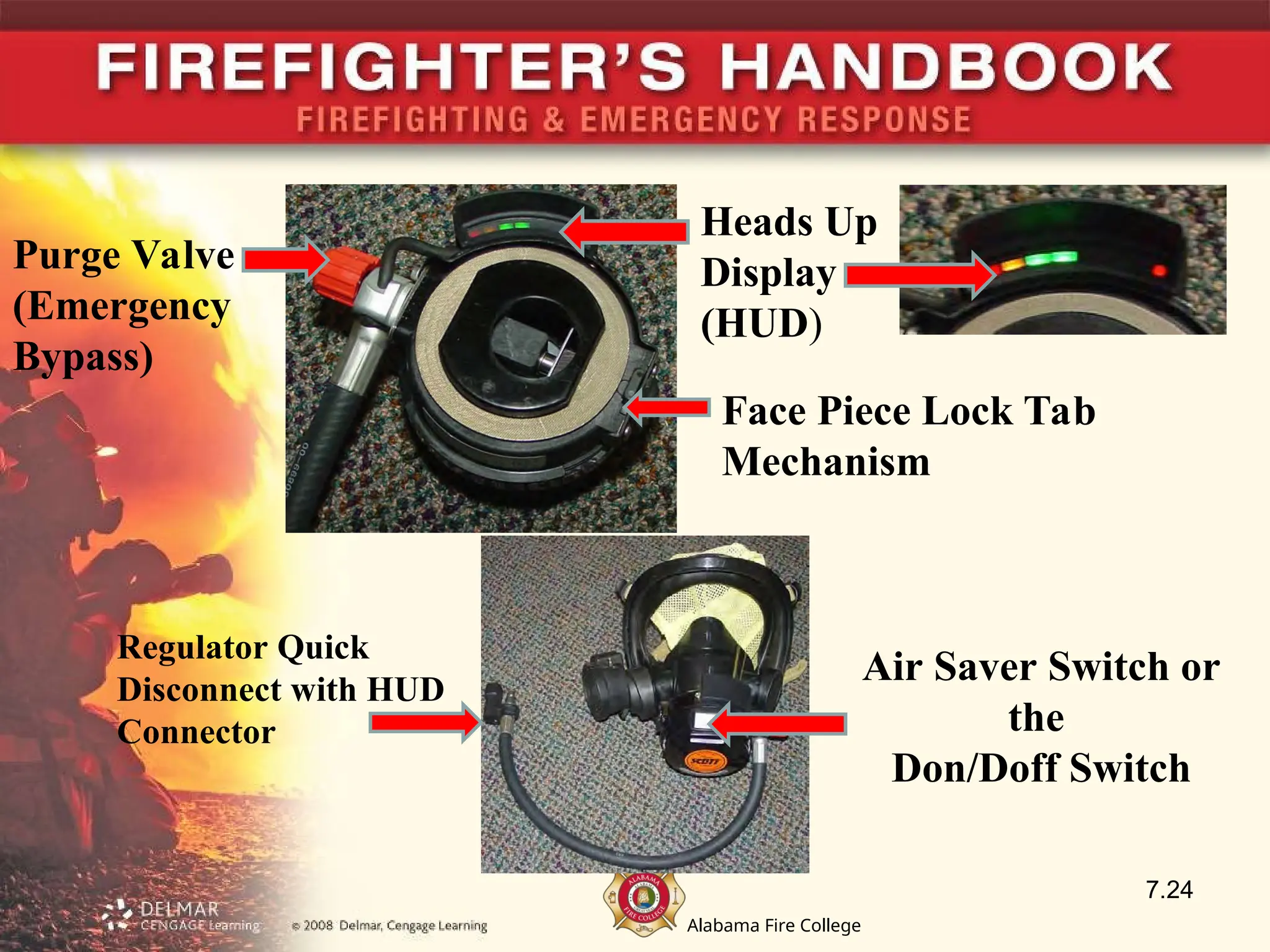
Purge Valve
(Emergency
Bypass)
Regulator Quick
Disconnect with HUD
Connector
Heads Up
Display
(HUD)
Face Piece Lock Tab
Mechanism
Air Saver Switch or
the
Don/Doff Switch
Alabama Fire College
Closed-Circuit Self-Contained
Breathing Apparatus
• Not used for firefighting operations
• Most common use: hazardous materials
incidents
• Air supplies range from 30 minutes to four hours
• Contain cylinder, filter system, regulator, and
valves
• Clean and filter exhaled breath and add oxygen
– Air supply duration based on filtering/cleaning and
oxygen capacity of unit
7.25
Alabama Fire College
Open-Circuit Supplied
Air Respirators
• Open-circuit supplied air respirators
(SARs)
– Also called airline respirators
– Remote air supply
• Commonly used for hazardous materials
incidents
– Confined space rescues
• Long-duration of air supply, mobility, agility
• SCBA escape unit with 510 minutes
7.26
Alabama Fire College
Inspection and Maintenance of
Self-Contained Breathing
Apparatus
• Inspection on daily or regular basis
• Always follow manufacturer’s
instructions
• Procedures in this chapter may differ
from the recommendation
7.27
Alabama Fire College
Daily Maintenance
• SCBA units should be checked
daily
• If used during emergency scene or
training exercise should be
serviced in same manner
• Follow 10-step inspection
procedure
7.28
Alabama Fire College
Monthly Maintenance
• Monthly SCBA check contains all
elements of the daily check
– Adds several checks of mechanics of
system
• Irregularities noted and repaired or
pull SCBA from service
7.29
Alabama Fire College
Annual and Biannual
Maintenance
• NIOSH and SCBA manufacturers
require different functional tests of
SCBA units
• Only manufacturer’s authorized or
trained service personnel shall
conduct these tests
• Firefighters should refer to the
instructions for the SCBA units used
7.30
Alabama Fire College
General Considerations
• Operational safety checks must be
performed
• Conducted on a daily or regular
basis
– Immediately prior to using the SCBA
unit
• If any component does not operate
properly or is damaged, unit taken
out of service immediately
7.31
Alabama Fire College
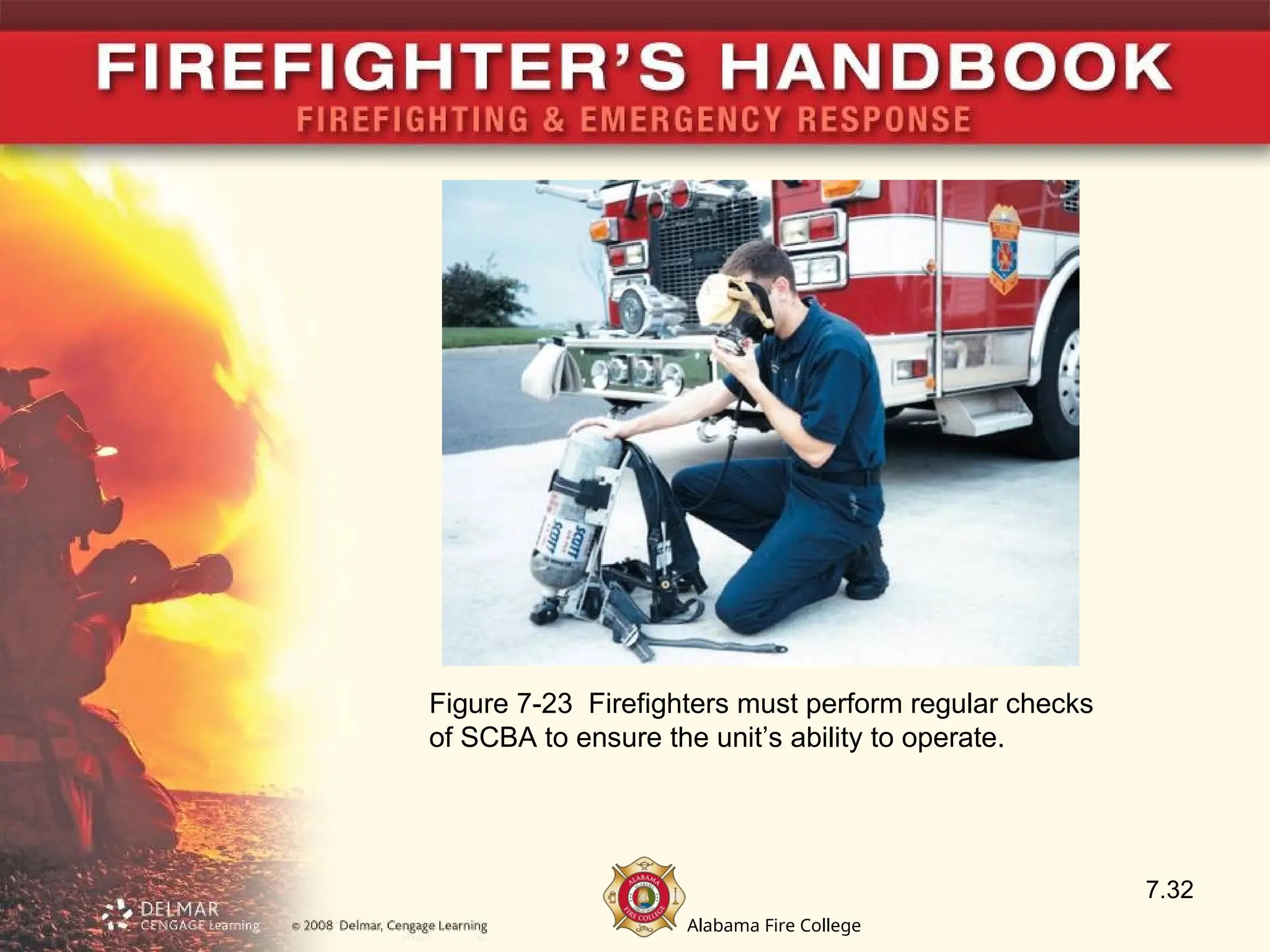
7.32
Figure 7-23 Firefighters must perform regular checks
of SCBA to ensure the unit’s ability to operate.
Alabama Fire College
Donning and Doffing Self-
Contained Breathing Apparatus
• Most common donning procedures:
– Seat-mounted position in the apparatus
– Side compartment on the apparatus
– Storage case
• Refer to manufacturer’s instructions
7.33
Alabama Fire College
Storage Case
• Two methods to don unit:
– “Over the head”
– “Coat”
– Choice is a matter of personal
preference and training
• Refer to donning instructions for the
particular SCBA unit
7.34
Alabama Fire College
Seat-Mounted Apparatus
• Allows for quick donning
• Unit readily available for regular
inspection
• Three important safety requirements:
– Storing of the face piece
– Donning the unit while vehicle is moving
– Checking the cylinder gauge
• Never don while vehicle is in motion
• Check gauge before response or use the
buddy system
7.35
Alabama Fire College
Compartment or Side-Mounted
Apparatus
• Similar to seat-mounted position
except firefighter is standing
• If mount bracket wrong height, use
“coat” method
• Follow donning methods for particular
mounting style
7.36
Alabama Fire College
Donning the SCBA Face Piece
• Most SCBA face pieces donned in a similar
manner
– Difference in style of head straps, regulator
location
• Essential to protect firefighter from toxic
gases
• Firefighter must be fitted for the face piece
to be used with a particular manufacturer’s
SCBA
• Prohibit anything that may interfere with
proper fit and seal of face piece
– Examples: eye glasses, beards, sideburns
7.37
Alabama Fire College
Removing/Doffing the
SCBA Unit
• Generally to remove SCBA donning procedure
is reversed
• If awaiting another assignment, remove face
piece
– Allow normal breathing, conserve air
• Do not wear the mask without air flowing into it
• Regulator or face piece must not be
contaminated
• After assignment complete, report to
rehabilitation
7.38
Alabama Fire College
Self-Contained Breathing
Apparatus Operation and
Emergency Procedures
• Fire departments must establish
respiratory protection programs
• Firefighters must be proficient in the
safe use of SCBA
– Donning and doffing procedures
– Individual limitations
– Limitations of SCBA unit
7.39
Alabama Fire College
Safe Use of SCBA
• Essential to firefighter survival
• SCBA unit and protective
equipment add weight and bulk
– Increased exertion and loss of body
fluids
• Firefighters must be aware of
symptoms of heat stress
– Be aware of own limitations and
abilities
7.40
Alabama Fire College
Operating in a Hostile
Environment
• General rules:
– Check in with accountability officer when entering
or exiting
– Remain low, check the environment and
conditions
– Never remove the face piece, maintain an
awareness of location
– Ventilate as you advance if it does not spread fire
– Check for outside openings
– Maintain direct contact with other team members
– Never enter a hostile environment alone
7.41
Alabama Fire College
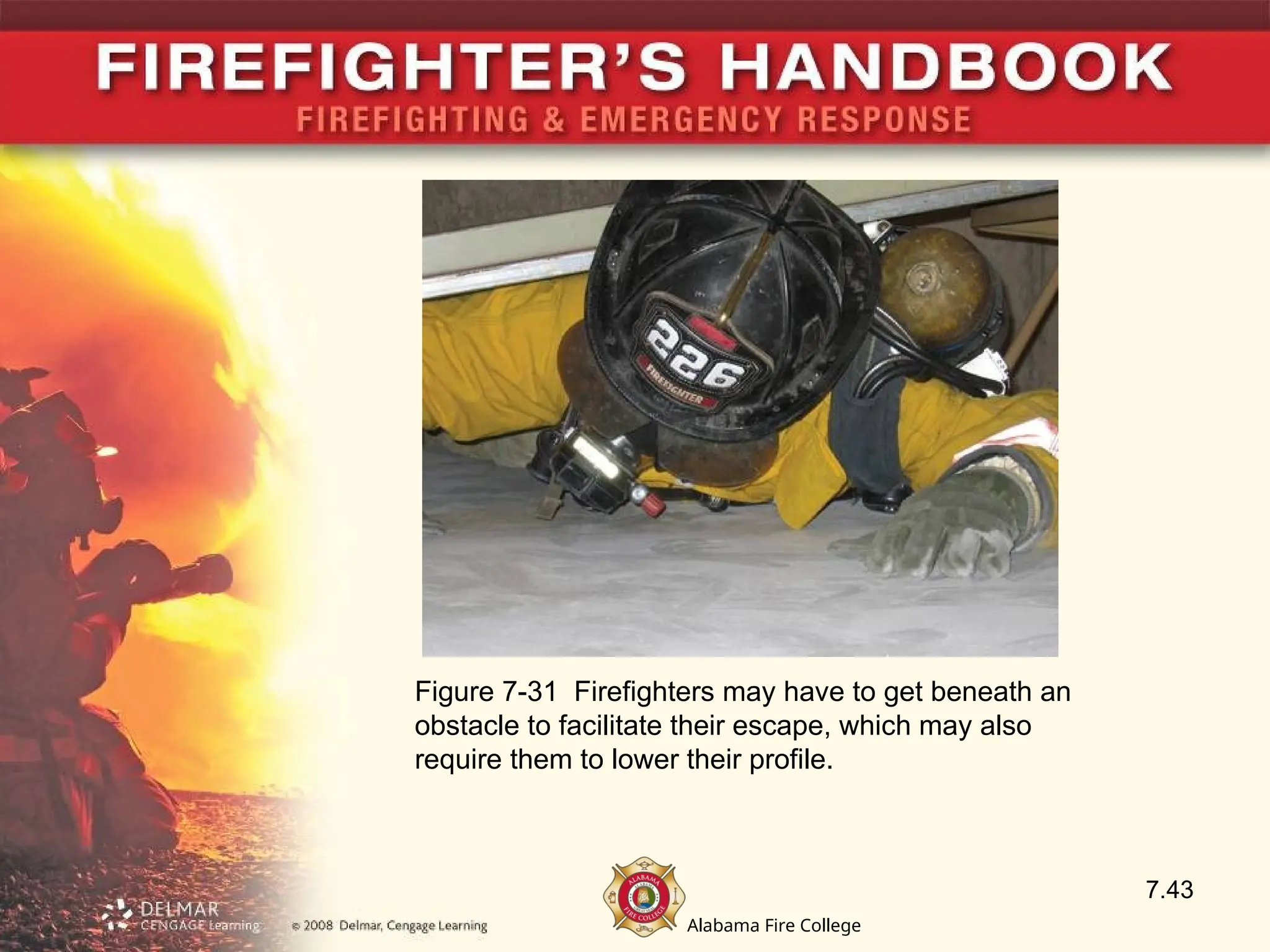
Restricted Openings
• Probe tight spot with a tool
• Be sure conditions on other side of
obstacle are safe
• Shift pack to left side
• “Swim” through obstacle backwards
• “Forward dive” technique
• Do not remove SCBA unless
absolutely necessary
7.42
Alabama Fire College
7.43
Figure 7-31 Firefighters may have to get beneath an
obstacle to facilitate their escape, which may also
require them to lower their profile.
Alabama Fire College
Emergency Procedures
• Emergency procedures exist to assist a
firefighter in safe escape from hazard
• Remain calm, rely on training and
knowledge
• Never remove the face piece of the SCBA
• Standard emergency check procedure
stressed
• If entangled, do not pull forward
– Use wire cutters to cut one wire at a time
– “Swim” method
7.44
Alabama Fire College
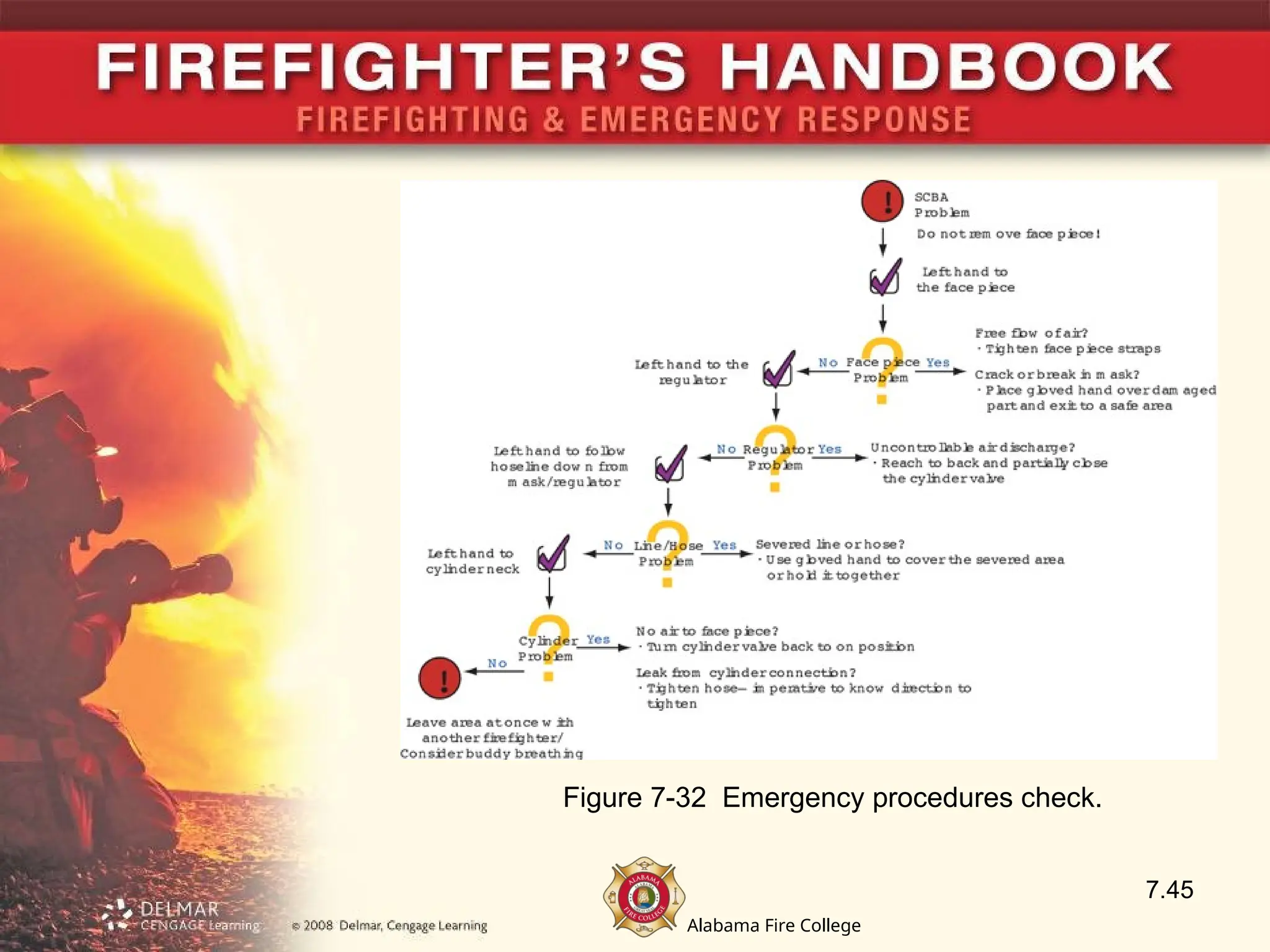
7.45
Figure 7-32 Emergency procedures check.
Alabama Fire College
Changing SCBA Cylinders
• Cylinders changed after use, following
local SOPs
• Cylinder 90 percent full could mean loss
of 25 minutes of air supply
– Could make the difference in successful exit
• Follow 12-step replacement procedure
• Additional steps for two-person SCBA
cylinder replacement
7.46
Alabama Fire College
Servicing SCBA Cylinders
• Cylinder serviced when below full
– Air source must be tested and certified
– All cylinders must have a current
hydrostatic test date
– All fill stations must have fragmentation
containment devices
– All manufacturer’s recommendations
should be followed
– Fill rate may vary
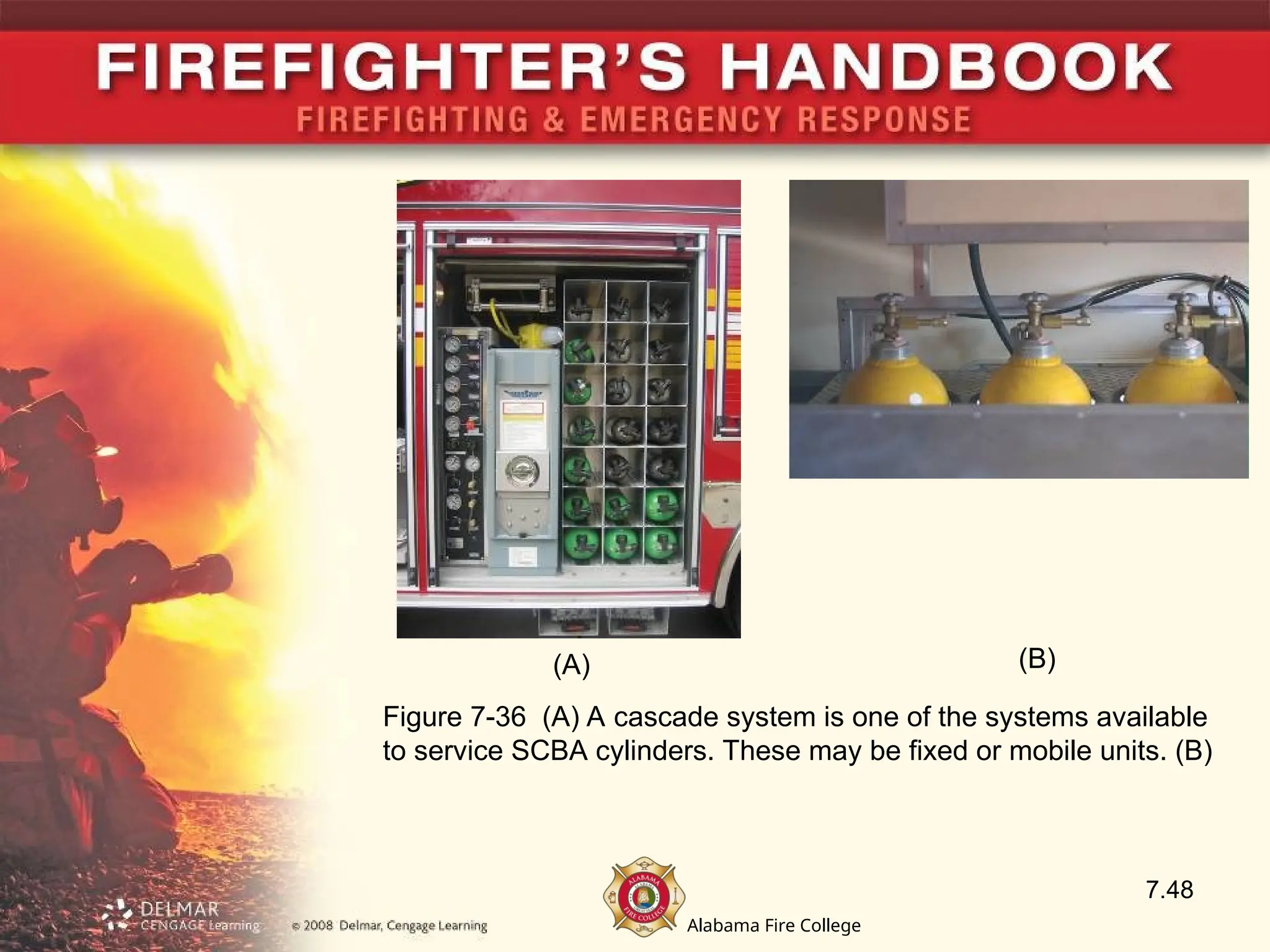
• Cascade system
• Compressor/purifier system
7.47
Alabama Fire College
7.48
Figure 7-36 (A) A cascade system is one of the systems available
to service SCBA cylinders. These may be fixed or mobile units. (B)
(A) (B)
Alabama Fire College
Lessons Learned
• SCBA unit is to a firefighter as a weapon is
to a soldier
• No substitute for proper SCBA training
– Continued practice and advanced training
necessary
• Prevent failures: thoroughly inspect and
test SCBA function as often as possible
• Firefighters must be prepared to go in
harm’s way
– Be knowledgeable and proficient in use of SCBA
7.49
Alabama Fire College
Summary
• SCBA is one of the most important items of PPE
that firefighters have available to them.
• An increase in safety regulations and
improvements in design and construction of
SCBA have greatly increased their safety and
reliability.
• An SCBA has limitations and also increases the
limitations and demands on the firefighter’s
physical conditioning.
7.50
Alabama Fire College
Summary
• The firefighter must be familiar and
comfortable with the use, emergency
procedures, inspection, and maintenance
of an SCBA.
• The firefighter must be proficient in the
proper and rapid procedures for donning
and doffing SCBA.
7.51

basic-scba training for firefighters.ppt

  • 1.
    Alabama Fire College BasicSCBA Self-Contained Breathing Apparatus
  • 2.
    Alabama Fire College Introduction •Failure to use the SCBA properly can result in injury or death • Respiratory system extremely vulnerable • Fire departments must have a mask rule • Wear and use SCBA in IDLH atmosphere • SCBA necessary even during exterior defensive operations 7.2
  • 3.
    Alabama Fire College Introduction(cont’d.) • Any inhaled toxic gas can directly cause disease of the lung tissue • One in 12 firefighters is injured in the line of duty each year • Smoke inhalation accounts for 18 percent of fatalities – 21 percent of fireground injuries 7.3
  • 4.
    Alabama Fire College ConditionsRequiring Respiratory Protection • Oxygen deficiency • High temperatures • Smoke or by-products of combustion • Toxic environments 7.4
  • 5.
    Alabama Fire College Oxygen-Deficient Environments •Fire consumes oxygen – Produces toxic gases – Displace or dilute oxygen • Oxygen concentrations below 19.5 percent are oxygen-deficient atmospheres • Affects on the human body: – Muscular impairment – Mental confusion – Death 7.5
  • 6.
    Alabama Fire College 7.6 Table7-1 Effects of Hypoxia (Reduced Oxygen)
  • 7.
    Alabama Fire College ElevatedTemperatures • Respiratory system sensitive to temperature • Air temperatures as low as 165°F can cause death within 1 minute • Inhaling gases causes: – Pulmonary edema – Asphyxiation – Long-term damage • Temperatures in structure fire reach 1000°F – One unprotected breath will cause death or severe damage to respiratory system 7.7
  • 8.
    Alabama Fire College Smoke •Unburned products of combustion, particles of carbon, tar, associated gases • Large amounts of gases due to use of plastics • Inhalation of small amounts may be fatal • Four causes of damage by smoke: – Asphyxiation – Chemical irritation – Chemical asphyxiation – Any combination of these 7.8
  • 9.
    Alabama Fire College Effectsof Toxic Gases and Toxic Environments • Combustion produces toxic gases and irritants – Affect short- and long-term health • When combustion products combine may form lethal toxins • Some common gases affect circulatory system • Commercial occupancies may produce additional toxins – Requires higher level of protection 7.9
  • 10.
    Alabama Fire College 7.10 Table7-2 Toxic Gases Formed as Products of Combustion
  • 11.
    Alabama Fire College LegalRequirements for Self-Contained Breathing Apparatus Use • Common sense: Use SCBA on every fire scene – Start to finish • Regulations developed for SCBA use • Organizations established regulations and standards 7.11
  • 12.
    Alabama Fire College Title29 Code of Federal Regulations, Section 1910.134 • Establishes standards for all entries into IDLH atmospheres • April 1998 revision contains requirements related to interior structural firefighting – Defines interior structural firefighting as IDLH • Requires the use of SCBA • Requirements for complete respiratory protection program – Regular medical evaluation 7.12
  • 13.
    Alabama Fire College NFPA1500: Standard on Fire Department Occupational Safety and Health Program • Authority having jurisdiction (AHJ) must adopt the standard for the fire department • Three additional standards: – NFPA 1404: minimum requirements for protection programs – NFPA 1981: design and performance criteria – NFPA 1982: standards on PASS 7.13
  • 14.
    Alabama Fire College Limitationsof Self-Contained Breathing Apparatus • Understand limitations to use unit effectively and safely • Limitations of the SCBA unit itself – Size, weight, air supply • Physiological limitations of the user 7.14
  • 15.
    Alabama Fire College 7.15 Figure7-7 Continuous training with SCBA is one of the keys to effective firefighting operations.
  • 16.
    Alabama Fire College SCBADesign and Size • SCBA units add weight and bulk to PPE • SCBA cylinder consumed more quickly than length of time rated for: – Limits advance into building – More frequent crew rotations • Other concerns: – Restricted visibility – Added weight and bulk – Firefighter’s voice muffled – Limited air quantity 7.16
  • 17.
    Alabama Fire College Limitationsof the SCBA User • Physical, mental, emotional state cause usage problems – Physical limitations: added weight and bulk – Physiological limitations • Lack of confidence in SCBA unit • Physical stress and anxiety • Emotional conditions 7.17
  • 18.
    Alabama Fire College AirSupply Management • Air supply management – Must understand air consumption rates – Individual point of no return – Heads up display • Various methods of breathing take experimentation on the part of the firefighter – Use normal breaths and exhale slowly – Never hold breath – Controlled breathing is most efficient use of air 7.18
  • 19.
    Alabama Fire College 7.19 Figure7-11 An example of an air consumption test.
  • 20.
    Alabama Fire College Typesof Self-Contained Breathing Apparatus • Two types of SCBA: – Open-circuit SCBA • Exhaled air is vented to outside atmosphere • Most common – Closed-circuit SCBA • Exhaled air stays in the system for filtering, cleaning, circulation • Sometimes used for specialized rescue incidents 7.20
  • 21.
    Alabama Fire College Open-CircuitSelf-Contained Breathing Apparatus • Designed and built in accordance with NIOSH and NFPA standards • Four basic assembly components: – Backpack and harness – Cylinder – Regulator – Face piece assembly 7.21
  • 22.
    Alabama Fire College 7.22 Figure7-13 The four components of the open-circuit SCBA are the backpack/harness, cylinder, regulator, and face piece assemblies.
  • 23.
    Alabama Fire College 7.23 HeadHarness Head Straps Voice Emitter Regulator Adapter Port Nose Cone Head Straps
  • 24.
    Alabama Fire College 7.24 PurgeValve (Emergency Bypass) Regulator Quick Disconnect with HUD Connector Heads Up Display (HUD) Face Piece Lock Tab Mechanism Air Saver Switch or the Don/Doff Switch
  • 25.
    Alabama Fire College Closed-CircuitSelf-Contained Breathing Apparatus • Not used for firefighting operations • Most common use: hazardous materials incidents • Air supplies range from 30 minutes to four hours • Contain cylinder, filter system, regulator, and valves • Clean and filter exhaled breath and add oxygen – Air supply duration based on filtering/cleaning and oxygen capacity of unit 7.25
  • 26.
    Alabama Fire College Open-CircuitSupplied Air Respirators • Open-circuit supplied air respirators (SARs) – Also called airline respirators – Remote air supply • Commonly used for hazardous materials incidents – Confined space rescues • Long-duration of air supply, mobility, agility • SCBA escape unit with 510 minutes 7.26
  • 27.
    Alabama Fire College Inspectionand Maintenance of Self-Contained Breathing Apparatus • Inspection on daily or regular basis • Always follow manufacturer’s instructions • Procedures in this chapter may differ from the recommendation 7.27
  • 28.
    Alabama Fire College DailyMaintenance • SCBA units should be checked daily • If used during emergency scene or training exercise should be serviced in same manner • Follow 10-step inspection procedure 7.28
  • 29.
    Alabama Fire College MonthlyMaintenance • Monthly SCBA check contains all elements of the daily check – Adds several checks of mechanics of system • Irregularities noted and repaired or pull SCBA from service 7.29
  • 30.
    Alabama Fire College Annualand Biannual Maintenance • NIOSH and SCBA manufacturers require different functional tests of SCBA units • Only manufacturer’s authorized or trained service personnel shall conduct these tests • Firefighters should refer to the instructions for the SCBA units used 7.30
  • 31.
    Alabama Fire College GeneralConsiderations • Operational safety checks must be performed • Conducted on a daily or regular basis – Immediately prior to using the SCBA unit • If any component does not operate properly or is damaged, unit taken out of service immediately 7.31
  • 32.
    Alabama Fire College 7.32 Figure7-23 Firefighters must perform regular checks of SCBA to ensure the unit’s ability to operate.
  • 33.
    Alabama Fire College Donningand Doffing Self- Contained Breathing Apparatus • Most common donning procedures: – Seat-mounted position in the apparatus – Side compartment on the apparatus – Storage case • Refer to manufacturer’s instructions 7.33
  • 34.
    Alabama Fire College StorageCase • Two methods to don unit: – “Over the head” – “Coat” – Choice is a matter of personal preference and training • Refer to donning instructions for the particular SCBA unit 7.34
  • 35.
    Alabama Fire College Seat-MountedApparatus • Allows for quick donning • Unit readily available for regular inspection • Three important safety requirements: – Storing of the face piece – Donning the unit while vehicle is moving – Checking the cylinder gauge • Never don while vehicle is in motion • Check gauge before response or use the buddy system 7.35
  • 36.
    Alabama Fire College Compartmentor Side-Mounted Apparatus • Similar to seat-mounted position except firefighter is standing • If mount bracket wrong height, use “coat” method • Follow donning methods for particular mounting style 7.36
  • 37.
    Alabama Fire College Donningthe SCBA Face Piece • Most SCBA face pieces donned in a similar manner – Difference in style of head straps, regulator location • Essential to protect firefighter from toxic gases • Firefighter must be fitted for the face piece to be used with a particular manufacturer’s SCBA • Prohibit anything that may interfere with proper fit and seal of face piece – Examples: eye glasses, beards, sideburns 7.37
  • 38.
    Alabama Fire College Removing/Doffingthe SCBA Unit • Generally to remove SCBA donning procedure is reversed • If awaiting another assignment, remove face piece – Allow normal breathing, conserve air • Do not wear the mask without air flowing into it • Regulator or face piece must not be contaminated • After assignment complete, report to rehabilitation 7.38
  • 39.
    Alabama Fire College Self-ContainedBreathing Apparatus Operation and Emergency Procedures • Fire departments must establish respiratory protection programs • Firefighters must be proficient in the safe use of SCBA – Donning and doffing procedures – Individual limitations – Limitations of SCBA unit 7.39
  • 40.
    Alabama Fire College SafeUse of SCBA • Essential to firefighter survival • SCBA unit and protective equipment add weight and bulk – Increased exertion and loss of body fluids • Firefighters must be aware of symptoms of heat stress – Be aware of own limitations and abilities 7.40
  • 41.
    Alabama Fire College Operatingin a Hostile Environment • General rules: – Check in with accountability officer when entering or exiting – Remain low, check the environment and conditions – Never remove the face piece, maintain an awareness of location – Ventilate as you advance if it does not spread fire – Check for outside openings – Maintain direct contact with other team members – Never enter a hostile environment alone 7.41
  • 42.
    Alabama Fire College RestrictedOpenings • Probe tight spot with a tool • Be sure conditions on other side of obstacle are safe • Shift pack to left side • “Swim” through obstacle backwards • “Forward dive” technique • Do not remove SCBA unless absolutely necessary 7.42
  • 43.
    Alabama Fire College 7.43 Figure7-31 Firefighters may have to get beneath an obstacle to facilitate their escape, which may also require them to lower their profile.
  • 44.
    Alabama Fire College EmergencyProcedures • Emergency procedures exist to assist a firefighter in safe escape from hazard • Remain calm, rely on training and knowledge • Never remove the face piece of the SCBA • Standard emergency check procedure stressed • If entangled, do not pull forward – Use wire cutters to cut one wire at a time – “Swim” method 7.44
  • 45.
    Alabama Fire College 7.45 Figure7-32 Emergency procedures check.
  • 46.
    Alabama Fire College ChangingSCBA Cylinders • Cylinders changed after use, following local SOPs • Cylinder 90 percent full could mean loss of 25 minutes of air supply – Could make the difference in successful exit • Follow 12-step replacement procedure • Additional steps for two-person SCBA cylinder replacement 7.46
  • 47.
    Alabama Fire College ServicingSCBA Cylinders • Cylinder serviced when below full – Air source must be tested and certified – All cylinders must have a current hydrostatic test date – All fill stations must have fragmentation containment devices – All manufacturer’s recommendations should be followed – Fill rate may vary • Cascade system • Compressor/purifier system 7.47
  • 48.
    Alabama Fire College 7.48 Figure7-36 (A) A cascade system is one of the systems available to service SCBA cylinders. These may be fixed or mobile units. (B) (A) (B)
  • 49.
    Alabama Fire College LessonsLearned • SCBA unit is to a firefighter as a weapon is to a soldier • No substitute for proper SCBA training – Continued practice and advanced training necessary • Prevent failures: thoroughly inspect and test SCBA function as often as possible • Firefighters must be prepared to go in harm’s way – Be knowledgeable and proficient in use of SCBA 7.49
  • 50.
    Alabama Fire College Summary •SCBA is one of the most important items of PPE that firefighters have available to them. • An increase in safety regulations and improvements in design and construction of SCBA have greatly increased their safety and reliability. • An SCBA has limitations and also increases the limitations and demands on the firefighter’s physical conditioning. 7.50
  • 51.
    Alabama Fire College Summary •The firefighter must be familiar and comfortable with the use, emergency procedures, inspection, and maintenance of an SCBA. • The firefighter must be proficient in the proper and rapid procedures for donning and doffing SCBA. 7.51