“ a substance that must be consumed as part of the diet to provide a source of energy, material for growth, or substances to regulate growth or energy production.” - Bantam Medical Dictionary
“ a raw or processed agricultural commodity or other nutrient source” - SACN, 5 th  Ed.
Essential “Non-dispensable” Body cannot produce   Non-Essential “Dispensable” The body can produce  Conditionally Essential Required during certain physiologic or  pathologic conditions
Supply energy Cofactors in metabolic chemical reactions Transport substances throughout body Regulate body temperature Impact food palatability Form structural components of the body
Water Carbohydrates Protein Fat Minerals Vitamins Antioxidants* Energy Producing Nutrients
Most important nutrient Body composition ~ 70% of fat-free body weight Functions: Solvent Transports materials Chemical reactant (hydrolysis) Supports blood volume and pressure Regulates body temperature Provides shape to body
* Loss of 15% results in death How Water Gets Into an Animal Metabolizable Ingested Breakdown of carbohydrates, protein, fat as used for energy Free Water Routes of Water Loss Urine, Feces, Respiration, Perspiration, Milk,
Water Content Varies by Nutrient Carbohydrates 0.6 grams of water per gram of carbohydrate Protein 0.4 grams of water per gram of protein Fat 0.2 grams of water per gram of fat
What types of things influence the amount of  water an animal needs?
Species Environment (climate, air movement, etc.) Food type and source Diet composition (high protein, fiber,   mineral salts) Life stage and lifestyle Water quality
Total Dissolved Solids Index for measuring water quality More dissolved solids, decreased water quality 6 most common minerals present in water are chloride, sodium, calcium, magnesium, sulfates and bicarbonate Other factors: pesticides, pathogens, bacteria, algae, protozoa < 2,500 mg/L dissolved solids desired
Energy:   “the ability to do work” -SACN, p.26 Calorie:   amount of heat required to raise the temperature of 1 gram of water 1 °C. Kilocalorie  = 1000 calories
All living cells require energy After water, energy is most critical requirement in nutrition  Carbohydrates, Protein, Fat provide energy from the diet Not all of consumed energy is used
GROSS ENERGY (GE) DIGESTIBLE ENERGY (DE) METABOLIZABLE ENERGY (ME)
Gross Energy (GE) Total amount of heat produced when feed is burnt completely  GE determines total energy content of a feed, but  doesn’t equal amount of energy available to the animal GROSS ENERGY (GE)
Digestible Energy (DE) the energy remaining after the energy lost in feces is subtracted from the gross energy Measure of the energy absorbed from the feed after consumption Not a true measure, some energy is from tissue sloughing from the GI tract DIGESTIBLE ENERGY (DE)
Digestible Energy DIGESTIBLE ENERGY   =  Gross Energy – Fecal energy losses Image source:  Dr. Geneva Acor, Hill’s Pet Nutrition, Inc.
Metabolizable Energy (ME) Energy available to the animal after energy from feces, urine, and gases has been subtracted from the gross energy More accurate than DE for estimating amount of energy available to animal Expensive: feeding trials METABOLIZABLE ENERGY (ME)
Metabolizable Energy METABOLIZABLE ENERGY  = Gross Energy – Fecal, Urine, Gas losses Digestible Energy Image source:  Dr. Geneva Acor, Hill’s Pet Nutrition, Inc. Gross Energy
 
Most accurately predicts amount of energy available to the animal Has been determined on a few feedstuffs Used widely in formulating diets for ruminant species
Method for estimating energy content in a feed Food is fed and all dietary components are measured Amount of dietary components in feces is measured
Digestible crude protein + digestible crude fiber + digestible nitrogen free extract ( starches and sugars) +  2.25 X Digestible ether extract ( fat) TOTAL DIGESTIBLE NUTRIENTS
WHAT CHARACTERISTICS OF A FEED MIGHT AFFECT ITS DIGESTIBILITY?
Maturity of plant material- as plants mature, an undigestible material called  lignin  increases in plant cell walls
Energy producing nutrient Composed of carbon (C), hydrogen (H), oxygen (O)  – CH 2 O Includes sugars, glycogen, starch and cellulose Mainly in plants  (~75% of solid plant material) Cell layer is cellulose;  Starch is the energy source
Classified according to molecule size Type of CHO Example CH 2 O Monosaccharides   (one molecule) Glucose, dextrose, fructose (CH 2 O) 2 Disaccharides  (two molecules) Sucrose, Lactose (CH 2 O) 3 Polysaccharides  (three or more molecules) Cellulose, Glycogen, Pectin
Monosaccharides  CH 2 O     GLUCOSE Glucose  &  fructose  most common Glucose is immediate source of energy for cellular reactions i.e. tissue repair, muscle contractions, nerve transmissions Body continually supplies glucose to blood from stored compounds in liver (glycogen) Extremely  Important
Disaccharides  (CH 2 O) 2 Short chain of 2 CHO molecules Lactose  (milk sugar);  Sucrose  (table sugar) Plants convert their stores of carbohydrates to sucrose for easy transport through the plant Proteins often have attached disaccharides
Polysaccharides (CH 2 O) 3 Includes  starches ,  glycogen  and  cellulose The most abundant of all carbohydrates
Starches- from plants, broken down into glucose subunits Glycogen- storage form of glucose in animal cells, stored in liver and muscle, broken down to release glucose Cellulose- comprises majority of plant cell wall, insoluble, digested by bacteria in the herbivore digestive tract
Energy producing nutrient Found in highest concentration of any nutrient except water in all living organisms Composed of carbon (C), hydrogen (H), oxygen (O), and  nitrogen  (N)   (and sometimes sulfur (S) and phosphorus (P)
WHAT FUNCTIONS DO PROTEINS PERFORM IN  THE BODY?
Functions Tissue Building Hormones Growth Enzymes Immune System Blood cells
Made up of  amino acid (AA)   sub-units Definition: Small organic compound that consists of an amino group (NH 2 ) on one end and a carboxyl group (COOH) on other plus a special group that defines the individual amino acid AA are linked together by peptide bonds 2 linked bonds = dipeptide 3+ linked bonds = polypeptide
Synthesized by plants, rumen microorganisms Non-herbivores get AA in diet Absorbed in the anterior small intestine Most protein in plants and animals composed of only 20 amino acids 10 Essential Amino Acids (11 for cats)
Essential Amino Acids Phenylalanine Histidine Valine Arginine Tryptophan Lysine Threonine Leucine Isoleucine Methionine Taurine* Cats only
Requirement for monogastric and avian species is for amino acids High needs for:  young, rapidly growing gestating and lactating animals surgery or trauma certain pathologic conditions
Protein Deficiency Poor growth rate in young; weight loss in adults Excess shedding High neonate mortality; reduced egg production,  infertility Causes of Protein Deficiency Inadequate food intake Poor quality protein Maldigestion or malabsorption Protein losing enteropathy, Nephropathy Common in catteries and kennels
Uncommon due to cost of feed Used for energy or stored as fat Chronic excess stresses kidneys Excretion of urea increases nitrogenous wastes that build up in bloodstream When urea or  other non-protein sources are fed to ruminants, toxicity and death occur if diet has insufficient carbohydrates
Energy producing nutrient Insoluble in water Include fat, oils, complex sterols Comprised of carbon (C), hydrogen (H) and  oxygen (O)
Fat is solid at room temperature Oil is liquid at room temperature
Functions Insulation Absorption of fat-soluble vitamins  Hormone synthesis Structure to cell membrane Moisture to skin Palatability
Accounts for most of body’s stored energy “Fat reserves” Fat provides twice as much energy as CHO and protein Source of essential fatty acids Hydrophilic, absorbs water and takes up more space in the body
Definition: A chemical unit that occurs naturally, either singly or combined, and consists of strongly linked carbon and hydrogen atoms in a chain-like structure Important for lipid-protein structure of cell membrane Linoleic acid and Linolenic acid   are essential for mammalian species.  (Both are Omega 6 fatty acids) Arachadonic   acid  is required in cats
Important to brain development Iam’s -  “How to Grow Smart Puppies” ™ Beneficial in inflammatory conditions Common sources found in feeds: Flaxseed, linseed, menhaden fish, animal fat,  evening primrose oil, black currant oil
Signs of EFA Deficiency Signs of deficiency: scaly skin, necrosis of tail, reduced reproduction, edema, hemorrhaging,  poor feathering in chickens  Seen in pigs, chickens, calves, dogs, mice and guinea pigs Rare in ruminants, despite a fat-free diet, because the microbes produce adequate amounts of EFA
Neutral fats Phospholipids Sterols Carotenoids waxes
Most abundant fat in living things Includes saturated fats and unsaturated fats Saturated-have no shared carbon bonds Unsaturated- one shared bond between carbons Polyunsaturated-two or more shared bonds between carbons
Form cell membranes- one hydrophilic end and one hydrophobic end Fatty acid portion ( tail) is hydrophobic and not water soluble
Lipids that have no fatty acids Occur in cell membranes Include sex hormone ( estrogen, testosterone) Cholesterol, bile salts and sterols, ( biologically important) cholesterol- most common sterol in animal cell tissues Bile salts- role in fat digestion in small intestine
Red and yellow pigment cells of all plants Classified as lipids because of insolubility in water and oily consistency Vitamin A comes from splitting pigment
Long chain fatty acids tightly packed  Firm consistency: repel water Help form the cuticle on plants and leaves Keeps feathers of water fowl clean and dry
Monogastrics Primary site is small intestine Bile and pancreatic lipase If large amount of fat is mobilized for energy, ketones form and excessive amounts are dumped into urine, milk and lungs Ruminants- microbes convert unsaturated fats to saturated fats
Small, organic compounds required by body for normal function Cofactors in ezymatic reactions Classified as  fat soluble  or  water soluble  -  Absorbed through variety of ways Important in milk – especially  colostrum
Different for each vitamin Vision Blood clotting factors Immune defense Epithelial tissue Bone mineralization and resorption Neural transmission
Vitamin A Vitamin C Potassium Zinc Vitamin E Iron Magnesium Calcium Vitamin K Selenium Vegetable Oil Tuna, red meat Citrus, green peppers Carrots, pumpkin Beef, Brazil nuts Sardines, milk Yogurt, lentils Soybeans Nuts, bananas Cauliflower, broccoli
Vitamins A, D, E, K Higher potential for toxicity than water soluble vitamins  Require fat and bile salts to be absorbed Fat Soluble
Important part of visual proteins Key for  epithelial  tissues  (skin, lining of body cavities) Beneficial to immune system Signs of deficiency :  poor coat, retarded growth, anorexia Signs of toxicity :  anorexia,  “Cervical spondylosis”  in cats Fat Soluble
Calcium/Phosphorus balance Key in bone resorption and mineralization Absorbed as  ergosterol , converted to    calciferol (D 2 )   in skin Kidneys convert D 2  to different  compound used for calcium absorption Signs of deficiency :  Rickets, posterior paralysis Signs of excess :  anorexia, kidney stone, FORLs Fat Soluble
Antioxidant  “Tocopherol” Alpha tocopherol:  active in body Mixed tocopherol:  active in food Protects cell membranes Signs of deficiency :  sterility in males,  steatitis in cats , immunodeficiency Signs of toxicity :  Increased clotting time Fat Soluble
Vital to blood clotting proteins Synthesized by microbes in ruminant gut Deficiency is rare in all species    except poultry Signs of deficiency :  increased clotting time, hemorrhaging Sign of excess :  minimally toxic Fat Soluble
B-Vitamins, Vitamin C Minimally toxic, due to excretion from the body in urine Key as cofactors in enzymatic reactions Water Soluble
Water Soluble Thiamin (B 1 ) Pyroxidine (B 6 ) Riboflavin (B 2 ) Biotin (B 7 ) Niacin (B 3 ) Folic Acid (B 9 ) Pantothenic acid (B 5 ) Cobalamin (B 12 )
Functions varied among forms of Vitamin B No single food source has enough vitamin B  - must be gained from multiple sources Riboflavin deficiency is rare Niacin deficiency results in  pellagra  with dermatitis; dementia Water Soluble
Antioxidant Collagen synthesis Important in   Carnitine  synthesis Signs of deficiency :  scurvy  Signs of toxicity:   rare Water Soluble
Natural component of animal cells Most carnitine (~98%) in body lives in skeletal and cardiac muscle Helps transport fatty acids into cells Helps build lean tissue
In nutrition, mineral means all inorganic    elements in a food Major portion of body fluids (electrolytes) Important in enzymatic reactions “ Ash”
Macro Minerals Calcium Phosphorus Sodium Magnesium Potassium Chloride Sulfur Micro Minerals Chromium Cobalt Copper Fluorine Iron Iodine Manganese Molybdenum Nickel Selenium Silicon Zinc
Largest amounts found in skeletal system  Provide structural rigidity Some functions: Iron is essential part of hemoglobin Iodine is component of thyroid hormone Sodium is key to body’s pH level Of total minerals in animal’s body… Ca = 46% and P = 29%
Absorbed from the GI tract  Fat sometimes chelates certain minerals,   thereby reducing their availability to animal Young are more efficient than old at absorbing minerals Requirements vary by species
Definition:  “ an especially reactive atom or group of atoms that has one or more unpaired electrons;  produced in the body by natural biological processes or introduced from an outside source (as tobacco smoke, toxins, or pollutants) and that can damage cells, proteins, and DNA by altering their chemical structure.” - Merriam-Webster Dictionary
DNA Mitochondria Attack cell membranes, DNA & Mitochondria mutations in DNA changes fluidity of    cell membrane Cause  oxidative stress   in the body
Creates DNA damage Damage accumulates over course of animal’s life Injures cells Responsible for lots of chronic illnesses Cancer, Kidney disease, Cardiovascular disease, Cognitive Dysfunction Syndrome, etc
Pollution Radiation Metabolism Chemicals Food Additives
“ Powerhouse of the cell” By-product of energy production is free radicals Normally, body’s natural defenses quench free radicals Free radicals attack and damage mitochondria, which causes it to produce more free radicals Free radicals overwhelm body’s natural defenses,  creating damage
Mitochondria “ Powerhouse of the Cell” Damaged Mitochondria Body’s  Defenses Body’s  Defenses Body’s  Defenses Body’s  Defenses X X X X
Definition: “ a substance that inhibits oxidation or reactions promoted by … free radicals” -Merriam-Webster Dictionary
Inactivate free radicals Improve cellular efficiency Work best in conjunction with other antioxidants (help to regenerate each other) Some are active in food; some are active in the body
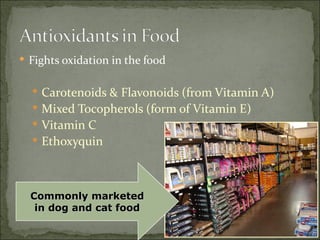
Fights oxidation in the food Carotenoids & Flavonoids (from Vitamin A) Mixed Tocopherols (form of Vitamin E) Vitamin C Ethoxyquin Commonly marketed in dog and cat food
Fight oxidation in the animal’s cells Alpha tocopherols (form of Vitamin E) Ascorbic Acid Selenium Lipoic Acid Beta Carotene Carotenoids Flavanoids “ Cowboy”
SMALL ANIMAL NUTRITION:   ENERGY CALCULATIONS &  LIFE STAGE/LIFE STYLE NUTRITION

Basic Nutrients

  • 1.
  • 2.
    “ a substancethat must be consumed as part of the diet to provide a source of energy, material for growth, or substances to regulate growth or energy production.” - Bantam Medical Dictionary
  • 3.
    “ a rawor processed agricultural commodity or other nutrient source” - SACN, 5 th Ed.
  • 4.
    Essential “Non-dispensable” Bodycannot produce Non-Essential “Dispensable” The body can produce Conditionally Essential Required during certain physiologic or pathologic conditions
  • 5.
    Supply energy Cofactorsin metabolic chemical reactions Transport substances throughout body Regulate body temperature Impact food palatability Form structural components of the body
  • 6.
    Water Carbohydrates ProteinFat Minerals Vitamins Antioxidants* Energy Producing Nutrients
  • 7.
    Most important nutrientBody composition ~ 70% of fat-free body weight Functions: Solvent Transports materials Chemical reactant (hydrolysis) Supports blood volume and pressure Regulates body temperature Provides shape to body
  • 8.
    * Loss of15% results in death How Water Gets Into an Animal Metabolizable Ingested Breakdown of carbohydrates, protein, fat as used for energy Free Water Routes of Water Loss Urine, Feces, Respiration, Perspiration, Milk,
  • 9.
    Water Content Variesby Nutrient Carbohydrates 0.6 grams of water per gram of carbohydrate Protein 0.4 grams of water per gram of protein Fat 0.2 grams of water per gram of fat
  • 10.
    What types ofthings influence the amount of water an animal needs?
  • 11.
    Species Environment (climate,air movement, etc.) Food type and source Diet composition (high protein, fiber, mineral salts) Life stage and lifestyle Water quality
  • 12.
    Total Dissolved SolidsIndex for measuring water quality More dissolved solids, decreased water quality 6 most common minerals present in water are chloride, sodium, calcium, magnesium, sulfates and bicarbonate Other factors: pesticides, pathogens, bacteria, algae, protozoa < 2,500 mg/L dissolved solids desired
  • 13.
    Energy: “the ability to do work” -SACN, p.26 Calorie: amount of heat required to raise the temperature of 1 gram of water 1 °C. Kilocalorie = 1000 calories
  • 14.
    All living cellsrequire energy After water, energy is most critical requirement in nutrition Carbohydrates, Protein, Fat provide energy from the diet Not all of consumed energy is used
  • 15.
    GROSS ENERGY (GE)DIGESTIBLE ENERGY (DE) METABOLIZABLE ENERGY (ME)
  • 16.
    Gross Energy (GE)Total amount of heat produced when feed is burnt completely GE determines total energy content of a feed, but doesn’t equal amount of energy available to the animal GROSS ENERGY (GE)
  • 17.
    Digestible Energy (DE)the energy remaining after the energy lost in feces is subtracted from the gross energy Measure of the energy absorbed from the feed after consumption Not a true measure, some energy is from tissue sloughing from the GI tract DIGESTIBLE ENERGY (DE)
  • 18.
    Digestible Energy DIGESTIBLEENERGY = Gross Energy – Fecal energy losses Image source: Dr. Geneva Acor, Hill’s Pet Nutrition, Inc.
  • 19.
    Metabolizable Energy (ME)Energy available to the animal after energy from feces, urine, and gases has been subtracted from the gross energy More accurate than DE for estimating amount of energy available to animal Expensive: feeding trials METABOLIZABLE ENERGY (ME)
  • 20.
    Metabolizable Energy METABOLIZABLEENERGY = Gross Energy – Fecal, Urine, Gas losses Digestible Energy Image source: Dr. Geneva Acor, Hill’s Pet Nutrition, Inc. Gross Energy
  • 21.
  • 22.
    Most accurately predictsamount of energy available to the animal Has been determined on a few feedstuffs Used widely in formulating diets for ruminant species
  • 23.
    Method for estimatingenergy content in a feed Food is fed and all dietary components are measured Amount of dietary components in feces is measured
  • 24.
    Digestible crude protein+ digestible crude fiber + digestible nitrogen free extract ( starches and sugars) + 2.25 X Digestible ether extract ( fat) TOTAL DIGESTIBLE NUTRIENTS
  • 25.
    WHAT CHARACTERISTICS OFA FEED MIGHT AFFECT ITS DIGESTIBILITY?
  • 26.
    Maturity of plantmaterial- as plants mature, an undigestible material called lignin increases in plant cell walls
  • 27.
    Energy producing nutrientComposed of carbon (C), hydrogen (H), oxygen (O) – CH 2 O Includes sugars, glycogen, starch and cellulose Mainly in plants (~75% of solid plant material) Cell layer is cellulose; Starch is the energy source
  • 28.
    Classified according tomolecule size Type of CHO Example CH 2 O Monosaccharides (one molecule) Glucose, dextrose, fructose (CH 2 O) 2 Disaccharides (two molecules) Sucrose, Lactose (CH 2 O) 3 Polysaccharides (three or more molecules) Cellulose, Glycogen, Pectin
  • 29.
    Monosaccharides CH2 O GLUCOSE Glucose & fructose most common Glucose is immediate source of energy for cellular reactions i.e. tissue repair, muscle contractions, nerve transmissions Body continually supplies glucose to blood from stored compounds in liver (glycogen) Extremely Important
  • 30.
    Disaccharides (CH2 O) 2 Short chain of 2 CHO molecules Lactose (milk sugar); Sucrose (table sugar) Plants convert their stores of carbohydrates to sucrose for easy transport through the plant Proteins often have attached disaccharides
  • 31.
    Polysaccharides (CH 2O) 3 Includes starches , glycogen and cellulose The most abundant of all carbohydrates
  • 32.
    Starches- from plants,broken down into glucose subunits Glycogen- storage form of glucose in animal cells, stored in liver and muscle, broken down to release glucose Cellulose- comprises majority of plant cell wall, insoluble, digested by bacteria in the herbivore digestive tract
  • 33.
    Energy producing nutrientFound in highest concentration of any nutrient except water in all living organisms Composed of carbon (C), hydrogen (H), oxygen (O), and nitrogen (N) (and sometimes sulfur (S) and phosphorus (P)
  • 34.
    WHAT FUNCTIONS DOPROTEINS PERFORM IN THE BODY?
  • 35.
    Functions Tissue BuildingHormones Growth Enzymes Immune System Blood cells
  • 36.
    Made up of amino acid (AA) sub-units Definition: Small organic compound that consists of an amino group (NH 2 ) on one end and a carboxyl group (COOH) on other plus a special group that defines the individual amino acid AA are linked together by peptide bonds 2 linked bonds = dipeptide 3+ linked bonds = polypeptide
  • 37.
    Synthesized by plants,rumen microorganisms Non-herbivores get AA in diet Absorbed in the anterior small intestine Most protein in plants and animals composed of only 20 amino acids 10 Essential Amino Acids (11 for cats)
  • 38.
    Essential Amino AcidsPhenylalanine Histidine Valine Arginine Tryptophan Lysine Threonine Leucine Isoleucine Methionine Taurine* Cats only
  • 39.
    Requirement for monogastricand avian species is for amino acids High needs for: young, rapidly growing gestating and lactating animals surgery or trauma certain pathologic conditions
  • 40.
    Protein Deficiency Poorgrowth rate in young; weight loss in adults Excess shedding High neonate mortality; reduced egg production, infertility Causes of Protein Deficiency Inadequate food intake Poor quality protein Maldigestion or malabsorption Protein losing enteropathy, Nephropathy Common in catteries and kennels
  • 41.
    Uncommon due tocost of feed Used for energy or stored as fat Chronic excess stresses kidneys Excretion of urea increases nitrogenous wastes that build up in bloodstream When urea or other non-protein sources are fed to ruminants, toxicity and death occur if diet has insufficient carbohydrates
  • 42.
    Energy producing nutrientInsoluble in water Include fat, oils, complex sterols Comprised of carbon (C), hydrogen (H) and oxygen (O)
  • 43.
    Fat is solidat room temperature Oil is liquid at room temperature
  • 44.
    Functions Insulation Absorptionof fat-soluble vitamins Hormone synthesis Structure to cell membrane Moisture to skin Palatability
  • 45.
    Accounts for mostof body’s stored energy “Fat reserves” Fat provides twice as much energy as CHO and protein Source of essential fatty acids Hydrophilic, absorbs water and takes up more space in the body
  • 46.
    Definition: A chemicalunit that occurs naturally, either singly or combined, and consists of strongly linked carbon and hydrogen atoms in a chain-like structure Important for lipid-protein structure of cell membrane Linoleic acid and Linolenic acid are essential for mammalian species. (Both are Omega 6 fatty acids) Arachadonic acid is required in cats
  • 47.
    Important to braindevelopment Iam’s - “How to Grow Smart Puppies” ™ Beneficial in inflammatory conditions Common sources found in feeds: Flaxseed, linseed, menhaden fish, animal fat, evening primrose oil, black currant oil
  • 48.
    Signs of EFADeficiency Signs of deficiency: scaly skin, necrosis of tail, reduced reproduction, edema, hemorrhaging, poor feathering in chickens Seen in pigs, chickens, calves, dogs, mice and guinea pigs Rare in ruminants, despite a fat-free diet, because the microbes produce adequate amounts of EFA
  • 49.
    Neutral fats PhospholipidsSterols Carotenoids waxes
  • 50.
    Most abundant fatin living things Includes saturated fats and unsaturated fats Saturated-have no shared carbon bonds Unsaturated- one shared bond between carbons Polyunsaturated-two or more shared bonds between carbons
  • 51.
    Form cell membranes-one hydrophilic end and one hydrophobic end Fatty acid portion ( tail) is hydrophobic and not water soluble
  • 52.
    Lipids that haveno fatty acids Occur in cell membranes Include sex hormone ( estrogen, testosterone) Cholesterol, bile salts and sterols, ( biologically important) cholesterol- most common sterol in animal cell tissues Bile salts- role in fat digestion in small intestine
  • 53.
    Red and yellowpigment cells of all plants Classified as lipids because of insolubility in water and oily consistency Vitamin A comes from splitting pigment
  • 54.
    Long chain fattyacids tightly packed Firm consistency: repel water Help form the cuticle on plants and leaves Keeps feathers of water fowl clean and dry
  • 55.
    Monogastrics Primary siteis small intestine Bile and pancreatic lipase If large amount of fat is mobilized for energy, ketones form and excessive amounts are dumped into urine, milk and lungs Ruminants- microbes convert unsaturated fats to saturated fats
  • 56.
    Small, organic compoundsrequired by body for normal function Cofactors in ezymatic reactions Classified as fat soluble or water soluble - Absorbed through variety of ways Important in milk – especially colostrum
  • 57.
    Different for eachvitamin Vision Blood clotting factors Immune defense Epithelial tissue Bone mineralization and resorption Neural transmission
  • 58.
    Vitamin A VitaminC Potassium Zinc Vitamin E Iron Magnesium Calcium Vitamin K Selenium Vegetable Oil Tuna, red meat Citrus, green peppers Carrots, pumpkin Beef, Brazil nuts Sardines, milk Yogurt, lentils Soybeans Nuts, bananas Cauliflower, broccoli
  • 59.
    Vitamins A, D,E, K Higher potential for toxicity than water soluble vitamins Require fat and bile salts to be absorbed Fat Soluble
  • 60.
    Important part ofvisual proteins Key for epithelial tissues (skin, lining of body cavities) Beneficial to immune system Signs of deficiency : poor coat, retarded growth, anorexia Signs of toxicity : anorexia, “Cervical spondylosis” in cats Fat Soluble
  • 61.
    Calcium/Phosphorus balance Keyin bone resorption and mineralization Absorbed as ergosterol , converted to calciferol (D 2 ) in skin Kidneys convert D 2 to different compound used for calcium absorption Signs of deficiency : Rickets, posterior paralysis Signs of excess : anorexia, kidney stone, FORLs Fat Soluble
  • 62.
    Antioxidant “Tocopherol”Alpha tocopherol: active in body Mixed tocopherol: active in food Protects cell membranes Signs of deficiency : sterility in males, steatitis in cats , immunodeficiency Signs of toxicity : Increased clotting time Fat Soluble
  • 63.
    Vital to bloodclotting proteins Synthesized by microbes in ruminant gut Deficiency is rare in all species except poultry Signs of deficiency : increased clotting time, hemorrhaging Sign of excess : minimally toxic Fat Soluble
  • 64.
    B-Vitamins, Vitamin CMinimally toxic, due to excretion from the body in urine Key as cofactors in enzymatic reactions Water Soluble
  • 65.
    Water Soluble Thiamin(B 1 ) Pyroxidine (B 6 ) Riboflavin (B 2 ) Biotin (B 7 ) Niacin (B 3 ) Folic Acid (B 9 ) Pantothenic acid (B 5 ) Cobalamin (B 12 )
  • 66.
    Functions varied amongforms of Vitamin B No single food source has enough vitamin B - must be gained from multiple sources Riboflavin deficiency is rare Niacin deficiency results in pellagra with dermatitis; dementia Water Soluble
  • 67.
    Antioxidant Collagen synthesisImportant in Carnitine synthesis Signs of deficiency : scurvy Signs of toxicity: rare Water Soluble
  • 68.
    Natural component ofanimal cells Most carnitine (~98%) in body lives in skeletal and cardiac muscle Helps transport fatty acids into cells Helps build lean tissue
  • 69.
    In nutrition, mineralmeans all inorganic elements in a food Major portion of body fluids (electrolytes) Important in enzymatic reactions “ Ash”
  • 70.
    Macro Minerals CalciumPhosphorus Sodium Magnesium Potassium Chloride Sulfur Micro Minerals Chromium Cobalt Copper Fluorine Iron Iodine Manganese Molybdenum Nickel Selenium Silicon Zinc
  • 71.
    Largest amounts foundin skeletal system Provide structural rigidity Some functions: Iron is essential part of hemoglobin Iodine is component of thyroid hormone Sodium is key to body’s pH level Of total minerals in animal’s body… Ca = 46% and P = 29%
  • 72.
    Absorbed from theGI tract Fat sometimes chelates certain minerals, thereby reducing their availability to animal Young are more efficient than old at absorbing minerals Requirements vary by species
  • 73.
    Definition: “an especially reactive atom or group of atoms that has one or more unpaired electrons; produced in the body by natural biological processes or introduced from an outside source (as tobacco smoke, toxins, or pollutants) and that can damage cells, proteins, and DNA by altering their chemical structure.” - Merriam-Webster Dictionary
  • 74.
    DNA Mitochondria Attackcell membranes, DNA & Mitochondria mutations in DNA changes fluidity of cell membrane Cause oxidative stress in the body
  • 75.
    Creates DNA damageDamage accumulates over course of animal’s life Injures cells Responsible for lots of chronic illnesses Cancer, Kidney disease, Cardiovascular disease, Cognitive Dysfunction Syndrome, etc
  • 76.
    Pollution Radiation MetabolismChemicals Food Additives
  • 77.
    “ Powerhouse ofthe cell” By-product of energy production is free radicals Normally, body’s natural defenses quench free radicals Free radicals attack and damage mitochondria, which causes it to produce more free radicals Free radicals overwhelm body’s natural defenses, creating damage
  • 78.
    Mitochondria “ Powerhouseof the Cell” Damaged Mitochondria Body’s Defenses Body’s Defenses Body’s Defenses Body’s Defenses X X X X
  • 79.
    Definition: “ asubstance that inhibits oxidation or reactions promoted by … free radicals” -Merriam-Webster Dictionary
  • 80.
    Inactivate free radicalsImprove cellular efficiency Work best in conjunction with other antioxidants (help to regenerate each other) Some are active in food; some are active in the body
  • 81.
    Fights oxidation inthe food Carotenoids & Flavonoids (from Vitamin A) Mixed Tocopherols (form of Vitamin E) Vitamin C Ethoxyquin Commonly marketed in dog and cat food
  • 82.
    Fight oxidation inthe animal’s cells Alpha tocopherols (form of Vitamin E) Ascorbic Acid Selenium Lipoic Acid Beta Carotene Carotenoids Flavanoids “ Cowboy”
  • 83.
    SMALL ANIMAL NUTRITION: ENERGY CALCULATIONS & LIFE STAGE/LIFE STYLE NUTRITION