
MARKETING
MANAGEMENT
 The process of planning and executing the conception, pricing,
promotion, and distribution of ideas, goods, and services to
create exchanges that satisfy individual and organizational
objectives.
DEFINITION OF MARKETING
 The process by which companies create, communicate and
deliver value for the target customers in order to get value in
return.
WHAT IS MARKETING?
 Marketing management is the art and science of choosing
target markets and getting, keeping, and growing customers
through creating, delivering, and communicating superior
customer value.
WHAT IS MARKETING MANAGEMENT?
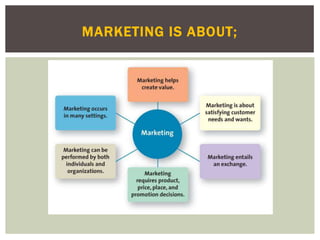
MARKETING IS ABOUT;
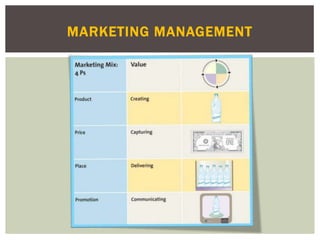
MARKETING MANAGEMENT
 Goods
 Services
 Events and experiences
 Persons
 Places and properties
 Organizations
 Information
 Ideas
WHAT IS MARKETED?
 ignores public
 influences values & ideas
DRAWBACKS OF MARKETING CONCEPT
 Concerns public welfare and social responsibility
RECENT DEVELOPMENT
-- SOCIETAL MARKETING CONCEPT
 Marketing Analysis
 Marketing Planning
 Marketing Implementation
 Marketing Control
THE ROLE OF MARKETING
 Gathering, recording and analysis of data.
 To solve a specific problem that is too important to be
answered by guessing.
 an informational input to decisions.
MARKETING RESEARCH
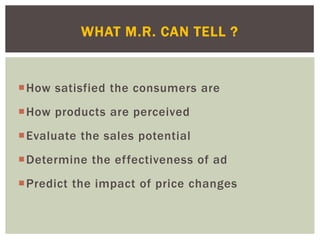
How satisfied the consumers are
How products are perceived
Evaluate the sales potential
Determine the effectiveness of ad
Predict the impact of price changes
WHAT M.R. CAN TELL ?
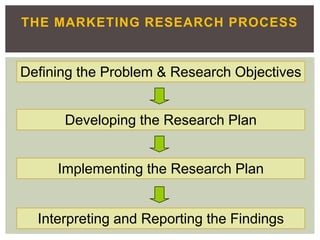
THE MARKETING RESEARCH PROCESS
Defining the Problem & Research Objectives
Developing the Research Plan
Implementing the Research Plan
Interpreting and Reporting the Findings
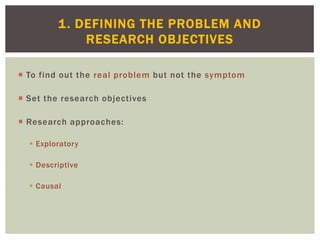
 To find out the real problem but not the symptom
 Set the research objectives
 Research approaches:
 Exploratory
 Descriptive
 Causal
1. DEFINING THE PROBLEM AND
RESEARCH OBJECTIVES
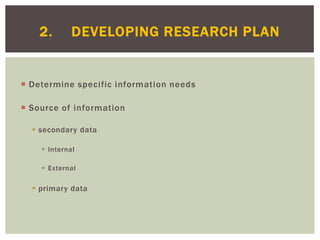
 Determine specific information needs
 Source of information
 secondary data
 Internal
 External
 primary data
2. DEVELOPING RESEARCH PLAN
 Planning primary data collection
 Research approach
 contact methods
 sampling plan
 research instruments
2. DEVELOPING RESEARCH PLAN
Research approach
• Observational research
• Survey research
• Focus group
• Experimental research
Contact Methods
• Telephone survey
• Mail questionnaires
• Personal interviews
Sampling Plan
• Sampling unit
• Sampling size
• Sampling procedure
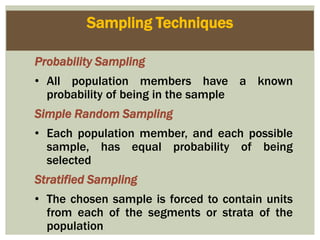
Sampling Techniques
Probability Sampling
• All population members have a known
probability of being in the sample
Simple Random Sampling
• Each population member, and each possible
sample, has equal probability of being
selected
Stratified Sampling
• The chosen sample is forced to contain units
from each of the segments or strata of the
population
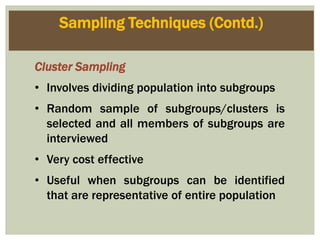
Sampling Techniques (Contd.)
Cluster Sampling
• Involves dividing population into subgroups
• Random sample of subgroups/clusters is
selected and all members of subgroups are
interviewed
• Very cost effective
• Useful when subgroups can be identified
that are representative of entire population
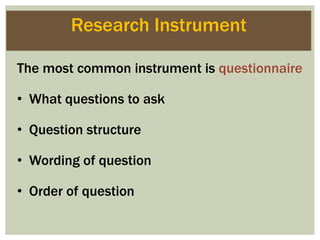
Research Instrument
The most common instrument is questionnaire
• What questions to ask
• Question structure
• Wording of question
• Order of question
Implementing The Research Plan
• Collecting and
Analyzing data
Interpreting And Reporting The Finding
• Interpret the findings, draw conclusions and
report to management.
• The manager will utilize these findings
to make decisions.
THANKS Namita Dande

Basic Marketing Management

  • 1.
  • 2.
     The processof planning and executing the conception, pricing, promotion, and distribution of ideas, goods, and services to create exchanges that satisfy individual and organizational objectives. DEFINITION OF MARKETING
  • 3.
     The processby which companies create, communicate and deliver value for the target customers in order to get value in return. WHAT IS MARKETING?
  • 4.
     Marketing managementis the art and science of choosing target markets and getting, keeping, and growing customers through creating, delivering, and communicating superior customer value. WHAT IS MARKETING MANAGEMENT?
  • 5.
  • 6.
  • 7.
     Goods  Services Events and experiences  Persons  Places and properties  Organizations  Information  Ideas WHAT IS MARKETED?
  • 8.
     ignores public influences values & ideas DRAWBACKS OF MARKETING CONCEPT
  • 9.
     Concerns publicwelfare and social responsibility RECENT DEVELOPMENT -- SOCIETAL MARKETING CONCEPT
  • 10.
     Marketing Analysis Marketing Planning  Marketing Implementation  Marketing Control THE ROLE OF MARKETING
  • 11.
     Gathering, recordingand analysis of data.  To solve a specific problem that is too important to be answered by guessing.  an informational input to decisions. MARKETING RESEARCH
  • 12.
    How satisfied theconsumers are How products are perceived Evaluate the sales potential Determine the effectiveness of ad Predict the impact of price changes WHAT M.R. CAN TELL ?
  • 13.
    THE MARKETING RESEARCHPROCESS Defining the Problem & Research Objectives Developing the Research Plan Implementing the Research Plan Interpreting and Reporting the Findings
  • 14.
     To findout the real problem but not the symptom  Set the research objectives  Research approaches:  Exploratory  Descriptive  Causal 1. DEFINING THE PROBLEM AND RESEARCH OBJECTIVES
  • 15.
     Determine specificinformation needs  Source of information  secondary data  Internal  External  primary data 2. DEVELOPING RESEARCH PLAN
  • 16.
     Planning primarydata collection  Research approach  contact methods  sampling plan  research instruments 2. DEVELOPING RESEARCH PLAN
  • 17.
    Research approach • Observationalresearch • Survey research • Focus group • Experimental research
  • 18.
    Contact Methods • Telephonesurvey • Mail questionnaires • Personal interviews
  • 19.
    Sampling Plan • Samplingunit • Sampling size • Sampling procedure
  • 20.
    Sampling Techniques Probability Sampling •All population members have a known probability of being in the sample Simple Random Sampling • Each population member, and each possible sample, has equal probability of being selected Stratified Sampling • The chosen sample is forced to contain units from each of the segments or strata of the population
  • 21.
    Sampling Techniques (Contd.) ClusterSampling • Involves dividing population into subgroups • Random sample of subgroups/clusters is selected and all members of subgroups are interviewed • Very cost effective • Useful when subgroups can be identified that are representative of entire population
  • 22.
    Research Instrument The mostcommon instrument is questionnaire • What questions to ask • Question structure • Wording of question • Order of question
  • 23.
    Implementing The ResearchPlan • Collecting and Analyzing data
  • 24.
    Interpreting And ReportingThe Finding • Interpret the findings, draw conclusions and report to management. • The manager will utilize these findings to make decisions.
  • 25.